
PGA Tour: Reading Between the Lines of TV Analysts and Commentators
It’s been said that golf television broadcasts are the perfect white noise in which one can use to dive into a long, satisfying Sunday nap. It’s the hushed tones and soft nature sounds that seem to do it. To golf fans, however, the quality of the telecast can hinge on what is said and when.
Whether it is Johnny Miller saying that a player choked or Nick Faldo trying on some puckish wit on Kelly Tilghman, these “personalities” infuse our experience of the event, for good or ill.
A careful long-time listener, however, will detect certain biases, unspoken rivalries and insight into the personality of the person who’s holding the microphone. It’s important to remember that these people always focus on the story on the course, but yet a little reading between the lines tells us so much more.
David Feherty CBS
1 of 10
Feherty sometimes strives too hard to be funny, but that isn’t too often. His sharp eye for detail coupled with his irreverent outlook on the game combine to give us a unique picture of what it’s like to try to make a living as a professional golfer.
To wit: The hole where the ball has to go is really, really small, and there are tons of guys who are good at it, just not him. And it’s also a wickedly mean game as seen with comments like this about Jim Furyk’s golf swing: “It looks like a monkey falling out of a tree.”
Of note is that Feherty usually gets the Tiger Woods group because CBS’ other on-course commentator Peter Kostis had the audacity to criticize Woods when he was going through swing changes about five years ago. Only in the last year or so has Woods cooled enough to talk to Kostis post-round, though there are times when the frostiness clouds the TV screen.
Chris Berman ESPN
2 of 10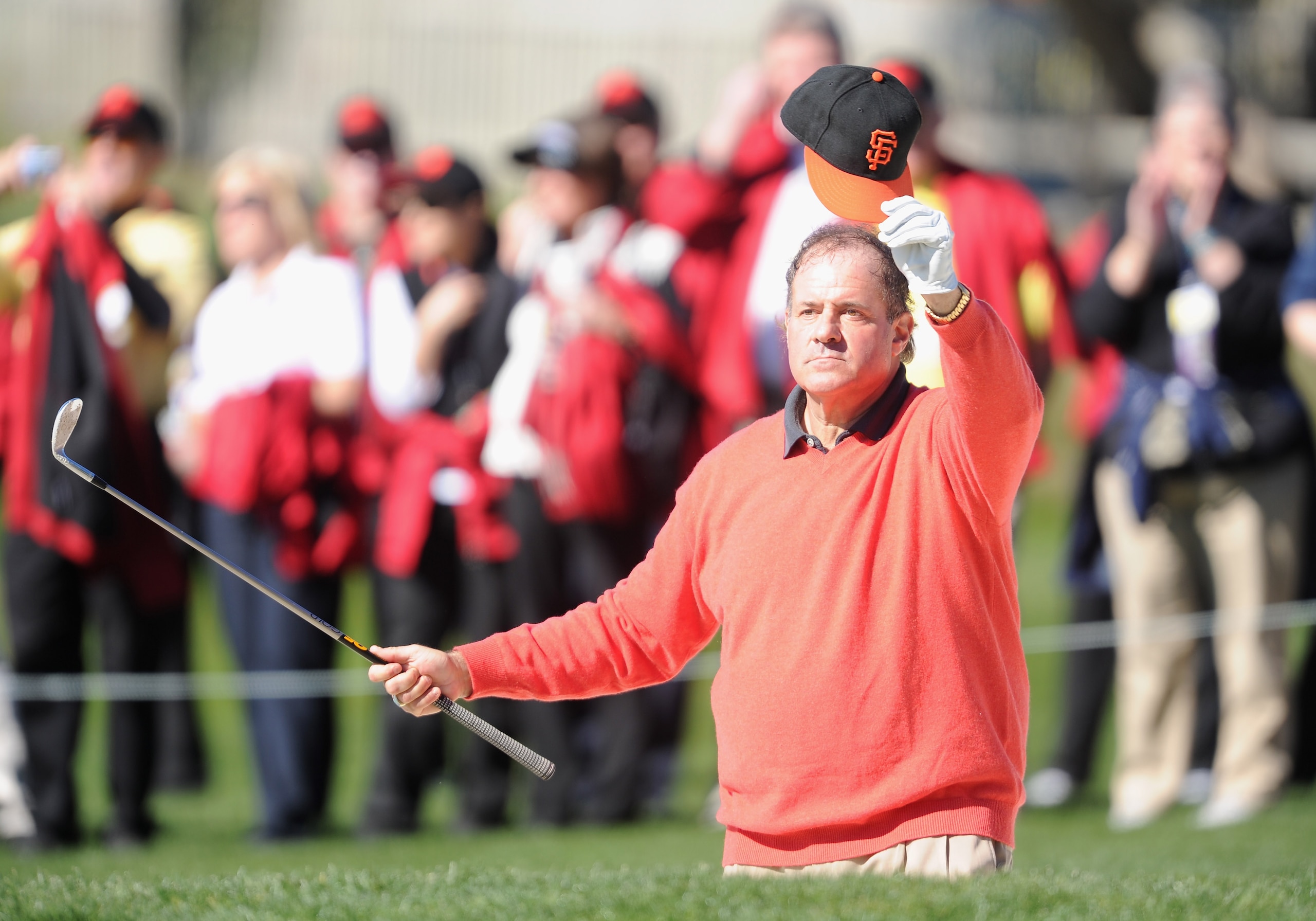
“Boomer” only does golf when ESPN gets the first two rounds of the U.S. Open and, at times, the British Open. And though those broadcasts often have a more general audience, golf aficionados cringe every time Berman tries his shtick of giving out nicknames like the after-dinner mints at a restaurant.
It has to be said that Berman tries to levitate the silence with humor, but even though the game is played on grass many of his statements make a clanking sound as they hit the ground. It doesn’t help that Boomer also tends to overplay the difficulty of the game, which is natural for someone who is about a 20-handicapper like himself. But for most of the pros, many times what led to a bad shot is the fact that the golfer screwed up.
Judy Rankin Golf Channel
3 of 10
She provides solid commentary from the tower during LPGA telecasts. But she’s on this list for her work as an on-course commentator for ABC. In that role she provided a sharp contrast to her fellow grass walker Bob Rosburg. It seemed to happen about once every nine holes when someone would be in a predicament, leaving Rosburg to comment, “He’s got no chance,” only to have the pro place a wonderful shot very near the target.
Rankin always played it straight with fact-based analysis of the situation. During the British Open, particularly, her insight into the weather conditions coupled with her sharp observations of the players and their moods gave viewers a good indication of what was going on. And she never said, “He’s got no chance.”

.jpg?w=2560 "Cardinals Giants Football")

Mark Rolfing NBC
4 of 10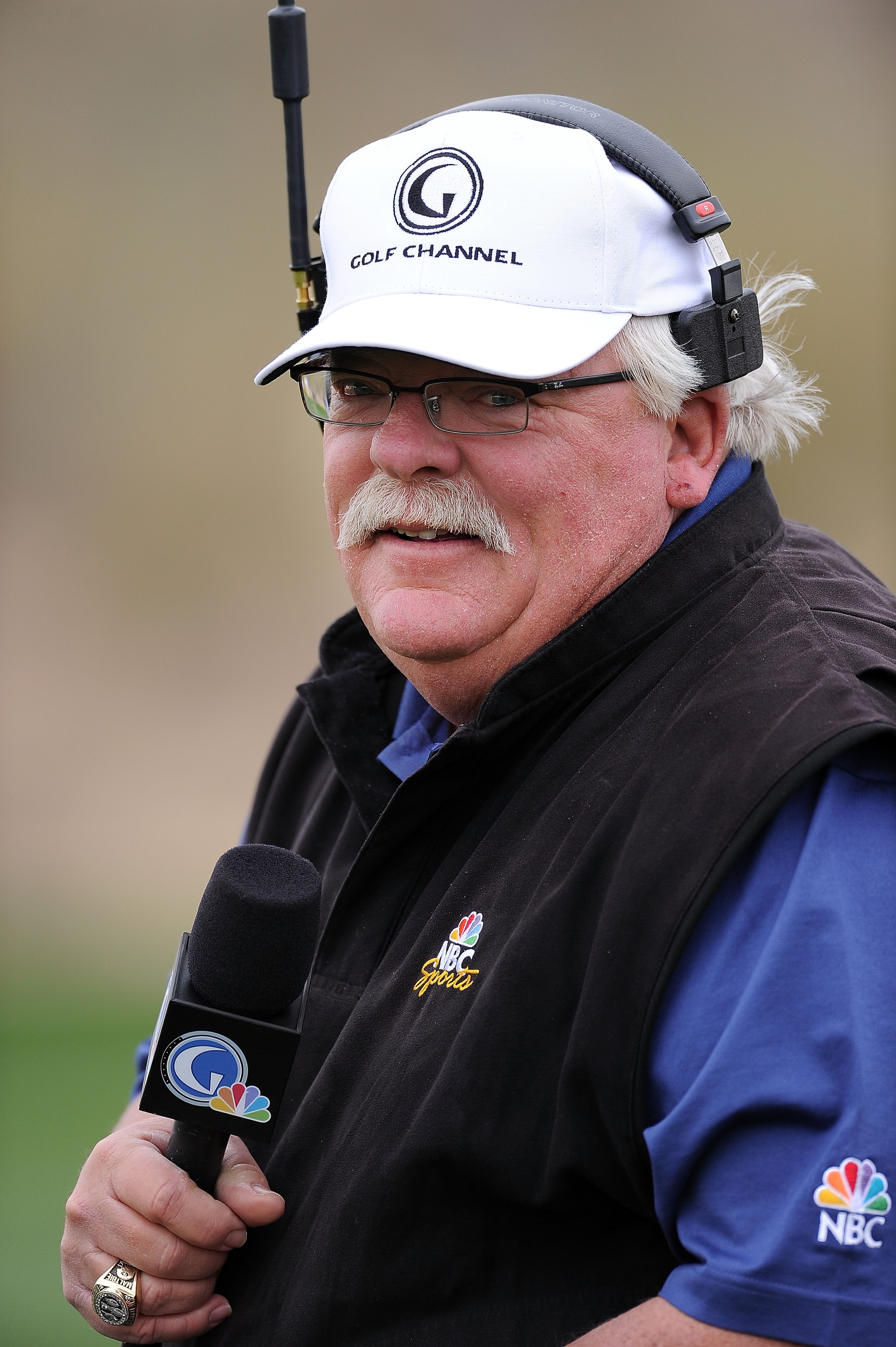
“Mothballs” is another player who tends to play it pretty straight on players. When they don’t handle it well, he says so, though often he avoids the “C” word – choke. And Maltbie has a good way of telling the story without getting in trouble. Here’s one:
During the 1994 U.S. Open at Congressional Country Club, an early round rain delay stopped play, giving the fans more time to drink and increase their volume. Play finally resumes again Brit golfer Colin Montgomery is seen jawing with some American fans. He’s gesturing and pointing to one; and sure enough security comes over.
Tower-man Dan Hicks asks Maltbie what the scene is, and Maltbie said, “It’s just the American fans getting a little patriotic before the Ryder Cup play.” What was really said by the fan in a very loud voice, Maltbie told me later, was: “Hey Monty, nice [breasts].”
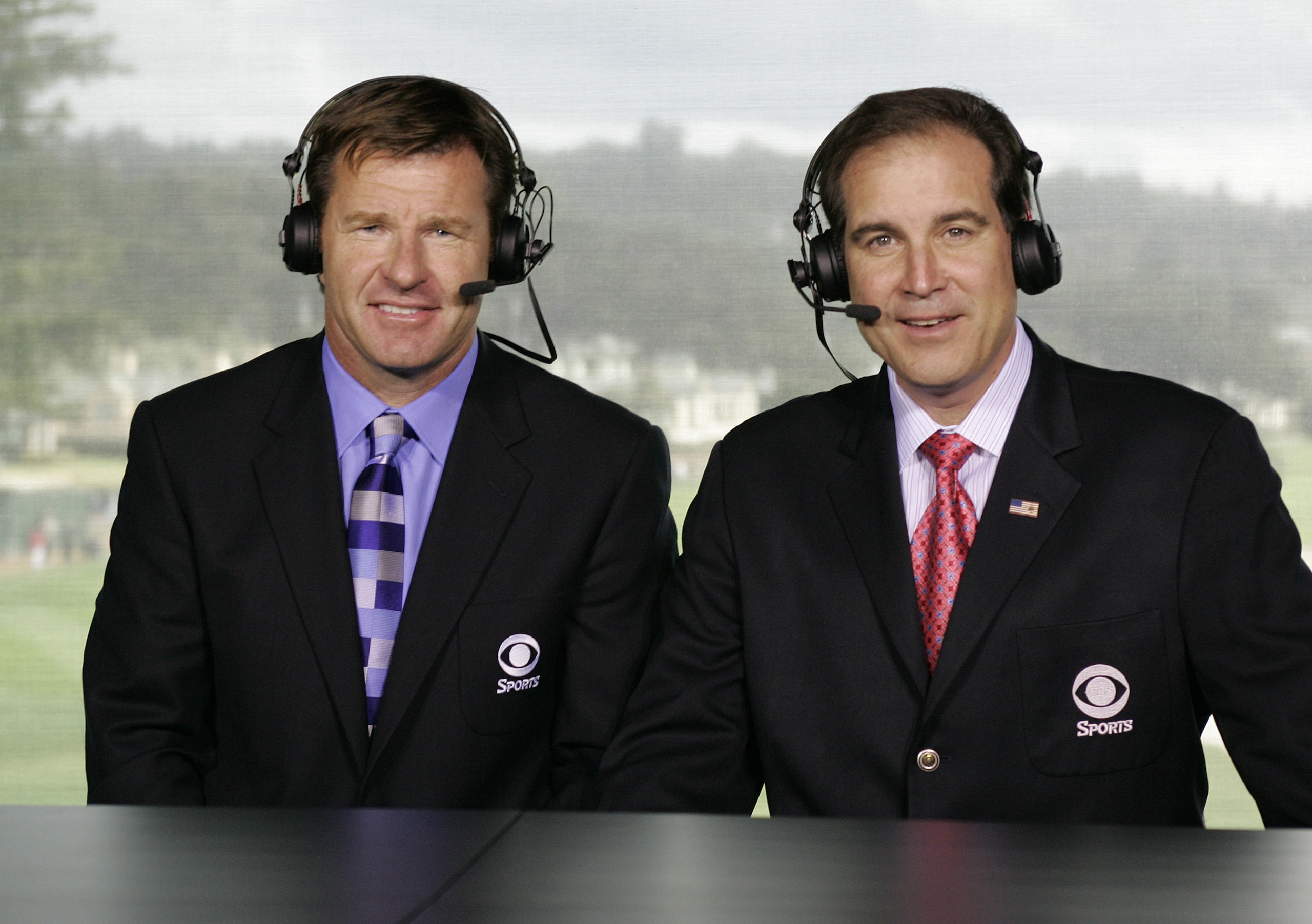
Nick Faldo-Jim Nantz CBS
5 of 10
Faldo’s expertise and lilting British accent pair well with Nantz’s well-informed descriptions; they make the broadcast move well without getting too dramatic. And Faldo during the Masters last week gives in-depth insight into what it takes to master Augusta National. Invariably, his observations are spot on.
At the same time, Nantz seems to fall deeper and deeper in love with Augusta National. And the 2011 Masters had the course in spectacular condition; the fauna exploding with color. But Nantz’ exultations only reinforce the notion that CBS has to give the Augusta National members lots of oral attention as their way to renew that contract every year.
Kelly Tilghman Golf Channel
6 of 10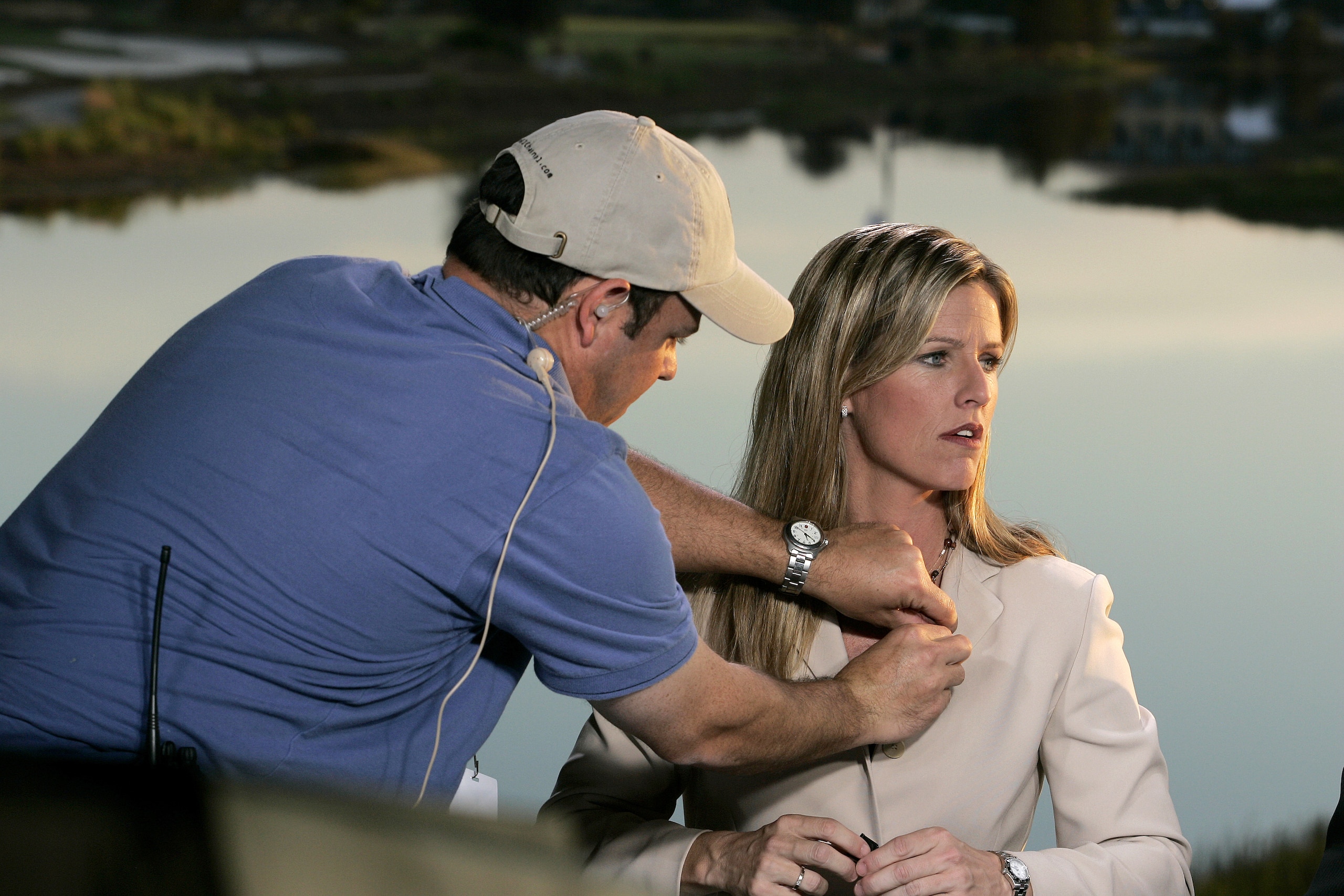
That Faldo works many Golf Channel telecasts speaks to his endurance. Four days in a chair staring at monitors and making comments can get a little dull. That’s a lot of dead air to overcome. That said, Sir Nick, who is 53, goes out of his way, or is told to go out of his way, to offer some verbal jousting with the 41-year-old Tilghman, the first female host of a golf telecast.
A year after she got the lead job in 2007, she made the famous slip about some players wanting to do harm to Tiger Woods. It was an inadvertent slip and it caused a great deal of controversy. It wasn’t The Golf Channel producers who caught the gaffe, either. It was a journalist. She got suspended.
Since then, we can say that Tilghman has been more than guarded about her comments, which makes Faldo’s puckish teasers all the more obvious and, uh, geezer-like.
Gary McCord CBS
7 of 10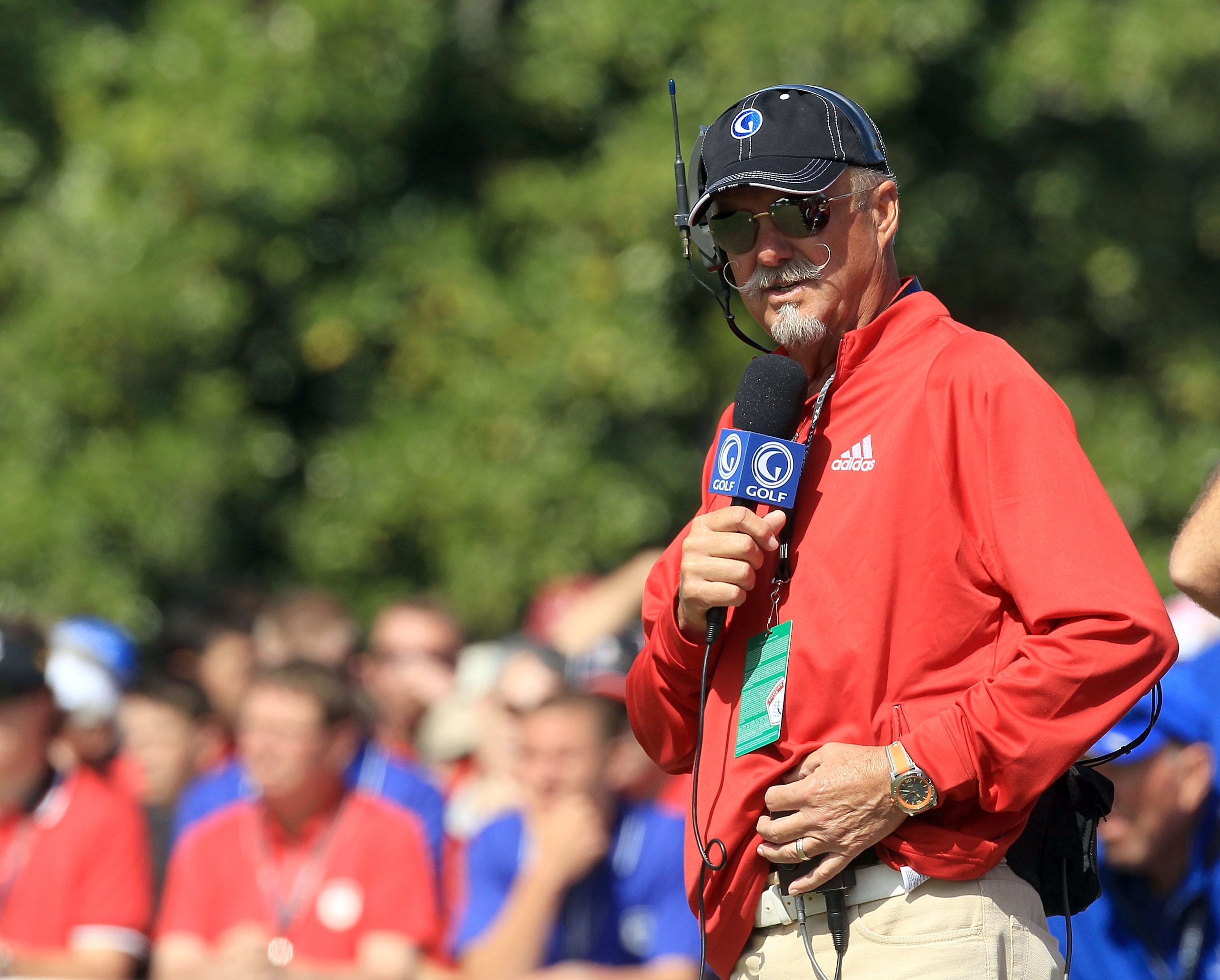
As a personality, McCord still comes across as the range ball found among a box of Titleists (the name of McCord’s book). But it’s that quirky perspective that makes McCord stand out against the whispering brethren in the business.
It’s not a hard swing, “that’ll be a full-volume wedge.” The green isn’t firm, it’s “like trying to stop the ball on your drive way.” He doesn’t tell us, he lets us feel it. His on-air specials on rules and equipment sometimes get a little cheesy, but his tower work is first-rate. Many thought he was better when he got to play off the ever-proper Ben Wright, whose English accent seemed to add a little more salt in his put-downs of McCord.
Johny Miller NBC
8 of 10
The ’73 U.S. Open champion finds himself the favorite analyst among many golf fans – better than Faldo, better than anyone on the Golf Channel. To his credit, he calls a choke a choke; also, to his credit he walks the course every day and scouts pin locations. By and large, he’s spot on about where putts will break, where shots need to land.
And that can irritate the heck out of his on-course commentators. About once or twice a round you’ll hear Roger Maltbie offer a “well, in this case…” because he doesn’t want to contradict Miller, but he also wants to be accurate. In that sense Miller at times can come across as the bossy cow.
Dottie Pepper NBC
9 of 10
Like Rankin, Pepper comes across as a solid, information-first, opinion second on-course commentator. She knows the game and she know what it’s like to manage a small ball over a large area of real estate that’s laden with traps and trickery. She and Maltbie both do a good job of restricting their personalities when they cover golf. Pepper, known for a spicy temper when she was on the LPGA, might do well to let her rankles through now and then.
Curtis Stange ESPN
10 of 10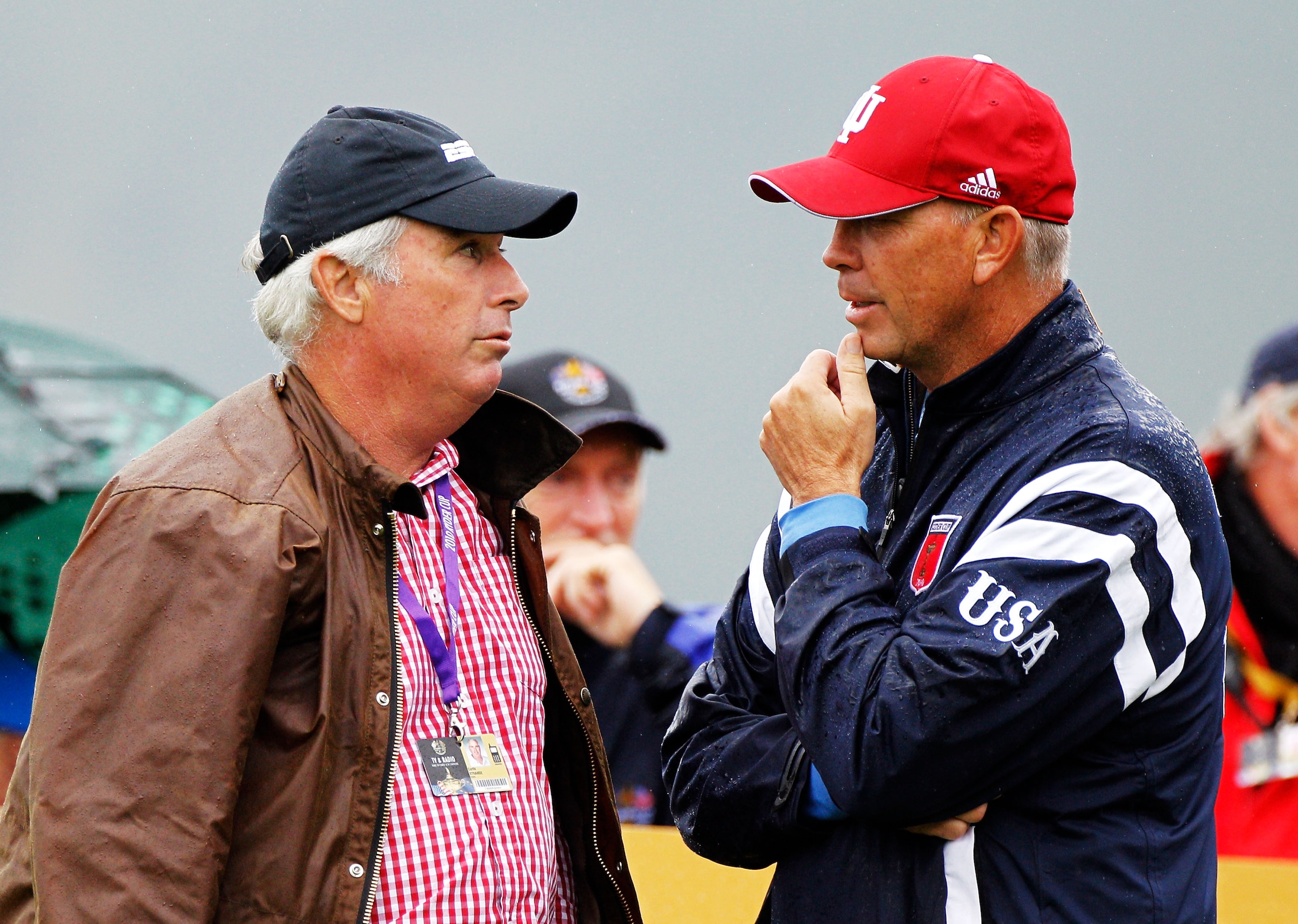
About seven years ago, a British writer listened to Strange’s commentary on the ABC telecast and came out the next day with a hilarious accounting of the experience. It included repeating Strange’s words phonetically: “Togger has to hit a hah-ard oht-iron here.” It became a hit within the media tent.
Strange proves that being a two-time U.S. Open winner does not guarantee success in the booth. It’s his Virginia accent and his outlook; Strange comes across like he’s running on 80-percent battery power.
.jpg?w=2560 "Hill Injury Update Football")
.jpg?w=2560 "Titans Giants Football")
.jpg?w=2560 "Tyreek makes another cryptic post amid Chiefs rumors")


.jpg?w=2560 "Greenlaw Talks Payton Exchange")
