
NFL Trade Winds: Herschel Walker and the Top 25 Blockbuster Trades of All Time
With veteran stars like Carson Palmer and Donovan McNabb potentially on the trading block, the NFL trade market would be sizzling if it weren’t for the lockout. History demonstrates that even in the NFL, where trades are comparatively rare, a major deal can have lasting consequences.
Whether it’s one player going for a slew of players or picks, or established stars trading places, a single blockbuster trade can change the landscape of the league.
Read on for the 25 biggest deals in NFL history.
Note: For purposes of this list, trades like Marshall Faulk for two minor draft picks were not considered. A trade had to be big at the time it happened, not just in hindsight, to qualify.
25. Oakland Parts Ways with Ken Stabler
1 of 25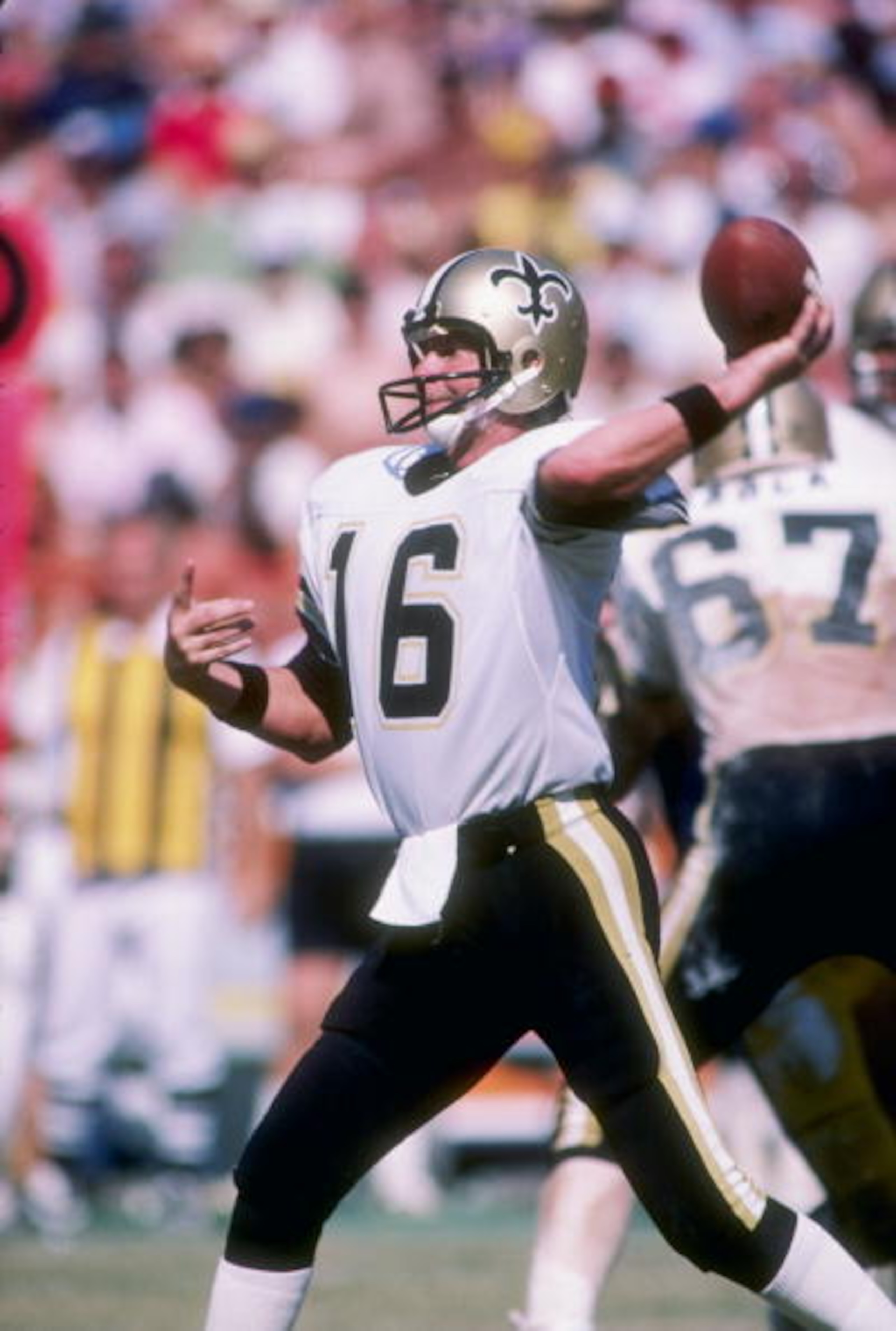
By 1980, Ken Stabler owned the Oakland Raiders’ record books as a passer, but the team had fallen on hard times. When Stabler held out prior to the season, the Raiders decided that they’d had enough.
Oakland shipped the future Hall of Famer to Houston, acquiring in return another former Pro Bowl QB, Dan Pastorini.
Neither side came away happy. Stabler threw more interceptions than TDs and failed to bring playoff success to Houston, while Pastorini was immediately injured and replaced by Jim Plunkett.
24. Follow the Bouncing Jim Lachey
2 of 25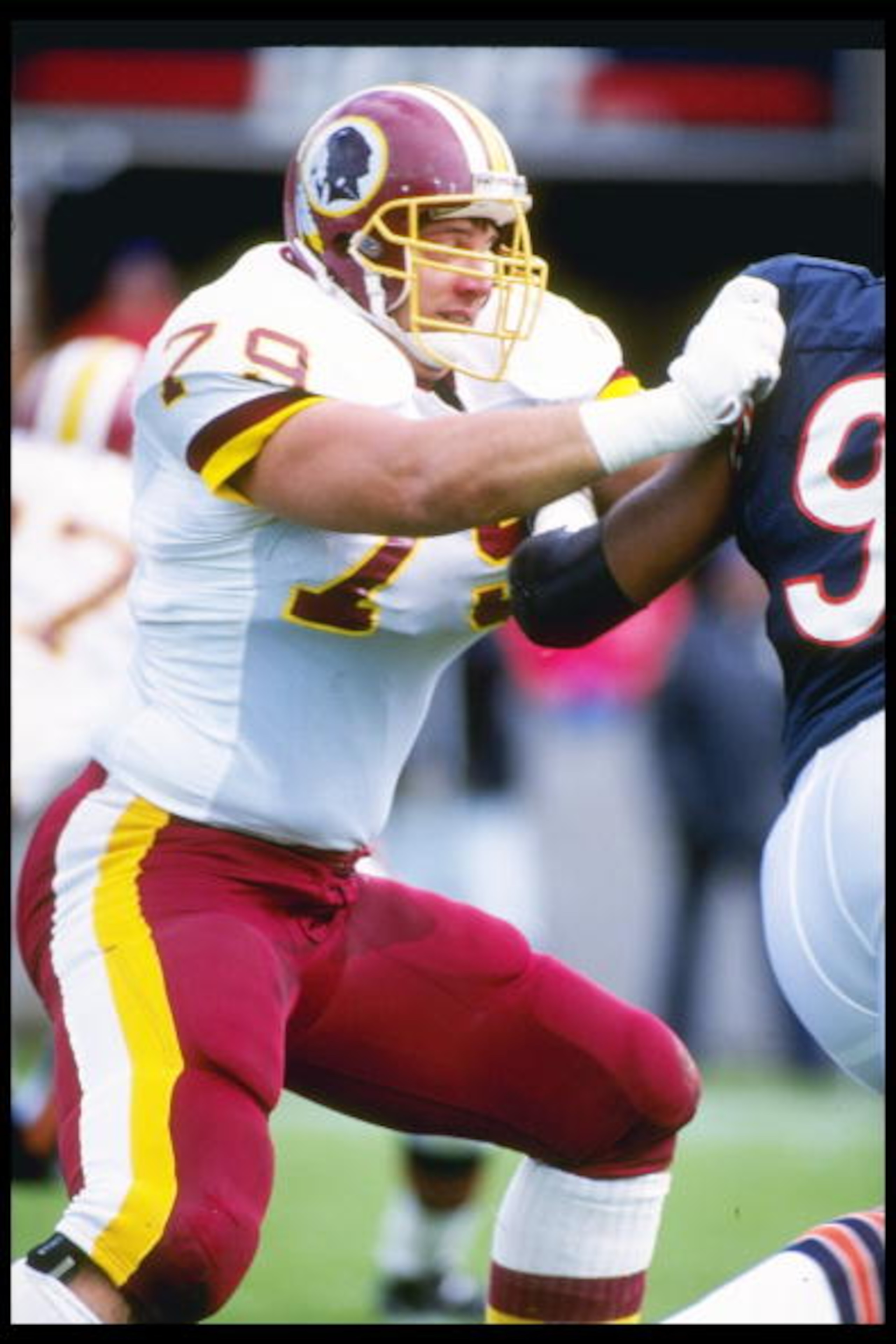
In 1987, third-year OT Jim Lachey made his first Pro Bowl for the Chargers. Lachey wanted a richer contract after proving himself as an NFL tackle, so the Chargers decided he was more trouble than he was worth.
San Diego unloaded Lachey to the Oakland Raiders, receiving OT John Clay and a pair of draft picks in exchange. Oakland, in turn, traded Lachey after just one game, acquiring QB Jay Schroeder and a pair of draft picks from Washington.
Clay failed his physical upon reporting to the Chargers and played just two games in a San Diego uniform. Schroeder endured five largely unsuccessful seasons as the Raiders’ starter.
The Redskins, meanwhile, laughed all the way to the bank, as Lachey made two more Pro Bowls and anchored the line for their 1991 Super Bowl champs.
23. Bill Bergey Doesn't Jump to the WFL
3 of 25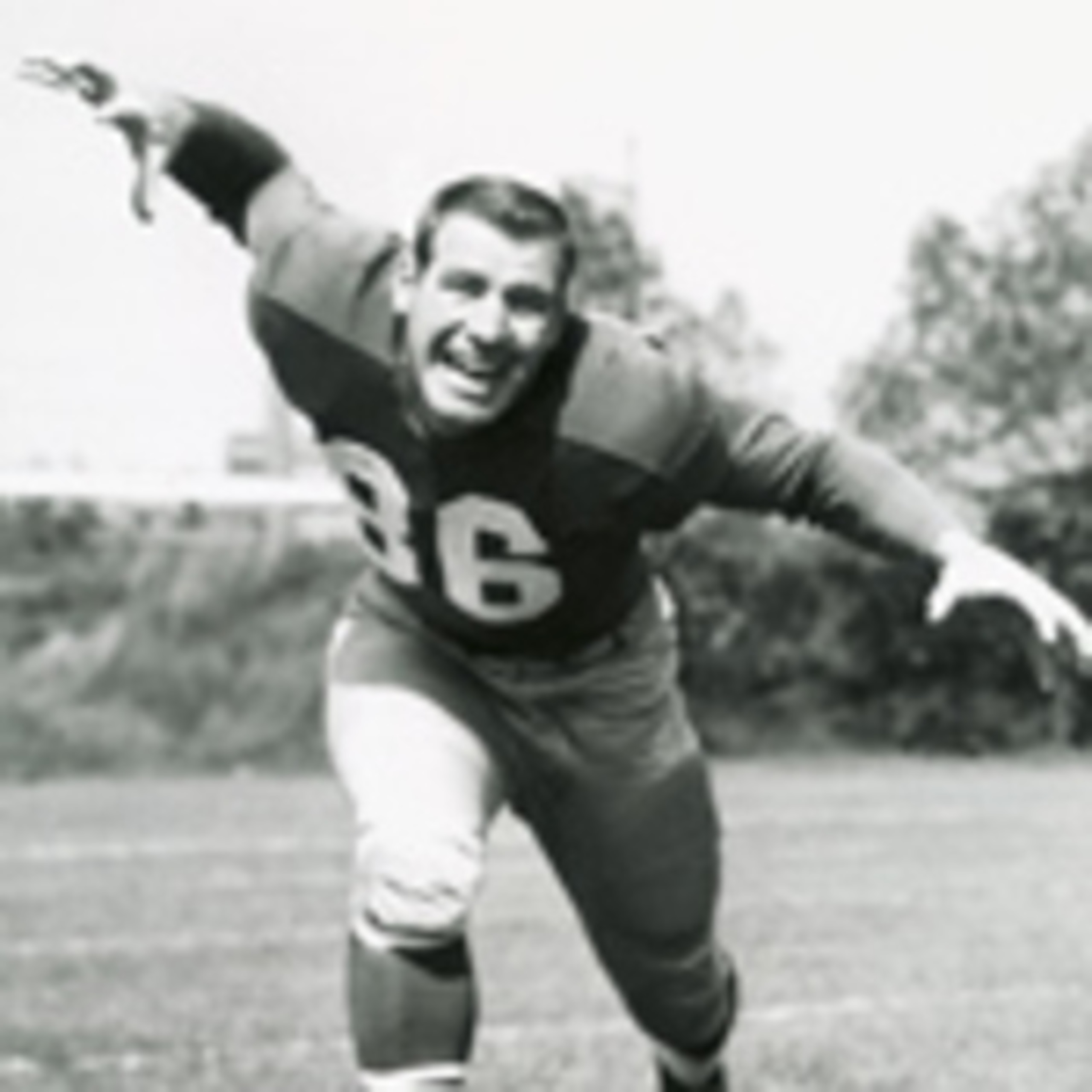
In 1974, the newly created World Football League was attempting to poach NFL stars by signing them to “futures” contracts, which would go into effect when their existing NFL contract expired. One player who took advantage of the opportunity was Bengals LB Bill Bergey.
Cincinnati coach Paul Brown, upset at Bergey’s apparent disloyalty, responded by trading the former AFL All-Star to Philadelphia for three draft picks, including two first-rounders.
Bergey (who was still under contract to Philadelphia when the WFL went out of business) would make four Pro Bowls as an Eagle and played a key role on their 1980 NFC title team.
The deal wasn’t a total loss for Cincinnati, which converted one of the resulting draft picks into Pro Bowl DE Ross Browner, who helped lead them to the 1981 AFC championship.
.jpg?w=2560 "Cardinals Giants Football")
.jpg?w=2560 "Titans Giants Football")
22. Mr. Bailey Goes from Washington
4 of 25
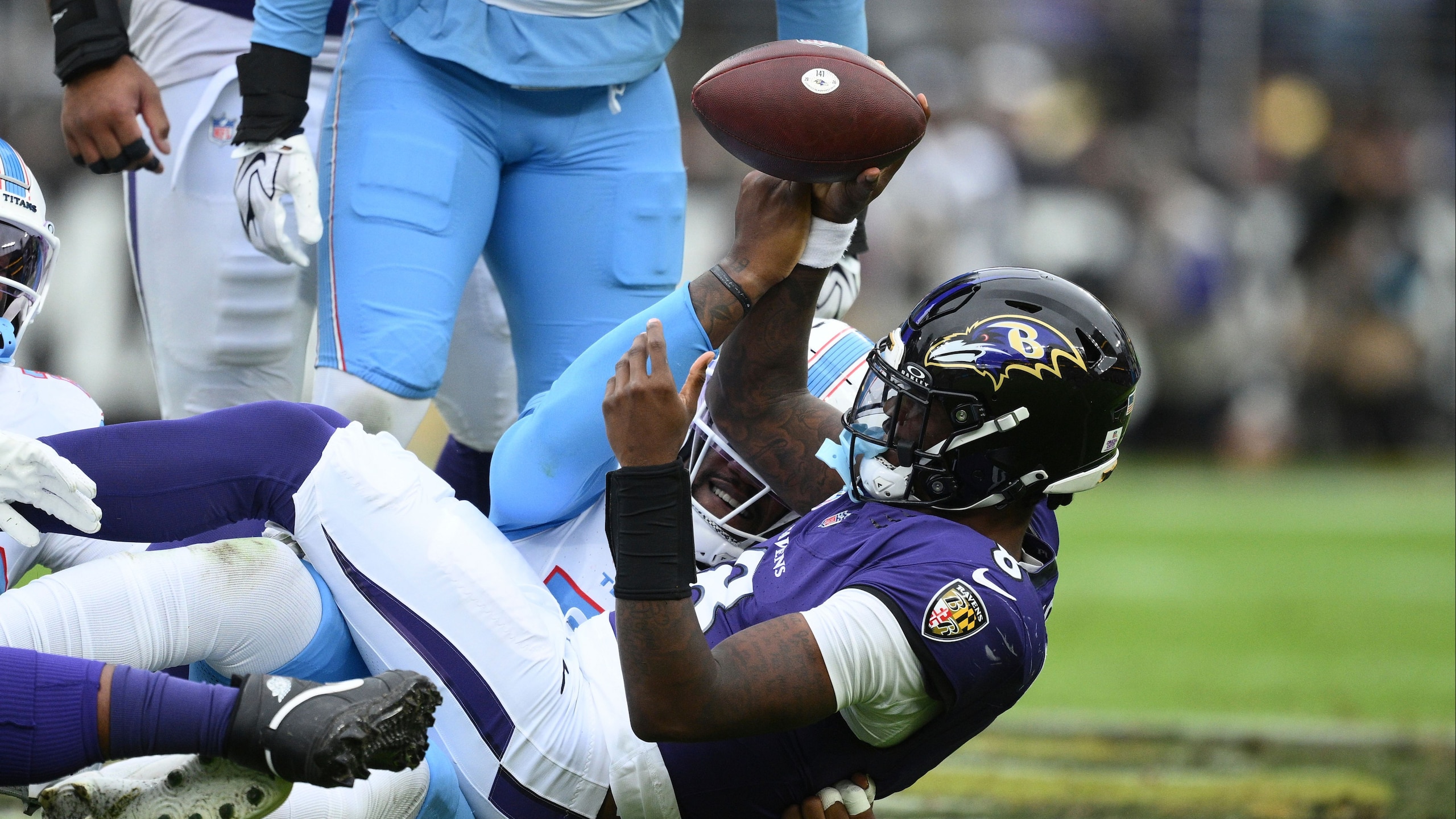
By 2003, Champ Bailey was already a four-time Pro Bowler and one of football’s best defensive players. With his Redskins contract expiring, Bailey wanted a change of scenery, but Washington didn’t want to give him up for nothing.
The Redskins arranged a trade with Denver that brought in Pro Bowl halfback Clinton Portis in exchange for Bailey and a draft pick.
Bailey, of course, is still going strong in Denver. Recent years haven’t been kind to Portis, but he did make the 2008 Pro Bowl and has gained as many as 1,500 yards in a season during his Redskins career.
21. Patriots Trade Nick Buoniconti for Peanuts
5 of 25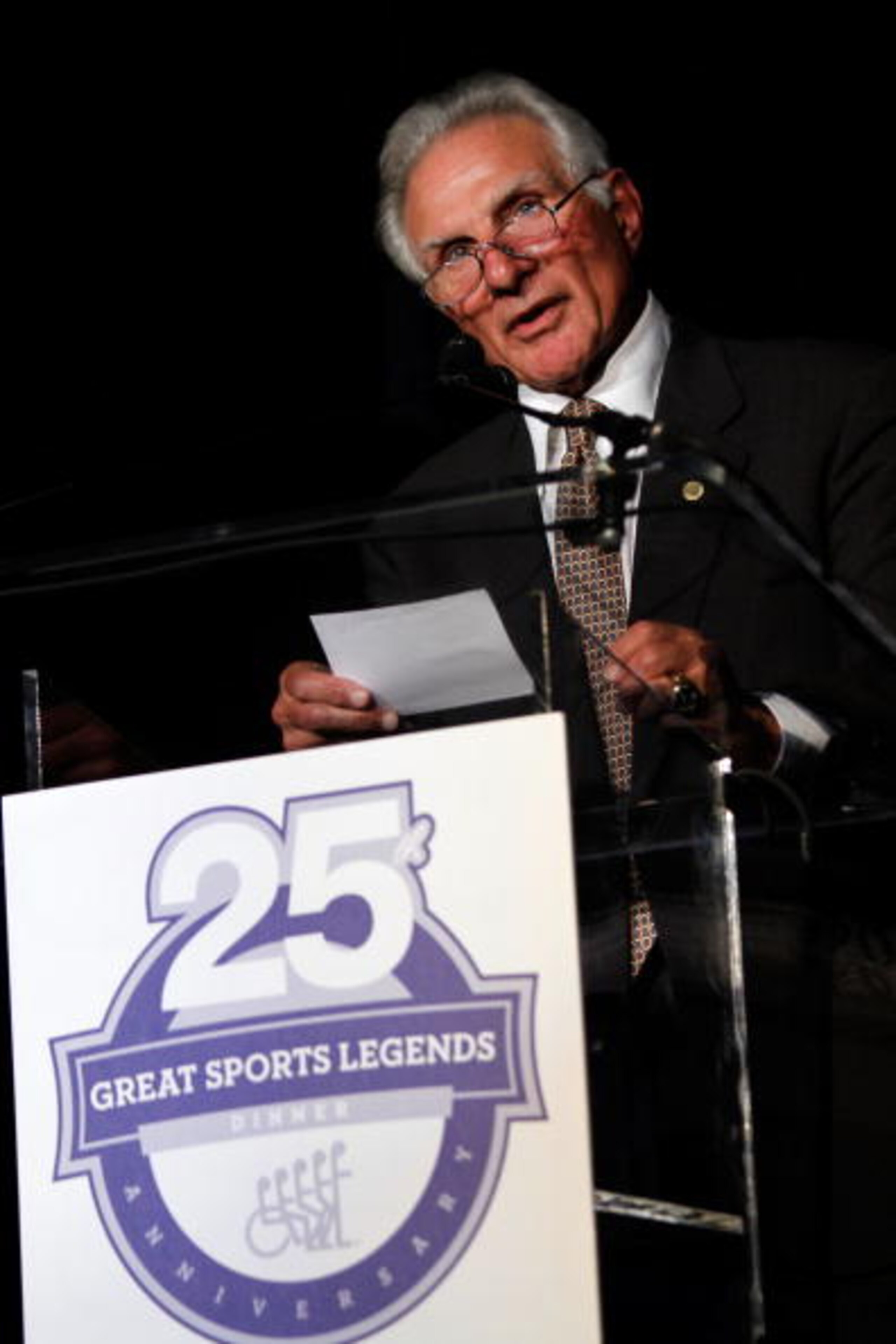
In 1968, Boston Patriots LB Nick Buoniconti was widely considered one of the AFL’s top defenders, having made five AFL All-Star teams prior to his injury-shortened 1968 season. Boston, though, had finished just 4-10 the year before.
In a trade that few fans agreed with, the Patriots sent Buoniconti to Miami for All-Star linebacker John Bramlett, backup QB Kim Hammond and a fifth-round pick.
Buoniconti would make one more All-Star game and two Pro Bowls in Miami on his way to the Hall of Fame. He was defensive captain for their back-to-back Super Bowl champions, including the undefeated 1972 season.
By 1972, all of the players the Pats acquired for Buoniconti were out of football.
20. New York Giants Get Their Manning
6 of 25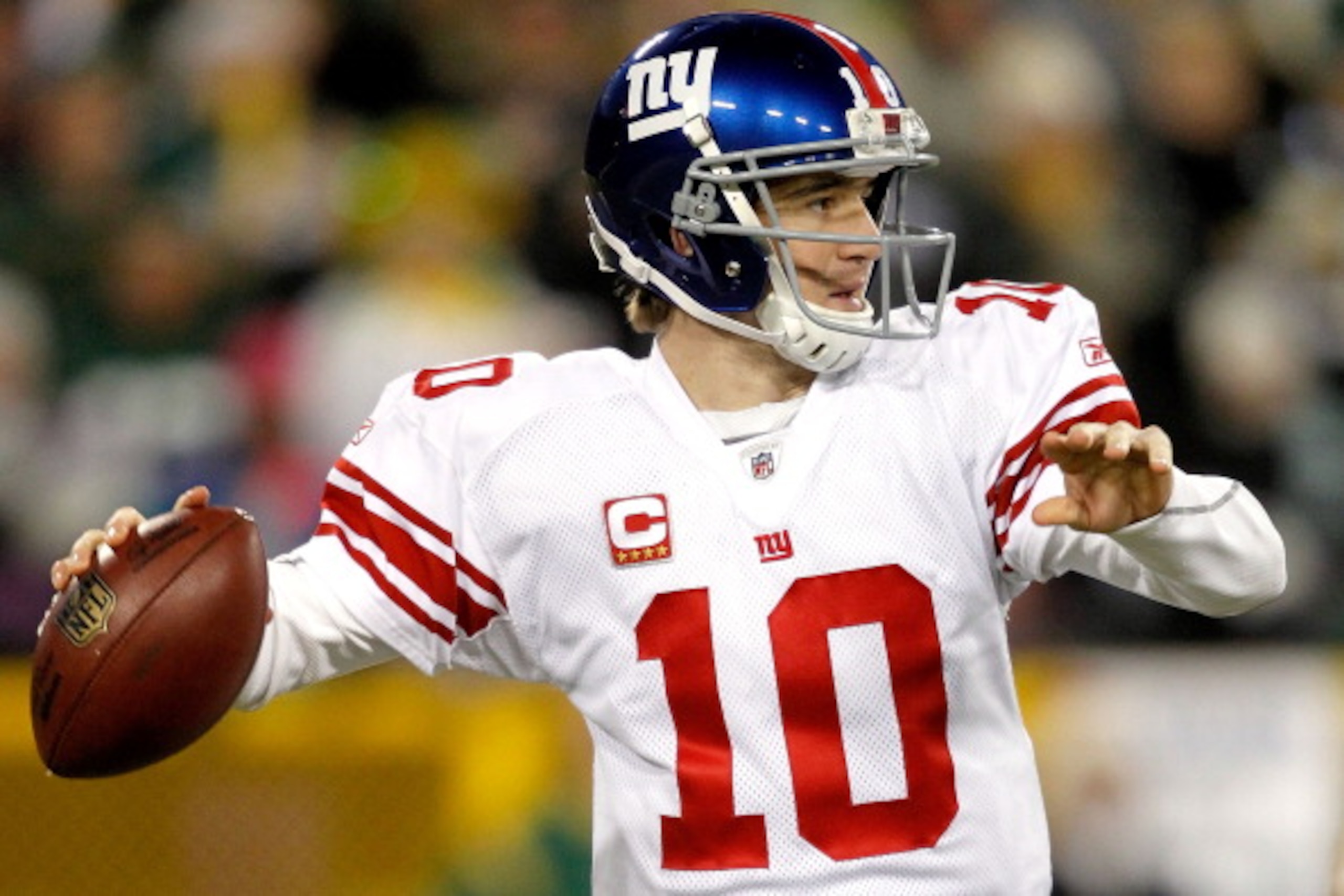
Entering the 2004 draft, many analysts rated Ole Miss’ Eli Manning as the top QB available. San Diego, holding the top pick, needed a quarterback, but Manning had already declared that he wouldn’t play for the Chargers if they selected him.
The Chargers managed to turn the situation to their advantage, arranging a trade in which they selected Manning, then sent him to the Giants in exchange for New York’s own just-drafted QB (Philip Rivers) and two draft picks.
New York got their man, and Manning has led the Giants to one Super Bowl win already. San Diego, however, may have gotten the better of the deal. In addition to landing Rivers, who has three Pro Bowl selections to Manning’s one, the Chargers used their extra picks to draft two other future Pro Bowl performers, LB Shawne Merriman and K Nate Kaeding.
19. Bobby Mitchell Becomes First African-American Member of the Redskins
7 of 25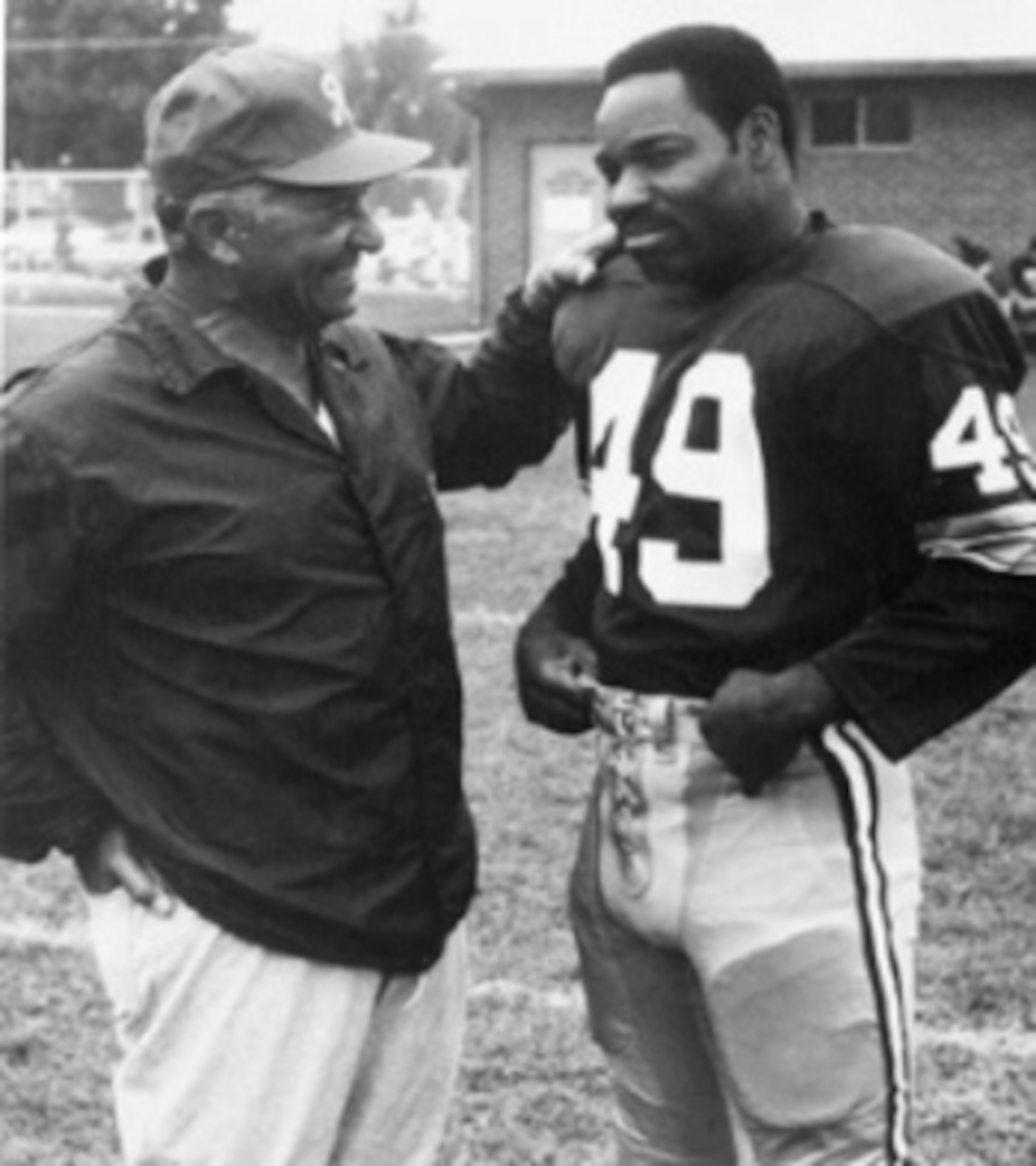
In 1961, Redskins owner George Preston Marshall faced heavy pressure from both the league and the federal government to integrate the last all-white roster in the NFL. As a condition of being allowed to continue playing at D.C. (later RFK) Stadium, Marshall agreed to select an African-American player in the 1962 draft.
Washington used the pick, No. 1 overall, to select Ernie Davis out of Syracuse, the first African-American Heisman winner. Davis, however, would not be the black star who integrated the Redskins.
Shortly after the draft, Davis was traded to the Cleveland Browns, where he would be paired with fellow Syracuse legend Jim Brown in the backfield. In exchange, Washington got Pro Bowl halfback and return man Bobby Mitchell, whose finesse running style had clashed with coach Paul Brown’s offensive game plan.
Davis, tragically, died of leukemia without ever playing an NFL game.
Mitchell not only became the first black player to star for the Redskins, but underwent one of history’s most successful position changes. He became a star wide receiver for the last seven seasons of his Hall of Fame career.
Note: Technically, the Redskins had signed draft pick Ron Hatcher before the Mitchell trade, making Hatcher the first African-American on the roster, but Mitchell is more commonly given credit because of his star status.
18. Lions Bring Down Curse of Bobby Layne
8 of 25
By 1957, Bobby Layne had already led the Lions to two NFL championships when he broke his leg late in the regular season. Replacement Tobin Rote led the Lions to a third title, and the two were platooned to start the next season.
Layne expressed his frustration at not having a definitive starting quarterback, and the Lions responded by unceremoniously trading him to Pittsburgh. The Steelers sent their young Pro Bowl QB, Earl Morrall, to Detroit along with a pair of draft choices.
Morrall served as the Lions starter for parts of the next six seasons, but Detroit struggled to win. After leaving Detroit, he would win two Super Bowls with the Colts and Dolphins.
Layne, meanwhile, made a pair of Pro Bowl appearances but similarly, failed to win consistently as he closed out his Hall of Fame career.
Apocryphally, Layne is said to have cursed the Lions to 50 years of losing for getting rid of him so abruptly. The 50th year after the trade was Detroit’s winless season in 2008.
17. Jeff George, Savior of the Colts
9 of 25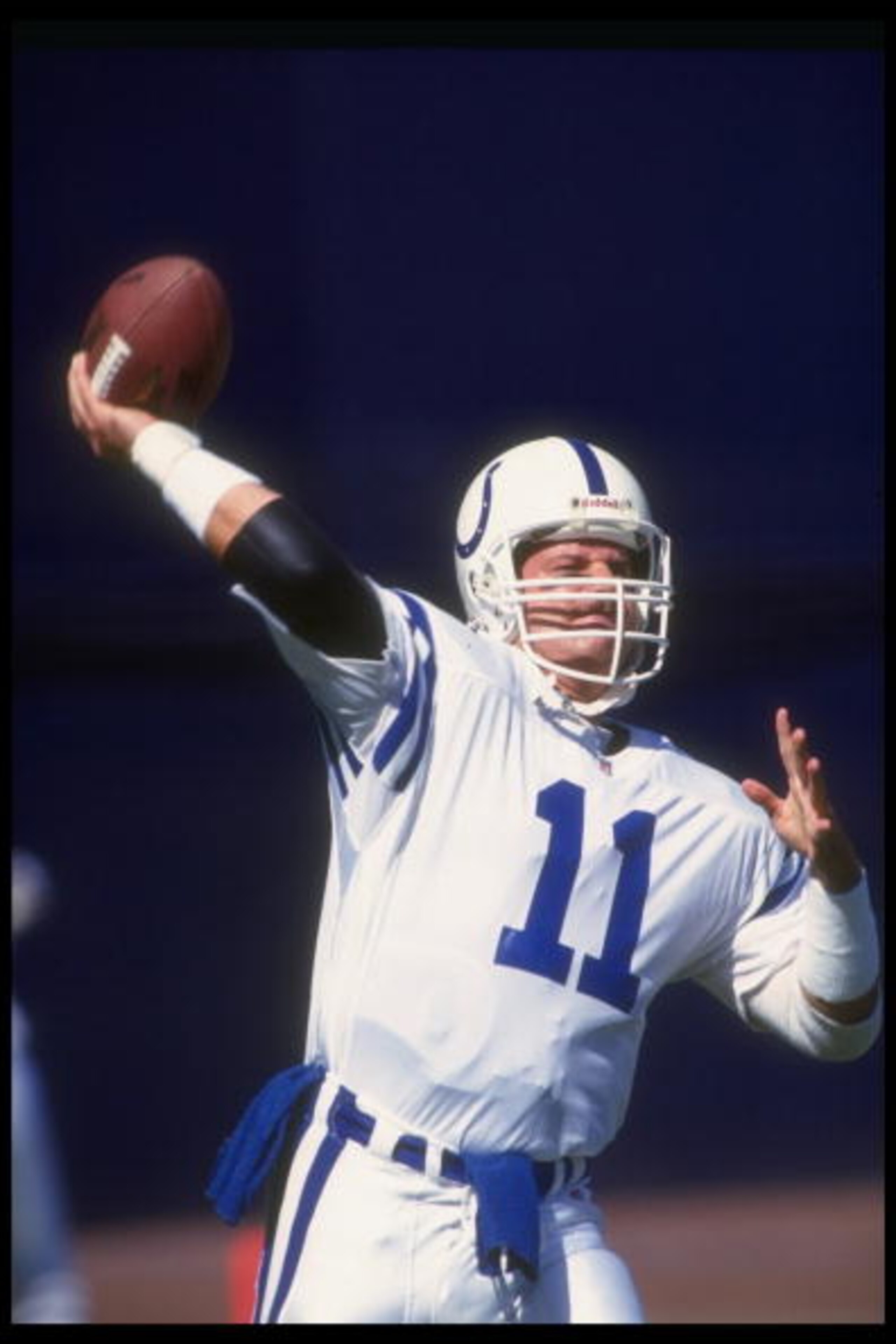
Entering the 1990 draft, Jeff George looked like a can’t-miss prospect. The rocket-armed Illinois QB impressed the Indianapolis Colts so much that they paid a steep price for the right to draft him.
In exchange for Atlanta’s No. 1 overall pick, Indy sent tackle Chris Hinton (a six-time Pro Bowler) and wideout Andre Rison (who would go on to make the next four Pro Bowls) to the Falcons, along with their own first-round pick.
George struggled so badly that Indianapolis would pick first overall again just two years later, having finished 1-15 in 1991. Hinton gave the Falcons four solid years (including one more Pro Bowl berth), and Rison became one of the leading receivers in franchise history.
16. John Elway Forces His Way out of Baltimore
10 of 25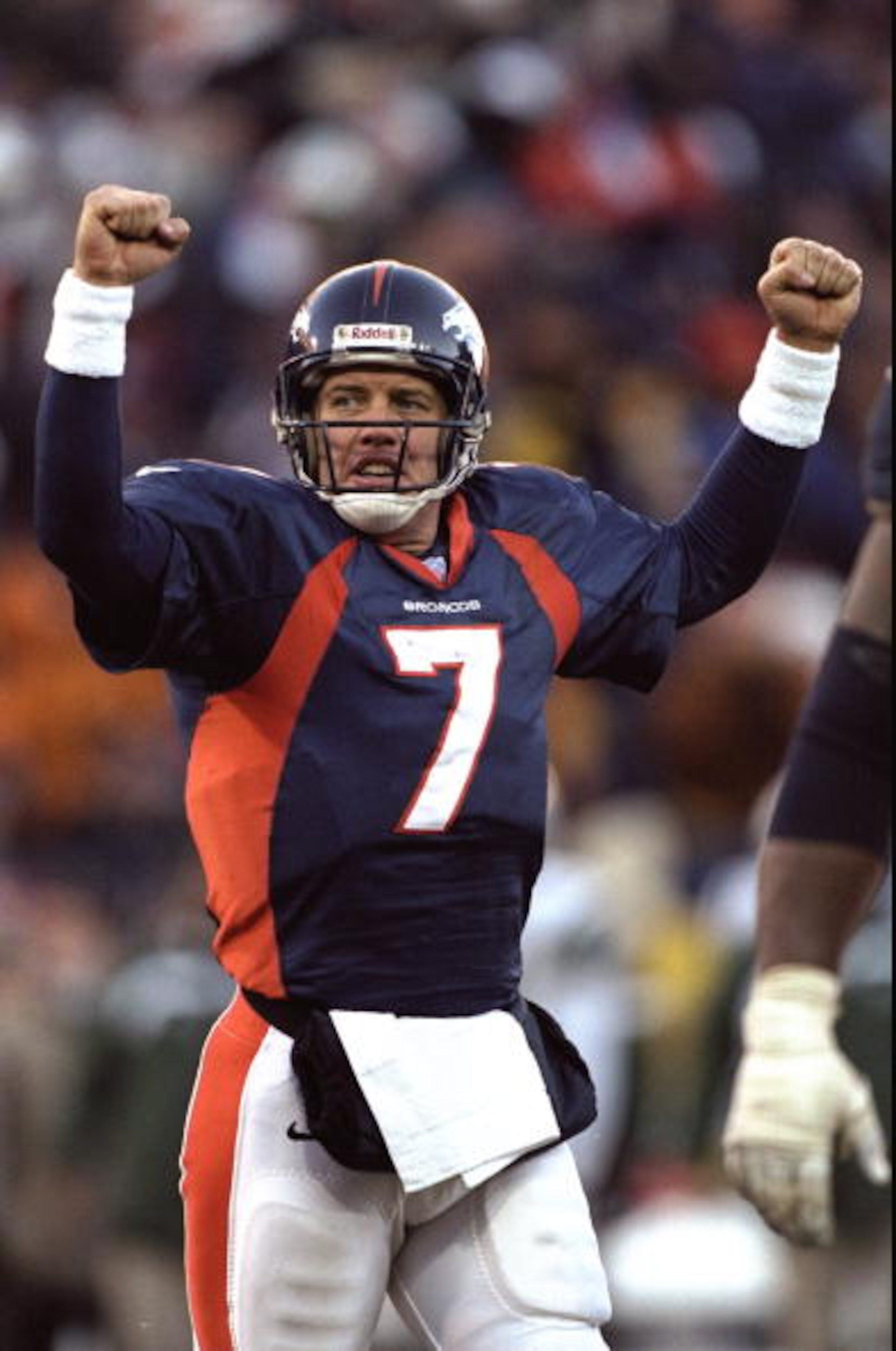
The Baltimore Colts used the first pick in the 1983 draft to solve their quarterbacking problems by drafting can’t-miss Stanford star John Elway.
There was just one small difficulty: Elway, who also had an offer of a pro baseball contract with the Yankees, had no intention of playing for a team as wretched as the Colts.
Faced with the prospect of getting nothing in return for their pick, the Colts finally traded Elway’s rights to Denver, getting backup QB Mark Herrmann, the rights to tackle Chris Hinton and a first round pick in return.
Herrmann would spend just one season with the Colts, backing up Mike Pagel. Hinton made six Pro Bowls before being traded to Atlanta.
And John Elway was John Elway, so the Broncos still came out ahead on the deal.
15. Philadelphia's Roman (Gabriel) Holiday
11 of 25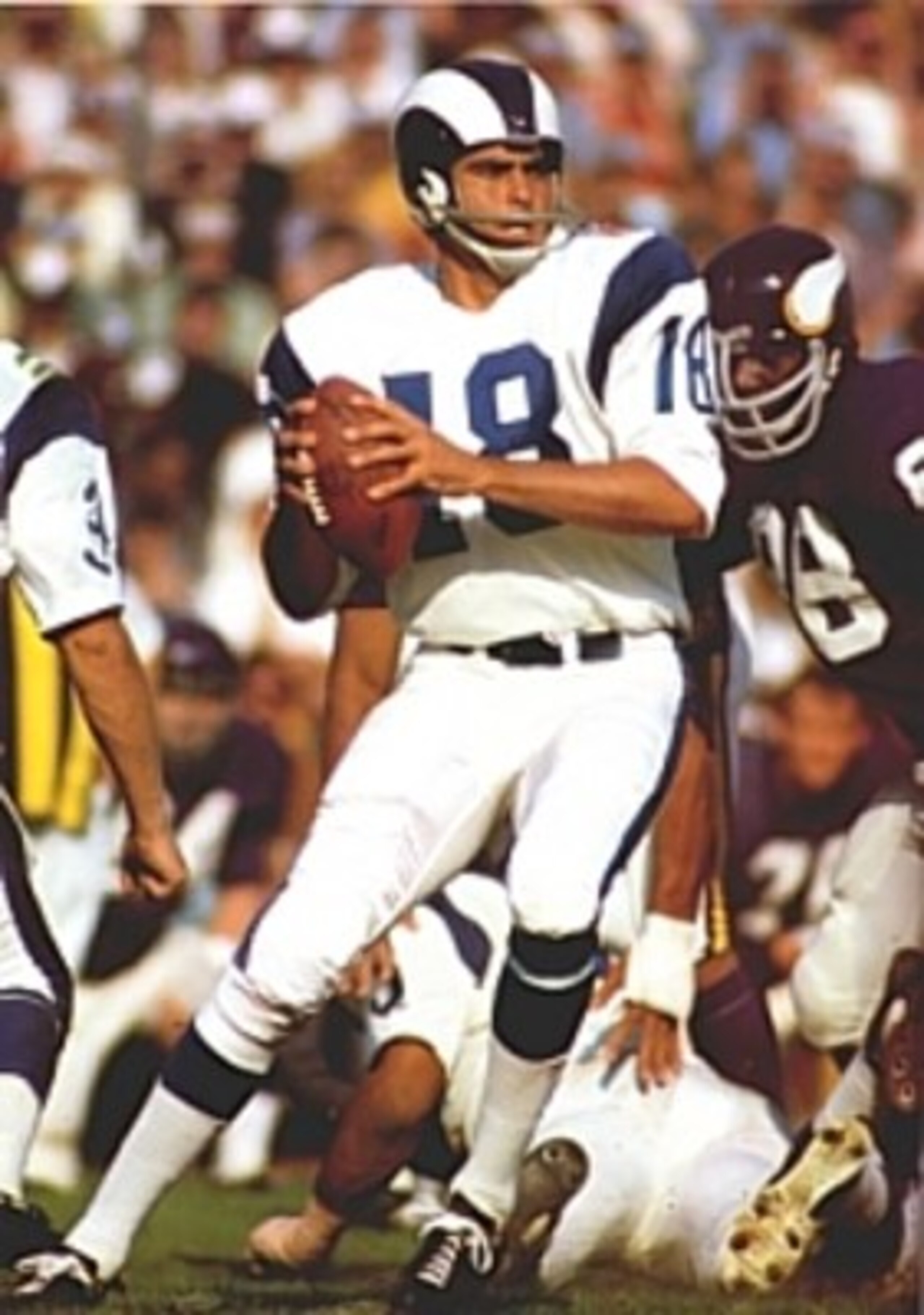
In 1973, the Rams acquired John Hadl to replace injury-plagued QB Roman Gabriel. With Gabriel now expendable, Los Angeles cashed in on his substantial trade value.
The Rams sent Gabriel to Philadelphia in exchange for Pro Bowl wideout Harold Jackson and two first round draft picks.
Gabriel won Comeback Player of the Year honors for the Eagles in 1973, though injuries relegated him to backup duty within a few years. Jackson made three Pro Bowls for the Rams in the next five years, while the two draft picks turned into productive starters in RB John Cappelletti and OG Dennis Harrah.
14. Atlanta Swaps Picks for Vick
12 of 25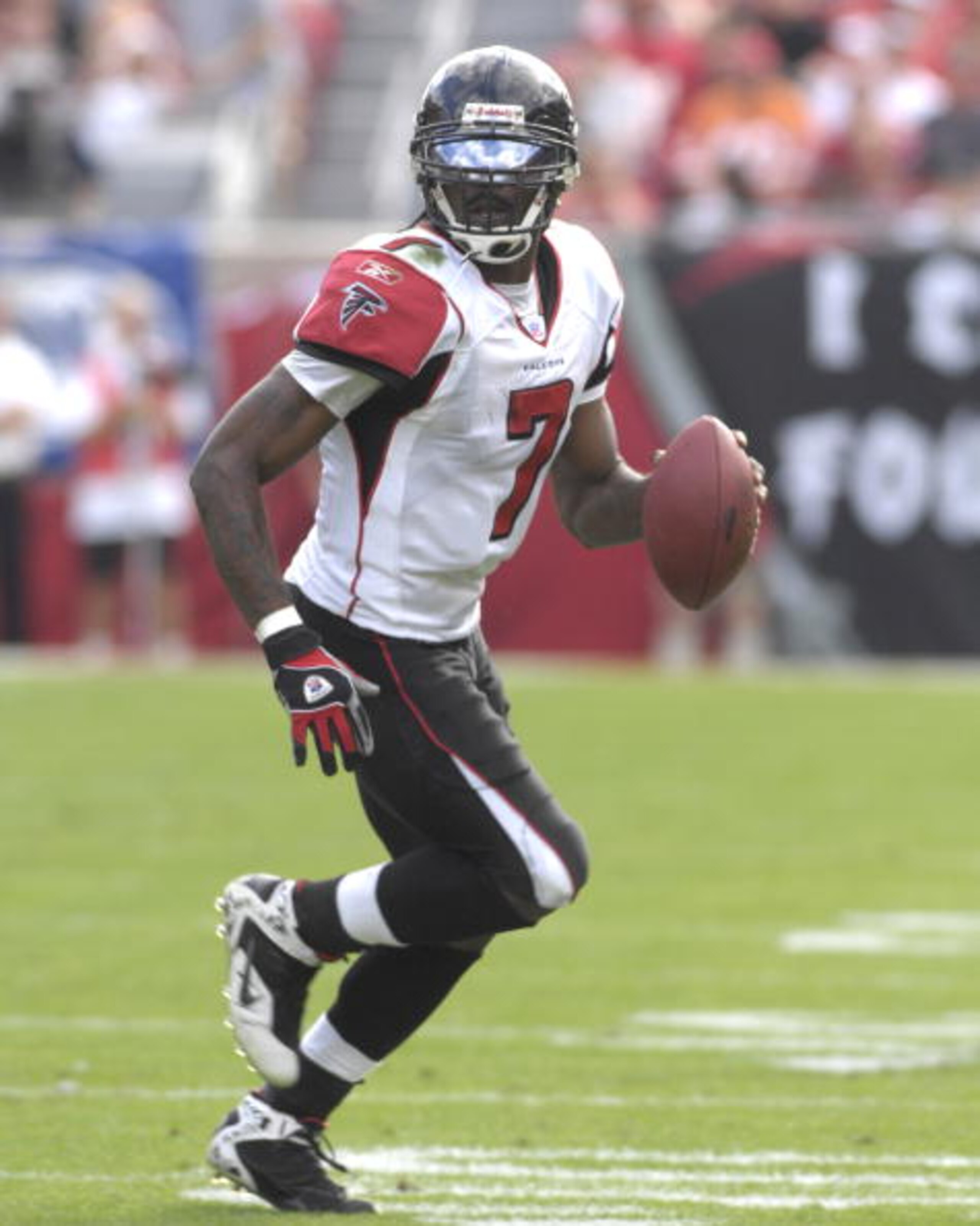
Heading into the 2001 NFL Draft, Virginia Tech QB Michael Vick was the consensus No. 1 pick. Atlanta, picking No. 5, knew they had no shot at Vick unless they traded up.
San Diego held the Falcons for ransom, getting the No. 5 pick, two other picks and WR Tim Dwight in exchange for the top selection.
Vick turned the Falcons into playoff contenders before his career was put on hold by his arrest for running a dogfighting ring. San Diego, meanwhile, used Atlanta’s No. 5 selection to take LaDainian Tomlinson, who in turn, would help make them into a playoff team.
13. Minnesota Sends Fran Tarkenton to New York
13 of 25
By 1967, Fran Tarkenton had established himself as one of pro football’s most talented, and most frustrating, QBs. The two-time Pro Bowler threw too many interceptions, but the big plays he made with his arm and his legs often made up for them.
Minnesota, tired of his inconsistency, shipped him to the Giants for a package of four draft picks, including two first-rounders.
Tarkenton would make four Pro Bowls in a row, but the Giants would struggle to win under his leadership. The Vikings draft picks included future Hall of Fame OT Ron Yary and two future Pro Bowl performers in DT Ed White and WR Bob Grim, all of whom contributed to Minnesota’s berth in Super Bowl IV.
12. Ryan Leaf Becomes All-Time Bust
14 of 25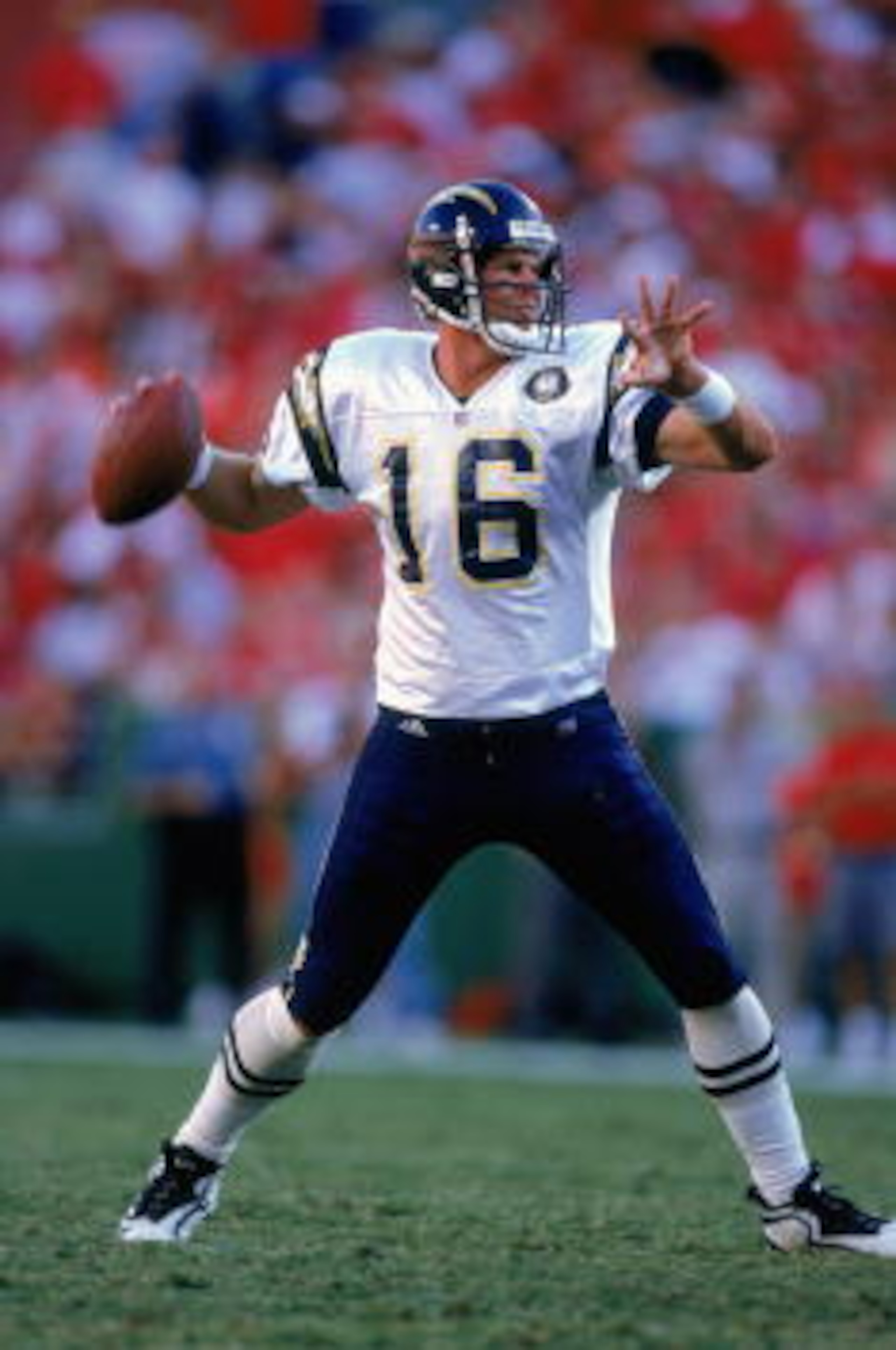
The 1997 Chargers had scored just 17 TDs, worst in the league, and the team desperately needed a quarterback. The 1998 draft had two elite QB prospects, Peyton Manning and Ryan Leaf, but San Diego was picking third.
In order to ensure their shot at one of the top QBs, San Diego traded up for Arizona’s No. 2 overall pick. In exchange for moving down one spot in the first round, the Cardinals picked up a second round pick (No. 33 overall), a first-rounder the next year, LB Patrick Sapp and veteran return specialist Eric Metcalf.
As it turned out, both teams whiffed on their first round picks, with Leaf becoming one of the draft’s all-time busts and Arizona taking mediocre DE Andre Wadsworth. However, Arizona converted the 1999 first-rounder into Pro Bowl wideout David Boston.
11. Rams Unload John Hadl
15 of 25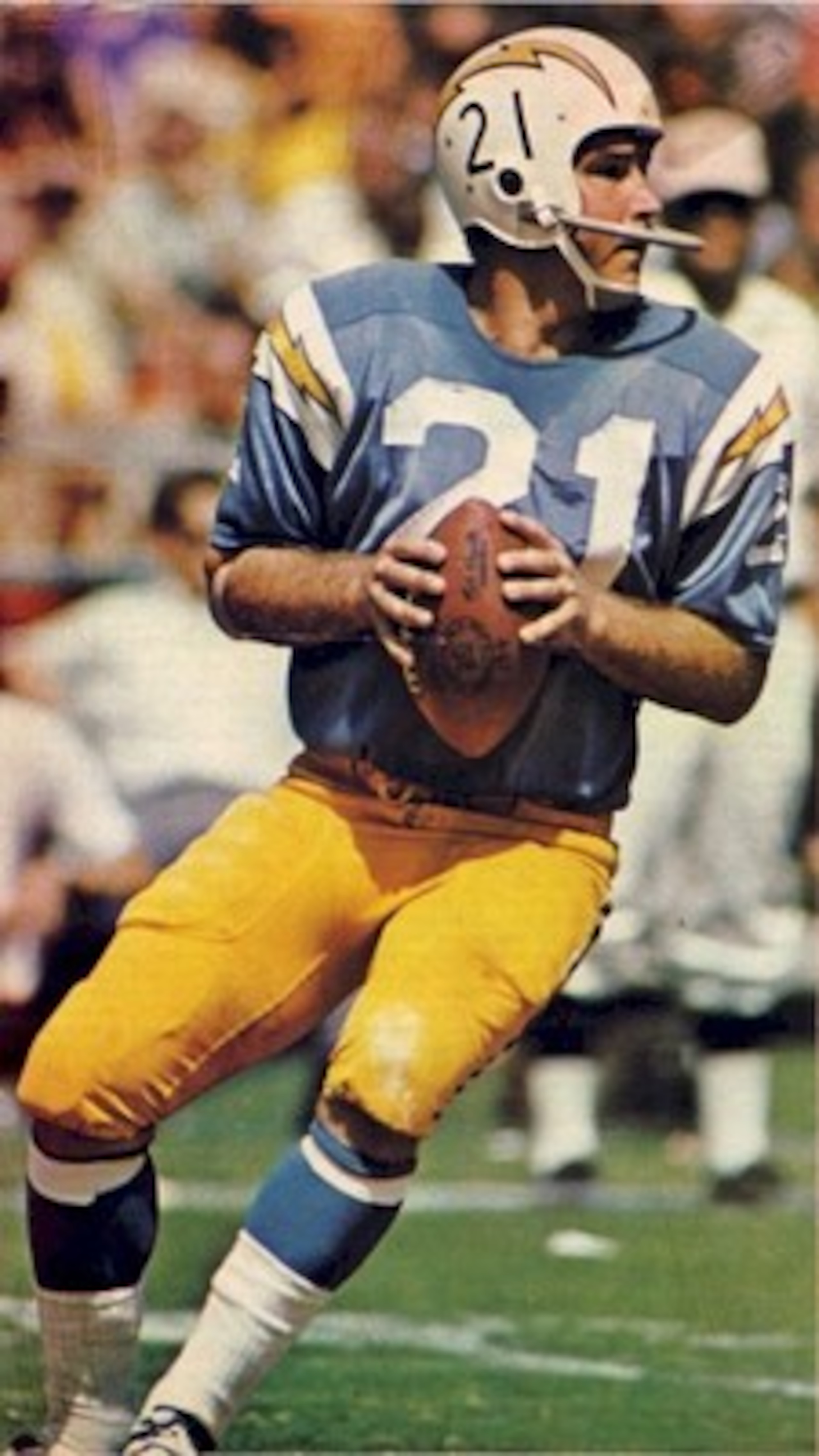
In 1974, Green Bay had started the season 3-3 but was looking for a replacement for the ineffective quarterbacking tandem of Jerry Tagge and Jack Concannon. The Rams, having benched the recently acquired John Hadl, seemed to have the solution.
The Pack traded five draft picks, including two first-rounders, to L.A. in exchange for Hadl.
Hadl would throw nine TDs and 29 INTs as a Packer before being released. The Rams didn’t fare much better, with undistinguished DT Mike Fanning being the best player acquired with their host of extra picks.
10. Chargers Ship John Jefferson out of Town
16 of 25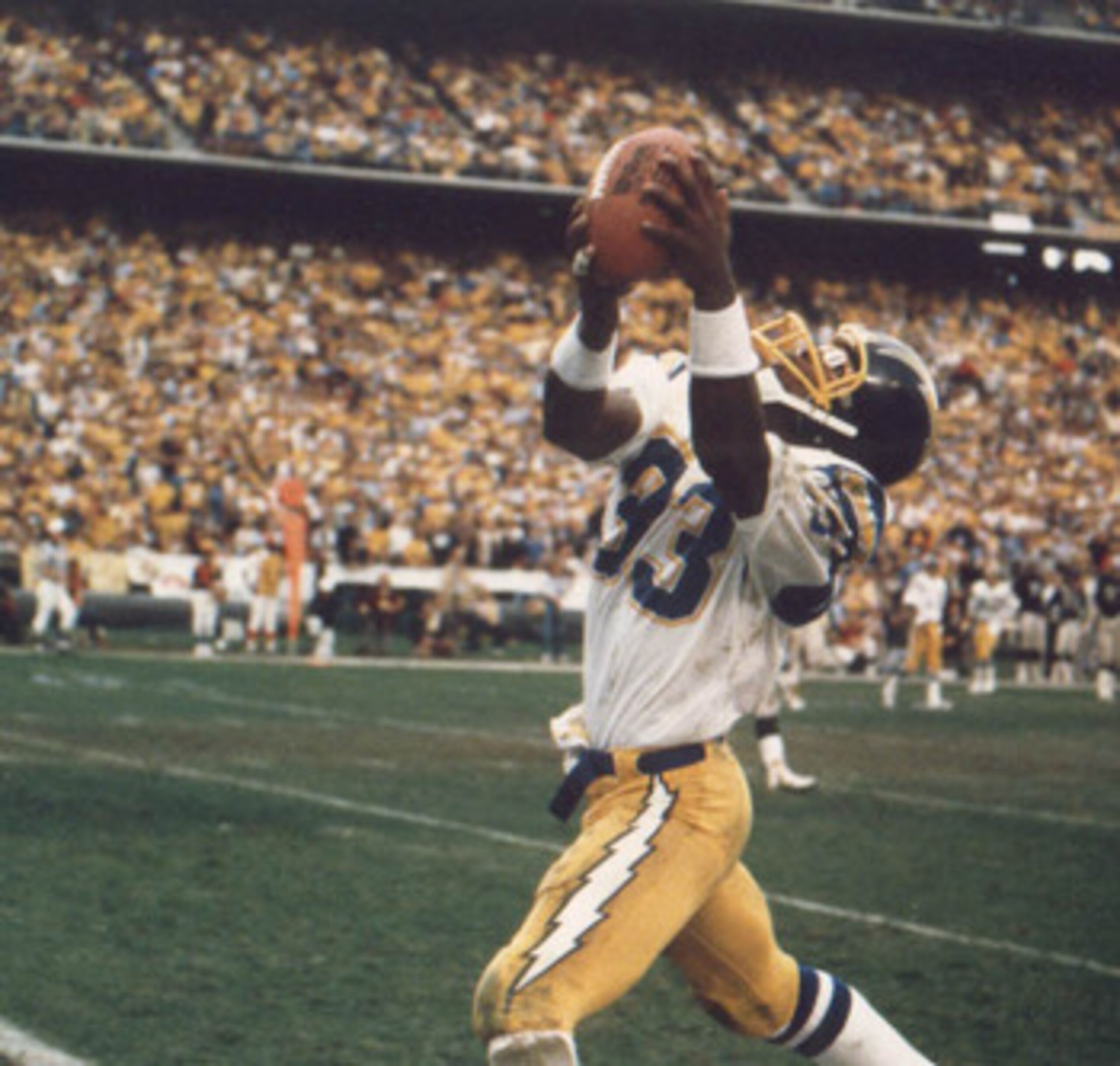
John Jefferson, the Chargers’ first-round pick in 1978, started his career with three straight Pro Bowl seasons. However, when he tried to renegotiate his contract after leading the NFL in receiving yards and TDs, San Diego owner Gene Klein would have none of it.
Klein shipped his star wideout out of town three games into the 1981 season, sending him to Green Bay for wideout Aundra Thompson and four draft picks (including two first-rounders). Thompson, in turn, was traded to New Orleans for WR Wes Chandler after just one game with the Chargers.
Without Dan Fouts to throw him the ball, Jefferson never again broke 1,000 yards receiving. Chandler gave San Diego six strong seasons, but rarely matched the numbers Jefferson had put up in a Charger uniform.
9. New York Sends Fran Tarkenton Back to Minnesota
17 of 25
In 1972, after four productive but playoff-less seasons with the Giants, Fran Tarkenton requested a trade to a contender. The team that had drafted him, the Minnesota Vikings, had finished 11-3 the previous year despite having three different starting quarterbacks.
Minnesota was only too happy to reacquire Tarkenton, sending the Giants two former Pro Bowlers in backup QB Norm Snead and wideout Bob Grim*, along with second-year RB Vince Clements and two draft picks (one a first-rounder).
Tarkenton would lead the Vikings to three Super Bowls in the remainder of his Hall-of-Fame career. Snead made one last Pro Bowl with the Giants before being relegated to the bench, and Grim was a starter of no particular distinction for three seasons.
*Yes, this is the same Bob Grim who was drafted with one of the picks the Vikings had gotten from the Giants in the first Fran Tarkenton trade
8. Houston Gives Away Houston
18 of 25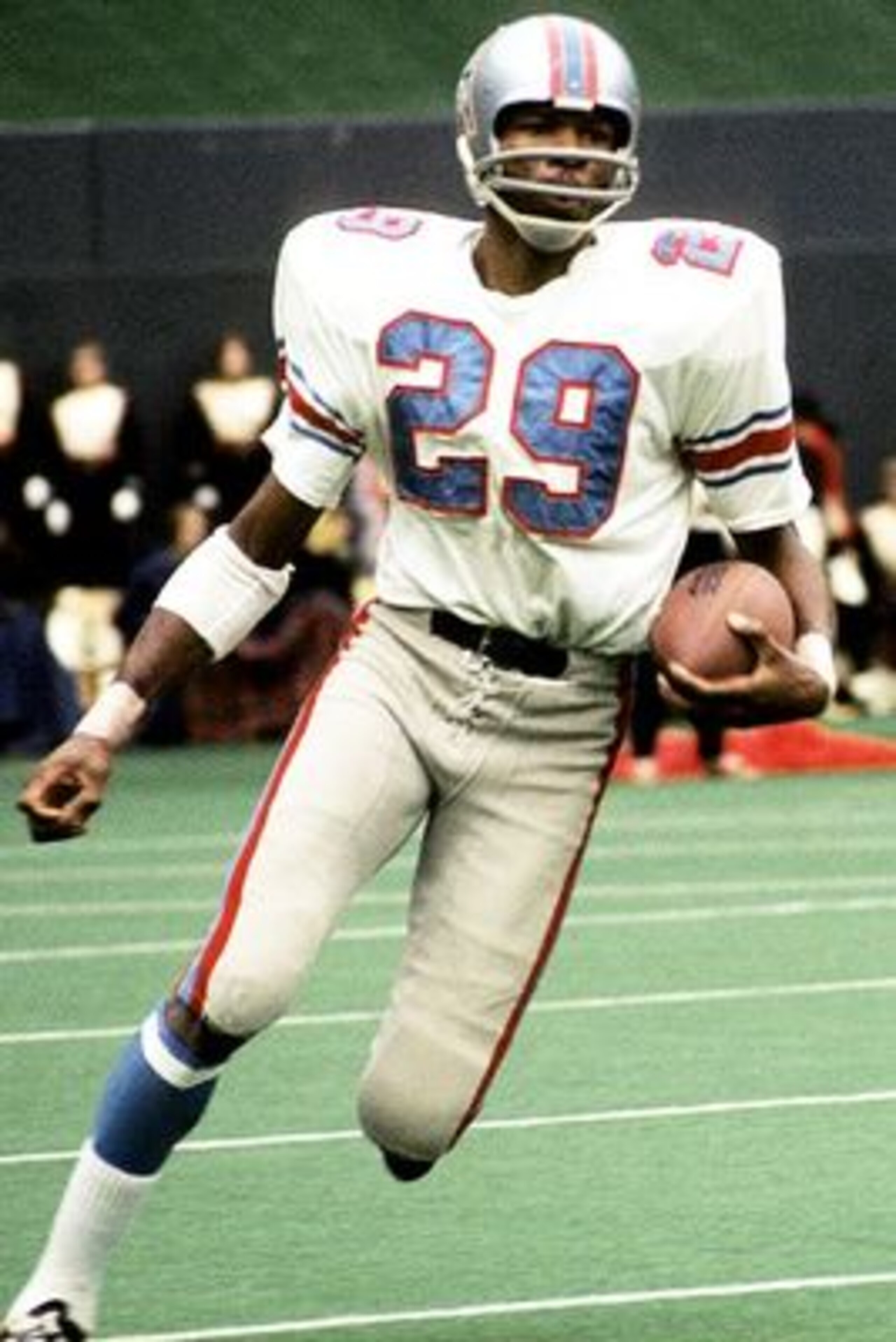
In 1972, the Oilers had suffered through a 1-13 season. Desperate to improve their fortunes, they looked for a buyer for one of their few marketable commodities, five-time Pro Bowl* safety Ken Houston.
The Redskins, defending NFC champions at the time, jumped at the chance to acquire Houston and sent five players to the Oilers in exchange: OT Jim Snowden, TE Mack Alston, WR Clifton McNeil, DE Mike Fanucci and S Jeff Severson.
Amazingly, the Oilers still hadn’t gotten enough in return. Houston, the player, made seven more Pro Bowls as he finished his Hall-of-Fame career in Washington.
Houston, the team, got a combined total of 16 games from Snowden, McNeil and Fanucci. Severson played well enough, but was gone after two years, and Alston proved to be a solid but unspectacular tight end for the next four seasons.
*Two of these were AFL All-Star Game appearances
7. Saints Trade Entire Draft for Ricky Williams
19 of 25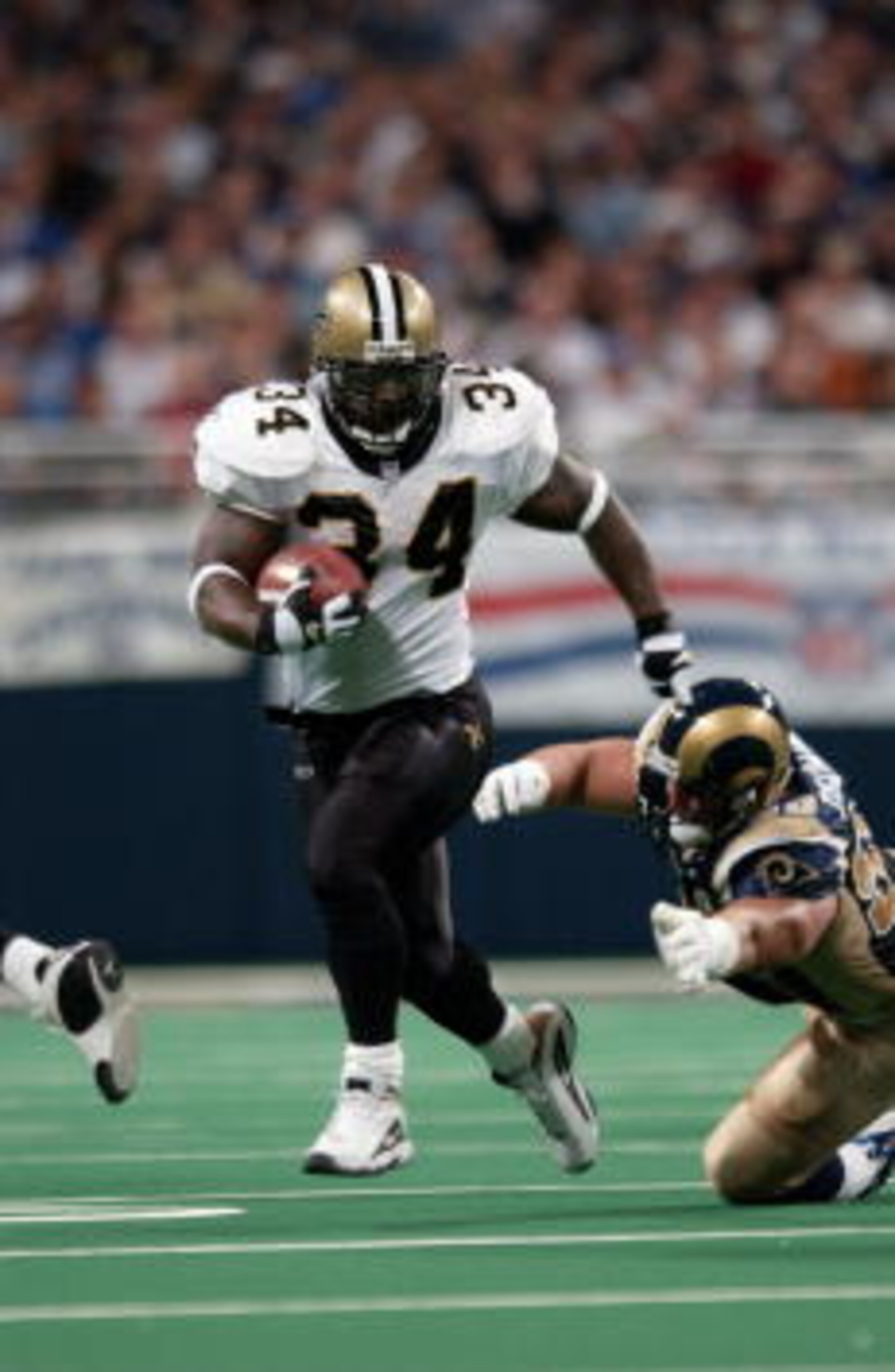
That the New Orleans Saints wanted to acquire star RB Ricky Williams in the 1999 NFL Draft was no surprise. The surprise was that they wanted him to be their 1999 draft.
New Orleans traded all six of their selections in the draft to the Redskins, who held the No. 5 overall pick that became Williams.
Washington traded away many of the picks acquired in the Williams deal, but did get Pro Bowl LB LaVar Arrington with one of them. Williams, meanwhile, played three good but not great seasons in New Orleans before being traded to the Dolphins (for four more draft picks) and having his breakout season there in 2002.
6. Eric Dickerson Escapes from L.A.
20 of 25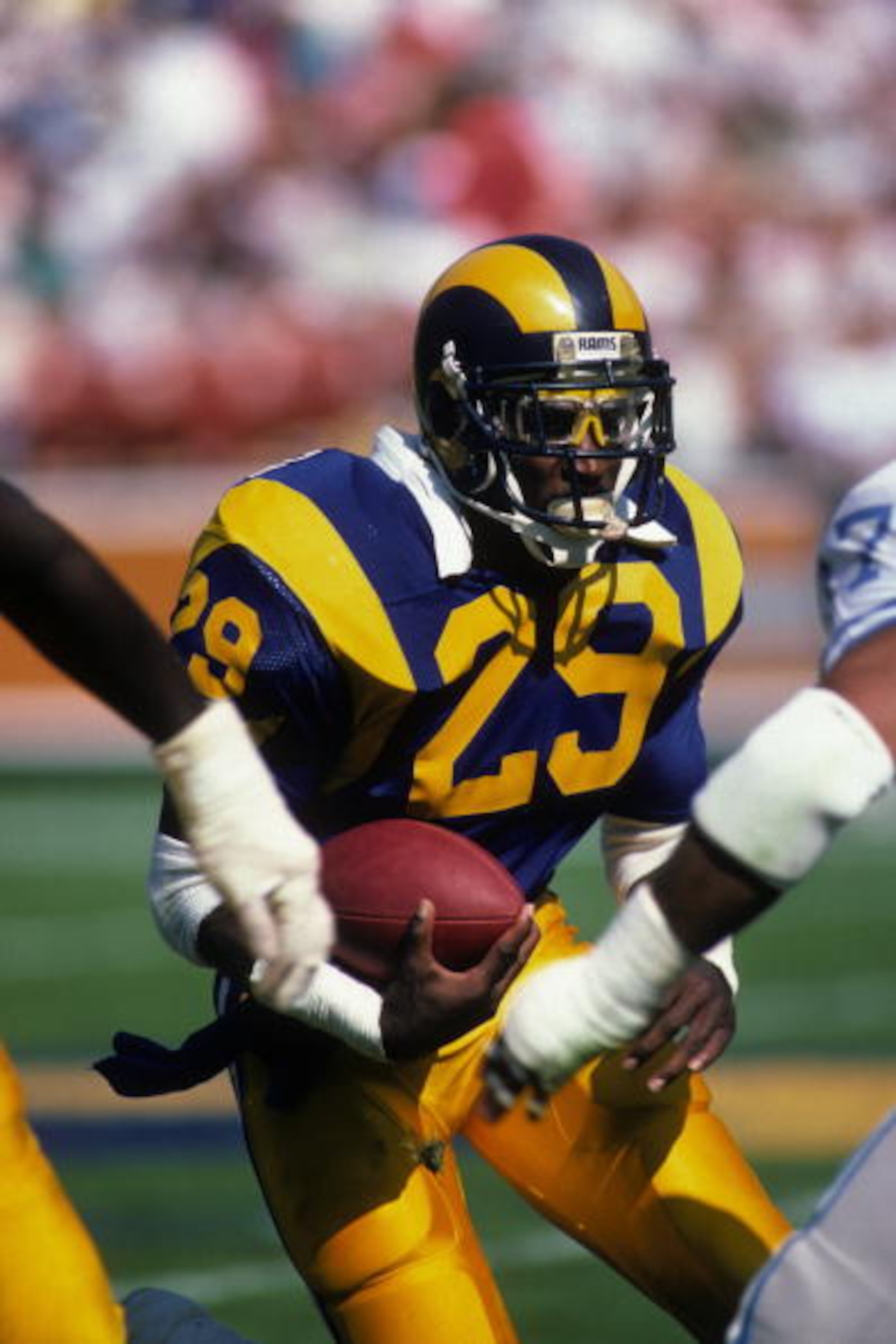
In 1987, the Indianapolis Colts selected Alabama linebacker Cornelius Bennett with the No. 2 overall pick, but Bennett wanted more money than the Colts were willing to pay.
When negotiations stalled, the Colts set up a three-way deal with the Rams and Bills. Indianapolis sent Bennett to Buffalo, the Rams sent disgruntled superstar RB Eric Dickerson to the Colts and L.A. received Bills Pro Bowl RB Greg Bell and six draft picks, three of them first-rounders.
Bell would eventually be joined by two more solid runners chosen with those draft picks, Gaston Green and Cleveland Gary. None of them came close to Dickerson’s success with the Rams.
Dickerson himself never matched his record-setting 1984 season, but he did make three straight Pro Bowls and made the Colts a playoff team on his way to the Hall of Fame.
Bennett went on to become one of the stars of the Bills defense for the next decade, helping propel them to four Super Bowls.
5. Rams Trade Everyone They Can Find for Ollie Matson
21 of 25
In 1959, Ollie Matson of the then-Chicago Cardinals was one of the NFL’s top running backs. He’d made five straight Pro Bowls, but the Cardinals weren’t winning with him.
Looking to add young talent, the Cardinals traded Matson to the Rams for seven players, several of whom had just been picked in the 1959 draft.
The Rams sent RB Don Brown, OT Frank Fuller, DT Art Hauser, FB Larry Hickman, DE Glenn Holtzman, OT Ken Panfil and LB John Tracey to Chicago, along with a second-round pick.
Panfil would make the Pro Bowl the next season, but most of the Cards’ other acquisitions came to nothing. (Tracey would later become a star with the AFL’s Buffalo Bills).
Matson never made another Pro Bowl, lasting four seasons with the Rams before being sent to Detroit, but did make the Hall of Fame on the strength of his Cardinals’ days.
4. Rams Trade an Entire Team for Les Richter
22 of 25
Coming out of Cal in 1952, LB/OG Les Richter looked like a surefire star. The L.A. Rams used the first pick in the draft on QB Bill Wade, but coveted Richter as well.
After the draft, the Rams acquired Richter from the Dallas Texans (who would move to Baltimore and become the Colts the next season) for a record 11 players.
The full list of Rams heading to Dallas: RB Dave Anderson, RB Billy Baggett, OT Jack Halliday, RB Dick Hoerner, CB Tom Keane, FB Dick McKissack, C Aubrey Phillips, C Joe Reid, CB George Sims, LB Vic Vasicek and WR Richard Wilkins.
In those days of two-way play, the Rams had given up the equivalent of a full team for one player.
The investment paid off: When Richter returned from the Army in 1954, he played his entire Hall of Fame career with the Rams.
The Texans, meanwhile, finished a dismal 1-11. Of all the players they acquired, only Keane would make a Pro Bowl (with the Colts in 1953).
3. Redskins Become the Over-the-Hill Gang
23 of 25
When George Allen took over as Redskins head coach in 1971, he wanted to build the team by adding veterans, not through the draft. Accordingly, he spent draft picks like water to get the players he wanted.
Allen traded seven draft picks, including their 1971 first-rounder, to the L.A. Rams in exchange for veteran LBs Jack Pardee, Myron Pottios and Maxie Baughan, plus DT Diron Talbert, OG John Wilbur and special teamer Jeff Jordan.
The Rams also got LB Marlin McKeever in the deal. Washington also got another draft pick, but immediately flipped it to the Packers for WR Boyd Dowler.
The best of the Rams’ ensuing draft selections was long-time starting safety Dave Elmendorf. The Redskins, meanwhile, led by the so-called Over-the-Hill Gang acquired from L.A., won the NFC championship two years later.
2. Colts and Browns Exchange (Future) Championship Teams
24 of 25
Shortly after the 1953 draft, the Colts (just re-installed in Baltimore after detours through New York and Dallas) decided to shake up a roster that had gone 1-11 the year before. Cleveland coach Paul Brown saw an opportunity to improve a Browns team that had just lost in the championship game.
The teams pulled off the biggest players-only trade in NFL history, with Cleveland getting LB Tom Catlin, DT Don Colo, OG Herschell Forester, OT Mike McCormack, and CB John Petitbon.
In exchange, the Colts acquired QB Harry Agganis, OT Dick Batten, WR Gern Nagler, CB Bert Rechichar, LB Ed Sharkey, OT Stu Sheets, CB Don Shula*, OG Art Spinney, CB Carl Taseff and OG Elmer Willhoite.
Both teams would win back-to-back championships with their new acquisitions, the Browns in 1954-55 and the Colts in 1958-59. Spinney, Rechichar and Colo all became Pro Bowlers, and McCormack is in the Hall of Fame.
*Yes, that one.
1. Cowboys Turn Herschel Walker into Three Super Bowl Titles
25 of 25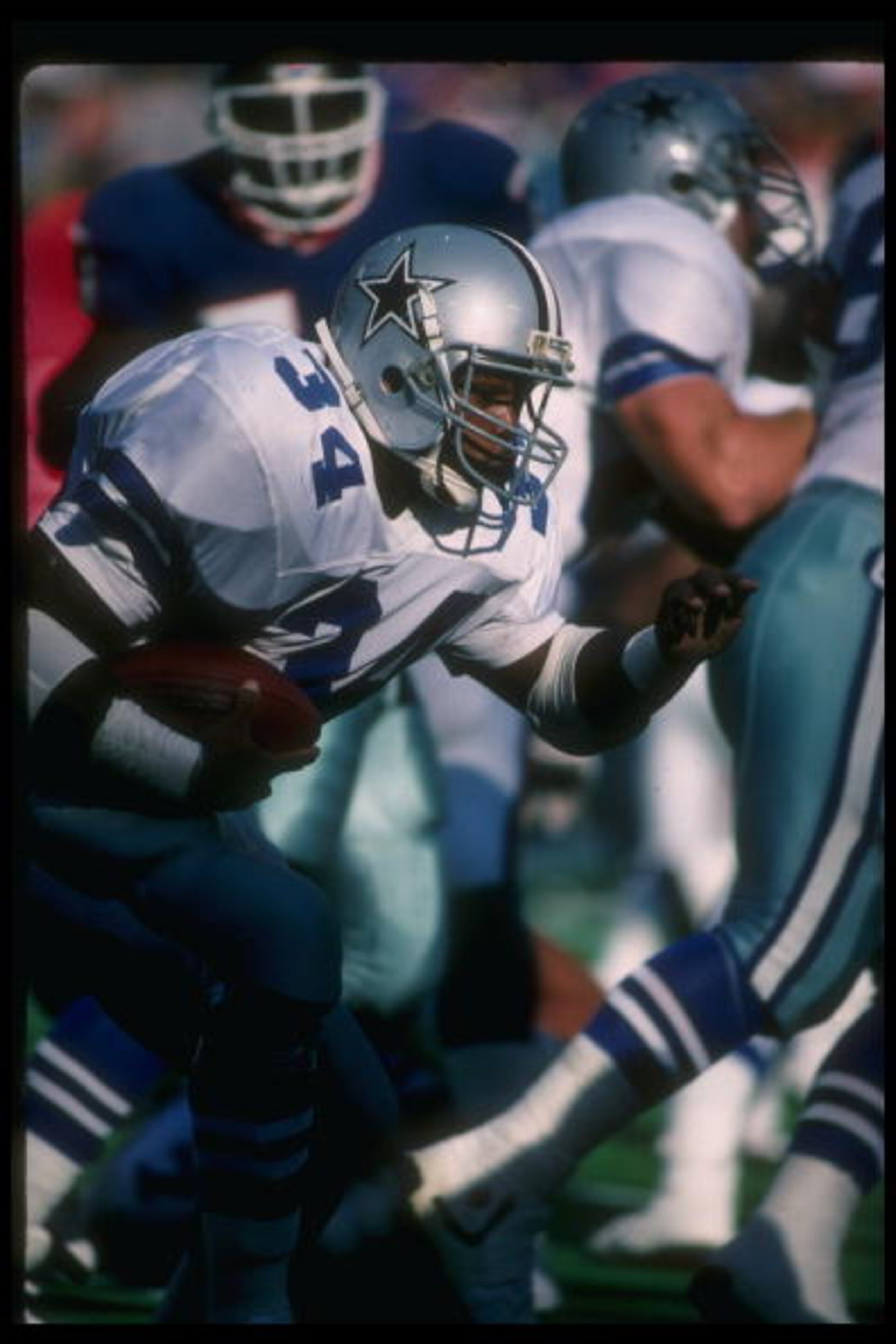
You knew it was coming.
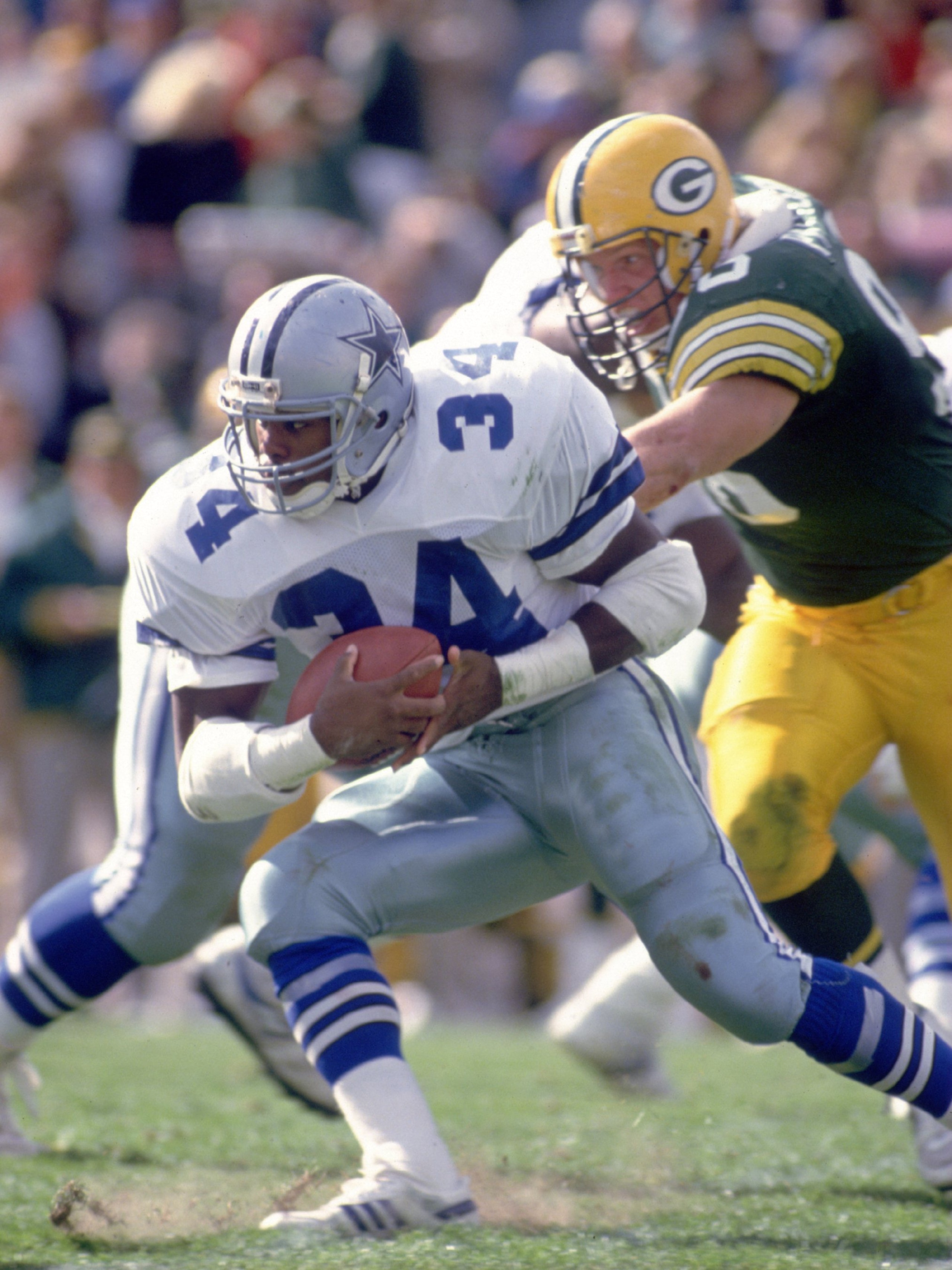
The biggest, most famous trade in NFL history was the one that built the Cowboys’ dynasty of the 1990s. From a losing team with a Pro Bowl running back in Herschel Walker, the Cowboys became three-time Super Bowl champs.
In 1989, the Vikings thought Walker was the last piece they needed to reach the Super Bowl. Accordingly, they were willing to pay whatever Dallas wanted to get him.
The Vikings got Walker and three draft picks. The Cowboys got five players—CB Issiac Holt, LB David Howard, LB Jesse Solomon, DE Alex Stewart and RB Darrin Nelson—and eight draft picks, three of them first-rounders.
Nelson refused to report to Dallas, so he was traded to San Diego for yet another pick, which went back to the Vikings.
The Cowboys used the Walker picks to draft Alvin Harper, Dixon Edwards and Darren Woodson, all key starters on their Super Bowl teams. Another pick was part of a trade up in the 1990 draft to pick Emmitt Smith.
Minnesota made the playoffs with Walker in 1989, but got slaughtered by Joe Montana’s 49ers. After two more seasons of mediocre play from Walker, who never fit Minnesota’s offensive schemes, he was released.
The best thing to come out of the trade for Minnesota was that one of the draft picks they acquired turned out to be long-time WR Jake Reed.
.jpg?w=2560 "Dolphins Bills Football")