
Notre Dame Football: 10 Things Brian Kelly Learned in His First Season
It was a roller coaster first season for new Irish head coach Brian Kelly. After a rough 4-5 start, including a pair of embarrassing losses to Navy and Tulsa, his squad regrouped and ended the campaign on a four-game winning streak that sent the Irish into the offseason with a bounce in their step.
Now that year one is in the books, it's time to reflect on what the head honcho picked up along the way. Today, we examine 10 things Brian Kelly learned on the job in his first year, both on the field and off it.
No. 10: The Spotlight Burns Brightest Under the Golden Dome
1 of 10
When things are going well, there’s no better place to be than Notre Dame. Before Kelly ever ran out of the tunnel for the first time, he was the darling of a national fanbase hell-bent on finding every possible correlation to previous program saviors Ara Parseghian and Lou Holtz.
When things are going poorly, there is no place where the stress bears down on you like at Notre Dame. Every move is dissected on national television by millions of people with verbal scalpels. It doesn’t matter whether it’s a play call, a reaction on the sideline, or a choice of outfit, it will be critiqued ad nauseum.
Every coach knows that being the head football coach at the University of Notre Dame is incredibly pressure packed, but they can’t fully understand it until experiencing it themselves. In one short year, Kelly experienced so many dramatic highs and lows that he has to have a good feel for what living in a pressure cooker is like.
Understanding how intense the stress and scrutiny can be is the first step in trying to effectively manage it. While most coaches get at least a year grace period, Kelly’s honeymoon was arguably over by the end of September and most definitely over before Halloween.
You could see how the season wore on him as he answered questions at press conferences after stumbling to 4-5 on the year. You’d think winning dissolves the pressure, but that’s not true—a new pressure emerges that’s just as intense. All he needs to do is ask Lou Holtz how things were after winning his national title in 1988. He’d probably say far more stressful than prior to it.
Perhaps one day Kelly will get to the point where he has to worry about the type of stress that accompanies national titles, but in the meantime, the great unknown is not longer there and that’s something that has to be a relief.
No. 9: Relentless Effort on the Recruiting Trail Nets Results
2 of 10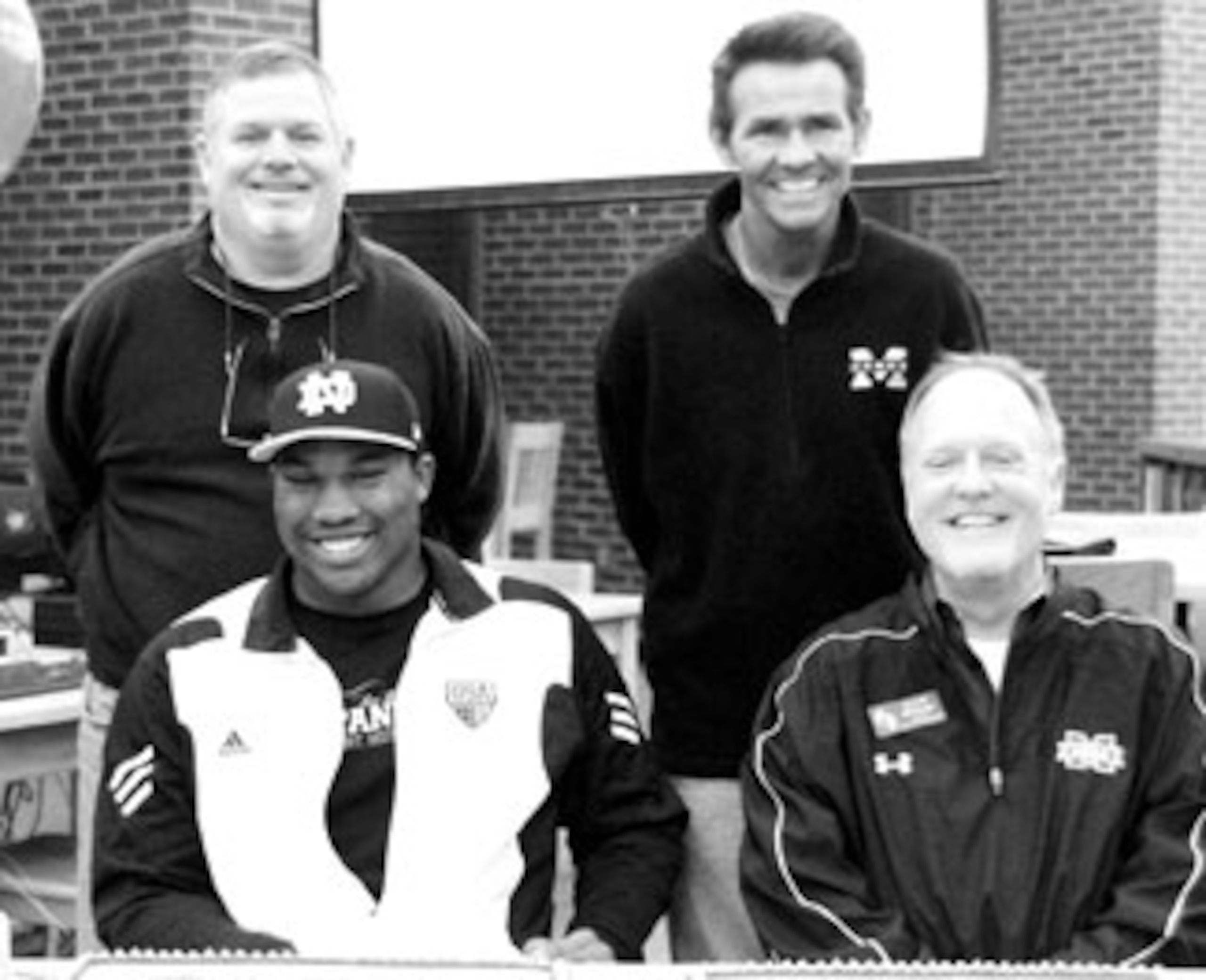
Charlie Weis was a fantastic recruiter who reestablished Notre Dame as a major player on the national scene for elite high school prospects. He reeled in high-profile recruits from Southern Cal’s backyard (Jimmy Clausen and Manti Te’o), Florida’s backyard (Armando Allen Jr. and Sam Young) and Ohio State’s as well (Kyle Rudolph). He landed consensus top 10 classes almost every season, reaching as high as number 1 in 2008.
But for some reason, Weis always suffered a few defections in the weeks, days and hours leading up to when it was finally time for players to put pen to paper. When a prospect decommitted from Weis’ class, Charlie’s philosophy was “if you don’t want us, we don’t want you” and he looked elsewhere.
You can’t necessarily blame him for taking that approach. He wanted people committed to Notre Dame, not guys who’d rather be elsewhere. That approach didn’t save his job though, while a few of the prospects he watched walk out that door could have.
Brian Kelly is wired a little differently. When Aaron Lynch and Stephon Tuitt decommitted, he and his staff continued to relentlessly pursue both to the bitter end. Kelly appears to have a unique understanding that these are 18-year-old kids who are incredibly impressionable. One day they may wake up and be all about Notre Dame and fully committed to the cause, but the next day they may hear something from another coach that makes them think ND isn’t the place for them.
Kelly is more than willing to be patient and remind those prospects why they committed to Notre Dame in the first place and address whatever concerns they may have. The effort he and his staff put forth to close out the recruiting cycle was truly remarkable, and the fruit of their labor was a haul that made recruitniks far and wide tip their cap.
No. 8: His Quarterback's Blind Side Is Safe Through 2013
3 of 10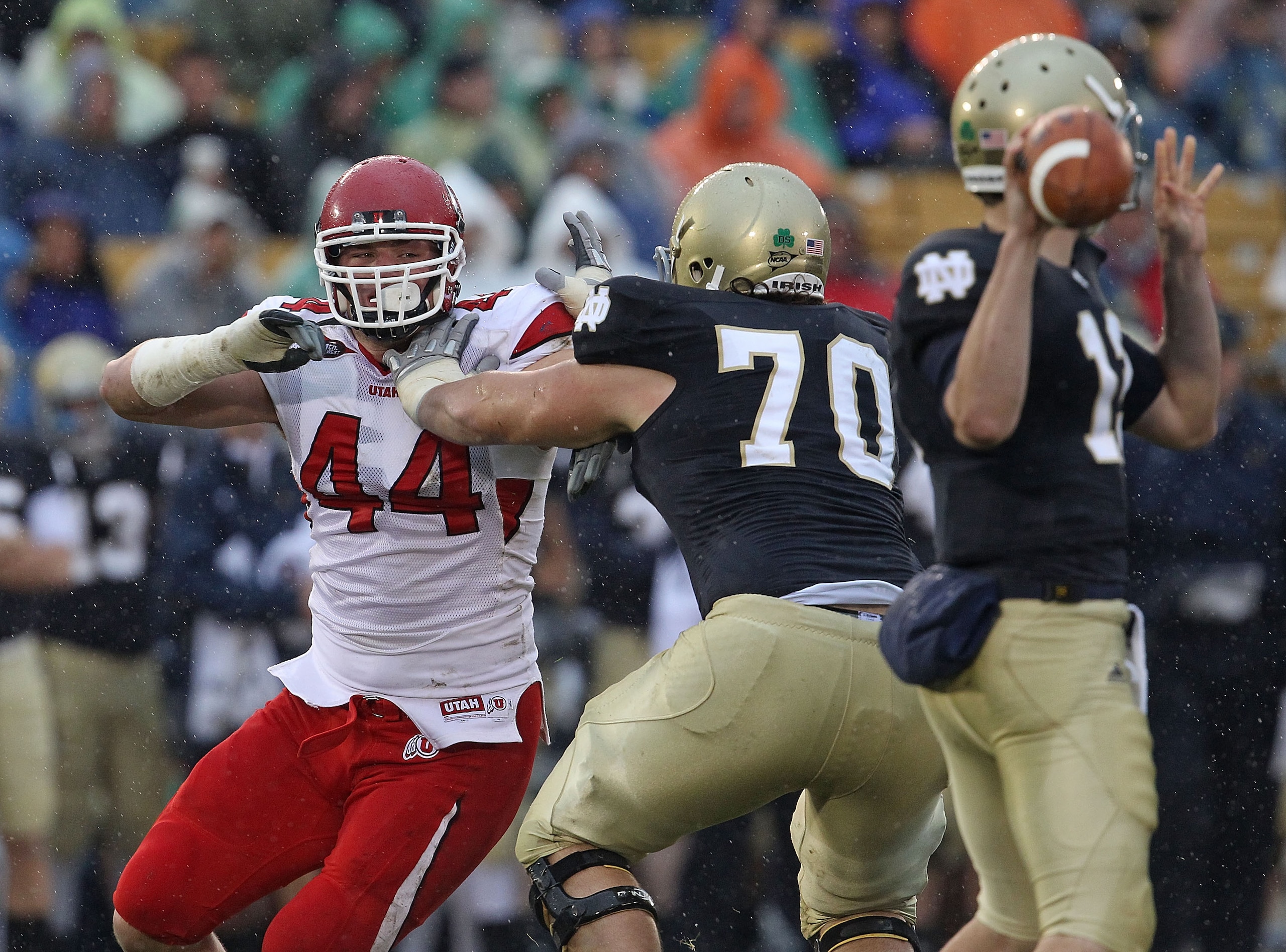
One of the biggest and most pleasant surprises of 2010 was the emergence of left tackle Zack Martin. After redshirting his freshman season, Martin was a relative unknown going into spring practice and was expected to play second fiddle to senior Matt Romine in the battle for a starting position.
Second fiddle wasn’t a good fit for Martin though. He quickly established himself not only as the best option at left tackle, but as the most consistent and reliable lineman on the team.
Martin is a very good athlete for a guy his size with quick feet and a nasty streak that serves him well. He has three more seasons to progress before he takes his talents to the league, a scary thought for opponents.
There may be plenty of questions over the next two years as to who will replace key starters that leave because of graduation, but one thing Brian Kelly won’t have to think twice about is the one protecting his quarterback’s blindside. That’s a comforting thought.

No. 7: A Good Defense Makes Life Easier
4 of 10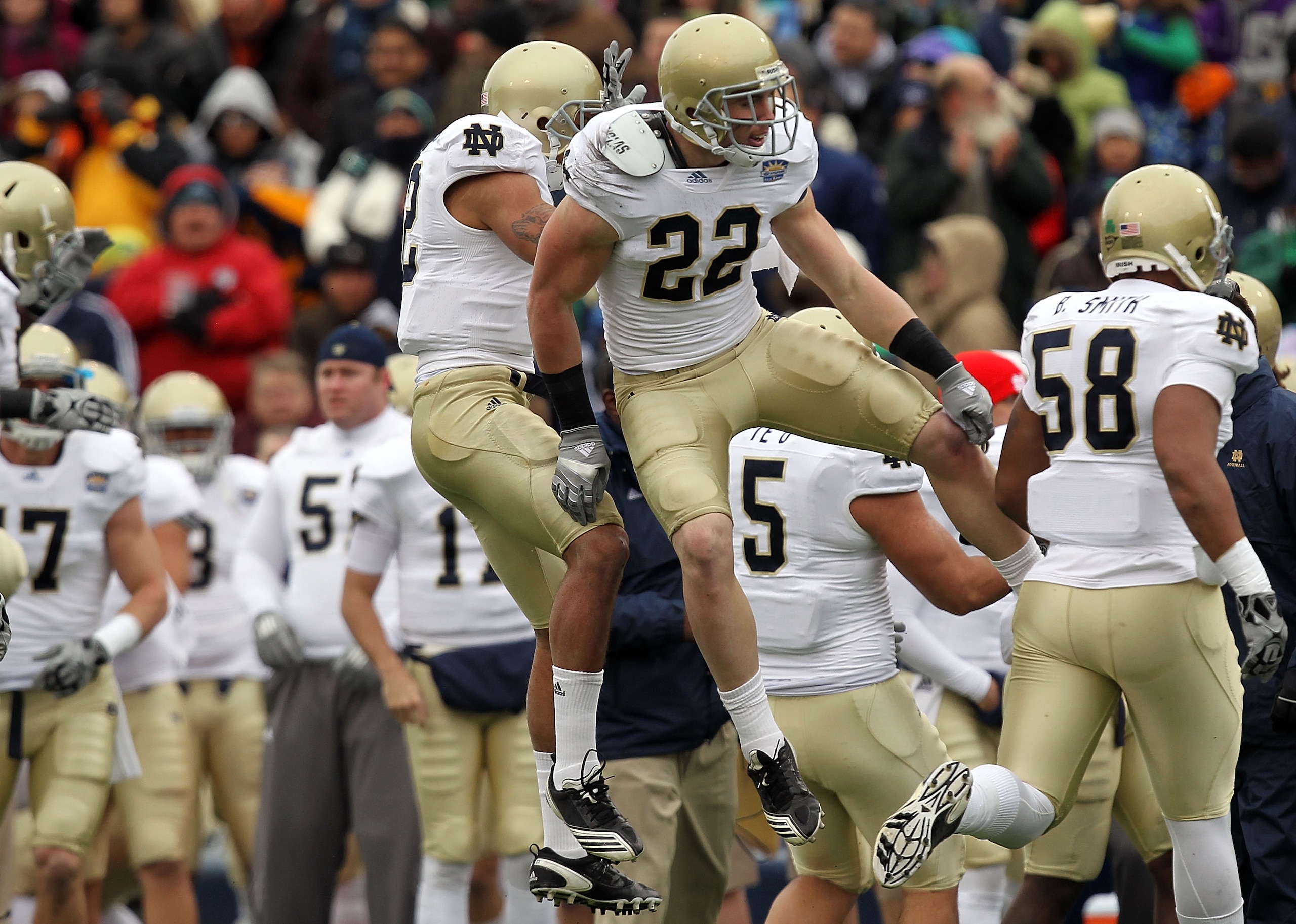
There is one central reason that completely turned its season around over the final four games: the evolution of the defense.
Even in the beginning of the season, Notre Dame’s defense had seriously improved from the 2009 outfit that was one of the nation’s worst, but during their winning streak to close the year, it was downright elite. They suffocated opponents and relieved the pressure that had previously been on the shoulders of the quarterback.
Plenty of Irish fans are ready to jettison Dayne Crist and start the Tommy Rees Era because he found a way to win down the stretch. If Dayne had enjoyed the same support on the other side of the ball that Tommy did, he would’ve won more games, and the argument of “winner” vs. “not a winner” wouldn’t even be valid.
Defensive coordinator Bob Diaco did a phenomenal job turning around his team after the Navy disaster and showed how a dominant defensive unit can overcome the blemishes of an offense, even if they’re borderline crippling (see: Tommy Rees’ performance against Southern Cal).
Getting his offense humming at maximum efficiency is a priority, but even more important is continuing the trend of vastly improved defense. As Dayne, Tommy or whoever experiences growing pains, it’s a huge coup to have the safety net of a dominant defense. It netted the Irish a victory over Southern Cal last year and it will net plenty in the future as well.
No. 6: How To Stop the Option
5 of 10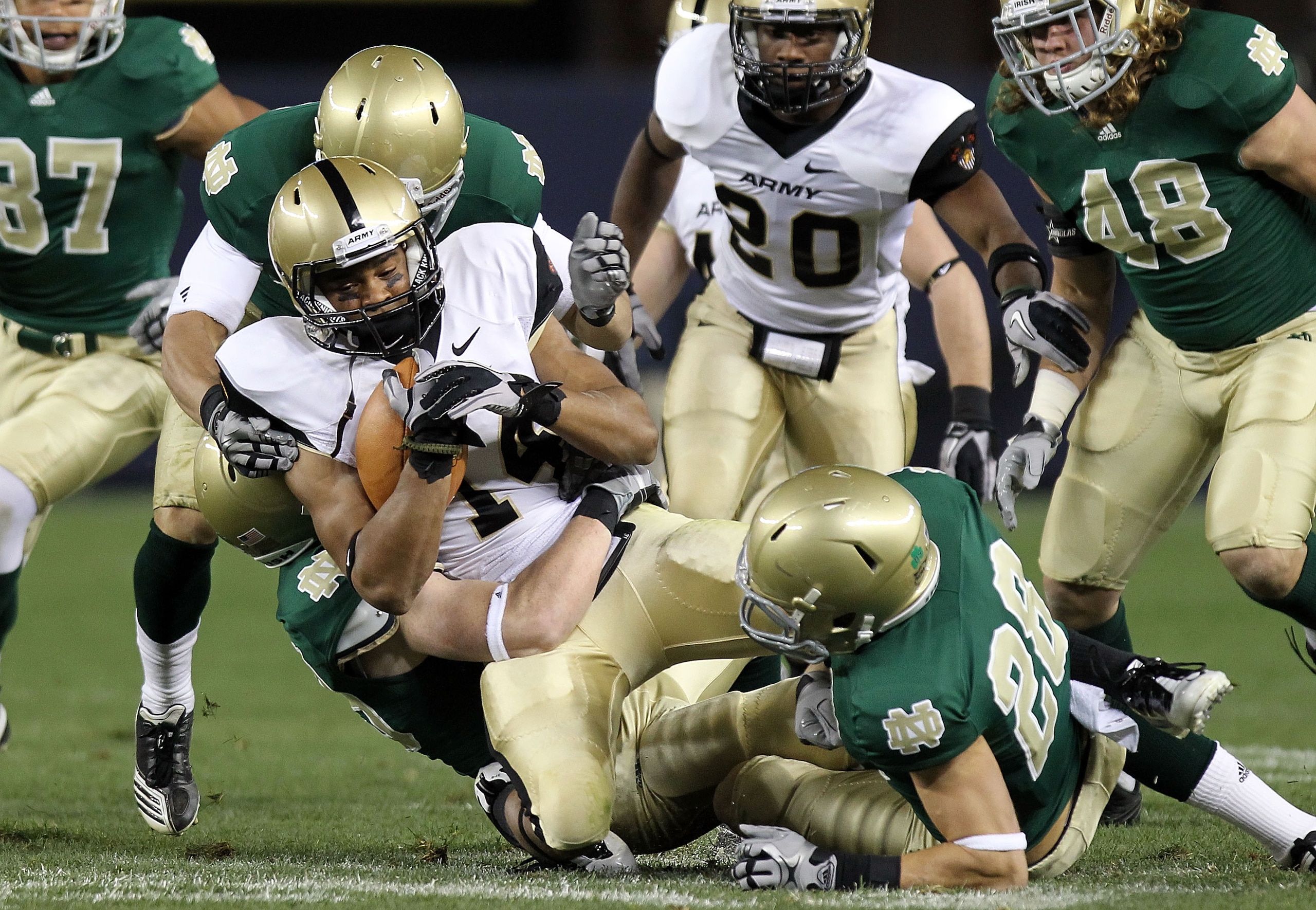
Stats will pretty much tell the story on this one. Take a look at the first time he and defensive coordinator Bob Diaco faced off against the option.
Notre Dame vs. Navy (October 23, 2010)
Navy Rushes: 60
Rushing Yards Allowed: 367 (82 yards above Navy’s season average)
Yards per Rush: 6.1 (almost one yard above Navy’s season average)
Points Allowed: 35 (five above Navy’s season average)
Opponent Time of Possession: 35:49
It was without a question the most abysmal defensive performance of the last 20 years. The final score gave no justice to the complete and thorough beatdown the Middies delivered.
One month later Kelly and Diaco had a second chance against an equally prolific option rushing attack from Army.
Notre Dame vs. Army (November 20, 2010)
Army Rushes: 43
Rushing Yards Allowed: 135 (117 yards below Army’s season average)
Yards per Rush: 3.1 (1.4 yards below Army’s season average)
Points Allowed: 3 (24 points below Army’s season average)
Opponent Time of Possession: 29:17
Kudos to the coaches for making the necessary major adjustments to the defensive scheme by the time round two with the option happened at Yankee Stadium. Lesson learned.
No. 5: Michael Floyd Is More Than a One-Trick Pony
6 of 10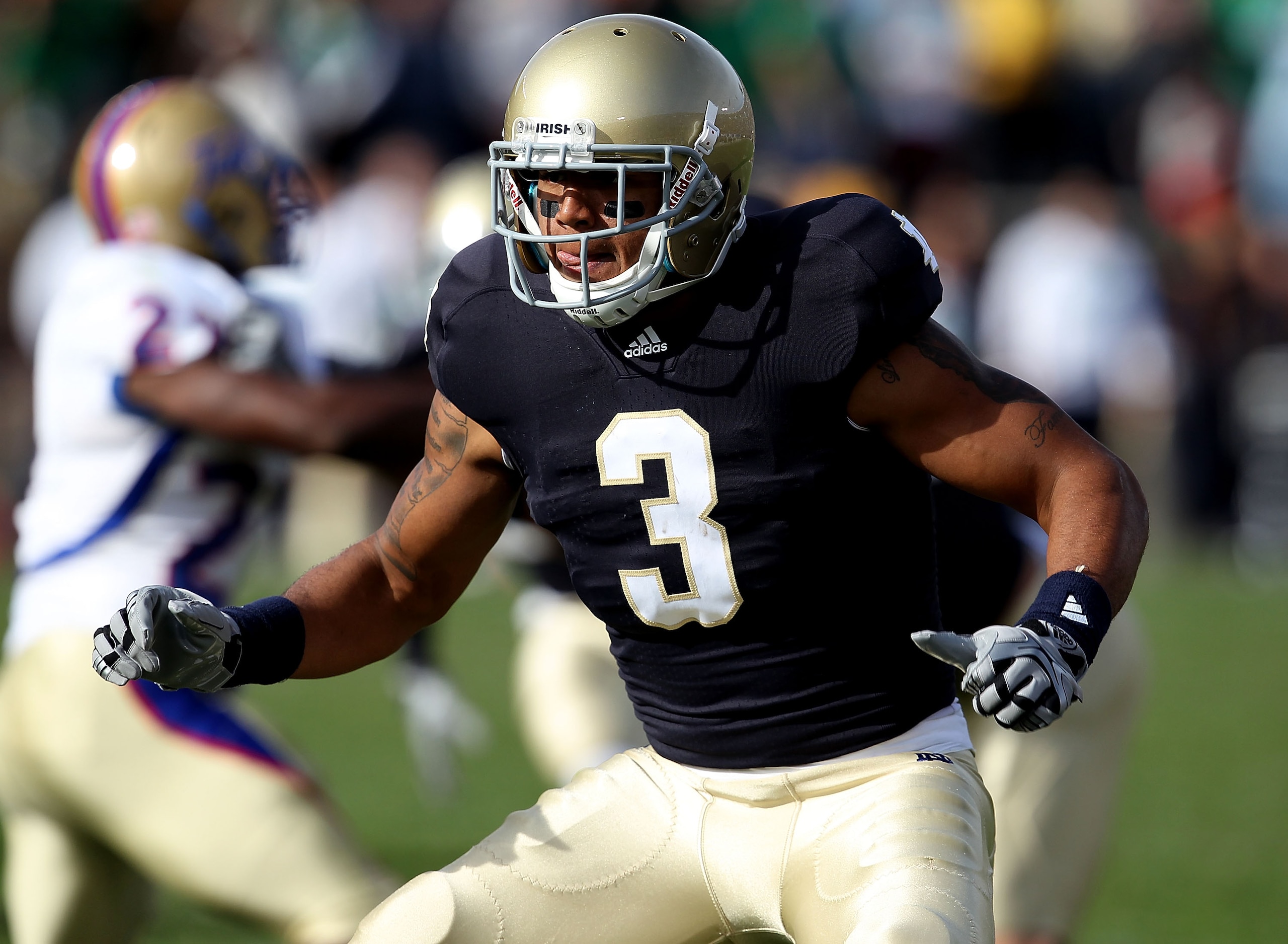
Brian Kelly stated prior to the season that he was thoroughly unimpressed with the film he studied of Michael Floyd. Sure, he was more physically gifted than 99 percent of the guys that line up at receiver, but Kelly didn’t buy into the hype.
“I thought Michael Floyd was overhyped. I thought he was, at times, average. If you watched him, were evaluating him, you go, ‘OK, he’s got a big body, he runs down the field. If they throw it up there, there’s a good chance he’s going to get it. You never saw him in positions to run the dig or drive, be one-on-one, beat coverage on a quick slant on fourth down and snap his hands.”
After a year watching him work on and off the field, Kelly can be considered a convert.
Michael Floyd was the leading receiver for the 2010 season, reeling in 79 catches for over 1,000 yards and 12 touchdowns. He proved to be a consistent and reliable gamebreaker whether Dayne Crist or Tommy Rees was on the other side of the pass. At the same time, it’s often overlooked that he was an absolutely devastating run blocker, willing to do all the necessary dirty work to help the team succeed.
His extraordinary efforts on the field were duplicated off it. Kelly praised Floyd’s work ethic in practice and the weight room to the point where he claimed it raised the bar of expectations for the entire team.
Floyd emerged as one of the team’s clear leaders and Kelly tabbed him to be a captain for his upcoming senior campaign. God-given talent and physical ability may not have impressed Kelly all that much, but unparalleled desire that showed up in every facet of Floyd game made the head coach do a 180. My guess is Kelly didn’t have a problem with the fact Floyd changed his mind.
No. 4: A Balanced Offense Is Key
7 of 10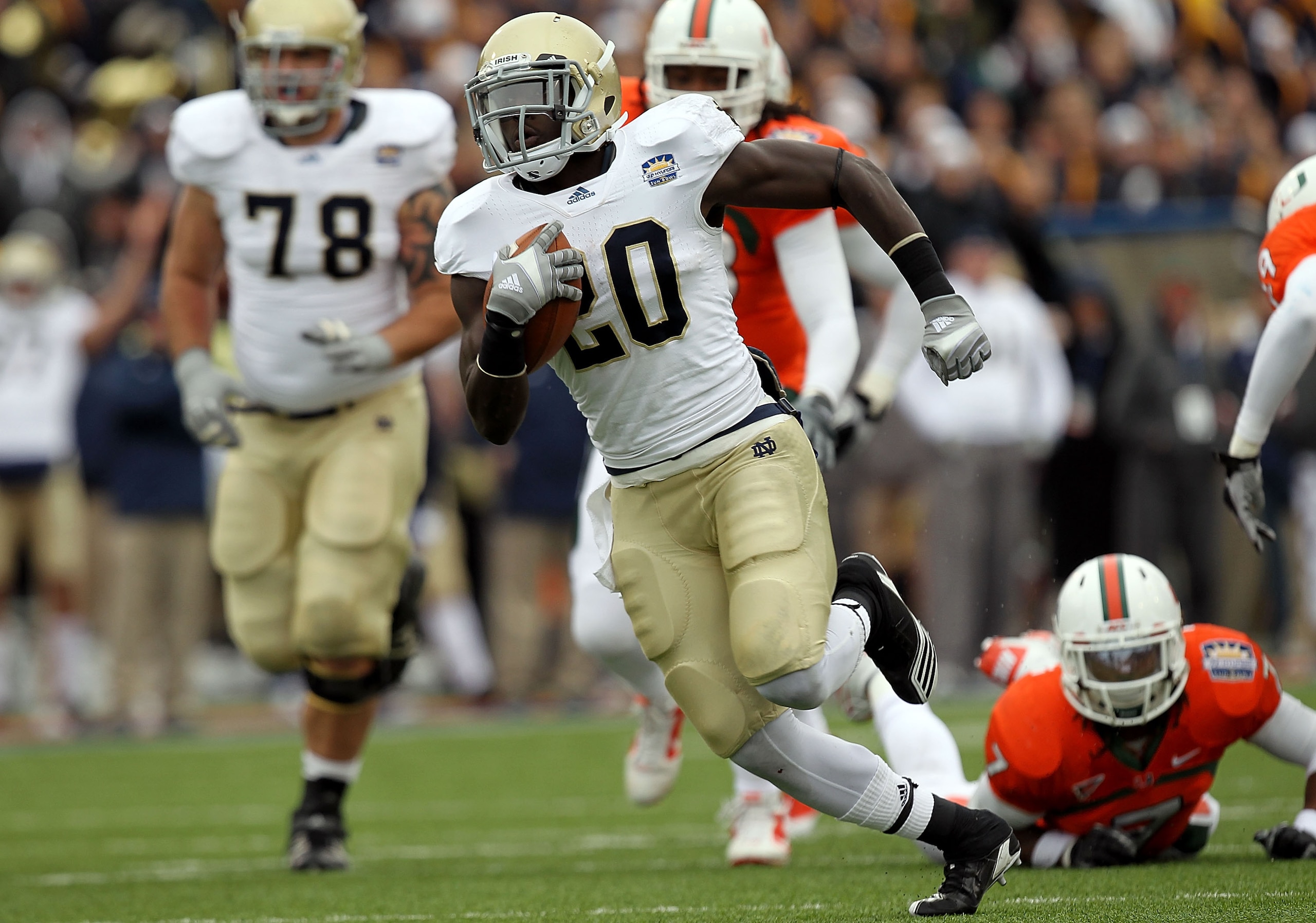
Let’s compare the numbers of the 4-5 start and the 4-0 finish.
Average number of passes per game (first nine): 42
Average number of passes per game (final four): 25.8
Average number of rushes per game (first nine): 29.7
Average number of rushes per game (final four): 36.8
That was a major shift in philosophy during the winning streak. What Kelly learned is that this is not Central Michigan and it’s not Cincinnati. In order to consistently win at this level, teams need not only to be able to run the ball, but be committed to doing so.
A big reason for the shift from airing things out to running more had to do with trying to protect freshman Tommy Rees, but it proved to be an enlightening period for Kelly. On the most important drive of the series in the waning minutes of the Southern Cal game, Notre Dame stuck to the run and pounded the ball down the throat of the Trojan defense unlike any Notre Dame team had in 15 years. The result was Robert Hughes bulldozing for the game-winning touchdown and an epiphany for the coach.
In a press conference later on he mentioned how things are different at Notre Dame compared to Cincinnati and Central Michigan. Notre Dame isn’t concerned about having an exciting offense that will sell tickets; it’s concerned about winning football games. A proven formula in which to do that is committing to presenting a more balanced offense.
Kelly’s offense there will probably always be based far more on passing than rushing, but he’s proven to be adaptable. The success down the stretch won’t be dismissed now that he has a more experienced duo of quarterbacks ready to air it out.
Expect the Irish to lean much more on the run moving forward, especially when they get a quarterback under center that is a bigger running threat than Rees and Crist. The run-pass split will settle somewhere in between the two extremes of last season and will make the offense much tougher to defend and prepare for in the future.
No. 3: Beating Southern Cal Doesn't Cure All...But It Cures a Lot
8 of 10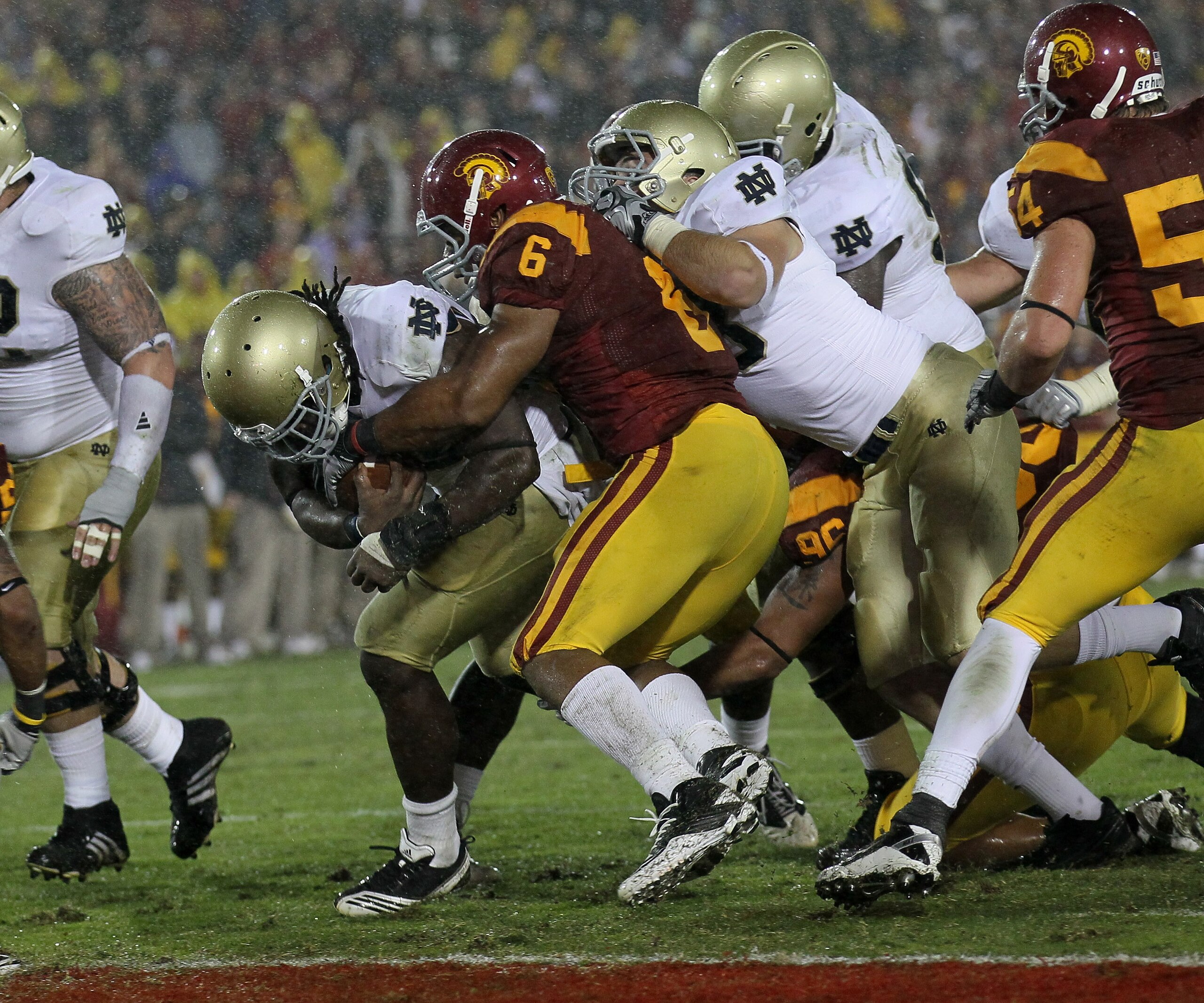
There is no way that the 2010 season could be considered a big success. Why? There are three clear reasons that jump off the page.
First, there was the three-game swoon to end September that officially marked the end of the Brian Kelly honeymoon.
Next was the complete catastrophe in the Meadowlands against Navy where the Irish were outschemed, outhustled and overpowered by sheer will. Even the most optimistic of the Irish Faithful had their faith shaken that day, as a listless group rolled over when the Midshipmen punched them in the mouth.
Lastly, there was the heartbreaking home loss to Tulsa, a team that a chunk of the fanbase thought wasn’t even worthy of stepping foot in Notre Dame Stadium. The embarrassment of the loss that day was overshadowed by the gut-wrenching fashion in which defeat manifested itself on the heels of a tragedy that shook the entire school community.
If you would have told me things could get darker in 2010 than they were when I watched the student body give the one-finger farewell salute to Charlie Weis after the UConn game last year, I would’ve called you a liar. Well, somehow we found a way to hit rock bottom and then dig some more.
But here’s the crazy thing: When you ask Irish fans how they’re feeling about the future, everyone has an upbeat tone, a bounce in their step. The four-game winning streak to end the season was great, but it’s one game that has stapled a grin to collective face of ND Nation: Notre Dame 20, Southern Cal 16.
There’s no way I would have guessed I could look back on this past season with any sort of fond memories, but I was wrong. For all the bad things that happened on and off the field during 2010, one thing that it will be associated with is the year the Southern Cal streak ended.
The victory put a bounce in the step of fans, coaches and players alike heading into bowl season and beyond. Beating Southern Cal doesn’t erase or excuse the shortcomings of the rest of season by any stretch of the imagination, but goodness gracious does it provide a big fat silver lining to embrace.
No. 2: Never Let Teaching Lessons Get in the Way of Winning
9 of 10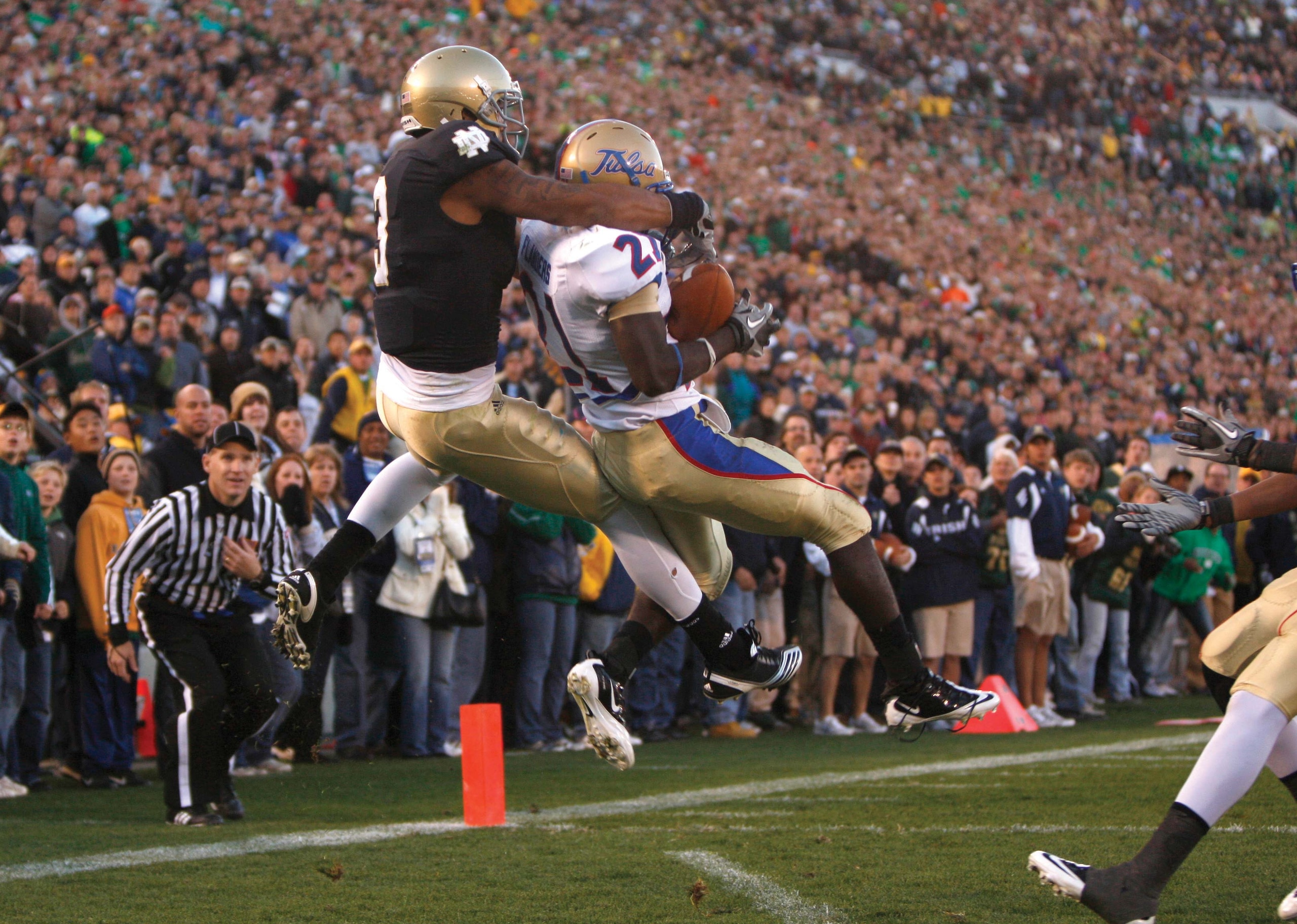
The loss to Tulsa last October represented the low point of the last 25 years. In a quarter century filled with plenty of them, that’s an inglorious distinction.
The fact that the Irish lost to a team from the lowly Conference USA at home didn’t earn it that distinction; it was the circumstances in which the game was played and lost that did.
On the heels of an emotionally exhausting week where the student body lost one of its own due to the misjudgment of someone within the football or athletic program, the team and school needed a victory. It needed to win for Declan Sullivan, the boy tragically killed in the accident that week. It needed to win to try to uplift the spirits of a team that was battered mentally and physically. It needed to win for the rest of the students, who had spent three days mourning in the midst of a nationwide media crucifixion of their beloved University.
At the end of the game, instead of attempting a field goal with his kicker who’d never missed, Kelly decided to roll the dice and throw to the end zone with his freshman quarterback. The result of the play was an interception, sealing a defeat that was a square punch in the gut—one that many would argue was completely unnecessary.
The prudent play would’ve been position All-World kicker David Ruffer in the middle of the field and let him rip one of his booming kicks through the uprights, but Kelly wanted to teach a lesson. He wanted his team to know that they would always be aggressive, that they’d always keep the foot on the gas right down to the bitter end.
His teaching moment got in the way of the only thing that matters though: victory. Boos rained down from the student body, message boards tore apart the head coach they’d lauded just seven weeks earlier.
There are times for teaching lessons. Sometimes they’ll backfire, but ultimately they serve a long-term purpose. One such example was Kelly’s decision to go for a touchdown at the end of the first half of the Michigan game. Many disagreed, but he was trying to mold his team to think like he wants them to think.
The end of a game when victory is easily within grasp is not a time to sacrifice a single percentage point of win probability. He stood strong in the face of the ensuing backlash and insisted he’d call the play again and again if faced with the same situation.
But that’s not the truth. He’s too good a coach to make a mistake like that twice. His philosophy is fluid based on the situation, and if he were faced with that again next year, you better believe Ruffer would’ve had the game on his shoulders instead of an inexperienced quarterback with nearly zero previous game experience.
No. 1: There’s No Reason Notre Dame Can’t Win a National Championship
10 of 10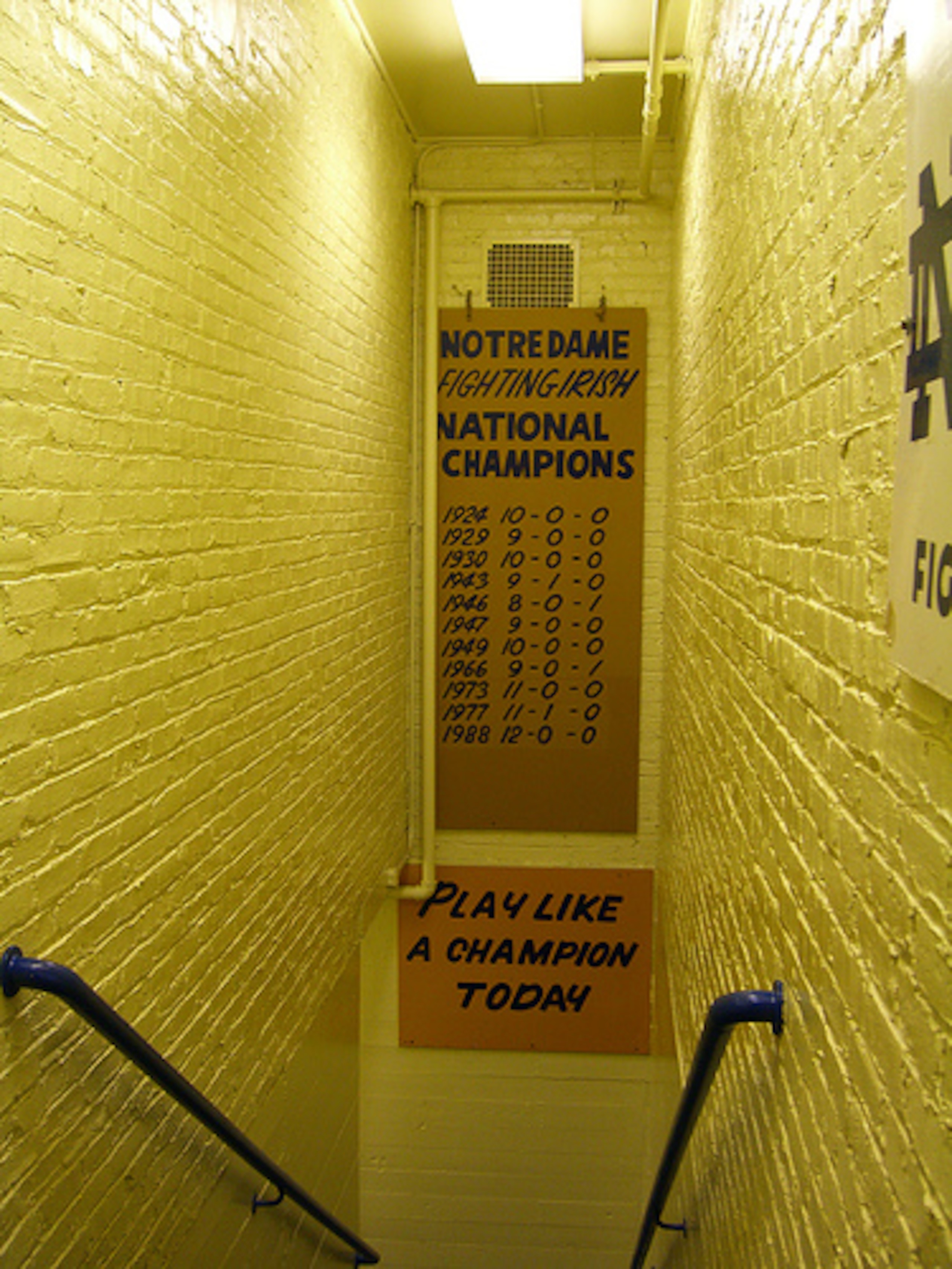
At this point Brian Kelly has been on the job for more than one calendar year, and he’s seen and learned a lot.
He’s gotten a feel for the inner-workings of the school and how both the administration and the admissions department work together with the football team. He’s experienced the time constraints that come with being the head football coach at Notre Dame and begun to grasp how extreme both the highs and lows of the job are in sports’ biggest pressure cooker.
Kelly’s also had a year to evaluate the talent currently on the roster and what caliber of player the school is capable of attracting despite all the academic restrictions that other competitors don’t possess.
His conclusion at the end of the year is simple: There isn’t a reason Notre Dame cannot rise back to the top of the college football world and win a national championship. It probably won’t be this season and it may not be next season, but one day Notre Dame can and will get there.
Kelly’s seen enough to realize that the excuses skeptics make are hollow and the hurdles critics insist are there are clearable. Of course, there’s no guarantee that Kelly will ever lead the Irish back to the Promised Land. His final record in year one was 8-5, and while the final four games were a huge step in the right direction, he has miles and miles to go before he “arrives.”
But the fact is that he has surveyed the job and come to realize the ultimate goal is attainable. Contrary to what Bob Davie would have you believe, it can be accomplished without having to compromise any of the University’s core values.
Who knows how long it took Kelly to realize this? Maybe it was the first time he talked with Jack Swarbrick before he even accepted the job. Maybe it was when a training table was provided for the team upon request. Or perhaps it was after working with admissions on the latest batch of recruits. Whenever it was, it came as a relief and probably motivated him to work even harder.
The roster has holes, but there’s elite talent littered all over the depth chart. It took just one full recruiting cycle for Kelly to prove he can attract the top athletes in the country regardless of whether they play a skill position or slog in the trenches. The notion that Notre Dame doesn’t have and can’t acquire the necessary talent to hang with the big boys is completely false.
Notre Dame has more to offer than most schools it’s competing against: the top business school in the country, an alumni network that rivals the Ivies, beautiful academic and athletic facilities and constant national exposure. At this particular juncture, it also provides recruits an opportunity to be more than just great college football players; they’re afforded the opportunity to be legends in the next chapter of Notre Dame lore.
As Lou Holtz once told a recruit in 1987, “Son, you can either join me and be a part of Notre Dame’s return to glory or you can watch it on national television.”
Brian Kelly learned that a return to glory is a real possibility and that’s reassuring knowledge to possess. Now it’s just a matter of learning how to make it come to fruition.
.png?w=2560)
.jpg?w=2560 "Colts Texans Football")


.jpg?w=2560 "Chiefs, Steelers Eye WR Trades")


.jpg?w=2560 "Latest Peyton-Colts Rumors")