
Boston Red Sox: The Playoff Pitching Rotation
With a loss to the Yankees last night, the Red Sox now set their sights on heading out to visit the Angels in the ALDS. This isn't a new scenario for Boston, as they seem to face Anaheim in the playoffs on an annual basis.
This year, though, it would seem that the Angels have the advantage on paper. They're a deeper team, with a tactician of a manager that knows how to win with small ball.
The Red Sox will need to win this with pitching, as there are outs in too many spots in the lineup. So how do these guys stack up? What should we expect? Let's take a look at each of the key players and find out.
TOP NEWS

Brewers Stun Padres in Game 2 😧
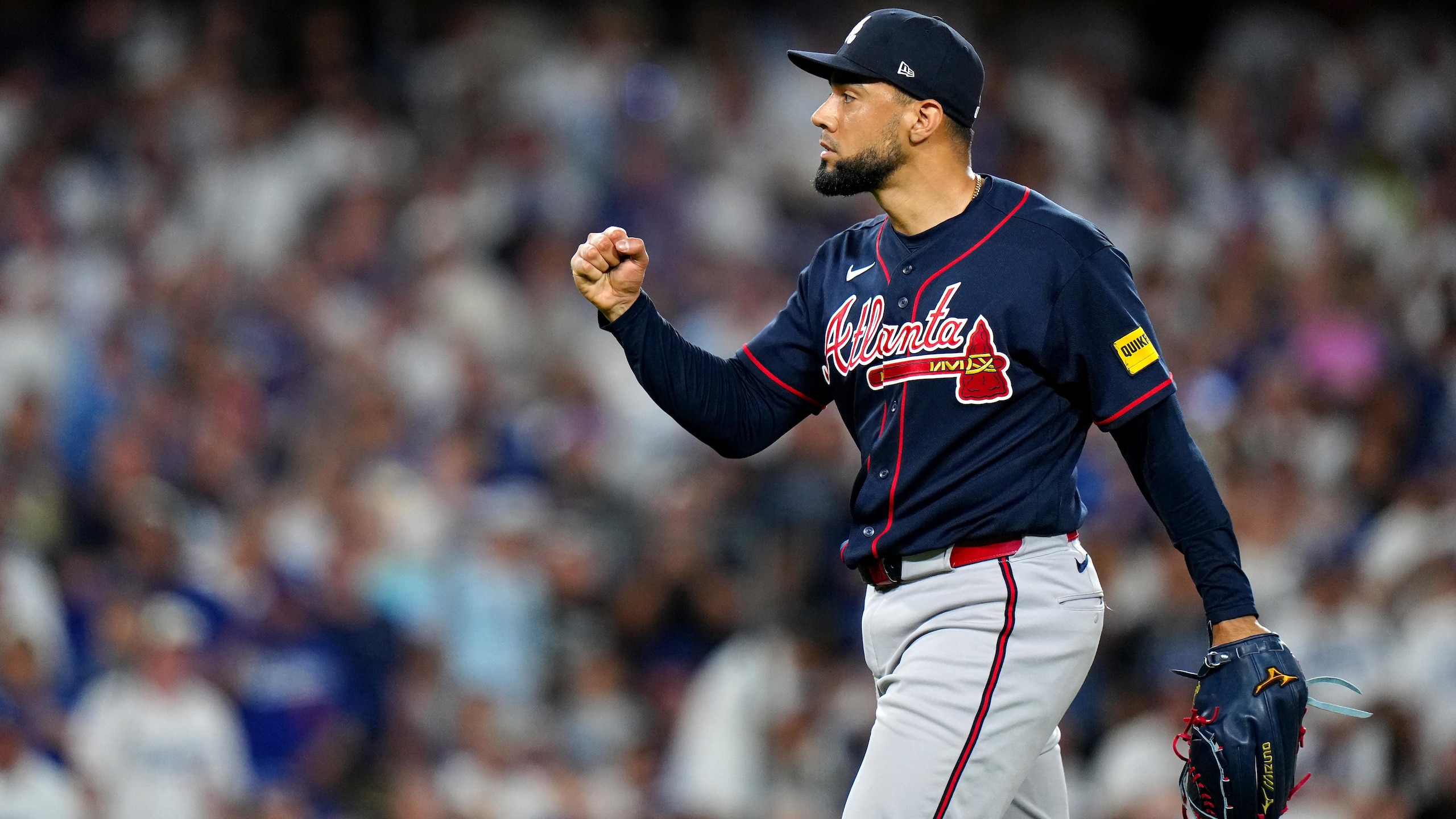
Braves' Opener Shines vs. LA 💪

Every MLB Team's Biggest Surprise and Disappointment ⚾
Josh Beckett
Beckett was as automatic as it got in the postseason last year. He went 4-0 with a 1.20 ERA, including a big win against Anaheim in the opening round. Beckett has made his name in the postseason, winning the 2003 World Series MVP while with the Marlins. This is his time of year, so you almost need to throw his regular season out the window. Almost.
This has been far from the dominating year Beckett had in 2007, but it hasn't been as bad as many analysts would have you believe. His second half has been much better than his first. Beckett needed some time on the DL in August, but his first two outings of that month saw him give up just three earned runs in 14 innings. His September has been nothing short of spectacular.
There are concerns. He's giving up home runs at a much more frequent clip than he did last season, and that's why his ERA can be over 4.00 while his WHIP can be 1.19 and his BAA can come in at .256. Worse, he's one of the few Red Sox pitchers that have struggled at home over the course of the season.
He draws much acclaim for his fastball, and it is certainly his out-pitch, but Beckett needs to be able to throw his curveball for strikes. That's what has made him successful in September. He doesn't walk many batters, registering only 34 on the season, and when he needs a strikeout can get a strikeout because of his plus-velocity. On the road, batters are hitting just .226 against him.
You don't have to worry about him getting overwhelmed in the atmosphere, and his focus in the postseason is what separates him from other pitchers. In my book, and that of many fans, he's your number one starter, regardless of anything else going on.
He was brought in to be the ace, and he's going to be just that for them in the playoffs.
Daisuke Matsuzaka
The one thing you can guarantee about Matsuzaka is you have no idea what you're going to get out of him from start-to-start.
Matsuzaka is electrifying to watch, but at the same time frustrating. He has 18 wins, and a 2.80 ERA. You could argue that if it weren't for Cliff Lee's season, Matsuzaka would have a legitimate case for the Cy Young award.
He even struck out 150 guys this season. Nothing seems to throw him off his game. He can walk the bases loaded (and has), then come back and strike out the side to get out of the jam.
He could also implode in one inning, and leave your team in a very deep hole. His control and focus are often questioned in Boston papers and media. Matsuzaka hasn't lost since July 28, coincidentally against the very team he'll be facing in the first round.
In his last 15 starts dating back to the beginning of July, he's allowed more than three earned runs only twice, and only has done that three times all season.
In reality, he's put on one of the more impressive displays of pitching you could ask for this season. Matsuzaka has been in the postseason before as well, but there is not a doubt that he will give fans a heart attack at least once, potentially more than that. There will be pacing in living rooms all over the area, hoping he can find that pitch to get out of the jam.
He has the stuff to be dominant, but the fan base doesn't seem to have the confidence in him. Many feel he should be more than he is. Tough to argue with these numbers, but he certainly makes people more nervous than you want out of a top pitcher.
Jon Lester
A year ago, we're all talking about a comeback from cancer. This year, we're talking about one of the best left-handed pitchers in the American League. It's impossible to argue that.
Lester spent much of last season, up to and including the World Series, getting his strength back. He provided one of the best moments of the Boston season when he pitched his no-hitter. In September, he was still hitting 96-mph with his fastball, and he was showing no signs of slowing down. He finished the season with 16 wins, 152 strikeouts, and a WHIP of 1.27.
The concerns with Lester are similar to the issues that fans have with Matsuzaka. Lester can lose focus quickly and throw too many pitches too early in the game. It's come back to hurt him several times this season, where he hasn't been able to work out of the fifth inning. The Red Sox need him to give the team six to seven innings in the playoffs in order to limit the exposure of one of their weaker areas, middle relief.
Pitching coach John Farrell has worked with Lester to have him get into more of a rhythm, working more quickly. It certainly has worked, as his second half numbers show. Teams will look to break that up and slow him down on the mound, because that's where they have an advantage.
He gives the staff a different look, strictly because he's coming from the left side. Lester has seen the playoffs before, securing the World Series victory with his performance in the clinching game in 2007. This is different, though. This time there are expectations and this time he's needed to perform as the number two or three starter in the rotation.
This is where it gets dicey for Boston, and there needs to be tempered expectations strictly because of his youth and inexperience.
Tim Wakefield
Speaking of getting dicey. There is very little indication that Wakefield will even be able to take a spot in the rotation. It might go to Wake, but it might go to Paul Byrd.
Wakefield, when throwing well, simply baffles hitters. He makes professional baseball players look stupid, as they swing at pitches thrown no harder than what they saw in high school. The problem for Wakefield has been his inability to throw the knuckler consistently over the course of the season. He's had to mix in more fastballs and curveballs to keep hitters off-balance.
In the ALDS, looking at the stats, Wakefield has had more trouble historically than any of the other Red Sox starters against Anaheim. In addition, he's had trouble with his shoulder over the last part to the season, and his numbers reflect that. In two of his last three starts he hasn't been able to get out of the third inning.
In reality, it doesn't look likely that Wakefield will be on the roster in the first round; Boston will not need to carry the extra starter because of how the games will be staggered. If they do, Wakefield, right now, doesn't give them the best chance to win. And that's hard to say about a guy that has meant so much to the franchise.
His style can make hitters look foolish, but his problems finding the plate (or finding too much of it) make him a weak link in the chain. His versatility and ability to pitch out of the bullpen may help him find a spot on the roster, but not likely to start a game.
Paul Byrd
He was picked up to help plug a hole that was being plugged by the leak that was Clay Buchholz and his fastball. Now, it looks like he could be the fourth starter in the playoffs.
The benefit to putting Byrd out there ahead of Wakefield is that he throws strikes consistently. He doesn't walk many people, finishing second in the league to Mike Mussina in fewest number of walked batters.
Byrd will allow the Red Sox to take advantage of their defense, an area where they are better than many of the playoff teams. He pitches to contact, and is a groundball pitcher that has been able to generate them since the All-Star break.
He does have a problem in tipping his pitches, and has needed to adjust his delivery over the course of at-bats in order to keep hitters off balance. It has worked relatively well in his last several starts.
Byrd, though, is going to need offense behind him in the same way that Wakefield would to garner wins. Because he relies on contact, it can come back to haunt him. He's all or nothing, but does give the Red Sox a slightly better chance to win right now.
Byrd and Wakefield will be fighting for this final spot in the playoff rotation, and each could be use, but look for them to look to Byrd first. He doesn't have the same type of injury risk that is there when you put out the crafty knuckleball pitcher.
--------------------
For Boston, they need these pitchers to give them six strong innings. They're weaker in middle relief than either Anaheim or Tampa, but they have better starting pitching...or at least more tested pitching.
The top-three are what the team hopes are sure things. The questions on the back end with Wakefield and Byrd are no different than other teams will face. In Anaheim it will be Weaver or Garland, in Tampa it will be Sonnastine or Jackson. Chicago and Minnesota have their own sets of questions at the end.
The playoffs are where players are made. Boston has done it before. They have the battle-tested ace, and two pitchers that have combined for 34 regular season wins. They have the horses, it all comes down to putting it together. If they do, get the Duckboats ready.
.jpg?w=2560 "NFL investigating 2 referees for separate viral exchanges")


.jpg?w=2560 "Report: Chiefs Contact Hill's Agent")
.jpg?w=2560 "OBJ Calls Out Giants After Release")
.jpg?w=2560 "Tyreek makes another cryptic post amid Chiefs rumors")
.jpg?w=2560 "Greenlaw Talks Payton Exchange")

