


The NFL has a long history of debunking the merits of college stardom. The leagues have deviated to such an extent through the years that the skill sets don’t always translate.
Perhaps there’s no better example of it then this: Of the past 10 Heisman Trophy winners (not counting Ingram and Newton, who admittedly could reverse that trend), only three have had any kind of a substantial impact in the NFL.
They’re just playing different games.
What worked in college might not work in the NFL and what weaknesses were covered will likely be exposed—and it’s the job of an NFL scout to project that. Sometimes these scouts are wrong and a player like James Harrison slips through the cracks. But more often than we give them credit for, they’re right. And today, I play their game.
The following is a list of legitimate college stars who might soon be, like I was, not selected in the NFL Draft.
20. QB Taylor Potts, Texas Tech
1 of 20
Potts sat out most of his first two years behind the highly successful Graham Harrell and B.J. Symons, before winning the starting job in 2009.
He blossomed this year in Texas Tech’s spread offense, throwing for 3,726 yards, 35 TDs and 10 INTs. He’s smart, intelligent and accurate, but the stigma he faces as a system quarterback is real.
Potts’ arm strength is questionable, which coupled with the NFL struggles of Harrell or Symons, means it’s unlikely that Potts will be drafted.
19. QB Tyrod Taylor, Virginia Tech
2 of 20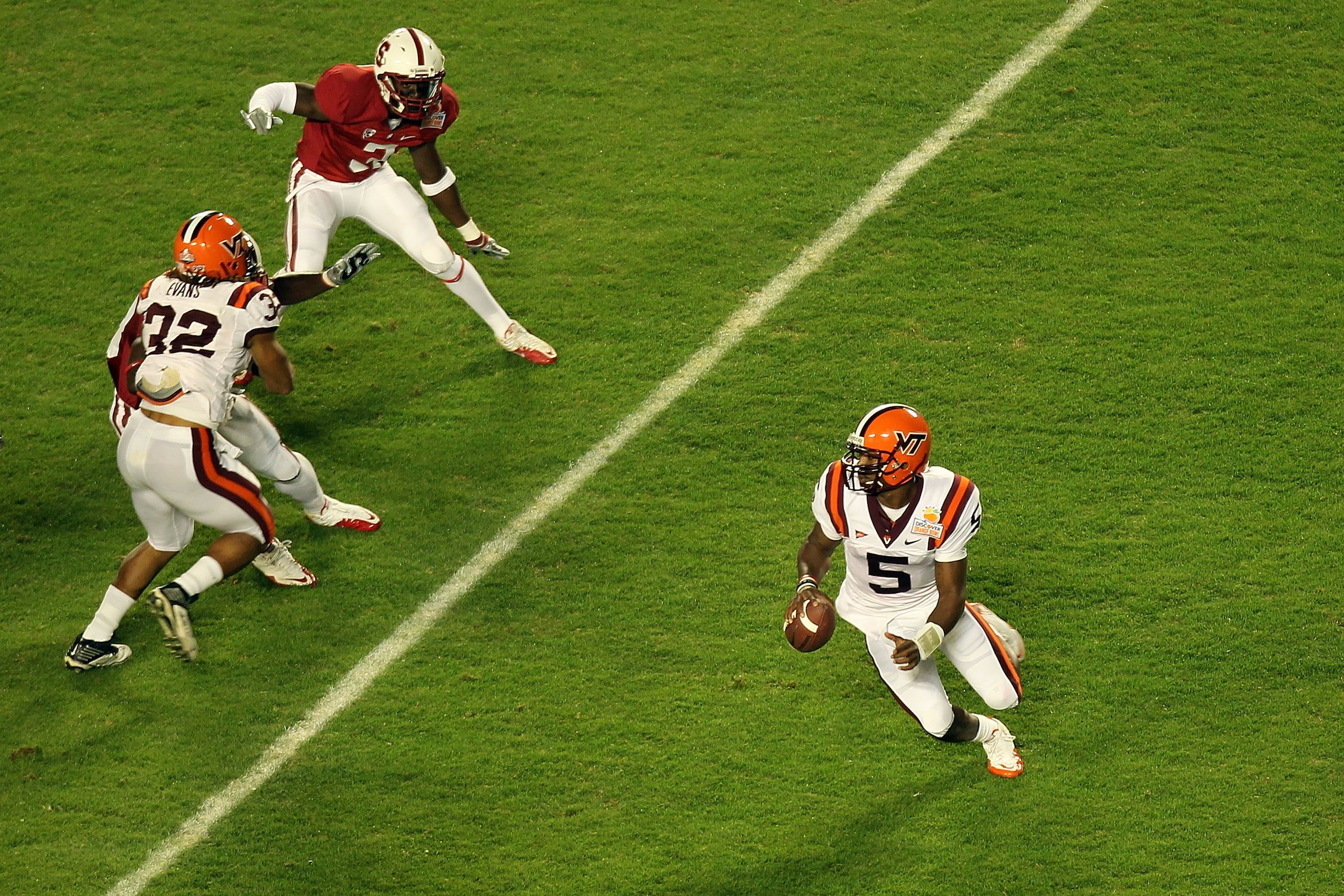
A star from the day he walked on campus, Taylor has never quite seen his package of skills come completely together.
He is big and athletic and he led Virginia Tech to a 23-5 record as a starter. He was the 2010 ACC Player of the Year too.
But Taylor lacks the pure passing ability to succeed as a thrower at the next level and his athleticism isn’t quite good enough to completely make up for that.
A team may take a flier on him in the later rounds (and maybe not to play quarterback), but it wouldn’t surprise me at all if he slipped out of the draft entirely.
18. DE Ryan Winterswyk, Boise State
3 of 20
A first-team All-WAC performer for the third consecutive year, Winterswyk totaled 44.5 tackles for losses in his college career, along with 21.5 sacks.
He would be an ideal fit as a 4-3 defensive end at the next level.
If Winterswyk falls out of the draft, it will be on account of his lack of size and athleticism. He’ll play in the NFL, but how effective he can be remains to be seen.
A former walk-on at Boise, Winterswyk may wind up following a similar path to the next level.
.jpg?w=2560 "Rams Raiders Football")

17. C Ryan Pugh, Auburn
4 of 20
A third team All-American and the man in front of Cam Newton, Pugh is strong at the point of attack, sustains his blocks well and is capable of sliding his feet in pass protection.
Pugh’s weakness is his inconsistent technique and when he loses leverage, his strength is negated.
Furthermore, Pugh is not particularly athletic, nor is he quick off the snap.
Pugh will ultimately compete for a roster spot, but it’s questionable that he’ll be drafted.
16. QB Greg McElroy, Alabama
5 of 20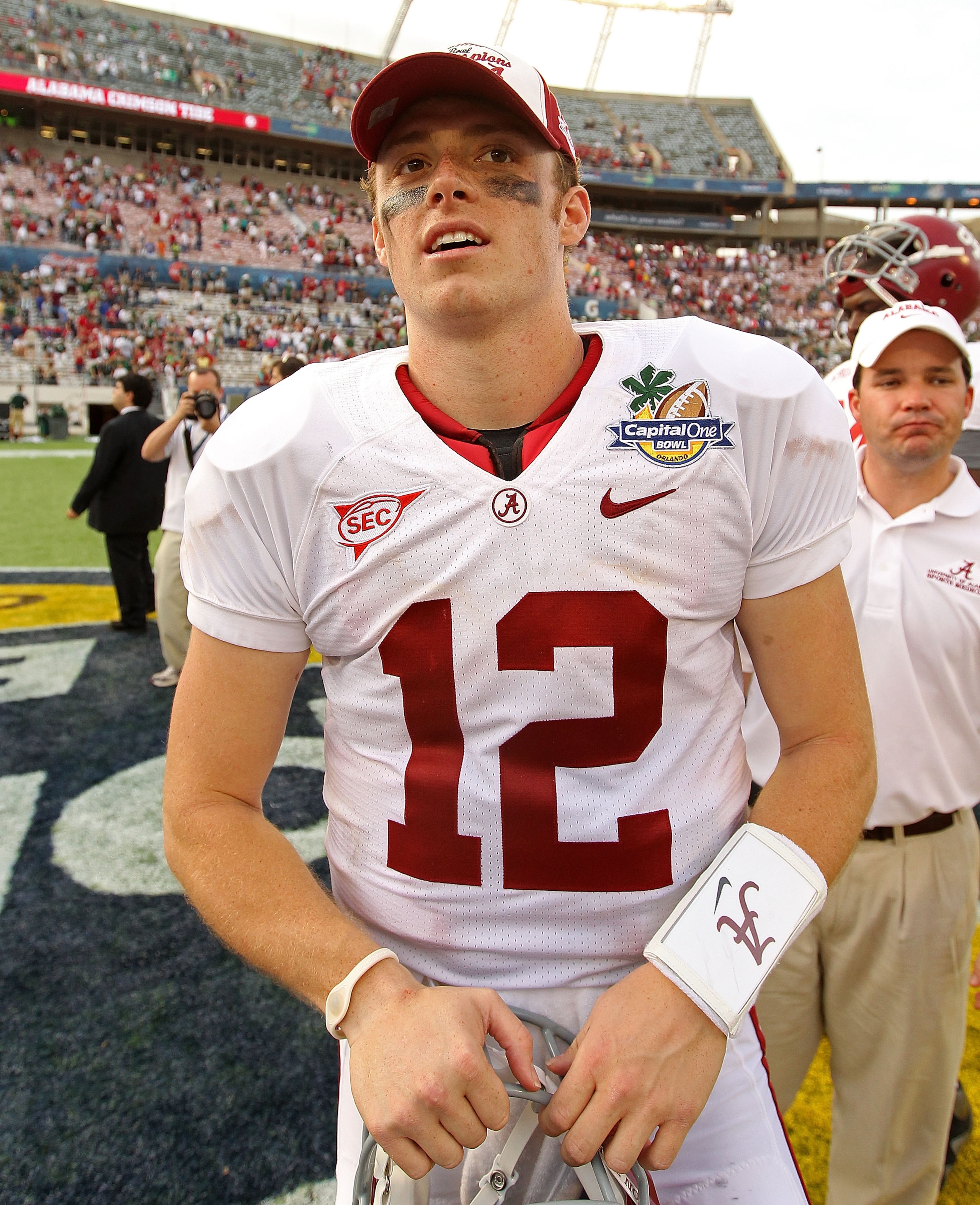
At the helm of a dominant Alabama team, McElroy proved to be a solid game manager whose biggest strength was his intelligence.
He has a fairly strong arm, but is not particularly accurate when can't set his feet, nor is he mobile enough to consistently buy time to do so. McElroy projects as no more then a solid backup in the NFL.
(Editor’s note: McElroy’s career completion percentage was, in fact, 66.3%, not 60.9% as this article originally stated. Special thanks to this guy for smearing the egg on my face.)
15. QB T.J. Yates, UNC
6 of 20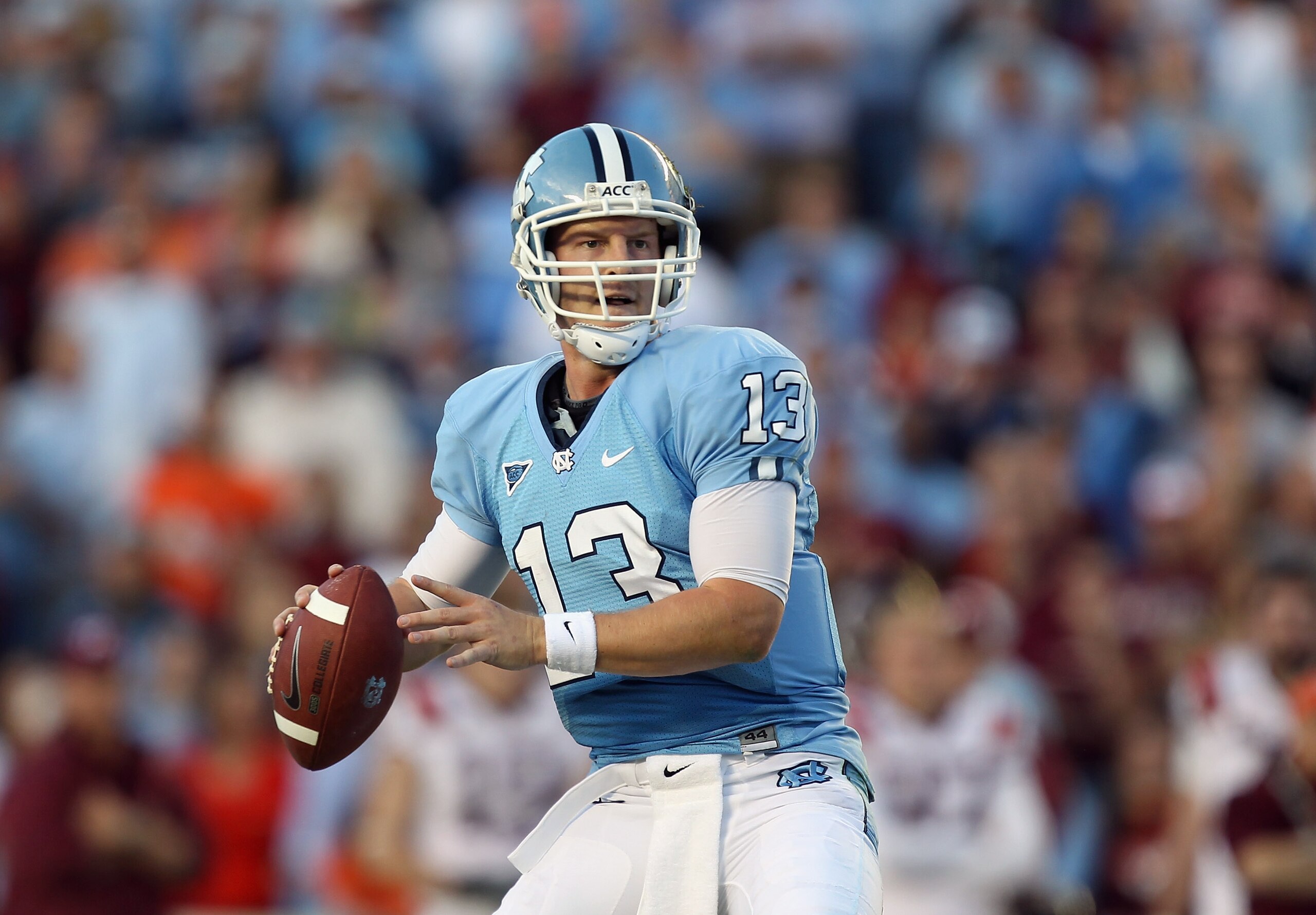
Another successful signal caller, Yates established 37 school records at North Carolina.
This past year, he led the Tar Heels to an 8-5 record while throwing for 3,418 yards, 19 TDs and nine INTs.
Yates’ arm is strong enough, but his accuracy is lacking. And while his decision making was much improved this year, it still remains a significant question mark.
14. CB Reggie Rembert, Air Force
7 of 20
Fast, active and exceptionally short, Reggie Rembert was a third team All-American this past year.
On the plus side, he has great instincts and a knack for getting to the ball.
The negatives? They're his size, and worse, his catch-up speed.
Though he’s been productive, to be undersized and questionably athletic are tough hurdles to overcome in the NFL.
13. FS Eric Hagg, Nebraska
8 of 20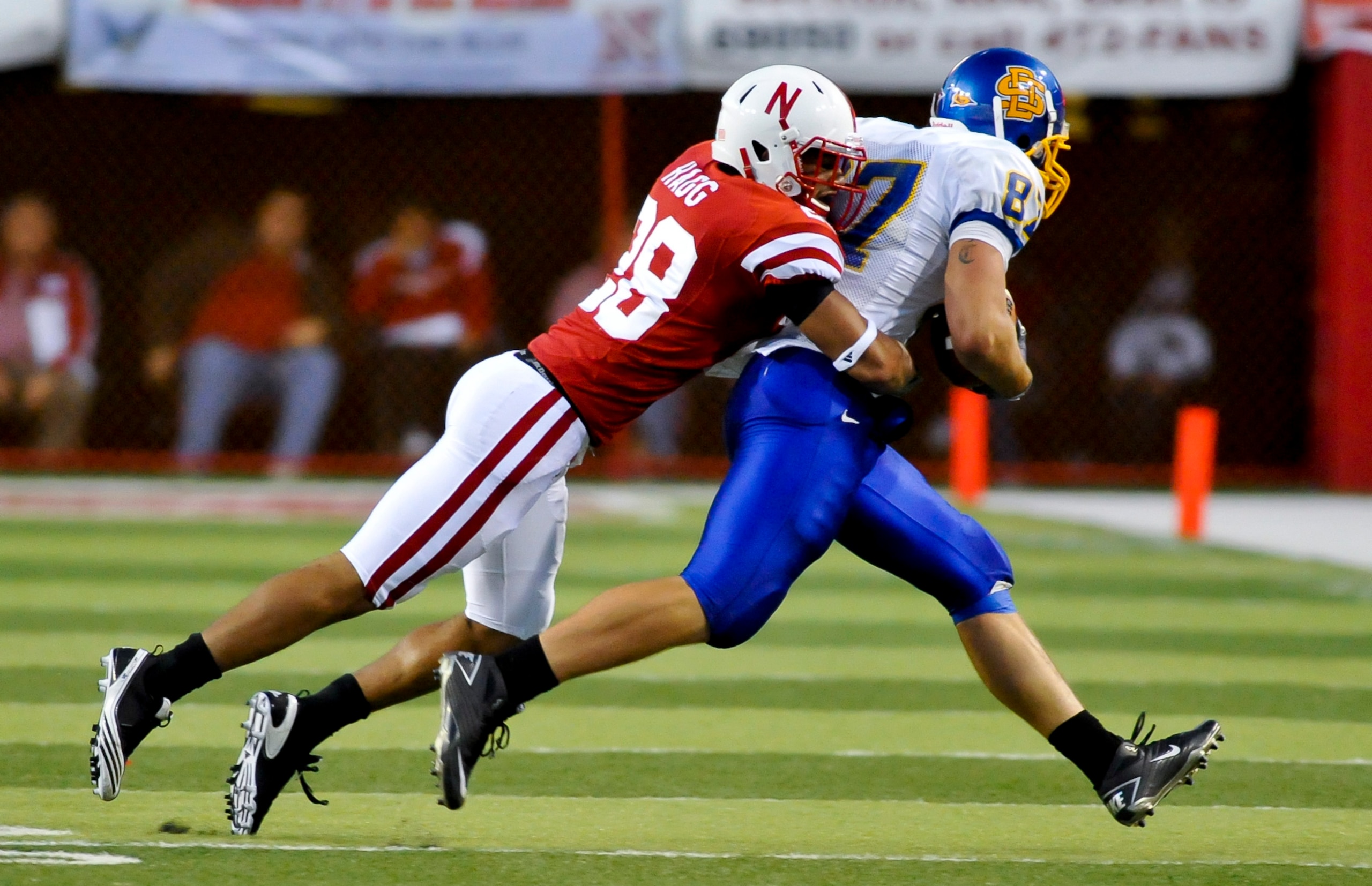
Voted by his teammates as the team MVP, the 6'2", 210-pound Hagg was one of the leaders on a Nebraska defense that finished in the top five nationally against the pass. On the season, he registered a team high five picks to go along with 49 tackles.
Where Hagg falls short is in his range. Not particularly explosive, it seems unlikely he’ll be able to cover enough of the field to be a starting NFL safety.
Nevertheless, Hagg is proven and will be given a chance to contribute one way or another.
He was a third team All-American in 2010.
12. C Chase Beeler, Stanford.
9 of 20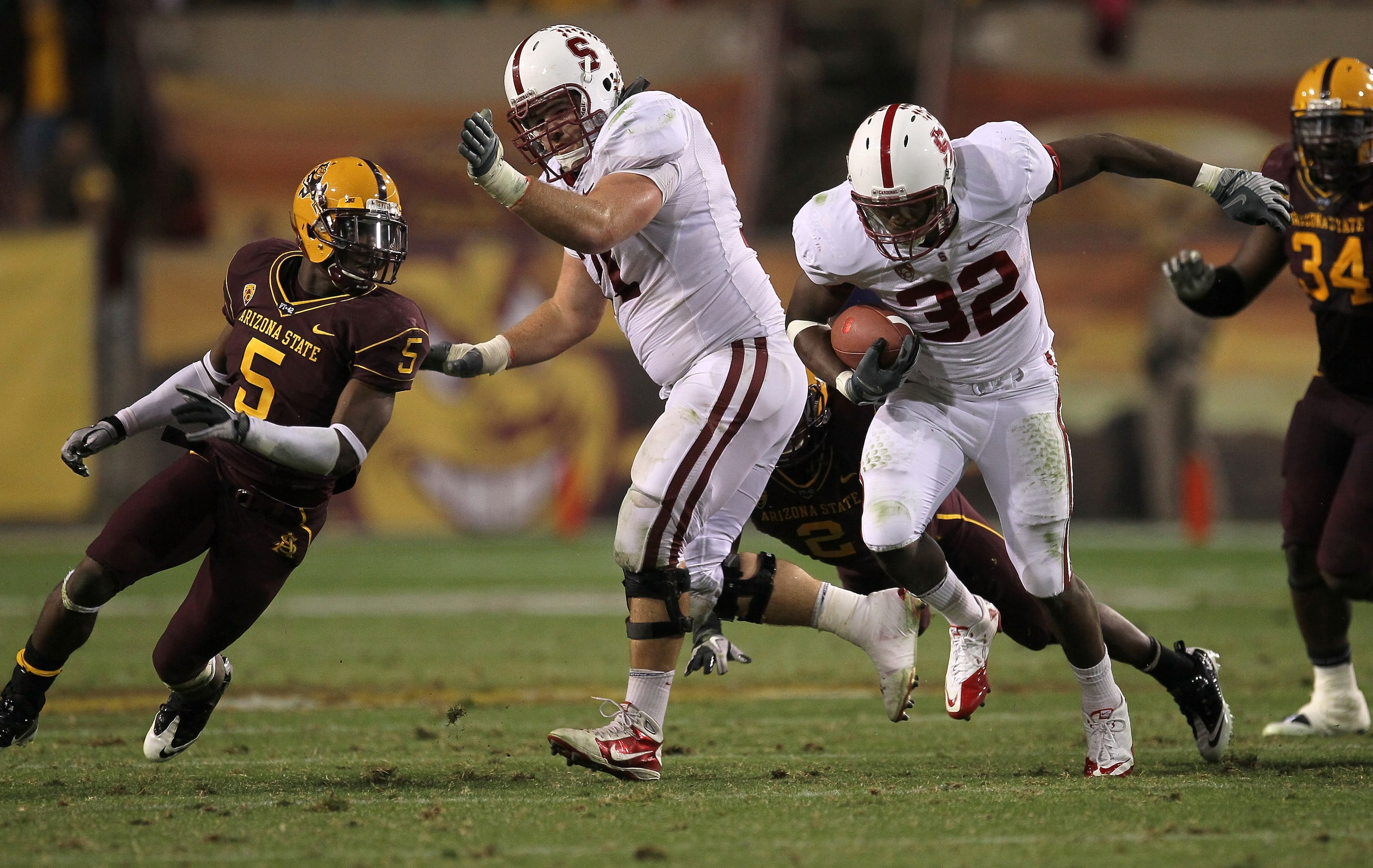
A first team All-American center, Beeler was a fifth-year senior serving as the anchor of Andrew Luck’s line. Behind Beeler and company, Luck was sacked the second fewest times in the nation and the Cardinal were able to rush for 211 yards a game.
Despite being slightly undersized at 285 pounds, Beeler is an excellent run blocker with deceptive strength.
Ultimately though, his strength is not deceptive enough. He's on the fringe of the draft because he needs to bulk up and skinny centers are notoriously undervalued.
11. FS Mark LeGree, Appalachian State
10 of 20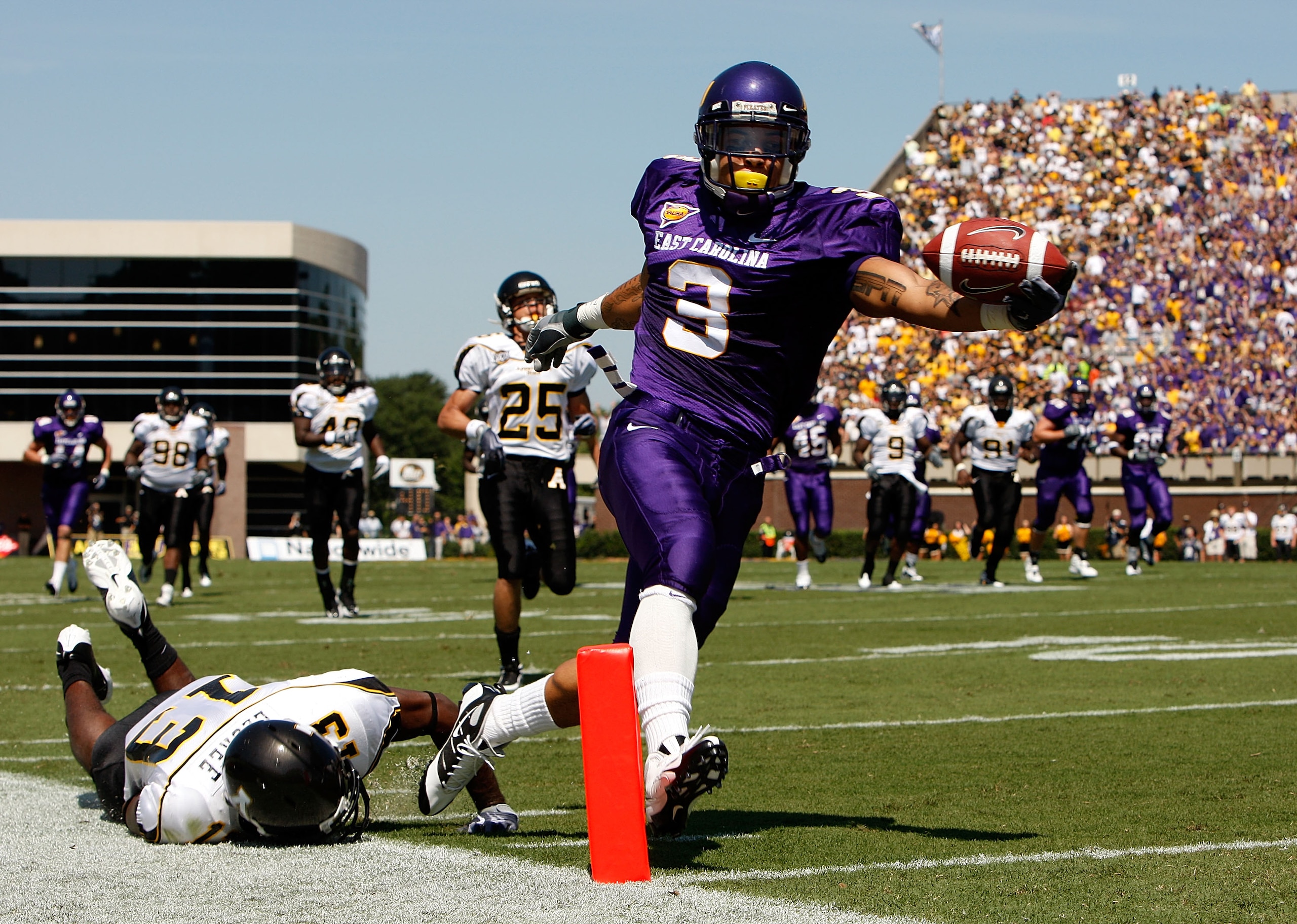
Taking over three years ago for three-time All-American safety Corey Lynch, Mark LeGree stepped in and didn’t miss a beat. He finished his career as the active leaver in Division I interceptions (22) and by the end of last year, nobody would throw at him.
LeGree is physical, rangy and has great instincts.
He falls because he lacks elite speed and transitioning to a faster game could potentially limit his effectiveness.
10. CB Korey Lindsey, Southern Illinois
11 of 20
Lindsey picked off 12 passes over the course of his sophomore and junior years and added one more in 2010 (the one pick being a result of much less opportunity).
His feet are quick, his football IQ is high and his production has been commensurate.
The questions surrounding Lindsey are the same as the ones surrounding McGree—can he make the jump from Southern Illinois to the NFL? With Lindsey, the answer is more likely to be yes.
9. WR Derrell Johnson-Koulianos, Iowa
12 of 20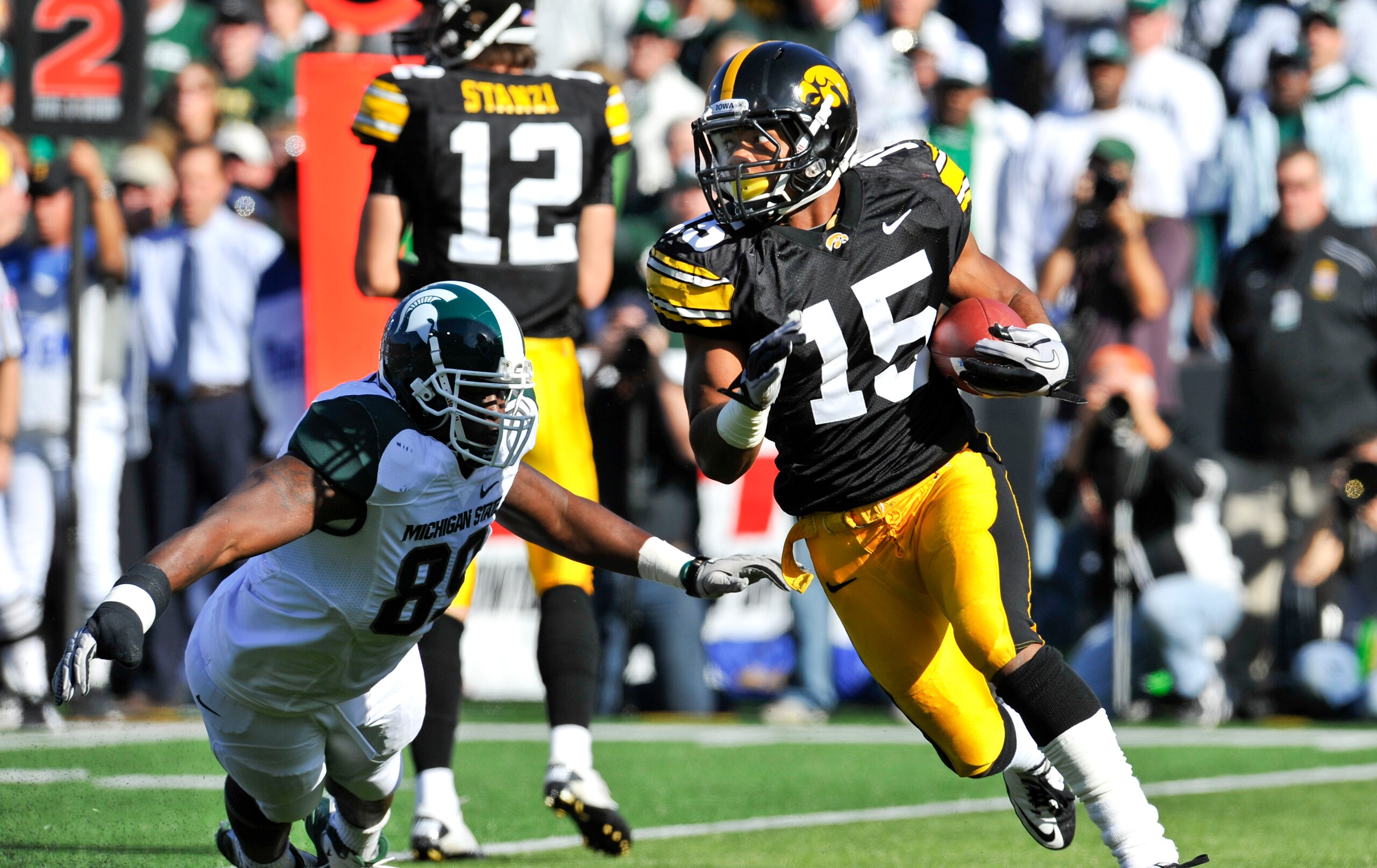
Just the third player in Iowa history to lead the team in receiving yards for three consecutive years, Johnson-Koulianos has the production, size and athletic ability of a future NFL receiver.
But DJK will fall in the draft because he was suspended for the Insight Bowl (an Iowa victory) after being arrested this past December on drug charges. (He pleaded guilty to marijuana possession and the rest of the charges were dismissed.)
Johnson-Koulianos has been saying all the right things for the past two months, but drug charges have a history of negatively affecting draft stock and DJK’s will be no different.
8. QB Mitch Mustain, USC
13 of 20
There’s a lot to like about Mustain and perhaps his biggest flaw is simply that he’s never produced. He transferred from Arkansas to get out from under Ryan Mallett, only to find himself under Matt Barkley at USC.
Mustain was a monstrously successful high school quarterback and, as nflsoup.com correctly points out, there are some Matt Cassel parallels here.
The team that gets Mustain could find him capable of filling a similar role.
Or, at worst, filling the medicine cabinet.
7. WR Greg Salas, Hawaii
14 of 20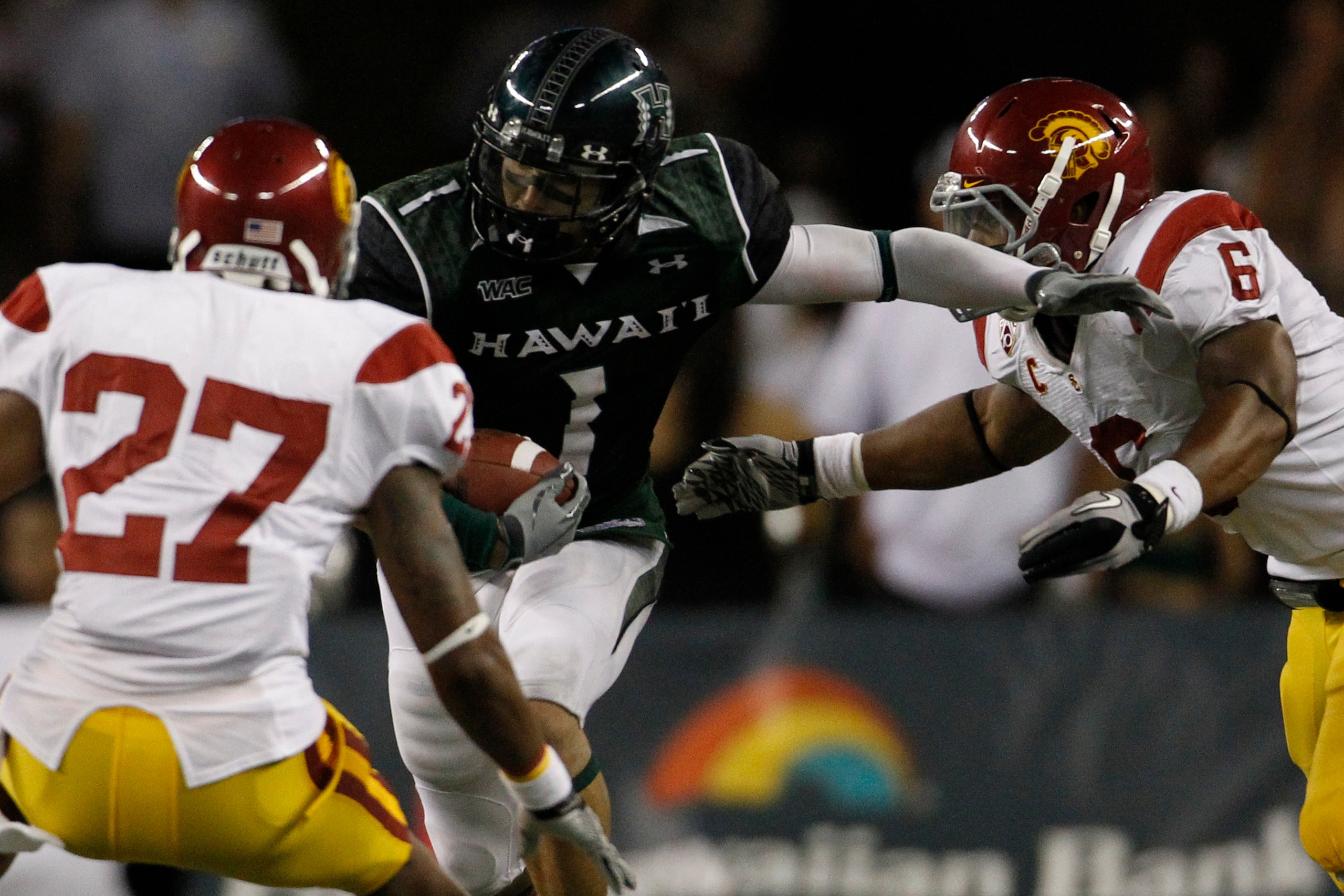
Salas enjoyed a remarkably productive career at Hawaii, amassing 285 receptions, 4,345 receiving yards and 26 touchdowns. He is Hawaii’s career leader in receiving yards.
At 6'1", 206 pounds, Salas has good size for a receiver to go along with excellent hands, but he struggles to make plays after the catch and is not a vertical threat. And his numbers, while impressive, are clearly inflated by Hawaii’s pass-happy attack.
The key for Salas will be to find a team that emphasizes his strengths. There are worse things to be than a receiver who can catch.
6. TE Weslye Saunders, South Carolina
15 of 20
Saunders is not so much a college star as he is unusually talented for a player unlikely to be drafted.
Saunders is huge (6'5", 272) and surprisingly athletic—big enough to take on defensive ends, fast enough to run by linebackers.
However, he did not play in 2010 as a result of a suspension and he was not particularly productive when he did play prior.
After much hullabaloo, an attorney for Saunders recently declared his client officially draft eligible.
At this point, it may not matter.
5. RB Vai Taua, Nevada
16 of 20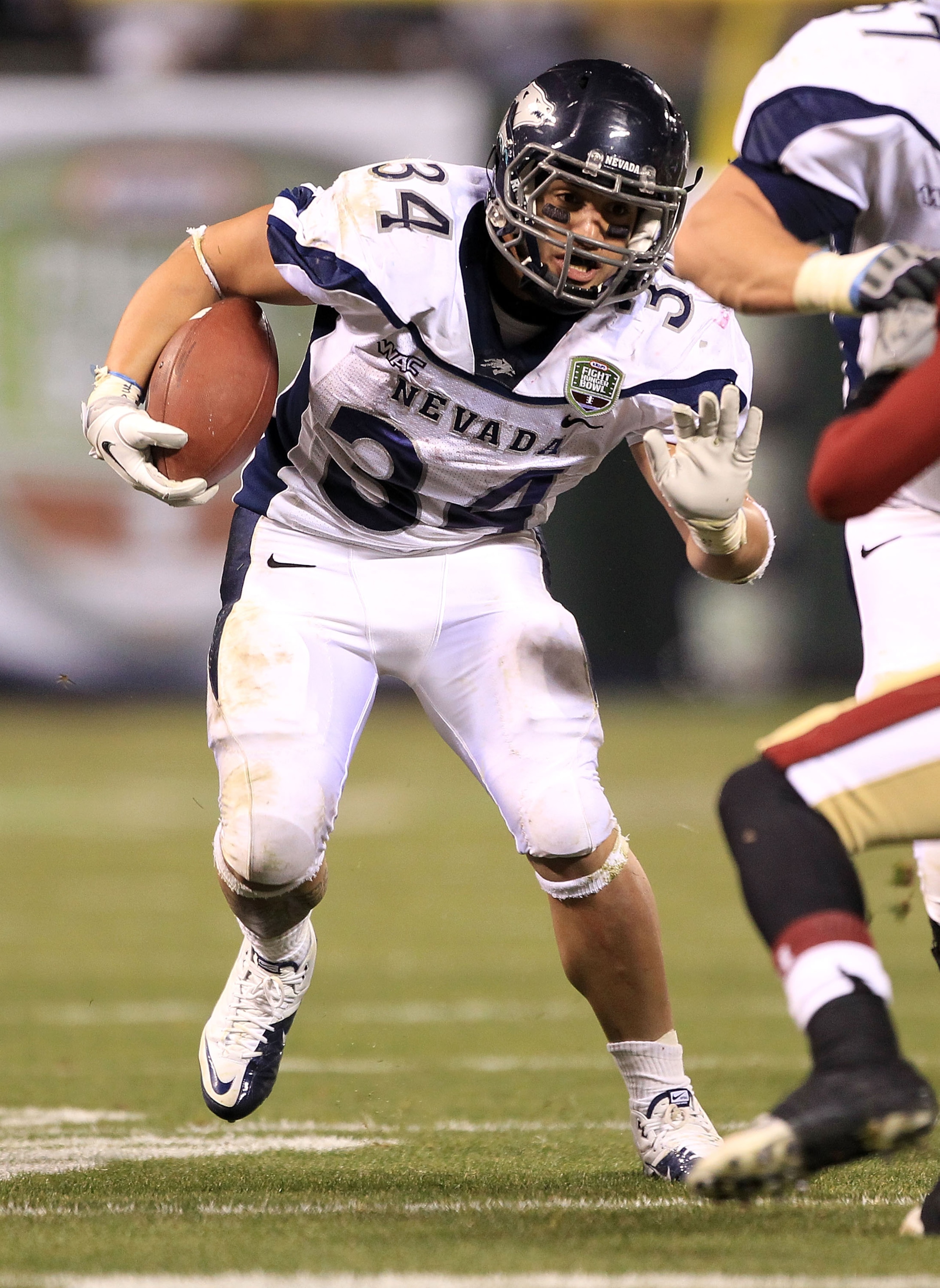
The Nevada bruiser was first team All-WAC, a third team All-American and put up a hefty 1,623 yards on 284 rushes this season.
He’s rushed for over 1,300 yards in each of the past three years.
The downside with Taua is that he’s not particularly fast (running the 40 in the mid-4.5’s) and not very powerful.
He’s steady, consistent and quite likely the type of back who will be signed after the draft.
4. RB Noel Devine, West Virginia
17 of 20
Undoubtedly one of the most exciting backs in college football, Devine faces one major obstacle in getting drafted—his size.
At 5'8", 176 pounds, there is just no way he projects as a frequent ball handler.
But with that said, Devine can be electric. His legitimate 4.3 speed and top-tier elusiveness make him a nightmare in the open field. And though more occasionally fantastic then consistently good, Devine’s skill set is always in demand.
Ultimately, I think his positives outweigh his negatives and Devine sneaks into the latter part of the draft.
3. OG Justin Boren, Ohio State
18 of 20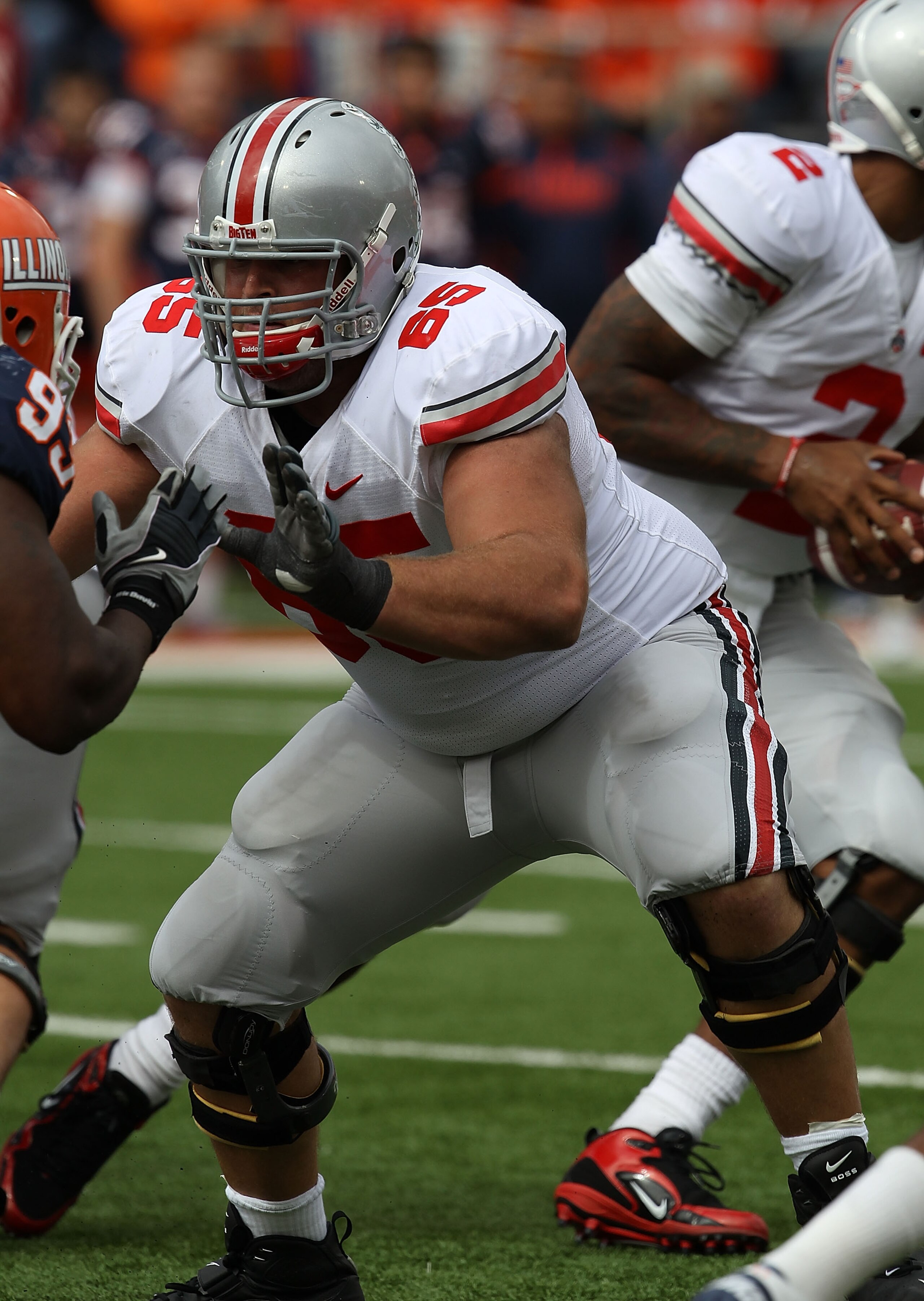
Boren is a tough and physical interior lineman who did the unthinkable in transferring from Michigan to Ohio State in 2008.
Boren gets a nice burst off the snap and works to finish his blocks at the second level.
He’s above-average in the passing game, but this is where he’ll need to improve in the NFL. JB is only an adequate athlete and has limited lateral range.
That said, there’s a lot to like here. Well-sized at 6'3", 320, Boren should be drafted.
He was first team All-Big Ten and second team All-American in 2010.
2. RB Roy Helu, Nebraska
19 of 20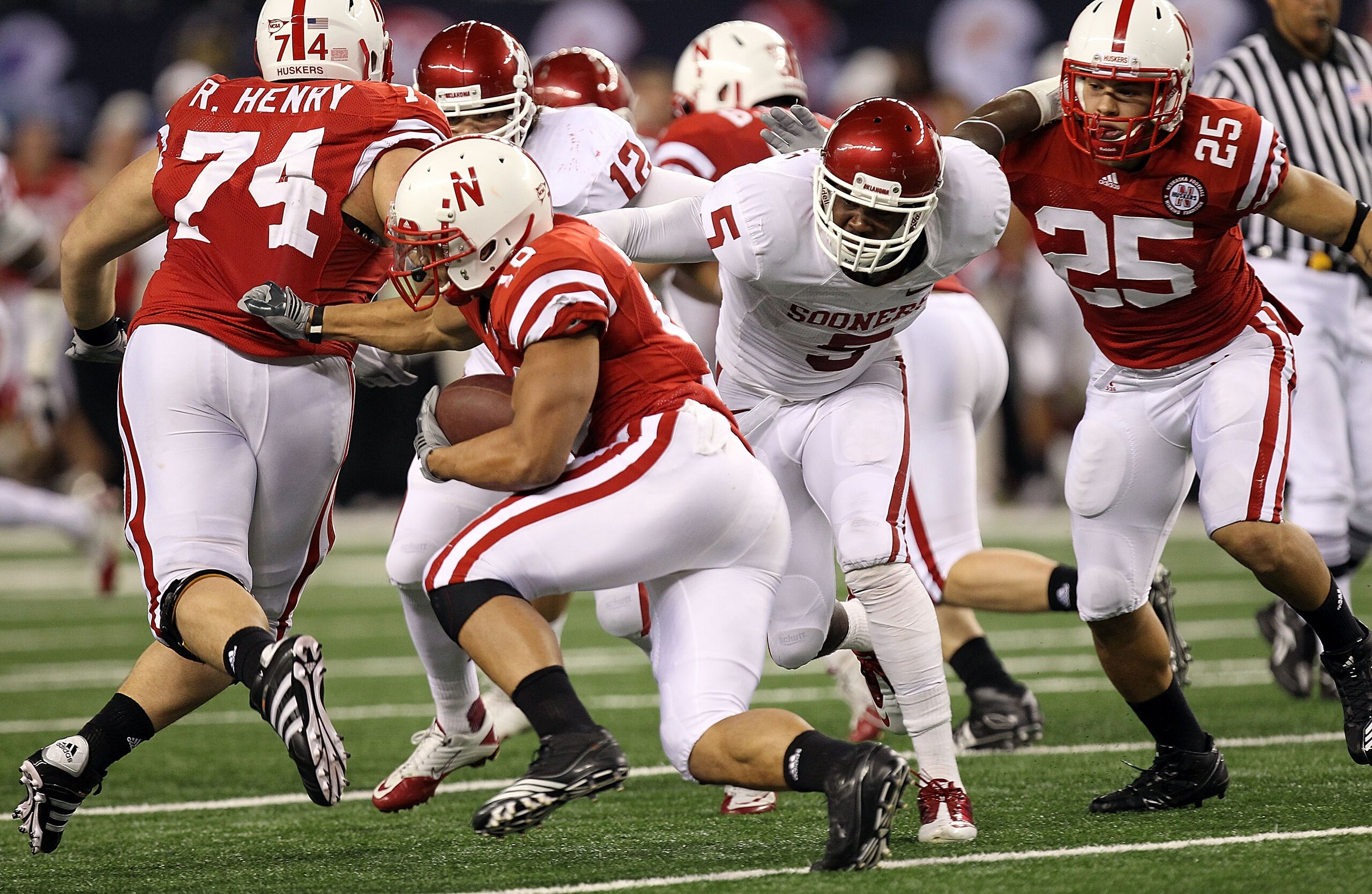
The 5'11", 216-pounder has been one of the most effective runners to ever grace the Cornhusker backfield. This past season, Helu rushed for a team high 1,245 yards and 11 touchdowns, moving him into the top five on Nebraska’s career rushing list.
He’s a tremendously explosive back, sets up his blocks well and has the speed to make long runs.
His negatives primarily revolve around an occasional hesitancy to attack at the line of scrimmage, which can neutralize his own ability. That and he’s not much of a blocker.
Helu is presently considered a fringe seventh-rounder, but when draft day rolls around, I wouldn’t be surprised to see that change. Backs this productive at big programs tend to stay productive in the NFL.
1. WR Cecil Shorts, Mount Union
20 of 20
At 6'0", 200 pound, with legitimate 4.4 speed, Cecil Shorts is a man amongst boys at the Division III level.
He’s coming off his third straight 1,000 yard season and he’s been named to the DIII All-American team three straight years as well.
The biggest (only?) knock on Shorts is that he’s thin and his strength has yet to be tested while playing against lesser competition.
Shorts may not (but probably will) get drafted and he'll look to follow in the footsteps of fellow DIII standout Pierre Garcon when he hits the league.
.jpg?w=2560 "Steelers Saints Football")



.jpg?w=2560 "🚨 Week 8 AP Top 25 Poll")
