

The All-Time Top 20 Men's Australian Open Champions
It used to take 45 days on a ship to get to Australia from Europe.
For that reason, in the early days, the Australian Championships were not well-attended by players outside of Australia and, at times, or even by their own players.
But as the world grew smaller, the importance of this colorful slam down under grew until now it ranks up there with the other three, receiving the attention from the players and the media the Australian Open so richly deserves.
This year as the 2011 Australian Open gets underway, the world is focused on many fascinating tennis stories.
For example, the women will be looking to crown a new champion with the absence of last year’s winner and former World No. 1 Serena Williams.
On the men’s side, the questions center on whether Rafael Nadal will be able to complete his “Rafa Slam," winning the Australian Open––owning all four major titles at one time.
No one has accomplished that since Aussie Rod Laver completed his own grand slam in 1969.
There is also much speculation wondering if Roger Federer, who is the defending champion, can win career grand slam title No. 17.
It would also give Federer five Australian Open Championships, which has not happened in the Open Era of men’s tennis.
Such a win would surely boost Federer higher on the list of the 20 all-time greatest Australian Open Champions.
No. 20 Boris Becker: Won In 1991 and 1996
1 of 20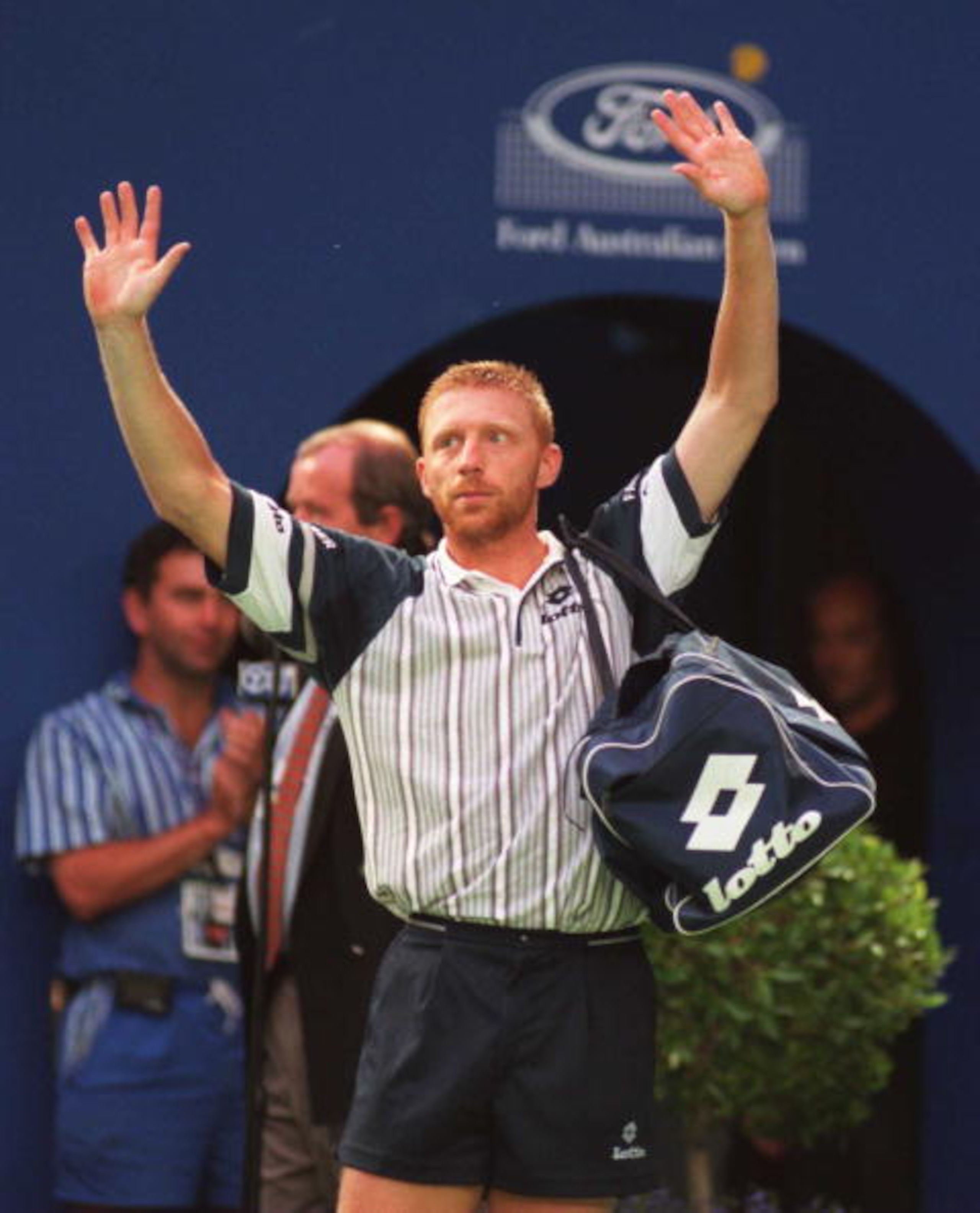
No. 20 Boris Becker (Won 1991 and 1996) - 2 Finals, 2 Wins
Boris Becker is best known for winning the Wimbledon Championship at age 17 as an unseeded player.
Totally, Becker won six career grand slam titles, his final one coming in Melbourne.
The big German won the Australian Open first in 1991, defeating Ivan Lendl 1-6, 6-4, 6-4, 6-4.
It marked the last time the former World No. 1 Lendl made a major final in his career. It also gave Becker the No. 1 ranking.
Becker won the Australian Open title again in 1996 defeating American Michael Chang in the final 6-2, 6-4, 2-6, 6-2.
This proved to be Becker’s last appearance in a slam final.
In total Becker played in 11 Australian Open Championships winning two.
His total win-loss record was 29-9 giving him a winning percentage for the Australian Open of 76.3.
No. 19. Ashley Cooper: Consecutive Winner In 1957 and 1958
2 of 20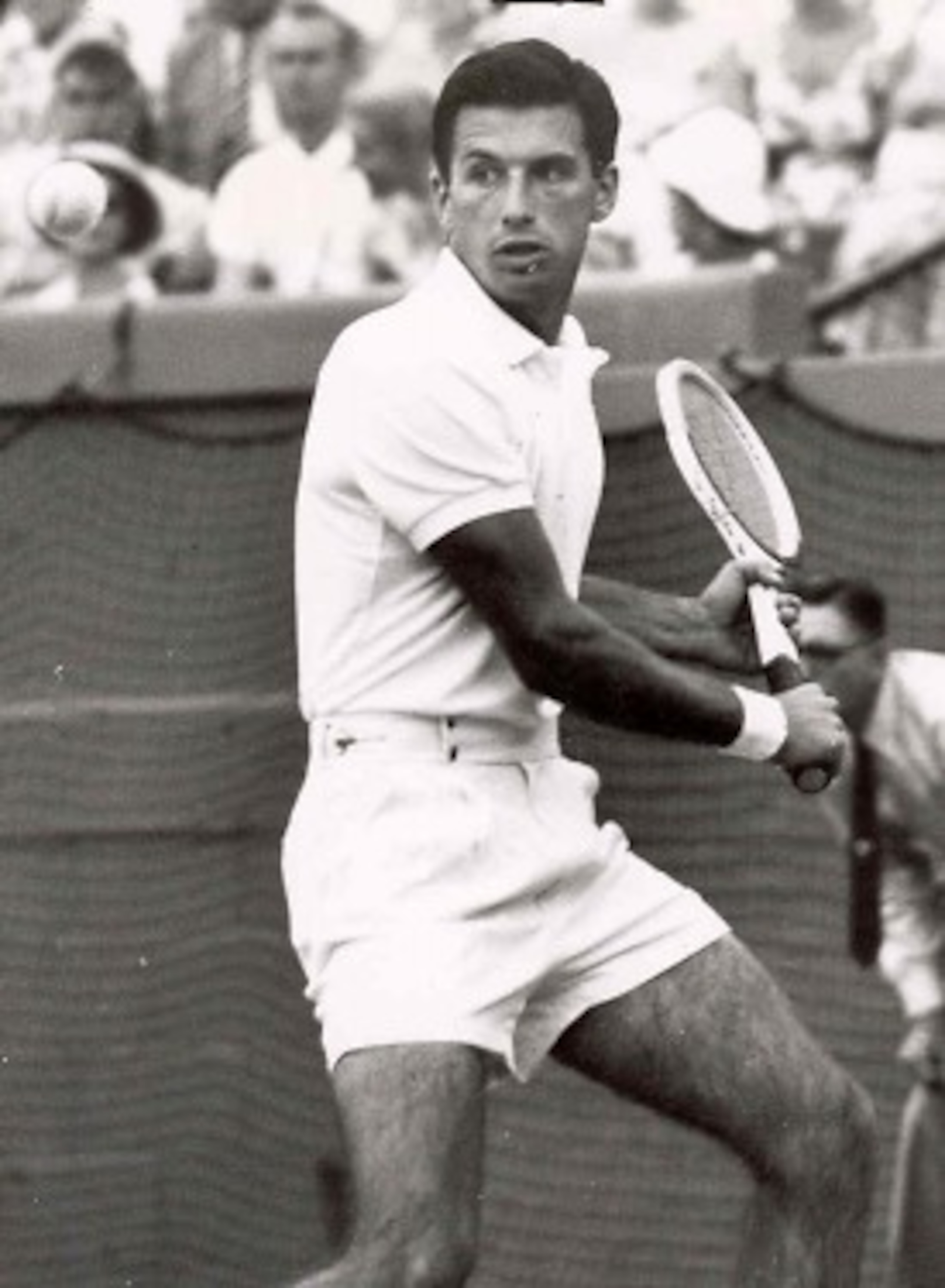
No. 19. Ashley Cooper (Won 1957 and 1958) - 2 Finals, 2 Wins
Like many of the great champions on this list, Ashley Cooper was an Aussie.
This former World No. 1 tennis player was born in Melbourne.
1958 was a stand out year for Cooper.
That year Cooper won three of the four major championships. He remains only one of ten men to accomplish that feat.
Cooper began the year winning the Australian Open. In 1958 he went on to capture Wimbledon and the U.S. Open Championship.
Unfortunately, Cooper lost in the finals of the French.
His opponent in the finals of the 1958 Australian Open was Malcolm Anderson. Cooper won that match 7-5, 6-3, 6-4.
It was the Aussie’s second consecutive win at the Australian Open.
Cooper had captured the title first in 1957 against fellow Aussie Neale Fraser 6-3, 9-11, 6-4, 6-2.
No. 18 Johan Kriek: Consecutive Winner In 1981 and 1982
3 of 20
No. 18 Johan Kriek (Won 1981 and 1982) - 2 Finals, 2 Wins
Johan Kriek was born in South Africa in 1958, moving to the United States where he developed his tennis prowess.
During his career Kriek won 14 singles titles and eight titles in doubles. His only two slam trophies, however, were captured in Australia.
His greatest triumph was winning back-to-back titles at the Australian Open in 1981 and 1982 defeating American Steve Denton both times.
During those years, of course, the tournament was still being played on grass.
Kriek’s win over Denton 6-2, 7-6, 6-7, 6-4 was the South African’s first grand slam singles title.
The next year, his repeat win over Denton was a bit easier 6-3, 6-3, 6-2.
It was Kriek’s last slam appearance, but the South African certainly left his mark on the Australian Open.
_0.png?w=2560 "CFB Top 25")

.png?w=2560)
No. 17 Jim Courier: Consecutive Winner In 1992 and 1993
4 of 20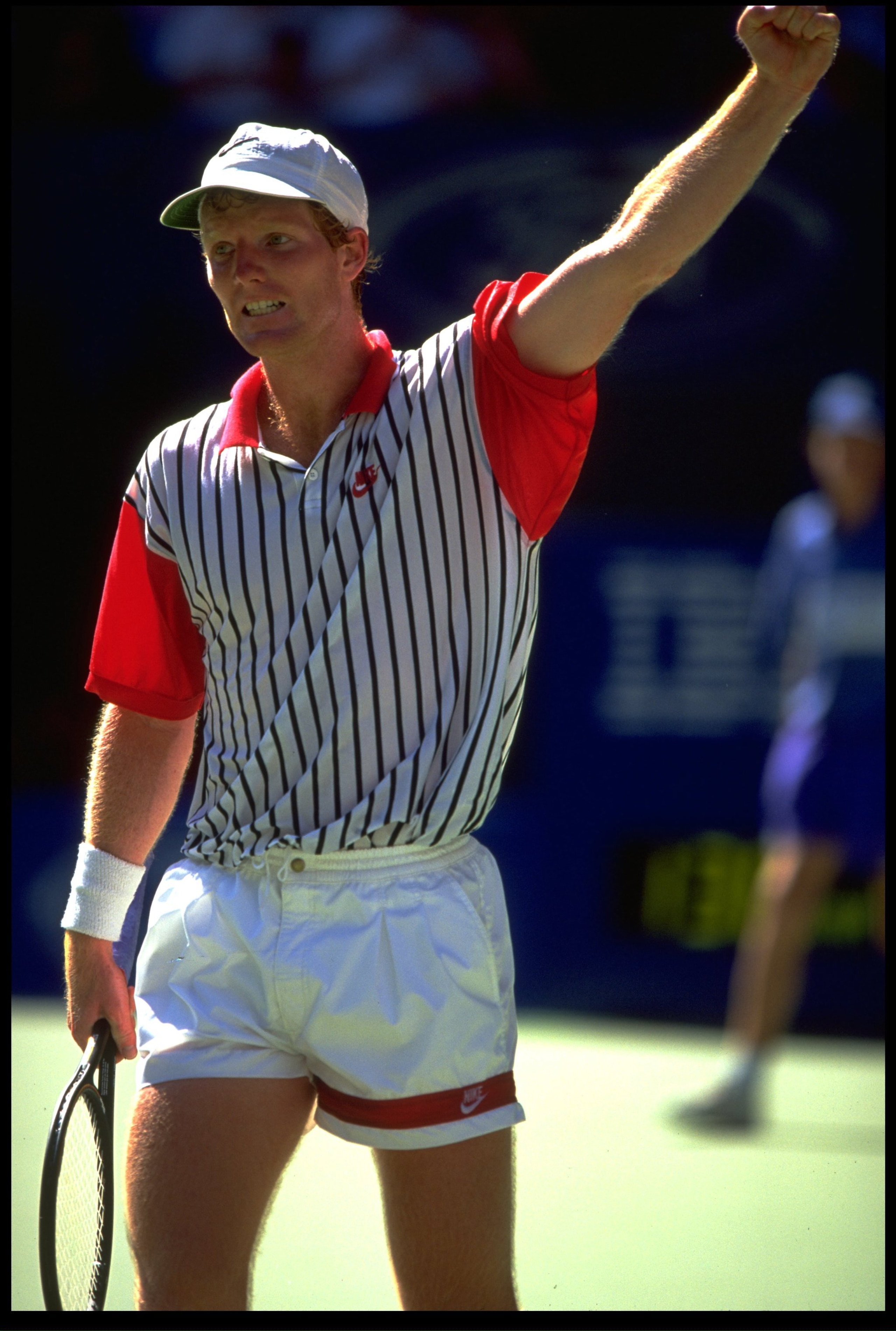
No. 17. Jim Courier (Won 1992 and 1993) - 2 Finals, 2 Wins
In 1992, American Jim Courier won the first of his back-to-back titles in Melbourne.
Courier’s opponent in the final was Sweden's Stefan Edberg.
The American dispatched Edberg 6-3, 3-6, 6-4, 7-5 capturing his first Australian Open championship and his second slam title overall.
In 1993 Courier once again faced the Swede in the finals in Melbourne, winning a second time 6-2, 6-1, 2-6, 7-5.
The win marked the final time either of these great champions would battle for an Australian Open championship.
In all, Courier appeared in 10 Australian Open Championships, winning two of them.
His overall win-loss record was 35-8 giving Courier a winning percentage of 81.4.
No. 16 John Newcombe: Won In 1973 and 1975, Runner-Up In 1976
5 of 20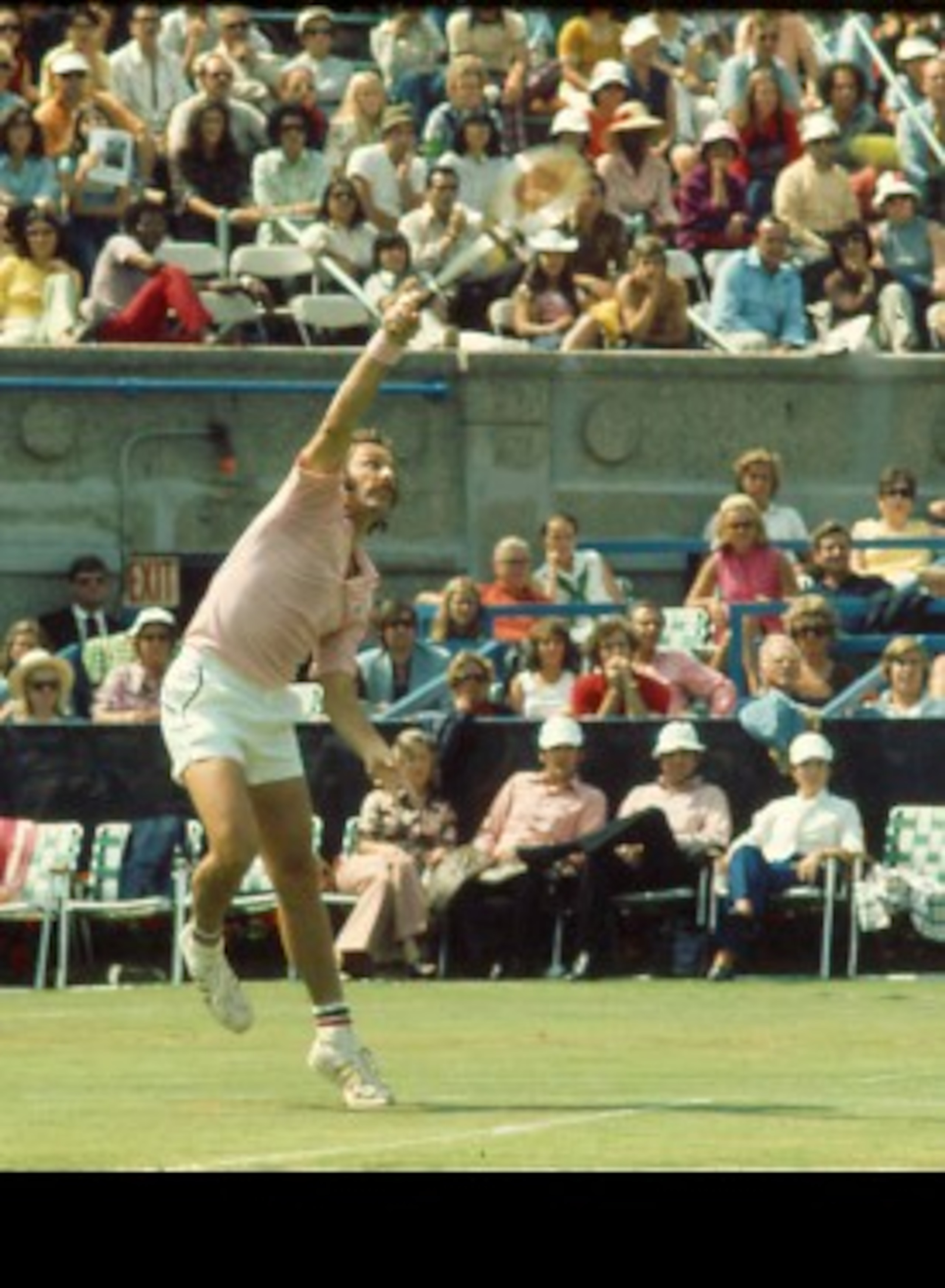
No. 16. John Newcombe (Won 1973 and 1975 - RU 1976) - 3 Finals, 2 Wins.
John Newcombe was one of several Australian men who won Australian Open Championships.
But in addition to his two Australian Open titles, Newcombe won three Wimbledon and two U.S. Open trophies.
In the late 1950s through the 1960s and early 1970s, the Australians dominated the game which was played primarily on grass.
Newcombe, like many of his contemporaries, played serve and volley tennis, employing a dominating serve.
The Aussie was one of the best of his era.
Newcombe won his first Australian Open by defeating Onny Parun of New Zealand 6-3, 6-7, 7-5, 6-1.
The Aussie’s second Australian Open title came when Newcombe defeated American Jimmy Connors 7-5, 3-6, 6-4, 7-5.
Perhaps Newcombe’s most famous match came in his defeat in the finals of the 1976 Australian Open to Aussie Mark Edmondson whose rise to win the championship could not have been more improbable.
Two weeks prior to the start of the Australian Open in 1976, Edmondson was working as a window cleaner.
Ranked No. 212 in the world, Edmondson defeated John Newcombe in the final 6-7, 6-3, 7-6, 6-1.
No. 15 Pete Sampras: Won In 1994 And 1997, Runner-Up In 1995
6 of 20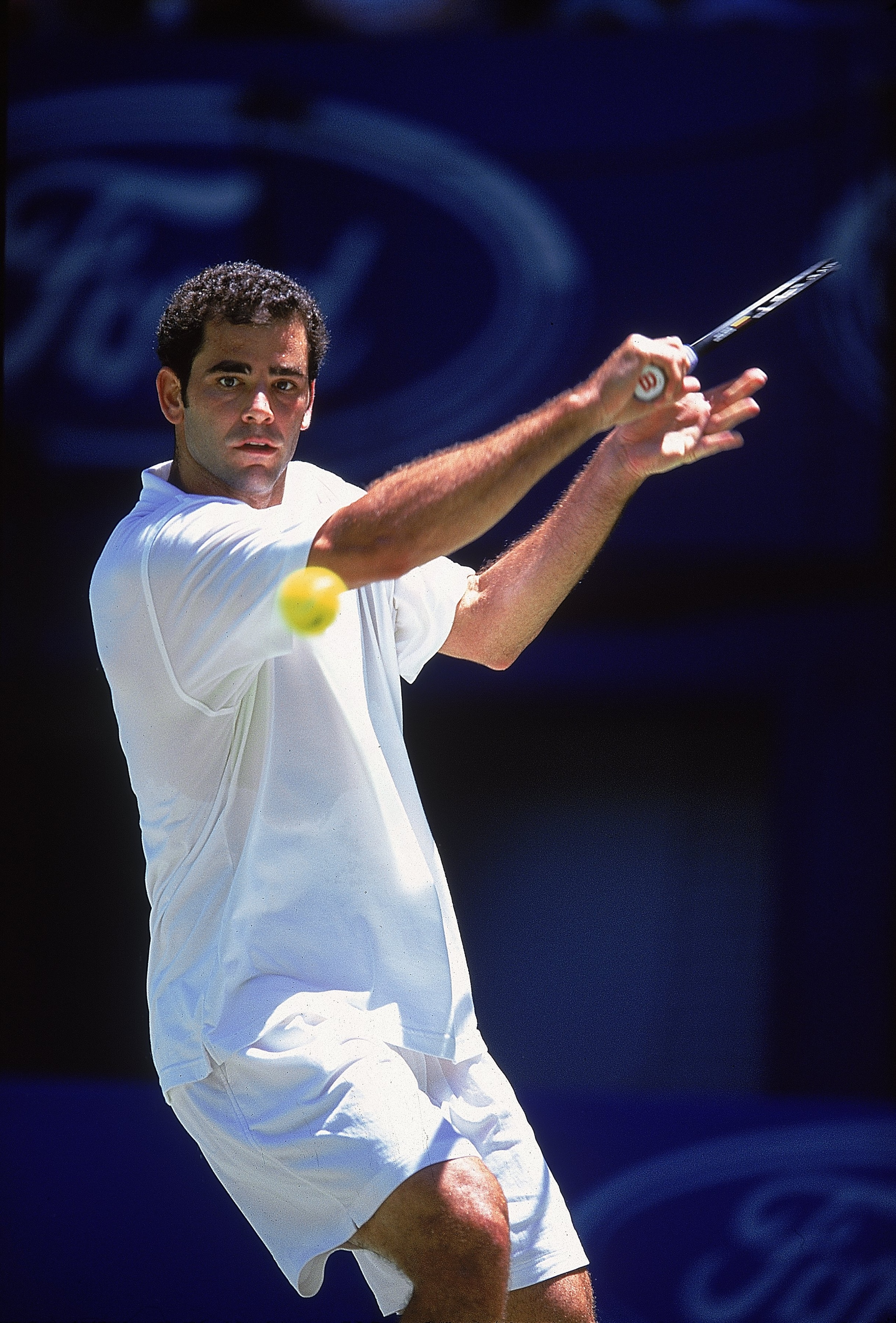
No. 15 Pete Sampras (Won 1994 and 1997 - RU 1995) - 3 finals, 2 wins
Arguably one of the greatest men ever to step foot on a tennis court, Sampras made the journey down under to compete in the Australian Open 11 times.
Better known for his play on the grass courts of Wimbledon, American Pete Sampras won two Australian Open Championships and was runner-up once in 1995.
His first Australian Open title came in 1994, defeating fellow American Todd Martin 7-6, 6-4, 6-4 to win his fourth career grand slam but Sampras' first in Melbourne.
In 1997, Sampras was able to win his second Australian Open championship, his ninth grand slam title overall.
He defeated Spaniard Carlos Moya in the 1997 final 6-2, 6-3, 6-3.
In 1995, Sampras lost in the final to fellow American Andre Agassi 4-6, 6-1, 7-6, 6-4.
In all, Sampras played in 11 Australian Open Championships, winning two titles in three final appearances with an overall win-loss record of 45-9.
Sampras had a winning percentage of 83.33 at the Australian Open.
No. 14 Frank Sedgman: Consecutive Winner In 1949 and 1950, Runner-Up In 1952
7 of 20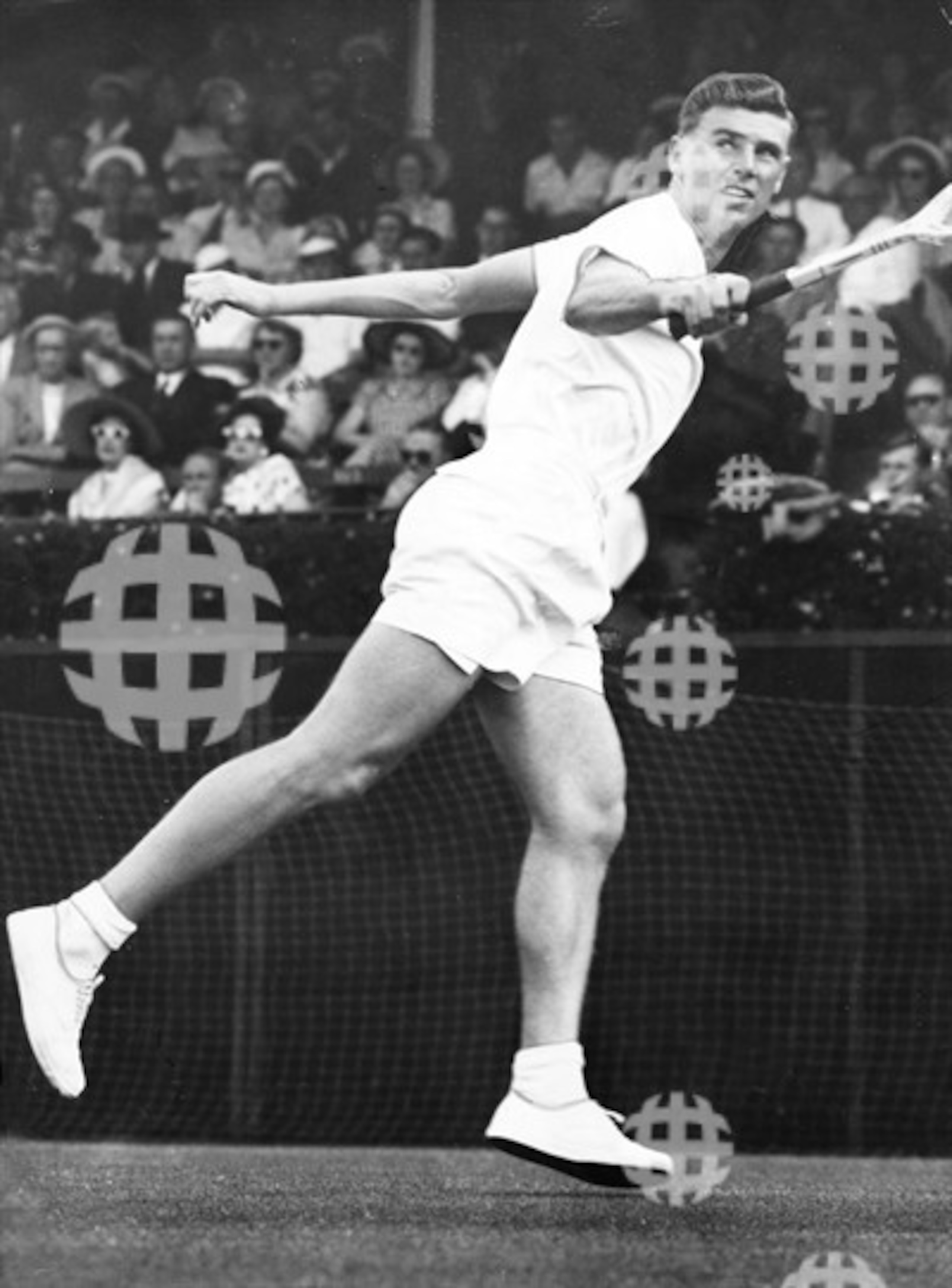
No. 14 Frank Sedgman (Won 1949 and 1950 - RU 1952) - 3 Finals, 2 Wins
Frank Sedgman was another Aussie who played a spirited and aggressive game of tennis.
In total Sedgman won five career grand slam titles and helped Australia secure three Davis Cup wins in the early '50s.
From 1949 through 1952, Sedgman lived tennis, winning 22 grand slam titles in singles, doubles and mixed doubles.
He won his first Australian Open title in 1949 defeating fellow Aussie John Bromwich 6-3, 6-2, 6-2.
A year later, Sedgman won his second title down under by defeating Aussie Ken McGregor 6-3, 6-4, 4-6, 6-1.
McGregor returned the favor in 1952, by defeating Sedgman in the final 7-5, 12-10, 2-6, 6-2.
The former World No. 1 Sedgman turned pro in 1953 in order to make a living playing tennis as did many players prior to the start of the Open Era in 1968.
No. 13 Guillermo Vilas: Consecutive Winner In 1978 and 1979, Runner-Up In 1977
8 of 20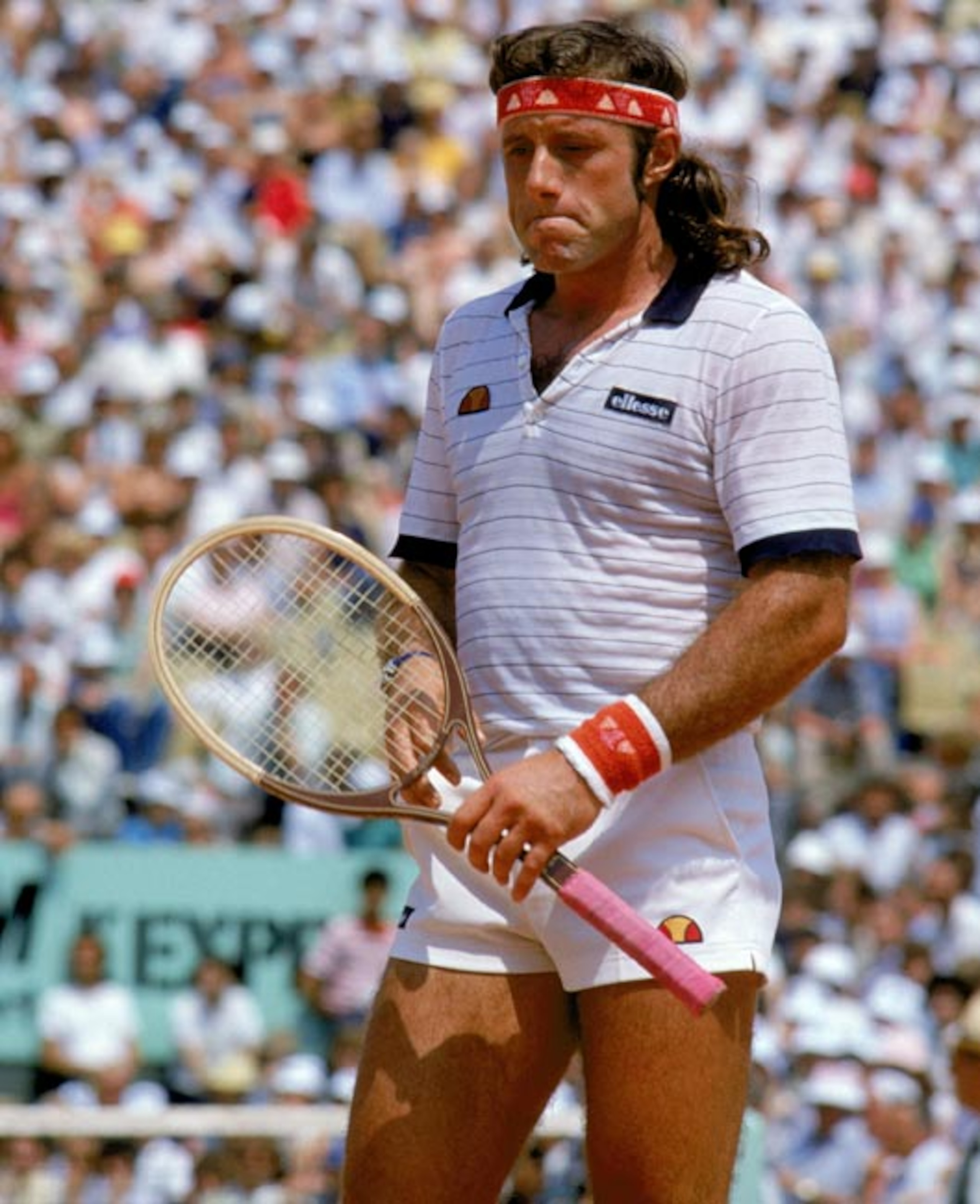
No. 13 Guillermo Vilas (Won in 1978 and 1979 - RU 1977) - 3 Finals, 2 Wins
Argentine Guillermo Vilas, who owned four career grand slam titles, enjoyed the Australian grass, winning two titles there. He could never adapt, however, to the lawns at Wimbledon. That title always eluded him.
Vilas won his first Australian Open Championship in 1978, defeating Australian John Marks in the final 6-4, 6-4, 3-6, 6-3.
It gave Vilas his third career grand slam title.
The following year, Vilas repeated this feat capturing his second consecutive Australian Open title this time by defeating American John Sadri 7-6, 6-3, 6-2.
In 1977, when the Australian Open was played twice––once in January and once in December––Vilas played in the January tournament. The Argentine lost in the final. He was the runner-up to American Roscoe Tanner who won 6-3, 6-3, 6-3.
In all Vilas appeared in five Australian Open Championships, winning two, with an overall record of 23-3.
Vilas’ winning percentage for the Australian Open was 88.46.
No. 12 Ivan Lendl: Consecutive Winner 1989 and 1990, Runner-Up In 1983 and 1991
9 of 20
No. 12 Ivan Lendl (Won 1989 and 1990 - RU 1983, 1991) 4 finals, 2 wins.
The great Ivan Lendl, who won eight career grand slam titles, did his best in Melbourne toward the end of his long and illustrious tennis career.
Lendl captured his first Australian Open Championship in 1989 by defeating enigmatic Miloslav Mecir 6-2, 6-2, 6-2.
It marked Lendl’s seventh career grand slam title.
The Czech followed up this triumph by repeating the feat the following year, defeating Stefan Edberg 4-6, 7-6, 5-2 (Edberg retired).
Lendl appeared in two other finals, losing both. In 1983, Lendl fell victim to Swede Mats Wilander 6-3, 6-3, 6-2 and in 1991 Lendl lost to German Boris Becker 1-6, 6-4, 6-4, 6-4.
Lendl appeared in 12 Australian Open Championships, winning two out of four finals with an over all win-loss record of 48-10.
Lendl’s Australian Open winning percentage was 82.76.
No. 11 Stefan Edberg: Won In 1985 and 1987, Runner-Up In 1990, 1992 and 1993
10 of 20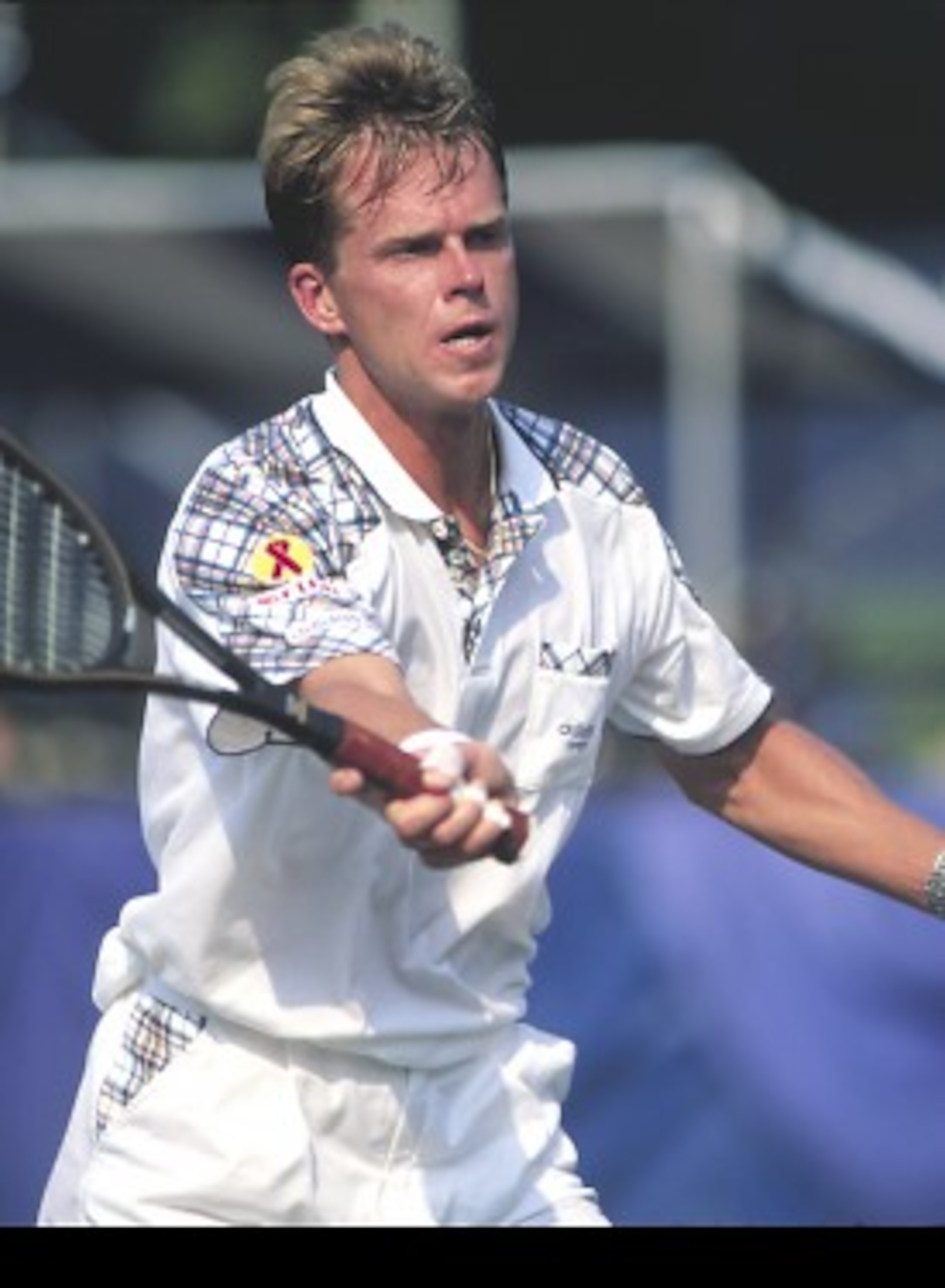
No. 11 Stefan Edberg (Won 1985 and 1987, RU 1990, 1992, 1993) - 5 Finals, 2 Wins
It is understandable that the serve and volley style of play perfected by Stefan Edberg gave the Swede the edge he needed to win the Australian Open when it was played on grass.
In 1985 Swede Stefan Edberg won his first Australian Open title and his first career grand slam title in Melbourne.
He defeated fellow Swede Mats Wilander in the final 6-4, 6-3, 6-3.
In 1987, Edberg found himself again in the finals of the Australian Open facing Aussie Pat Cash.
The two battled for five sets with Edberg winning the match 6-3, 6-4, 3-6, 5-7, 6-3.
This gave the Swede his second grand slam title and his second Australian Open Championship.
Edberg also appeared in three more finals when he did not capture the crown.
In 1990 he lost to Ivan Lendl and in 1992 and 1993, Edberg lost to Jim Courier.
In all Edberg played in 13 Australian Open Championships, winning twice while appearing in five finals with an overall win-loss record of 56-10.
The Swede’s winning percentage in Melbourne was 84.85.
No. 10 John Bromwich: Won 1939 & 1946, Runner-Up In 1937, 1938, 1947, 1948, 1949
11 of 20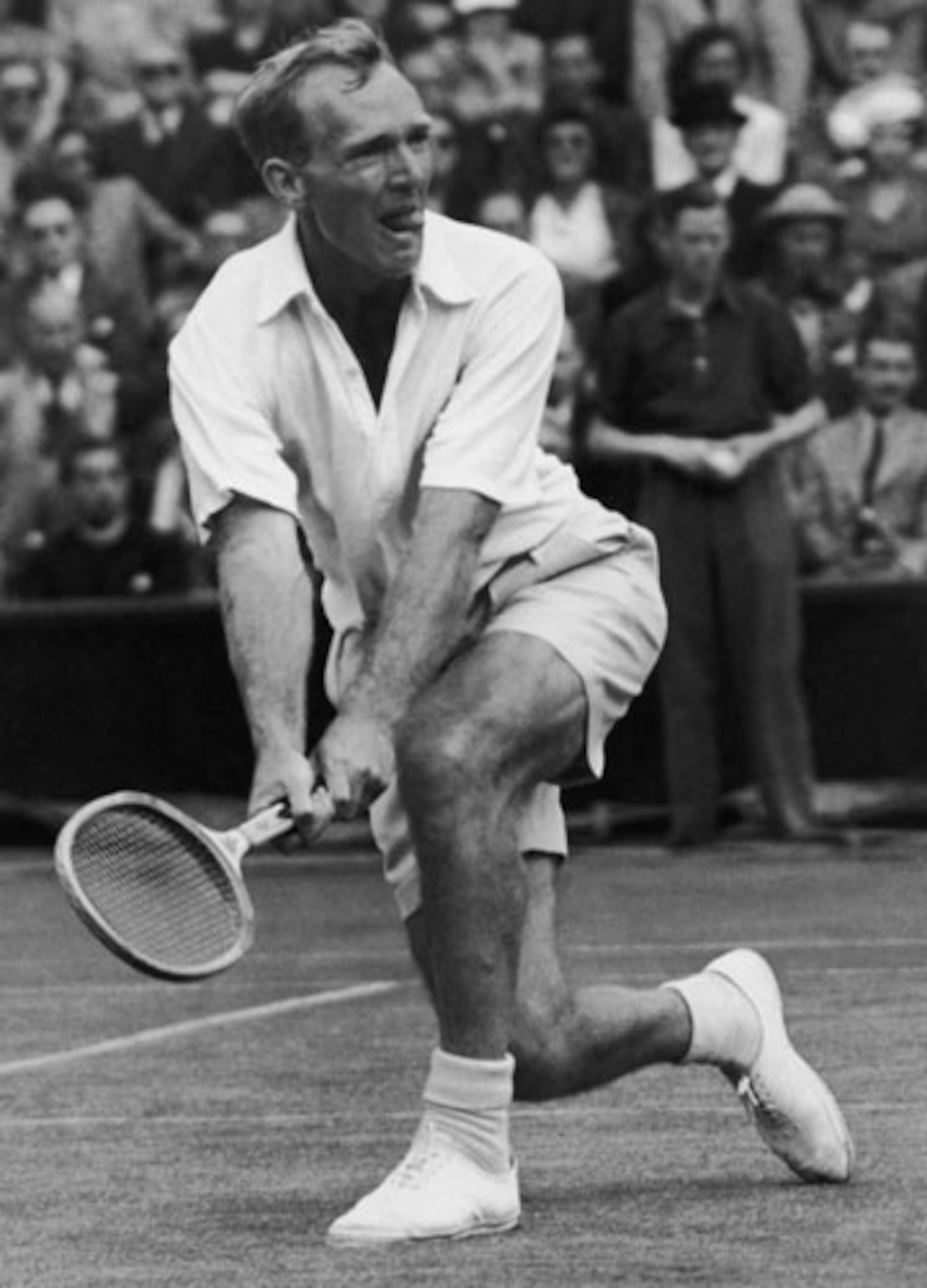
No. 10 John Bromwich (Won 1939 and 1946 - RU 1937, 1938, 1947, 1948, 1949 ) 7 Finals, 2 Wins.
Born in Sydney, John Bromwich was an innovator who helped usher in the two-handed forehand.
Primarily a doubles player, Bromwich could also obviously hold his own on the singles court.
He won his first Australian Open in 1939, defeating fellow Aussie Adrian Quist 6-4, 6-1, 6-3.
After the war in 1946, Bromwich again captured the Australian Open title over fellow Aussie Dinny Pails 5-7, 6-3, 7-5, 3-6, 6-2. It was a hard-fought contest.
Bromwich was also runner up five times in 1937, 1938, 1947, 1948 and 1949.
In 1937 Bromwich fell to his doubles partner Vivian McGrath and in 1938 to American Don Budge.
In 1947 Bromwich lost to Dinny Pails, in 1948 to Adrian Quist and in 1949, he lost to fellow Aussie Frank Sedgman.
In all, Bromwich appeared in seven Australian Championship finals, winning twice.
No. 9 James Anderson: Won In 1922, 1924 & 1925
12 of 20
No. 9 James Anderson (Won 1922, 1924, 1925) - 3 Finals, 3 Wins.
Australian James Anderson won the Australian Open three times in the 1920s when the tournament was titled the Australasian Championships––back in the days when not many players traveled down under to participate.
Between 1919 and 1925 Anderson played in 15 Davis Cup ties for Australia and was well-known on the tennis circuit.
In 1922, Anderson defeated Aussie Gerald Patterson 6-0, 3-6, 3-6, 6-3, 6-2.
In 1924, he defeated Richard Schlesinger also from Australia 6-3, 3-6, 3-6, 6-3, 6-2.
Finally in 1925, Anderson upended Patterson again 11-9, 2-6, 6-2, 6-3.
In 1927, the tournament name changed to the Australian Championships.
No. 8 Adrian Quist: Won In 1936, 1940 & 1948, Runner-Up In 1939
13 of 20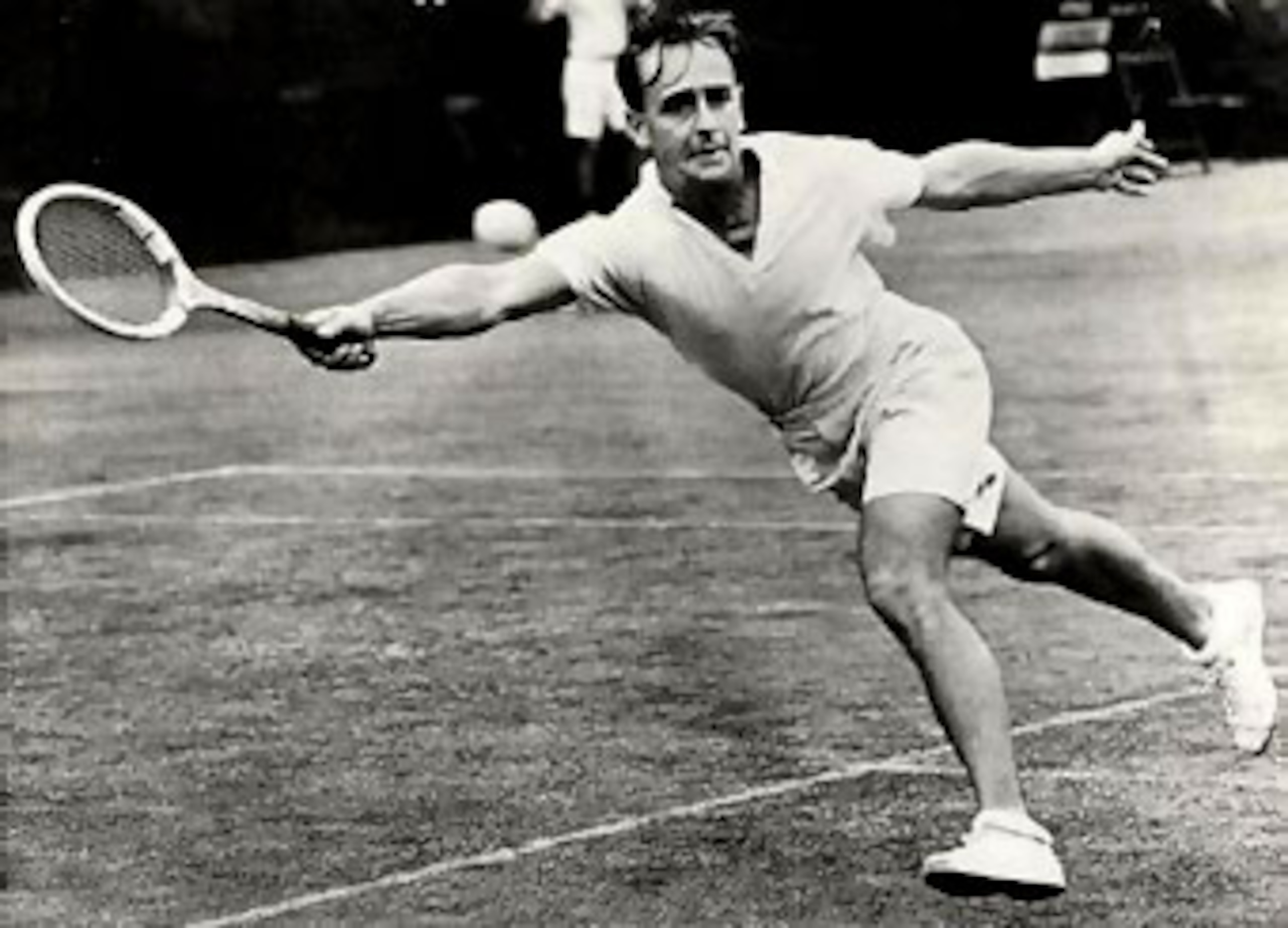
No. 8 Adrian Quist (Won 1936, 1940, 1948 - RU 1939) - 4 Finals, 3 Wins
Australian Adrian Quist won the Australian Open three times in singles but was known primarily for his stellar doubles play.
The Aussie's career was a long one played on tennis courts around the world.
Quist managed to capture his first singles title at the Australian Open in 1936 by defeating fellow Aussie Jack Crawford 6-2, 6-3, 4-6, 3-6, 9-7 in a tense five setter.
In 1940 Quist defeated Crawford again 6-3, 6-1, 6-2 in much easier fashion than their 1936 final.
Quist won his last Aussie singles final in 1948, defeating renowned champion John Bromwich 6-4, 3-6, 6-3, 2-6, 6-3.
Bromwich had defeated Quist in the 1939 Australian Open finals 6-4, 6-1, 6-3.
Ultimately Quist appeared in four Australian Championship finals, winning three of them.
No. 7 Rod Laver: Won In 1960, 1962 & 1969, Runner-Up In 1961
14 of 20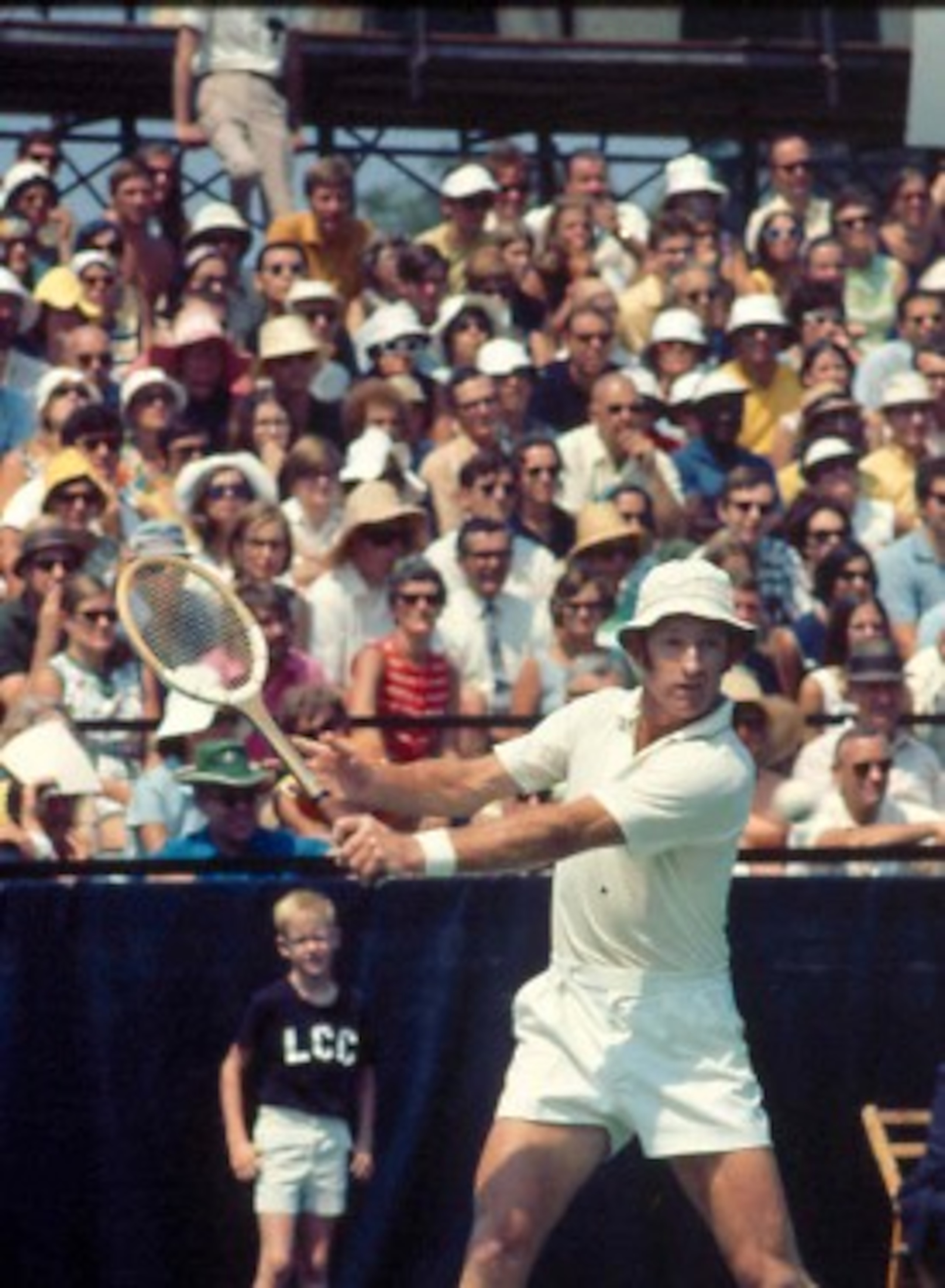
No. 7 Rod Laver (Won 1960, 1962, 1969 - RU 1961) - 4 Finals, 3 Wins
Native Australian Rod Laver, who holds a plethora of tennis records, won the Australian Open Championship three times and was a runner-up once.
As the only man in the history of the game to win two calendar year grand slams achieved once in the Open Era and once as an amateur, Laver was one of a legion of Australian tennis players to reign on the tennis stage during his era.
Laver was technically proficient as a serve and volley player with deft touch and tremendous foot speed.
He played during a time when tennis was played primarily on grass and occasionally on clay.
In all, Laver won 11 career grand slam tennis titles and three of them were won in his native country.
In 1960, Laver defeated fellow Aussie Neale Fraser 5-7, 3-6, 6-3, 8-6, 8-6 winning his first Australian Open Championship.
In 1962, Laver defeated Roy Emerson in the finals 8-6, 0-6, 6-4, 6-4 to take his second Australian crown.
Finally in 1969, he defeated Spaniard Andres Gimeno 6-3, 6-4, 7-5.
The Aussie Laver was the runner-up to Roy Emerson in 1961 losing 1-6, 6-3, 7-5, 6-4.
In all, Laver competed in the Australian Open Championships 9 times, making the finals four times, winning three singles titles.
His win-loss record was 23-6, giving the Aussie a winning percentage at the Australian Open of 79.31.
No. 6 Mats Wilander: Won Consecutively In 1983 & 1984, 1988, Runner-Up In 1985
15 of 20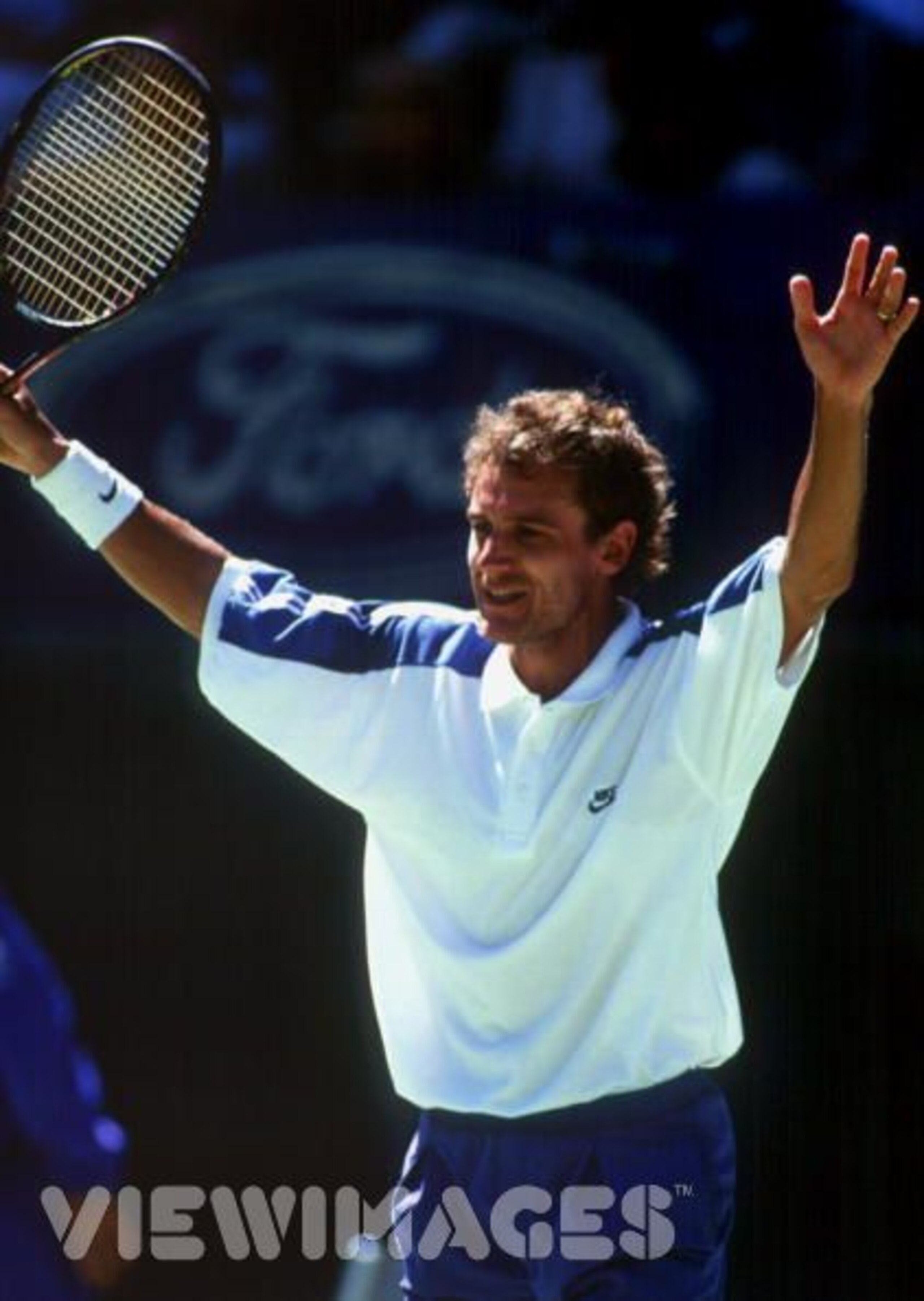
No. 6 Mats Wilander (Won 1983, 1984, 1988 - RU 1985) 4 Finals, 3 Wins.
Swede Mats Wilander holds the distinction of winning the Australian Open on both grass and hard courts, winning the tournament in 1988 when play commenced at Melbourne Park.
In 1983, Wilander won his first Australian Open Championship, defeating Ivan Lendl 6-3, 6-3, 6-2.
It was the Swede’s second career grand slam title.
Wilander repeated his championship run the following year.
In 1984, he defeated South African Kevin Curren 6-7, 6-4, 7-6, 6-2. It was the Swede’s second Australian Open title and his third career grand slam win.
In 1988, playing for the first time on hard courts, Wilander defeated Aussie hero Pat Cash 6-3, 6-7, 3-6, 6-1, 8-6 in a heart-breaker for local fans hoping to see an Australian Champion crowned that afternoon.
In 1988, Wilander would go on to capture the French Open and the U.S. Open, losing only at Wimbledon.
In 1985, Wilander was runner-up to fellow Swede Stefan Edberg losing 6-4, 6-3, 6-3.
In all, Wilander appeared in 10 Australian Open Championships winning three times while appearing in four finals with an over record of 36-7.
The Swede’s winning percentage for the Australian Open was 83.72.
No. 5. Andre Agassi: Won In 1995, 2000, 2001 & 2003
16 of 20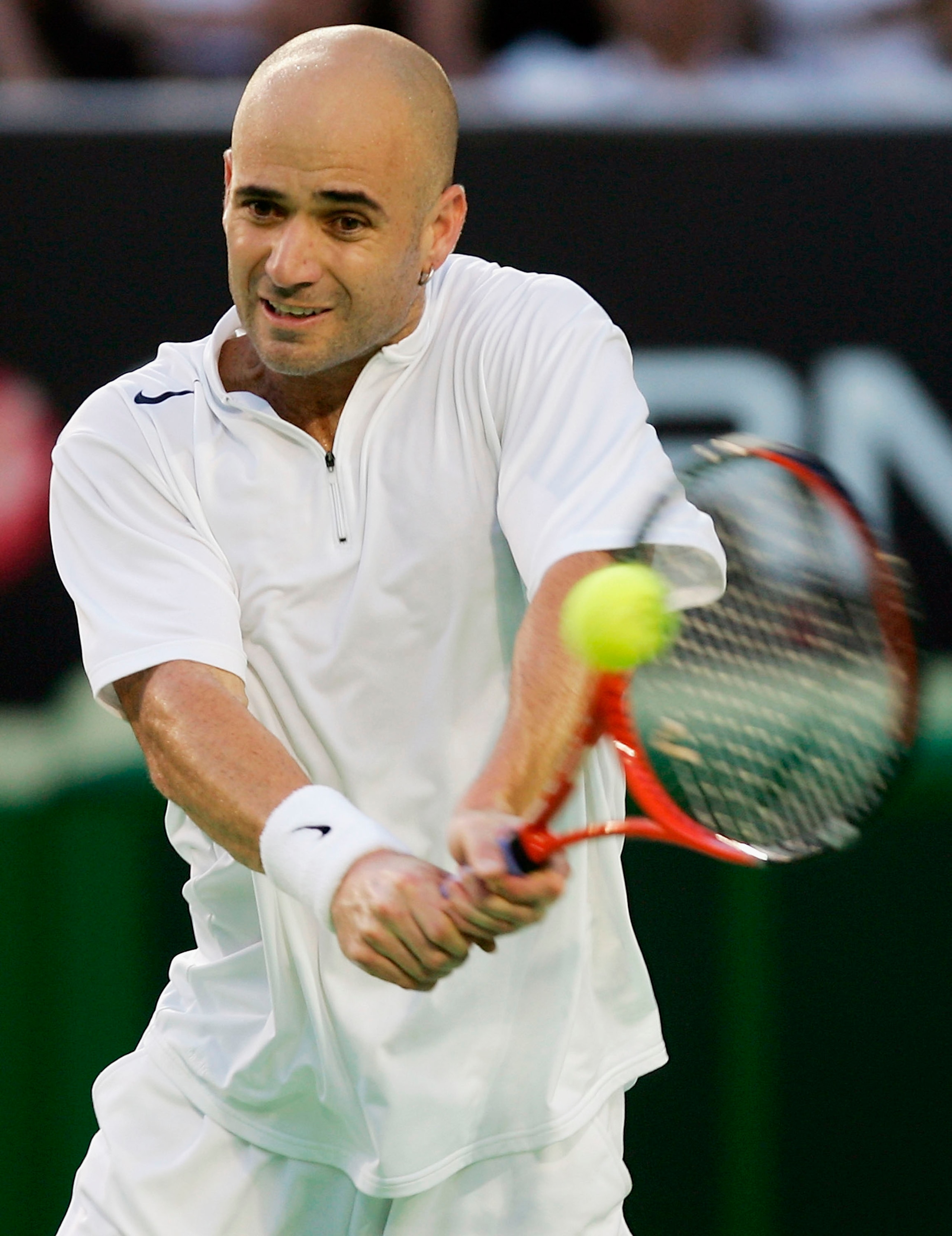
No. 5. Andre Agassi (Won 1995, 2000, 2001, 2003) - 4 Finals, 4 Wins
The great Andre Agassi found his greatest success winning slams in Melbourne.
The American won his first title in 1995 defeating his arch-rival fellow American Pete Sampras 4-6, 6-1, 7-6, 6-4.
It was Agassi’s third grand slam win as well as his first Australian Open title. Sampras was the No. 1 seed that year and Agassi was seeded No. 2.
In the year 2000 Agassi, seeded No. 1, defeated defending champion Yevgeny Kafelnikov 3-6, 6-3, 6-2, 6-4.
The following year, Agassi as the No. 6 seed repeated as champion at the 2001 Australian Open defeating Frenchman Arnaud Clement 6-4, 6-2, 6-2. Agassi won his 46th overall title and his seventh career grand slam title as well as his third Australian Open championship.
In 2003 when Agassi won his fourth Australian Open title, he set an Open Era Record. The win was his eighth and final career grand slam title.
Agassi would never again appear in a final at Melbourne Park. That afternoon the American defeated German Rainer Schuttler 6-2, 6-2, 6-1.
Agassi appeared in nine Australian Open finals, winning four with an overall win-loss record of 48-5. The American’s winning percentage was 90.57.
No. 4. Ken Rosewall: Won In 1953, 1955, 1971, 1972, Runner-Up In 1956
17 of 20
No. 4. Ken Rosewall (Won 1953, 1955, 1971, 1972 - RU 1956) - 5 Finals, 4 Wins
Like Rod Laver, Ken Rosewall was another of those great Aussie tennis players whose career spanned the amateur-professional years prior to the Open Era.
With his feet in both worlds, Rosewall, like Laver, managed to leave his mark in both.
Combined, Rosewall won four Australian Open championships, two as an amateur and two in the Open Era.
In 1953 Rosewall captured the Australian Open title defeating Mervyn Rose on grass 6-0, 6-3, 6-4.
He won the Australian Open again in 1955 this time defeating fellow Aussie Lew Hoad 9-7, 6-4, 6-4.
Then 16 years later, the amazing Rosewall won again in Sydney defeating American Arthur Ashe 6-1, 7-5, 6-3 in the finals of the 1971 Australian Open.
Rosewall repeated as champion in 1972 defeating Australian Mel Anderson 7-6, 6-3, 7-5.
Rosewall was the runner-up in the 1956 Australian Open, losing to Lew Hoad 6-4, 3-6, 6-4, 7-5.
In all Rosewall competed in 14 Australian Opens, winning four, appearing in five finals with an overall record of 47-10 and a winning percentage of 82.46.
No. 3. Roger Federer: Won In 2004, 2006, 2007, 2010, Runner-Up In 2009
18 of 20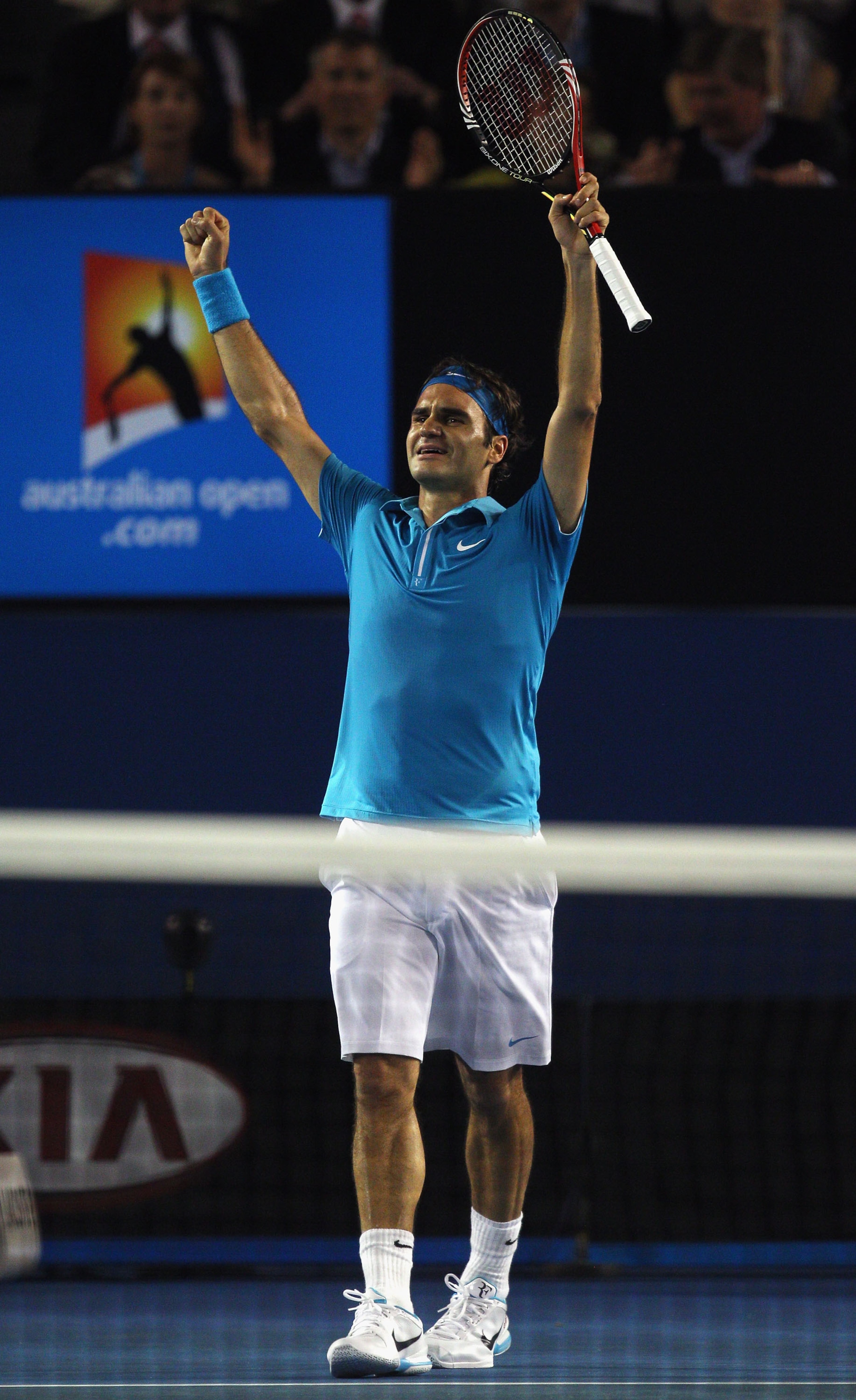
No. 3. Roger Federer (Won 2004, 2006, 2007, 2010 - RU 2009) - 5 Finals, 4 Wins
Roger Federer is the only active player on this list of the Aussie Open Top 20 Champions and he is one of few who have won four championships in Melbourne, tying him with Andre Agassi in the modern era and with Ken Rosewall and Jack Crawford in the years prior to 1968.
Federer would like to equal the all-time champ, Roy Emerson who won this championship six times. He will not, however, equal Emerson’s record of five consecutive Australian Open titles.
Federer entered the Australian Open in 2004 seeded No. 2 behind American Andy Roddick. He won his first Australian Open championship defeating Marat Safin 7-6, 6-4, 6-2. This also marked his second career grand slam title.
Seeded No. 1 in 2006, Federer captured his second Australian Open title defeating Cypriot Marcos Baghdatis in the final 5-7, 7-5, 6-0, 6-2.
In 2007 the Hawk-Eye line calling system came into play at Melbourne. Federer repeated as the men’s champion, defeating Chilean Fernando Gonzalez 7-6, 6-4, 6-4 giving Federer consecutive titles and his third Australian Open trophy. It was the Swiss’ 10th career grand slam title and his 46th title overall.
Last year in 2010 Federer won his fourth Australian Open title, defeating Scot Andy Murray 6-3, 6-4, 7-6 to seize the trophy and his 16th overall career grand slam title.
Federer was also the runner-up in 2009, losing in the final to Rafael Nadal 5-7, 6-3, 6-7, 6-3, 2-6.
In all Federer has appeared in eleven Australian Opens, winning four times in five final appearances with an overall record of 54-7––a winning percentage of 88.52.
Should Federer win this year, it would give him five Australian Championships, a Open Era record and one step closer to Roy Emerson.
No. 2. Jack Crawford: Won 1931, 1932, 1933, 1935, Runner-Up In 1934, 1936, 1940
19 of 20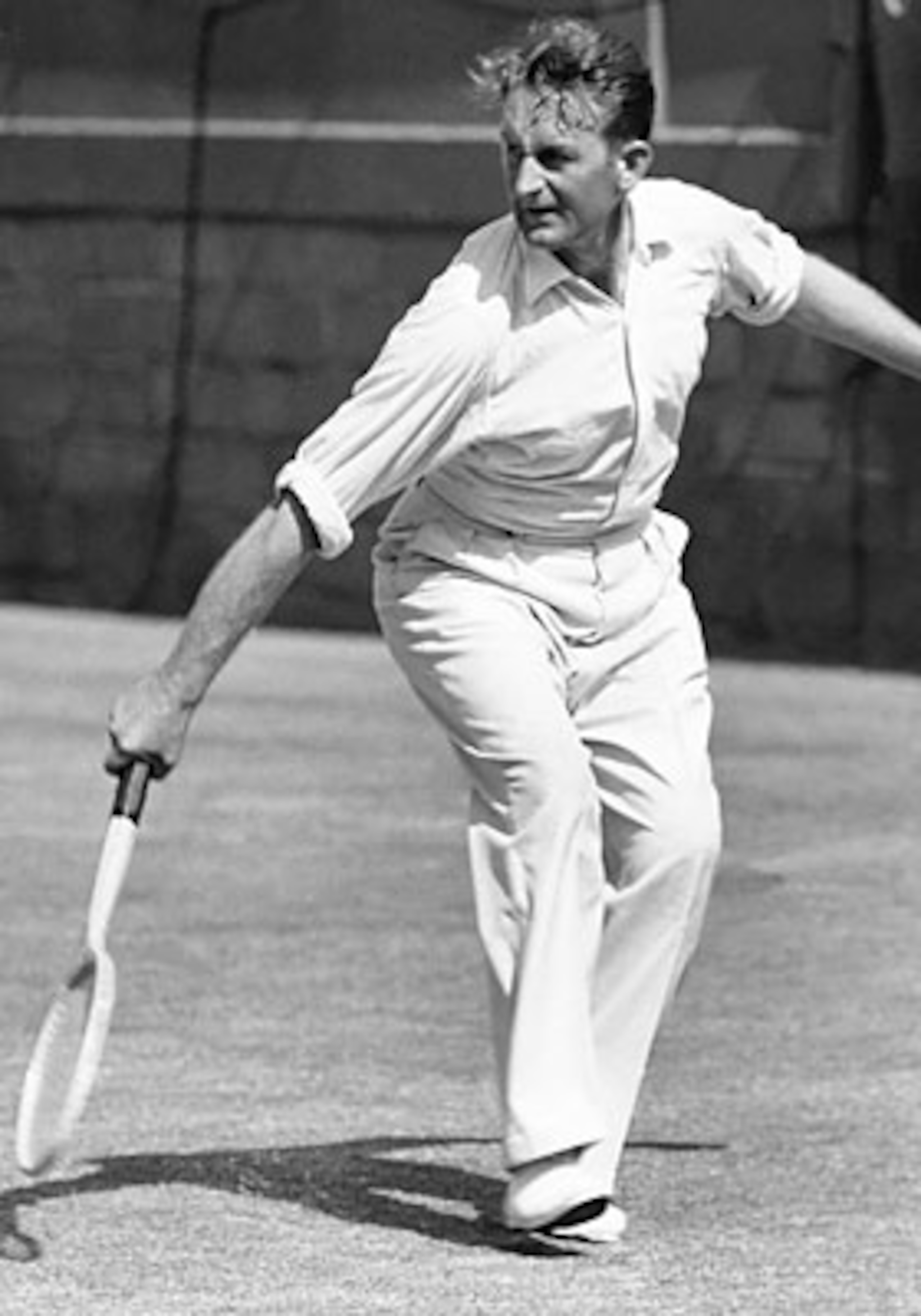
No. 2. Jack Crawford (Won 1931, 1932, 1933, 1935 - RU 1934, 1936, 1940) 7 Finals, 4 Wins
Winning six major titles in his career, Australian Jack Crawford served as the precursor to the legion of Aussie greats who would follow him in later decades into tennis immortality.
In 1933 Crawford seemed destined to be the first male to complete a tennis grand slam.
He won the Australian Open, the French Championships, and Wimbledon.
The Aussie needed only to win the U.S. championship played on Long Island that year to bring home the first grand slam in tennis.
But Crawford had breathing problems, suffering from asthma. The day of the final leading Brit Fred Perry two sets to one, not able to get enough oxygen, Crawford's stamina deserted him and Perry won the match. Still Crawford was widely acknowledged as one of the Aussie greats.
No other player except Roy Emerson has won three consecutive titles at the Australian Championships.
Crawford won his first Australian Championship in 1931 defeating legendary Harry Hopman 6-4, 6-2, 2-6, 6-1. The following year he again faced Hopman and defeated him 4-6, 6-3, 3-6, 6-3, 6-2 to claim the Australian Championship in 1932.
In 1933 Crawford won the Championship by upending American Keith Gledhill 2-6, 7-5, 6-3, 6-2. Crawford won one more title in 1935 defeating Fred Perry of Great Britain 2-6, 6-4, 6-4, 6-4.
In addition to winning four championships, Crawford was also the runner-up in three more finals.
First in 1934 the Aussie Crawford lost to Brit Fred Perry. In 1936 and in 1940 Crawford came in second to fellow Aussie Adrian Quist, the first in five sets and the second in three.
Jack Crawford, former World No. 1 won four titles, three consecutively in seven Australian Open finals. Ultimately Crawford ended with a 52-15 win-loss record at the Australian Open Championships with a total winning percentage of 77.61.
No. 1 Roy Emerson: Won In 1961, 1963, 1964, 1965, 1966, 1967, Runner-Up In 1962
20 of 20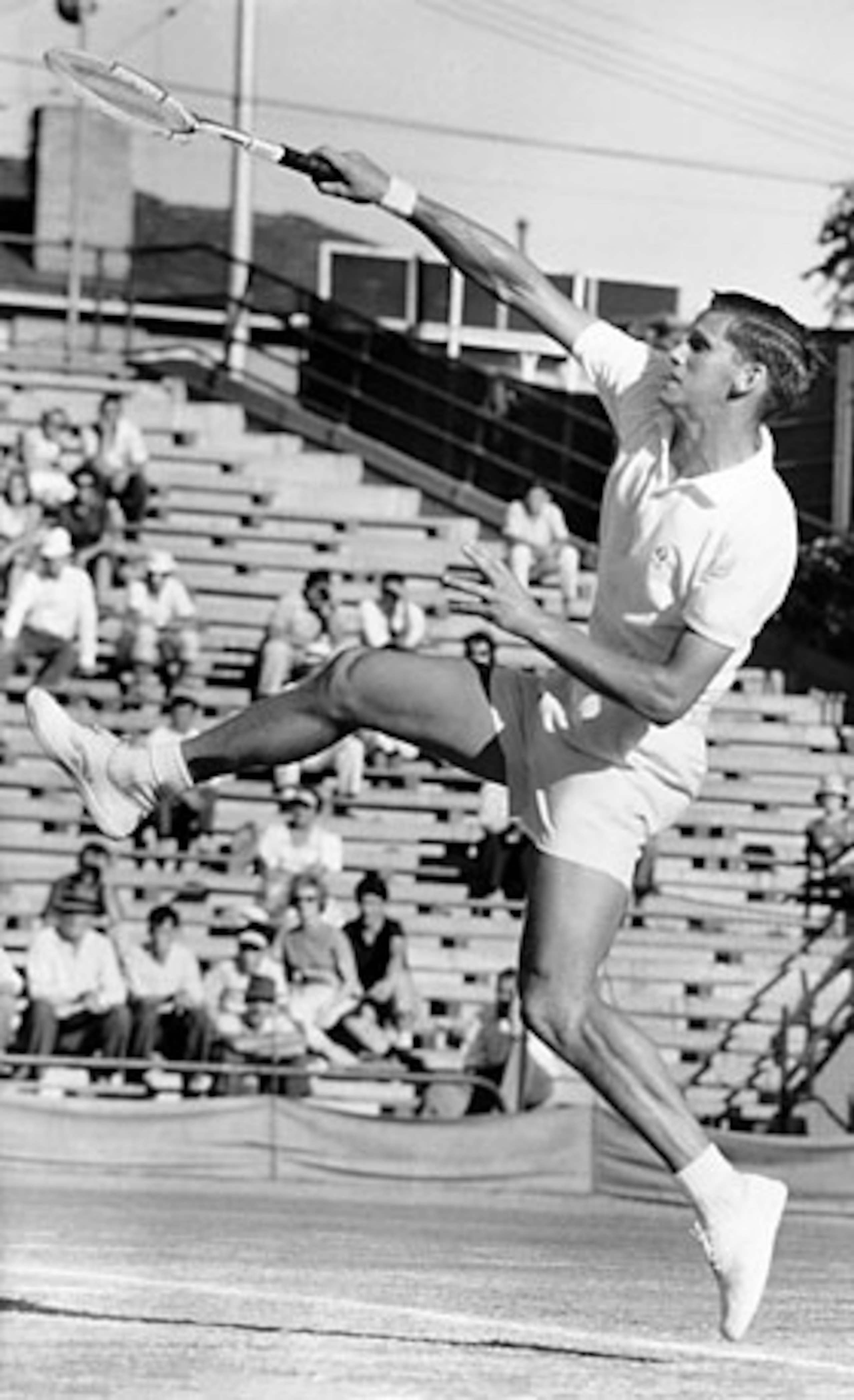
No. 1 Roy Emerson (Won 1961, 1963, 1964, 1965, 1966, 1967 - RU 1962) - 7 Finals, 6 Wins
Rumor has it that the great “Emmo” was bageled in the last two sets of his first match at the Australian Championships, although Emerson told everyone jokingly that he had no recollection of losing those sets 6-0, 6-0.
Born in Blackbutt about 100 miles from Brisbane, Emerson rose to be the Australian Open’s greatest champion winning a total of six singles titles in seven final appearances.
Emerson also won 12 career grand slam titles, holding the record for most slam singles until Pete Sampras passed him with No. 13 in the year 2000.
Today, however, it is doubtful that any current player will equal Aussie great Roy Emerson’s record of five consecutive Australian Open championships.
In total Emerson won six titles and was also the runner up in a seventh final.
Fellow Aussie Rod Laver interrupted Emerson’s run in 1962 winning that final 8-6, 0-6, 6-4, 6-4––otherwise, Emerson would have won seven consecutive Australian Open titles.
In 1961 Emerson won his first title defeating Laver 1-6, 6-3, 7-5, 6-4. After losing in 1962, Emerson came back to win again in 1963, defeating another Aussie Ken Fletcher 6-3, 6-3, 6-1.
Emerson followed that with another straight-set victory in 1964, this time over Fred Stolle 6-3,6-4, 6-2.
In 1965, however, Aussie Stolle put up more of a fight losing 7-9, 2-6, 6-4, 7-5, 6-1.
The following two years in 1966 and 1967, Emerson defeated American Arthur Ashe 6-4, 6-8, 6-2, 6-3 in 1966 and 6-4, 6-1, 6-4 in 1967.
It may be the definitive run at the Australian Open for the men. In total Emerson participated in 14 Australian Open Champions, winning six times in seven final appearances with an overall record of 58-7 with a winning percentage of 89.23.
.jpg?w=2560 "Colts Football")





