
Can College Football Postseason Be Saved with Traditional 8-Team Bowl Format?
 Many hungry fans have debated whether a college football playoff is the correct way to choose a national champion. To most, a playoff is the way to go.
But if a tournament ever comes about, which bracket is the best?
For those of you who are the traditional college football fan who enjoys the bowls but would like to see a bracket, stay tuned.

_0.png?w=2560)
In this article, I propose "The Solution." The rules are:
- All champions from the automatic qualifier conferences receive a bid as long as they are ranked in the Top 20. Call it the "Big East rule" (Auburn, Oregon, Wisconsin, Virginia Tech and Oklahoma).
- Any non-BCS school ranked higher than any of the AQ league champions while also a conference champion is eligible for the playoffs (Nevada over UConn, but Nevada is not guaranteed a bid).
- Any school ranked in the Top Four receives an automatic bid (Stanford, TCU).
- More than one school from a conference is eligible to be selected as long as they qualify in the Top Four, are conference co-champions or played in the conference championship game. (Ohio State—is not guaranteed a bid).
- The highest ranked team is guaranteed a spot in a tie (Ohio State over Nevada).
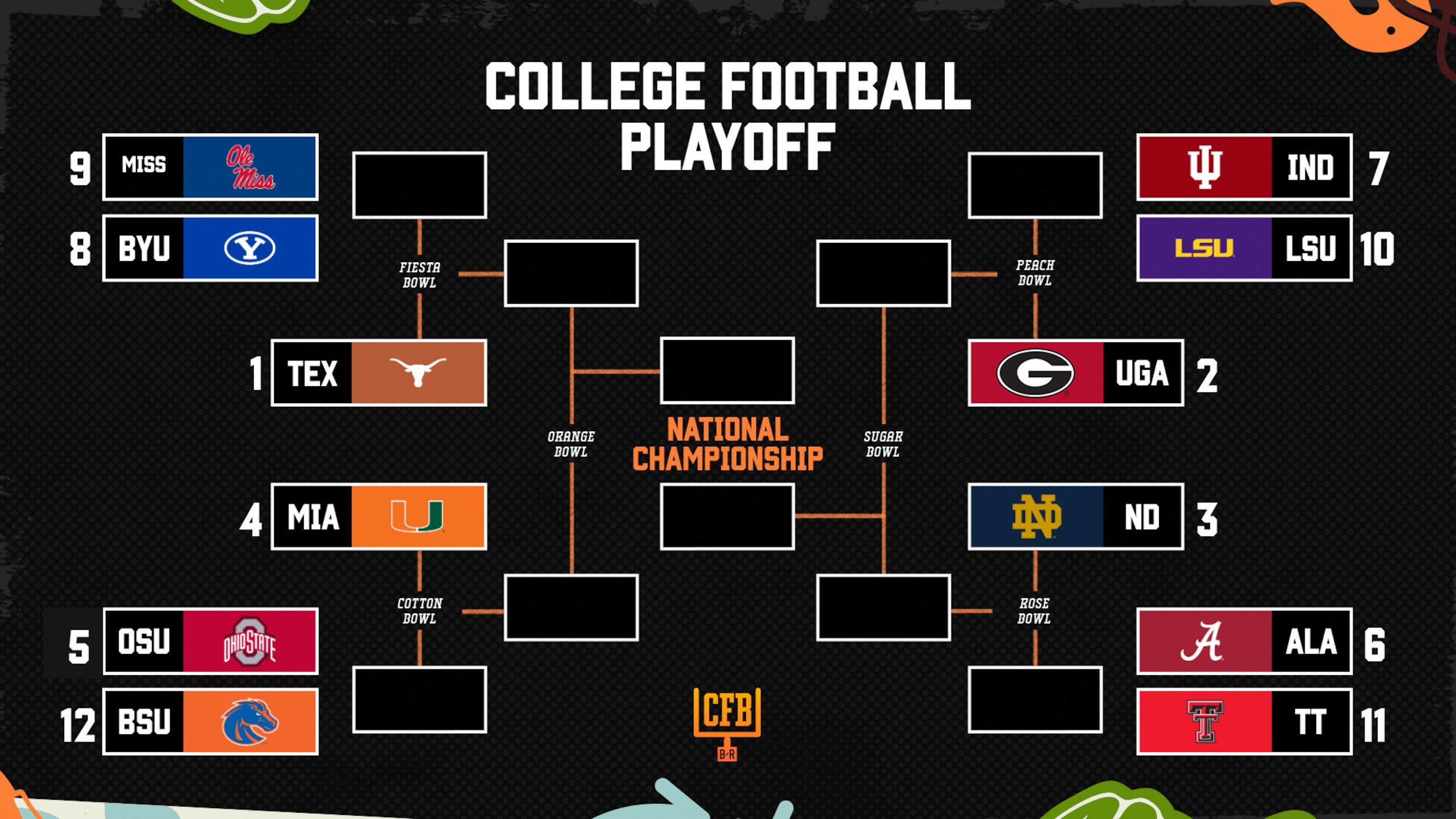
In this system, the first round game will be played at the home site of the higher seed. The bracket will be divided into the "East" and the "West." The seedings include:
- Auburn Tigers, SEC Champions, 13-0
- Oregon Ducks, Pac-10 Champions, 12-0
- TCU Horned Frogs, Mountain West Champions, 12-0
- Stanford Cardinal, BCS Automatic, 11-1
- Wisconsin Badgers, Big Ten Co-Champs, 11-1
- Oklahoma Sooners, Big 12 Champions, 11-2
- Virginia Tech Hokies, ACC Champions, 11-2
- Ohio State Buckeyes, Big Ten Co-Champs, 11-1
Left Out: Nevada, Boise State, Michigan State
This sets up the following matchups for the first round.
East
1) Auburn vs. 4) Ohio State
2) Stanford vs. 3) Wisconsin
West
1) Oregon vs. 4) Virginia Tech
2) TCU vs. 3) Oklahoma
In the second round, the 2011 NCAA East Finals will be held at the Sugar Bowl in New Orleans, LA. The 2011 NCAA West Finals will be held at the Rose Bowl. These games will be held on New Year's Day. They are seen as bowl games but have an extra importance. The two games are similar to the NFL's NFC and AFC championships.
The Orange Bowl is left out, and this year they will serve as the "other bowl." They play on New Year's Day also, but it does not count in the tournament.
The Fiesta Bowl hosts the NCAA championship in the final round in 2011, so let's say they can also hold their regular bowl, but it will be a game that doesn't count towards the tournament.
Look at this for more information.
NCAA Championship Game Host
2011: Glendale, AZ
2012: New Orleans, LA
2013: Miami, FL
2014: Pasadena, CA
NCAA East and NCAA West Finals Hosts
2011: Sugar Bowl and Rose Bowl
2012: Orange Bowl and Rose Bowl
2013: Sugar Bowl and Fiesta Bowl
2014: Orange Bowl and Fiesta Bowl
Non-Tournament BCS Bowls
2011: Orange Bowl and Fiesta Bowl*
2012: Fiesta Bowl and Sugar Bowl*
2013: Rose Bowl and Orange Bowl*
2014: Sugar Bowl and Rose Bowl*
In conclusion, I think this college football playoff format is traditional and fair. Although it leaves out many non-AQ schools, it rewards TCU, who was the only truly great non-BCS team. No offense, Nevada. Instead of being refused by the BCS, TCU would have a first-round home game versus Oklahoma.
Imagine the millions of dollars and the ecstatic fans. The amazing teams squaring off in front of sellout crowds. Oh, the many stories the players and coaches could tell to their grandchildren.
This playoff format is the correct path to crown the national champion in American college football, and just might work.
.jpg?w=2560 "OBJ Calls Out Giants After Release")





.jpg?w=2560 "Saquon Out for Game")