College Basketball Power Rankings: The Good, Bad and Miserable Conferences
Every year, there is usually a debate regarding which conference can claim superiority amongst the others. There is almost never a unanimous answer because of the fact that the conferences differ in size and level of play.
However, for most years there are tiers of conferences that separate themselves from the rest of the pack.
This year is no different, as there are three or four conferences that show that they are truly the best collection of teams. Once you reach the middle however, there is a distinct blending of conferences. With the rise of the mid-major and perennial Cinderella teams, some of the indistinguishable conferences have demanded to be noticed amongst the weaker big named conferences close to the top.
But then again, there are also the conferences that show year in and year out why they are at the bottom of the barrel.
32. Southwestern Athletic Conference (SWAC)
1 of 32
I can barely even refer to the SWAC by its name. All I think when I see a SWAC team is "chalk up a win for whoever they're playing." The fact of the matter is that the team that won the regular season in the SWAC (Jackson State) finished with a record of 19-13 overall and the only reason they finished with 19 wins is because they went 17-1 in conference play.
This last statistic may lend some people to say something like, "Well that must mean they just get beat up by good non-conference games looking for an easy win."
That would be half-right. They get beat up in their non-conference schedule. Jackson State lost their first 10 games last season. In those 10 games, they played one team that made the NCAA tournament and one team that made the NIT (Baylor and Memphis), neither of which they kept the game closer than 30 points.
This isn't just the case for one team. Only three teams finished more than one game over .500 last season. Jackson State proved easily that they were the best team in the SWAC and they weren't even able to make it to the tourney because they choked in their conference tournament.
Basically, the SWAC is like a group of cyclists trying to race in the Daytona 500, but then halfway through the race they decide that they're just going to beat each other. Easily the worst conference in all of Division I.
31. Great West Conference
2 of 32
The Great West Conference was in contention for the last spot, but I decided to cut them a break, as this is only their second year in existence. They don't even get an automatic bid to the tourney.
Once a collection of Division I independents, the Great West is consisted of seven hodgepodge teams that don't exactly fit the collective label: South Dakota, Houston Baptist, Utah Valley, North Dakota, Chicago State, Texas-Pan American and New Jersey Institute of Technology.
How that makes sense, I don't know, but I don't arrange the conferences.
South Dakota managed to put up a good season amongst a group of terrible teams. The Coyotes single-handedly brought the Great West from "worst possible conference" to "a really terrible conference." The only team in the conference even remotely close to .500, South Dakota finished at 22-10 on the season with three of the losses coming to future NCAA tournament teams. In fact, the Coyotes only lost to future Cinderella Cornell by six points.
However, one good team won't keep the newbies from slipping. If some of the other teams don't pick it up, they'll be back one spot as the worst conference out there.
Maybe they're so bad because they have nothing to play for. Get on it NCAA. Or maybe they don't have anything to play for because they're so bad. Probably the second. Disregard earlier comment NCAA, although eventually they'll want to get in.
30. Atlantic Sun Conference
3 of 32
This is the point where no conference really stands out as a terrible conference, so entirely mediocre is the next stepping stone.
The Atlantic Sun definitely falls under the later category. The conference was pretty much split into two tiers. The five at the top of the conference were all comfortably above the .500 mark, and this was a close race for who would make the tournament, which ended up being East Tennessee State.
The other half is what keeps Atlantic Sun so low in the rankings. The lower six teams were a combined 63-121 last season.
Few teams in the conference ever succeed in surpassing Belmont or East Tennessee State to make it to the tourney, but that might change this season. Stetson has already posted an impressive win on a new Wake Forest team in Winston-Salem this season. That's a sign of improvement in my book.
If only the other teams could pick up the pace.
29. Big South Conference
4 of 32
The Big South has very little excitement in it. That hasn't always been the case, but it is now.
Remember the Winthrop teams that almost beat Tennessee five years ago in the first round, then went on the next year to upset Notre Dame and scare Oregon? I understand if you don't, but that's my point. Winthrop has faded as a perennial upset alert because of the inconsistency of the conference as a whole.
There are a few teams that have a couple of characteristics that may ring a bell, but those characteristics aren't winning basketball programs. For instance, UNC Asheville may be remembered for hosting 7'8" giant Kenny George, before his height caused serious health problems.
Virginia Military Institute also can be recognized by their scoring tendencies. Every season their point average per game is always near 100 points, as they run and run and run. That's all. Yet, with all that scoring, they still couldn't finish above 10-19 last season.
Coastal Carolina was really the only team of importance last season coming out of the Big South. The Chanticleers went on 12- and seven-game winning streaks against a mix of non-conference and conference foes, taking them to a 15-3 record in the conference.
But, like so many before them, they choked in the conference tournament to, who else, Winthrop. The Chanticleers are once again a favorite to repeat as regular-season champions, but only if they can keep it together down the stretch will they get a chance to play in the real tourney come March.
28. Big Sky Conference
5 of 32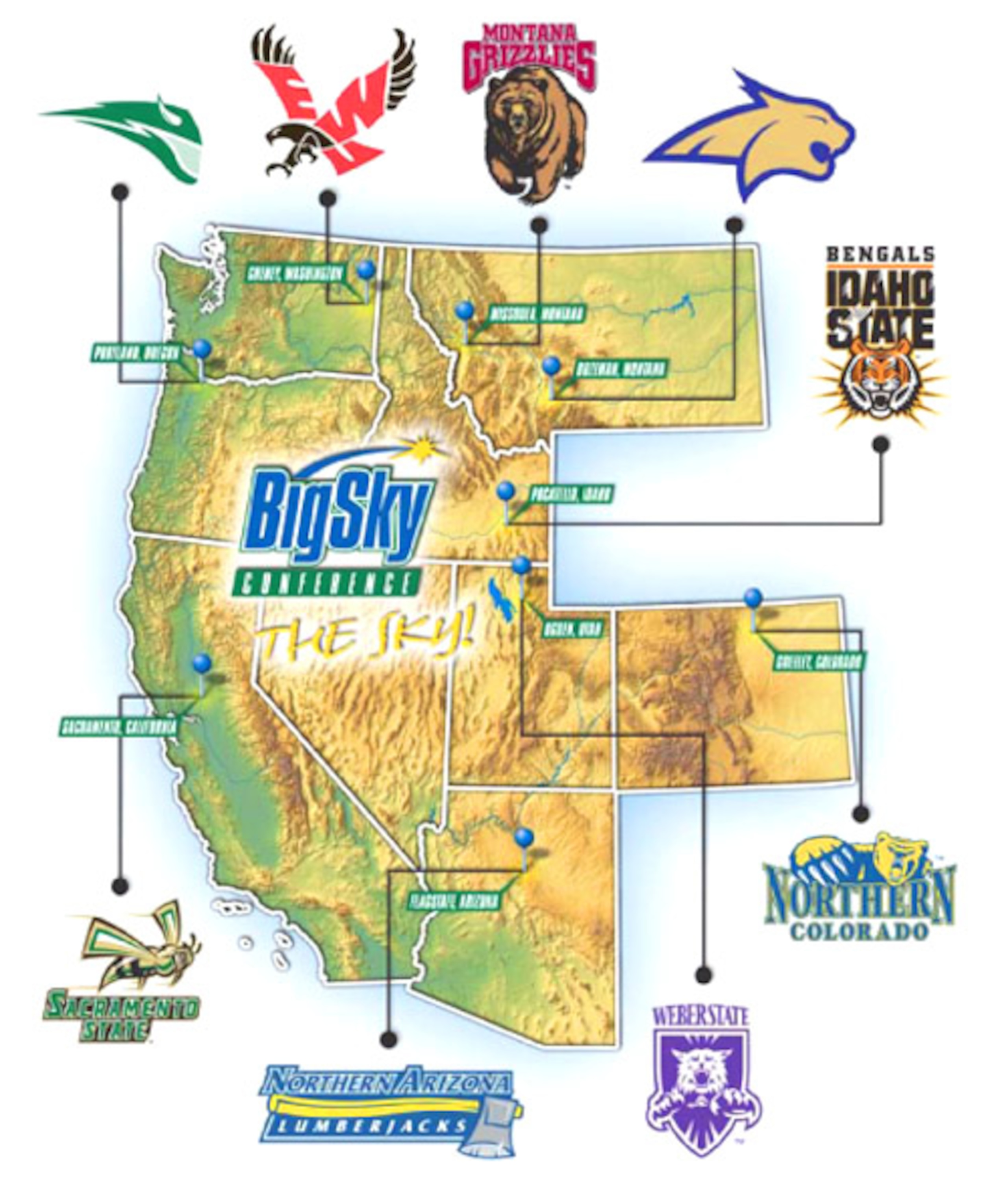
The Big Sky has historically just been a race for the conference championship between Weber State, Montana and Portland State. Last year, the Montana Grizzlies managed to wrestle the trophy free to enter the tournament, but the conference is generally unstable so the odds aren't great for them to continue their streak of one.
The Big Sky is usually a mix of three or four teams competing against each other and completely ignoring the bottom echelon. Every year the teams rotate and it is virtually impossible to predict how the conference will finish, both because of under-exposure (because frankly most Americans couldn't place Montana or Idaho on a map) and the uncertain nature just discussed.
This season, the likely candidates for top four are Northern Colorado (who made a nice run at the conference championship last year), Northern Arizona, Montana and Weber State.
It may be Northern Colorado's chance to make their first ever NCAA tourney and I'm cheering for them, but otherwise not many people are even going to care until March.
I salute you. unknown players. I'm watching and hoping.
27. Mid-Eastern Atlantic Conference (MEAC)
6 of 32
The MEAC is, like the previous couple, a conference of mediocrity. Comprised of one decent school and a bunch of others hovering around the .500 mark as if it were a desert oasis, the conference has great room for improvement.
The lone winner from this conference is Morgan State. The Bears finished last season at an impressive 27-10 with a conference record of 15-1. To prove how far above the rest of the conference they were, they were four games ahead of the next best team and their overall record was 11 games better.
Expect another winning season for Morgan State—no one else is really within striking distance.
As for the rest of the conference, they just need to work and get better. Some of last season you can attribute to youth and inexperience; then again you don't really need much experience to play in the MEAC.
We may see someone rise to the challenge and actual compete with Morgan State, namely Delaware State. The Hornets' slow style of play was effective in shutting down a majority of conference opponents and it may happen again.
26. Patriot League
7 of 32
The Patriot League may be the home of our armed forces, but if we were in a basketball war, I hope we wouldn't be using their basketball programs. Army and Navy are two of eight in an average conference that produces one good team and generally no others.
This rule also tends to shake up the conference each year. Last year, Lehigh was the team that was a head above everyone else, but the two years before that belonged to American and the year before that was the last time two teams achieved 20 wins in the same season.
This year, it seems that the trend would continue. Not knowing who is going to win makes my job a lot harder, but I can make my best guess. It seems that Lehigh could control the conference, but the loss of three starters may make that a more daunting task than it may seem.
Navy returns four starters, and they've already shown they can scrap, putting up a losing fight against Texas in Austin this year.
Sorry Bucknell returns all five starters, but that doesn't mean much given that they went 14-17 last season.
Colgate also has the potential to shine, having young talent, but they may be just out of reach.
I think that Lehigh will end up as the Patriot League champions and make a repeat trip to the tournament.
25. Ivy League
8 of 32
This may be my most disappointing rating of any. I love watching the Ivy Leaguers prove that brains can beat brawn as much as the next guy, but with the majority of Cornell's team leaving and Harvard sensation Jeremy Lin having graduated, it's back to the drawing board for most of the conference.
It seems that the predominating favorite this season is Princeton. The Tigers are seemingly the only team that has enough returning talent to make a dent. However, the Ivy League is unique in the fact that they have no conference tourney and the regular-season champion goes straight to the NCAA tournament without having to play anyone.
The reason for this ranking is the lack of support behind a weak Princeton. Last season, the Ivy League would have probably been five or six spots higher due to the high play of Cornell and underrated Harvard as well as the once young Princeton team.
Now, with only one really viable candidate for a strong team, the league suffers a bit.
24. Northeast Conference (NEC)
9 of 32
The NEC is yet another conference chock full of mediocrity. Besides Quinnipiac and Robert Morris, this conference barely even makes a dent in the college basketball scene.
Robert Morris, on the other hand, found a way to impact the entire nation. Last season, the Colonials took Villanova into overtime as a 15 seed in the NCAA tournament. The near-win would have been the second in Robert Morris history, and a historic one at that. However, they didn't win and now they're going up against Qunnipiac for another shot at tournament glory.
Other than Robert Morris and Quinnipiac are teams that don't really need to get named. Only one other team in the conference finished above .500, so I'll name them: Mount St. Mary's (not the one that actually beat Villanova).
Obviously, having no other powerful teams is harmful to the view as a conference, hence the No. 24 ranking.
23. America East
10 of 32
The America East conference is another mediocre conference with some decent mid-major activity at the top of the standings.
Home of Vermont, Boston U, Stony Brook, Maine and Binghamton, the America East generally doesn't draw attention until tournament time, when there have been a few surprising results. Vermont especially has done well in the postseason.
The Catamounts usually end up doing well in the conference and they've taken the automatic qualifying spot four years out of the last eight, including 2005, when the 13th-seeded Vermont team took down No. 4 seed Syracuse.
However, this season the Catamounts are not the favorite to win the conference tournament. Maine returns the most talent and is seemingly the favorite for dancing in March. However, Stony Brook is coming off of a very good season and they can certainly challenge for the title as well.
The story of America East's ranking lies in the bottom half, however. The bottom three teams of Albany, Hartford and UMBC only combined for 19 wins last season.
They are essentially cannon fodder that pad the higher teams' records, and the result is the rank of 24 for the America East.
22. Summit League
11 of 32
The Summit League has produced in the past, but not in recent memory has a decent mid-major come forth from the league to accomplish anything in the NCAA postseason.
Oral Roberts had control over the conference for three years from 2006 to 2008, winning three straight tournaments; however, they haven't been able to continue their success in the past few seasons.
Instead, the Oakland Golden Grizzlies and the IUPUI Jaguars have stepped up their game and contended for the conference championship. Oakland won it last year and a huge surprise season from North Dakota State led them to a tournament birth the year before.
This season, all indications show that the Golden Grizzlies will be the ones to make the trip dancing, returning three starters from a team that went 17-1 in the conference last year.
The rest of the conference is subpar to say the least. I won't get into details, but five of the 10 members of the conference have never even sniffed the dance floor.
I won't fault them for creativity, though. The bottom half of the Summit League includes the IPFW Mammoths, the UMKC Roos, the Western Illinois Leathernecks, the Southern Utah Thunderbirds, the South Dakota State Jackrabbits, and let's not forget the Centenary Gentlemen. The Summit League is ranked No. 1 in the mascot power rankings.
21. Big West
12 of 32
The only reason the Big West is as high as No. 21 is because of Pacific. The Tigers have been a solid constant in the league for the past four years. Although they may not have always made the tournament, the Tigers have finished with more than 20 wins in all of the last four years. No one else in the league has done that more than two years in a row.
This season, the Tigers look to return to the tournament after losing their grasp on the automatic bid in the conference tourney last season. The UCSB Gauchos may be their most difficult foe to dispatch. The Gauchos went to the tourney last season after beating Pacific in the Big West Tournament.
Other than Pacific, no one in the conference is very consistent at all. Pacific was the only team with more than 20 wins last season. Cal State Fullerton went to the tournament two years ago, but their return to nothingness began last season with a disappointing defending run.
No. 21 may even be a stretch for the Big West, but they have Pacific to thank for that.
20. Southland Conference
13 of 32
The Southland Conference is a fairly strong conference in terms of the schools that usually fight for the title. Over the past couple of years the battle for tournament access has been a struggle between three schools: Sam Houston State (last year's winner), Stephen F. Austin (the year before last's winner) and Texas A&M Corpus Christi (winner of four years ago).
These three teams have all been involved in a tight race the last couple of years and the trend doesn't seem like it will be ending soon. While the Islanders from Corpus Christi seemed to have a down year last year, they still finished fourth in the conference and they return four starters.
Sam Houston State only returns two starters, but they have plenty of bench depth that should step up and defend their tournament chances.
The Lumberjacks of Stephen F. Austin may usurp their title, however. They return three starters from a 23-9 team and have a bunch of young talent as well.
With these three teams so strong, it seems unlikely that the Southland would be ranked this low, however, the rest of the conference doesn't really pick up the slack. While there are nine other teams in the conference, only half of them were above .500.
The other three teams seemed to start out strong but withered at the end of the season. Without the depth of some of the other conferences, the Southland can't be ranked higher than 20.
19. Ohio Valley Conference (OVC)
14 of 32
The OVC manages to be one of the least-known conferences in the country. Since they have no real standout program, they tend to go unnoticed.
However, last season that might have changed. OVC tournament champion Murray State pulled off one of the biggest upsets of the tournament, knocking off fourth-seeded Vanderbilt in the first round. This was the final capping piece on a 31-win season put together by the Racers.
Murray State's success last year and the return of three starters have lots of people looking for a repeat performance by the Racers. In fact, many (including me) believe that they may be able to get in with an at-large bid if they play well. They have a weak non-conference schedule, only playing two opponents from the "Big Six" conferences.
Other schools have targets on the Racers though, including the team that has had success of late, Morehead State. Morehead State has managed two straight 20-win seasons and is looking to make it a third.
There are a lot of potential sleeper teams in this conference, which puts them right in the middle of all the conferences. Keep an eye out for Austin Peay and Eastern Kentucky as well, but at this point the conference is safely in the hands of Murray State.
18. Mid America Conference (MAC)
15 of 32
The MAC has plenty of competitive teams, but they just aren't very competitive against other people.
The conference was incredible close last year; only four teams out of 12 finished with a losing record. Incredibly, the winner of the conference tourney, Ohio (who subsequently beat No. 3-seed Georgetown in the first round of the NCAA tournament), was the No. 9 seed going into the conference tourney. Their overall record was 22-15, but their conference record was 7-9.
This season, Ohio might be able to repeat, but it seems unlikely given the muddled mess of the standings that the MAC ended up with last season. Teams like Kent State and Akron, who did a good job of running the conference last season, will be looking to return to the tourney.
None of the elite teams in the conference last season return with as much talent as they had, so in all likelihood we may be looking at a giant knot of teams all trying to grapple for the one spot in the NCAA tournament.
17. Sun Belt Conference
16 of 32
The Sun Belt has a storied history in college basketball that separates itself from the majority of the list before it. In 2008, the Sun Belt sent two teams, Southern Alabama and Western Kentucky, to the NCAA tournament. The conference has had two bids in one season before as well in the '80s and '90s.
In terms of history, the Sun Belt surpasses many of the mid-major conferences easily. However, in the current days, they aren't as good as they once were.
The most notable team in the Sun Belt is Western Kentucky. The Hilltoppers are the eighth-winningest program in NCAA history and they have been in the middle of the fight for the conference championship during the past few years.
Along with the North Texas Mean Green, the Troy Trojans and underachieving South Alabama, the Sun Belt has a solid lineup of teams at the top. These teams are always upset-alerts come March and they tend to sneak up on people come tournament time.
The bottom of the barrel may not look like much, but opposed to previous examples, the losers in this conference are at the bottom due to repeated thrashings by their conference foes. This is a good conference—don't underestimate it.
16. Colonial Athletic Association
17 of 32
The CAA is a conference that has proved pesky over the past few years. While there are no dominating forces in the conferences, there are quite a few teams that have screwed up season plans for some other large schools.
Two of these teams are Virginia Commonwealth and Old Dominion. These two teams have both made their names known by knocking off pretty big opponents in March. Old Dominion won the conference tournament and ended up beating Notre Dame in the tournament last season, and VCU won over Duke three years ago in the first round.
These aren't the only two schools that need to be worried about though. The CAA is like an African savanna; there are too many predators to count. While they might not stick out at first, they are all there lurking and waiting for their time to strike.
Old Dominion has already almost beaten a top-25 team this season, pushing Georgetown to the buzzer on Friday. Everyone remembers George Mason's storybook run to the Final Four in 2006 and Northeastern is no team to slouch at.
Don't take the Colonial lightly; they are well deserving of the No. 16 spot.
15. Southern Conference
18 of 32
The Southern Conference, like many in this section of the list, is an overlooked conference. The SOCON has some of the best sleeper teams and some of the best unknown players in the country hiding right in plain sight.
Last season, the Wofford Terriers earned their first-ever bid to the tournament after defeating Appalachian State in the conference tournament. Both of these teams are back in force along with some other teams that may be sleepers come tourney time.
Although it's unlikely that this conference will get more than one bid into the tournament, the teams are very good in the South.
College of Charleston took Maryland to the buzzer last Wednesday under the guidance of Andrew Goudelock, who single-handedly ruined the North Carolina Tar Heels season and sent them spiraling into a whirlwind of depression that spread throughout the entire state of North Carolina (It was a big deal to me...).
Another one of the best players in the conference is Noah Dahlman, the hardworking forward who shouldered the Wofford Terriers into the tournament.
App State, College of Charleston and Wofford definitely have the highest likelihood of escaping the SOCON, but watch out for teams like Western Carolina and Davidson as well.
Whoever does manage to make it to the tournament should be able to make an impact against whoever they play.
14. Western Athletic Conference (WAC)
19 of 32
The WAC is probably ranked higher than they should be, but every year a sleeper team pops out of this conference that seems hell-bent on screwing some fanbase's hopes of success.
Last season, Utah State was that team. Although they didn't necessarily succeed when it counted in the tourney, the Aggies should be ready to make a run again this season.
There are other teams in the WAC that are in similar circumstances. They put in two teams last season: Utah State and New Mexico State. There were also two waiting in the wings in Nevada and Louisiana Tech. All four of the aforementioned teams posted above 20 wins and there were only enough bubble spots for mid-majors.
This season is a whole new ballgame. Utah State seems like the daunting favorite to repeat as regular-season champs as they are returning four starters from last year's team.
The other hopefuls may have a more difficult task however. NMSU, La. Tech and Nevada return three, two and one starters, respectively, meaning that they will all have difficulty replacing what they lost.
It looks for now that the New Mexico State Aggies may be in the best position, however. Maybe the WAC gets two in again, but I don't see anyone beating Utah State in the conference tournament two years in a row.
13. Missouri Valley Conference (MVC)
20 of 32
The Missouri Valley is a mystery to a lot of people. Teams will pop up and do astounding things and then disappear right back into..."The Valley."
Last season is a perfect example of that. The Northern Iowa Panthers were a hurricane-sized force. They rolled through the regular season only racking four losses total heading into the tournament. And then they did what no one thought possible, beat the favorites. Kansas, No. 1 ranked, No. 1 seeded, lost to measly UNI. And now, they're gone.
UNI are not the favorites to win the conference this season. This year it's the Wichita State Shockers. WSU was present in the race for the MVC last year, they just didn't have what UNI did. The Shockers might have a year like that this season, too. Returning four starters from the team that just missed the tournament may have set Wichita State up for a monster season this year.
Also waiting in the wings is contender Missouri State. The Bears had a great season last year as well, winning 24 games but collapsing down the stretch. Other teams in the MVC have a shot too. Illinois State almost stole the bid but lost to Wichita State in the semifinals of the conference tournament.
A young Southern Illinois team is also ready to make an assault on the top of the conference after being absent from the tournament for three years. Overall, the MVC is a very deep conference that is looking for a breakout year, much like the Mountain West did last season.
12. Metro Atlantic Athletic Conference (MAAC)
21 of 32
The MAAC is just stacked with teams that could make a run this season.
The conference has belonged to Siena for three straight years and senior forward Ryan Rossiter is the perfect man to try and complete the four-year sweep. Although the Saints have lost lots of talent, Rossiter is a candidate for MAAC player of the year and is very capable of carrying the team back to the tourney.
However, the Fairfield Stags are on a rampage to get back to the tournament. They lost in the conference finals last year to the Saints and they return four of their starters from last season, compared to Siena's two. The pure experience factor may be the turning point for Fairfield that could get them into the tournament this year.
Don't count out some of the other teams, though. The MAAC is deep with teams that could post 20-plus wins easily.
Iona returns all five starters from last year, a team that went 21-10 overall, a very possible challenger to the Stags or Saints.
Saint Peter's is another team that very well could run with their experience (all five of their starters return as well).
There are a lot of possibly dangerous teams lurking within this conference, and they all have the weapon of experience on their side.
11. Horizon League
22 of 32
Many people may recognize Butler as the only dangerous team in the Horizon League. While yes, they are dangerous (and I can't overstress that), this season may not be as smooth-sailing as the Bulldogs have had in the past.
Most notably, the Detroit Titans are going to be a very dangerous team this season. Having added Ray McCallum Jr., the Titans possess a great weapon. McCallum can shoot, drive, dribble, finish and defend. He's an great all-around player, and while Detroit may not be the deepest or most experienced of teams, they are a 20-plus win team again this season.
The presence of Wright State and Green Bay will also be felt this season. The No. 2 and No. 3 finishers return two starters each, so they will have to work some kinks out, but given that they have each put up 20 win seasons for two years running, I think they might be able to do so.
Also, watch for the return of the pesky Cleveland State Vikings; only just below .500 last season, they might be able to repeat their 2009 NCAA tournament run with all five starters returning.
10. West Coast Conference
23 of 32
The West Coast Conference has been and should continue to be controlled by the Gonzaga Bulldogs. Having a team of their strength in your conference automatically increases your difficulty every year.
The Bulldogs will most likely run with the conference again this season, but there are a few teams that might be interestingly competitive.
One is St. Mary's. Everyone thought that they were down and out last season when they lost Patty Mills. But a new star was born in Omar Samhan. Saint Mary's successfully advanced to the Sweet 16 by defeating No. 2 seed Villanova through Samhan's brilliant post play. Now, with Samhan gone, many people are doubting that St. Mary's can still compete.
However, they bring back three of their starters from last season. The Gaels managed to do it once and they can quite possibly do it again.
The other team to be prepared for is Portland. The Pilots finished with 21 wins last season with wins against Oregon, Minnesota and UCLA, but they lost leading scorer Nik Raivio to an ACL tear and their season never fulfilled its true potential. They've lost four starters but they return the nation's best three-point shooter in Jared Stohl (.478 3PT FG) and one of the best returning rebounders in the WCC in Luke Sikma.
The Pilots could just as well slip into the St. Mary's-sized hole.
9. Conference USA
24 of 32
Conference USA is full of talent, but questions remain about most teams in the conference about their chemistry on the court.
Memphis is once again the favorite to win the conference after a one-year hiatus from greatness, post-Calipari. Josh Pastner's young but extremely dangerous Tiger team is poised to stranglehold C-USA into submission.
One of the many obstacles for them lies in El Paso, Texas. The UTEP Miners return from their NCAA trip returning three starters including Randy Culpepper, the defending Player of the Year in the conference. His acrobatics and scoring ability were not enough to push the Miners past Butler in the tournament, but his return has UTEP excited again.
Both a question and a blessing is new UTEP head coach Tim Floyd. Previously at Arizona, Floyd has stepped in to try attempt re-entry to the NCAA tournament for the first time since 2005.
Other teams that are poised for postseason duty include the Marshall Thundering Herd, who, although lacking NBA lottery pick Hassan Whiteside, have been playing good basketball so far this season, as well as the UAB Blazers.
UAB may not be as talented as they were last season, but never underestimate the work of a good coach, Mike Davis. Who knows, we may even see Houston sneak into the tourney again.
8. Pacific 10 (Pac-10)
25 of 32
What used to be a dominant force on the West Coast has faded to shades of its former self.
The Pac-10 hasn't been the same since Lute Olsen left Arizona. The Bruins haven't had success as one of the most successful programs of all time and Washington has to sneak its way into the Sweet 16.
This season may be a different story, though. All three of these faded programs have the ability to restore their names in the tiers of the elite.
Don't take that last sentence as an actual prediction. UCLA and Arizona are in no way elite teams this season. They have the tools to develop into them, but they still need to work out a few key details.
UCLA brings in two fabulous freshman to partner with returning Josh Honeycutt, who is in for a breakout year. Down in Arizona, sophomore Derrick Williams is another player to watch out for. His rebounding ability and the ability to use the paint is surpassed by only a few.
As promising as things seem, the conference will be Washington's this year (barring a collapse like they had at the beginning of last season). Point guard Isaiah Thomas is one of the best in the nation and now that he's even older, he'll be able to control the game like he does the ball in his hand. Matthew Bryan-Amaning should have a breakout season this year.
Don't forget about the rest of the Pac-10 either. A much improved Oregon team is back for another (hopefully more rewarding) season. If they can rope the Cougars together, Washington State could be a very dangerous team with Klay Thompson running the show.
Plus, California returns three starters from their tournament team, albeit without Jerome Randle.
The Pac-10 is more dangerous than a lot of people give them credit for, but I don't see them getting more than two, maybe three, teams into the tournament this season.
7. Atlantic 10 Conference
26 of 32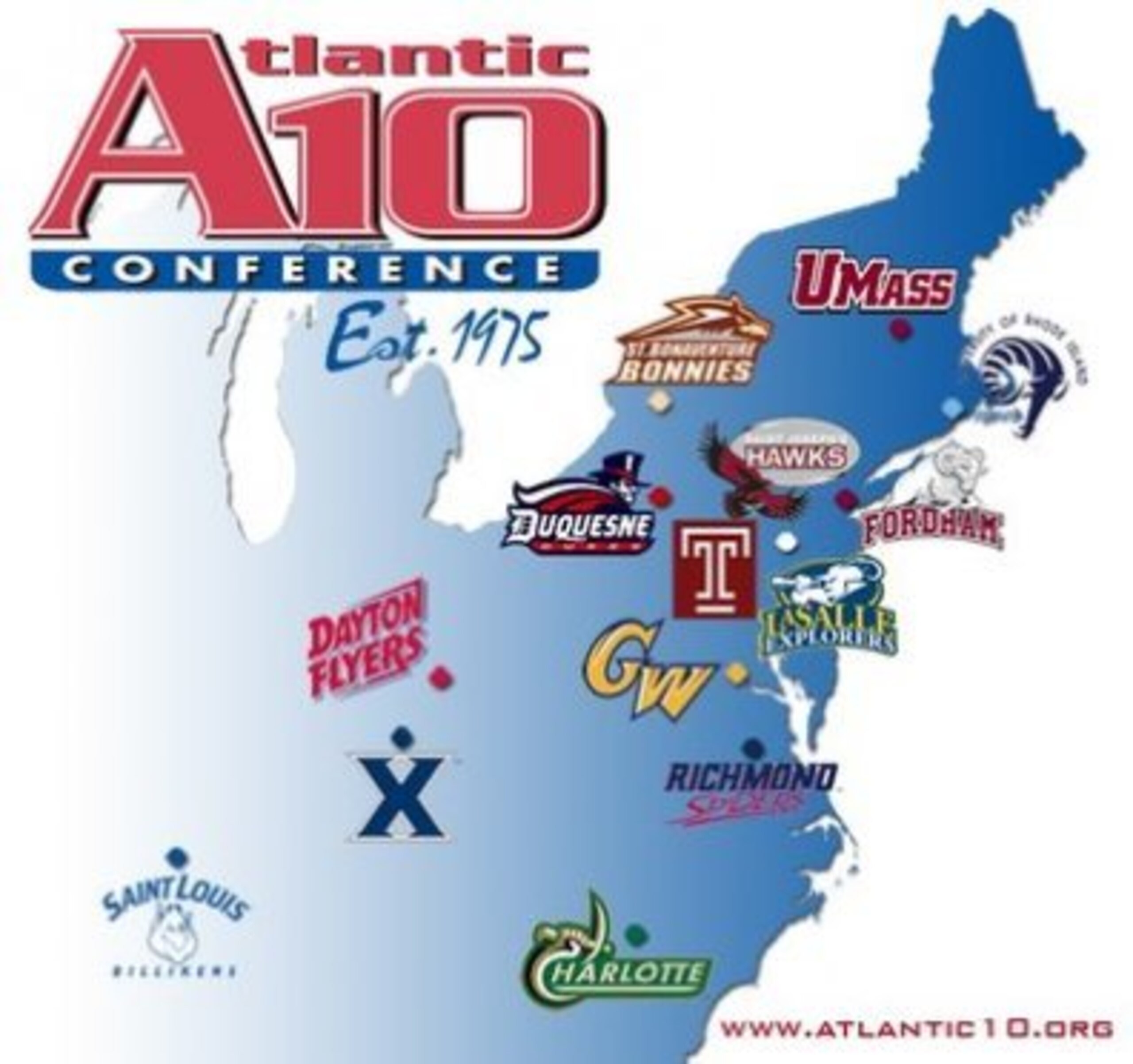
The A-10 has been a deep conference for the past decade. Every time one team starts to decline, another rises out of the mediocrity.
This season is no different for the Atlantic schools. Starting with the obvious, Temple is going to be a strong team this year. Bringing back arguably the best guard in the conference in Juan Fernandez and a ruler of the paint in Lavoy Allen is an instant recipe for success.
Xavier is always a school to recognize as well, as they continuously bring in solid recruits that combine to form the solid teams that Xavier puts on the floor every year. Although they lost one of the best all-around scorers in the nation in Jordan Crawford, the Musketeers bring back three other starters. While they may not go toe-to-toe with Kansas State this season, they may be a threat if they can play together.
The Spiders of Richmond are looking to avenge their first round upset by returning two of the best players in the A-10: Kevin Anderson and Justin Harper. Anderson is the defending A-10 POY and is looking for an even better season this year. Another team to keep an eye on is the Rhode Island Rams.
They took Pittsburgh right down to the buzzer in Pittsburgh, one of the toughest places to play in the country. The Rams bring back great athletic talent Delroy James along with three other starters and bunches of players ready to step into a role on the team.
Dayton is one other dangerous team. The defending NIT champs won't be satisfied with defending their title. They want into the Big Dance this season. They can achieve it with the help of returning senior Chris Wright. There is a bunch of crazy talent in Dayton this season, so watch out for the Flyers as well.
6. Mountain West Conference (MWC)
27 of 32
The Mountain West exploded as a conference full of talent last year. Teams that weren't even on the radar bounced forward and took the limelight. The MWC put four teams into the NCAA tournament last season and they're on good pace to match that this year.
First off is Brigham Young. All you need to know about Brigham Young can be summed up in two words: Jimmer Fredette. The kid can ball. Plain and simple. No one can stop him, they only hope to contain him. WIth Fredette, BYU will cruise right into the tournament this season.
Next up, UNLV. The Rebels return all five starters from a team that lost a total of nine games last season. There is no match for experience and the Rebels have plenty of it to go around.
Another team that shouldn't be overlooked is San Diego State. The Aztecs nearly beat a Tennessee team that went all the way to the Elite Eight last season. They also return all five starters, including outstanding sophomore Kawhi Leonard, who could battle Jimmer Fredette for POY honors.
New Mexico seems to be left out of a lot of consideration because of the loss of Darington Hobson and Ramon Martinez, two of their biggest assets. New Mexico has plenty of depth though and they are very capable of another tournament run, but maybe not a No. 3 seed.
Also be aware that Colorado State returns four starters from a .500 team last year that showed flashes of greatness.
5. Southeastern Conference (SEC)
28 of 32
The SEC is the most athletic conference in basketball. It's the same way in football. They just attract ridiculous athletes. But, you don't always win in basketball with just athleticism.
However, the teams in the SEC don't just have talent, but skill as well. The SEC East is a lot deeper than the SEC West, but that fluctuates from year to year. It just means that the powers will play more difficult opponents and we'll be able to see how good they really are.
The SEC East includes powerhouses Florida and Kentucky. Florida looks best as it has since the back-to-back titles in 2007 and 2008. The Wildcats have no idea what to expect out of this season. They basically are running with the same game plan as last year; they bring in a bunch of great freshman and see if they can play together. It worked last year, but will it this year without big man Enes Kanter? \
The SEC east doesn't end with them, though.
Tennessee upset some fans after losing their exhibition to lowly Division II Indianapolis, but they bounced back and won the one that mattered this week, and it seems they should be okay down the stretch.
A big sleeper pick this season is the upstart Georgia Bulldogs. The combination of Trey Thompkins and Travis Leslie seems to intimidate a lot of teams and they may make a run late in the SEC. Vanderbilt is another possible team that could make the tournament with returning wing Jeffrey Taylor leading the way.
The SEC West is less intimidating, but can still pack a punch. The main worries in the West are the schools in Mississippi. Two of the best guards in the SEC lead Ole Miss and Mississippi State. Dee Bost returns for the Bulldogs of Mississippi State. His talents led them to a No. 1 seed in the NIT, but they really wanted a NCAA birth and many felt that they deserved it. Chris Warren is the guard to watch out for against the Rebels. His scoring ability is unique and he really wants an NCAA bid in his senior season.
4. Atlantic Coast Conference (ACC)
29 of 32
The ACC is home to some of the most storied programs in college basketball. Arguably the richest tradition across a conference, the best of the best have played here.
However, this year, they are not the best of the best. Sure, there is plenty of talent in the ACC, but it is frankly a rebuilding year for many programs. The defending champion Duke is really the only team that is standing on solid ground. They've kept key players while adding more. Other teams are trying to rebuild or trying to breakout.
The North Carolina Tar Heels lost over 70 percent of their scoring last season, and yet they're still ranked in the top 10. How, you ask? Harrison Barnes. The anticipated freshman is the first to ever be nominated as a Preseason All-American. He scored 14 points in the first game and pulled in four boards. Solid, but All-American? Only time will tell.
Virginia Tech needs to make the tournament. They've missed the party wagon for three straight years and Seth Greenberg is furious. I don't know if he's calmed down since last March. Malcolm Delaney and Dorenzo Hudson should accomplish the goal.
Chris Singleton is a great player, but if the Florida State Seminoles want to make the tourney, he'll need some support.
Everyone else in the ACC is on the bubble. Maryland has been impressive early this season and Jordan Williams has been dominant, but can they fill the hole Grievis Vasquez left?
Clemson and Wake Forest need to settle down with new coaches, while Paul Hewitt and Georgia Tech need to find some rebounders after losing two of the best (Derrick Favors and Gani Lawal) to the NBA.
Virginia and Boston College are a mess, and Frank Haith may be on his last leg this season in Miami; if he doesn't produce he might be gone (although they did look impressive in the loss to Memphis early this morning).
3. Big 12 Conference
30 of 32
The Big 12 is just one big pot of "Who's gonna play better" stew. Everyone has Kansas State at the top of the conference, but the Kansas Jayhawks have slowly crept within three spots in the polls. It will be a very interesting matchup this season when they travel to see each other this year.
What really intrigues me about this conference, however, is how the rest will shake out. The ways that the third, fourth and fifth places may shake are infinite in number (not really). Missouri and Baylor are both seen as contenders for the third spot, but Texas has also looked quite impressive early in the season and if they can keep their play at a constant level all season, they look like a very powerful young team.
Even more intriguing is the way Colorado may walk into the situation. Last season, Alec Burks impressed everyone who saw him play. He led the Buffaloes to a very mediocre season, but maybe they can increase their level of play to fit his this season.
Oklahoma State is another interesting team to watch for. The Cowboys lost their star in James Anderson, but they also bring back three starters, including two senior forwards.
The Big 12 has all that anyone could ask for: star power, good teams, solid teams, depth, etc. The only thing they don't have is a clear answer on how the teams will perform this season.
2. Big East Conference
31 of 32
The Big East is difficult to place in the rankings as it has 16 teams in the conference and no one else has more than 12. So how do you decide which is better? While you still have better teams, there are also more to choose from.
I decided to choose by potential. There are more teams in the Big East with sleeper potential. Really the only teams I don't think will have any kind of success this season are Cincinnati, Rutgers, Providence and South Florida. They already look a little out of it.
Every other team is a possible tournament team. Yes, even DePaul.
The Blue Demons brought in coach Oliver Purnell from Clemson this season. The former Tiger did a miraculous job of using his players to create a great ACC team. Now, he needs to do that for a worse team, in a better conference. Is it possible? That's debatable. But if any man can do it, Purnell can.
The Big East has plenty of heavyweights to cement its place as a top conference. Villanova and Pittsburgh are the main two and they are going to be fighting for the NCAA title come March, no question.
The next tier of teams lies with Georgetown and Syracuse. They have the potential to garner a low seed in the tournament, they just need to get through non-conference season because they won't get through Big East play unscathed. It never happens.
Then we fall to the sleepers. Marquette, West Virginia and Louisville finished last season with varying degrees of success. West Virginia lost in the Final Four, Marquette and Louisville in the first round. This season, they all lose significant parts of their team so it will really hinge on the coaches to bring these programs back to the tournament.
The last tier belongs to the bubble teams: Seton Hall, Connecticut, St. John's and Notre Dame. The Irish lost Luke Harangody, but they retain three other starters that should allow them some sort of success.
Connecticut should be fine as Kemba Walker has grown into one of the best guards in the Big East and Alex Oriaki could be a breakout player (he grabbed 18 rebounds in their first game this season).
Seton Hall is a real headache. Can Jeremy Hazell carry this team? Early indications say he won't have to. He's getting decent backup points from his forward Herb Pope. He shot well from the field, not throwing up 41 attempts like he has been known to do.
St. John's is the same deal. Will Steve Lavin turn things around in New York, or are the Red Storm in for more of the same old losing? Questions, questions, questions...
1. Big Ten Conference
32 of 32
The Big Ten is the epitome of what it is to be a conference. Yes, there are a few stragglers at the bottom of the totem pole, but they can't really help it and they're trying to turn it around.
At the top sits Michigan State. The team returns all but two significant players, four of them starters. Tom Izzo has had great success in the past decade, but I wonder what a new one will hold?
Ohio State is nipping closely behind. Although they lost Evan Turner, the Buckeyes gained Jared Sullinger, a beast who has no boundaries in the paint.
Close behind Ohio State are Purdue and Illinois. Purdue would have been one of the favorites to win the title had Robbie Hummel not have injured himself. Nonetheless, JaJuan Johnson and E'Twaun Moore lead one of the deepest teams in basketball into the season. Demetri McCamey and the Illini have been one of the more impressive teams so far.
The way that they have moved the ball around is astonishing, as if there were five McCameys on the court. No one is paying the boys in Champagne much attention, but that could change with just one big win (a.k.a. vs. Texas on Thursday).
Wisconsin is once again flying below the radar and that should suit Bo Ryan and the Badgers just fine. They are never the favorites in their conference and yet they always manage to slide into the tournament as if they were greased in butter.
Minnesota looked as if they were in for a decent season and then Devoe Joseph got suspended. That sounds like the beginning of another frustrating season for Tubby Smith.
Now is where I get to call someone out: Northwestern Wildcats. If you don't make the tournament this year I'm going to stop cheering for you. You have one of the most talented players in the country with John Shurna and yet you still can't win enough games to get one of the last at-large spots.
Really? It shouldn't be that hard. I mean, you've been trying long enough. You'd think it would finally happen. All I'm saying is it better happen. You can't keep intelligent people docile for long. They like to win, too.
The rest of the Big Ten may be in for a rebuilding year. I've seen Jon Beilin work wonders at other schools, but the Wolverines really need one in Ann Arbor. Tim Hardaway Jr. is in Ann Arbor and he posted a pretty solid 19 in their first game. Maybe Manny Harris can be replaced...
Iowa just needs to let Fran McCaffery do what he does and remake that entire program.
Penn State needs to give Talor Battle some help. He can't play all five positions (though he does his best).
Indiana just needs to cowboy up. It's not like they don't have talent. Tom Crean is starting to feel a little hot under the collar, I bet.
.jpg?w=2560 "Packers Vikings Football")
.jpg?w=2560 "Browns Likely to Stick with Watson")