
U.S. Open Tennis 2010: 10 Reasons Rafael Nadal Is the Dominant Player in Tennis
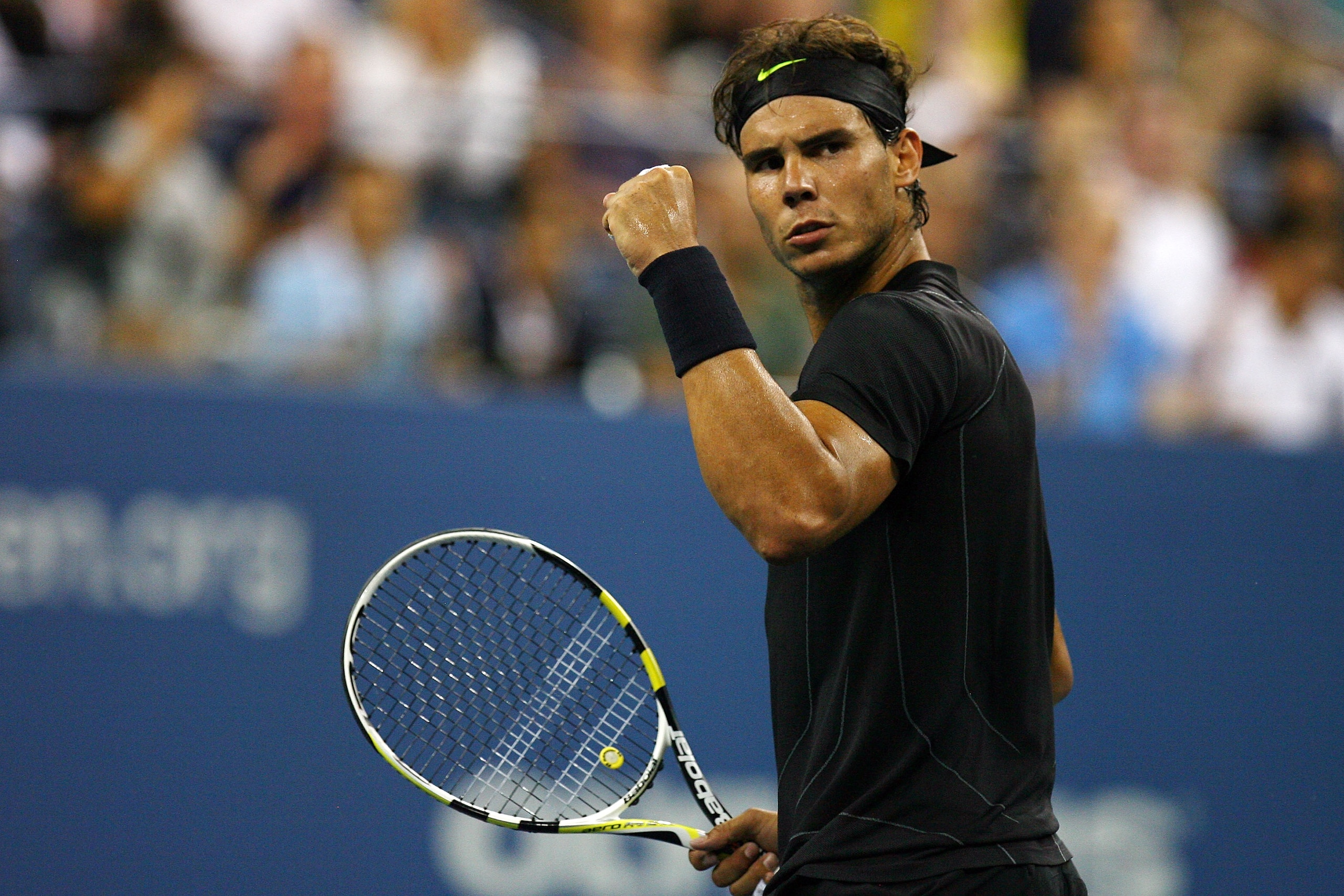
Rafael Nadal's picture isn't next to dictionary.com's definition of "dominant," but probably should be.
The word is defined as "ruling, governing, or controlling; having or exerting authority; occupying or being in a commanding or elevated position; main; major; chief."
Notice that each and every one of those explanations is firmly rooted in the present. There is no mention of past history, merely what is happening in the present. For that reason, Nadal can be the most dominant player in the game without being the greatest in a historical sense.
Consider this football metaphor. In 2001, Drew Bledsoe was the New England Patriots' franchise quarterback and unheralded second-year Tom Brady was simply riding the pine. When Mo Lewis essentially ended Bledsoe's career with his bone-crunching hit, Brady was thrust into the starting lineup and led the Patriots to the Super Bowl.
Brady quickly became the most dominant player at his position, but at the time, Bledsoe had more historical success. Therefore, Bledsoe was more historically great, but Brady was more dominant at the time. That would quickly change, but that's irrelevant here.
This metaphor holds true for the story of Roger Federer and Rafael Nadal.
There is no debate about who is the greater player in a historical sense. Federer, the holder of myriad records including the coveted Grand Slam title record, blows Nadal out of the water.
Reason 1: Versatility
1 of 10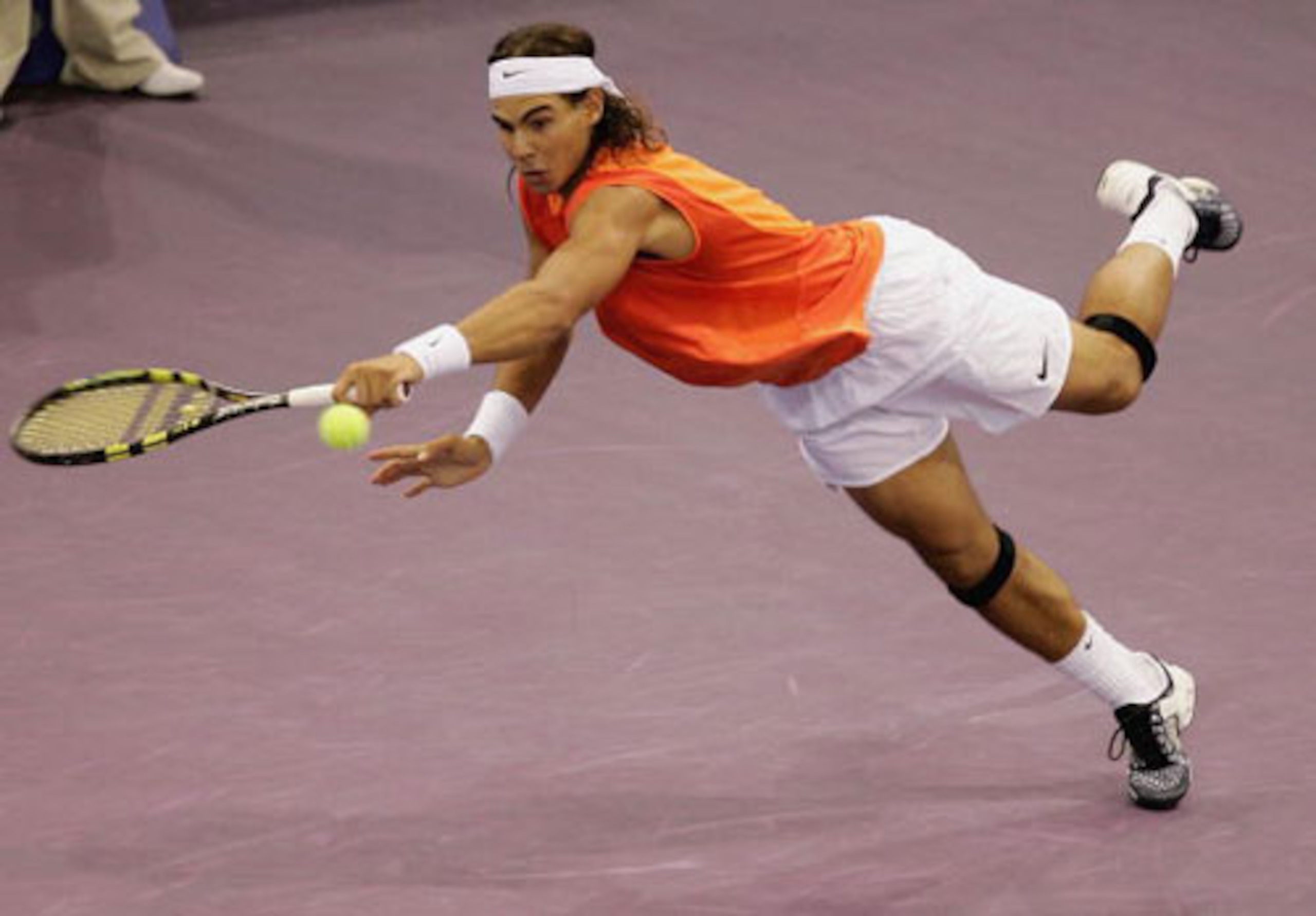
One reason for Nadal's dominance is his versatility. No player in tennis has the Spaniard's ability to win on every surface.
He can play on grass courts, clay courts, hard courts, and as evidenced by his 2008 exhibition match against Serena Williams, even water courts.
But Nadal does more than just play on all of the surfaces listed above. He wins on them.
Nadal is good enough on clay to be considered the "King of Clay," but recently, he has added the ability to play on other surfaces to his arsenal.
In 2008-2009, Nadal became the first tennis player ever to simultaneously hold Grand Slam titles on clay, grass, and hard courts.
In 2010, he joined Bjorn Borg as one of the only two players to win multiple Channel Slams by winning both the French Open and the Australian Open.
Nadal has gotten rid of the notion that he is simply a clay court specialist and has proved that he can win no matter what surface he plays on.
Reason 2: Speed
2 of 10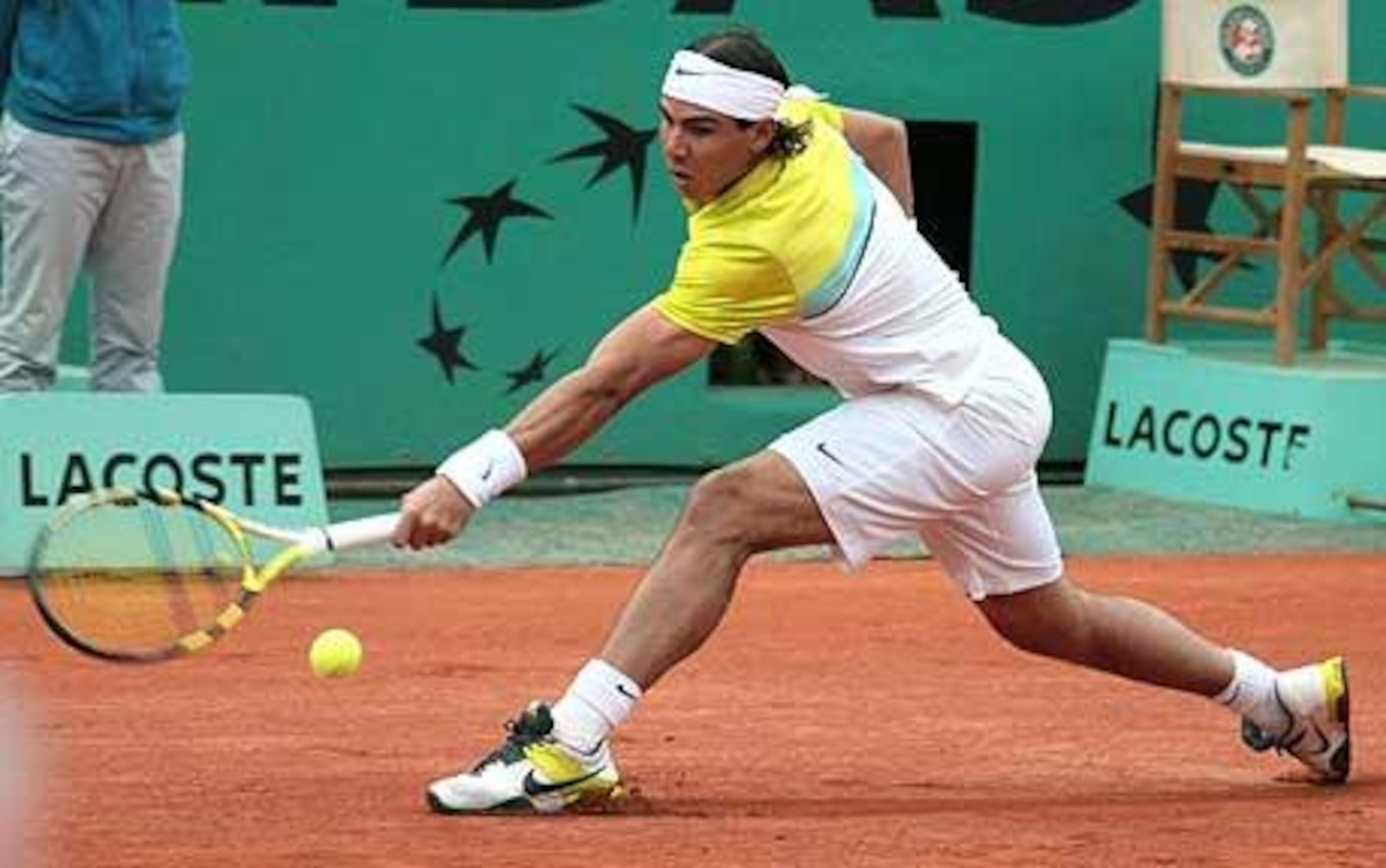
One way in which Nadal excels is by using his tremendous speed on the court.
We've all seen the No. 1 ranked tennis player in the world chase down seemingly impossible to reach shots, hit the yellow ball back into play, and then recover in time to hit his next shot.
His athleticism is simply astounding.
One way that Nadal maximizes his speed is through the use of a technique known by many different names: Gravity turn, floating pivot, drop step, negative step, or paradoxical step. Instead of using the more traditional crossover to stop and change directions, Nadal almost jumps into the shot with his leading foot and switches directions while hitting his shot.
This combination of speed and technique helps Nadal overwhelm his opponents. When he plays, it seems as though no shot is out of reach for him.
Reason 3: Defense
3 of 10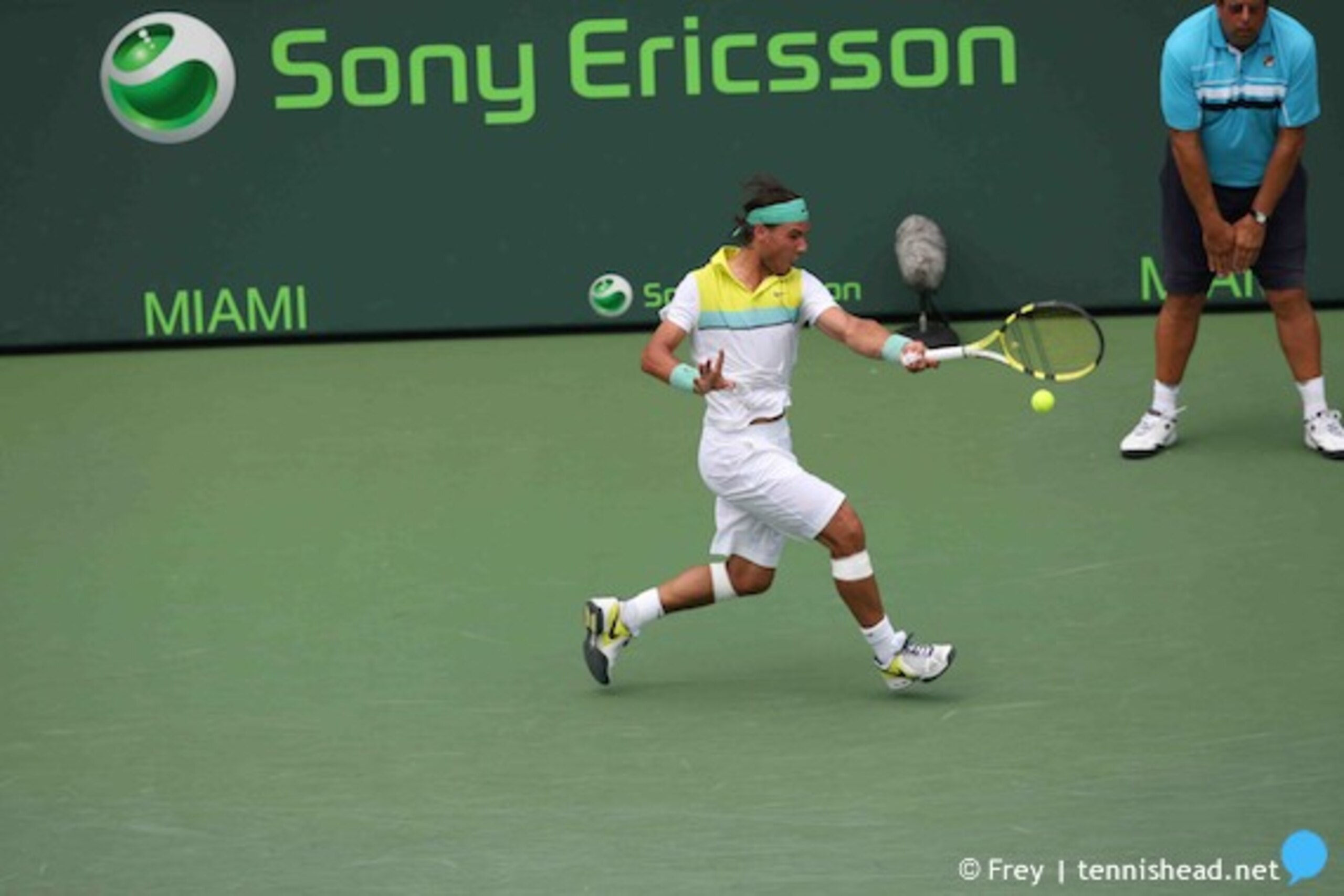
Nadal's defense, helped very much by his speed, is one of the strongest parts of his game.
It takes a toll on his body, but Nadal refuses to ever give up on a point. He returns seemingly every serve, gets back almost every shot that his opponent hits, and sometimes chooses to wait until his opponent makes a mistake.
As a counter puncher, one would think that he wouldn't be successful in today's game of booming serves and forehands. However, Nadal has proved that defense sometimes becomes the best offense.
.jpg?w=2560)

Reason 4: Spin
4 of 10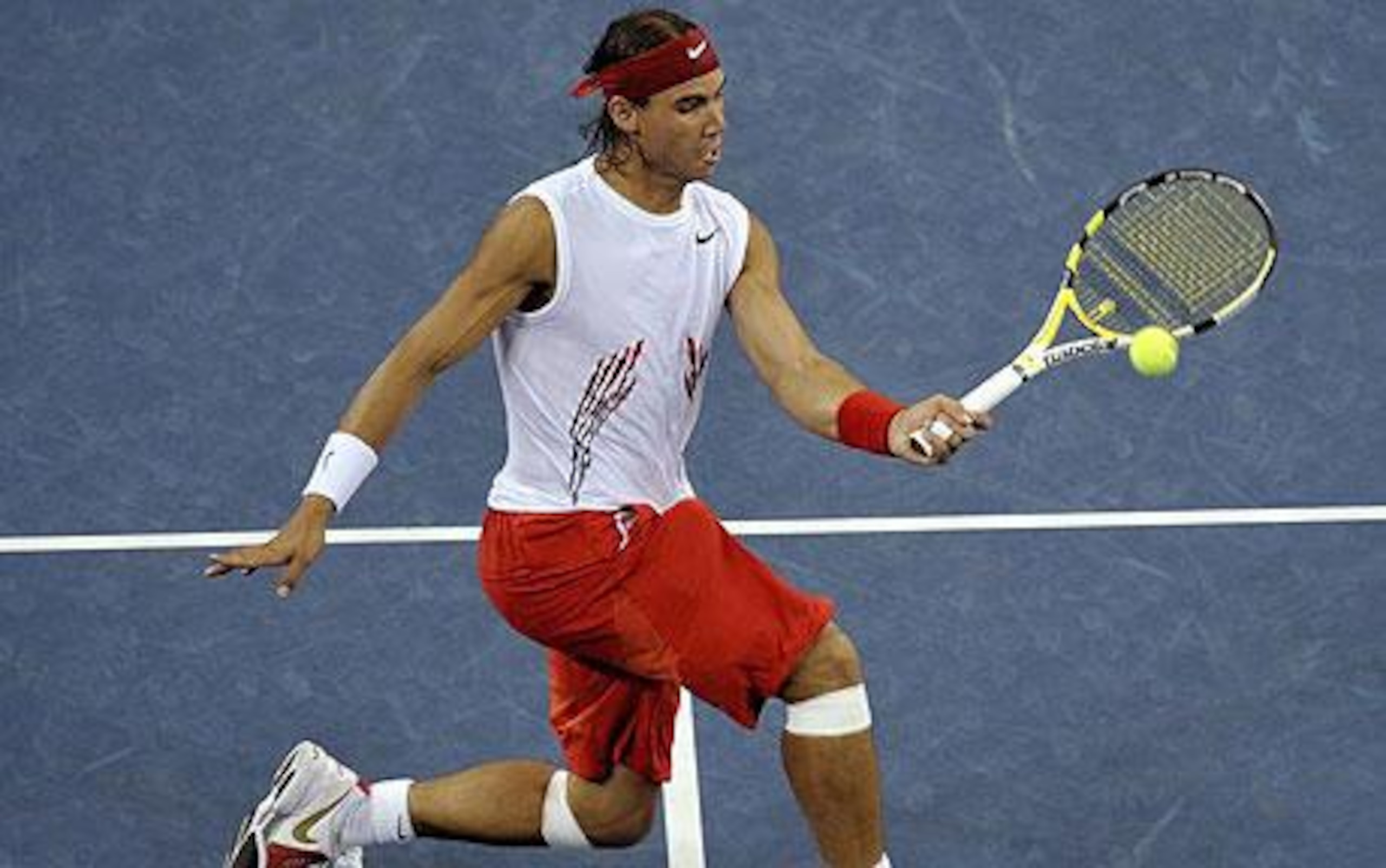
Rafael Nadal puts an absolutely ridiculous amount of spin on a tennis ball.
This is due to his somewhat unorthodox form on his forehands. Instead of finishing his shots across his body or opposite shoulder, Nadal finishes above his left shoulder. This is called a lasso-whip follow through. He also uses a semi-western grip on his forehand.
Now what this does is increase the amount of spin he puts on the ball.
John Yandell, a tennis researcher from San Francisco, measured the amount of spin that certain tennis players put on the ball and the results were astounding.
The greats of the previous generation, Andre Agassi and Pete Sampras, hit forehands with 1,800 to 1,900 revolutions per second. Roger Federer hits the ball with 2,700 revolutions per second. But Nadal blows all three out of the water.
Nadal averaged 3,200 revolutions per second and sometimes reaches 4,900.
Because of this, Nadal can hit the ball short of the baseline, allowing more room for error, and have the ball bounce extremely high, thus negating the advantage opponents would normally have from playing a short ball.
Reason 5: Clutch Serving
5 of 10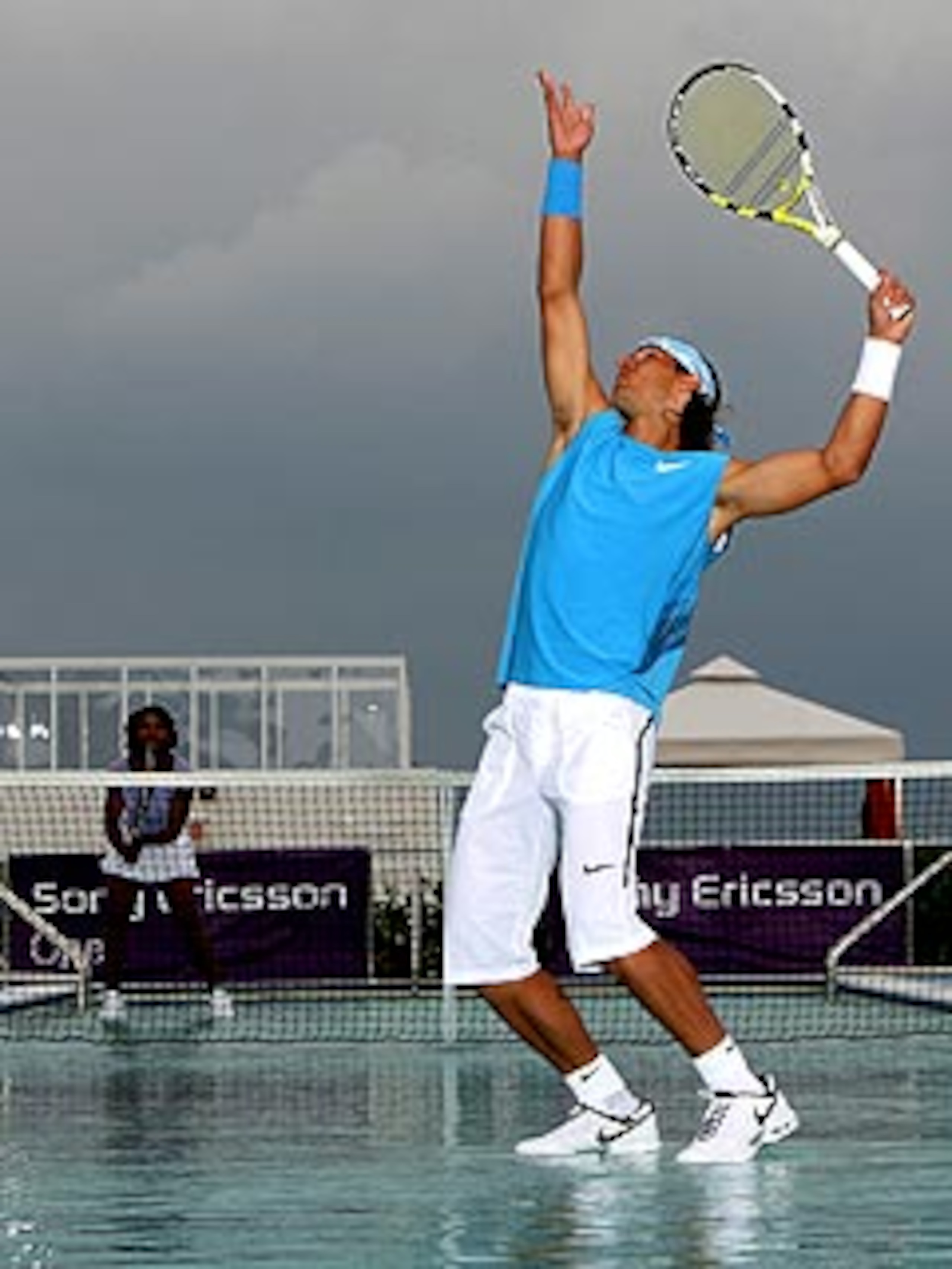
Nadal has never been known as a great server, but he has improved remarkably in recent years.
He doesn't choose to go for the powerful aces, but instead relies on his consistency to wear down his opponents.
The biggest improvement to his serving has been his ability to be clutch in the most dire circumstances.
This year, Nadal has saved 69 percent of the break points he has faced, a mark that places him second among ATP World Tour players. He is third in service games held, 89 percent, and is first for second-serve points won, 59 percent.
Reason 6: Strategy
6 of 10
In interviews, Nadal has often commented about little, seemingly unimportant nuances of the game. For example, he has talked about the difference in balls that are used in different tournaments as well as about different wind speeds.
These comments are characteristic of a player to whom strategy is vital.
Nadal cares about each and every aspect of his game and when one aspect is slightly off, he works to adjust it, even if that must occur in the middle of a match.
For that reason, Nadal has been able to adjust his game to win on every single kind of surface. On a smaller scale, this ability to think strategically has helped him win many matches.
Nadal goes into matches with a game plan, but unlike other players, he has the ability to change that game plan mid-match so that he can increase his chances of winning.
Reason 7: Resiliency
7 of 10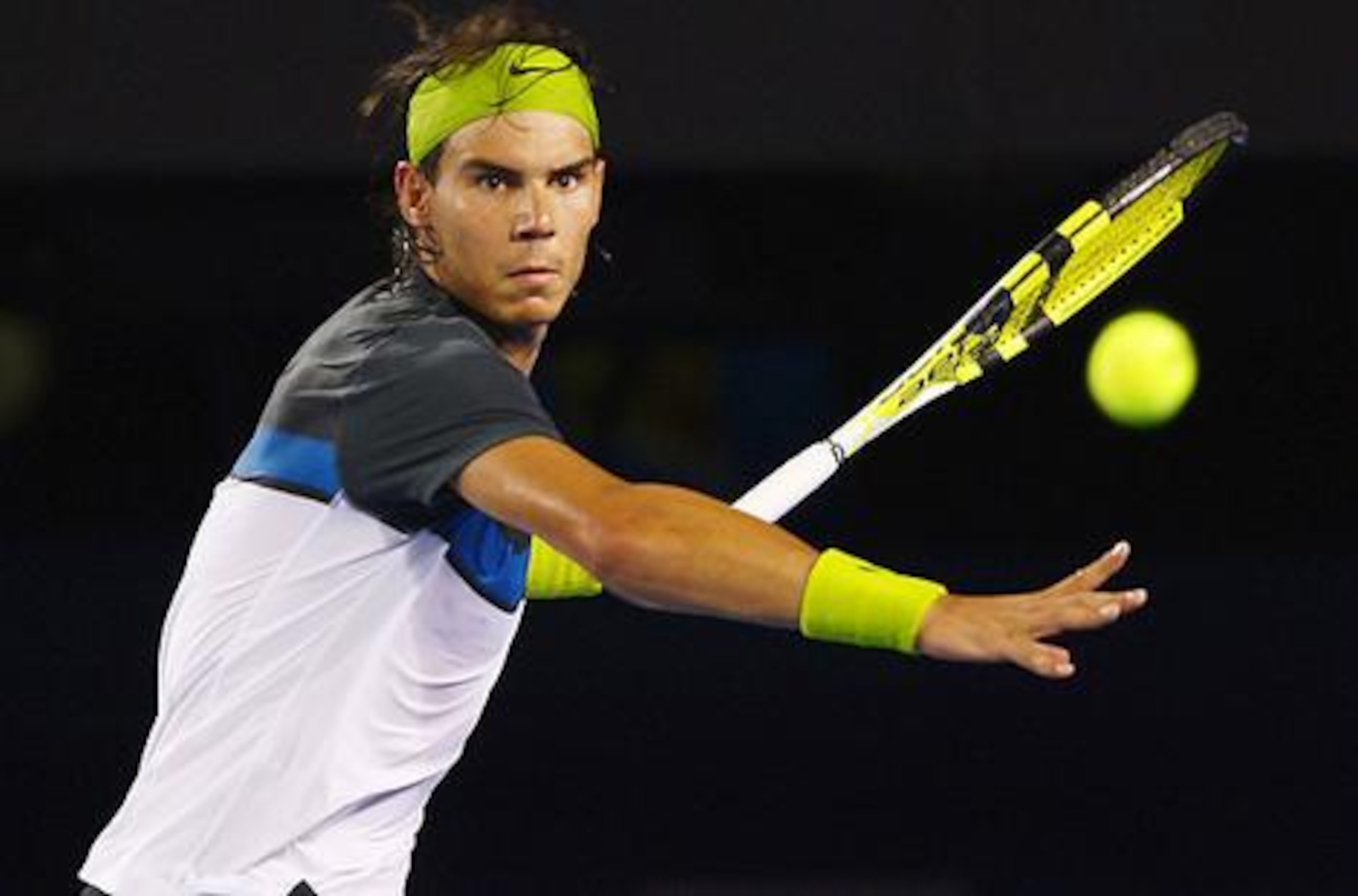
This is arguably Nadal's biggest strength. He has been recognized both by peers and by his own critical self as possessing resiliency.
Every great player sometimes goes through a stretch where they play poorly. This can be an extended multi-match or even multi-tournament period, or a short stretch during a match.
Some of those players get down on themselves and allow the mistakes to start to pile up. Rafael Nadal is not one of those players.
Instead, Nadal is a player who truly lives in the moment. No matter what the situation is, he is only thinking about the current point. He also never really gets down on himself; he accepts the bad shots along with the good ones.
This more than anything else is the mark of a champion.
Reason 8: Youth
8 of 10
One of the biggest knocks on Rafael Nadal is his tendency to succumb to injury. Because of his playing style, it seems as though he is constantly trying to fight through some sort of pain.
But remember, Nadal is still young. He was born on June 3, 1986 and is still just 24 years old.
He's in the prime of his career and his body is still young enough to bounce back from any injury.
Nadal's body will probably not withstand the physical toll he places on it for a very long time, but right now it can. And remember, dominance is rooted in the present.
Reason 9: Humility
9 of 10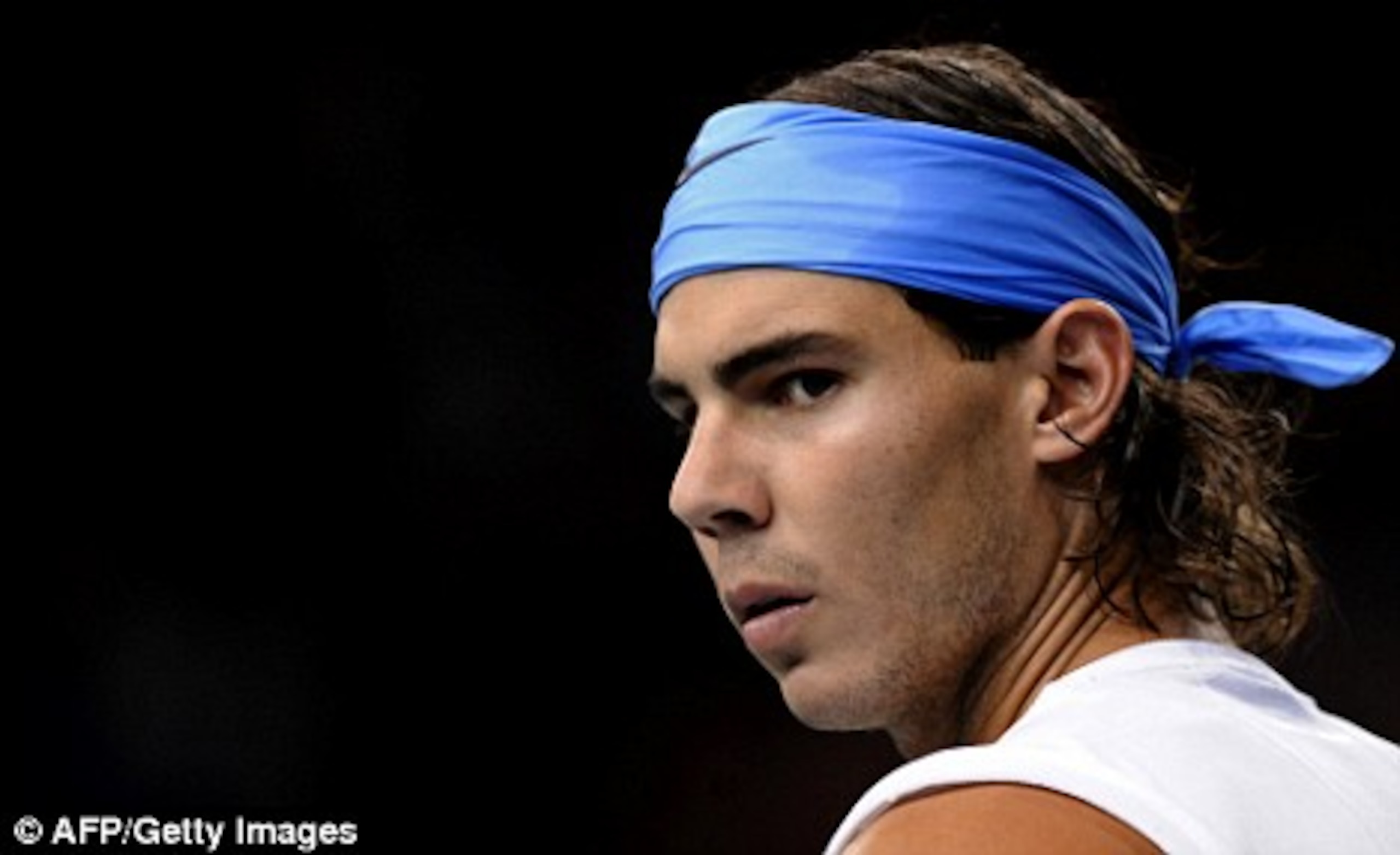
Humility may seem unimportant, but for Nadal, remaining humble helps him to keep his desire to win. He may believe he is the best, but instead of arrogantly believing that fact to be true, he chooses to remain humble and always believe that he has something to work on.
This weekend, Nadal provided a multitude of quotes that speak to this very fact:
"Just to be here and have a chance to win the fourth (Slam) is just an unbelievable thing.
"When I was younger, seven years before or six years before or three years before, I never really thought I could really do that. So I am very happy with what has happened in my life, in my career. I'm just enjoying that moment and trying to fight every ball because if there is any chance to win here, I want to convert this chance.
"Roger is the best in history and he needed Roland Garros. He deserved Roland Garros because he (advanced to) three finals. For me, completing the Grand Slam at this moment is not a goal. For me, the goal is try to improve my level, to play well the next match, and we will see what happens next Sunday. If I (don't win), I'm going to come back home, try to keep improving. This is not an obsession and is not a real goal.
"I never thought about that. I think I am not ready to be the best in history. This is not the right moment to talk about that, seriously. I am 24 and a half, so talk about the history when one player is playing is difficult, no?
"I am very happy—eight Grand Slams, Olympics, 18 Masters 1000. I am probably in one part of the history of tennis, so I am very happy with that. Now everything is to win. I don't know if I'm going to have the chance to keep winning Grand Slams. I'm going to try, for sure. But to be the best of the history is almost impossible."
Nadal is just going to keep working harder and harder to get better, so this humility helps to fuel his dominance.
Reason 10: Ranking
10 of 10
Right now, Rafael Nadal sits atop the ATP World Tour Singles rankings.
He has played two less tournaments than No. 2 Roger Federer, but he has 10,745 points to Federer's 7,215.
Rankings don't always tell the whole story. Sometimes a player has such a huge lead in the rankings that they can endure a period of time where they aren't the most dominant player in the world, yet still maintain their ranking.
This is not one of those times.
Nadal right now is playing like the most dominant player in tennis, and the ranking shows it.

.jpg?w=2560 "Landon Dickerson Placed on IR")
.jpg?w=2560 "Nabers' Recent IG Post 👀")
