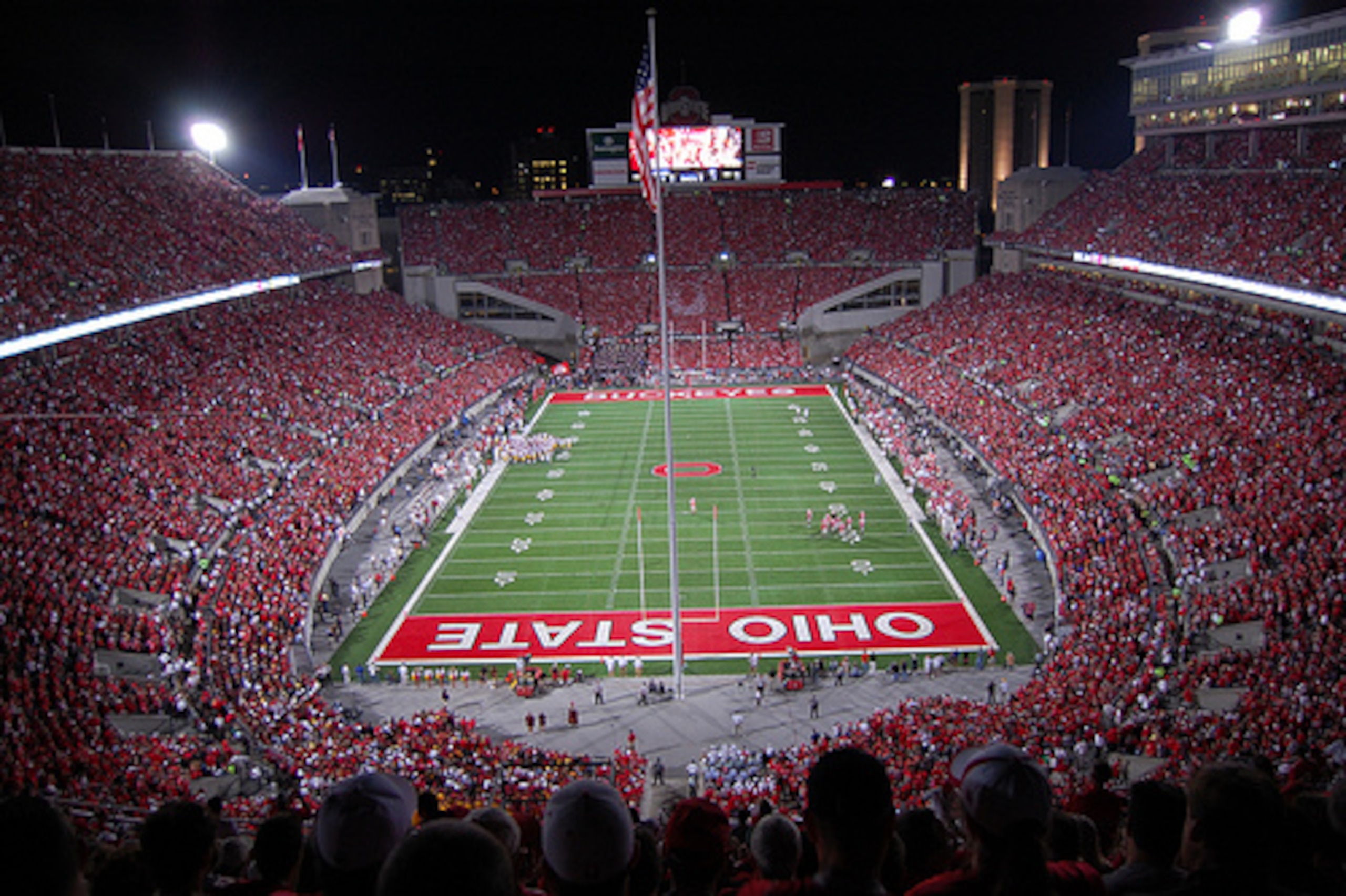


For whatever reason, stadiums in college football are bigger, more lively, and more iconic than any other sports venues.
They seem to evoke a certain emotion in teams and fans that simply cannot be matched. Some have been recognized as historic monuments due to their standing in the course of American history. Some even rival other world-leaders in terms of size.
They mean much, much more than the concrete purpose they serve. They are symbols and icons in the world of sports, and have captured the hearts of countless fans across the country.
So with that being said, here's a list of the 20 most storied college football stadiums in the country.
No. 20: Gaylord Family - Oklahoma Memorial Stadium, Oklahoma
1 of 20
Broke Ground in 1923
For some reason, Gaylord hasn't been deemed historic to the extent of some of the other stadiums on this list, but that doesn't mean it isn't among the country's greatest today.
It has clearly been a friend to Bob Stoops, given his 66-2 record at home, and current 30-game home winning streak (the longest in college football).
Gaylord is a flat-out nightmare for visitors, and has been established as icon among the Big 12 and the world of college football. Most importantly, it's hosted one of the most dominant teams of the 2000s.
No. 19: Memorial Stadium, Clemson
2 of 20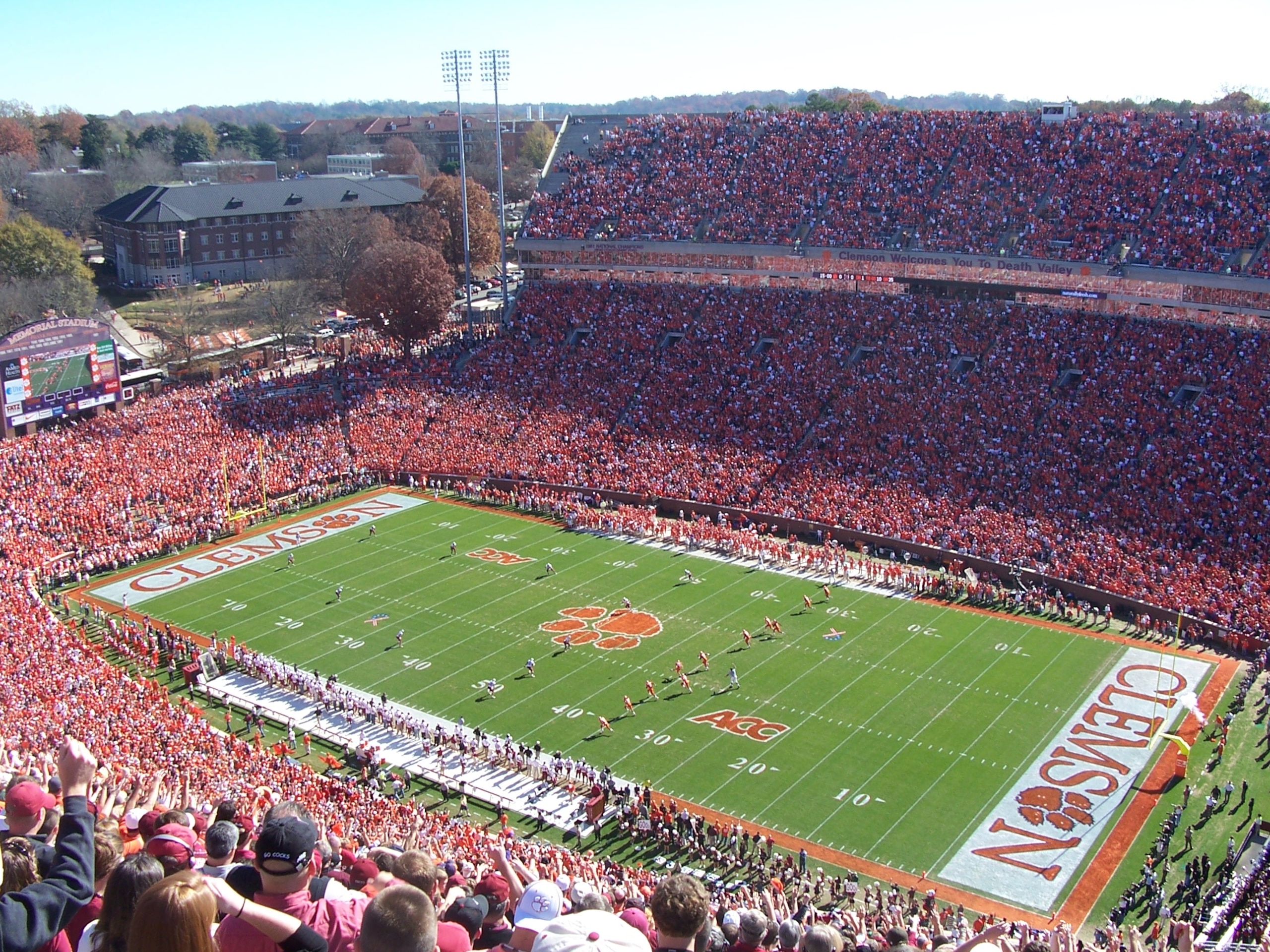
Broke Ground in 1942.
No other sport features such an array of unique team traditions as college football, which is evidenced by those of the fighting Clemson Tigers.
Memorial Stadium has been called "Death Valley" due to its physical location in a valley, which is overlooked by the university cemetery. Also, the team's traditional entrance to home games is a fan favorite. Prior to each game, the team rubs the famous "Howard's Rock," then runs down a long hill while the entire fanbase watches. The pregame ritual has been described as "The Most Exciting 25 Seconds in College Football."
However, it's the devotion on the part of the fans that make this a special place. Clemson has ranked in the top 20 in attendance every year for the past 22 seasons.
No. 18: Doak Campbell Stadium, Florida State
3 of 20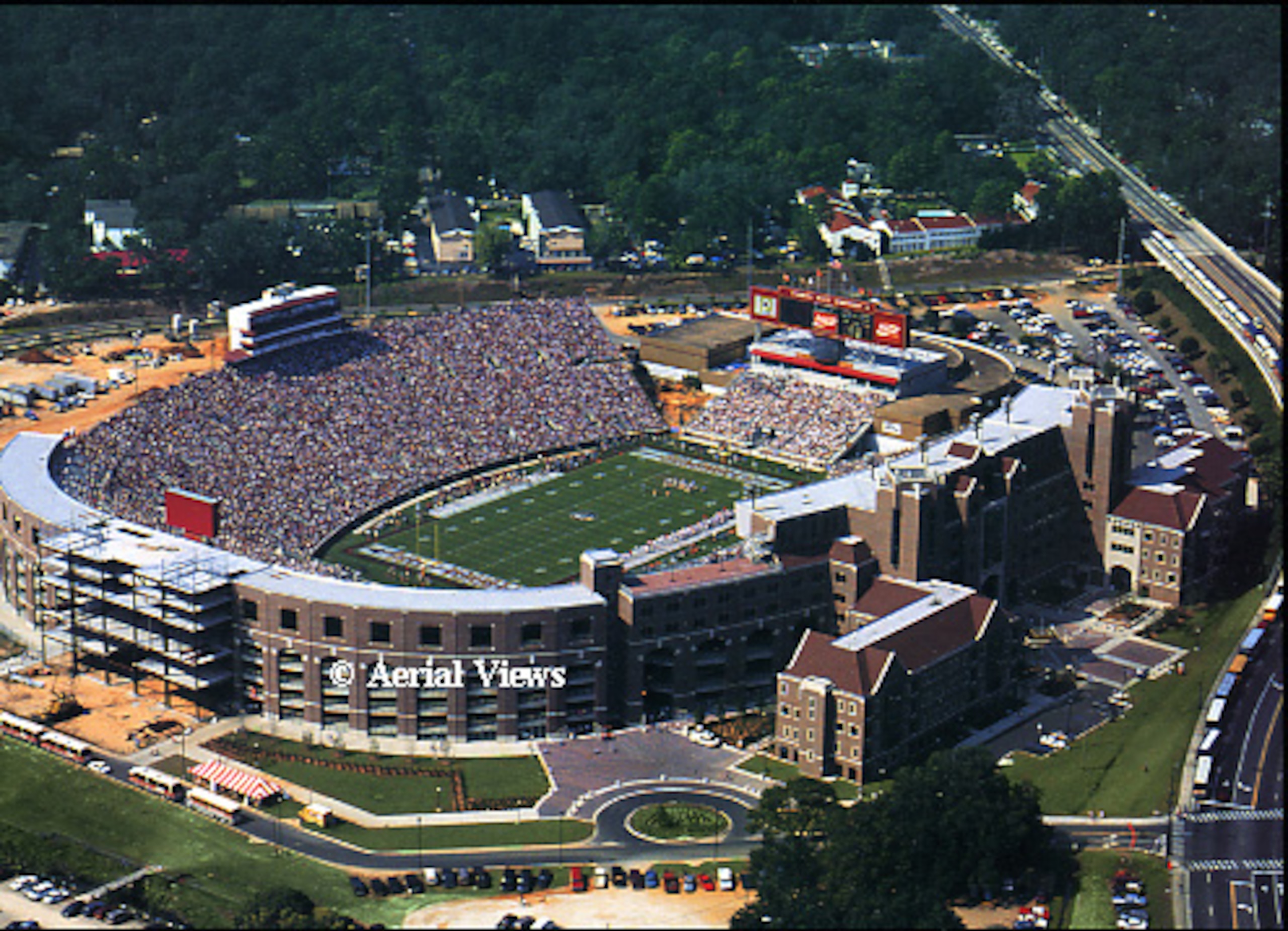
Broke Ground in 1950.
Doak Campbell Stadium has made a very rapid climb toward an elite venue.
From a maximum crowd of 15,000 in 1953 to a record-setting crowd of nearly 85,000 in 2003, the stadium has been catapulted by Bobby Bowden and the Florida State program into an elite NCAA icon. Such a fast-track climb toward such a high level surpasses any program in the country, and can be credited to the recently retired Bowden himself.
His services were formally recognized in 2004, when Bobby Bowden Field was named in his honor.
The home of the Seminoles has risen to the top along with the program itself, and won't be heading back down anytime soon.


No. 17: Franklin Field, Penn
4 of 20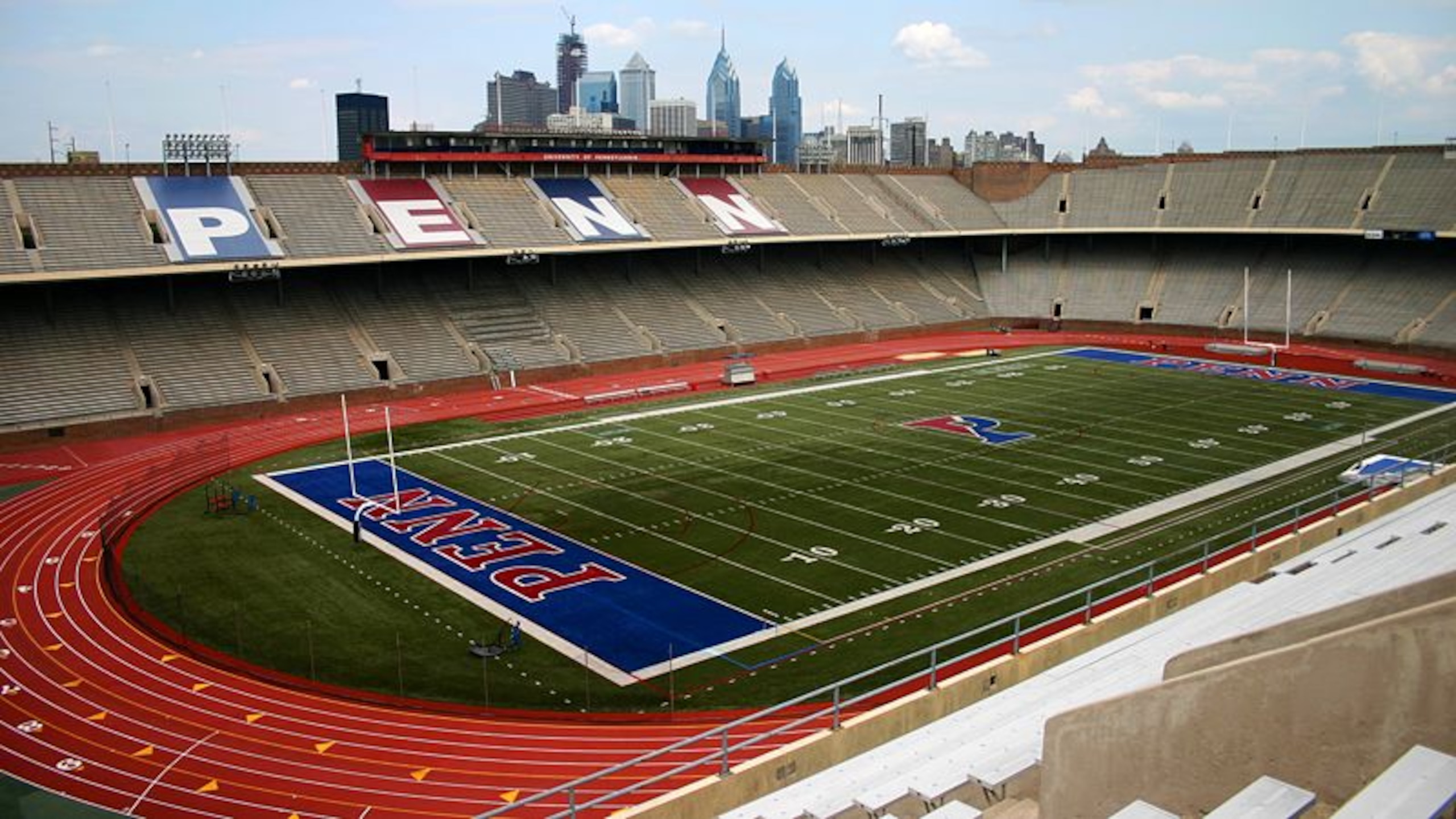
Broke Ground in 1895.
It's not the biggest, it's the most intimidating, and it's not state-of-the-art by any stretch of the imagination. What Franklin Field is, however, is the oldest and one of the most historic college football stadiums still in use today.
The ancient venue gets its name from founding father Benjamin Franklin himself, and once played host to Jim Thorpe and the Carlisle Indian School in 1907, which resulted in an overflow crowd of 20,000 spectators. Also, the venue became the first Division 1-AA stadium to host ESPN's College Gameday when, in 2002, Penn played Harvard in a conference-deciding contest.
Franklin Field simply has too much history to be left off this list, and its 115-year-old history makes it a pinnacle in the world of collegiate sports.
No. 16: Neyland Stadium, Tennessee
5 of 20
Broke ground in 1921.
Neyland Stadium might be the most impressive venue in all of the SEC, due to its 102,000 seat capacity and constant renovation.
It's housed nearly 25 million fans since 1950, and serves as a multipurpose venue by hosting large conventions and NFL exhibition games. It's the largest stadium of any SEC team, and the third largest in the country, which creates an inhospitable environment for those entering Knoxville.
Much of the recognizable activity occurs on ground level. Shields-Watkins Field sports the iconic orange and white checkerboard end zones, and the famous Southland Band form a giant orange "T" prior to every game played in Neyland.
Overall, the size, style, and culture one observes in Neyland Stadium make it a truly iconic place in the heart of the SEC.
No. 15: Camp Randall Stadium, Wisconsin
6 of 20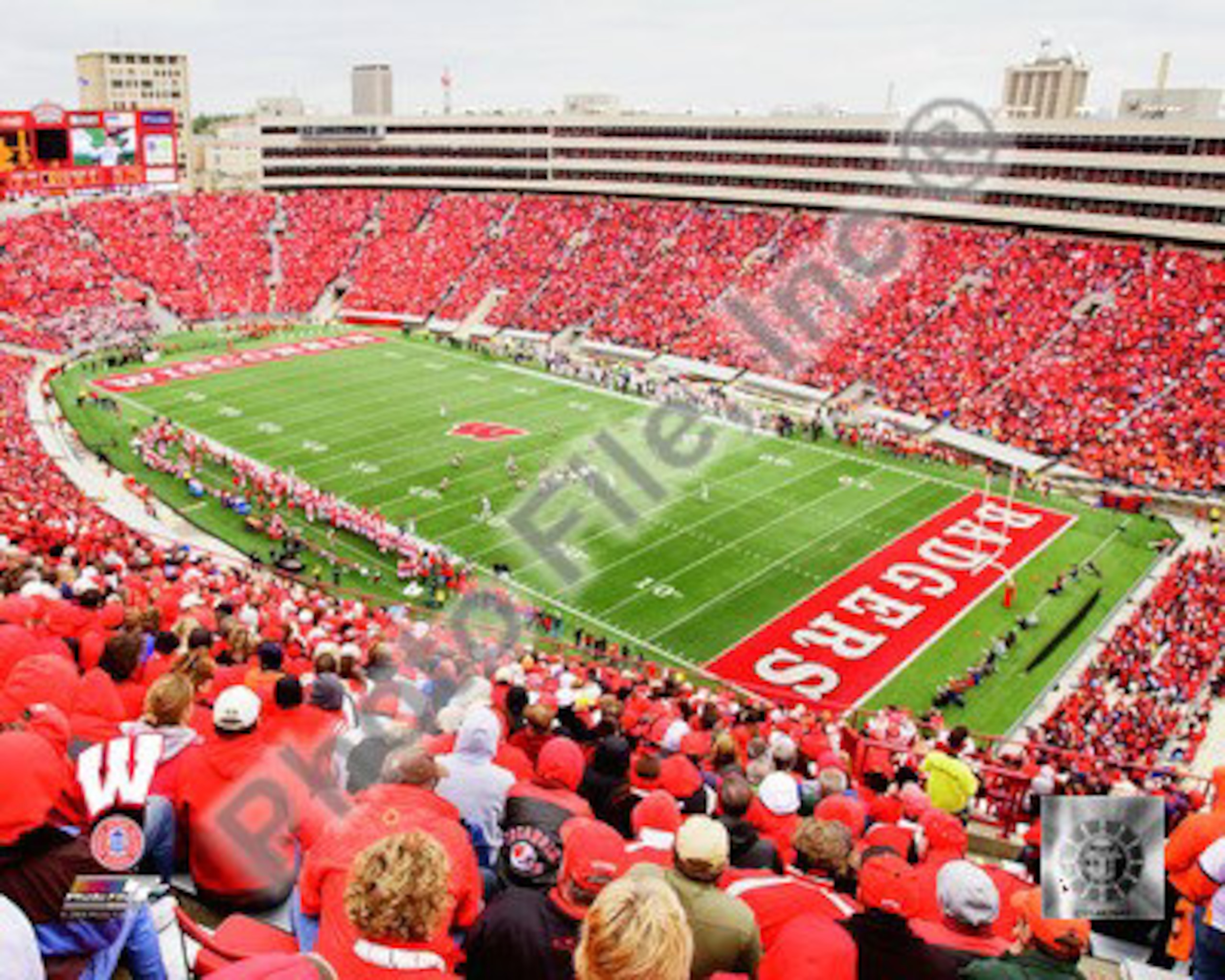
Broke ground in 1917.
As the oldest stadium in the Big Ten, it was impossible to leave The Camp off the list.
The very first game played in the historic venue featured the oldest rivalry in college football, the annual Wisconsin-Minnesota game that has added to Camp Randall's magnificence over the past century.
The stadium resembles that of Ohio Stadium, featuring an impressive double-decker horseshoe that fills with red and white every Saturday. It's in an ideal location as well, sitting smack dab in the middle of the Wisconsin campus, and in walking distance from downtown Madison. This comes in handy when Badger fans indulge in the famous "5th Quarter" by relocating to the local bars and pubs following home games.
Wisconsin might not be Ohio State, but it has a rich, rich history, and an extremely storied stadium that has treated Badger faithful well for nearly a century.
No. 14: Memorial Stadium, Nebraska
7 of 20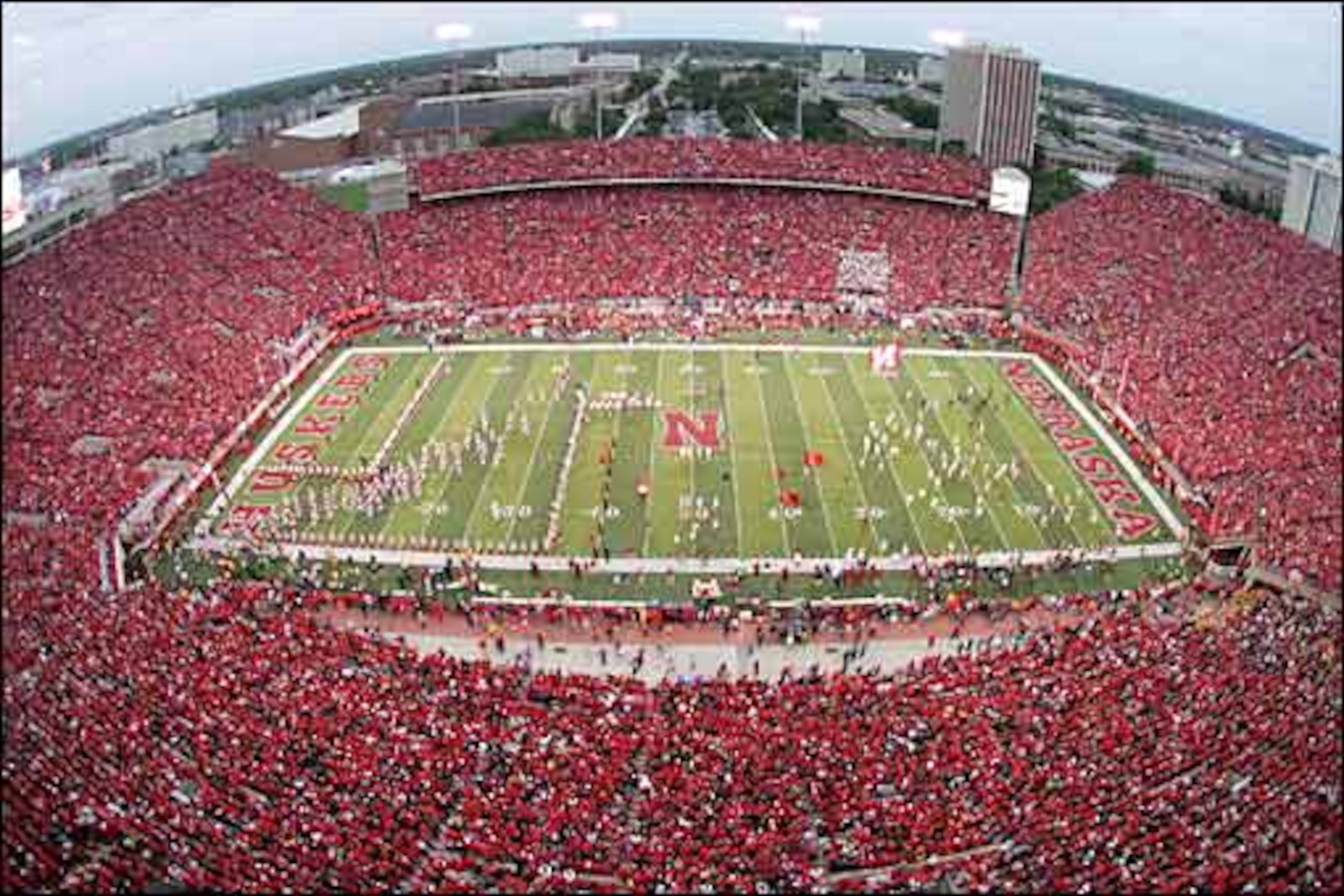
Broke Ground in 1923.
Memorial Stadium has been historically hailed as the toughest place to visit in all of the Big 12. It's also home to possibly the most dedicated fans in all of college football.
The stadium has a capacity of 82,000, holds the ongoing NCAA record of sellouts, being filled to capacity every game since the 1962 season. More impressively, when filled to capacity Memorial Stadium holds more people than any Nebraska city except Omaha.
The gigantic cluster of Husker fans donning the signature scarlet red is famously referred to as the "Sea of Red," which makes Nebraska's fan base one of the most recognizable in the nation.
Bottom line, Husker football is religion in Nebraska, and you'll be hard pressed to find a more beloved landmark in the entire state.
No. 13: The Yale Bowl, Yale
8 of 20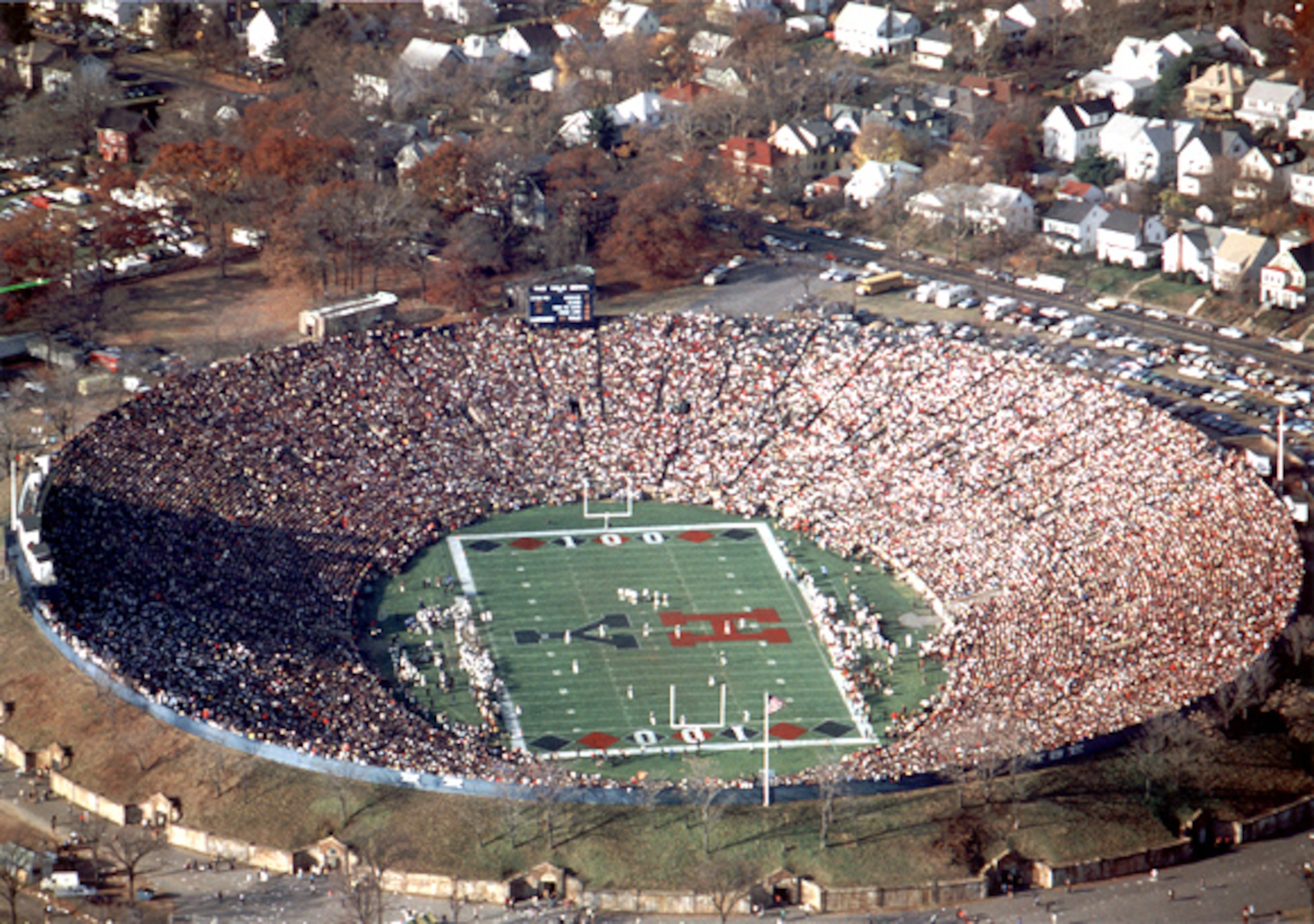
Broke Ground in 1913.
"The Bowl" might be the most influential stadiums in all of college football, due to its inspiration of venues such as the Rose Bowl, Los Angeles Memorial Coliseum, and Michigan Stadium.
It was the first bowl-shaped stadium in history, and plays host to one of the most storied rivalries in all of collegiate sports. The stadium is also the third biggest in all of Division 1-AA, having a capacity of 61,000. While not enormous compared to the largest of Division 1, it's still impressive given the mere 11,000 student body.
The Bowl was declared a National Historic Landmark in 1987, solidifying its status as a nationwide American icon.
Simply put, the Yale Bowl does more than host college football games. It represents a turning point in the world of American sports in general.
No. 12: Darrell K. Royal-Texas Memorial Stadium, Texas
9 of 20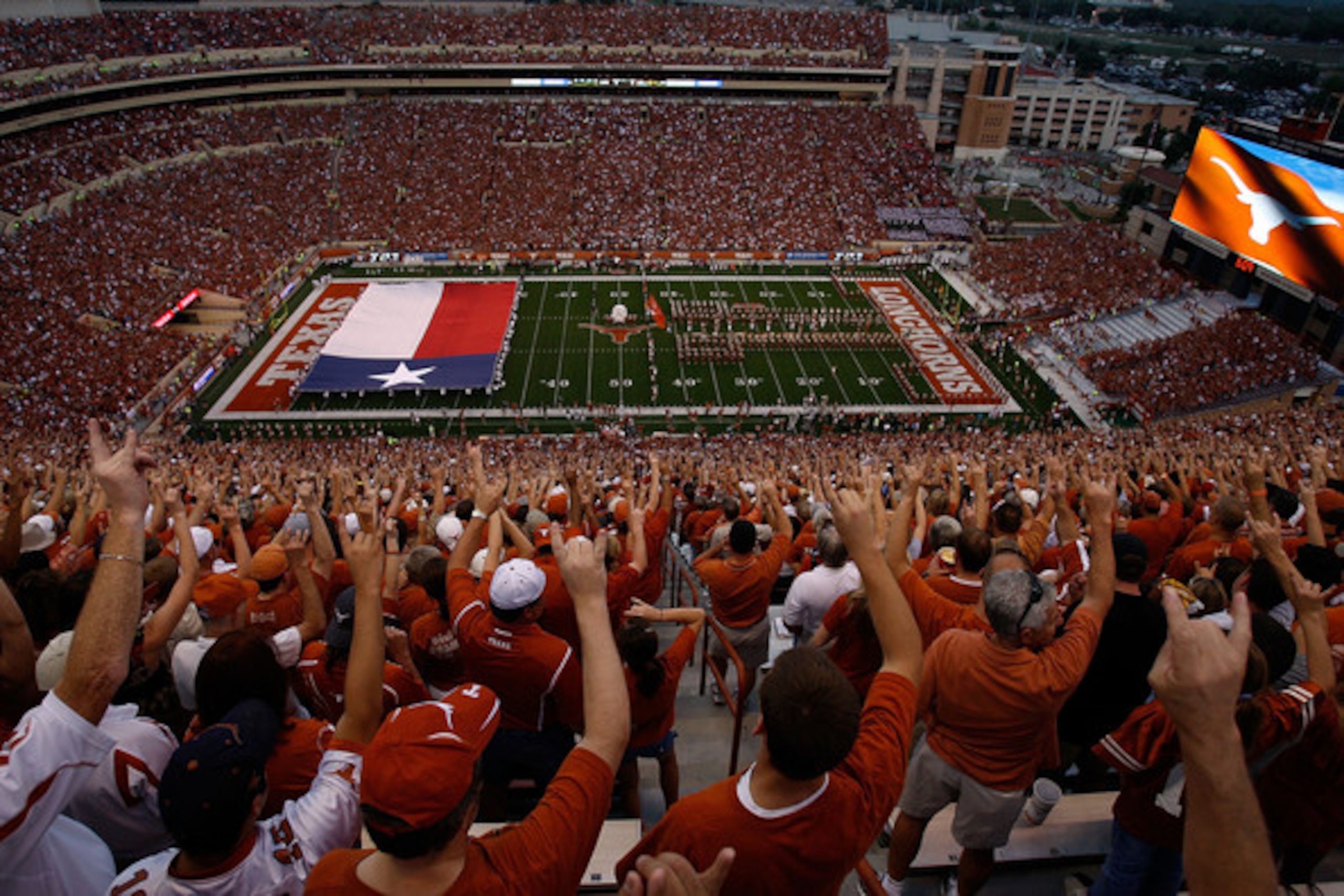
Broke Ground in 1924.
The home of the flagship team in the state of Texas has to be big. Well, Austin's Memorial Stadium is just that.
With a maximum capacity of 101,000, the home of the Horns is the largest football venue in Texas in terms of capacity. It's also the largest in the Big 12, and the sixth largest in all of college football. The immense size has certainly served the Longhorns well, as they boast an impressive 342-91 record throughout their history.
The stadium has been one of the most heavily renovated in the country, having undergone $50 million worth of renovation since 2005.
"Godzillatron," a 7,370-square-foot high-definition LED scoreboard was installed in 2006, and currently stands as the largest high-definition video screen in all of college football.
Darrell K. Royal stadium has it all: history, a devoted fanbase, and the best technology that money can buy.
No. 11: Ben Hill Griffin Stadium, Florida
10 of 20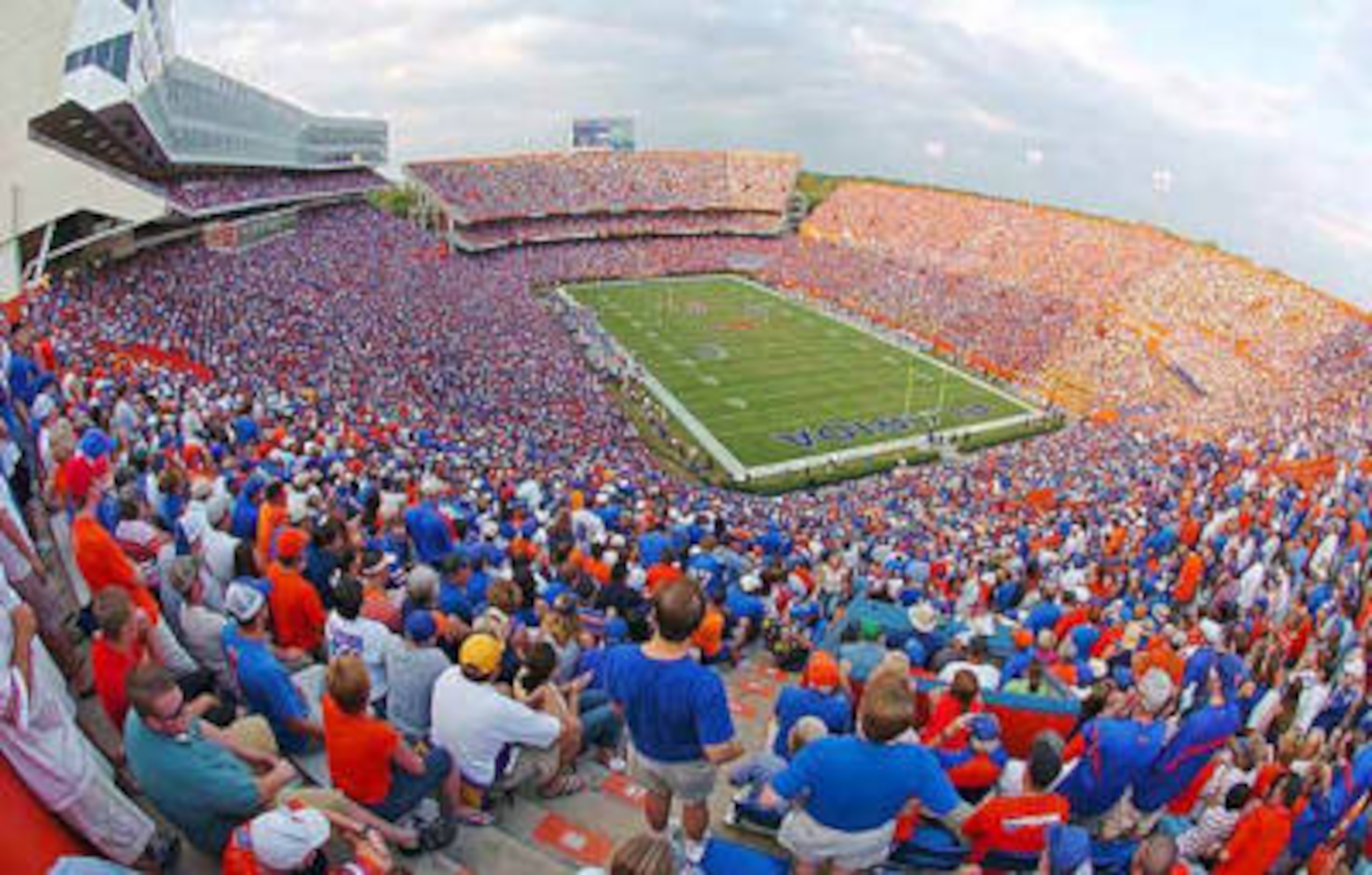
Broke Ground in 1930.
"The Swamp" has been notorious for its hostility towards visiting opponents, which has helped Florida become one of the most successful programs in history.
Some of this hostility can be credited to its unique design. The venue was originally built in shallow sinkhole, which put the field below ground level. This, along with the year-round humidity in Gainsville give the stadium its famous swamp-like atmosphere.
Ben Hill plays has been continuously labeled as one of the greatest places to watch a game, and played home to some of the most decorated players in the history of the game.
It might currently be the toughest place to play in the country, as Urban Meyer boasts an impressive 34-2 home record since his takeover of the program.
No. 10: Notre Dame Stadium, Notre Dame
11 of 20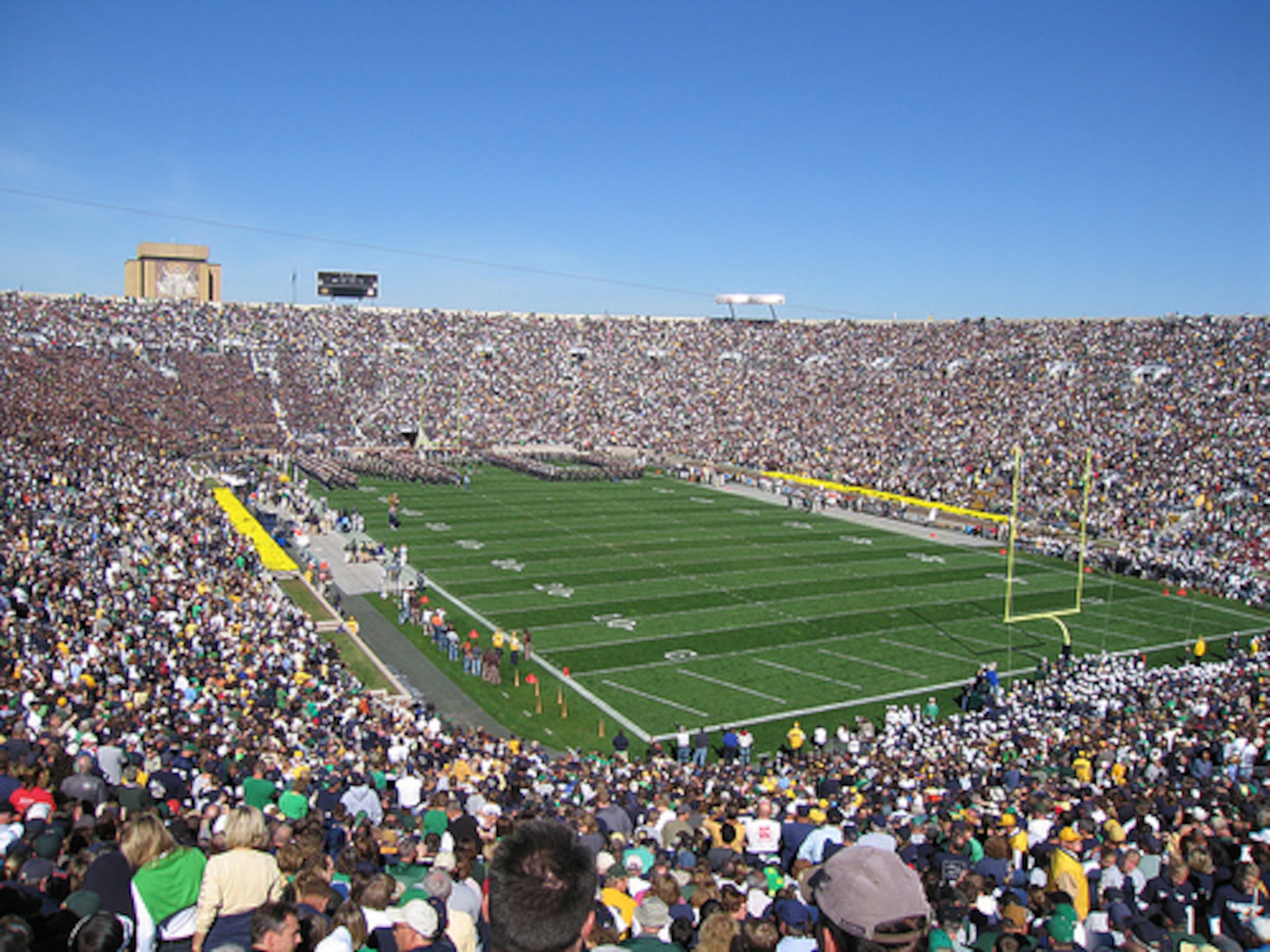
Broke Ground in 1930.
If you don't think religion plays a large role in Notre Dame athletics, you may want to look around Notre Dame stadium and gain some knowledge.
"Touchdown Jesus" looms over the stadium with great magnificence, and portrays Jesus with his hands up in referee fashion signifying a touchdown. It's actually a mural entitled The Word of Life, sits on the famous Hesburgh Library just out side the stadium.
Such is only one unique characteristic of Notre Dame field. Most of these characteristics are merely visible from inside, such as the Basilica of the Sacred Heart and the Golden Dome atop the administration building.
Football icon Knute Rockne played a large role in the stadium's designed, aiming to limit the space between the field and seating. It's construction was slightly patterned after that of Michigan Stadium, and hosted games between the two rivals countless times.
All in all, Notre Dame has too much history as a football program for its home not to be included in this list.
No. 9: Bryant-Denny Stadium, Alabama
12 of 20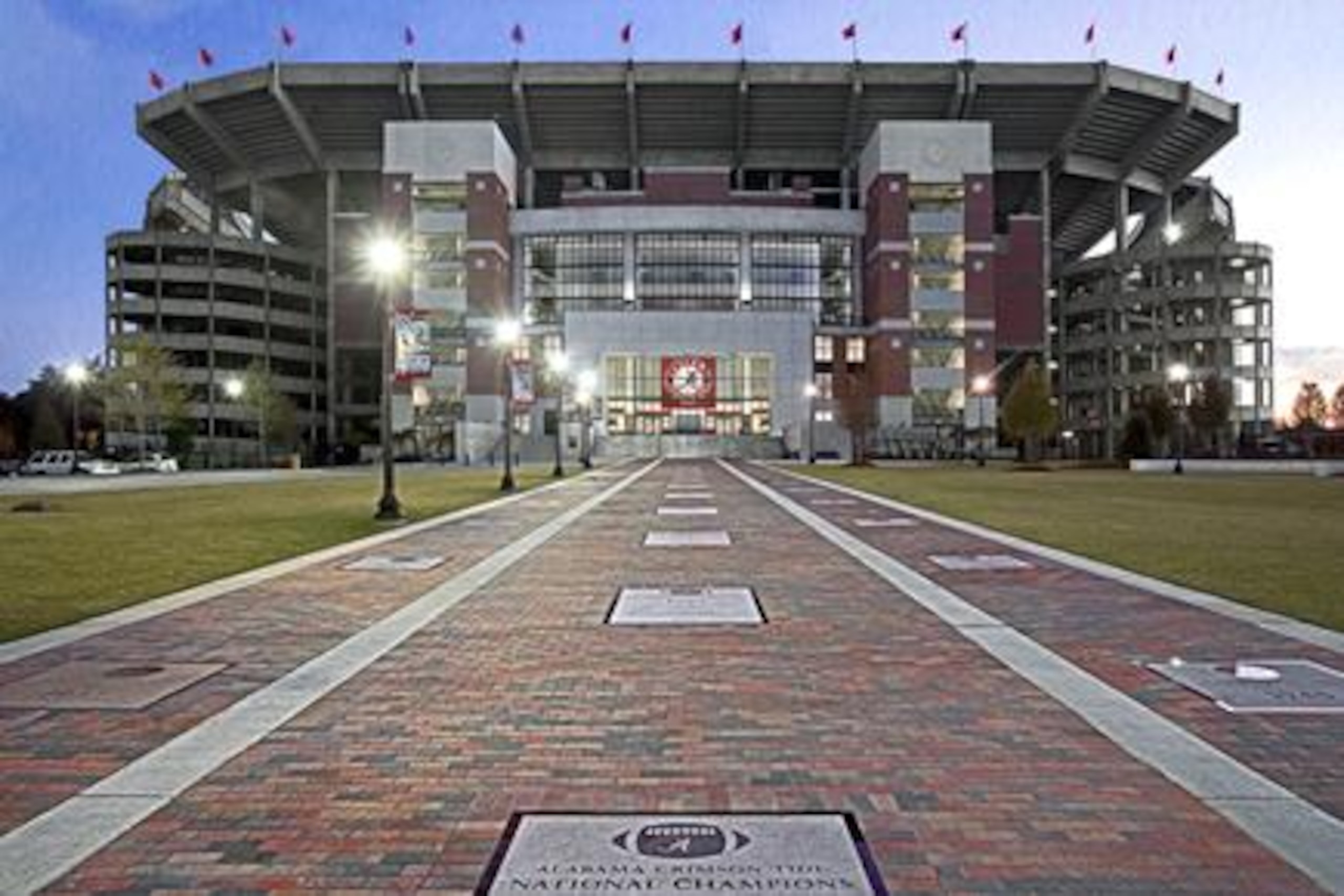
Broke Ground in 1929.
No team may feel more confident at home than the Crimson Tide.
Name after famed Alabama coach Paul "Bear" Bryant, Bryant-Denny Stadium ranks as the second-largest in the SEC and the fifth largest in all of college football. It has a capacity of over 101,000, which is almost impressive as the Tide's record inside it.
The Tide owns a 225-46 all-time home record in the past 80 years. Coach Bryant himself went 72-2 at home, which helped solidify himself as the greatest of all time.
The Alabama venue is simply one of the most historic and renowned stadiums in the history of college sports.
No. 8: Kyle Field, Texas A&M
13 of 20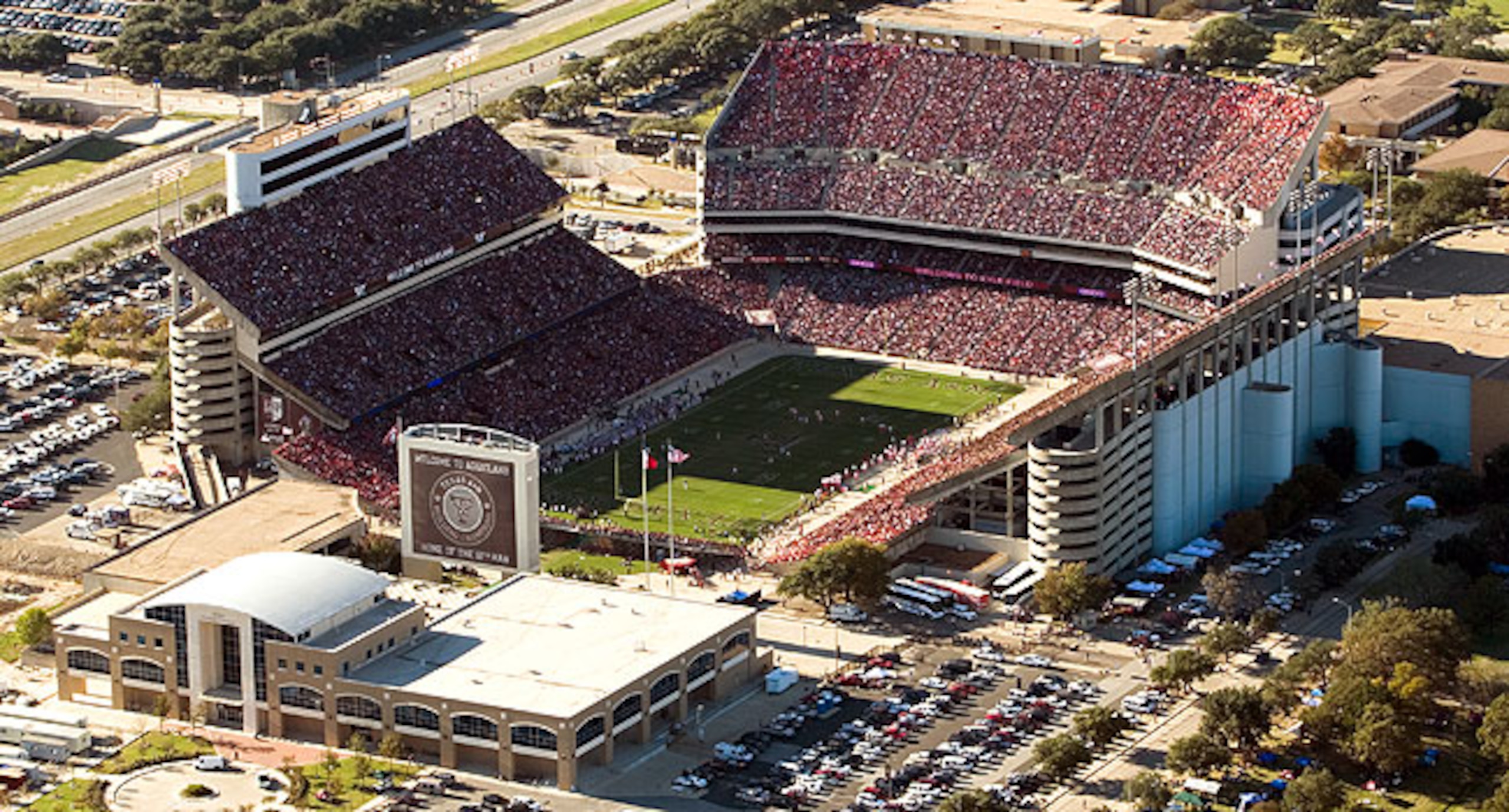
Broke Ground in 1927.
While the modern-day Kyle Field as we know it came to life in 1927, parts of the stadium were constructed and used as early as 1904, making it one of the first in the country.
Since that time, Texas A&M football has created one of the most dedicated and tradition-rich fanbases the NCAA has ever seen. The fans are so dedicated that they've received the title as the "12th Man," which symbolizes their large impact on Aggie home games. And if you ever attend a game in College Station, don't bother trying to count the number of maroon vehicles.
The stadium gained nationwide recognition during the Aggie glory days in the 90s, where A&M boasted an incredible 55-4 home record through the decade.
The number of Aggie traditions is unreal: the singing of the Aggie War Hymn (when fans link arms and sway back and forth), the famous Texas A&M Corps of Cadets, the Aggie Bonfire, and so on.
Kirk Herbstreit listed Kyle Field as best in the nation in terms of atmosphere, and for very, very good reason.
No. 7: Harvard Stadium, Harvard
14 of 20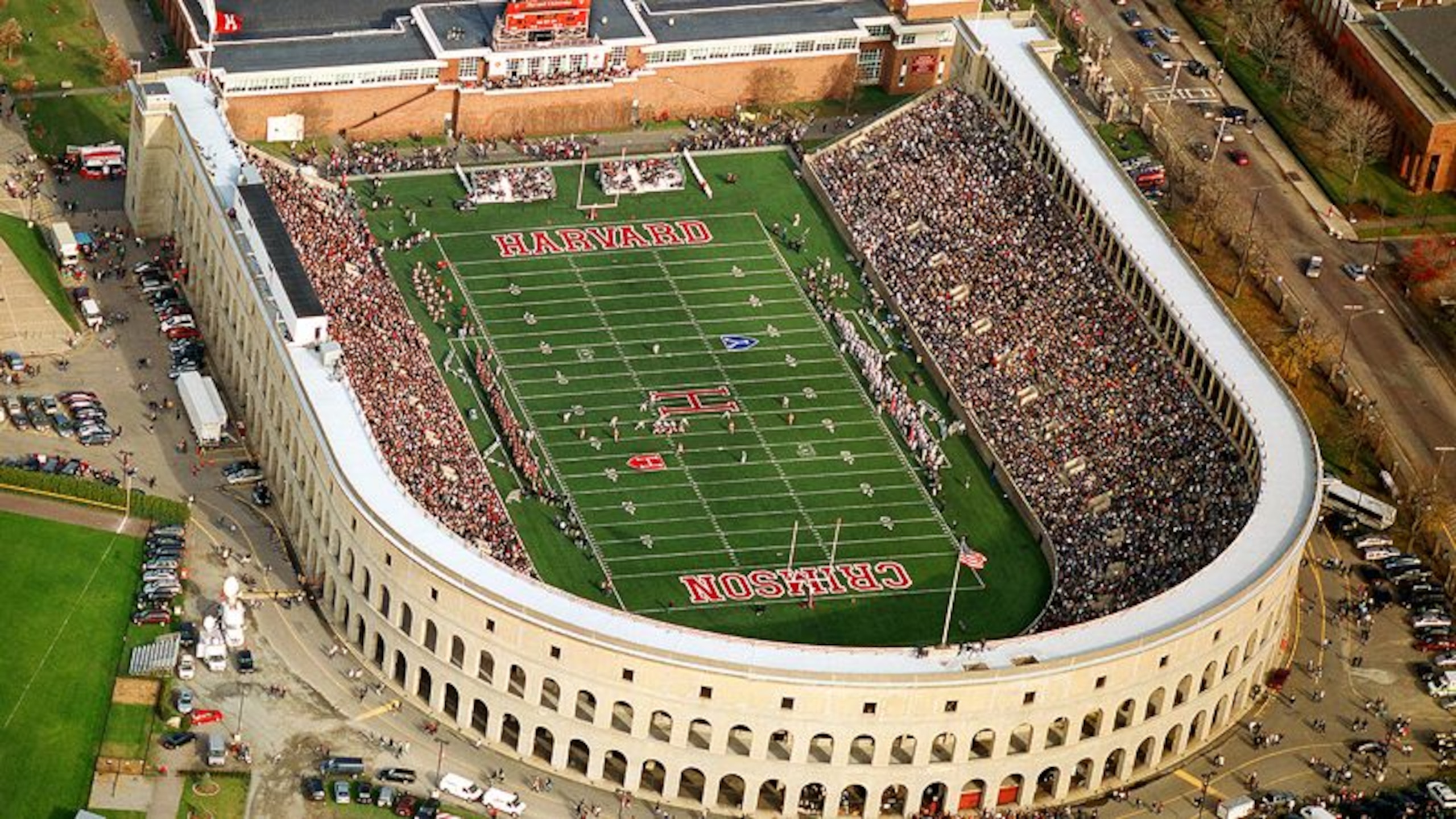
Broke Ground in 1903.
Harvard Stadium, along with the Yale Bowl and Franklin Field, housed the birth of American football as we know it.
Harvard Stadium is the oldest next to Franklin Field, and has served as the home of one the greatest rivalries in all of American sports for over a century. Due to the mass amounts history it has produced, it was recognized as a National Historic Landmark, making it one of only three sports venues on the list.
It's known for it's iconic Greek architectural elements and "horseshoe style" shape, which heavily influenced the design of Ohio Stadium. It is also known for it's narrow space between the field and the stands, which make visitors all the more uneasy.
The venue is, hands down, one of the most historic in college sports, in American history as well.
No. 6: Tiger Stadium, LSU
15 of 20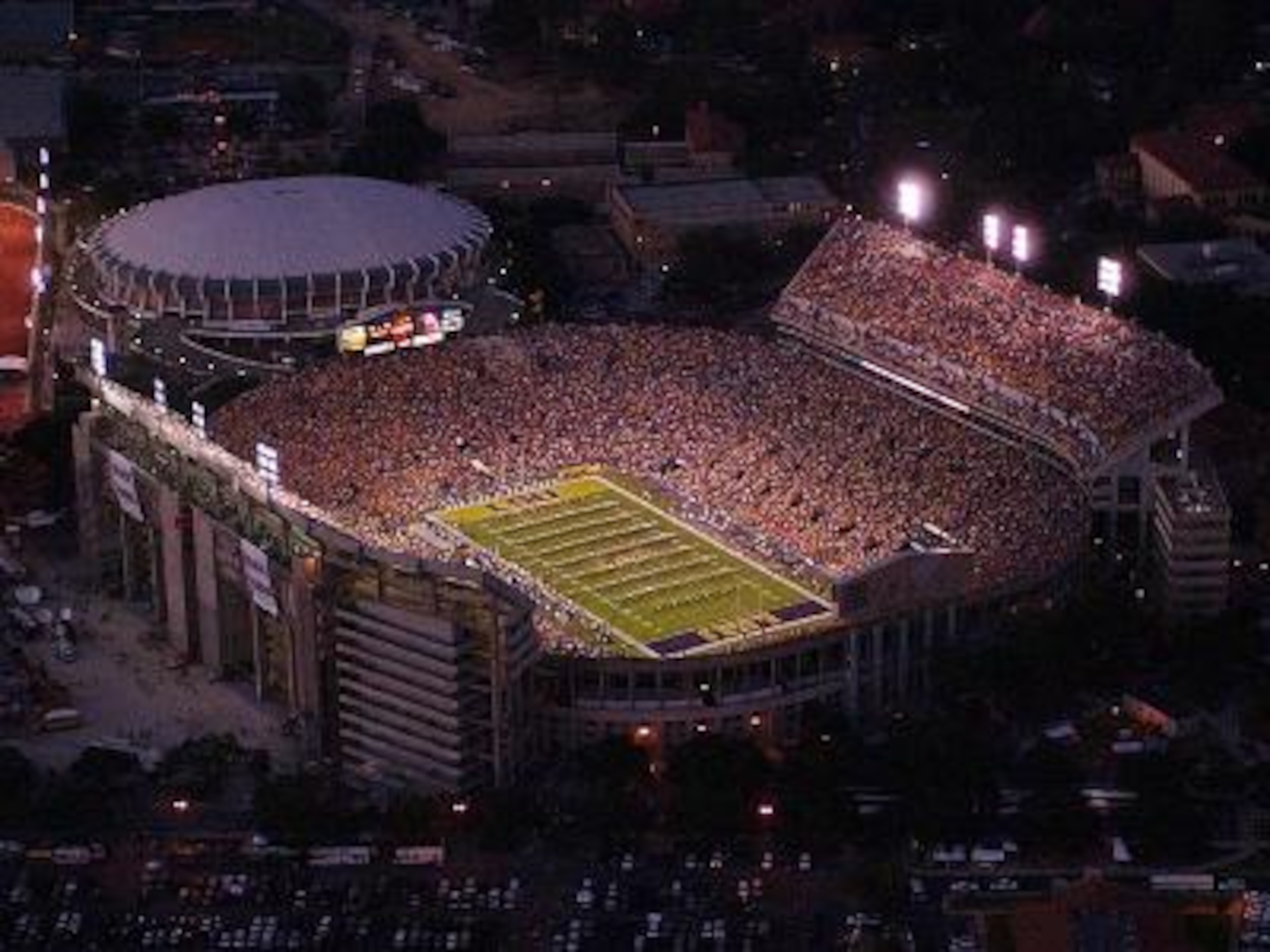
Broke Ground in 1924.
LSU's Tiger Stadium could very well be considered the hardest place to play in all of college football. Period.
It's known around the country as "Death Valley," but was originally nicknamed "Deaf Valley" due to it's absurdly high level of cheering. During a nationally televised game against Auburn in 2003, ESPN recorded a noise level of 119 decibels at several points during the game. During a 2007 matchup with Florida, CBS recorded a level of 130 decibels.
Tiger Stadium was home to the legendary "Earthquake Game," which took place in 1988 and featured a 7-6 LSU win over Auburn. After LSU quarterback Tommy Hodson completed a game-winning touchdown pass, the crowd reaction registered a legitimate earthquake on the seismograph in the Louisiana Geological Survey office.
Even Paul "Bear" Bryant compared Tiger Stadium to "being inside a drum."
Simply put, the home of the Tigers one of the most unbelievable venues in the entire world of American sports.
No. 5: The Rose Bowl, UCLA
16 of 20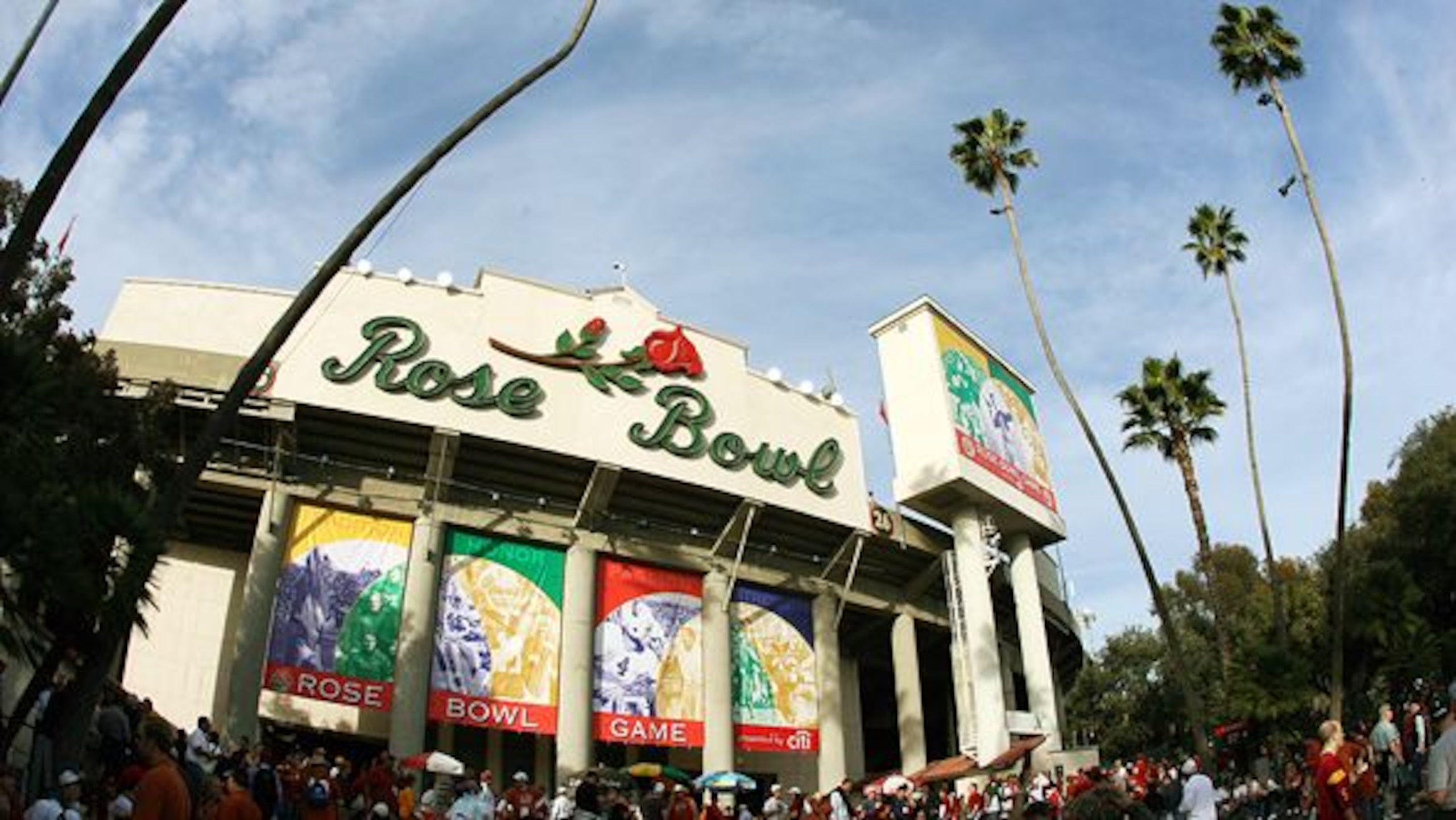
Broke Ground in 1921.
Much like its LA counterpart, the Rose Bowl has hosted a slew of high profile events throughout its years, in addition to serving as the home for UCLA.
Obviously, it annually hosts the Rose Bowl postseason game, which has featured some of most memorable games in history. It has also hosted the FIFA World Cup Final. Finally, the Rose Bowl was the short-term home for the Los Angeles Galaxy from 1996-2003.
Modeled after the Yale Bowl, Rose Bowl has a capacity of 92,500, and holds even more when the USC-UCLA rivalry takes place.
It's the ultimate Southern California icon, and stands as one of the most beloved stadium in all of sports.
No. 4: Beaver Stadium, Penn State
17 of 20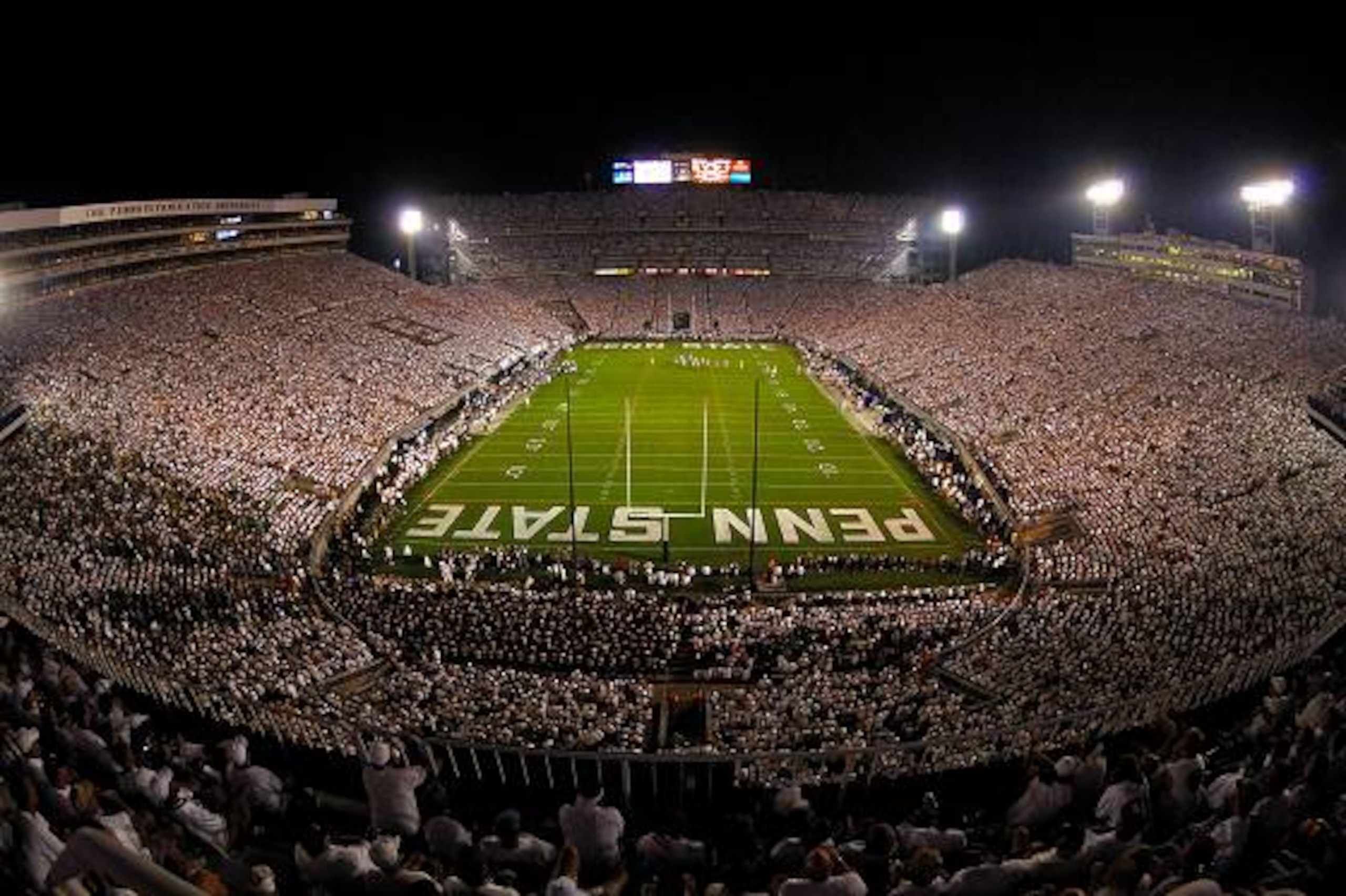
Broke Ground in 1960.
A Penn State game at Beaver Stadium is one of the greatest experiences in all of college sports. Kirk Herbstreit himself has said that the Nittany Lions have the best student section in the country, and called College Gameday at Penn State "The Greatest Show in College Sports."
It certainly has the fans, but is perhaps more well known for its size. It's the second-largest stadium in the Western Hemisphere, boasting an overall seating capacity of 107,282. Stadium capacity may not concern Penn State, as they exceed the limit on big games.
A record 110,753 were in the building to watch the Nittany Lions dismantle Nebraska 40-7 in 2002.
Clearly, Penn State faithful love piling into this historic place to watch Joe Paterno lead the Nittany Lions.
No. 3: Los Angeles Memorial Coliseum, USC
18 of 20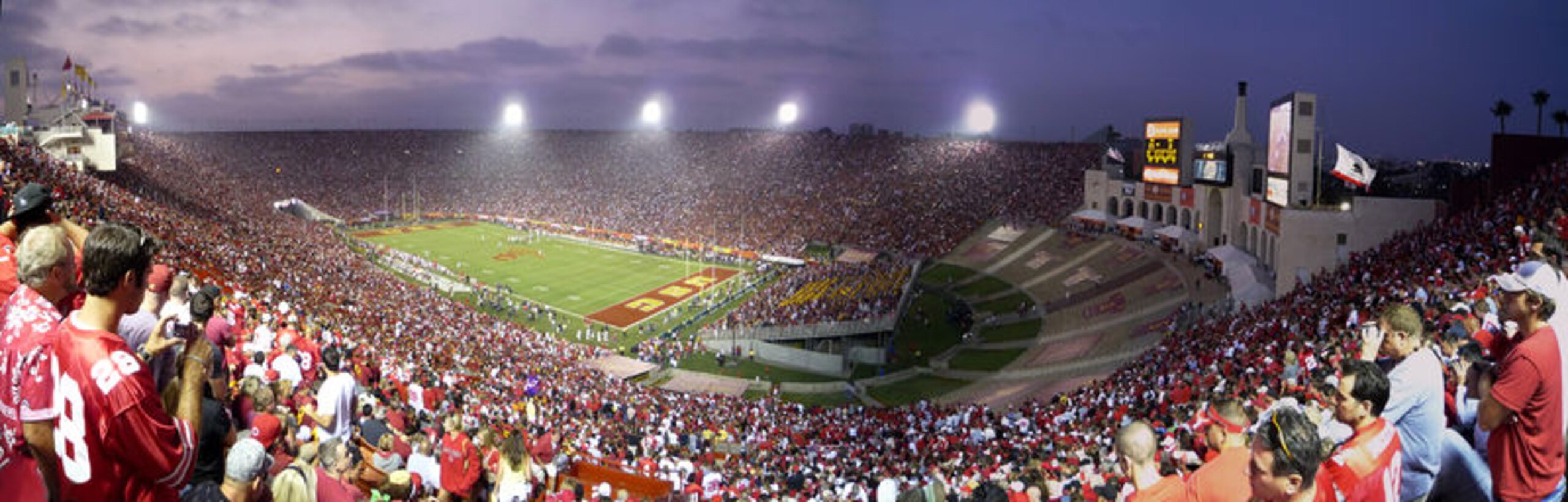
Broke Ground in 1921.
Los Angeles Memorial Coliseum is one of the most widely used sports facility in the country, and remains the only college football stadium to have hosted the Olympic Games, and the only stadium in the world to host the Olympics twice. Moreover, it's also the only Olympic stadium to have hosted the Super Bowl and World Series.
It was recognized as a National Historic Landmark in 1984.
So, that being said, being the home of one of college football's most historic football programs doesn't come close to scratching the surface with regard to its place in the world of sports.
It's undoubtedly the most renowned sporting venues on the West Coast, and one of the most renowned in the entire world.
No. 2: Michigan Stadium
19 of 20
Broke Ground in 1927.
Michigan Stadium is the signature big stadium in college football.
"The Big House" has a seating capacity of 109,901, but regularly exceeds 110,000 for signature, high-profile games. On November 22, 2003, it set the NCAA all-time attendance record when it contained 112,118 for a game against Ohio State.
The designers of the stadium envisioned an enormous facility from the start, as footings were designed to allow the capacity to be expanded beyond 100,000. Pretty amazing goals given the time of the construction. In addition, then-athletic director Fielding H. Yost expressed his desire for the capacity to someday reach 150,000.
It's currently the largest stadium in the Western Hemisphere, and the third-largest in the world. Clearly, Michigan stadium is among the most storied stadiums in all the world.
No. 1: Ohio Stadium
20 of 20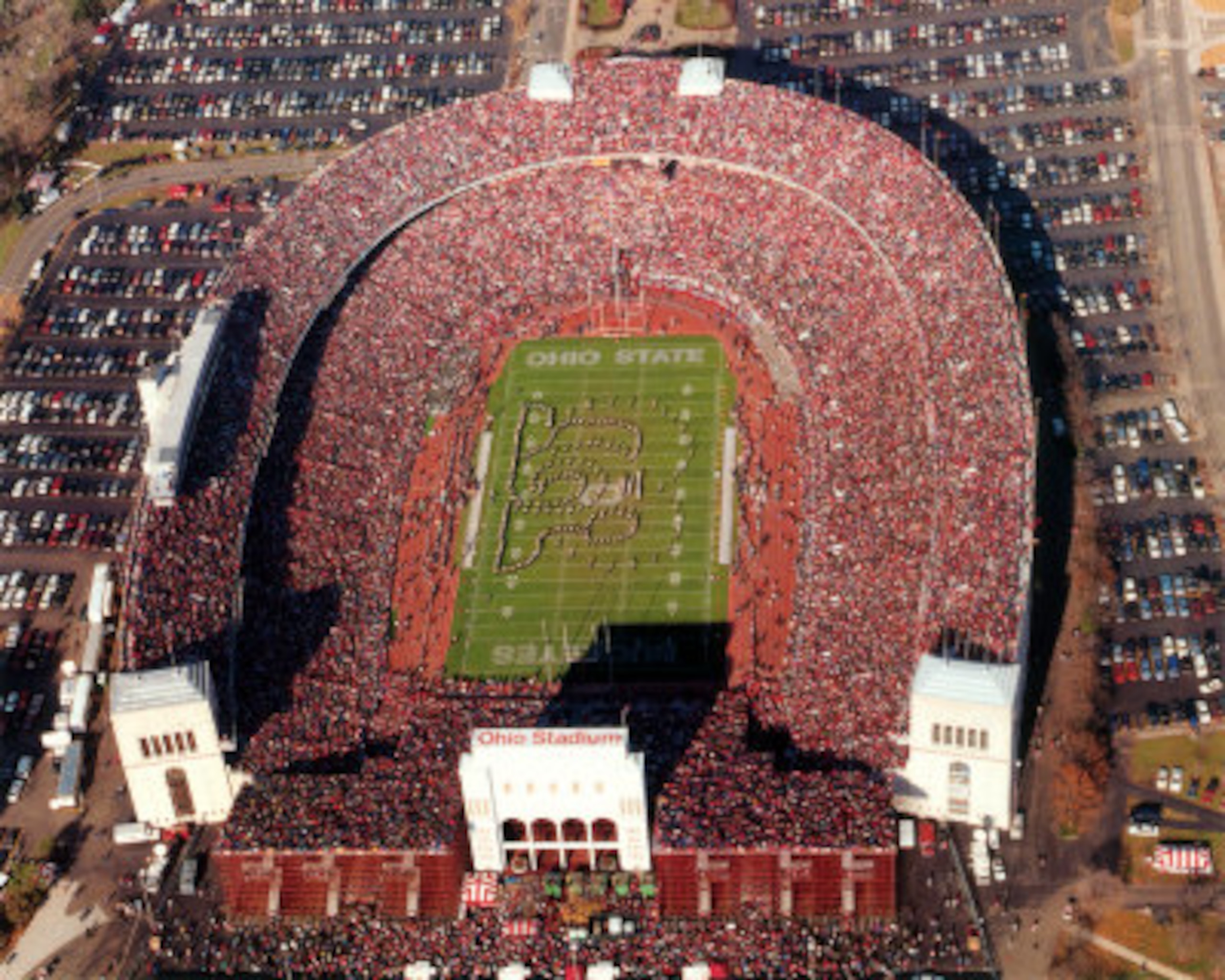
Broke Ground in 1921.
"The Horseshoe" might the most recognizable stadium in all of college sports. Its distinctive horseshoe shape has been transformed into a college football icon.
The stadium has largely been a product of its inhabitants, as the Buckeyes' rich history has made it into a center stage on countless occasions. Rivals such as Michigan, Penn State, Illinois, USC, and Notre Dame have helped to generate tremendous amounts of memories which make this venue special.
The iconic red and white that litter the horseshoe seem to be more an icon by themselves rather than a mere characteristic of the stadium. Furthermore, the stadium has been recognized as a National Historic Landmark.
With that said, Ohio Stadium has been a monument among stadiums throughout its history, and will continue to host the greatest games of all time.
.png?w=2560)
.png?w=2560)
.jpg?w=2560 "Chiefs, Steelers Eye WR Trades")