
Every NBA Team's Best Young Prospect
We interrupt your ongoing attempts to make sense of the NBA's impending 2022 playoff picture to pop champagne for every squad's top prospect.
Fair warning: This exercise does not aim to pluck out each team's best young player, period. Certain kiddies have played enough to be known quantities—or close to them. This space is for those in the infancy of their careers and/or relative unknowns.
To try weeding out more established youngsters, and after much thought, the following ground rules have been put in place:
- Every player must still be on their first NBA contract (two-ways don't count) and cannot have already agreed to sign an extension. Feel free to call this, among other things, the Please Do Not Refer to Mikal Bridges as a Prospect Decree.
- No All-Star or All-NBA appearances allowed.
- All rookies are eligible.
- All sophomores are eligible (unless they have already made an All-Star team...Sorry, LaMelo Ball.)
- Players in their third year or later cannot have averaged 25 minutes per game for an entire season more than once.
Select inclusions will still seem too established for prospect status. But this awkwardness is limited to only a situation or three. (Shoutout, Anthony Edwards.)
Let us now proceed to the uncorked bubbly portion of this shindig.
Atlanta Hawks: Onyeka Okongwu
1 of 30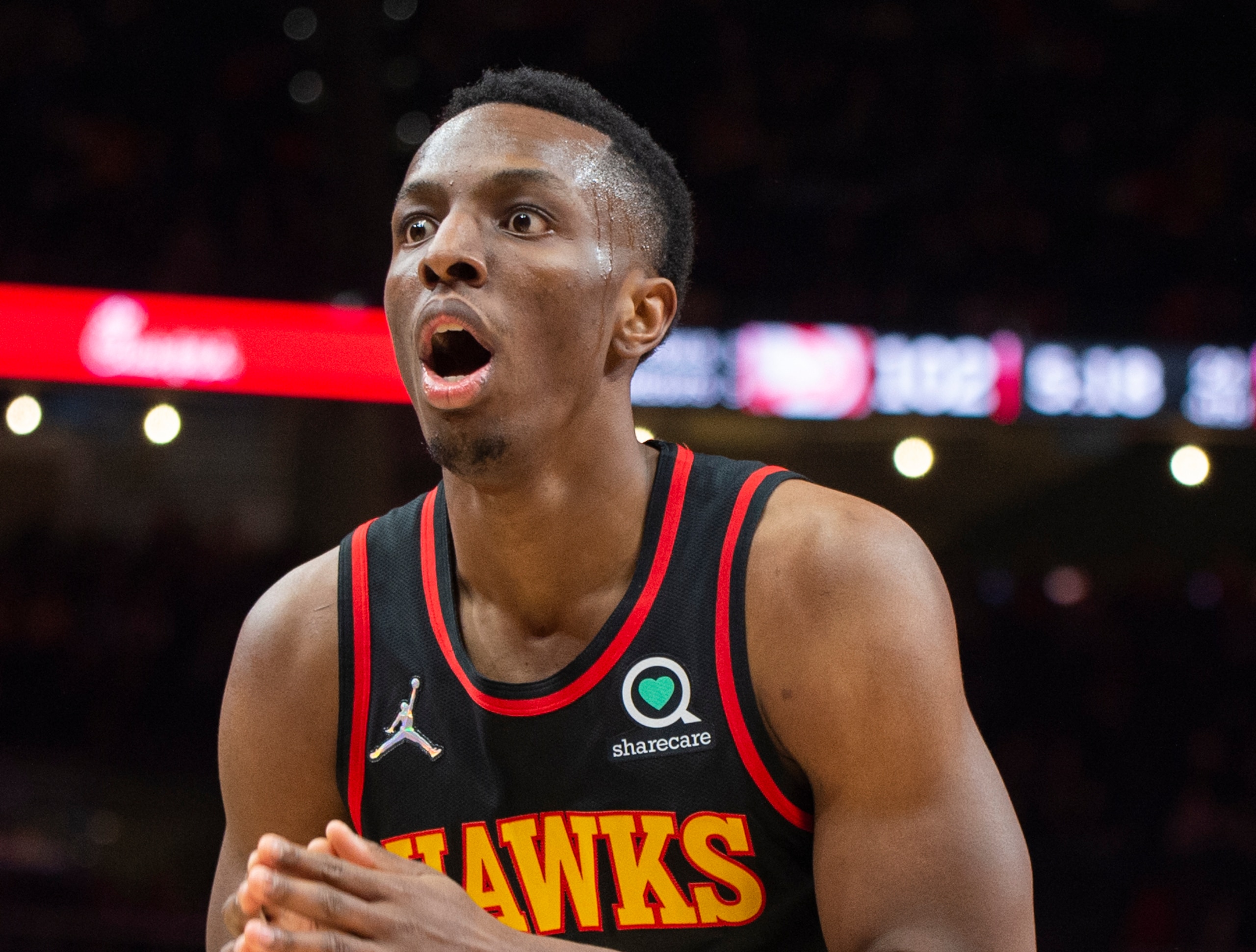
Some may want to grant a lack-of-availability exemption to De'Andre Hunter given how much time he's missed through his first two-plus seasons. Onyeka Okongwu still feels like the most correct answer.
Injuries and limited playing time have capped his exposure since getting drafted at No. 6 overall in 2020. There may always be a mystery element to his role and impact so long as he's on an Atlanta Hawks team that features both Clint Capela and John Collins.
When Okongu does play, though, he routinely offers glimpses into a more advanced skill set. Near-positionless defense remains his calling card, and he brings a presence around the basket that belies his 6'8" stature. Opponents are shooting nearly six percentage points worse inside six feet when challenged by him.
Anything extra Okongwu provides on offense will be huge. Most will bill him as a rim-runner and lob-catcher, but he has the potential to be more. He is getting better at establishing position when paths to the basket aren't unobstructed and seems more comfortable putting the ball on the floor if he needs to gather himself around the hoop, and there's an on-a-dime floater in his arsenal worth plumbing further.
Boston Celtics: Grant Williams
2 of 30
It feels like Grant Williams has been around forever, perhaps because he's survived many different iterations of the Boston Celtics both on and off the court through his first few seasons. In actuality, he has yet to wrap up Year 3, and this is the first time he's on track to clear 20 minutes per game.
Initial projections had him developing into Baby Al Horford. That clearly isn't happening. But he has turned himself into an endlessly scalable player, someone who opens all sorts of lineup combinations thanks to his low usage, floor spacing and capacity to soak up reps alongside other bigs.
Since we're all friends here, I'll be honest: It is hard for me to pinpoint what, exactly, Williams should become on defense. But he has some real portability. Bigs who don't wield obscene amounts of explosion cannot typically recover as well when caught off-balance, in space, versus slippery ball-handlers. Williams every so often makes a stop that hearkens to his extreme shiftiness—like when he blocked Ja Morant while backpedaling in Boston's March 3 win over Memphis.
Williams has entrenched himself as almost a pure accessory at the other end, in the best imaginable way. He can decision-make around the basket and has traces of a floor game, but he now cuts his teeth as an outside marksman. Nearly two-thirds of his attempts come from beyond the arc, where he's burying 44 percent of his shots, including a whopping 51 percent from the corners.
Brooklyn Nets: Cam Thomas
3 of 30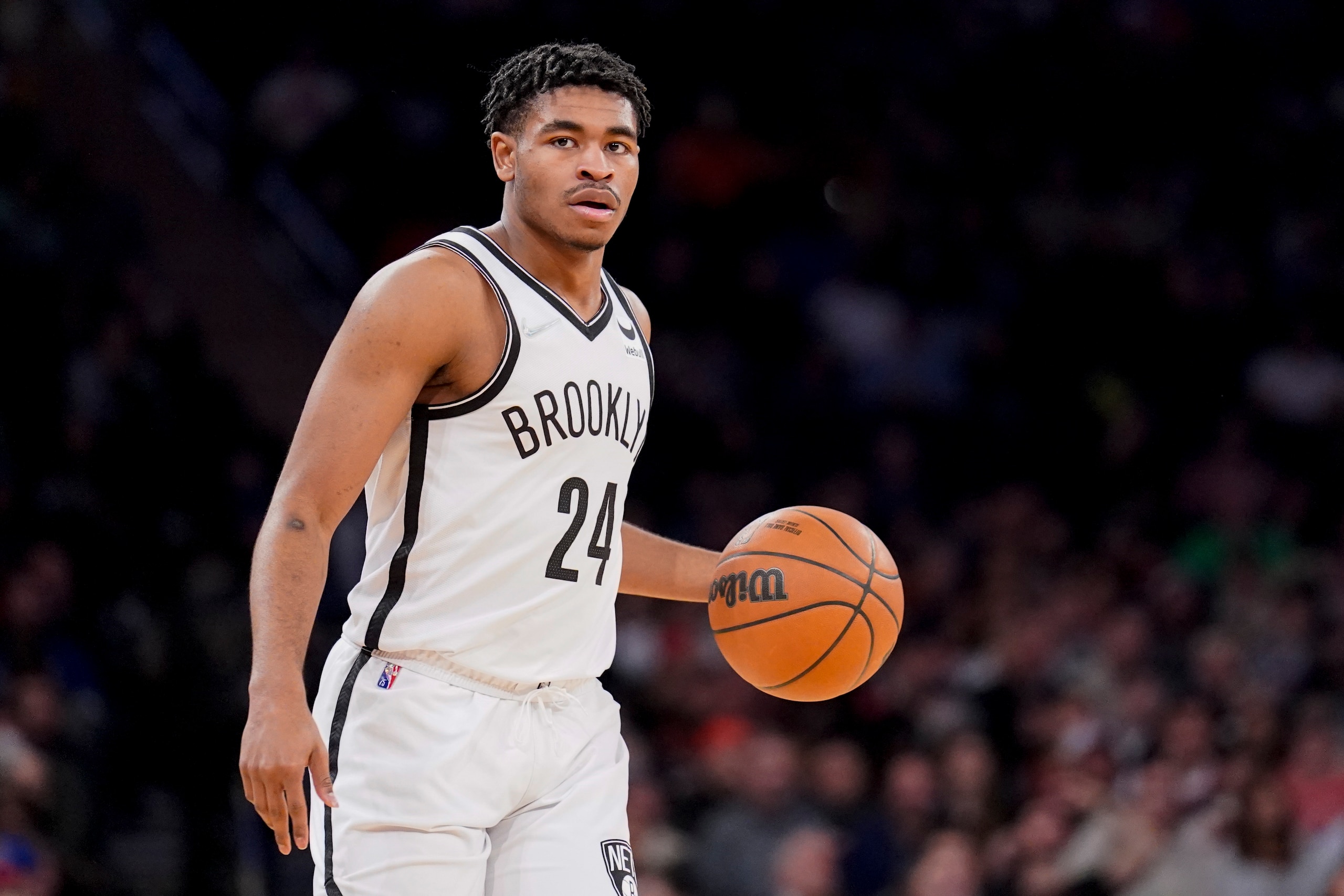
Here's a list of every rookie this season with more 20-point games than Cam Thomas (10):
- Cade Cunningham (17)
- Jalen Green (15)
- Franz Wagner (15)
- Scottie Barnes (13)
That's it.
This is ridiculously flattering company to hover around for someone selected at No. 27, and who entered the season as a break-in-case-of-emergency option for a Brooklyn Nets team peddled as a championship formality. Caveats galore have since turned Thomas into a necessity, and he's delivered with some truly mesmerizing shot-making in ultra-difficult situations.
Brooklyn needs his three-point clip to climb, and it will. He has the look and feel of someone who will inevitably down triples at an above-average rate, even as he diets on a steady stream of off-the-dribble opportunities. His shot profile wants for rim pressure, and he does indeed bail out too early on drives. But it's hard to quibble with his selection when he's connecting on 57-plus percent of his attempts between 10 and 16 feet and north of 40 percent on his long twos.
More complicated passing and better wing defense will be swing skills for Thomas over the longer term. His bucket-getting alone, though, is enough to render him one of the biggest steals (so far) from the 2021 draft.



Charlotte Hornets: James Bouknight
4 of 30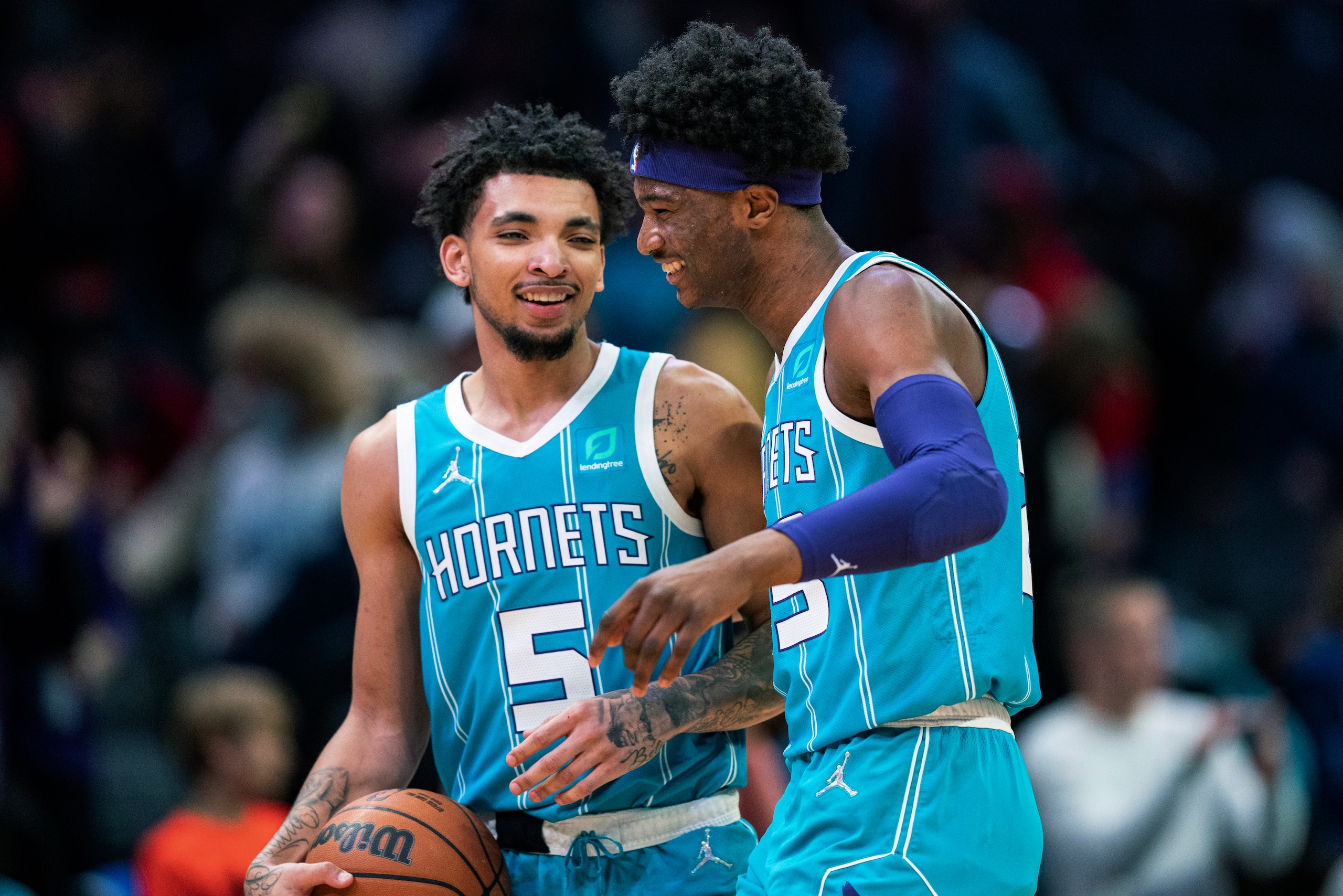
Deciding between James Bouknight and Kai Jones is waaay harder than it should be.
Both are rookies. Neither is playing real minutes with the Charlotte Hornets. One was drafted at the end of the lottery (Bouknight.) The other came off the board at No. 19. Default to the lottery pick. End of story.
And yet, Jones has put up video-game numbers in the G League while gauging the full extent of his range from the perimeter. He also fills a more glaring need in the Hornets rotation, both immediately and over the longer haul. This might be their center of the future in training.
I'm tilting toward Bouknight anyway. Count it as the lazy lottery-pick default if you like. Personally, I just assign more value to wings who can create on-ball or slide into a complementary shooter's role depending on the lineup composition.
To be clear: Bouknight has a long way to go. Unimpeded license in the G League hasn't helped his efficiency, and he may be overtaxed if tasked with table-setting and creating enough separation to generate his own offense from the point-of-attack. But the range of outcomes on his skill set includes a higher peak than that from Jones—for now, at least.
Chicago Bulls: Patrick Williams
5 of 30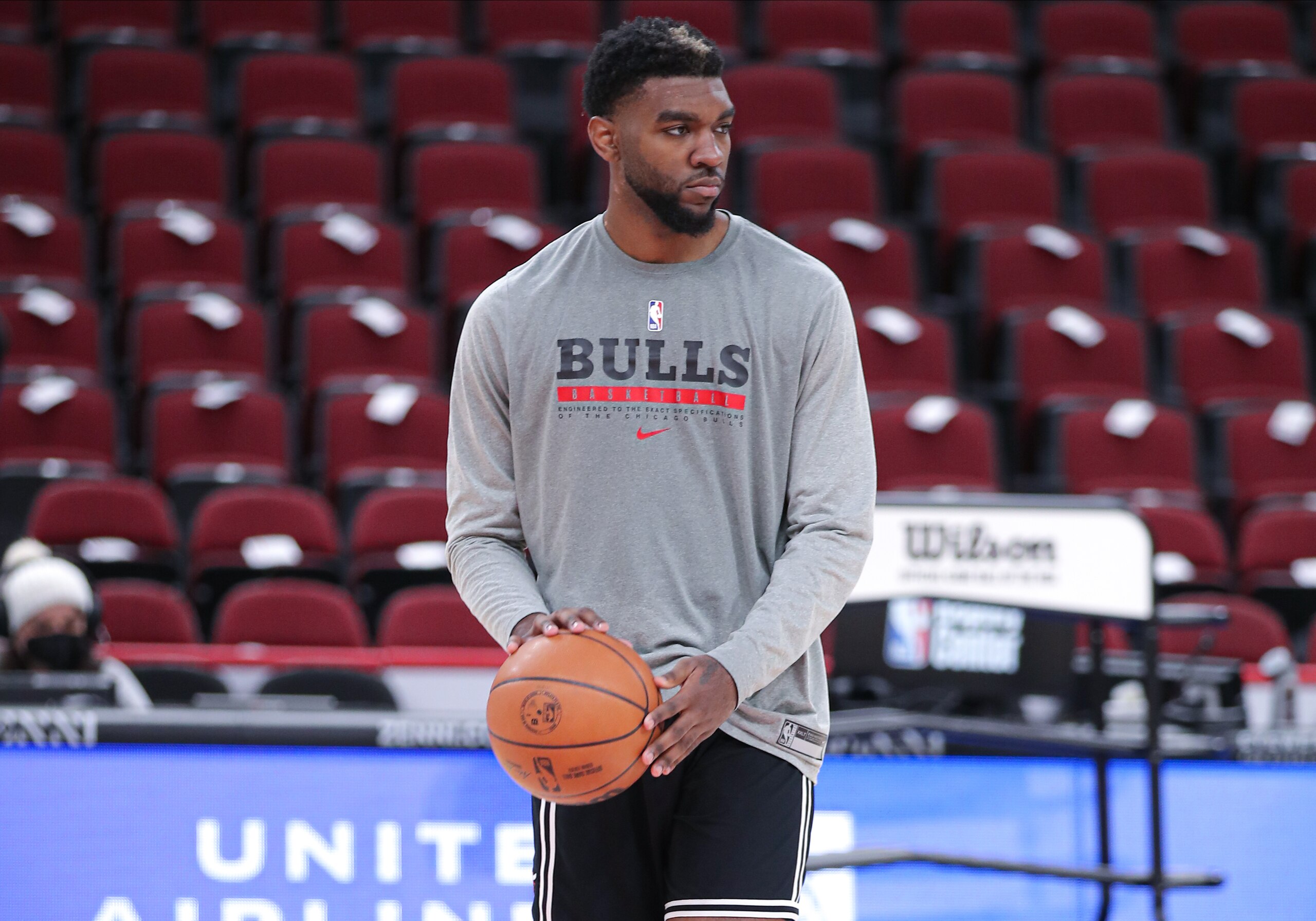
Ayo Dosunmu comes pretty damn close to usurping Patrick Williams in this prospect ladder. His rookie season has obliterated even the most optimistic expectations; he's flashed everything from on-ball creation to dependable outside shooting to indescribably effective defense across roughly 11 of the five positions on the floor.
Depending on what happens with Williams' recovery from a left wrist injury, there's also a not-insignificant chance Dosunmu racks up more total minutes this season than the former logs through his first two. That is bonkers.
So, no, I won't put up a fight against anyone claiming I'm an unstoppable moron who doesn't watch the games. Dosunmu's case grows ever stronger looking at the breadth of defensive assignments he covers from the point of attack. But I'm trying not to be swayed by recency bias.
A healthy Williams has the size and length to be indiscriminately pitted against superstar wings, which should render him the higher-end difference-maker if he pans out. And while Dosunmu's on-ball offense currently has him beat by a mile, Williams seems more a plug-and-play as a shooter and someone who will have an easier time getting off in-between looks in traffic and over trees.
Cleveland Cavaliers: Evan Mobley
6 of 30
Evan Mobley is at once already transcendent and still a prospect.
Congratulations to the Cleveland Cavaliers.
People will—and should—consider making Mobley the first rookie to earn All-Defense honors since Tim Duncan in 1997-98. His presence on the less-glamorous end is ubiquitous and without position. His ability to gum up dribble drives from the point of attack and erase breathing room in space is anomalous for someone his size. And he still has the chops to do all traditional big man things—like blow up looks at the rim.
Opponents are shooting 12.2 percent points below their season average when challenging him inside six feet, the fifth-largest differential in the league among 213 players who have contested at least 150 attempts.
Everything is on the table for Mobley at the other end. The form on his jumper is pretty enough to imagine him stroking threes at an above-average clip in due time. His comfort and cadence going downhill with the ball already puts defenses in mismatch hell. And he has the kind of vision that can devastate from both standstills and live dribbles.
This isn't merely a first-year player annihilating expectations. This is someone who is, as of now, on a first-ballot Hall-of-Fame trajectory.
Dallas Mavericks: Josh Green
7 of 30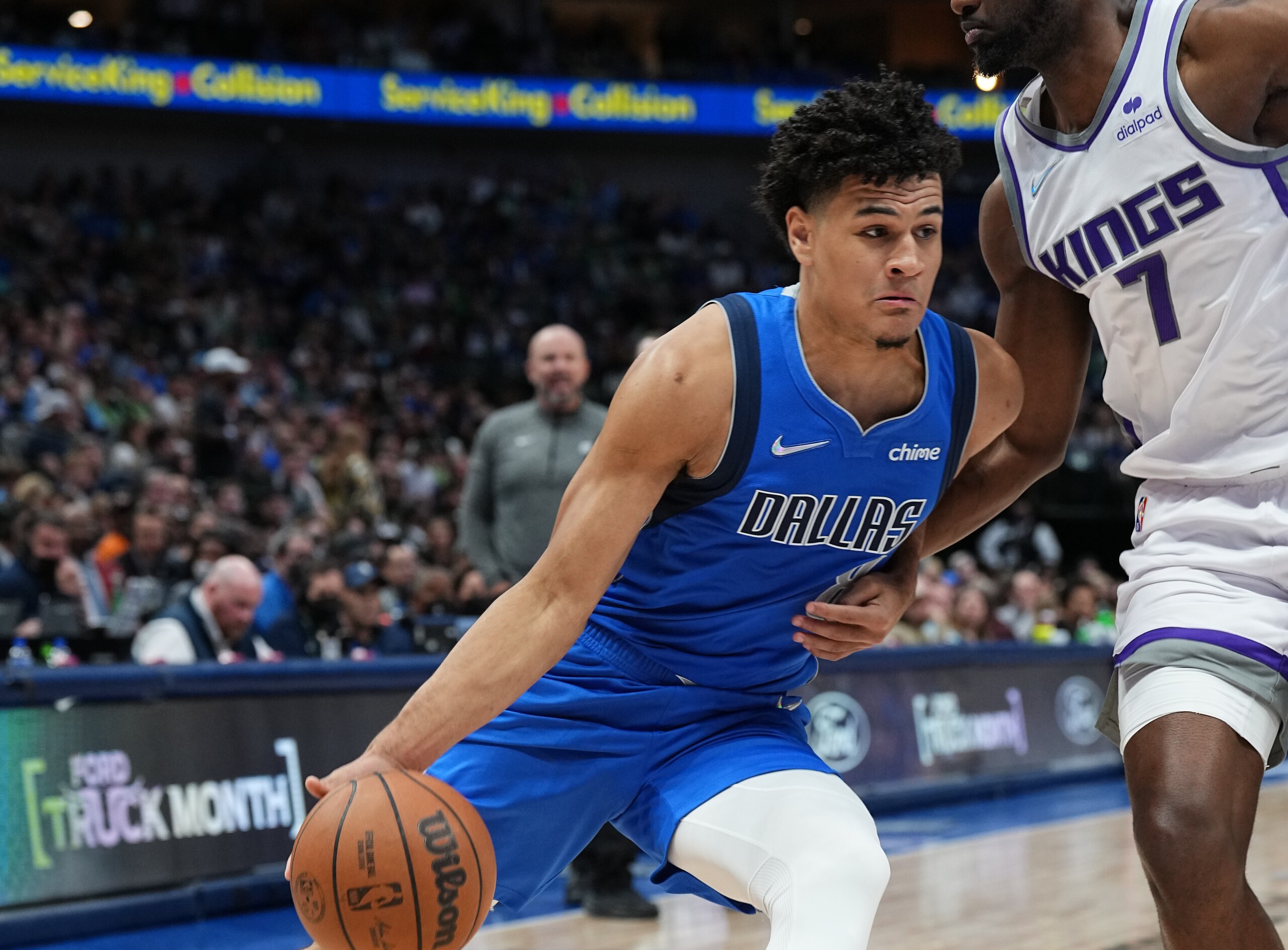
Actual playing time looks good on Josh Green.
Since joining the Dallas Mavericks' rotation for good just after Christmas, he's provided consistent end-to-end energy and held his own covering assignments across the 1 through 3 spots. His outside shooting has a long way to go, but he is quietly shooting 46.7 percent from the strong-side corners during this stretch (7-of-15) and has flashed some live-dribble touch on twos inside the paint yet outside the restricted area.
Defenses officially need to plan around his rim pressure, as well. He's hitting nearly 70 percent of his attempts at the hoop, on finishes that have highlighted everything from his floor-running, attacks on closeouts and overall bounce.
Nominate an alternative for the Mavericks at your own risk, mostly because they don't have one. Jalen Brunson has played his way beyond the criteria, and I recognize I'm in the minority when it comes to dredging up profoundly positive sentiments on the one and only Frank Ntilikina.
Denver Nuggets: Bones Hyland
8 of 30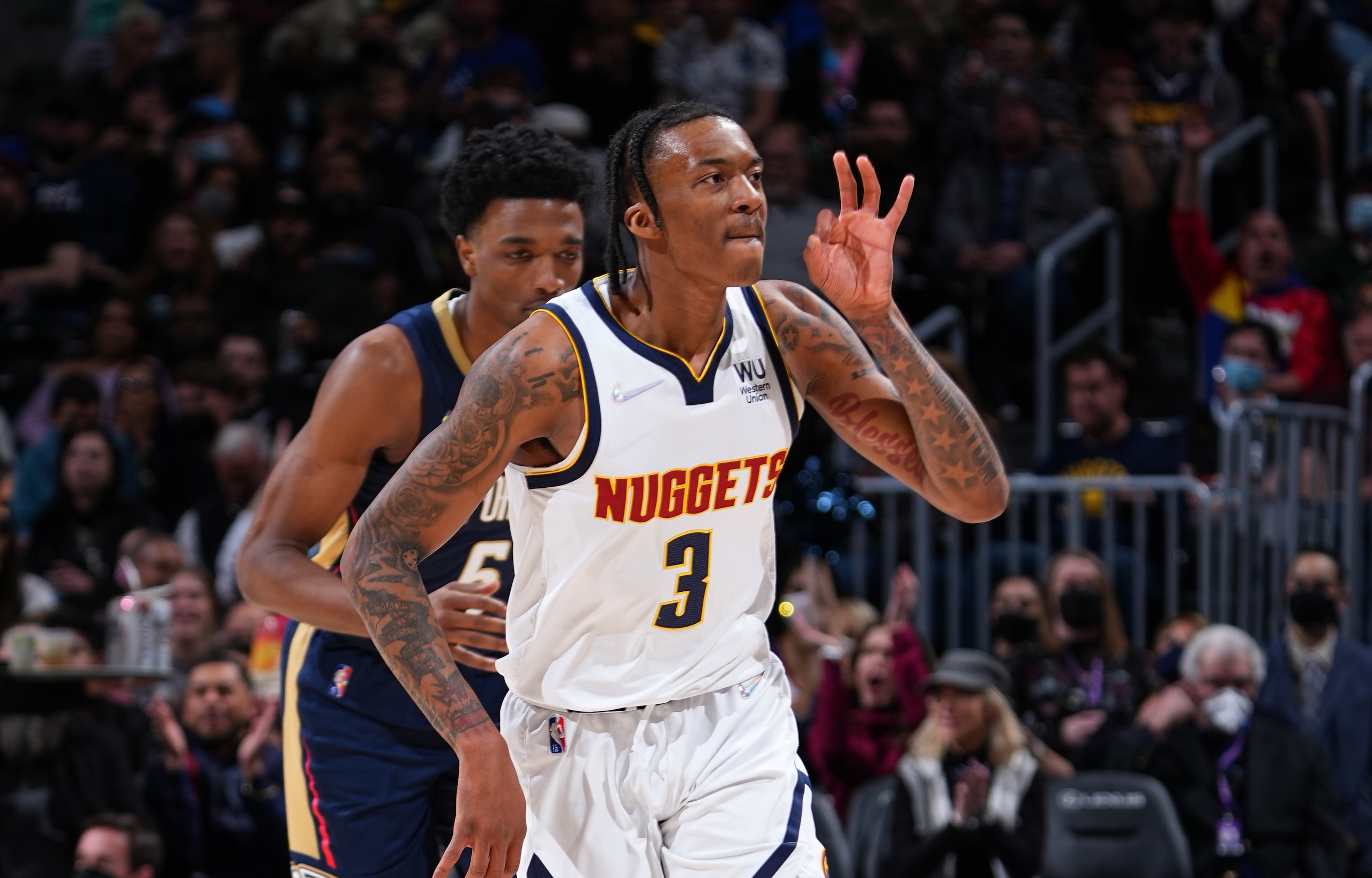
How in the bleep did Bones Hyland fall to No. 26 in last year's draft? His landing on the Denver Nuggets felt like a heavenly match in real time, and nothing's changed now.
Injuries and, until recently, an underperforming bench have shoehorned Hyland into a larger role than head coach Michael Malone would typically give a newbie. It turns out the Nuggets' availability hardships may be a long-term blessing in disguise. Bones is getting invaluable run as a rookie and showing out as a multilevel scorer.
Basically everyone knew he could shoot. But, well, he can really shoot. His 39.2 percent hit rate on spot-up threes makes him a fit for almost any lineup, and the 31.4 percent clip he's posting on off-the-dribble treys doesn't accurately portray the threat level he poses. His pull-up efficiency has ticked up significantly over his past 15 games, and he's converting 36.6 percent of his step-back triples for the entire season (15-of-41).
That is patently absurd. And it is not all Bones offers. There is a slipperiness to handle and body mechanics when he ventures inside the arc, and he's already throwing I-run-the-show passes. Denver, it seems, got another ridiculously good one.
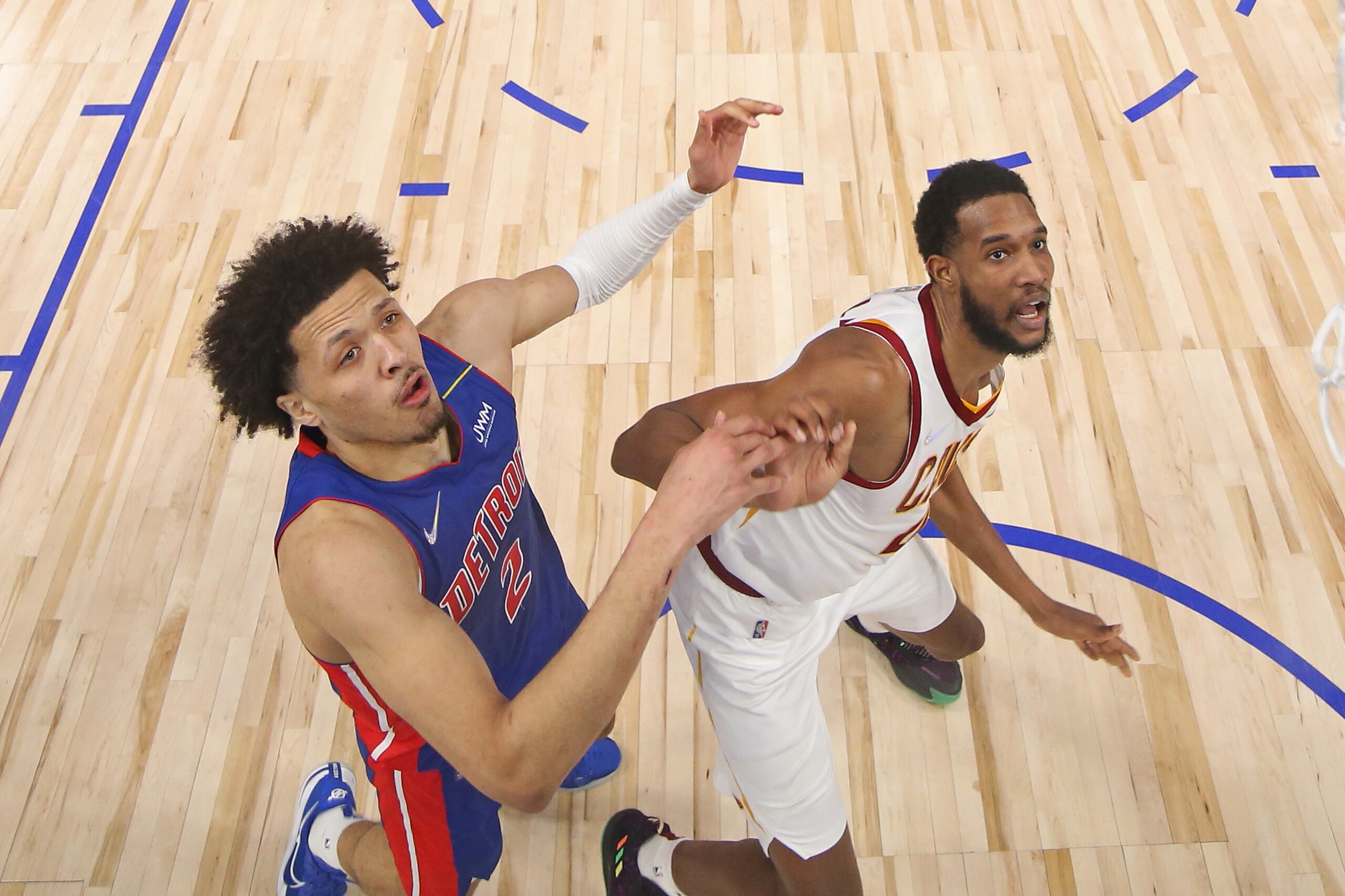
Detroit Pistons: Cade Cunningham
9 of 30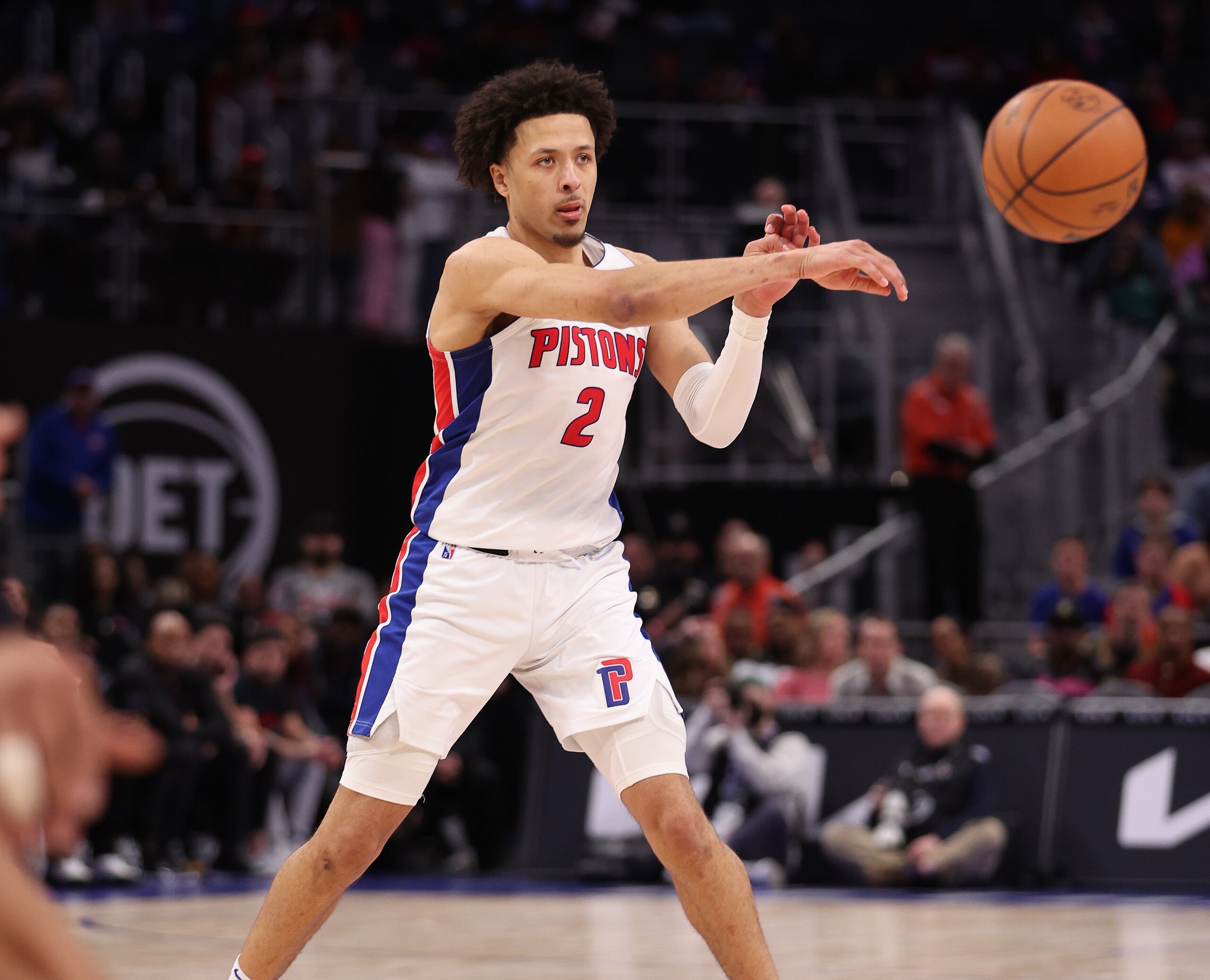
Cade Cunnigham may never be smack-you-in-the-face dominant. But that appears to be by choice. His is a subtle takeover mode. He is surgical and perpetually under control, a guiding force who steadies an entire operation through comprehensive instruction.
Aspects of his offensive efficiency are tamped down by the context of his role. His shot-making doesn't always come easy. He has attempted some truly difficult finishes around the rim and still seems to be gaining a feel for release points after head-fakes against and when dribbling through NBA length.
There is no substitute, though, for the confidence he engenders as a playmaking hub. His chemistry with teammates looks seamless and instant. Ask Marvin Bagley III. His decision-making off the bounce bleeds poise. He is a threat to toss lobs, drop dump-offs, take opportunistic chances in transition, find trailing shooters and spray kick-outs. He carries himself both off the catch and on the move like someone who needs to keep the ball moving.
It would be reductive to call his scoring effortless, but that's the vibe he gives off. He topples the 20-point threshold without you necessarily realizing it—and more often than any other rookie. And while his off-the-dribble jumper isn't yet a bankable weapon, he has found nylon on 46.2 percent of his pull-up twos over his past 10 games, and the lift and follow-through on his form suggests he'll invariably swish threes in efficient bunches.
Golden State Warriors: Jonathan Kuminga
10 of 30
Jonathan Kuminga garnered star-in-the-making consideration entering the 2021 draft on the back of otherworldly athleticism and defensive sturdiness. Not only has he made good on the crux of his projections after recently earning a larger role with the Golden State Warriors, but he's since redefined the depths of his offensive portfolio.
"It isn't just the dunks, either," Bleacher Report's Grant Hughes wrote. "Kuminga has remarkable body control in the air, and he came into the league understanding how to use his strength. He seeks contact and already understands how to finish through it. If he's isolated at the elbow with a live dribble, it's already a wrap. He's getting to the front of the rim."
Tidying up and quickening his jumper will have to be a focus if Kuminga wants to hit his adjusted peak. But he's not exactly a non-shooter. He's nailing 36.8 percent of his threes on three attempts per game over his last 25 appearances.
That he needs ample time and space to get them off is hardly a concern when he's not yet 20. It matters more that, as a teenager, he's cracked the rotation of a contender on the merits of his defensive persistence and bandwidth to function within the larger context of the offense.
Houston Rockets: Jalen Green
11 of 30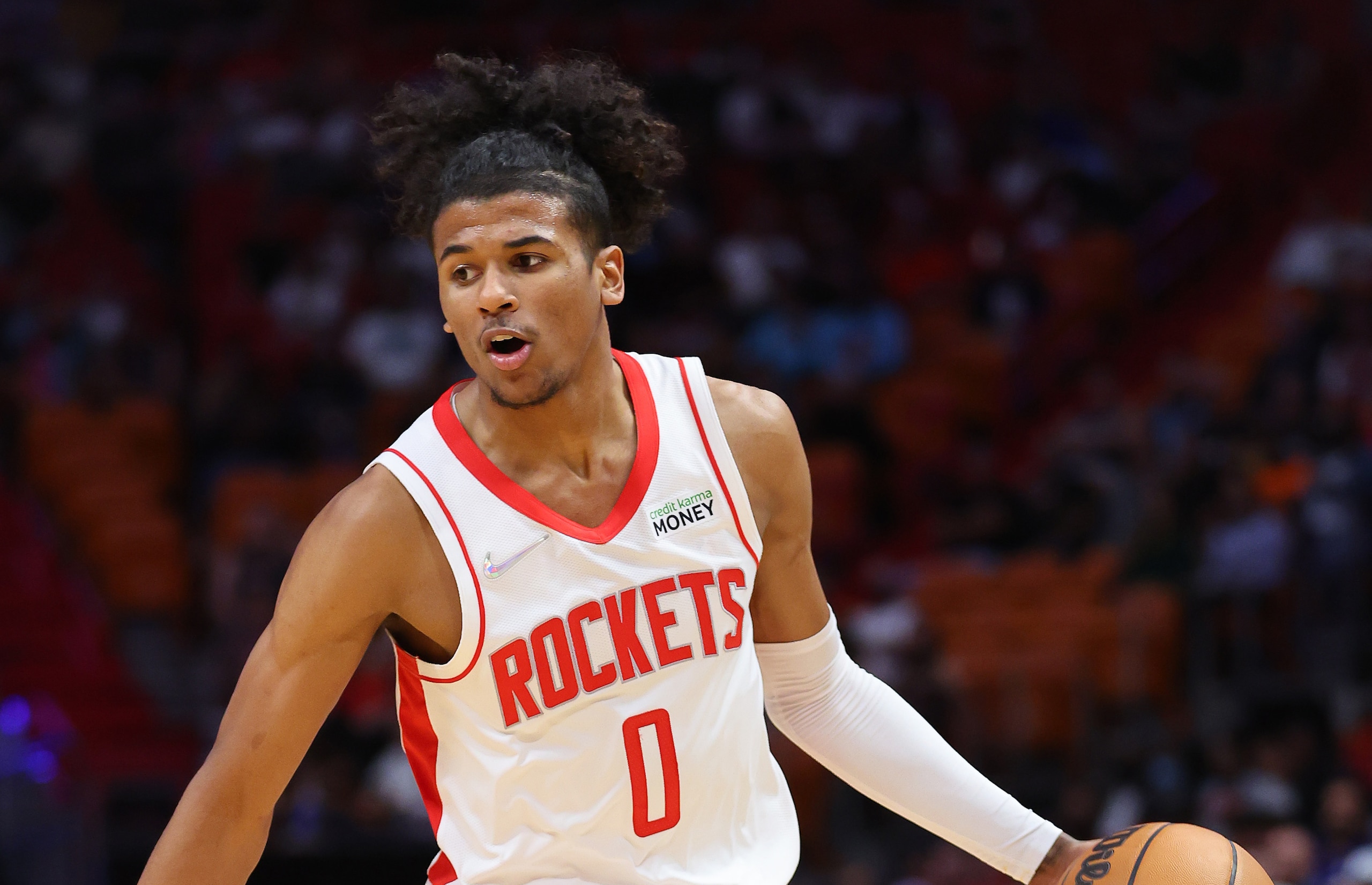
Don't fall into the trap of wanting too much from Jalen Green too soon. He just turned 20. He has more than enough to round out his game as a primary table-setter.
And even if he doesn't, the kid is already a professional scorer.
Green has started marrying difficult volume with actual efficiency since the start of February. Over his last 15 games, he's averaging 18.3 points while drilling 57 percent of his twos and 37 percent of his threes.
These are not gimmes on which Green is feasting, either. He is putting down 39.3 percent of his catch-and-fire triples during this stretch, but he's posting a better-than-solid 54.5 effective field-goal percentage on a large share of pull-up jumpers. Even his finishing around the basket has ticked up; his 63.2 percent success rate is still a hair below average but comes on a near-monopoly of self-created and contested looks.
Whether Green develops into the best player on a title-contending depends on a number of different factors. But he shouldn't be penalized for a sluggish start, or because he might be more top-20-player than top-seven-player material. And for what it's worth, his most recent 15-game streak has included an average of 3.1 assists against 1.5 turnovers.
Indiana Pacers: Tyrese Haliburton
12 of 30
Ticketing Tyrese Haliburton as more of a median-outcome star because he doesn't maintain killer-instinct mode for 49 of the 48 minutes per game has become a tired trope.
So what?
Haliburton doesn't need to be Chris Paul 2.0. We also don't need to rule out, well, anything for him right now. He is 22 years old. This is his second season. He still has time to develop and most definitely shouldn't be docked because he plays like a one-size-fits-all guard.
On that contrary, the universality of his style is a hefty part of his charm. He can slot beside just about anyone, inside any lineup, and optimize his surroundings. He doesn't need to cannibalize possessions or touches but can absolutely serve as the engine of an entire offense.
His patience and vision coming around screens is a running mate's dream, and there's some derring-do to his handles. He can make split-second decisions after leaving his feet or disarm defenders with abrupt changes in pace.
Other prospects have higher shot-making apexes. That's different from saying Haliburton cannot create for himself or uncork tougher-to-hit jumpers. Among 119 players who have jacked at least 50 pull-up threes this season, Haliburton's 39.9 percent clip places within the top 10.
L.A. Clippers: Amir Coffey
13 of 30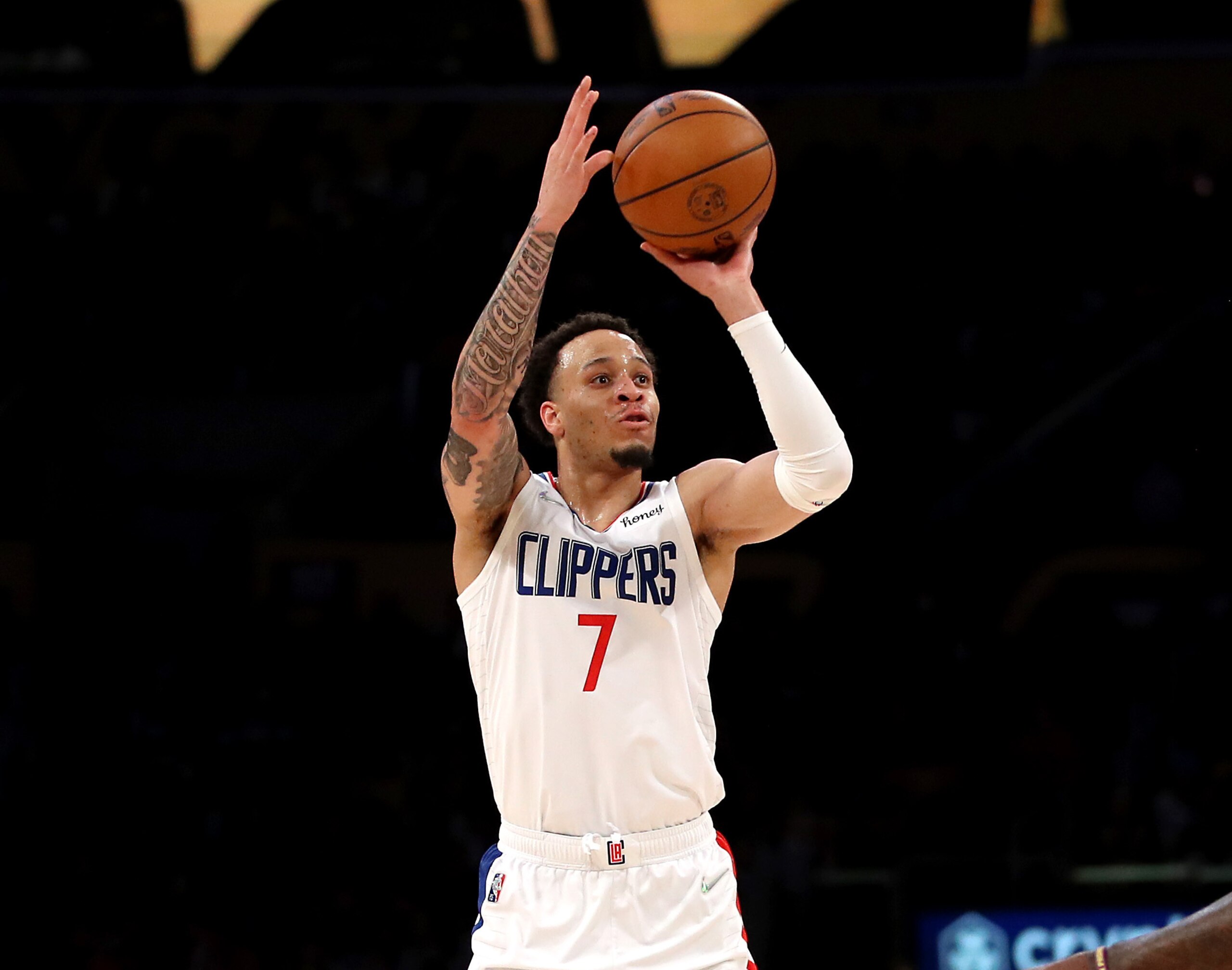
Terance Mann would technically meet our prospect criteria if he didn't sign an extension. Brandon Boston Jr. checks every box and has offered flickers of on-ball creation, but he concedes ground to a 24-year-old working on his second two-way contract with the L.A. Clippers.
Amir Coffey has been thrust into a prime-time role by necessity and done everything asked of him. And then he's done some more.
Since becoming a rotation staple just before Christmas, Coffey is splashing in 57 percent of his twos and 39.4 percent of his mostly-above-the-break triples. Los Angeles' rotation has demanded he shoulder more on-ball responsibility, and he doesn't appear overstretched.
Coffey can get by defenders when given enough room to use his left hand and seems unfazed navigating bodies and bumps around the rim. He's shooting 55.6 percent on drives and 76.6 percent at the basket during this stretch—through which, by the way, he's second on the Clippers in total minutes played.
This isn't meant to imply Coffey is the permanent answer to the Clippers' backup ball-handler woes. His passes are more reactive than inventive, which is fine but not floor general-esque. That's neither he nor there. Coffey is found money for the Clippers—a complementary gap-filler on offense who has the size to capably guard up and down the positional spectrum at the other end.
Los Angeles Lakers: Austin Reaves
14 of 30
Austin Reaves ranks fourth on the Los Angeles Lakers in total minutes played since New Year's Eve. Talk about developments you didn't see coming.
Granted, Reaves' spot in the rotation is not unearned. Los Angeles' irredeemable shallowness may have gifted him minutes in the first place, but he's done more than enough to keep getting them.
Most of the Lakers' guards' struggle to keep enemy ball-handlers in front of them with any semblance of consistency. Reaves is less of a wild card. He has, on many nights, provided more point-of-attack resistance than anyone.
Though it'd be nice if he drained threes at a higher rate, his overall mode of operation still skews toward complementary. He hits just enough of his spot-up triples for defenses to react (37.4 percent on the season) and knows how to capitalize off-ball on screens and switches.
Reaves leverages this movement away from the action and a pleasantly polished pump-and-drive game into floaters and high-quality looks around the hoop. He is shooting 72 percent between four and 14 feet (18-of-25) and 73 percent at the rim.
Talen Horton-Tucker was precluded from consideration after getting his second contract over the summer. But even if he were eligible, Reaves may have shown enough to be the answer anyway.
Memphis Grizzlies: Desmond Bane
15 of 30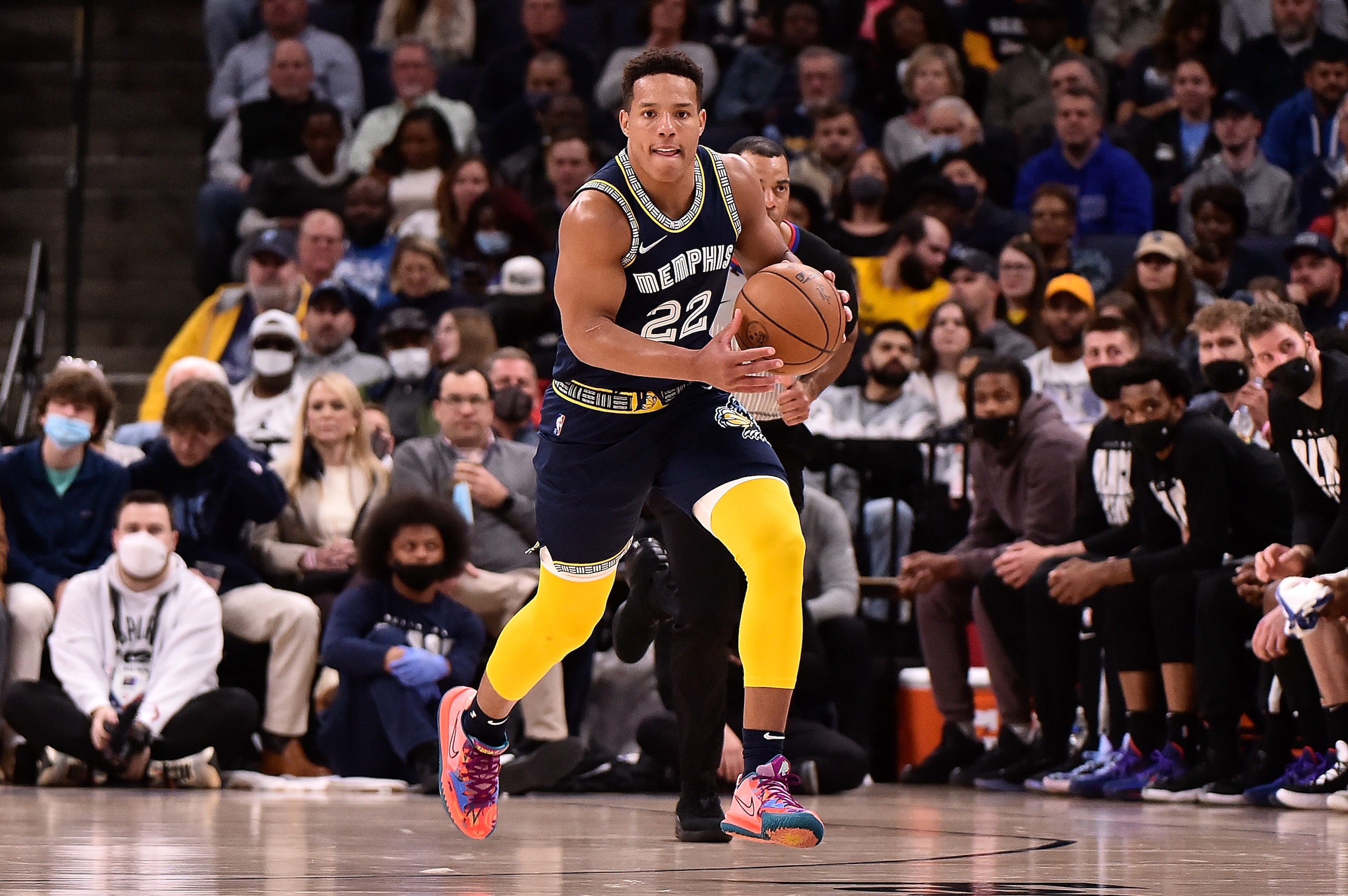
Desmond Bane's rise through the player ranks was initially meteoric. It is now a shrug-of-the-shoulders status quo as if he's been a top-three player on the Western Conference's No. 2 seed since the dawn of time.
He hasn't, of course. Bane spent most of last season as an efficient yet still ancillary player. Even those who watched him go kaboom at the Las Vegas Summer League this past year wouldn't have necessarily dared to forecast this progression from ordinary prospect to potential cornerstone.
Around 25.5 percent of Bane's shots came as pull-up jumpers as a rookie. That number has ratcheted up to 40.4 percent this season, and he's paired this rise in volume with an efficiency uptick, too. His drives per 36 minutes are also up from 2020-21, and the Memphis Grizzlies have him running appreciably more pick-and-rolls.
Full-fledged stardom doesn't seem to be in Bane's future. That's not an insult when he projects as the next best thing: a high-level shot-maker who can ferry secondary ball-handling without ever infringing upon the volume or stylistic leanings of the more central hubs he plays alongside.
Miami Heat: Gabe Vincent
16 of 30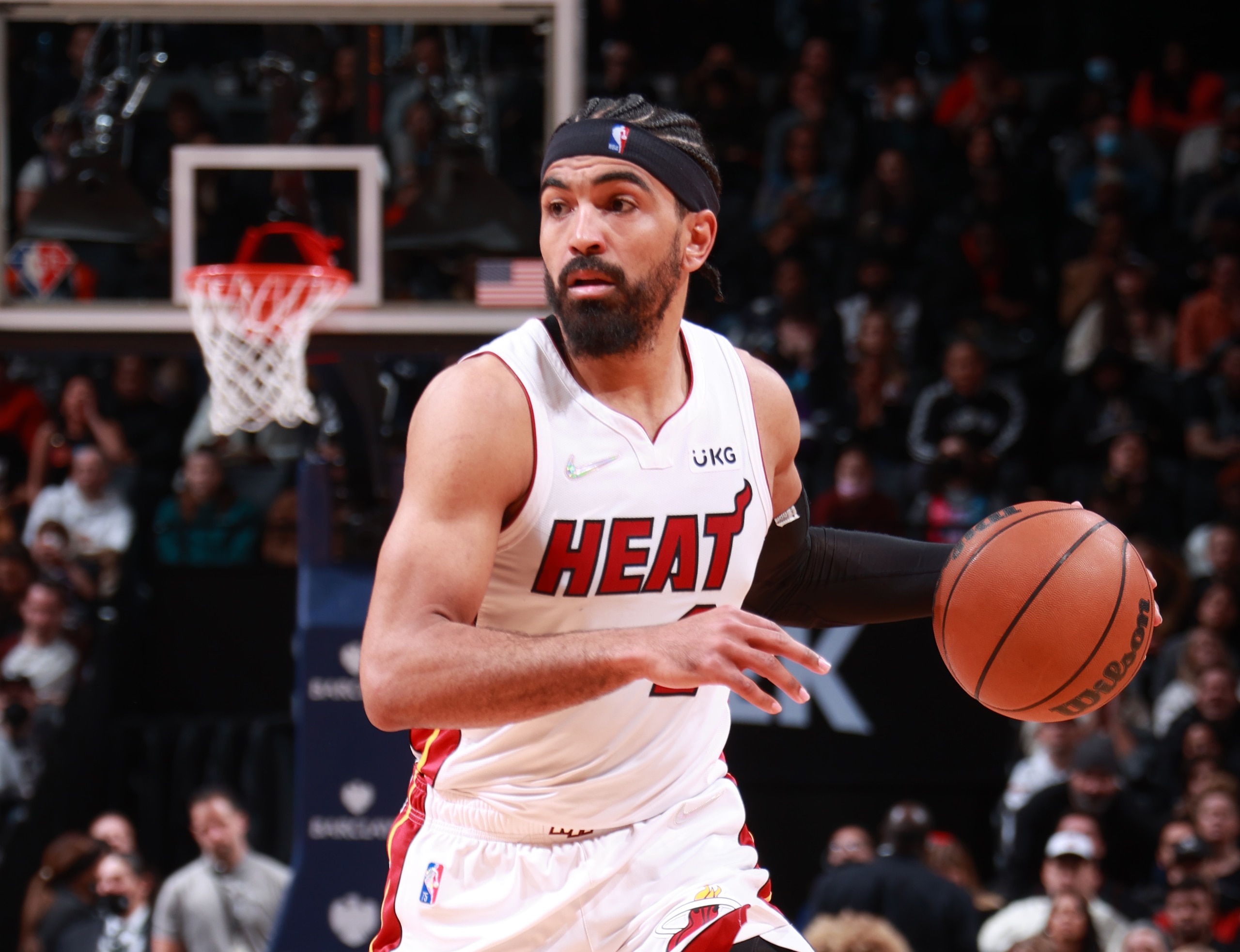
Our prospect criteria make for slim pickings from the Miami Heat. Tyler Herro has breezed past the playing-time threshold through each of his first three seasons, and Caleb Martin lost his eligibility when he was (deservedly) converted from a two-way deal to a regular contract.
Gabe Vincent, come on down.
After signing a pair of two-ways with the Heat over the previous two seasons, this is the first year in which Vincent finds himself on a full-fledged NBA pact. As luck would have it, this also happens to be the first year in which his shooting stroke has gone from theoretical to actual.
Vincent is torching twine on 38 percent of his 5.0 three-point attempts per game. His most efficient damage comes off the catch (39.9 percent)—and includes some super-deep launchings—but he has shown the capacity to keep defenses honest by dribbling into on-a-dime jumpers. He is knocking down 35.8 percent of his pull-up treys since returning from health and safety protocols on Jan. 12 and has occasionally unbottled a neat-o fadeaway inside the arc.
Miami is even more fortunate Vincent has stabilized the backup point guard rotation. He isn't what you'd call a highlight-reel playmaker, and bad passes account for the overwhelming majority of his turnovers.
But Vincent knows how to work the corners, thread dimes in the pocket and keep the ball moving. The offense is hovering a notch above league average when he plays without Jimmy Butler or Kyle Lowry—no small feat given how much time they've combined to miss.
Milwaukee Bucks: Jordan Nwora
17 of 30
Jordan Nwora earns this nod almost by default.
Donte DiVincenzo finally calls Sacramento home and wasn't playing that well upon return from injury. Grayson Allen graduated from this discussion by virtue of being too damn old and signing an extension. The Milwaukee Bucks aren't teeming with any other alternatives.
To be sure, Nwora has value beyond being the only option. The confidence he has working off the dribble is evident and sometimes even effective. He is downing 36.5 percent of his pull-up threes and has improved his finishing around the rim by 15 percentage points compared to last season.
Figuring out how to fit Nwora inside the larger offensive ecosystem can be difficult. He is the quintessential example of a player more comfortable dominating that ball, even amid thickets of bodies and shot contests, than ripping wide-open jumpers off the catch. B
ut he has speckled in moments of growth—possessions on which he defers rather than settles for skin-crawlingly bad step-backs or scoots past defenders away from the ball to position himself for a pass around the basket.
Minnesota Timberwolves: Anthony Edwards
18 of 30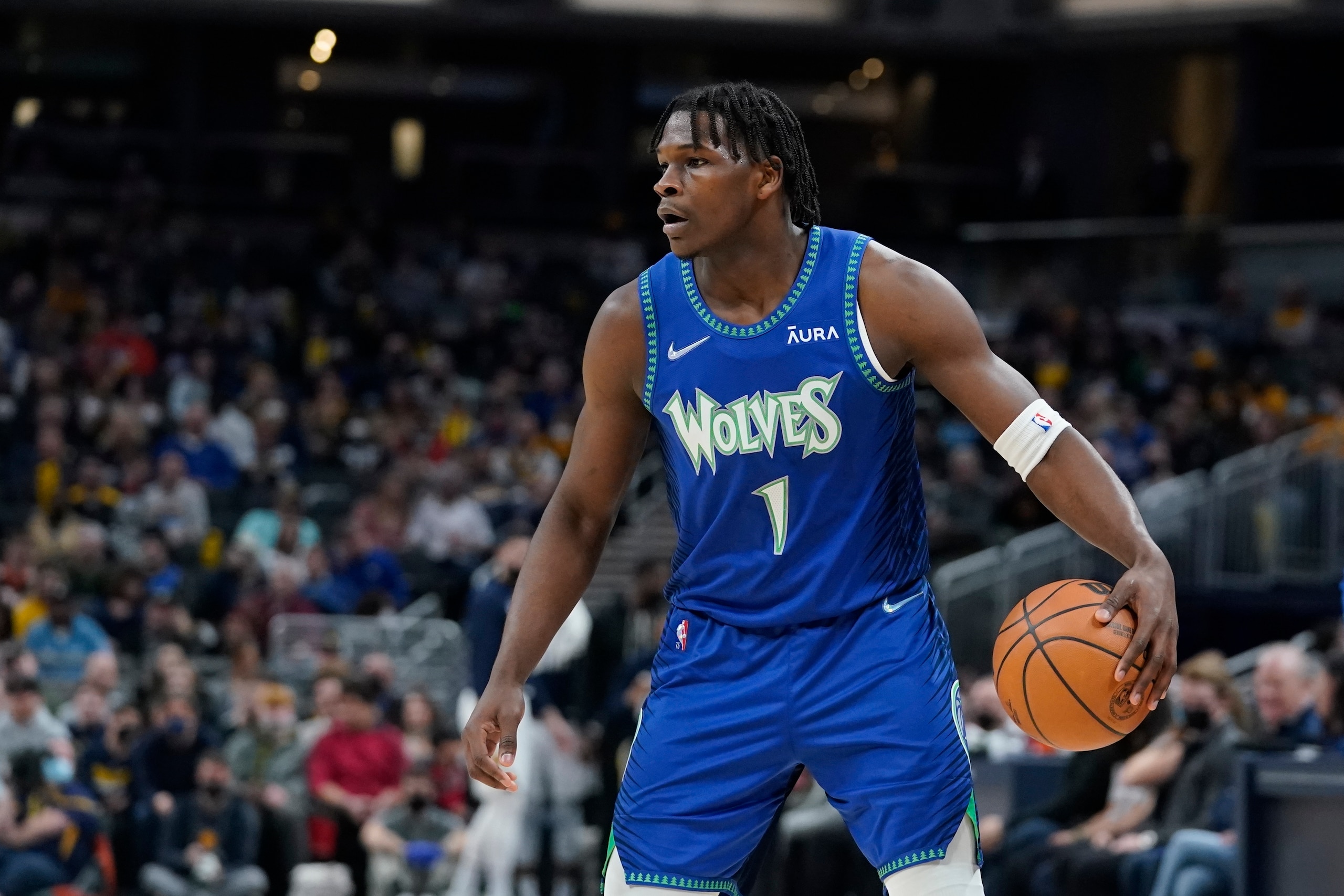
Anthony Edwards no longer plays like a prospect. There are still holes within his game; his off-the-dribble jumper can be exhilarating but doesn't yet fall at a high enough clip to be a functional anchor. Even so, Edwards gives off the air of a veteran.
Perhaps it's the raw numbers: 21.4 points and 3.7 assists on 51.2 percent shooting inside the arc and roughly league-average efficiency (34.7 percent) from behind the rainbow.
Maybe it's the attention he commands. As I wrote previously: "Defenses now overreact from the moment he catches the ball, a testament to his rim pressure and the threat he poses from beyond the arc. His passes no longer feel like last resorts nor matters of convenience, but quicker decisions borne from forethought, sometimes before he even takes possession."
Or maybe it's the refined opportunism on defense away from the ball, where he's a more selective risk-taker.
Or perhaps it's the way the Minnesota Timberwolves seem to have adopted his emotional identity. The entire team carries itself with a self-assured levity you can't help but want to hug.
Whatever it is, Edwards feels more like the established face of the franchise than a prospect. And that's great news for Minnesota.
New Orleans Pelicans: Herbert Jones
19 of 30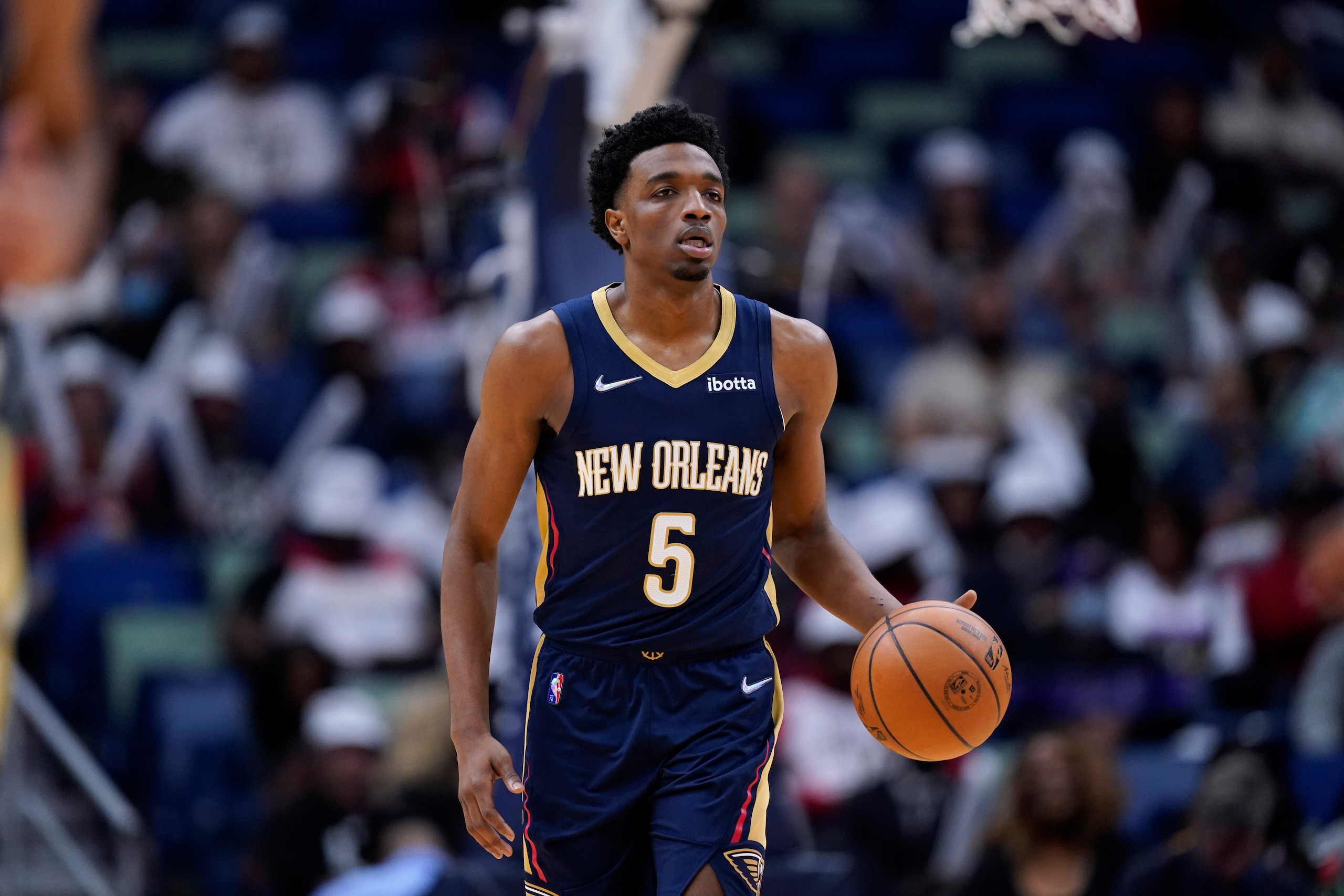
Please don't ask why Zion Williamson isn't here. Limited-availability exemptions cannot be granted to transcendent talents who already have an All-Star selection and played well enough in Year 2 to contend for All-NBA honors.
Herbert Jones gets the nod without much resistance. That is either a tip of the cap to the New Orleans Pelicans front office, who snagged him at No. 35 in the 2021 draft or a red flag for how little we know about Kira Lewis Jr. and Trey Murphy III.
Some might even prefer Jaxson Hayes. I can't get there. Jones' defense won't let me. He is what happens when the unstoppable force mates with the immovable object. The Pelicans have rolled him out liberally against positions 1 through 4, and he's seldom appeared overmatched.
He is equal parts suffocating and omnipresent. No passing lane is safe with him on the floor, not even in transition when his back is turned, and his motor has only one default setting: All-Everything-All-the-Time.
Basketball Twitter has done a nice job of giving it up for Jones, but I'm not sure everyone outside New Orleans truly understands the weight he carries for the Pellies. Among 225-plus players who have tallied at least 1,00 minutes this season, only three have a higher matchup difficulty rating on BBall Index: Luguentz Dort, De'Andre Hunter and Matisse Thybulle. Jones has logged more court time than all of them.
New Orleans already has a superstar role player on its hands, and that's before banking on the possibility of offensive growth. Jones is converting 35.6 percent of his threes over his past 40 games, has added some directionality to his drives and knows how to let possessions develop from a standstill.
New York Knicks: Immanuel Quickley
20 of 30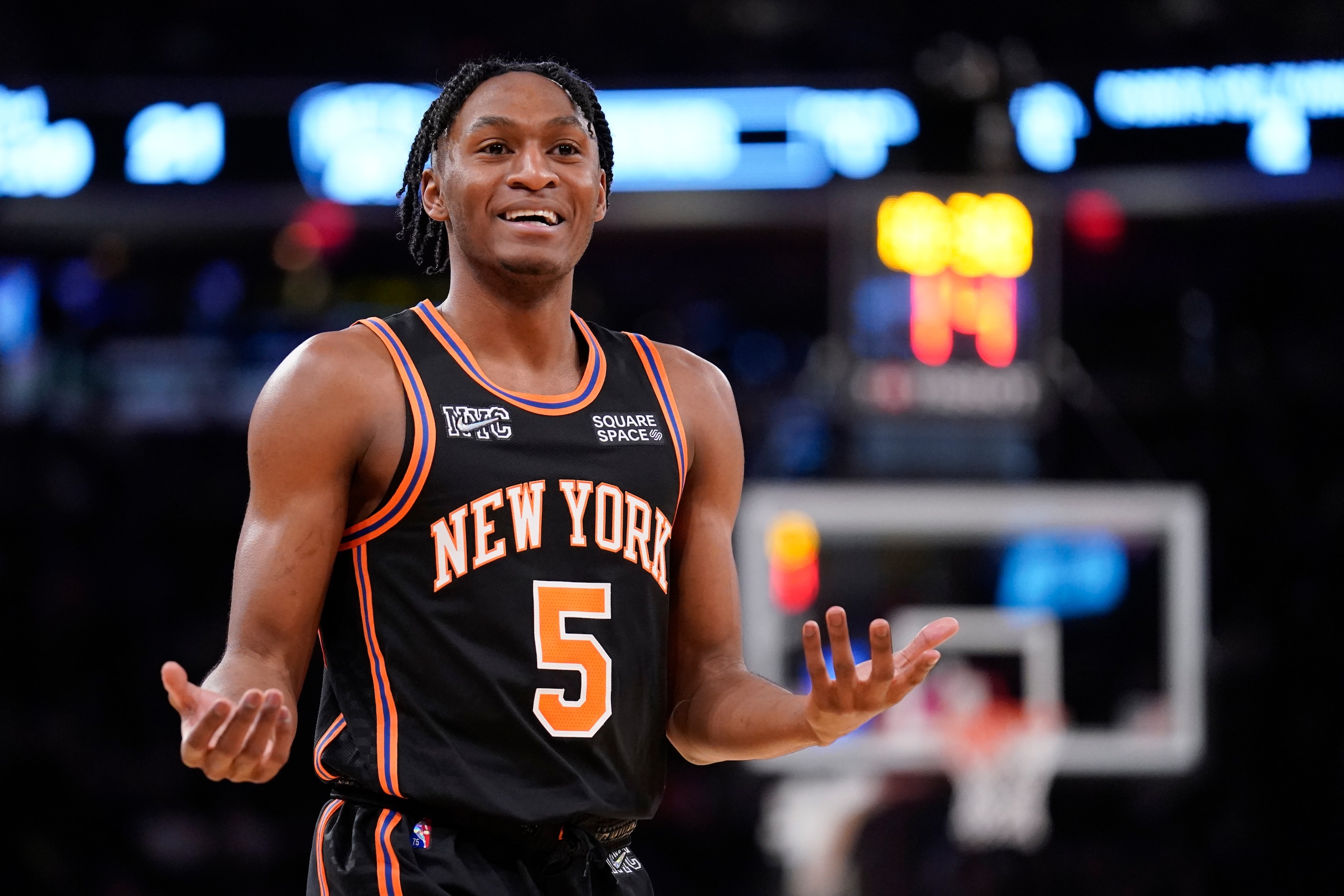
Anyone looking for RJ Barrett should know he blew away the playing-time threshold. He is 26th in total minutes since entering the NBA. His absence is among those that sting since there's so much of his game left to explore. But rules are rules.
Immanuel Quickley pretty easily takes home this honor with Barrett off the table. Perhaps some will favor Obi Toppin, Quentin Grimes, Miles McBride or even Cam Reddish, who has averaged above 25 minutes per game twice but only made 26 appearances last year. Count me among those who would select Quickley from this field no matter what.
For so long, the aesthetics of his game have demanded a longer rope. He has boundless range, an operable step-back, a deceptive hesitation dribble and a picture-perfect floater. The returns haven't always aligned with the look and feel of what he does, but maddeningly quick hooks from head coach Tom Thibodeau always felt disruptive to the growing process.
Those training wheels have come off for the time being. Quickley has seen his minutes increase over the past seven games, through which he's averaging 16.9 points and 3.0 assists while shooting 60.6 percent on twos and 48.6 percent on threes. This could be a flash-in-the-pan effect, but the 22-year-old has regularly been at his most efficient when he receives more court time. Go figure.
"But he tops out as a score-first sixth man!" will be the most common rebuke to Quickley's placement. Imagine thinking that's an insult. The New York Knicks need someone, anyone, who can maintain their dribble in the lane. Quickley may not be a conventional game manager, but the ship has hardly sailed on his offensive initiation.
Oklahoma City Thunder: Josh Giddey
21 of 30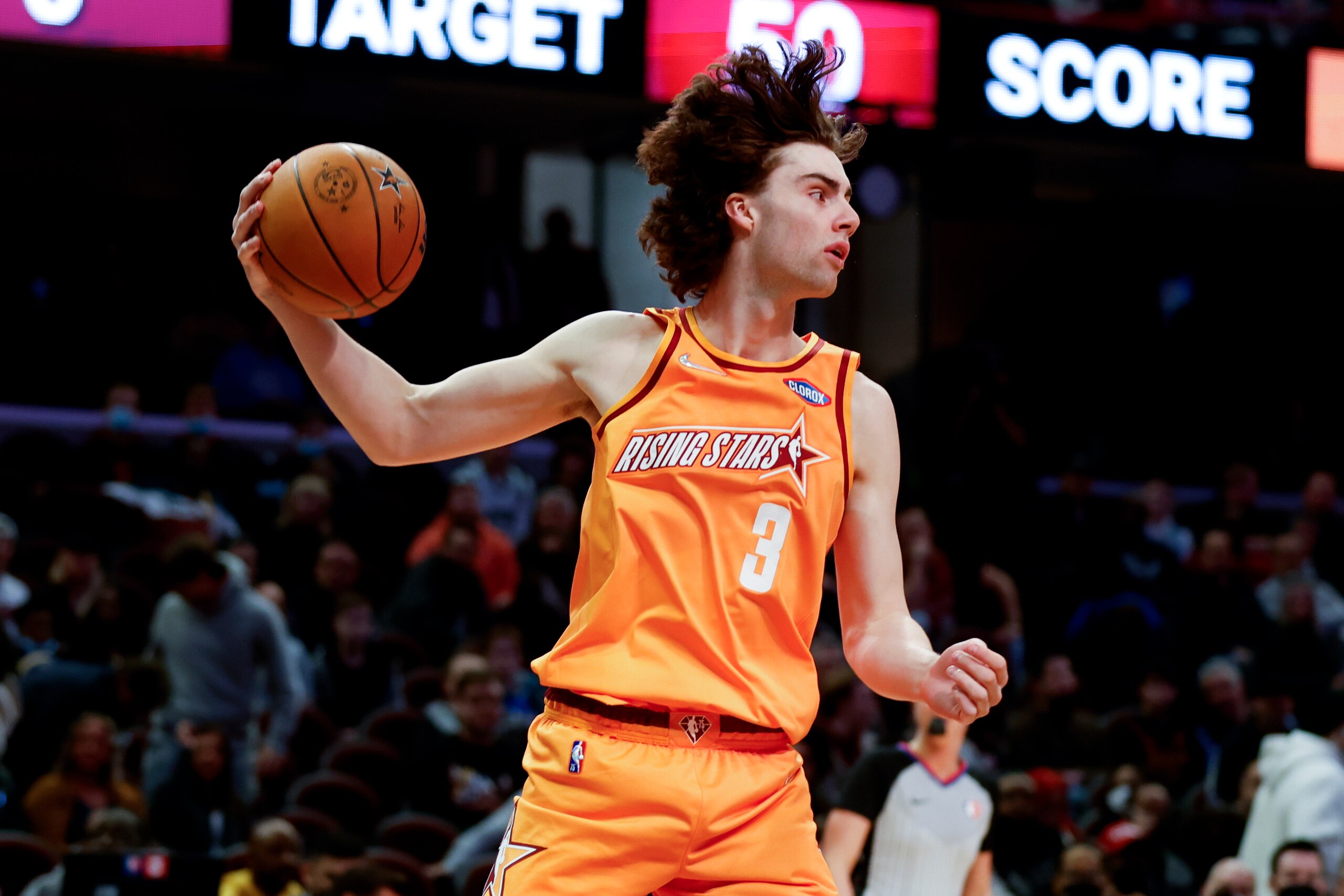
Aleksej Pokusevski commandeered a lot more of my brainpower entering this space than I initially imagined. But I'm not trying to be unnecessarily inflammatory.
Josh Giddey has a ways to go as a scorer. He has, on occasion, been more aggressive than advertised when looking for his own opportunities, gets to the rim with B-minus frequency and employs a budding in-between game. But his overall shot-making leaves much to be desired. He has yet to post higher than a 53 true shooting percentage in any given month.
Open-minded hoops heads will allow Giddey to plead 19 years old. They'll also celebrate his superhuman vision. He is a whiz at waiting out defenses and has, approxmiately, three different decisions he's processing through, in real-time, whenever he picks up his dribble.
There is a flair to his passes, but the substance outstrips any spectacle. He varies his delivery methods in a way that keeps defenses on tilt and his teammates in motion.
Giddey has likewise jump-started possessions with his presence on the defensive glass and proclivity for poking the ball away. His playstyle translates nicely to the box score.
He churned out four triple-doubles before recently being shelved with a hip injury. Only seven other rookies have ever recorded as many trip-dubs: Oscar Robertson (26), Ben Simmons (12), Luka Doncic (eight), Magic Johnson (seven), Alvan Adams (five), Tom Gola (five) and Jason Kidd (four).
Orlando Magic: Jalen Suggs
22 of 30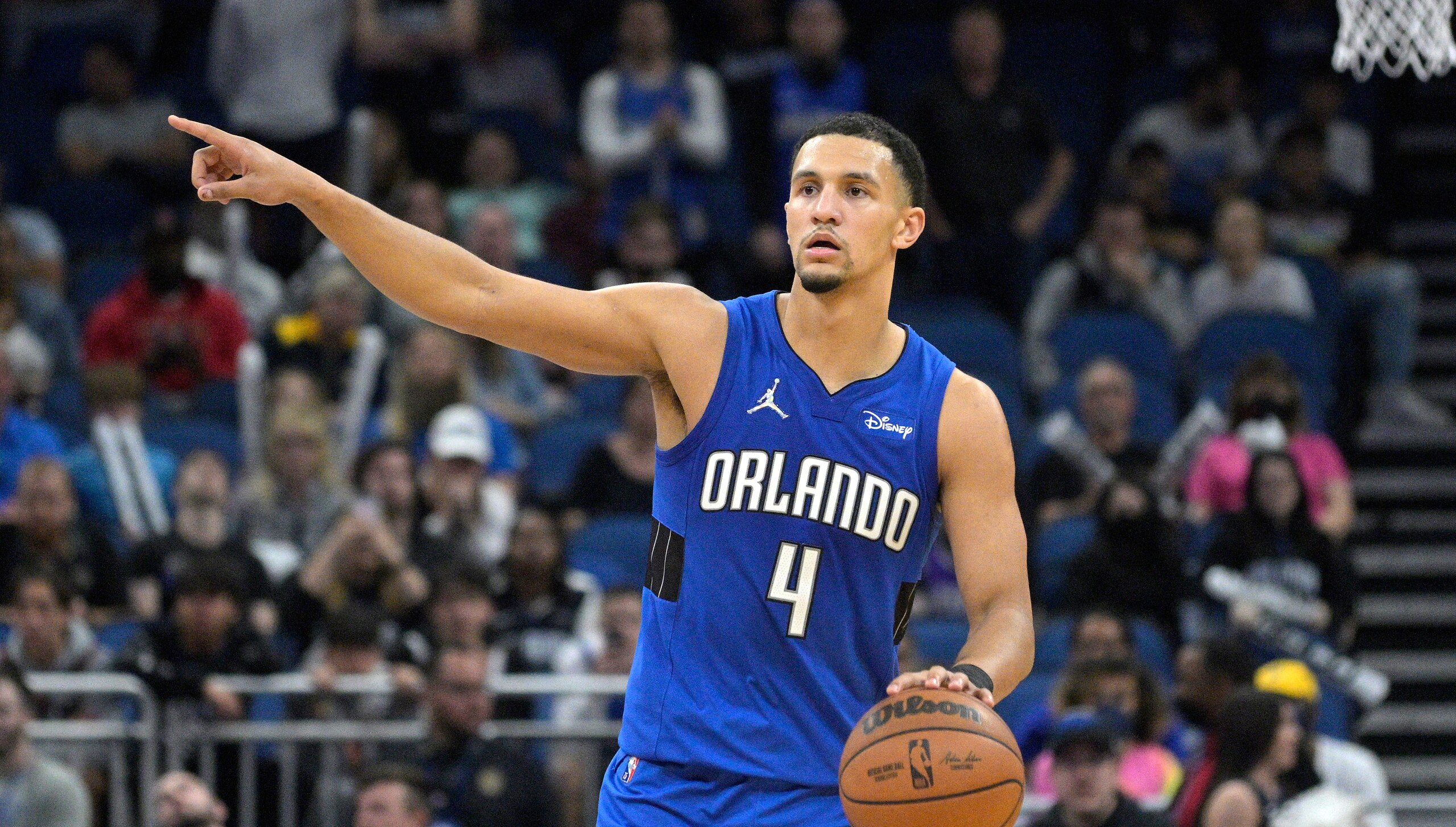
Franz Wagner comes oh-so-close to forcing relitigation in this spot. But when dealing with two rookies, it makes sense to favor the one with the higher-end best-case outcome. For all Wagner has done well—almost everything—he projects as a secondary playmaker with more dynamic and physical touch than you'd expect from someone who doesn't move at warp speed.
Jalen Suggs, on the other hand, retains his focal-point appeal—even though this hasn't been a banner rookie season.
His 12.5 points, 4.5 assists and 3.1 turnovers per game come on just 36.6 percent shooting and a 22.6 percent clip from distance, and he's seen his inaugural campaign interrupted by right ankle and right thumb issues. But extreme lows aren't enough to erase the possibility of monumental.
Suggs has flashed some of the offensive pizzazz that made him the fifth pick last year's draft. He is a magnet for defenses when going downhill; has the frame to absorb and survive contact; can change directions at a nanosecond's notice off the dribble; will adjust the angle of his finishes at the rim; and has made strides as a passer in transition and when coming around ball screens.
Resist the urge to view Suggs' first year as a letdown. It is more like baptism-by-fire. Whether slotting him in an outsized on-ball role pays off will be a matter of course. But the Orlando Magic weren't brimming with many other options to start the year, and there is value in pushing the boundaries of functional limitations, even if it's initially for the worse.
Philadelphia 76ers: Tyrese Maxey
23 of 30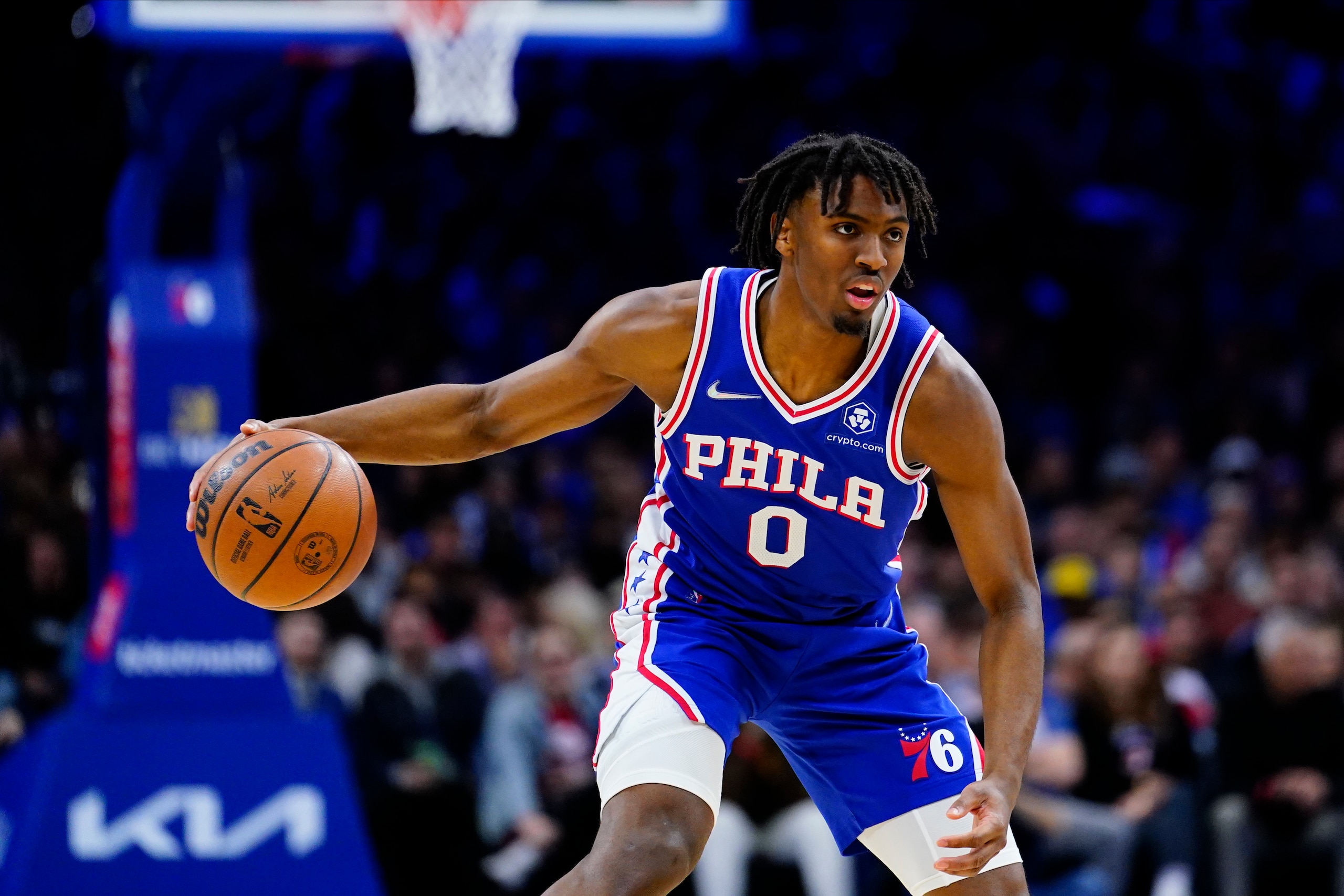
Tyrese Maxey finds himself under the Desmond Bane umbrella. He went from spitting out encouraging returns in a modest role as a rookie to becoming an indispensable part of his team's operations as a sophomore.
And the Philadelphia 76ers are much better off for it.
Maxey is clearing 17 points and four assists per game while putting in over 50 percent of his twos and 40 percent of his threes. The last player to hit these statistical touchstones before his 22nd birthday was...absolutely freaking no one.
This isn't even a case of Maxey exploiting easy-peasy circumstances. If anything, he was miscast as a No. 2 option for most the season—and then delivered anyway. James Harden's arrival has put him in a more natural third-wheel role, and he, not shockingly, looks even better. His shot quality has gone up, and defenses cannot contend with his speed on straight-line attacks. He is like a human blur when he gets downhill into open space.
Putting any sort of cap on Maxey's potential officially makes zero sense. He isn't a top-shelf passer, but the improvement he's made as an outside shooter, both on pull-ups and off the catch, proves that he has year-over-year leaps in him. That he's already the third-best player on, perhaps, the new Eastern Conference favorite says it all.
Phoenix Suns: Cameron Johnson
24 of 30
Nobody on the Phoenix Suns feels like a prospect in the conventional sense. So much of the non-Chris Paul core has played together for their entire careers—Deandre Ayton, Devin Booker, Mikal Bridges, Cameron Johnson—it gives off the impressive that they, collectively, have been around forever.
Ish Wainwright will get some (not unjustified) shine from the diehards. But whereas Ayton and Bridges don't qualify as prospects under our guidelines, Johnson is only eclipsing 25 minutes per game for the first time in his career. He counts.
And selfishly, that's just swell. Because it means I get to talk about him.
Almost everyone under the, ahem, sun thought Phoenix was reaching at No. 11 in the 2019 draft when it selected him. Sure, he was touted as the best functional shooter in the class. But what else does he do?
Apparently, a little of everything.
Johnson's reputation as a lights-out shooter endures. After dropping in under 35 percent of his threes last season, he's at 44.8 percent from behind the arc this year. But his usage extends beyond offensive-adornment territory. He can knock down contested looks and quickfire treys after flying around screens. He is comfortable handling the ball in open space. And he can find rolling bigs and toss on-point lobs.
There is more of a floor game within Johnson's overall arsenal. The Suns' typical pecking order just doesn't call for him to lean on it. He can employ sudden shifts in direction on his live dribble and polish off middies and tougher finishes around the basket. Just ask Mitchell Robinson.
Twenty-six-year-olds are hardly ever considered prospects. Johnson may not be a full-on exception. But there are so many more layers to what he does than he's gotten the chance to consistently show. That he is, in some form, still a mystery box at his age is terrifying.
Portland Trail Blazers: Anfernee Simons
25 of 30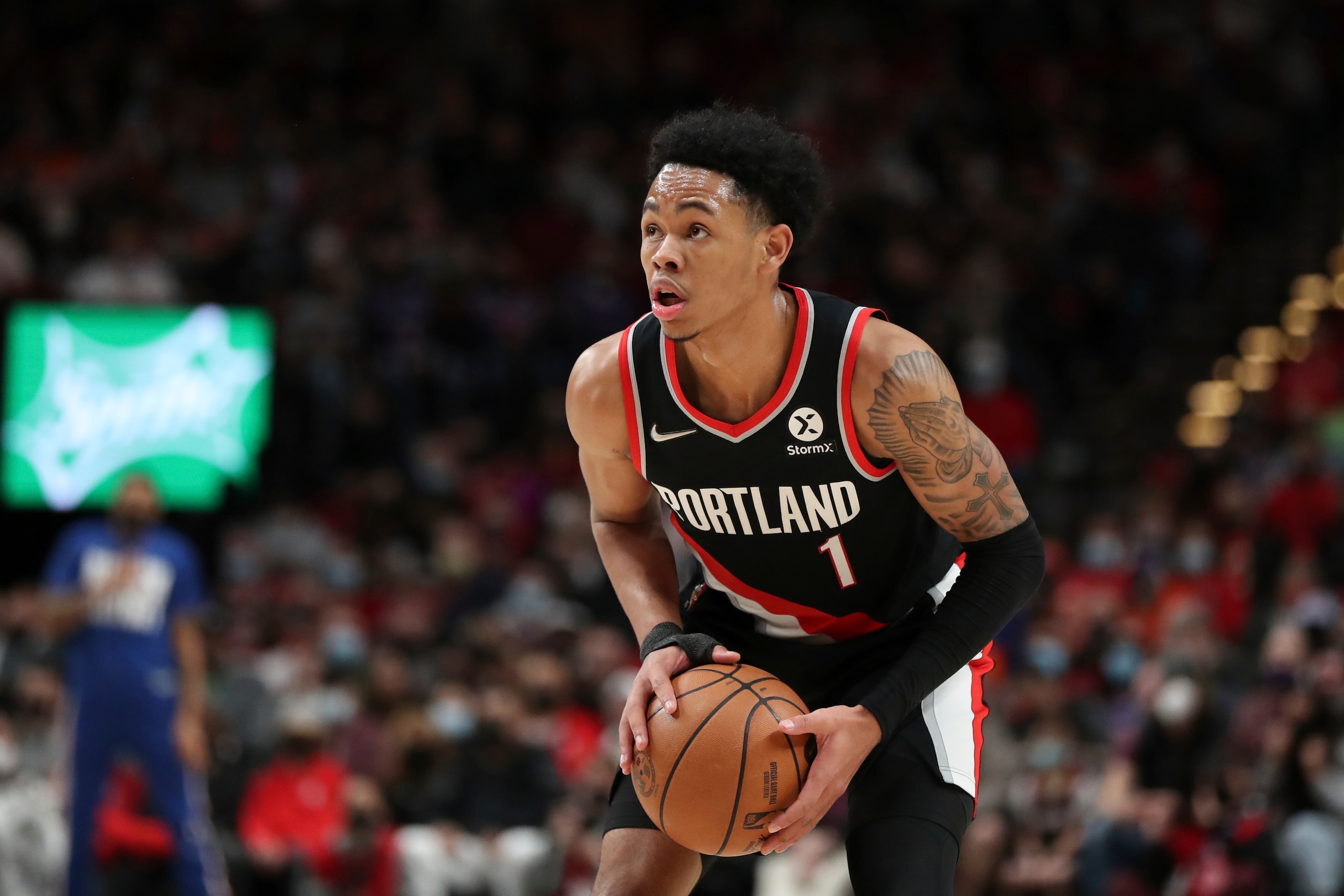
All the drama surrounding the Portland Trail Blazers these past couple of seasons has ostensibly aged-up Anfernee Simons' career. Surely he's not a prospect. He's been in Portland for almost a half-decade.
Except this is the first season the 22-year-old has enjoyed both a regular and prominent role. And it still took a wholesale trade-deadline audible to ensure nothing and no one derailed it.
Simons has spit hot fire for most of the season but pivoted into offensive-fulcrum status around the middle of December, upon return from a sprained right ankle. He has averaged 20.7 points and 4.9 assists while burying 41.4 percent of his 9.8 three-point attempts per game in the months since.
His numbers have been even more absurd following the trade deadline. In the absence of Damian Lillard (abdominal injury) and on the heels of the Norman Powell and CJ McCollum deals, Simons has put up 25.9 points and 5.1 assists on 46.7 percent shooting from long range through seven games.
Doubting the sustainability of this explosion can't be the default. We aren't talking about Simons erupting over the course of a few games, or a couple of weeks, or even just a couple of months. His ascension has spanned an entire season, making it more of a new normal.
The degree to which he's improved is hard to overstate, as well. He toggles between ripping through mega-deep spot-ups and mind-meltingly difficult from-scratch treys. His finishing around the basket is a coin toss, when he actually gets there, but he's cobbled together a reliable and decisive mid-range game and more purposeful passing on the move. It's a leap that bodes well for whatever direction Portland travels next—and for Simons' wallet when he hits restricted free agency this summer.
Sacramento Kings: Davion Mitchell
26 of 30
Did everybody get their obligatory "Tyrese Haliburton should be slotted here, lol #Kangz" joke out of the way? OK, cool. Let's move on.
Davion Mitchell's sweltering defense was his claim to top-10-lottery status in the 2021 draft. He has mostly lived up to that hype.
Trying to get past him is like attempting to go through a brick wall, in a full body cast, without a running head start. He gives ball-handlers about as much breathing room as an unventilated attic in the dead of summer and has the sturdy and explosive build to get away with it.
That blanketed strength has served him well for spurts on offense. The Sacramento Kings absolutely need him to be a more consistent jump shooter, but he's a heavy-duty presence when jetting downhill.
Smaller guards will bounce off him, and a hard-as-nails frame allows him to absorb physical contests from bigs. Though his finishing on drives can be all over the place, he's shown he can get tough looks to fall when he doesn't prematurely take off or bail out. Mitchell is shooting 72.4 percent in the restricted area over his last 15 games (21-of-29), including 76.2 percent on all driving layups (16-of-21).
Whether Mitchell has another outside gear remains to be seen. He has done a better job maintaining his dribble and doesn't seem ill-equipped when unloading step-backs or spot-up jumpers. For now, perhaps it matters more that he takes those shots at all while having diversified his ball-handling package than if said looks are falling.
San Antonio Spurs: Devin Vassell
27 of 30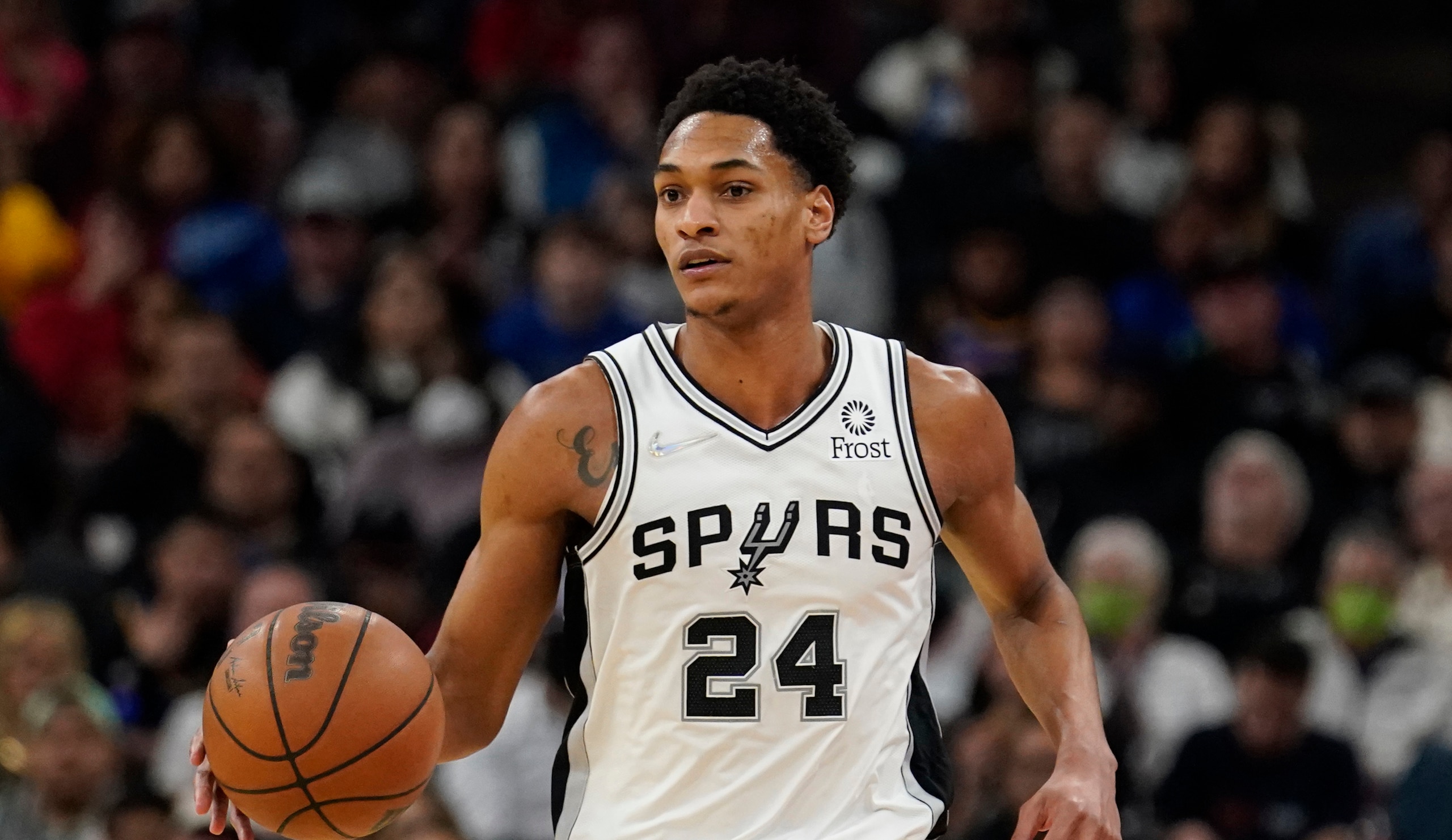
Devin Vassell too often gets misinterpreted as a niche contributor—a three-and-D specialist who doesn't quite hit enough of those threes but moves with high IQ away from the ball.
That synopsis isn't necessarily wrong. Vassell is all those things. He is also much more.
Assuming he relies on others to generate his offense is the most common misconception. The San Antonio Spurs have given him the license to put the ball on the floor and dribble into jumpers. More than one-quarter of his total looks this season have come as pull-up twos, on which he's shooting a sound 45.2 percent, and he's converting 53.8 percent of his attempts off drives.
San Antonio's decision to ship out Derrick White at the trade deadline further paves the way for Vassell to experiment with a more assorted offensive package. (It also creates additional opportunity for Josh Primo and Tre Jones.) He is already averaging more drives per 36 minutes (6.4) than before (5.2), and the Spurs are sending him more ball screens off which to work. He may never be a high-volume offensive maestro, but you can already see the outline of a player who's more complete than a situational specialist.
Toronto Raptors: Scottie Barnes
28 of 30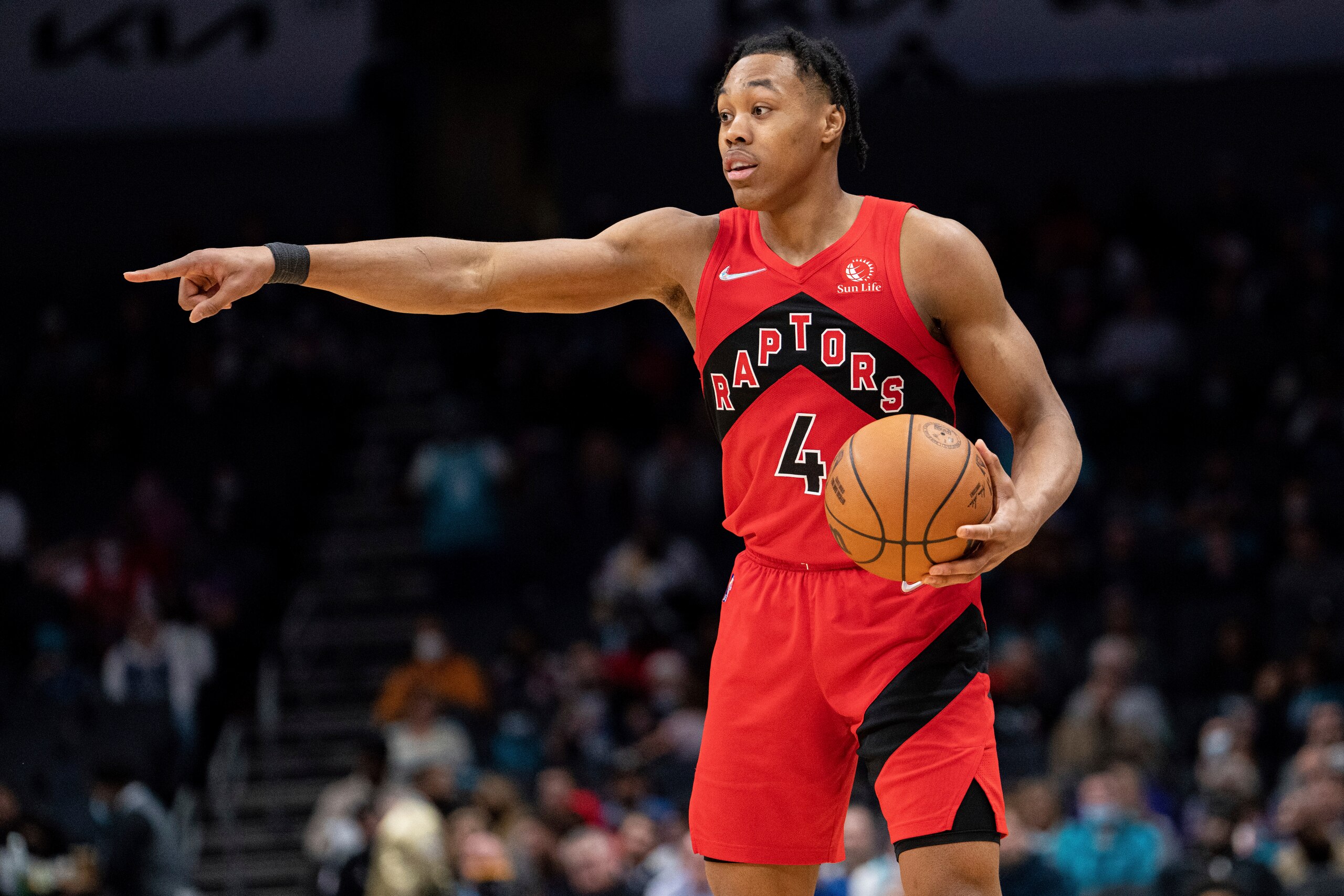
Benefit of the doubt was given to the Toronto Raptors and team president Masai Ujiri when they took Scottie Barnes at No. 4 in the 2021 draft over Jalen Suggs. They have birthed enough high-end talent from their program in recent years to warrant blind confidence, even if it isn't above pangs of skepticism.
Skip ahead to now, and Barnes' rookie campaign has exceeded even the most Utopian projections. He is nuking expectations just by averaging over 35 minutes per game for a frisky playoff team. The Raptors have performed better without him on the floor, but his contributions hardly amount to a net negative.
Even has he vanishes for protracted stretches, labors through scoring droughts and gets caught off-guard on certain defensive possessions, he registers as an immediate asset by virtue of allowing Toronto to buy time. Its rotation is shallow—disturbingly so. Barnes is one of their scant few security blankets, someone who can be plugged into the most egregious-looking lineups, and who needn't be shelved against certain matchups.
It helps that the 20-year-old is much further along on the offensive end than anyone envisioned. As Imman Adan from the Dishes & Dimes podcast pointed out on a recent episode of Hardwood Knocks (28:20 mark), Barnes was portrayed as a "zero-level scorer" at Florida State. He has instead displayed genuine touch around the basket and from mid-range, and he's let fly wide-open triples, even though they're not falling at a high clip.
Barnes' handle on the move has also looked serviceable enough that he will soon be able to carry a larger offensive burden against set defenses. Combine that runway for creation with the defensive highlights he's already amassed with his size and strength, and the Raptors seem to have found another legitimate building block—if not perhaps the player who will serve as the basis for everything they try to be years down the line.
Utah Jazz: Nickeil Alexander-Walker
29 of 30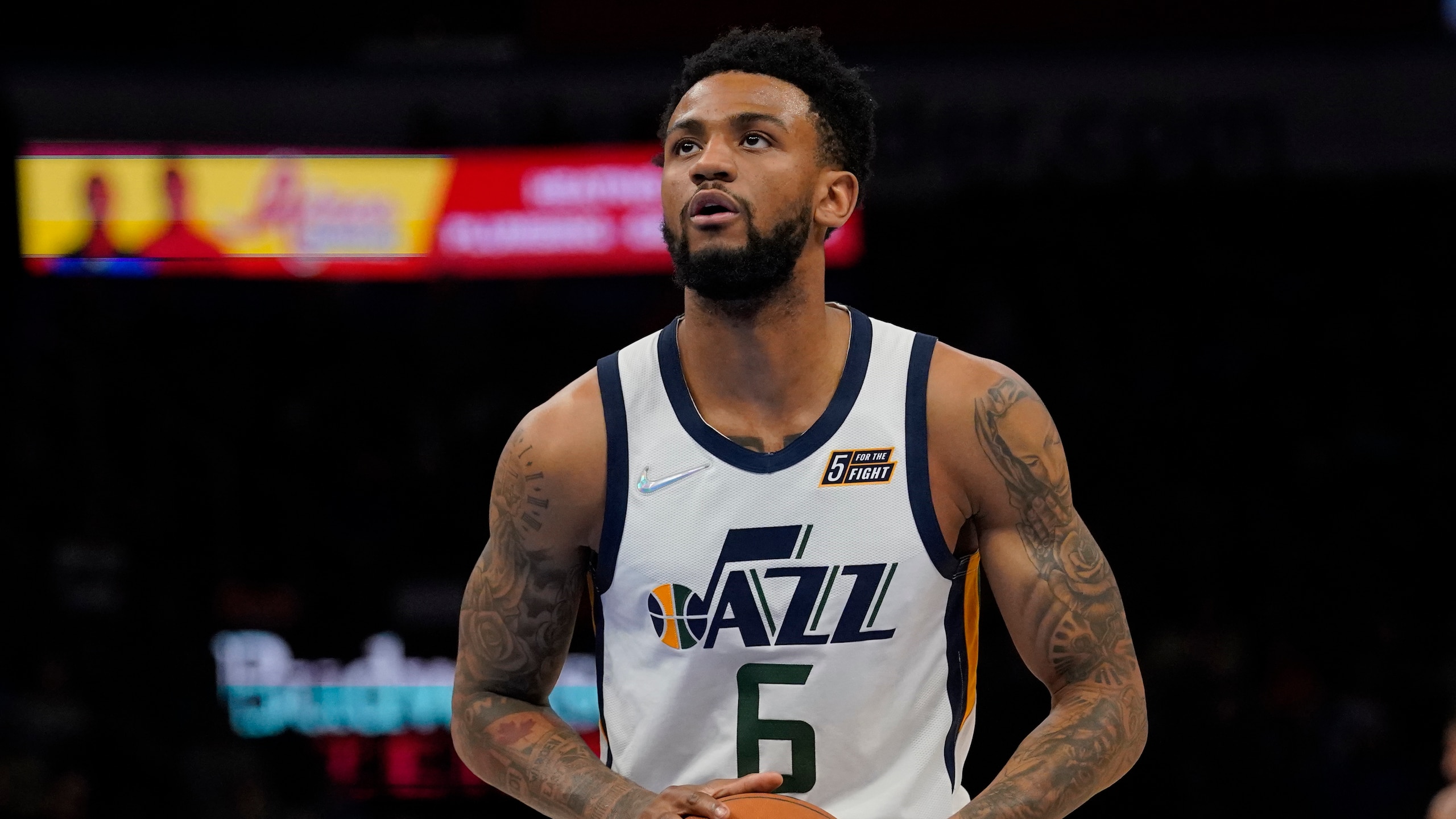
This is an impossible decision—and not because the Utah Jazz are drowning in too many options.
Trent Forrest's defensive pressure, coupled with a shallow backup guard rotation, has earned him a fairly steady role on a contender. That matters. Jared Butler seemed like a steal at No. 40 in last year's draft. Maybe he still will be. His 221 minutes of court time aren't enough to draw meaningful conclusions. If his evasiveness and wiggle off the dribble from Baylor spill over to the NBA, he can have a measurable impact on his team's offense.
Pick either Butler or Forrest. Or go ahead and cape for Udoka Azubuike. I won't fight you. Nickeil Alexander-Walker gets priority from me only because his game is tantalizing enough without much control that it makes me wonder what he could look like when reined in a bit.
Just so we're clear: NAW has a long way to go. He isn't particularly active or comfortable when stashed away from the ball yet isn't nearly efficient enough to warrant guaranteed touches or actual playing time in Utah.
Out of 46 players who have logged at least 1,200 minutes and are matching his usage rate, NAW's true shooting percentage ranks...45th. But I will continue clinging to the fact that he drilled 36.9 percent of his spot-up triples through 2019-20 and 2020-21 before dipping to 32.0 percent this season. There's also the fluidity with which he pulls up and, at times, attacks downhill. Lots of what he can do on-ball just looks good. And so, I believe. Still. For now.
Washington Wizards: Deni Avdija
30 of 30
Deni Avdija thus far plays like someone who has yet to be unleashed. He has spent most of his first two seasons working alongside players much more ball-dominant and needed to focus on blending in without disappearing entirely from view.
Mission accomplished.
Giving Avdija the plug-and-play gold star might be a stretch. He needs to hit more of his threes to open up the floor for the rest of the offense first. He's at 31.4 percent from deep for his career, though he has put in 34.3 percent of his triples since the trade deadline.
Avdija is at least someone the Washington Wizards can count on inside the arc. He's shooting 54.3 percent on twos, including 48.6 percent on a sample of drives that feature revelatory speed and physicality. He has also turned into one of the team's more dependable defenders. And while he's more of an astute helper, Kentavious Caldwell-Pope is the only Wizards player who has seen as many reps versus No. 1 options, according to BBall Index.
Best of all, Avdija doesn't seem to be anywhere near a finished product. He has more to offer as a secondary facilitator, having peppered in a handful of intriguing moments when spearheading fast breaks and table-setting from standstills. Washington hasn't yet sought to broaden his usage to include noticeably more on-ball responsibility, not even with Bradley Beal on the sidelines and Spencer Dinwiddie in Dallas. It feels like that should change.
Unless otherwise noted, stats courtesy of NBA.com, Basketball Reference, Stathead or Cleaning the Glass and accurate entering Tuesday's games. Salary information via Spotrac.
Dan Favale covers the NBA for Bleacher Report. Follow him on Twitter (@danfavale), and listen to his Hardwood Knocks podcast, co-hosted by NBA Math's Adam Fromal.

.jpg?w=2560 "NFL investigating 2 referees for separate viral exchanges")

.jpg?w=2560 "Report: Chiefs Contact Hill's Agent")
.jpg?w=2560 "OBJ Calls Out Giants 😳")
.jpg?w=2560 "Tyreek makes another cryptic post amid Chiefs rumors")