Source: Giannis Compared Bucks' Supermax Offer to Texas, Florida Scenarios
Giannis Antetokounmpo's representatives met with Bucks general manager Jon Horst on Monday, one day before the two-time reigning MVP announced he was signing a five-year contract extension in Milwaukee. Its $228 million value marks the largest deal in NBA history. The pact may have seemed like destiny to those who heeded Giannis' loyal sentiments throughout the process, but there were other considerations in play.
In that meeting, Horst maintained the messaging Bucks officials have communicated to Antetokounmpo and his representation dating back to the summer—and consistently over the last two weeks. Milwaukee's front office is determined to continue building a complementary team around Antetokounmpo, and ownership is willing to pay into the luxury tax in order to sustain a contending roster.
That monetary commitment is ultimately all Antetokounmpo was left hoping for. The superstar, by all accounts, remains fiercely loyal. He has never been allured by the brighter stages in glitzier markets. He settled into a home in Milwaukee and with the Bucks organization, and has always cherished being the face of the franchise that set the wheels in motion for his NBA star turn. Winning, and winning championships, is Antetokounmpo's priority, and Bucks ownership has given the full indication it intends to pay for that possibility.
Instead of signing the five-year supermax, Antetokounmpo weighed signing a two-year maximum extension and then inking a four-year supermax in the summer of 2022, when he would have reached free agency as a 10th-year player, eligible for an even higher portion of any team's salary cap.
Sources tell B/R that Antetokounmpo's representation also enlisted the services of a financial consultant to consider how a two-year max with the Bucks and a four-year max would have compared in the states of Florida and Texas, as opposed to Wisconsin.
In those scenarios, Antetokounmpo would have netted roughly $42.8 million over that two-year extension after taxes, plus approximately $114 million over a four-year deal in the states of Texas and Florida.
These are based off projections of the league cap—which is only set up through 2023-24—but $156.8 million over six years, compared to the $124.2 million after taxes in Wisconsin in just his five-year deal he agreed to, tipped scales in the favor of Milwaukee.
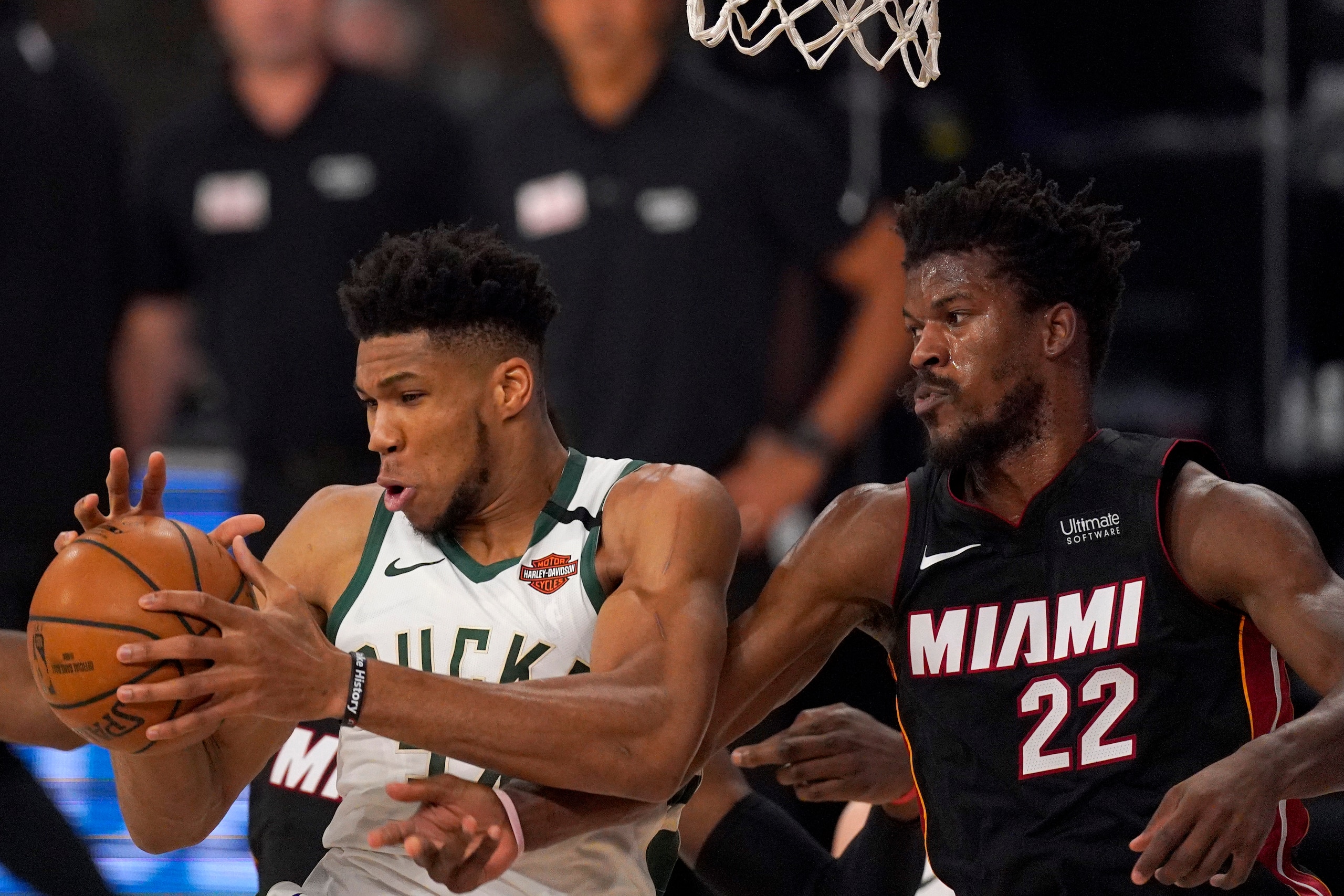
That was true even with the possibility of paying a lower income tax elsewhere. It's an undeniable victory for what's become such a polarizing CBA addendum in this era of player movement.
Just 13 days ago John Wall and Russell Westbrook were essentially swapped for each other because the Rockets and Wizards simply had no alternative. That trade has been celebrated by many as a fresh start for both All-Star point guards, but it also ushered in a referendum on the supermax contract structure that had Houston and Washington both struggling to find any value in those two players on those gargantuan deals.
Once upon a time, Washington and Oklahoma City all but needed to sign those extensions. Then Wall's Achilles injury made him a giant question mark. And Westbrook's dominant usage rate, plus his playing style, so dependent on athleticism, are both curious propositions as he dips deeper into his 30s. A five-year commitment can be necessary for a franchise at the time, but it can become damning in the blink of an eye.
For the Bucks, however, the supermax and its greater earnings played a critical factor in Antetokounmpo's commitment to Milwaukee, even against those two states that are notorious in free-agency discussions for pitching their lower income taxes.
Additionally, no party involved in these discussions truly wanted this question hanging over the Bucks' season, a campaign in which Milwaukee and Antetokounmpo fully expect to compete for the league crown. And if the Bucks' contending situation deteriorates, if Antetokounmpo does grow unhappy in Milwaukee, he will be eligible to be traded one year after the signed contract is submitted to the league office. That date may actually prove to be even earlier given the uncertainty of the league calendar.
Today, however, and for the foreseeable future, Antetokounmpo clearly showed he is as committed to the Bucks as team leadership is to building a contending unit around its MVP. While many involved in the discussions believed Antetokounmpo was going to enter free agency in 2021, his extension agreement solidifies the structure of this franchise and presents an obviously monumental step toward locking up Jrue Holiday, who can reach the open market after his season or next, long term.
Milwaukee, among many reasons, has the supermax provision to thank.

.jpg?w=2560 "Viral Dan Campbell Presser 💙")
.jpg?w=2560 "AD Trolls Bears WR on IG 😂")
.jpg?w=2560 "Cam Ward Says He's Not A Loser")
.jpg?w=2560 "Chargers Fall to 0-5 🤢")
.jpg?w=2560 "Report: Steelers WR to Miss 'Weeks'")