
Ranking the Greatest NBA Stars Who Stuck with 1 Franchise
In the modern NBA, player movement is more than merely commonplace. It's the operating principle behind the league's ebbs and flows.
Though flashy trades and free-agent signings make for an interesting league, the non-stop nature of it all can be overwhelming and cause us to pine for the days when superstars regularly spent a decade or more with one franchise, building a relationship with a fanbase and valiantly pushing for playoff success year after year.
Giannis Antetokounmpo's recent supermax extension with the Milwaukee Bucks only exacerbates this feeling as seeing a superstar choose stability and comfort over the excitement of a new location is almost nostalgic now.
Many of the greatest players of all time changed teams, but many also stayed put in one location throughout their careers, achieving the highest of highs in the process. We ranked these icons based on a combination of team success, individual production and accolades, as well as the incredibly nebulous factor of impact on their respective franchises.
Don't think too hard about the order, though. All these players will be celebrated by their franchises in perpetuity, and that's the point of this exercise, too.
Honorable Mentions
1 of 11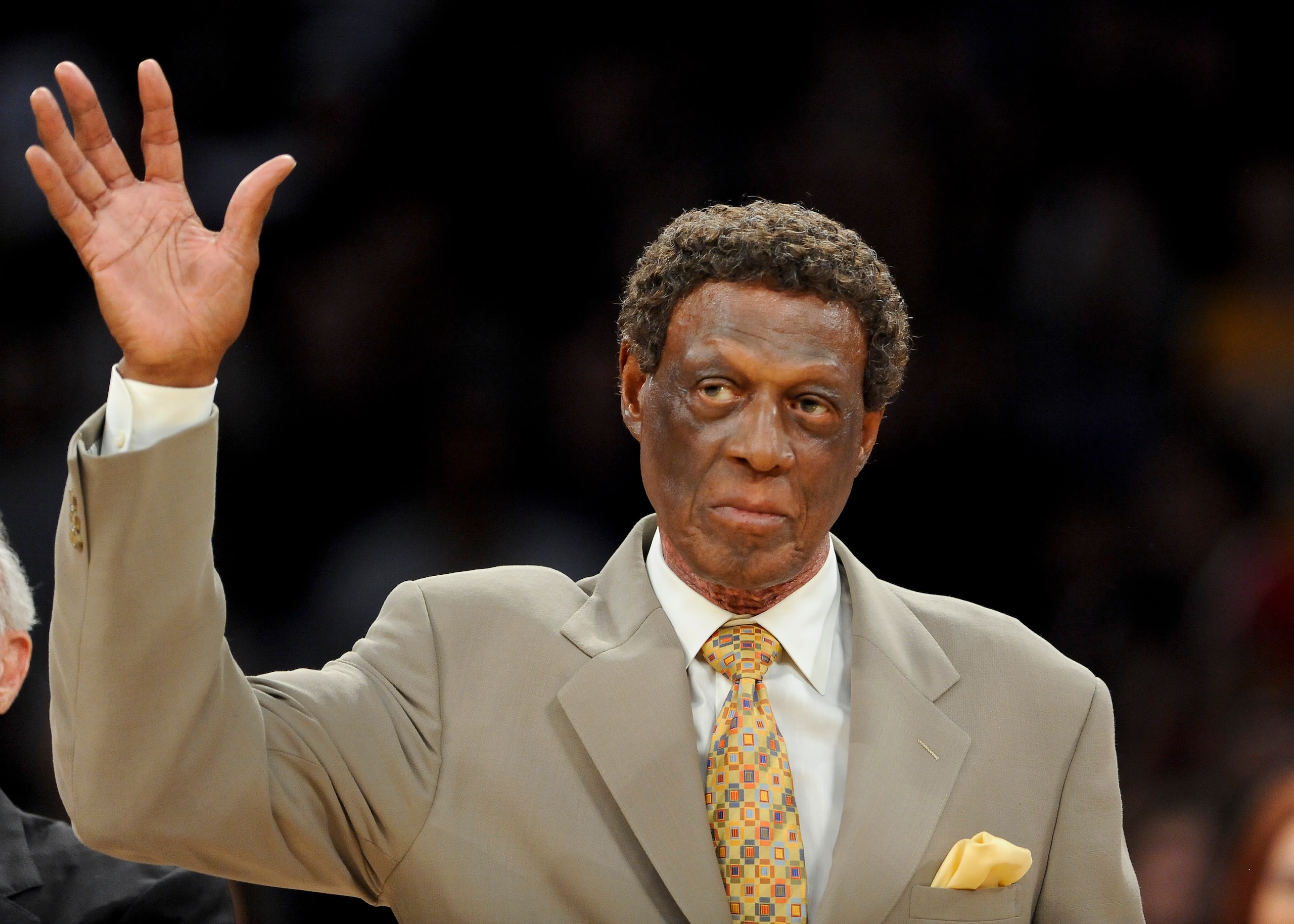
Elgin Baylor (Minneapolis/Los Angeles Lakers, 1958-72)
Often remembered as one of the greatest players in NBA history to never win a title, Elgin Baylor surely didn't come up ringless through a lack of trying.
As perhaps the sport's first aerially inclined superstar, he loomed over his less-athletic opponents on both ends of the floor, averaging a double-double in 11 of his 14 career seasons and making 11 All-Star games and 10 All-NBA teams as Jerry West's co-leading man. The duo led the Lakers to eight NBA Finals appearances in a 12-year span and remain one of the preeminent one-two punches in league history.
John Havlicek (Boston Celtics, 1962-78)
Though almost never the team's main star, John Havlicek was usually among the Celtics' most important players throughout his time with the franchise.
A point-forward and two-way wing long before such terms existed, Havlicek recorded 31 career triple-doubles, made eight All-Defensive teams and ranks 17th all-time in scoring. Oh, and he won eight NBA championships, too, claiming Finals MVP in 1974 after averaging 26.7 points, 7.7 rebounds and 4.7 assists in Boston's seven-game triumph over the Milwaukee Bucks.
He's not the only Celtic here. But as a criminally underrated player, Hondo deserves to be spotlighted whenever possible.
Reggie Miller (Indiana Pacers, 1987-2005)
Reggie Miller's reputation received a major boost this spring as Michael Jordan remarked in The Last Dance that his Pacers teams were the only Eastern Conference club he was remotely concerned about during the Bulls' dynasty.
Remembered now largely for his antics against the New York Knicks, it was nice to see Miller get proper shine from somebody who'd definitely know. The lanky 2-guard made five All-Star games and three All-NBA teams while leading the Pacers to six Eastern Conference Finals and one NBA Finals appearance. As a result of those heroics, he remains the greatest player in Pacers history.
Bob Pettit (Milwaukee/St. Louis Hawks, 1954-65)
One of the NBA's forgotten stars, Pettit was a force from the start, averaging 20.4 points and 13.8 rebounds as a rookie and only improving from there. A two-time league MVP and four-time All-Star Game MVP, the LSU alum led the Hawks to the 1958 NBA title and led the sport in career points when he retired.
As his only franchise has since moved to Atlanta and he hasn't played in the Association for over 50 years, Pettit's legacy feels a bit adrift in 2020. But make no mistake: He's the greatest Hawk ever.
David Robinson (San Antonio Spurs, 1989-2003)
After spending two years fulfilling his active-duty obligation with the Navy, David Robinson made his NBA debut in 1989 and quickly lifted the San Antonio Spurs to competence. The team improved its record by a staggering 35 wins in Robinson's rookie year, and the rest was history.
Aptly nicknamed the Admiral, Robinson appeared in 10 All-Star games, made 10 All-NBA Teams and eight All-Defensive teams and won MVP and Defensive Player of the Year Awards. He wouldn't win a title until Tim Duncan arrived in town, but he remains a towering figure in franchise history, both literally and symbolically.
10. John Stockton (Utah Jazz, 1984-2003)
2 of 11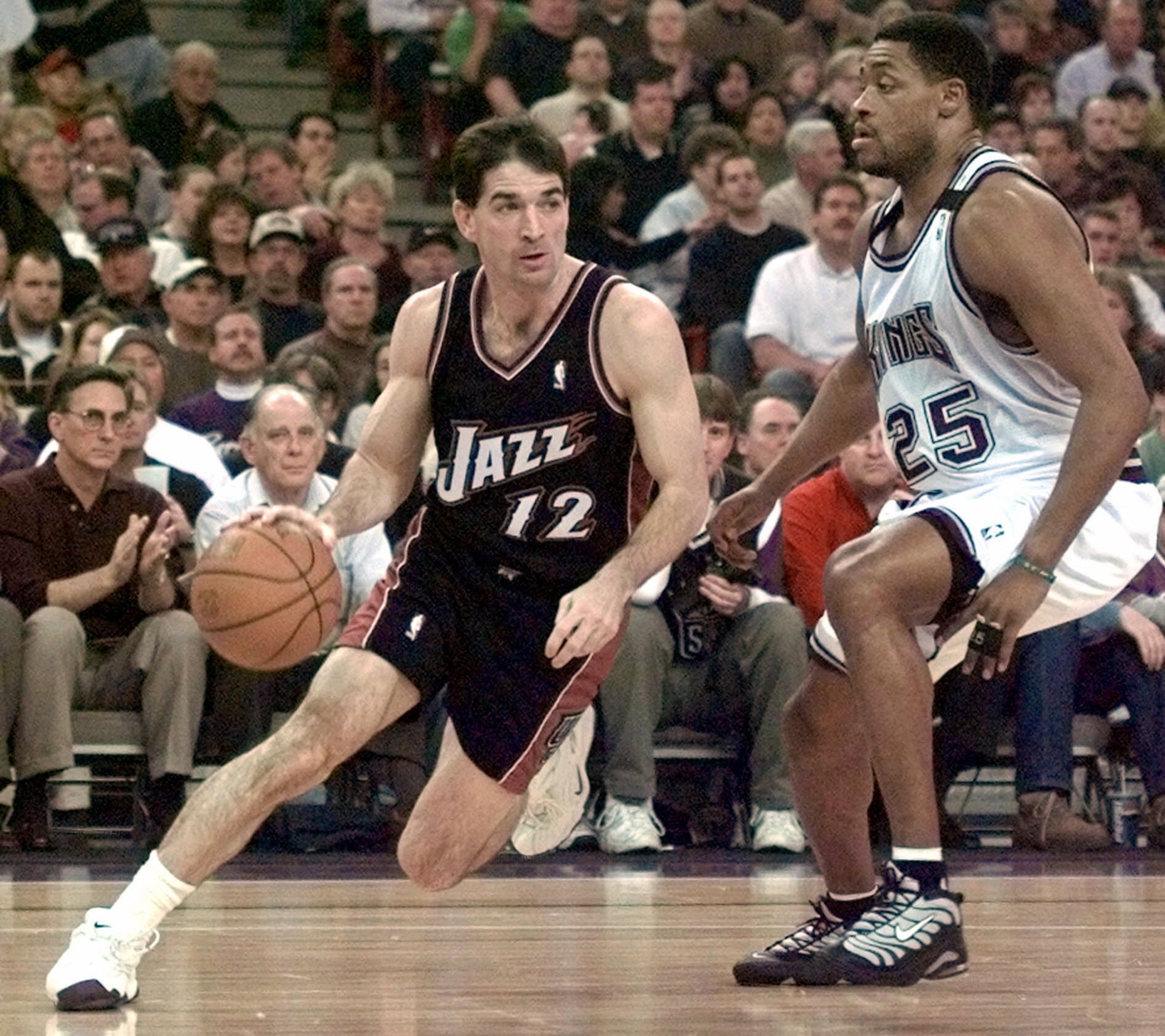
For a player who often went unrecognized in public during the 1992 Olympics, John Stockton sure compiled a remarkable resume with the Utah Jazz.
Though Karl Malone is a top-five scorer in league history and would deserve a mention of some kind if not for an ill-advised late-career stint with the Los Angeles Lakers, he wouldn't have been nearly as big a name if not for his longtime pick-and-roll partner.
Stockton used his physically unremarkable frame to his advantage year after year, constantly finding new ways to succeed with basketball's most basic play on offense and harassing the opponent's best scorers in ways flagrant enough for them to get upset yet subtle enough for referees to not take their complaints seriously.
As Stockton's game was never predicated on athleticism, he was able to age gracefully, leading the Jazz to playoff berths in each of his 19 seasons (not a typo) and remaining a vital contributor to the very last game. Utah's lack of a Larry O'Brien Trophy surely nags at him to this day, but he deserves kudos for arguably squeezing more talent out of his 6'1", 170-pound frame than any player in NBA history.
9. Isiah Thomas (Detroit Pistons, 1981-94)
3 of 11
Given that he was the team's lead playmaker and wasn't physically imposing, it's easy to divorce Isiah Thomas from the Bad Boy Detroit Pistons. But make no mistake. He was an integral part of the team's identity and owned it proudly.
Zeke could do everything the Pistons required of him as a point guard. He certainly wouldn't be on this list without two championships, 12 All-Star appearances and a spot in the Hall of Fame, but the reason he's canonized as the best-ever Piston is that he was also willing to get dirty whenever necessary.
Growing up as the youngest of nine children in Chicago, Thomas knew how to scrap for every last ounce of pride and translated those skills to the court, alienating fellow superstars in the process. He was the instigator in the Pistons' refusal to shake hands with the Boston Celtics and Chicago Bulls, and though he publicly walked back the latter decision in The Last Dance, you get the feeling he only did so to quiet controversy after all these years.
At his core, Thomas has always been a physical and competitive basketball player, and that's why Detroit will forever embrace him.
8. Dirk Nowitzki (Dallas Mavericks, 1998-2019)
4 of 11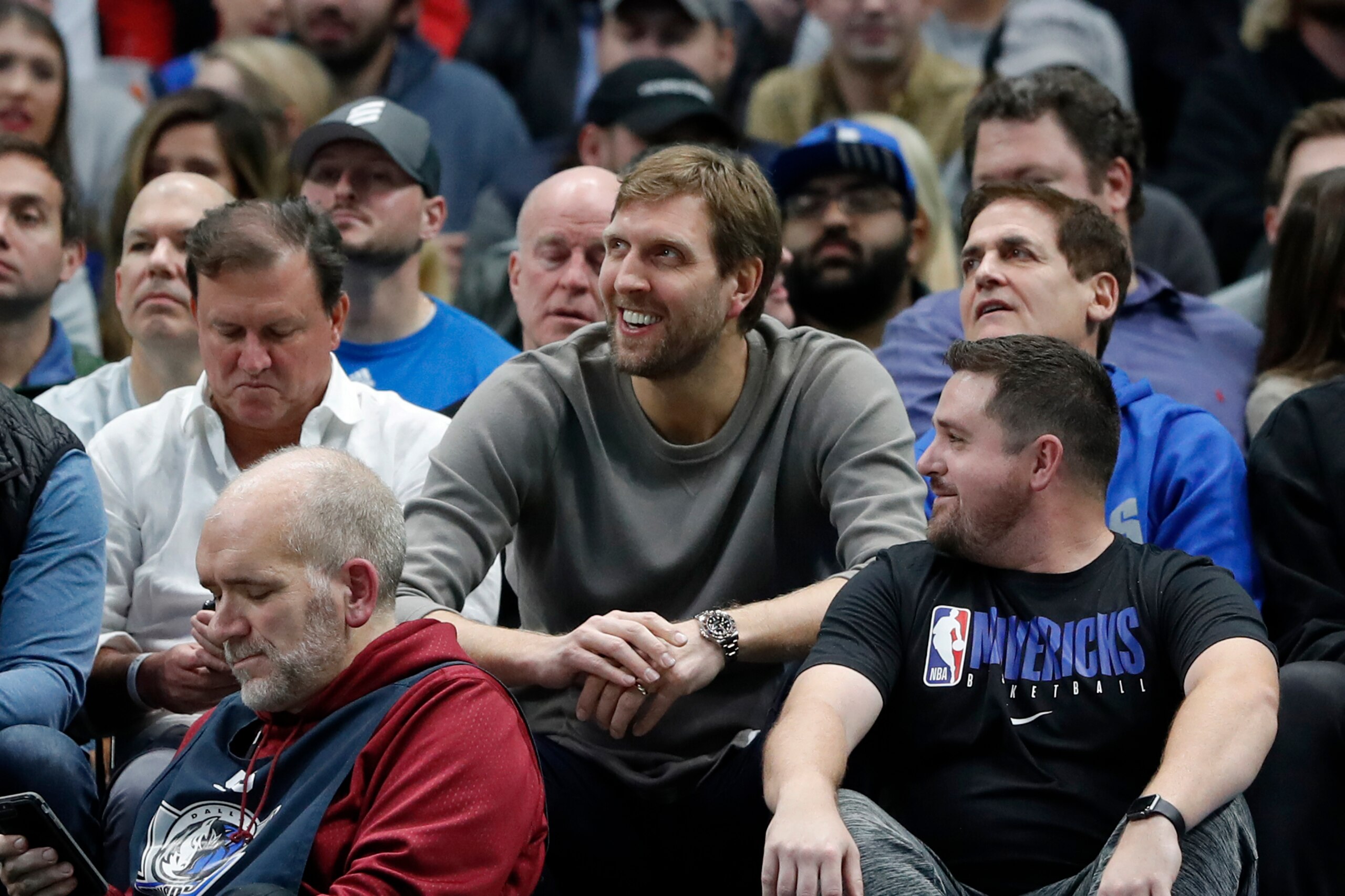
In a hilariously lopsided draft-night trade, the Dallas Mavericks dealt Robert Traylor to the Milwaukee Bucks for Pat Garrity and a 20-year-old German named Dirk Nowitzki. Traylor would go on to average 4.8 points per game for four teams over a seven-year career, while Nowitzki would merely become one of the greatest and most influential players in league history.
Despite the successes of players like Drazen Petrovic, European players were still widely regarded with skepticism when it came to the draft at this time, but Nowitzki's success threw all those preconceived expectations away. After a rocky rookie season and a productive but largely hollow sophomore campaign, the big man took control of the moribund Mavericks, leading them to 12 straight playoff appearances.
Dirk would go on to make 14 All-Star games and 12 All-NBA teams while winning one regular-season MVP and one Finals MVP. His success as a jump-shooting big man (38.0 percent from deep for his career) also helped pave the way for the ubiquitous three-point revolution.
This may seem a high ranking for Nowitzki at first glance, but he deserves it after reflection on his laundry list of accomplishments and innovations.
7. Jerry West (Los Angeles Lakers, 1960-74)
5 of 11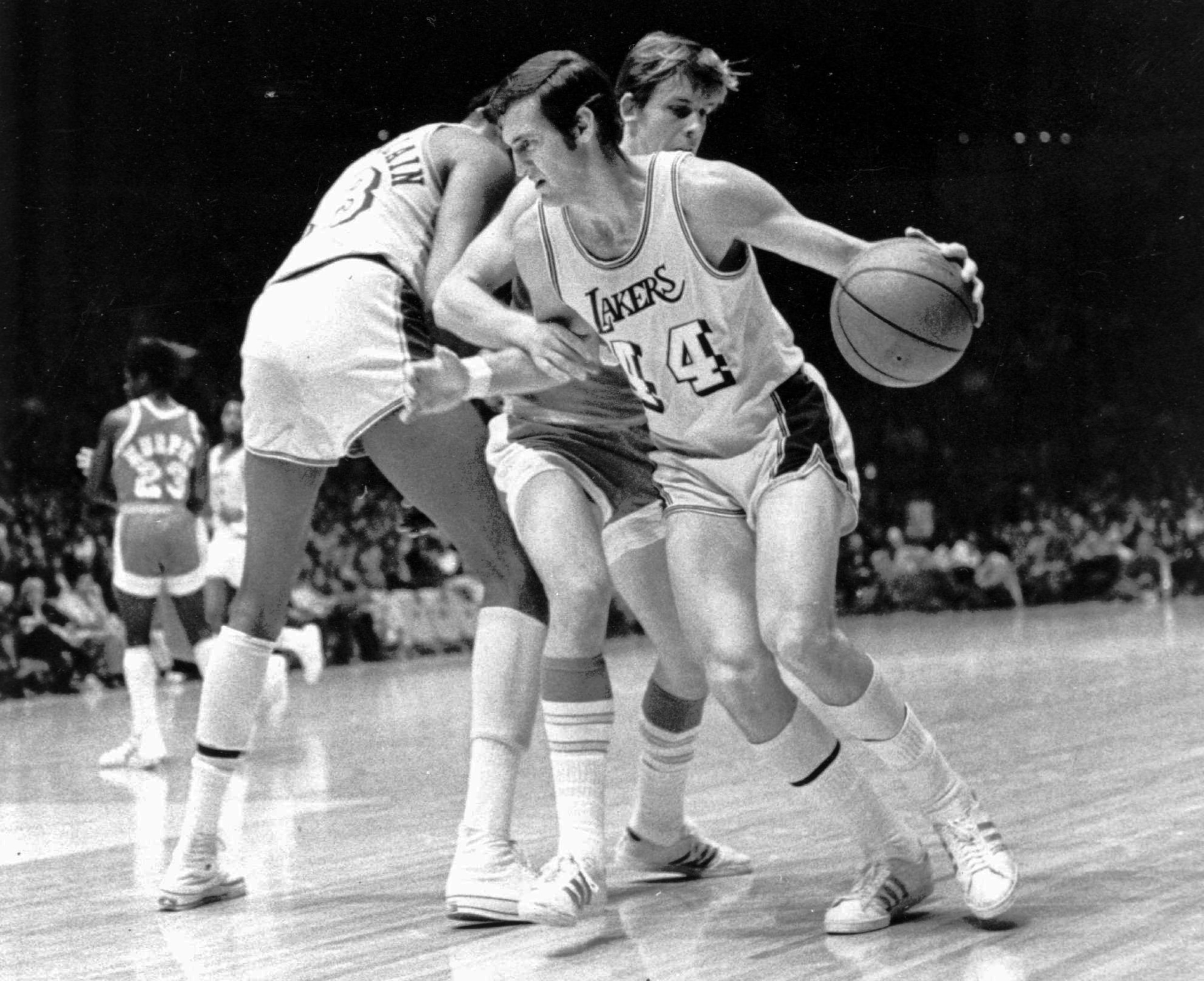
NBA fans today know Jerry West chiefly as a sort of front office Svengali, orchestrating numerous league-changing moves for four separate franchises over the past 40 years. But in celebrating West's team-building savvy, we run the risk of minimizing his on-court career, which was even more spectacular.
After a dominant college career at West Virginia, West was picked second overall by the Los Angeles Lakers and immediately continued to run roughshod over opponents. Under the Logo's stewardship, Los Angeles made nine NBA Finals appearances, winning one in 1972.
West continues to reckon with his numerous postseason failures—even reportedly using them as recruiting tools, in some cases—but clearly did everything he could, even becoming the only player to win Finals MVP for a losing team in 1969. As for his individual accomplishments, he measures up well, making the All-Star Game in all 14 seasons and earning appearances on five All-Defensive Teams while leading the league in scoring and assists one time apiece.
The fact that West is not the best Laker is much more a statement about the franchise's consistent excellence than any of his potential shortcomings. He remains an inner-circle Hall of Famer and one of the best guards ever.
6. Stephen Curry (Golden State Warriors, 2009-Present)
6 of 11
It's possible Stephen Curry will leave the Golden State Warriors. However, he's 32 and seems content, so we feel comfortable placing him on this list.
Curry's accolades and influence on the modern NBA are known by even the sport's most casual fans, so we don't need to repeat them. But it is remarkable that he has essentially become this generation's version of Tim Duncan.
Though superstars didn't move as freely between rosters in the early 2000s as they do now, the league's best players were just as outspoken about their discomfort. Still, Duncan, much like Curry today, remained steadfast in his loyalty to the San Antonio Spurs.
Due to a variety of factors, the pressure on superstars to find external and internal validation has never been higher, which is why Curry's tenure with the Warriors is so easy to love. From trying to co-exist with Monta Ellis to dealing with repeated ankle injuries to welcoming Kevin Durant with open arms, he has faced plenty of obstacles in his career yet has been a model NBA superstar the whole way.
He might be the last of a dying breed, so let's cherish him while we still can.
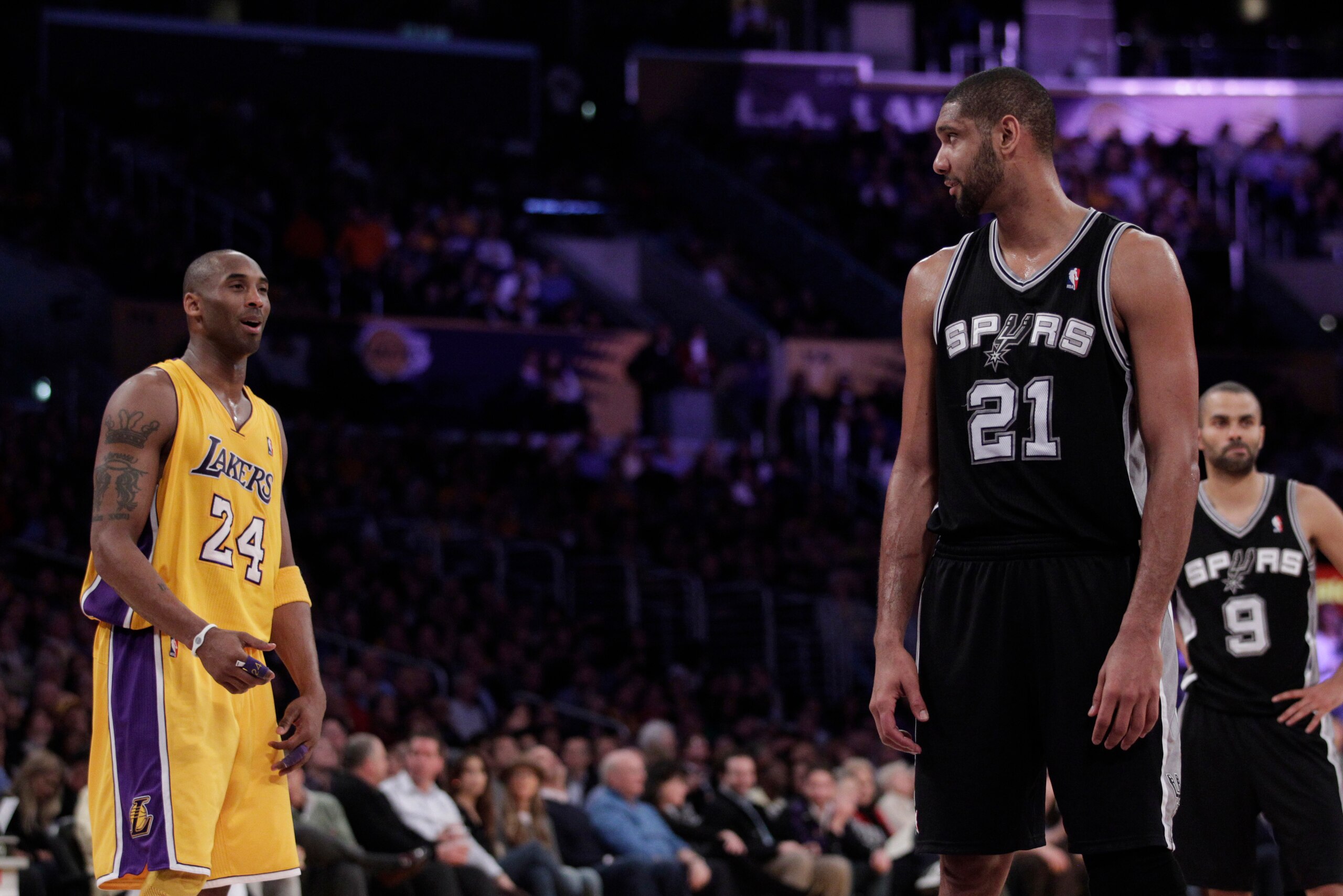
5. Kobe Bryant (Los Angeles Lakers, 1996-2016)
7 of 11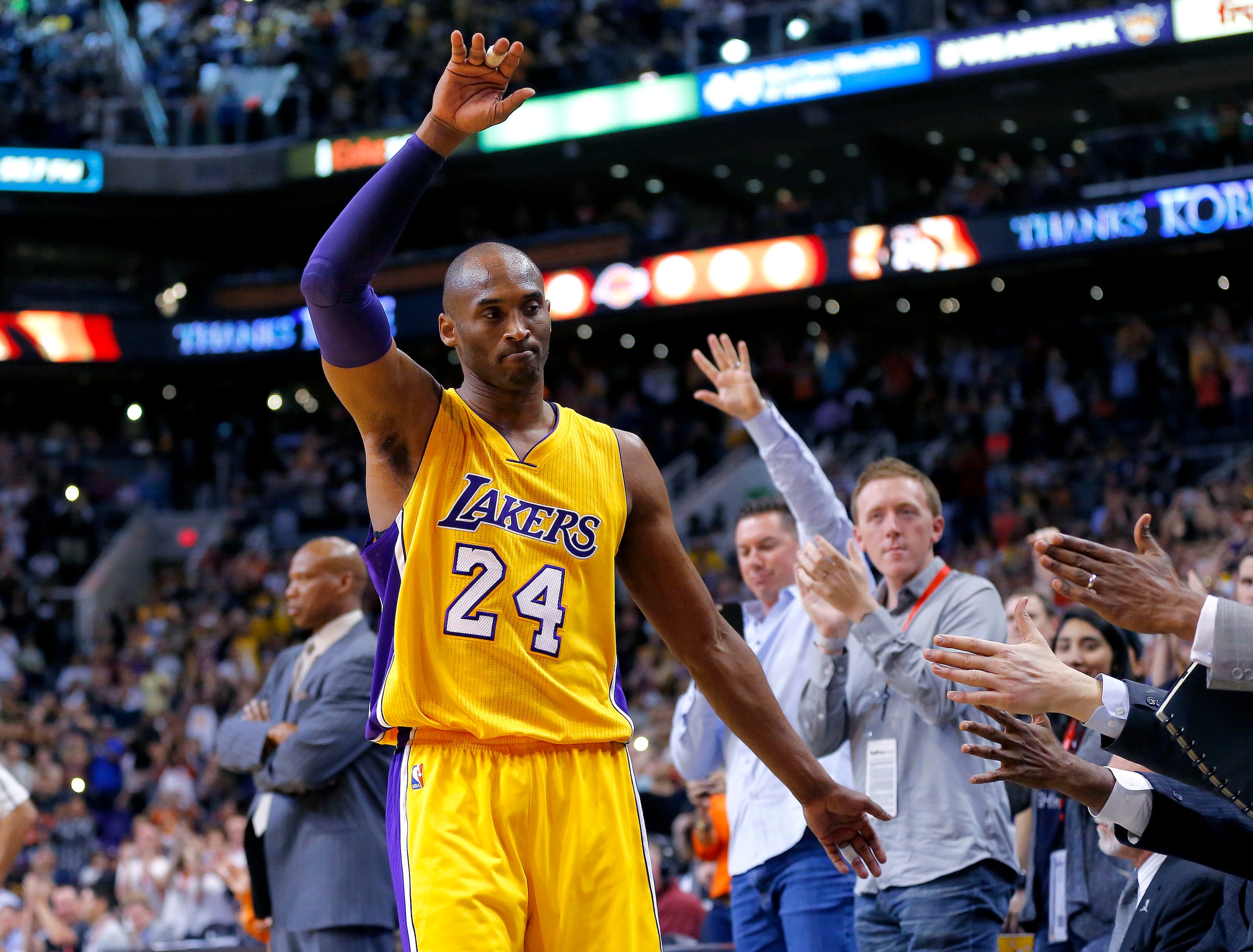
Speaking of Jerry West, he's the one who traded for Kobe Bryant, and we're glad he did. Kobe would have succeeded anywhere, but he's now so inextricably linked to the greater Los Angeles area that imagining him anywhere else is impossible.
Kobe knew he was destined for greatness, so it wasn't a surprise when he took crunch-time playoff shots as a rookie, earning kudos from Shaquille O'Neal in the process. It was only a matter of time before his skills would equal his insatiable work ethic, and when they did, it spelled doom for the league.
Almost no NBA player has ever had as long a prime as Kobe's. He made 18 All-Star games, appeared on 15 All-NBA Teams, led the league in scoring twice and won a combined three regular-season and Finals MVPs. One of the Mamba's most impressive games was his last one when he dropped 60 points.
Though he was criticized by some for being an inconsistent performer on the biggest stages, Kobe's five championships and extended reign of dominance suggest the opposite. His steadiness over nearly two decades remains an underrated aspect of his greatness, one that makes him an icon to basketball fans everywhere.
4. Tim Duncan (San Antonio Spurs, 1998-2016)
8 of 11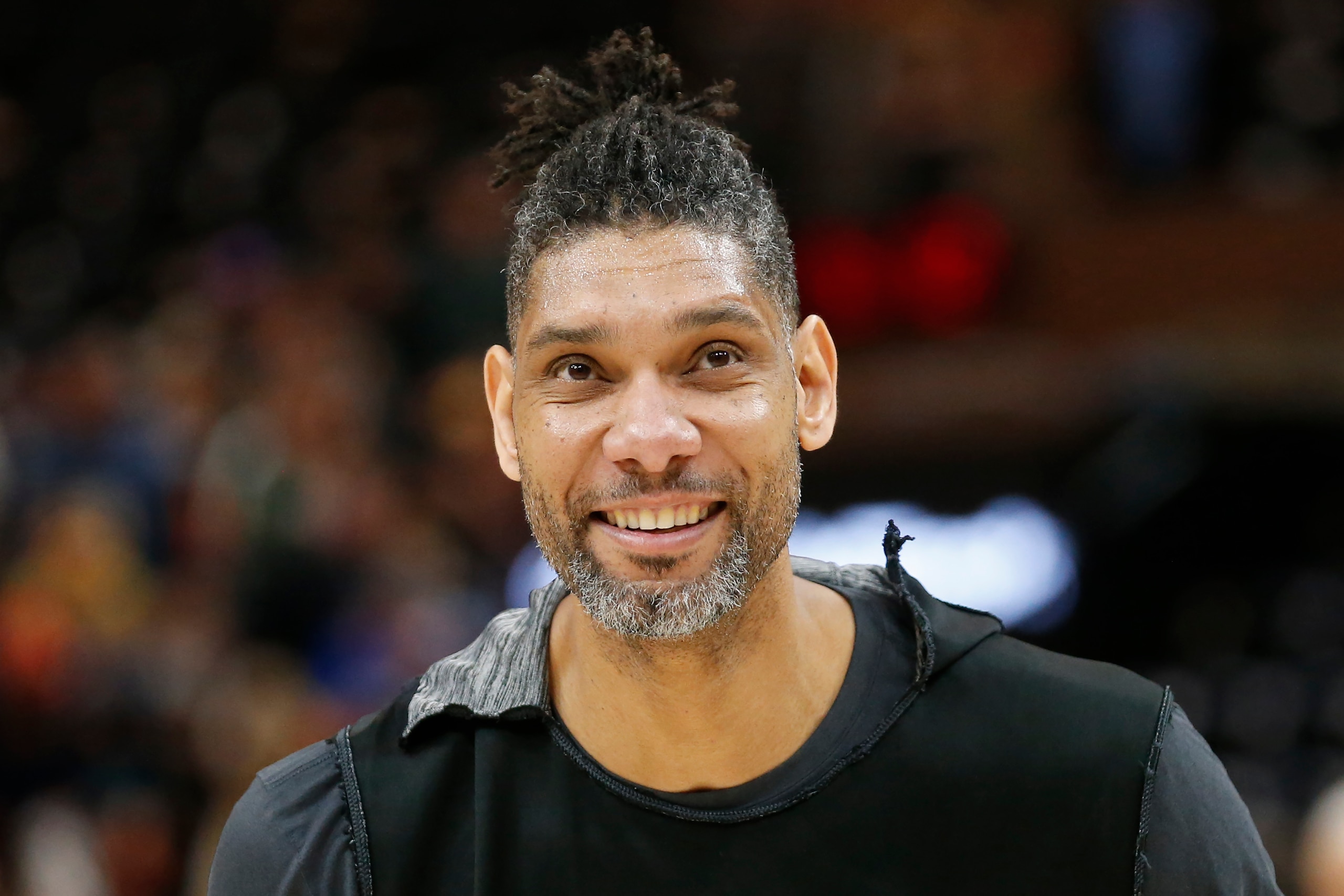
Nicknamed the Big Fundamental, Tim Duncan was a famously nonchalant superstar, rarely making highlight reels and almost never becoming the subject of scrutiny. But that made him an easy player to take for granted, and the reality is that if the big man's path to success was so straightforward, then he'd have been replicated by now.
Gregg Popovich might have succeeded anywhere, but his blossoming into one of the greatest head coaches in NBA history was made infinitely easier by Duncan's presence. The big man had one of the smallest egos you'll ever see for a player of his caliber, genuinely wanting to win at any cost and refusing to take shortcuts along the way.
That attitude made Duncan an overwhelmingly dominant two-way force during his prime and provided a seamless transition into the post-prime stage of his career, in which he served chiefly as an elder statesman while Kawhi Leonard and LaMarcus Aldridge took center stage.
Duncan wasn't an innovator of the sport, and he wasn't a cultural flashpoint, either. He just played team basketball as well as humanly possible, and the end result suggests that more superstars might want to try emulating him.
3. Larry Bird (Boston Celtics, 1980-92)
9 of 11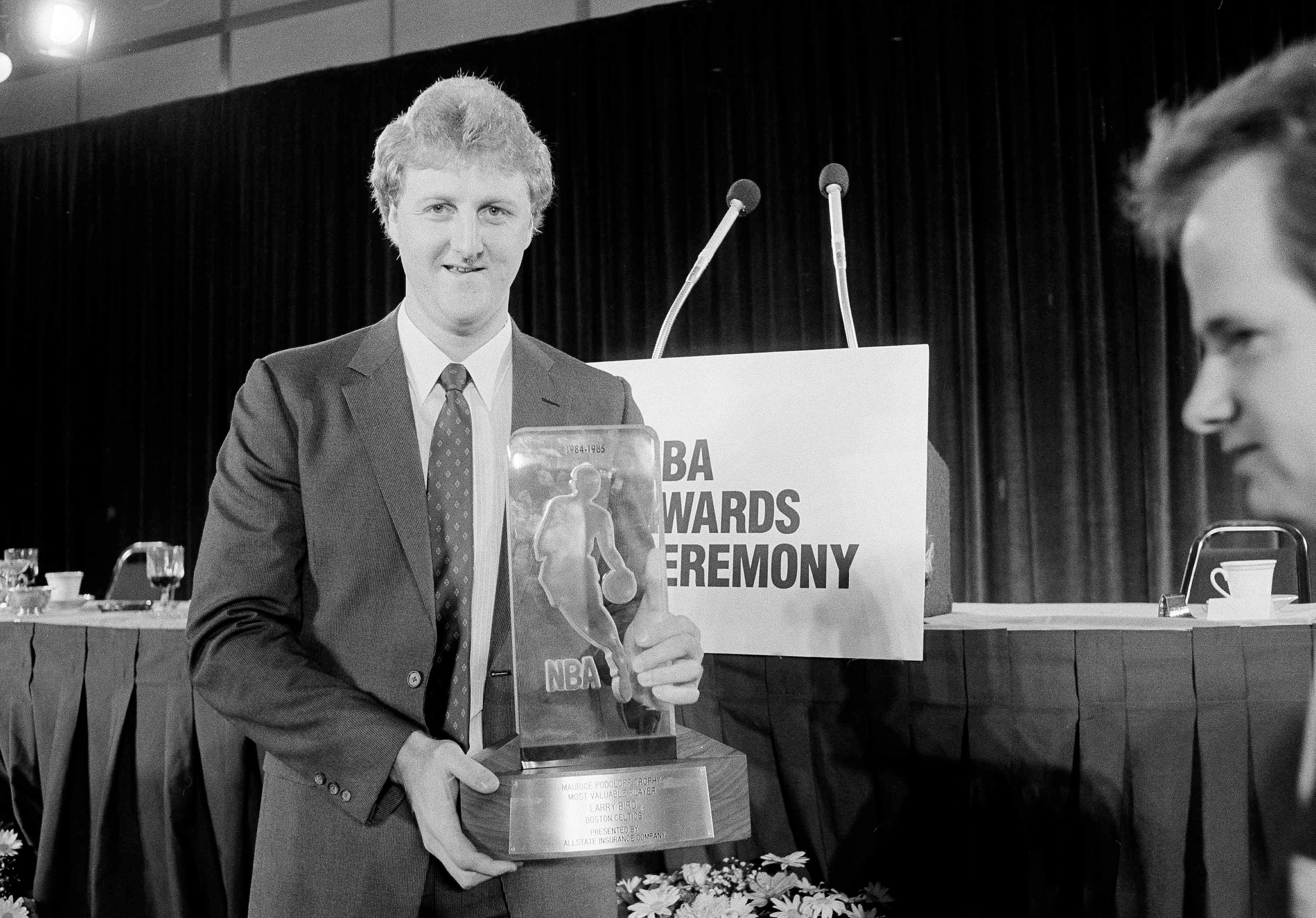
The Boston Celtics loved Larry Bird so much that they let him play his final year at Indiana State before joining the NBA. Spoiler alert: The wait was worth it.
Bird transformed the Celtics immediately. As a rookie, he helped Boston improve its record by 32 wins and made the All-Star Team, and he only improved from there. He went on to win three titles, two Finals MVP awards and three regular-season MVP awards.
We'll get to Magic Johnson, but Bird's rivalry with his West Coast counterpart was the best thing the NBA could have ever asked for.
They were not just evenly matched on the court; they were diametrically opposed counterparts in every way and fully embodied their respective cities. Where Magic and his megawatt smile captained a Los Angeles Lakers team that became as well-known for its flair as its substance, Bird led a blue-collar Celtics team that, while often flashy in its own right, usually played a more traditional style.
While Bill Russell may have been (slightly) more consequential on the court, Bird was the embodiment of a Celtics superstar.
2. Bill Russell (Boston Celtics, 1956-69)
10 of 11
Bill Russell's legacy is about to enter a strange place. He has very few available highlights for fans to watch, and he hasn't taken the court in over 50 years. So, where does this leave the big man?
Well, he appears to be the best defender in NBA history.
The man averaged 22.5 rebounds per game for his career, would likely have been among the all-time leaders in blocks if they were tracked during his career and pioneered the block as a play with multiple possibilities. While rejecting a shot, he'd often send it back toward the Boston Celtics' basket to spark a fast-break opportunity.
In addition, Russell's 11 championships speak volumes, as does the naming of the Bill Russell Finals MVP Trophy.
Despite probably being the best player in the history of one of the NBA's most storied franchises, Russell has a complicated relationship with the Celtics. He was famously cranky with the media, rarely attends games and only got his number retired after repeated insistence from legendary head coach Red Auerbach.
But it seems time has begun to heal the wounds between Russell and his basketball home. Hopefully, modern fans can continue to learn more from and about him for as long as he's still here.
1. Magic Johnson (Los Angeles Lakers, 1979-96)
11 of 11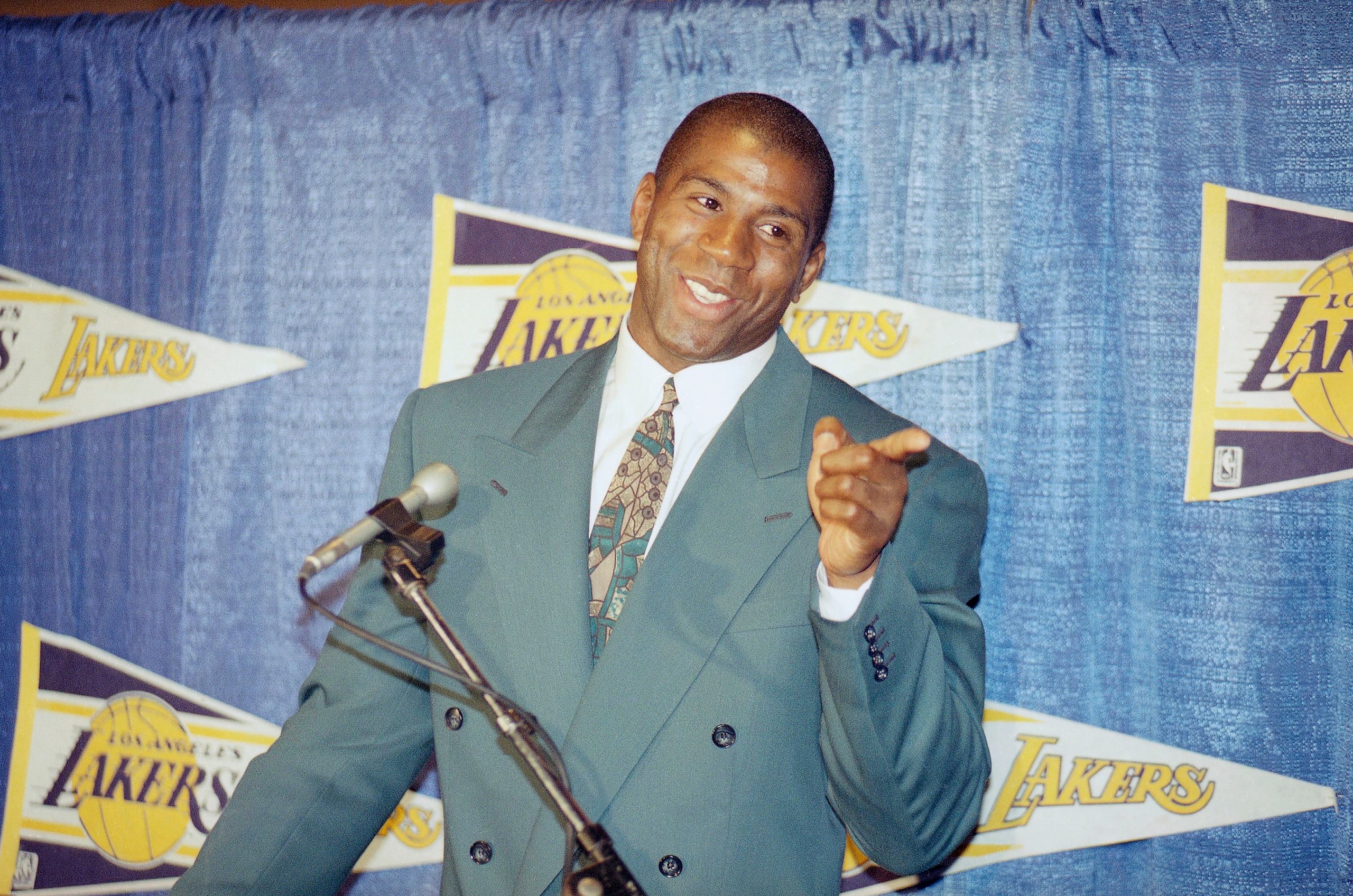
Though his tenure as a Los Angeles Lakers executive was certainly rocky, Magic Johnson's on-court accomplishments remain superlative.
It's easy to forget, but the Lakers only earned the right to select Magic because they had acquired the then-New Orleans Jazz's first-round pick and proceeded to win a coin flip for the top selection in the 1979 NBA draft. That's as good an argument for basketball gods existing as anything, because there's never been a better player-team fit than Magic and the Lakers.
Though the Lakers would have been competitive in the 1980s without him—they still rostered Kareem Abdul-Jabbar, after all—the big point guard's versatility, preternatural feel for the game and run-and-gun style vaulted the franchise back to greatness for the entirety of the decade. He led Los Angeles to five titles and nine total Finals appearances while winning a combined six regular-season and Finals MVP awards (including the latter as a 20-year-old rookie).
We haven't even scratched the surface of Magic's excellence here. Books have been written about how his personality meshed perfectly with 1980s Los Angeles and how his rivalry with Larry Bird almost literally saved the NBA.
But this'll do for now.

.jpg?w=2560 "Report reveals list of next NFL international locations")
.jpg?w=2560 "Breaking News")
.jpg?w=2560 "McCarthy 'Not Surprised' to Be QB1")