
Ranking the Greatest MLB Players Who Never Won a World Series in the Modern Era
If a player is talented and durable enough, chances are he'll win a World Series before his career in Major League Baseball is over.
Unfortunately, however, there are numerous exceptions to this rule even just within the league's more recent history.
In attempting to rank the greatest of the ringless greats, we set our sights on players who starred after the introduction of free agency in 1976. That event did, after all, begin an era in which both players and teams have greater flexibility to pursue World Series glory.
We also disregarded active players on the grounds that they technically still have a shot at winning a ring. That means Mike Trout and especially Clayton Kershaw, who's in the World Series with the Los Angeles Dodgers right now.
Let's begin with some honorable mentions and then move on to the top 10, who were ranked according to their numbers, accolades and the overall legacies they left behind.
Honorable Mentions
1 of 11
A Few Hitters
- Andre Dawson (1976-1996)*
- Carlton Fisk (1969-1993)*
- Vladimir Guerrero (1996-2011)*
- Todd Helton (1997-2013)
- Don Mattingly (1982-1995)
- Edgar Martinez (1987-2004)*
- Dale Murphy (1976-1993)
- Rafael Palmeiro (1986-2005)
- Ryne Sandberg (1981-1997)*
- Sammy Sosa (1989-2007)
- Ichiro Suzuki (2001-2019)+
A Few Pitchers
- Chuck Finley (1986-2002)
- Trevor Hoffman (1993-2010)*
- Mike Mussina (1991-2008)*
- Roy Oswalt (2001-2013)
- Rick Reuschel (1972-1991)
- Johan Santana (2000-2012)
- Lee Smith (1980-1997)*
- Dave Stieb (1979-1998)
*Hall of Fame
+Won the Japan Series in 1996 and the World Baseball Classic in 2006 and 2009
10. Adrian Beltre (1998-2018)
2 of 11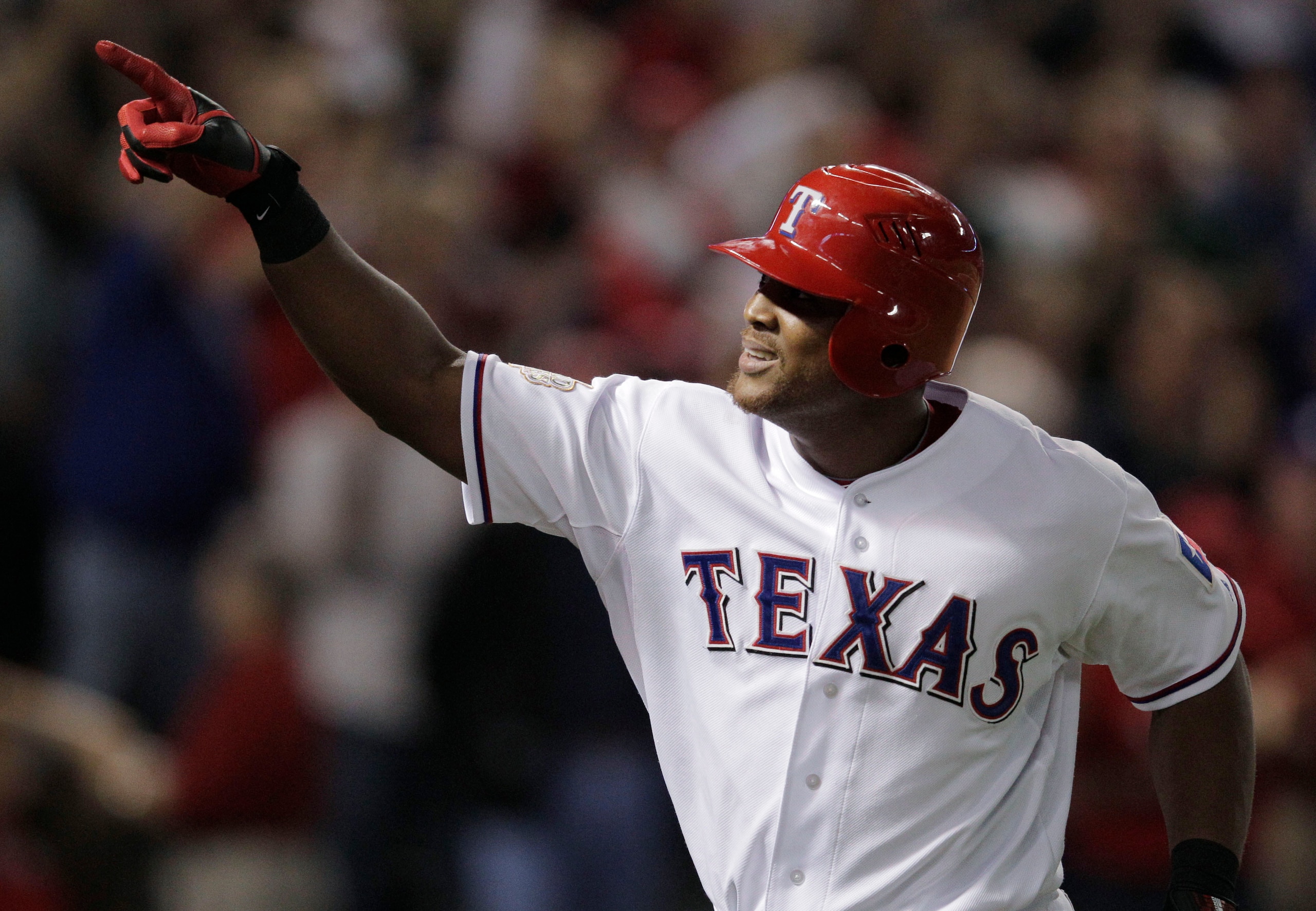
It wasn't until later in Adrian Beltre's career that everyone seemed to realize, "Wait a second, this guy's awesome!"
His endlessly delightful antics as a member of the Texas Rangers between 2011 and 2018 had something to do with it. But so did his performance. It was in those years that he collected three of his five Gold Gloves and three of his four All-Star nods, not to mention his 3,000th career hit.
Out of his 477 total home runs, Beltre hit more as a third baseman (441) than anyone except Hall of Famers Mike Schmidt and Eddie Mathews. Because he also ranks third among all-time third basemen with 93.6 rWAR, Beltre should absolutely be elected into the Hall of Fame when his time comes in 2024.
Yet Beltre was generally just OK in the five trips he made to the postseason with the Dodgers and Rangers. In 28 total games, he hit only five home runs with a modest .747 OPS.
Let's not forget, though, that Beltre delivered a clutch go-ahead home run in Game 6 of the 2011 World Series. Had things played out differently in that one, his postseason track record would look a lot different.
9. Robin Yount (1974-1993)
3 of 11
Though he started his career two years before free agency came to baseball, it really wasn't until 1980 that Robin Yount became Robin Yount.
That season marked the beginning of a 10-year run of excellence with the Milwaukee Brewers in which Yount won two American League MVPs with overall marks of a 135 OPS+, 174 home runs and 148 stolen bases. More than anything, it was this run that sealed his election to the Hall of Fame in 1999.
Yount's only chances at postseason glory came in 1981 and 1982. He flopped in the first one, and the Brewers advanced to the World Series in spite of his .679 OPS in the National League Championship Series the following year.
However, Yount more than made up for it in the '82 Fall Classic. He went 11-for-21 with three doubles and a home run through the first five games, thereby helping the Brewers take a 3-2 over the St. Louis Cardinals.
Though Yount cooled in Games 6 and 7, it's not his fault the Brewers lost the latter. They took a two-run lead into the bottom of the sixth inning, only to allow five unanswered runs to seal a crushing loss.

8. Roy Halladay (1998-2013)
4 of 11
The late Roy Halladay was one of the greatest pitchers of his or any other era.
Between 1998 and 2013, the former Toronto Blue Jays and Philadelphia Phillies ace ranked second to fellow Hall of Famer Randy Johnson with 65.4 rWAR. Halladay peaked between 2002 and 2011, in which he was an eight-time All-Star and two-time Cy Young Award winner.
Alas, the Blue Jays teams that Doc served on between '02 and '09 were a perennial also-ran in the American League East. It was only after he went to Philadelphia in 2009 that he finally got a chance to prove himself on a real contender.
And did he ever. He won his second Cy Young Award in 2010 and further bolstered his legend with a perfect game in May and the second playoff no-hitter in history in his postseason debut. In 2011, he basically did it all over again en route to finishing second in the Cy Young voting.
But despite Halladay's 2.37 ERA in five postseason outings between '10 and '11, the Phillies fell short of the World Series both years. And that was pretty much that, as the team promptly collapsed, and shoulder woes forced Doc into retirement in 2013.
7. Larry Walker (1989-2005)
5 of 11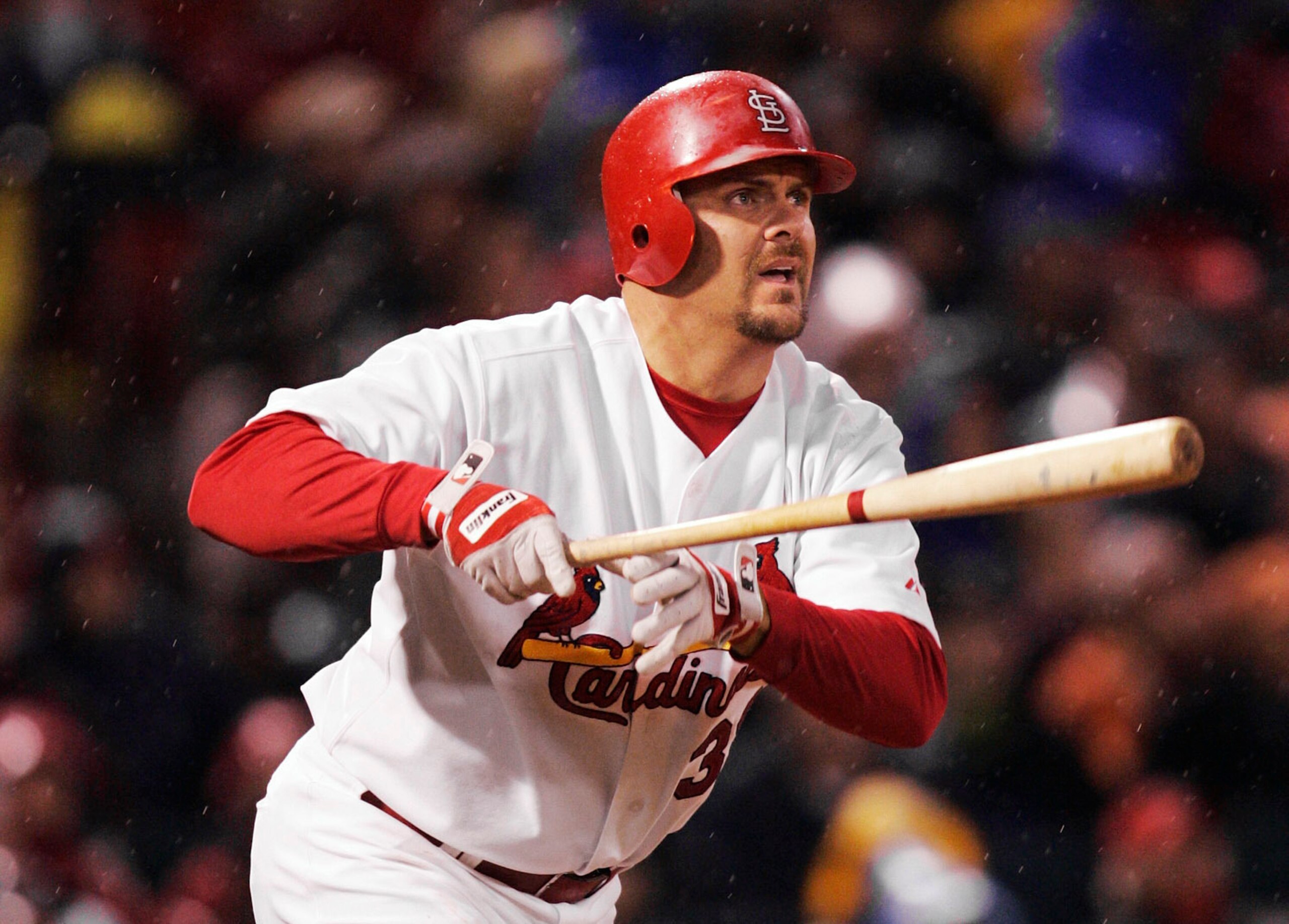
Though he was elected into the Hall of Fame in 2020, Larry Walker frankly never should have been made to wait for the honor until his 10th and final year on the ballot.
The right fielder was a huge star in his heyday, collecting a National League MVP award in 1997 and otherwise earning five All-Star selections, three batting titles and seven Gold Glove awards.
It helped that Walker got to hit at Coors Field half the time in his nine-plus seasons with the Colorado Rockies. Despite that, a complete list of hitters with a .300/.400/.500 batting line and at least a 140 OPS+ includes only Walker and 21 other players.
Trouble is, Walker's time with the Rockies yielded only one trip to the postseason. And it was a forgettable one for him, as he went just 3-for-14 in a loss to Atlanta in the National League Division Series in 1995.
It's no fault of Walker's, though, that the St. Louis Cardinals didn't get it done in the playoffs after they acquired him midway through 2004. He had a 1.086 OPS and six homers (including two in the World Series) in the postseason that year.
6. Mike Piazza (1992-2007)
6 of 11
The Los Angeles Dodgers drafted Mike Piazza with the 1,390th overall pick in 1988, essentially as a favor to then-manager Tommy Lasorda, who was an old friend of Piazza's father.
Yet Piazza was the National League Rookie of the Year by 1993. By the time he ended his career, he had collected 12 All-Star selections and hit a record number of home runs (396) by a catcher. Per his 59.6 rWAR, he's one of the five best players to ever man the position.
Piazza nonetheless stuck on the Hall of Fame ballot for four years before he was finally elected in 2016. For some voters, suspicions about performance-enhancing drugs played a role. For others, the bigger problem might have been Piazza's lack of a ring.
He had his chances to win one, going to the playoffs five times with the Dodgers, New York Mets and San Diego Padres. Yet his bat tended to cool in October, wherein he posted a .759 OPS in 32 career games.
Still, there's no blaming Piazza for how the Mets fell short in 2000. In 10 games between the National League Championship Series and the World Series, he hit four homers with a 1.178 OPS.
5. Jim Thome (1991-2012)
7 of 11
Simply put, Jim Thome is one of the great power hitters that baseball has ever known.
The 612 home runs that he hit throughout his career place eighth on the all-time list, and there was rarely a season in which he didn't rack 'em up in bunches. He had as many seasons (14) with at least 25 homers as the great Willie Mays.
Yet when Thome was elected into Cooperstown in 2018, he spoke openly about his one regret: "A day like today is special, but I can only envision what it would have been like to win a World Series."
Thome partially has himself to blame for his goose egg in the championship column. He made 10 different trips to the playoffs throughout his career and got as far as the Fall Classic twice with Cleveland in 1995 and 1997. But on the whole, he managed only a .760 OPS in October.
It's nevertheless to Thome's credit that he boasts as many postseason homers (17) as noted October great David Ortiz. He also did his part in the '97 World Series, in which he homered twice and authored a .965 OPS.
4. Jeff Bagwell (1991-2005) and Craig Biggio (1988-2007)
8 of 11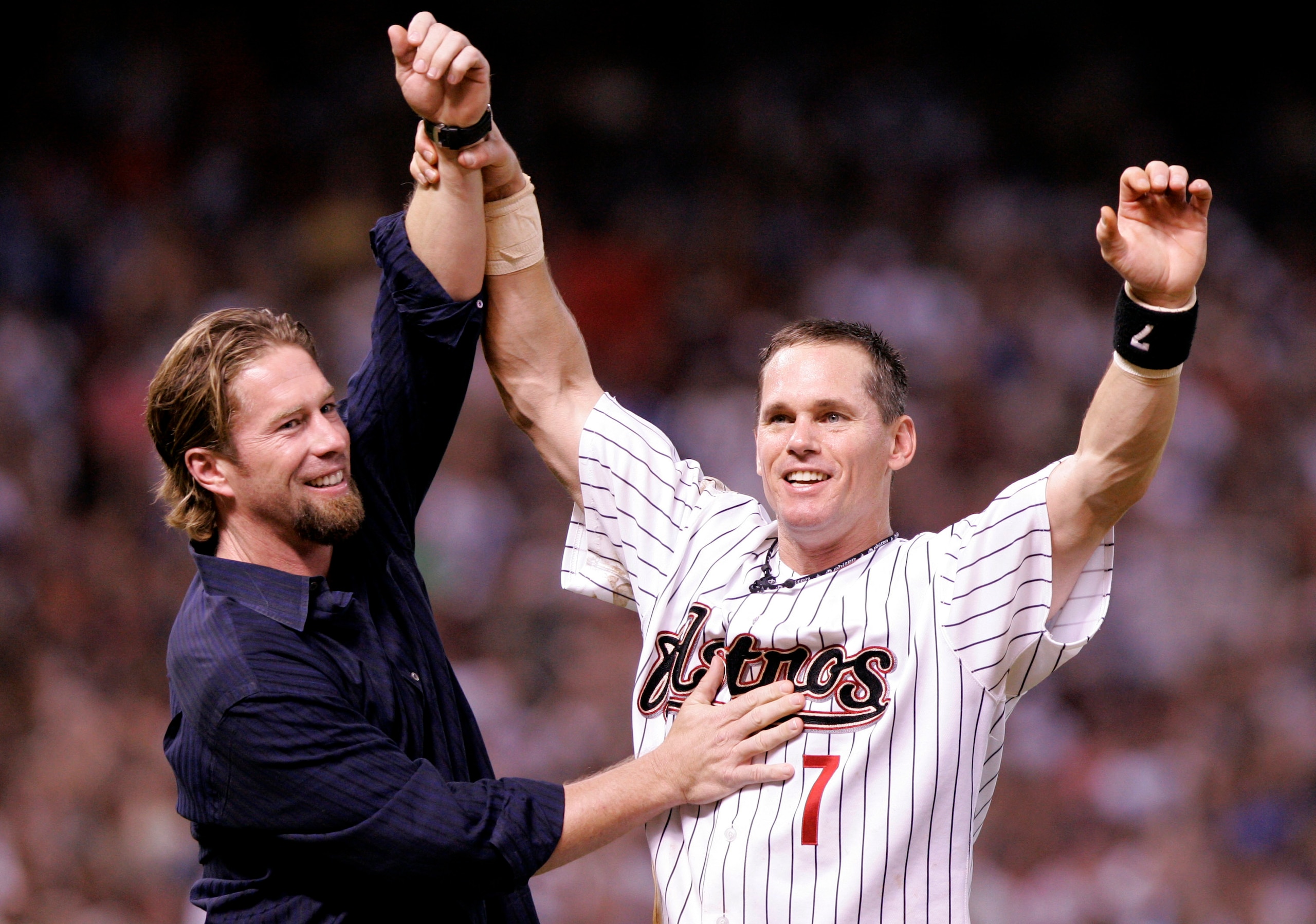
Why make Jeff Bagwell and Craig Biggio a two-for-one special? Well, why not?
They're both Hall of Famers who were synonymous with the success of the Houston Astros in the 1990s and early 2000s. Between 1994 and 2005, specifically, the Astros were the National League's second-winningest team while their two big stars were the NL's second- and ninth-best players by rWAR.
At Bagwell's peak between '94 and '03, an average season for the slugging first baseman included a 156 OPS+ and 37 home runs. Biggio began his peak a little earlier in '91, mustering a 129 OPS+, 15 homers and 33 stolen bases per year as a wily leadoff man between then and '99.
Unfortunately, neither Bagwell nor Biggio did much in their six trips to the playoffs between 1997 and 2005. Both players finished their postseason careers with OPSes in the .600s.
Even more tragically, both players were past their respective primes by the time they finally made it to the World Series in '05. Bagwell, who was on the verge of retirement, managed just one hit in eight at-bats. Biggio, who was in his third-to-last season, went 4-for-18. The Astros were swept by the Chicago White Sox.
3. Tony Gwynn (1982-2001)
9 of 11
The late Tony Gwynn had such a long and marvelous career with the San Diego Padres that he was nicknamed accordingly: Mr. Padre.
Though Gwynn was a five-time Gold Glover in right field, he wrote his legend primarily with his bat. He was a .338 career hitter who won eight batting titles. He even made a run at .400 in the strike-shorted 1994 season, finishing at .394 after 110 games.
Granted, Gwynn hit only 135 home runs in the process, or exactly as many as Mark McGwire hit in two seasons in 1998 and 1999. But he also struck out only 434 times, with a high of only 40 strikeouts in 1988. Other hitters have achieved the latter number within just a single month a staggering 113 times.
Though Gwynn played in only three postseasons with the Padres, two of those lasted until the World Series. He went just 5-for-19 in the first in 1984 but rebounded with an 8-for-16 effort in the 1998 Fall Classic.
Regrettably, the Padres were no match for the Detroit Tigers in '84 and even less of a match for the New York Yankees in '98. San Diego lost each World Series in five and four games, respectively.
2. Ken Griffey Jr. (1989-2010)
10 of 11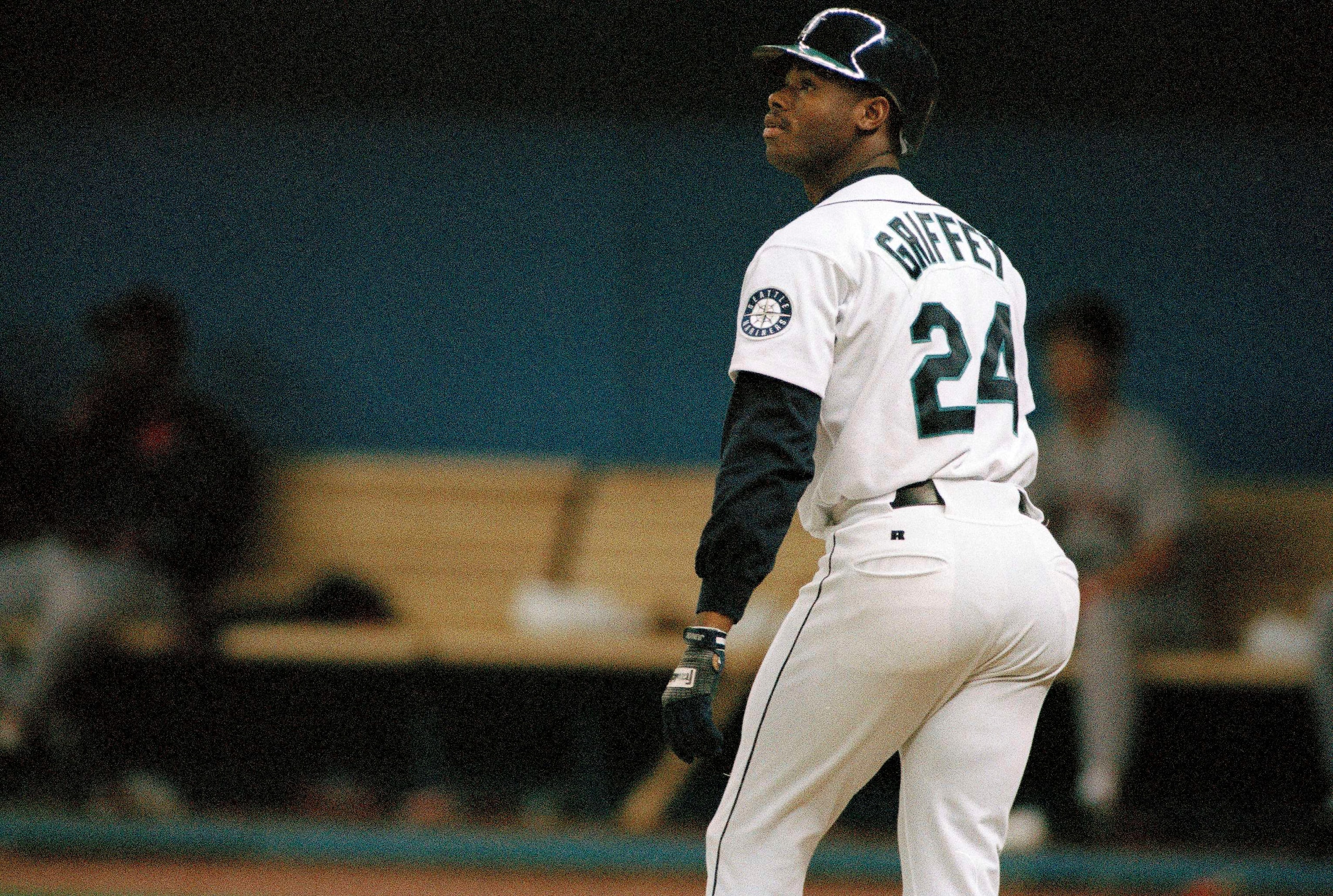
When Ken Griffey Jr. collected all but three of 440 votes for his first year on the Hall of Fame ballot in 2016, the only surprise was that he missed on even that many.
Before eventually ending his career with 630 home runs—seventh on the all-time list—Griffey broke out as the biggest baseball star of the 1990s. He averaged a 152 OPS+ and 38 home runs per year with the Seattle Mariners and was an All-Star and Gold Glover annually. He was also the American League MVP in 1997.
With Griffey leading the way, the Mariners finally broke through and made the playoffs for the first time in their history in 1995. He celebrated the occasion by homering five times and scoring the game- and series-winning run in the newly conceived Division Series.
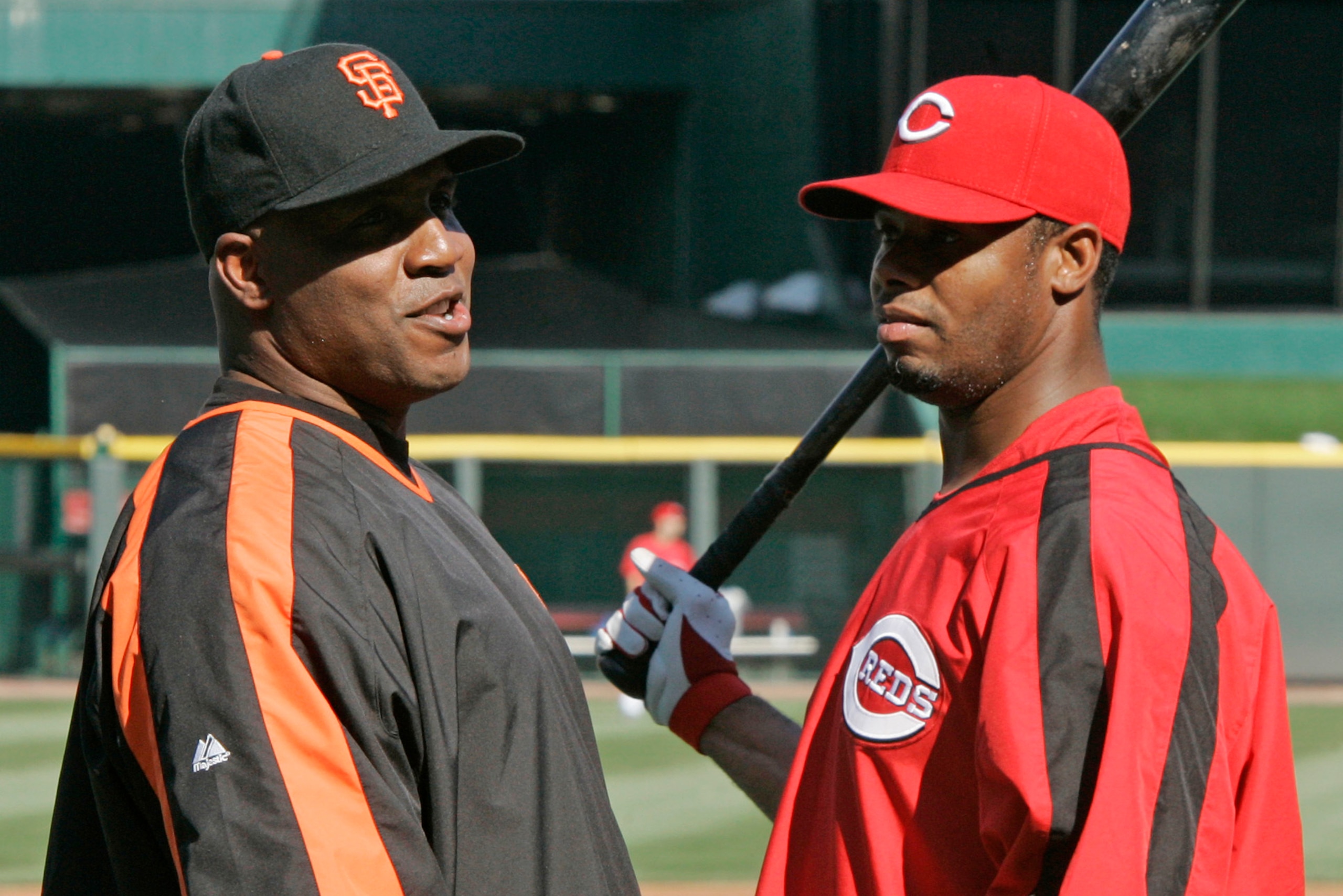
That playoff run subsequently fizzled, however, and the same thing happened to Griffey's health and good fortunes after Seattle traded him to the Cincinnati Reds in 2000. He played on only one winning team in parts of nine seasons with the Reds.
His last postseason appearance happened in 2008, and then only as a part-timer on a Chicago White Sox club that got knocked out of the Division Series.
1. Barry Bonds (1986-2007)
11 of 11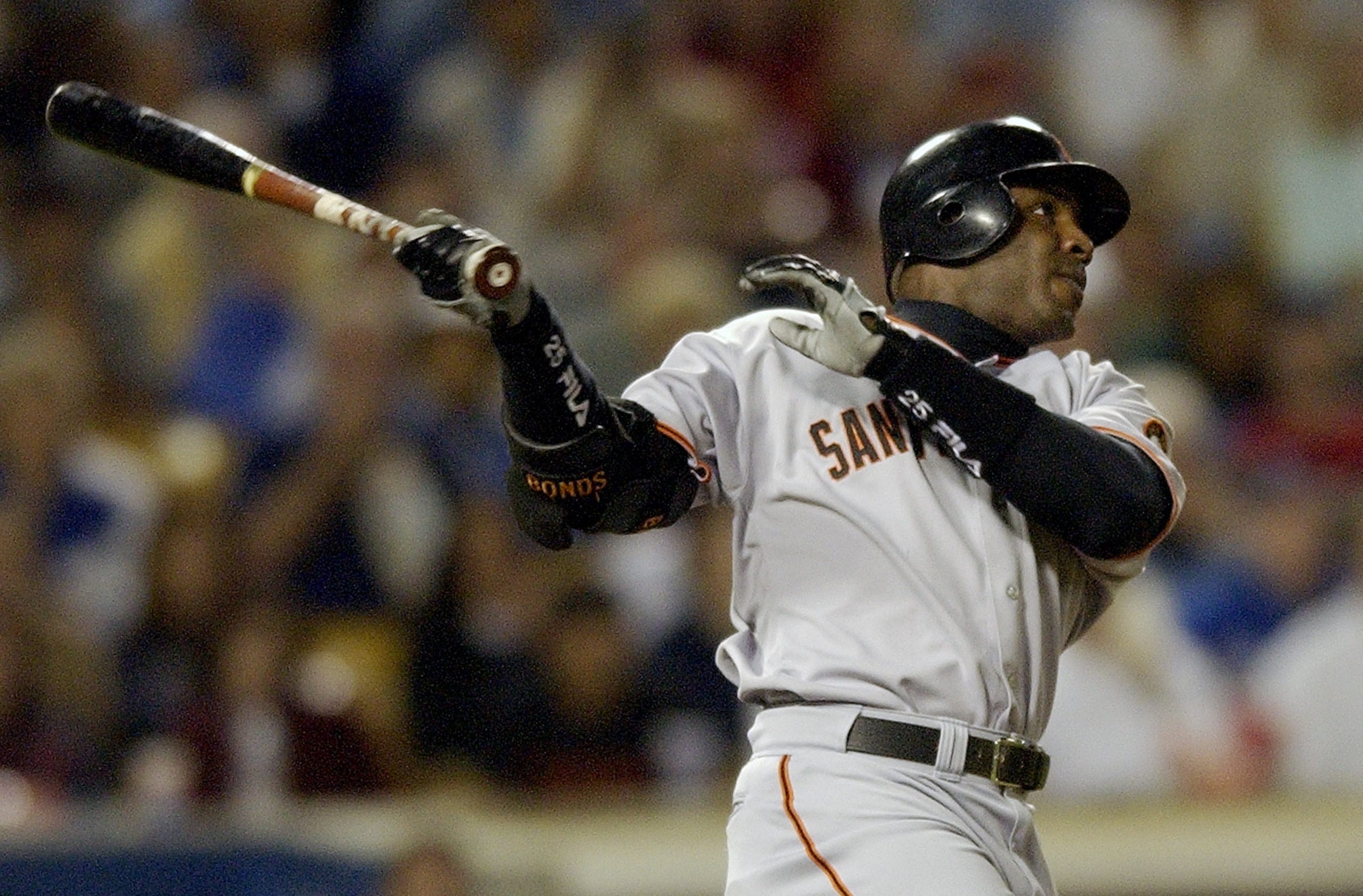
Though they obviously require context, Barry Bonds' accomplishments in Major League Baseball otherwise need no introduction.
He holds numerous records, including both the single-season (73) and all-time (762) home run marks and that of the most career rWAR (162.8) accumulated by an individual player. He was a 14-time All-Star, an eight-time Gold Glover and a seven-time MVP.
But in seven trips to the playoffs with the Pittsburgh Pirates and San Francisco Giants, Bonds never won the big one. He was notoriously cold in his first five postseasons, posting only a .618 OPS. In his seventh and final appearance in 2003, he didn't get anything to hit as he walked in eight of just 18 plate appearances.
In 2002, however, Bonds was a man on a mission. He helped get the Giants to the World Series with four home runs and a 1.286 OPS through his first 10 games and then hit four homers with a .700 on-base percentage (.700!) in the Fall Classic itself.
Though Bonds didn't get a ring for that effort, it's not his fault that Felix Rodriguez grooved a fastball to Scott Spiezio in Game 6.
Stats courtesy of Baseball Reference.

.jpg?w=2560 "Old Brady Vid Goes Viral 🐐")