

MLB Postseason 2020: Breaking Down Dodgers vs. Braves Keys to Winning NLCS
Neither Los Angeles nor Atlanta has had any trouble getting to the National League Championship Series. Both clubs have won all five games they've played in the postseason.
Clearly, one of them will finally hit a wall in the NLCS.
We dove deep into this matchup and picked out seven things that figure to determine whether L.A. or Atlanta goes to the World Series. These cover how the tone of the best-of-seven series might be set, as well as which players will have to beat expectations.
With the series set to begin at Globe Life Field in Arlington, Texas, on Monday, the time to cover these things is now.
Both Teams' Sluggers vs. Globe Life Field
1 of 7
No matter which broadcast you tune into, you might hear commentators espouse small ball (i.e., bunts and productive outs) as a key to victory in Major League Baseball's postseason.
This isn't not true. But as Mike Petriello of MLB.com covered in more detail, nothing attracts W's in October like hitting home runs.
In theory, this NLCS matchup promises to be a veritable Festival of Dingers. Led by sluggers such as Mookie Betts and Marcell Ozuna, Los Angeles and Atlanta finished first and second, respectively, in the majors in home runs during this year's 60-game regular season.
In the playoffs, however, Atlanta has hit only seven homers, while the Dodgers have hit just two. The clubs also won't be playing in a bandbox, as Globe Life Field has earned a reputation as a place where fly balls go to die.
If Atlanta and/or Los Angeles can't overcome that reputation, they may have to play small ball after all.
Atlanta Hitters vs. Dodgers Fastballs
2 of 7
In fairness, neither Los Angeles nor Atlanta is coming into the NLCS with a one-note offense.
Both teams finished among the MLB leaders in on-base percentage and in hitting with runners in scoring position. Overall, the Dodgers and Atlanta finished second and fifth, respectively, in OPS+.
If there's one specific thing Atlanta did better than any team this season, it's hit the fastball. The club's hitters slugged .553 against fastballs, the top mark in the majors.
Dodgers pitchers won't make it easy on Atlanta's hitters. They co-led the majors in averaging 94.7 mph on their fastballs during the regular season. And when it came to hitting fastballs of at least 95 mph, Atlanta hitters were relatively mortal with a seventh-ranked .453 SLG.
Dodgers hurlers might not want to get too cocky, though. Atlanta's hitters faced plenty of live arms opposite the Miami Marlins in the National League Division Series, yet they powered a sweep with a .574 SLG against heaters for the series.
Max Fried vs. the Dodgers' Hard-Hitting Bats
3 of 7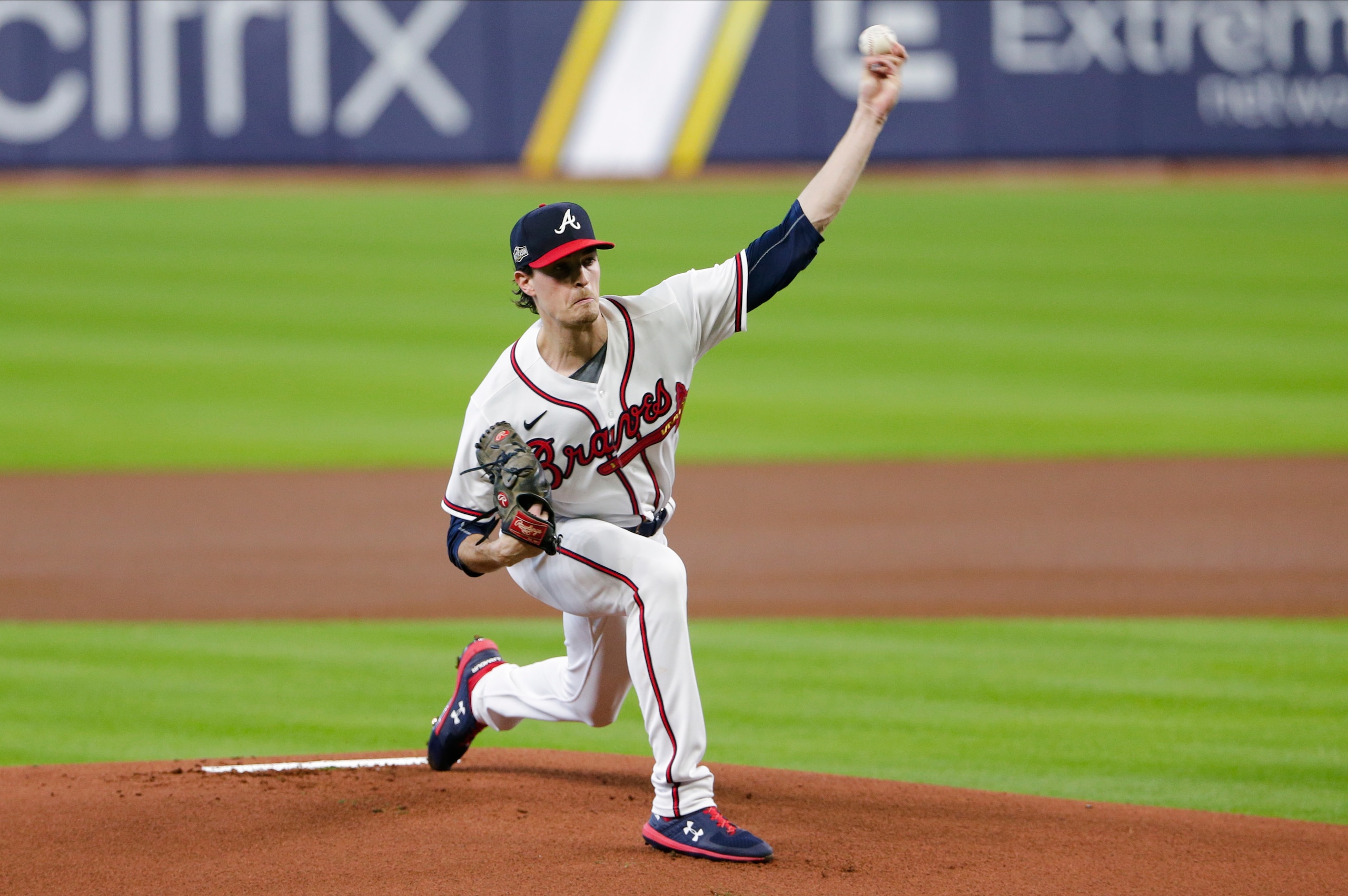
As for how the Dodgers offense preferred to conduct its business during the regular season, let's put it this way: They didn't hit so many home runs because the baseball gods willed their fly balls over fences.
The Dodgers flat-out crushed the ball this season, leading MLB with 90.0 mph average exit velocity, a 43.8 hard-hit percentage and 164 total barrels.
Containing thunder of this magnitude will be a challenge for the entirety of Atlanta's pitching staff. But if one man can show how it's done, it's Max Fried.
The ace left-hander only struck out 50 batters in 56 innings this season but nonetheless authored a 2.25 ERA because he excelled at limiting hard contact. His exit velocity, hard-hit rate and barrel rate were all at least in the 92nd percentile.
Fried against the Dodgers hitters is thus a classic unstoppable force vs. immovable object matchup. What's more, it could play out twice if the series goes the distance.


Atlanta's Lesser Starters vs. a Larger Role
4 of 7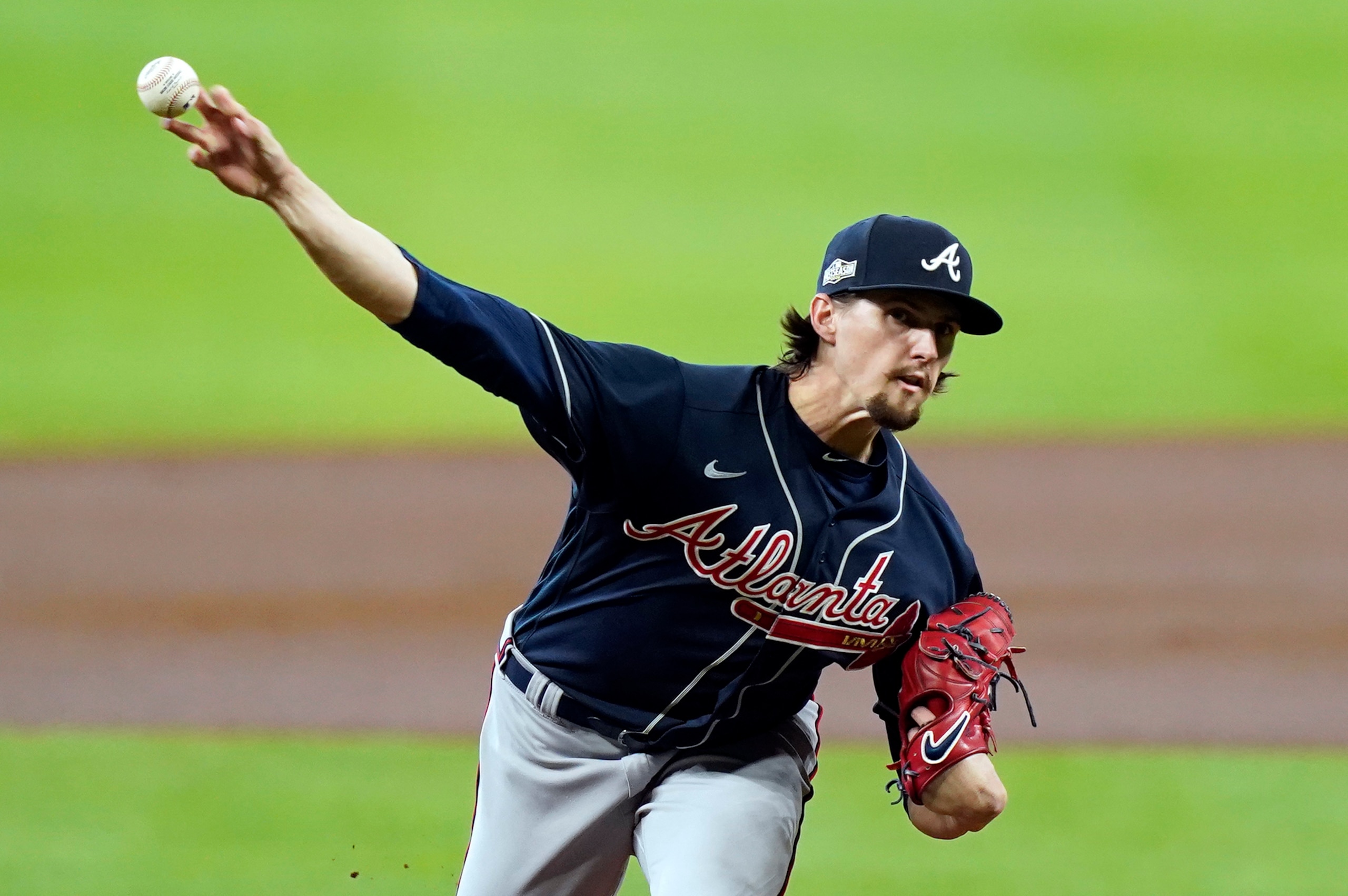
Fried and Ian Anderson will likely be up against Walker Buehler and Clayton Kershaw in the first two games of the NLCS. Because both duos posted ERAs in the 2.00s (see here and here) this year, that makes the grade as "good stuff."
Ah, but what of the starters after Los Angeles' and Atlanta's dynamic duos?
The Dodgers can more or less rest easy there. They figure to deploy some combination of Dustin May, Julio Urias and Tony Gonsolin, who had an aggregate 2.82 ERA as starters in the regular season.
Atlanta doesn't have that kind of depth. Its starters posted a 5.51 ERA in the regular season. While Kyle Wright has looked promising in his last four starts—including six shutout innings in Game 3 of the NLDS—that's a small sample size.
Because Atlanta doesn't have a clear No. 4 after Wright, somebody may have to play the role of the out-of-nowhere hero in order for the club to win the series.
Clayton Kershaw vs. His Postseason Demons
5 of 7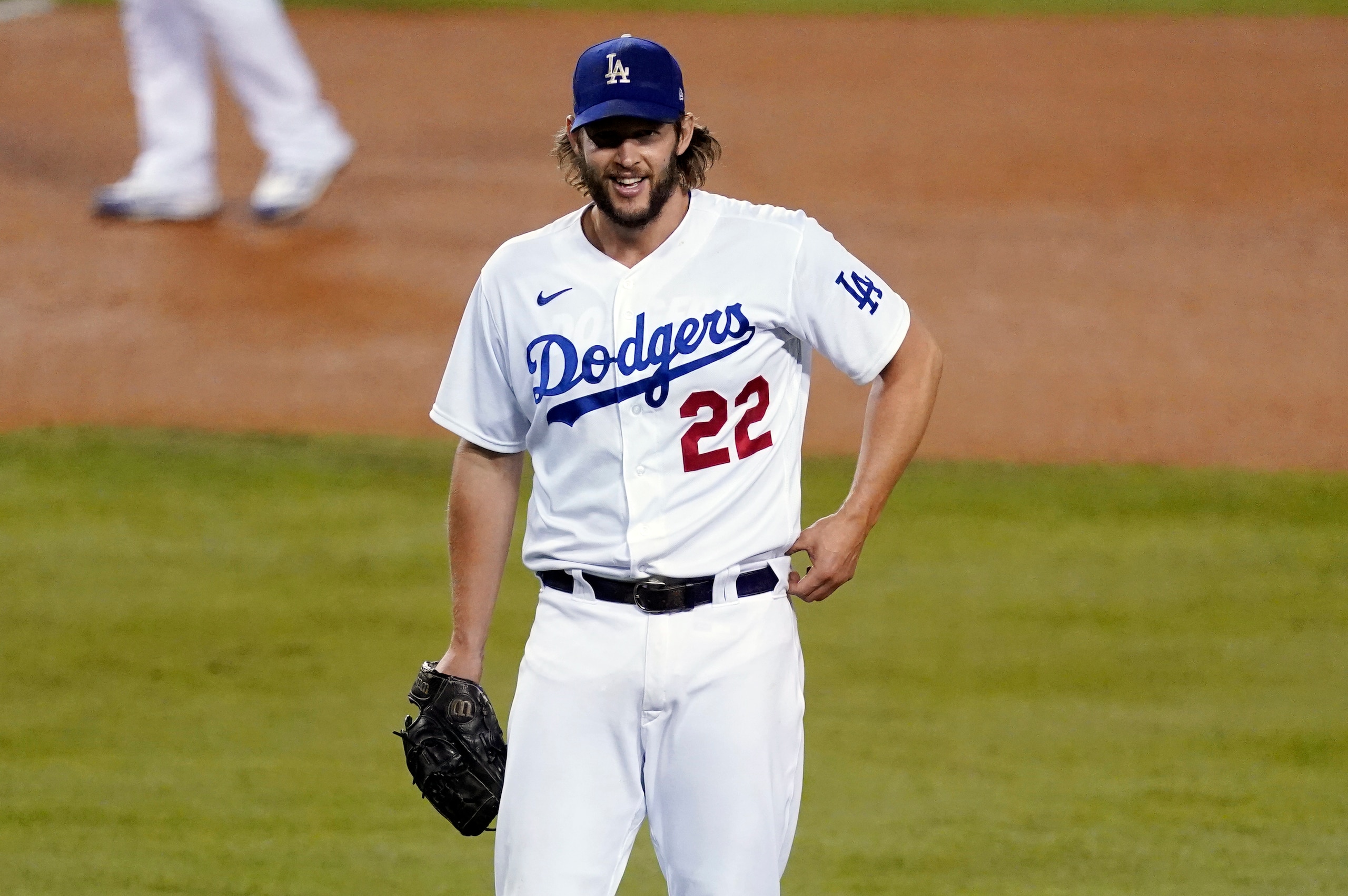
In Game 2 of the Wild Card Series, Clayton Kershaw held the Milwaukee Brewers scoreless while striking out 13 in eight innings. It was only the ninth postseason start of its kind and his personal best.
But then in Game 2 of the NLDS, Kershaw came back to earth by allowing three runs in six innings opposite the San Diego Padres. In particular, the back-to-back homers he allowed to Manny Machado and Eric Hosmer in the sixth inning felt all too familiar.
Kershaw has a 4.23 career ERA in the postseason with escalating marks for the NLDS (4.02), NLCS (4.61) and World Series (5.40). He hasn't been all bad, but frankly, he mostly hasn't been good.
Yet Kershaw has a favorable matchup in the NLCS. He's not a fastball pitcher anymore, and Atlanta's lineup was worse against left-handed starters (.751 OPS) than right-handed starters (.851 OPS) this year.
If Kershaw can exploit these advantages, it could be hard for Atlanta to deny the Dodgers of their third World Series appearance in the last four years.
Freddie Freeman vs. Los Angeles' Lefties
6 of 7
On the offense side of things, the most important player of the NLCS might be Freddie Freeman.
Despite a harrowing bout with the coronavirus, he enjoyed the most fruitful campaign of his 11-year career in 2020. His stellar .341/.462/.640 batting line might win him the National League MVP Award.
Freeman initially lived up to his billing with a walk-off hit against the Cincinnati Reds in Game 1 of the Wild Card Series. But he's since gone cold, collecting only two hits in Atlanta's last four contests. Now, more hard times may be on tap for Freeman in the NLCS.
Two of Los Angeles' starters (Kershaw and Urias) and several of its key relievers (Jake McGee, Adam Kolarek and Victor Gonzalez) are left-handed and therefore capable of taking advantage of Freeman's platoon split. In the regular season, his OPS against lefties was 502 points lower than his OPS against righties.
If Freeman can't correct this issue, Atlanta may have to beat the Dodgers in spite of him.
Kenley Jansen vs. High-Leverage Moments
7 of 7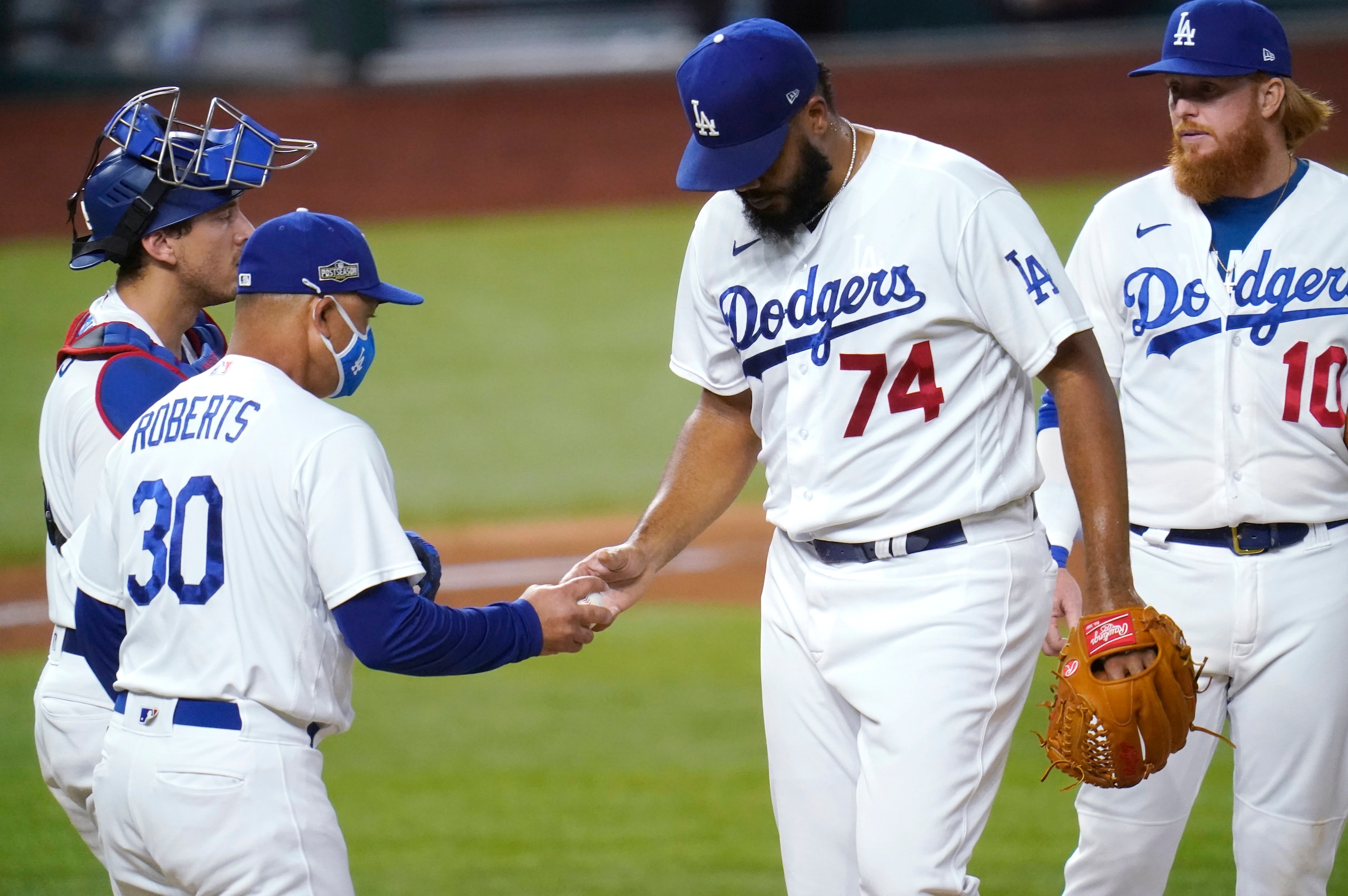
If nothing else, Atlanta can feel confident in its bullpen going into the NLCS.
Atlanta relievers posted a solid 3.50 ERA in the regular season and have thus far owned the postseason with a 0.44 ERA. With Mark Melancon, Will Smith, Shane Greene, Chris Martin, Tyler Matzek and others, manager Brian Snitker has options aplenty.
Because the Dodgers got an NL-best 2.74 ERA out of their relievers, they would seem to be in the same boat. But their pen isn't perfect, particularly where the ninth inning is concerned.
Kenley Jansen doesn't have the same cutter that he used to. His dominance has suffered accordingly, and he was last seen getting pulled from Game 2 of the NLDS after serving up as many runs (two) as he got outs.
As it happens, Atlanta had the highest OPS against relief pitchers of any team during the regular season. So even if manager Dave Roberts is confident enough in Jansen to use him in high-leverage spots—and he may not be—the veteran closer will be in for a huge challenge.
Stats courtesy of Baseball Reference, FanGraphs, Baseball Savant and MLB.com.
.png?w=2560 "MLB Power Rankings")
.jpg?w=2560 "Rams troll Jameis, Giants on social media")


.jpg?w=2560 "WWE Raw Live Grades 🔠")