

The Biggest Winners and Losers of the 2020 MLB Regular Season
The truncated 2020 MLB season is at the finish line. We'll hardly have a chance to catch our breath before the expanded 16-team postseason begins.
So let's take this moment to glance back and declare some winners and losers from what was unquestionably one of the oddest, wildest, rarest campaigns in baseball's long, storied history.
From impending free agents who raised or sunk their stock to surprise contenders to disappointing superstars, we've got it all and more.
Oh, and yes—the fake fans make an appearance.
Loser: Kirby Yates' Free-Agent Bid
1 of 10
The San Diego Padres ascended to full-fledged contender status in 2020 behind superstar shortstop Fernando Tatis Jr. and a flurry of aggressive trade-deadline additions.
Nearly lost amid the good news was the unfortunate fate of right-hander Kirby Yates.
In 2019, he established himself as one of the top closers in baseball with a 1.19 ERA, 41 saves and 101 strikeouts in 60.2 innings. Entering a contract year, he was poised to anchor the Pads bullpen and set himself up for a healthy free-agent payday.
Instead, Yates wobbled through six appearances, and yielded four walks, seven hits and six earned runs in 4.1 frames before undergoing season-ending elbow surgery.
Yates will sit out San Diego's playoff run. And, entering his age-34 season, he'll likely have to settle for a short-term show-me contract this winter.
Winner: Cardboard People
2 of 10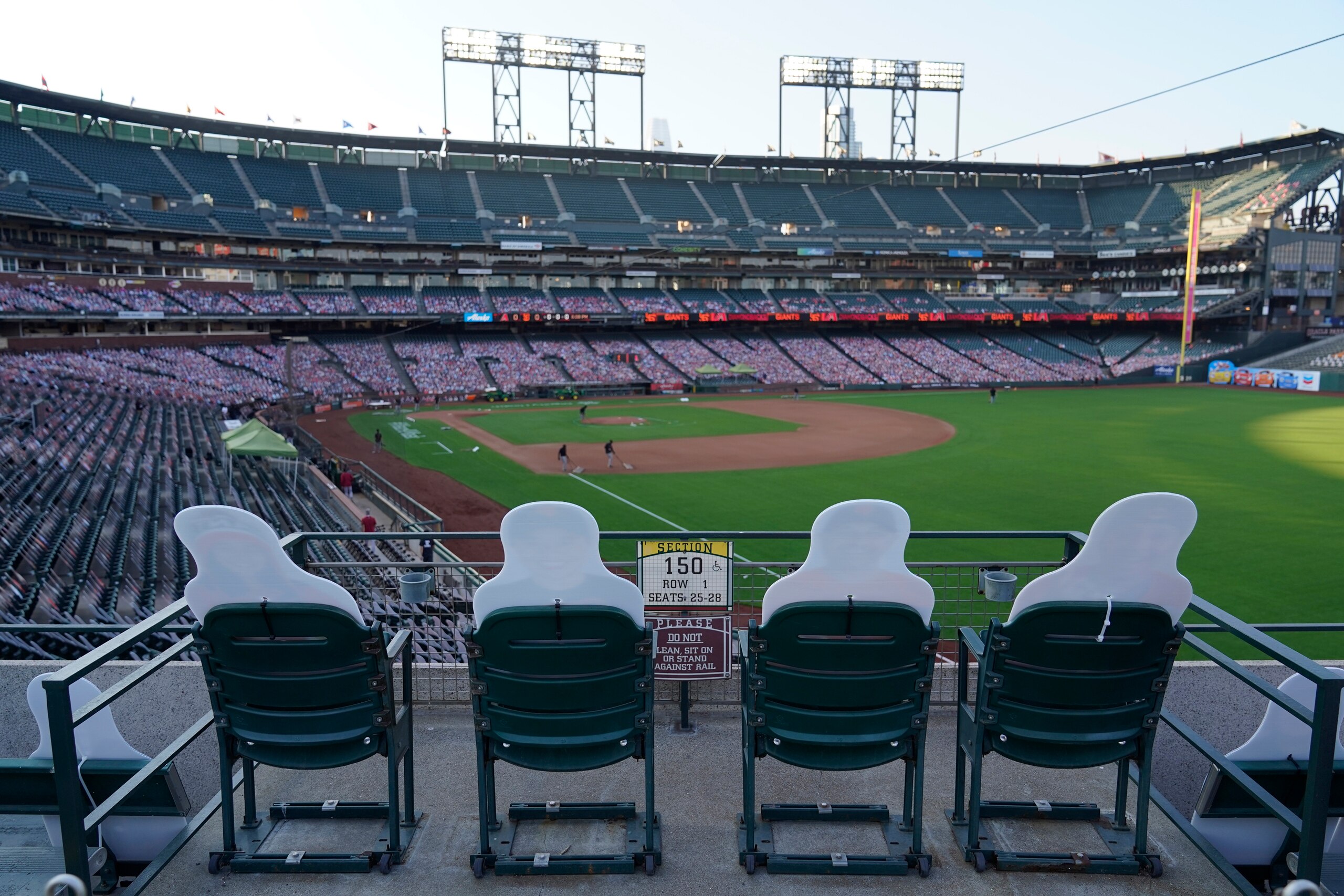
Yes, at first the cardboard fans were...unsettling. Unblinking, one-dimensional people (and pets) felt like a surreal substitute for flesh-and-blood spectators, especially when mixed with the ambient canned crowd noise.
They're still undeniably weird. But as the season wore on, those cutouts grew on us. In a year when nothing was normal, they were—in a sense—the ideal backdrop.
Commissioner Rob Manfred expressed optimism that there could be fans in the stands for National League Championship Series and World Series games in Texas. It would be a welcome sight—masked up, socially distant and all.
Hopefully next season, or sometime in the not-too-distant future, we can return to the days of packed ballparks.
In the meantime, the cardboard crowds have been a surprisingly effective stand-in.
Loser: Texas Rangers
3 of 10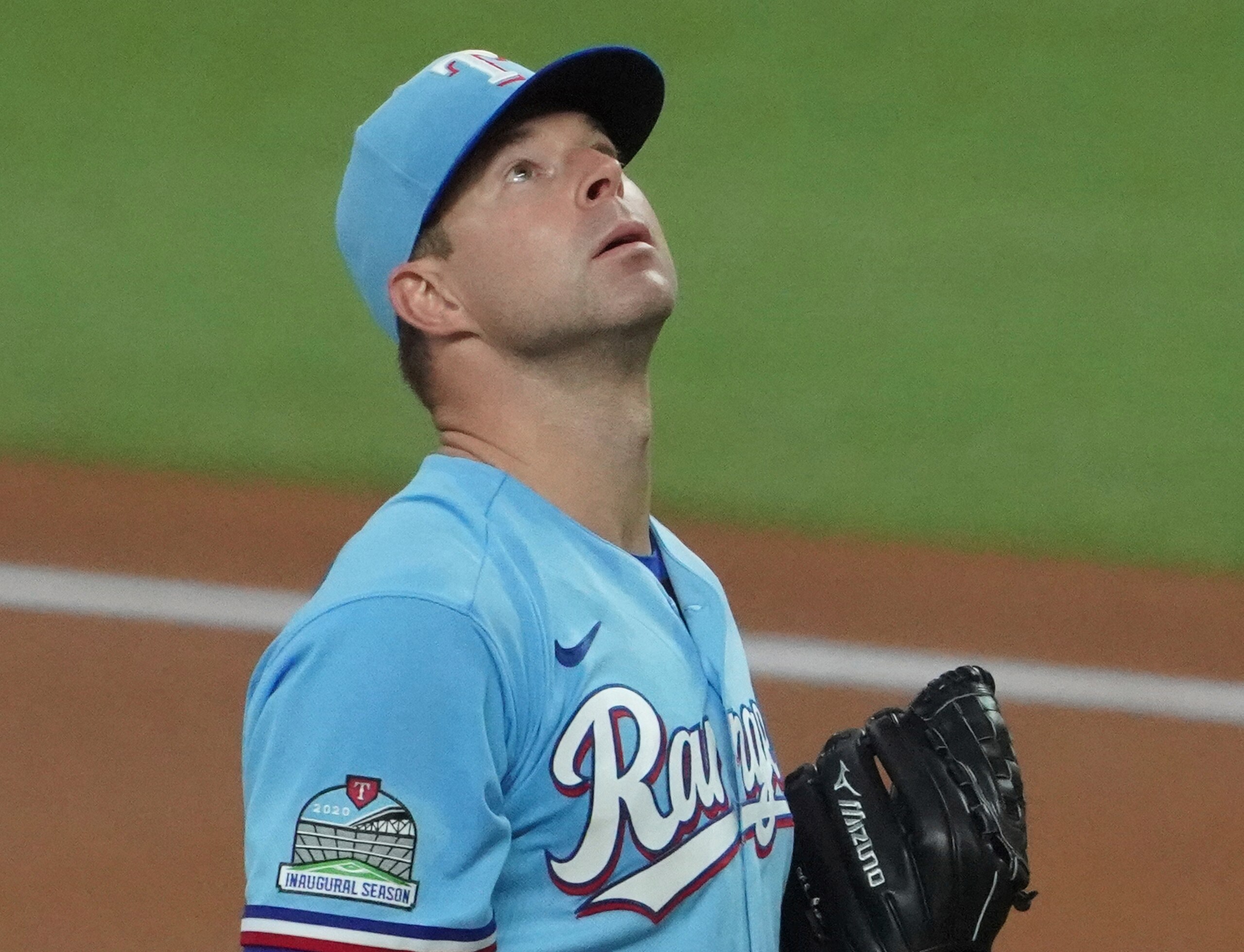
The Texas Rangers came into 2020 with designs on contending in the American League West behind a strong starting pitching staff that added two-time Cy Young Award winner Corey Kluber in a trade with Cleveland.
Kluber threw just one inning for Texas before a shoulder injury ended his season, and things went downhill from there.
The pitchers didn't pitch well. The hitters didn't hit well. And the Rangers finished dead last in the division with the worst run differential in baseball (minus-97).
They'll have to make some tough decisions this winter, including whether to trade pieces such as right-hander Lance Lynn and slugger Joey Gallo and initiate a full-scale rebuild.
Meanwhile, postseason games will be played at the team's shiny new facility, Globe Life Field, including the World Series.
But the Rangers will be watching from afar.


Winner: Fans of the Designated Hitter
4 of 10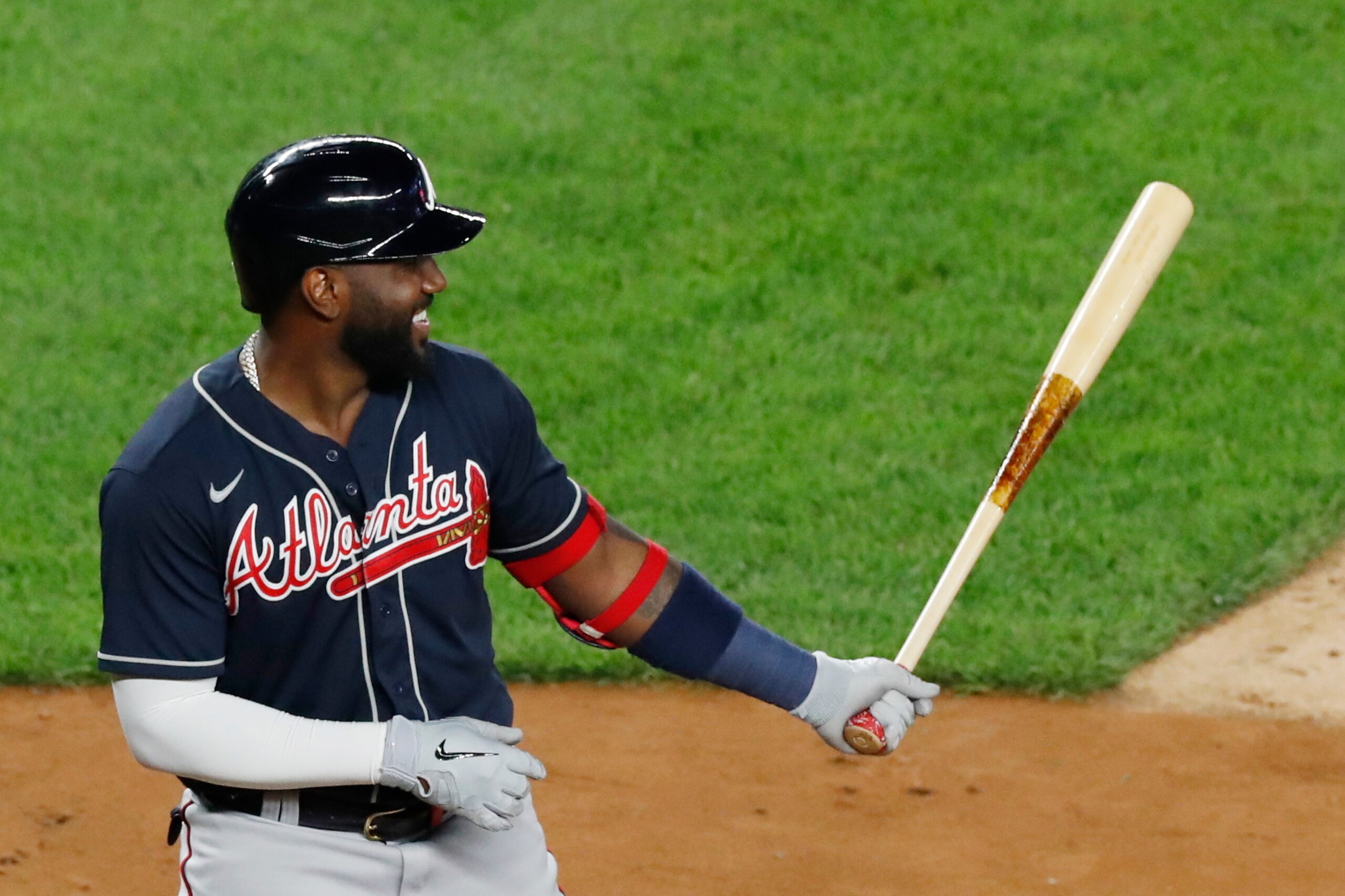
The universal designated hitter has seemed like an inevitability for a while. Still, when MLB adopted it for the 2020 season, it was worth wondering how the experiment would play with purists and National League diehards.
So far, if there has been grumbling, it's been quiet.
Mostly, it's been nice to see lineups in both leagues stocked top to bottom with actual hitters, instead of the 347 pitchers who combined to hit .127 with a cool .317 OPS in 2019.
And NL players with valuable lumber and questionable leather, such as Atlanta's Marcell Ozuna, have been able to get more at-bats.
"A lot of us like the National League rules, but it worked out well for us this year," Atlanta first baseman Freddie Freeman told reporters. "It was huge for us to have [Ozuna] be in that lineup every single night."
Since its advent in 1973, the DH has served as a demarcation between the Junior and Senior Circuits. But the arrival of interleague play did away with a lot of that.
Now, after we've seen it in action in both leagues, this feels like a change that should have happened years ago.
Loser: Washington Nationals
5 of 10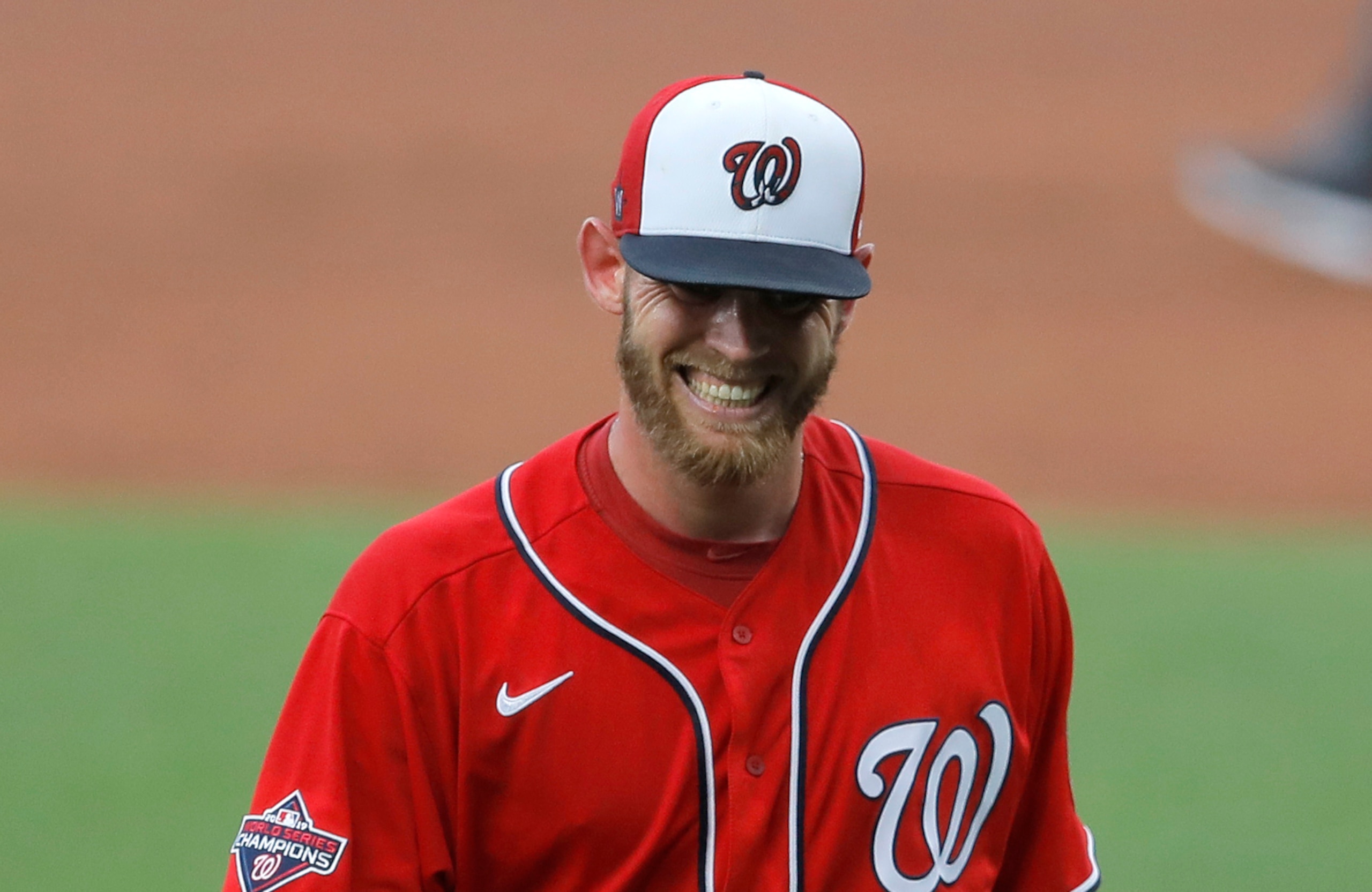
Winning consecutive championships is hard. Since 1979, only the Toronto Blue Jays (1992-93) and New York Yankees (1998-00) have accomplished the feat.
So the Washington Nationals had their work cut out for them to defend their 2019 title. Falling short was a real possibility. But a last-place finish? That stings.
It's especially painful because the Nats—who were the doormats of the NL East—came into 2020 as presumed contenders.
Yes, they lost star third baseman Anthony Rendon to free agency. But they made a number of ancillary free-agent additions to pick up the slack and returned their All-Star pitching duo of Max Scherzer and Stephen Strasburg.
Strasburg made just two starts before undergoing surgery to deal with carpal tunnel syndrome. The bullpen wobbled, and the pitching staff posted an ERA over 5.00.
There were bright spots, including outfielder Juan Soto, who continued his rise to the stratosphere. But not a lot went right for Washington, and it'll have to spend the winter warming itself with memories of 2019.
Winner: Cinderella Contenders
6 of 10
The 60-game season was going to create some small-sample anomalies. Add the 16-team playoff format, and all bets were off.
Teams such as the Miami Marlins (who clinched second place in the NL East on Friday) and San Francisco Giants (who entered play Sunday in a dead heat for the NL's final postseason spot) would have had a next-to-zero chance of tasting October baseball under the normal playoff format or over a 162-game grind.
But in the 2020 sprint, with three second-place finishers and two third-place finishers making the dance, "so you're telling me there's a chance" took on a whole new meaning.
Rob Manfred has indicated he'd like to make this expanded format permanent. That might be going too far.
But in a season that was already going to be unlike any other, some unlikely Cinderellas and the fans who follow them have had a fun ride.
Loser: Justin Verlander's Final Seasons
7 of 10
It was a tough season for the Houston Astros, as they spent the year playing the heel in the wake of the sign-stealing scandal that rocked the sport. But the 'Stros made the playoffs as the second-place team in the AL West and could still go on a postseason run.
If they do, it will be without ace Justin Verlander.
After winning his second AL Cy Young Award in 2019, Verlander made just one start this season before going on the injured list with a forearm strain. On Sept. 19, the other shoe dropped with the news that he would need Tommy John surgery.
"Obviously I'm extremely disappointed, but I will not let this slow down my aspirations for my career," Verlander wrote on Instagram. "I will approach this rehab the only way I know, attack and don't look back. I'm confident that with a proper rehabilitation program and my unwavering commitment that this surgery will ultimately lengthen my career as opposed to shorten it."
Those are hopeful words, but the reality is stark.
Verlander is 37.. Assuming he misses 2021, he will enter 2022 as a free agent going into his age-39 season. Considering his skill and track record, anything is possible. But we may have seen the last pitch of a no-doubt Hall of Famer.
Winner: Trevor Bauer
8 of 10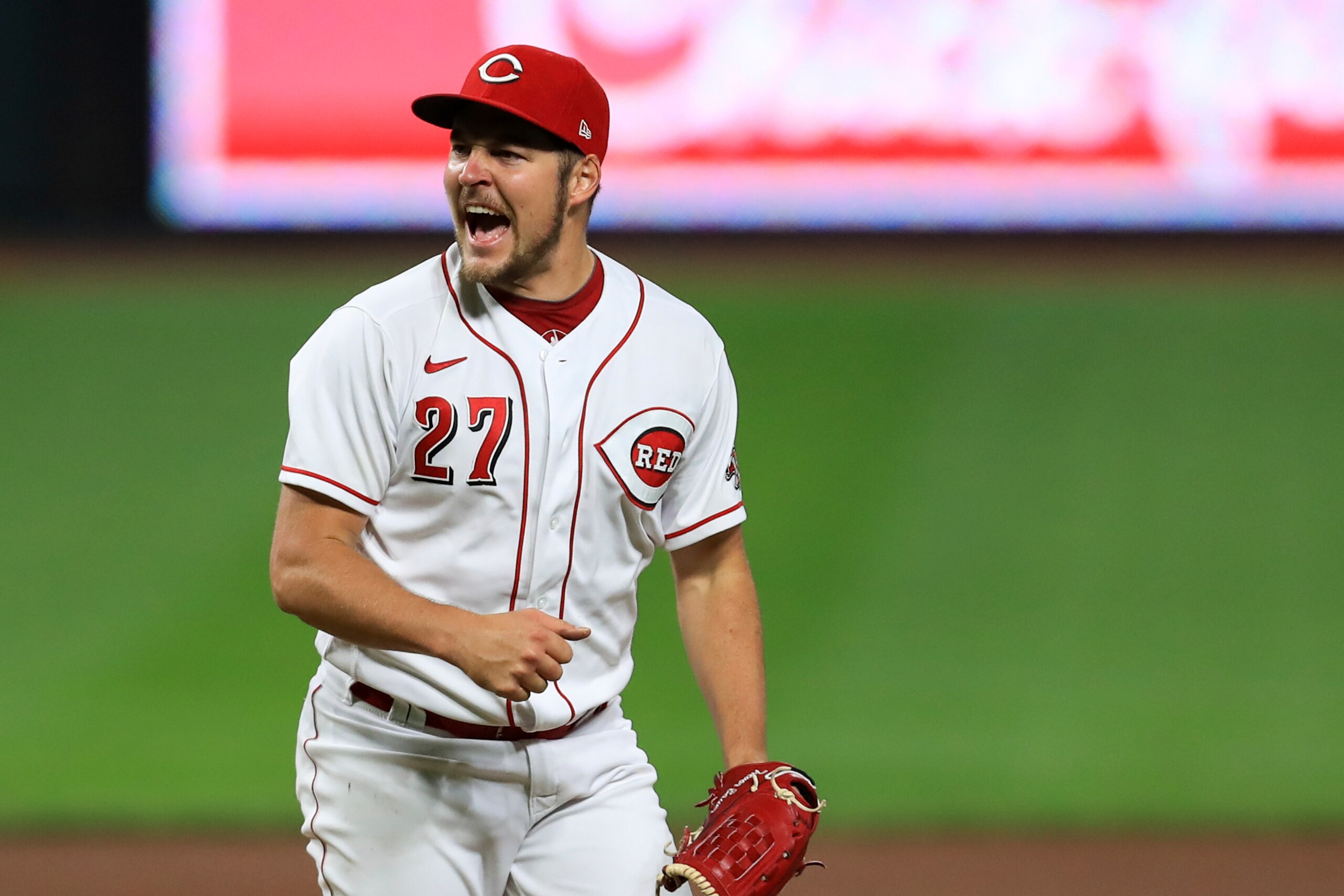
In 73 innings with the Cincinnati Reds, Trevor Bauer posted an NL-leading 1.73 ERA with 100 strikeouts. He could win NL Cy Young Award honors. In typically gregarious fashion, he declared himself the deserving recipient of the prize Wednesday.
The 29-year-old has pitched the Reds into the postseason and has hurled his way to a massive payday in free agency.
In early August, Bauer reiterated his plan to sign one-year contracts for the rest of his career. If he's serious, he could get the mother of all one-year deals from a deep-pocketed contender who would surely love to shell out record-breaking dollars for a single season of peak Bauer without the risk that comes from a long-term commitment.
No matter what, after posting ERAs north of 4.00 in seven of his first eight big league seasons, Bauer appears to have fully harnessed his bat-missing stuff and turned into an ace.
Just ask him.
Loser: Mike Trout
9 of 10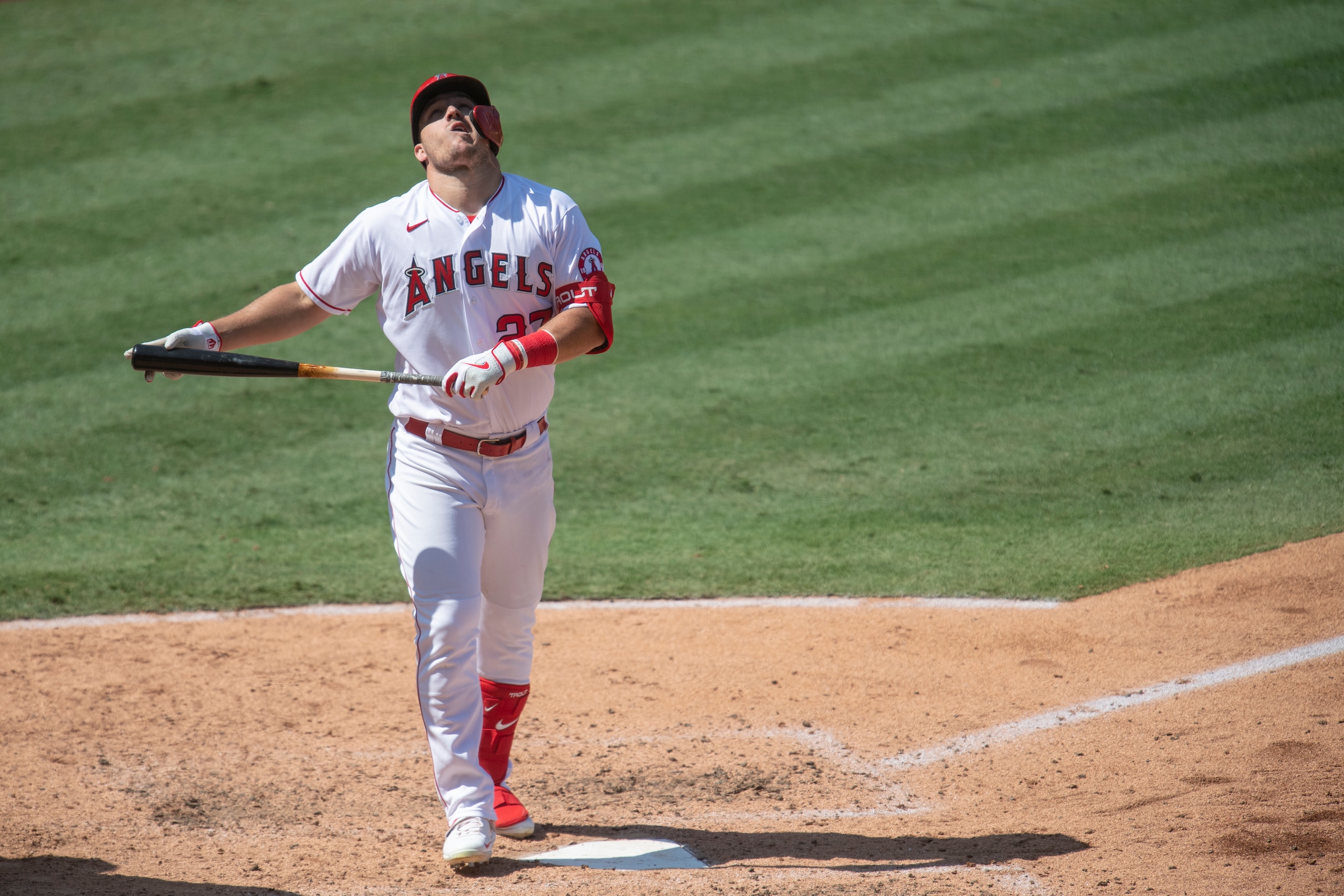
You shouldn't feel too sorry for Mike Trout. He's the best baseball player on the planet. He's locked into a deal that will pay him $37.1 million annually through 2030. He welcomed his first child July 30 and hit his 300th home run earlier in September.
Yet for all his accomplishments, there's one thing Trout has never done: win a postseason game.
That won't change this season, as the Los Angeles Angels will once again miss the playoffs despite the expanded field.
The Halos had hope after signing Anthony Rendon to join Trout in the middle of the lineup. But they were undone by a subpar pitching staff and wasted another season of their all-world center fielder's prime.
"Spring training, you come in, you got a great team. You had some big free agents with Rendon and some guys that can help this team win," Trout told reporters Sept. 3. "Then we get shut down and we come back and they expand the playoffs. To see where we're at now, it's definitely frustrating."
Trout is a low-key guy who has never really become the face of MLB despite his generational talent. But it's a huge loss for him and the game that he'll once again sit out October.
Winner: The Game Itself
10 of 10
Playing against the backdrop of the COVID-19 pandemic was never going to be easy, and it hasn't been.
Multiple teams were forced to shut things down because of positive tests, which made an already tenuous endeavor even more uncertain.
But the league, to its credit, adapted with things such as seven-inning doubleheaders. Teams mostly followed protocols, and worst-case outcomes were avoided.
It wasn't perfect, but every club completed the season.
We'll see how the expanded postseason plays out with neutral sites in Texas and Southern California for every round past the Wild Card Series. If fans are indeed in the stands for the NLCS and World Series, that'll add another wrinkle.
So far, though, Rob Manfred and Co. deserve a cap tip for making baseball happen despite the considerable obstacles. Attach all the asterisks you want—at least we got a season.
It's been a welcome diversion in these uncertain times, and for that we should all be thankful.
All statistics accurate through Friday and courtesy of Baseball Reference and FanGraphs.

.jpg?w=2560 "49ers LB Suspended for Headbutt")

.jpg?w=2560 "Buzz: MHJ Hired Agents for Trade")
.jpg?w=2560 "Commanders OL HEATED After Tie ▶️")
.jpg?w=2560 "AD Trolls Bears WR on IG 😂")