
Greg Maddux or Roger Clemens? Ranking MLB's Top 20 Starting Pitchers of 1990s
Who's ready for some nostalgia? Over the past few weeks, we've been taking position-by-position looks at the best MLB players of the 1990s.
Up next, the starting pitchers.
Who will claim the No. 1 spot—Roger Clemens or Greg Maddux? Where will the rest of the Atlanta Braves "Big Three" rank? Who will be the biggest snub from the list of 20? Those are among the questions we set out to answer.
A player's peak performance, his statistical body of work during the 1990s and his postseason production were all taken into account.
While no single stat was the be-all and end-all in this conversation, ERA+ and WAR/100 are two important ones to know.
ERA+ is a pitcher's ERA adjusted to take into account the ballparks in which he is pitching. An ERA+ of 100 is league-average, while each number above 100 represents one percentage point better than the league average.
WAR/100 is my creation. It's a pitcher's WAR total divided by his total innings pitched and then multiplied by 100, thus giving us his WAR per 100 innings pitched. The idea is to make it easier to contextualize WAR totals across different sample sizes.
Let's kick things off with some honorable mentions.
Honorable Mentions
1 of 21
These players received serious consideration for the final list but came up short:
- Wilson Alvarez
- Alex Fernandez
- Pat Hentgen
- Mark Langston
- Al Leiter
- Ramon Martinez
- Andy Pettitte
- Brad Radke
- Kenny Rogers
- Bret Saberhagen
- Kevin Tapani
20. Charles Nagy
2 of 21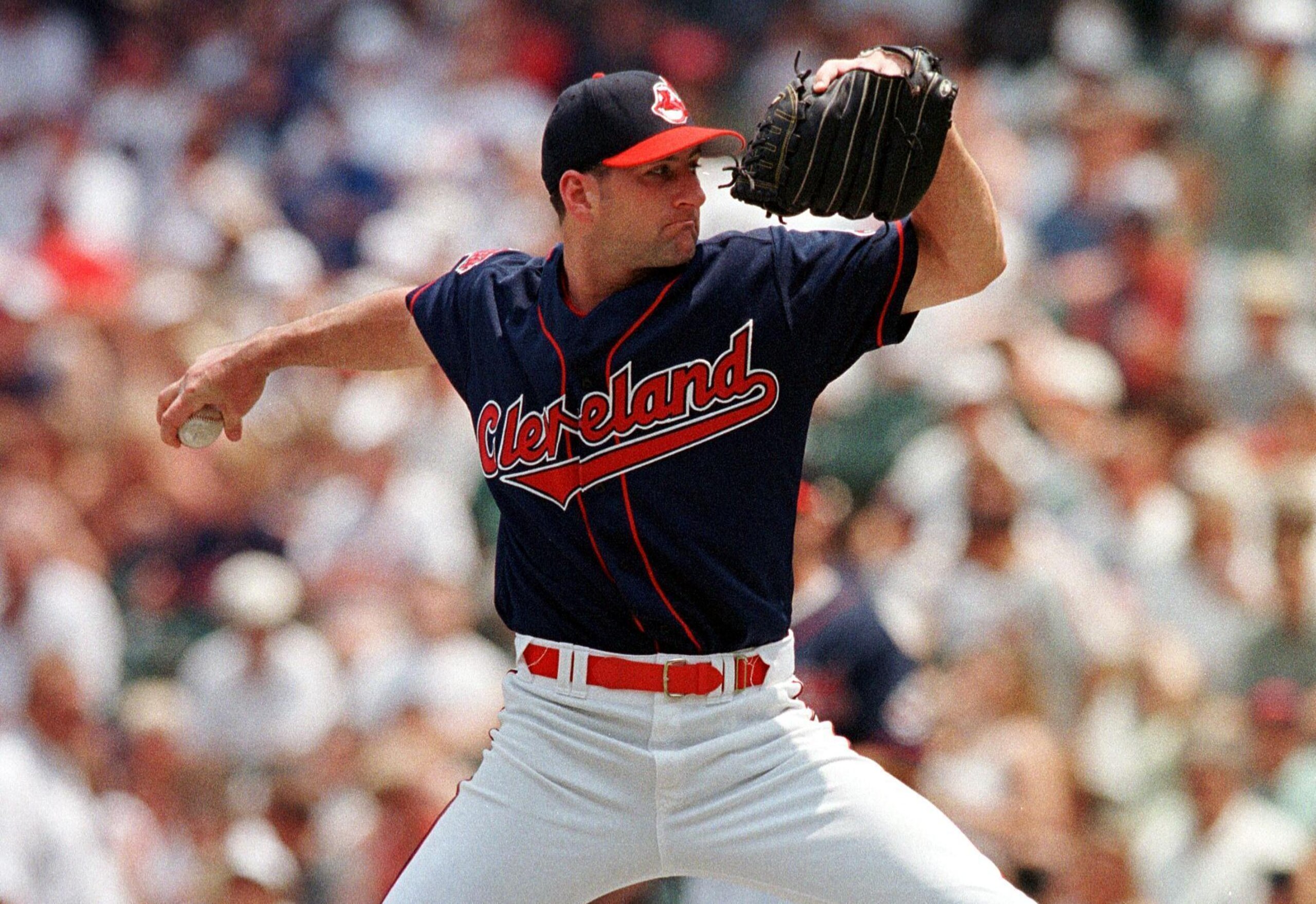
Stats: 121-86, 4.20 ERA (108 ERA+), 1.39 WHIP, 1,143 K, 1,766.1 IP, 27.1 WAR
Postseason: 3-4, 4.46 ERA, 1.38 WHIP, 55 K, 84.2 IP
WAR/100: 1.53
The Cleveland Indians had nothing short of an offensive juggernaut throughout much of the 1990s, but a lack of quality starting pitching kept them from winning a title.
That said, thanks to ace Charles Nagy, the rotation was not devoid of talent.
The No. 17 overall pick in the 1988 draft, he made his MLB debut in 1990 and became a full-time member of the starting rotation in 1991. He posted a 4.13 ERA in 211.1 innings to finish eighth in AL Rookie of the Year voting.
He finished in the top 10 in Cy Young voting three times, including a fourth-place finish in 1996 when he went 17-5 with a 3.41 ERA (143 ERA+) in 222 innings. He also started the All-Star Game that year, making three Midsummer Classic appearances in total.
19. Andy Benes
3 of 21
Stats: 125-116, 3.79 ERA (108 ERA+), 1.28 WHIP, 1,655 K, 2,068.1 IP, 30.3 WAR
Postseason: 0-1, 6.44 ERA, 1.54 WHIP, 29 K, 36.1 IP
WAR/100: 1.47
Andy Benes was the definition of a workhorse over the course of his 14-year career.
He made his MLB debut in 1989 after going No. 1 overall in the 1988 draft, posting a 3.51 ERA over 10 starts to finish fifth in NL Rookie of the Year voting.
The following year, he tossed 192.1 innings, and he went on to record at least 170 innings every year during the decade. He was one of just 10 pitchers to eclipse 2,000 innings during the 1990s, finishing seventh on that list with 2,068.1 frames.
He was an All-Star in 1993, he finished in the top 10 in Cy Young voting in 1991 (sixth) and 1996 (third), and he received some down-ballot MVP support in 1994 when he led the NL in strikeouts (189) and strikeouts per nine innings (9.9).
He signed with the Arizona Diamondbacks ahead of their inaugural season in 1998 and was the team's first Opening Day starter.


18. Juan Guzman
4 of 21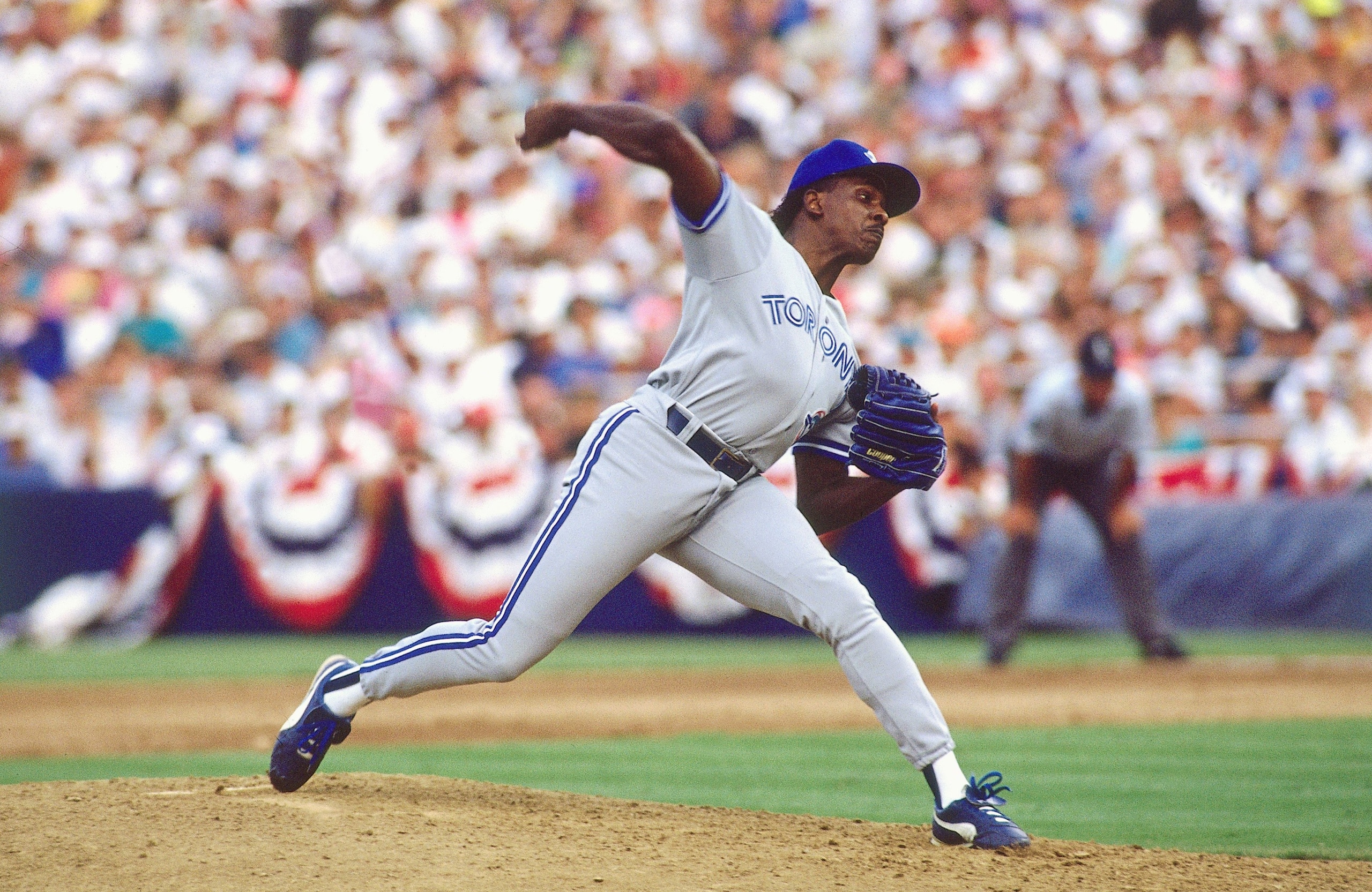
Stats: 91-78, 4.03 ERA (113 ERA+), 1.36 WHIP, 1,240 K, 1,481.2 IP, 24.9 WAR
Postseason: 5-1, 2.44 ERA, 1.34 WHIP, 41 K, 51.2 IP, Two-time WS winner
WAR/100: 1.68
After finishing runner-up in AL Rookie of the Year voting in 1991, Juan Guzman helped lead the Toronto Blue Jays to back-to-back World Series titles in 1992 and 1993.
- 1992: 16-5, 2.64 ERA (154 ERA+), 165 K, 180.2 IP, 5.5 WAR
- 1993: 14-3, 3.99 ERA (109 ERA+), 194 K, 221.0 IP, 3.4 WAR
He threw eight strong innings in Game 3 of the 1992 World Series and was a postseason standout during both of those title runs.
After struggling to a 5.99 ERA in 282.2 innings during the 1994 and 1995 seasons, he rebounded to lead the AL in ERA (2.93), ERA+ (171) and WHIP (1.12) in 1996.
He pitched at roughly a league-average clip the rest of the decade, but his significant contributions to one of the best teams of the decade earn him a spot in these rankings.
17. Dennis Martinez
5 of 21
Stats: 92-70, 3.37 ERA (122 ERA+), 1.19 WHIP, 882 K, 1,514.2 IP, 27.7
Postseason: 2-2, 2.45 ERA, 1.21 WHIP, 14 K, 33 IP
WAR/100: 1.83
Dennis Martinez made his MLB debut in 1976 at the age of 22, so he was already entering his age-36 season when the 1990 season arrived.
He made the NL All-Star team three years in a row to kick off the decade while pitching for the Montreal Expos. He finished fifth in Cy Young voting in 1991 when he led the NL in ERA (2.39), complete games (9) and shutouts (5).
He signed with the Cleveland Indians for his age-40 season in 1994, and he earned the Opening Day start in each of his three seasons with the team. That included a terrific 1995 campaign where he went 12-5 with a 3.08 ERA (152 ERA+) in 187 innings to earn his fourth All-Star selection of the decade.
In his final MLB season in 1998 at the age of 44, he pitched mostly out of the bullpen for the Atlanta Braves, posting a 4.45 ERA with two saves and 11 holds in 91 innings spanning 53 appearances.
16. Jack McDowell
6 of 21
Stats: 119-77, 3.88 ERA (111 ERA+), 1.31 WHIP, 1,212 K, 1,702.1 IP, 25.8 WAR
Postseason: 0-4, 8.72 ERA, 1.94 WHIP, 16 K, 21.2 IP
WAR/100: 1.52
While his peak was brief, Jack McDowell was one of the best pitchers in baseball for a short stretch during the 1990s.
- 1991: 17-10, 3.41 ERA (117 ERA+), 1.16 WHIP, 191 K, 253.2 IP
- 1992: 20-10, 3.18 ERA (122 ERA+), 1.24 WHIP, 178 K, 260.2 IP
- 1993: 22-10, 3.37 ERA (125 ERA+), 1.29 WHIP, 158 K, 256.2 IP
He was an All-Star in each of those seasons and won AL Cy Young honors in 1993.
His 38 complete games during that three-year stretch led all of baseball, and his 61 during the decade trailed only Greg Maddux (75) and Randy Johnson (65).
After a solid run with the Chicago White Sox, he was traded to the New York Yankees ahead of the 1995 season. He went 15-10 with a 3.93 ERA and eight complete games in 217.2 innings in his lone season in pinstripes.
His production dropped off significantly in 1996 as a member of the Cleveland Indians, and he made a combined 24 starts over the final three years of his career before retiring at the age of 33.
15. David Wells
7 of 21
Stats: 127-87, 4.11 ERA (110 ERA+), 1.24 WHIP, 1,244 K, 1,897 IP, 31.5 WAR
Postseason: 8-1, 2.77 ERA, 1.09 WHIP, 67 K, 84.1 IP, Two-time WS winner
WAR/100: 1.66
David Wells spent the first three years of the decade pitching in a swingman role for the Toronto Blue Jays, posting a 3.90 ERA and 106 ERA+ in 67 starts and 57 relief appearances while averaging 169 innings per season.
Released by Toronto ahead of the 1993 season, he spent the next four seasons as a quality workhorse, posting a 4.18 ERA and 112 ERA+ in 109 starts while pitching for the Detroit Tigers, Cincinnati Reds and Baltimore Orioles.
When veteran Jimmy Key left the New York Yankees in free agency prior to the 1997 season, the Yankees zeroed in on Wells as his replacement, signing him to a three-year, $13.5 million contract.
After a strong 1997 campaign, he turned in arguably the best season of his career for the legendary '98 Yankees. He was 18-4 with a 3.49 ERA and an AL-leading 1.05 WHIP, tallying eight complete games and five shutouts, including the 15th perfect game in MLB history. He won ALCS MVP honors during the team's run to a World Series title.
The Yankees traded him to the Blue Jays on the heels of that impressive performance in the deal that brought Roger Clemens to New York.
14. Jimmy Key
8 of 21
Stats: 112-68, 3.62 ERA (121 ERA+), 1.26 WHIP, 924 K, 1,476.2 IP, 29.1 WAR
Postseason: 4-2, 2.67 ERA, 1.15 WHIP, 28 K, 54.0 IP, Two-time WS winner
WAR/100: 1.97
Jimmy Key had six solid seasons with the Toronto Blue Jays during the 1980s. He earned an All-Star selection in 1985 and won the AL ERA title (2.76) to finish runner-up in Cy Young voting in 1987, so he was an established front-line starter when the 1990s began.
He spent the first three years of the decade with the Blue Jays, earning his second All-Star selection in 1991 before going 13-13 with a 3.53 ERA (115 ERA+) in 216.2 innings for the World Series-winning '92 squad.
Part of a vaunted 1992-93 free-agent class that also saw Greg Maddux, Barry Bonds, David Cone and Doug Drabek change teams, Key signed a four-year, $17 million contract with the New York Yankees.
His first two seasons in pinstripes were two of the best of his career:
- 1993: 18-6, 3.00 ERA (139 ERA+), 1.11 WHIP, 236.2 IP, 6.3 WAR
- 1994: 17-4, 3.27 ERA (140 ERA+), 1.36 WHIP, 168.0 IP, 4.4 WAR
After an injury-plagued 1995 season, he made 30 starts and posted a 4.68 ERA (107 ERA+) for the '96 team en route to his second World Series ring before finishing out his career with two seasons in Baltimore.
13. Jose Rijo
9 of 21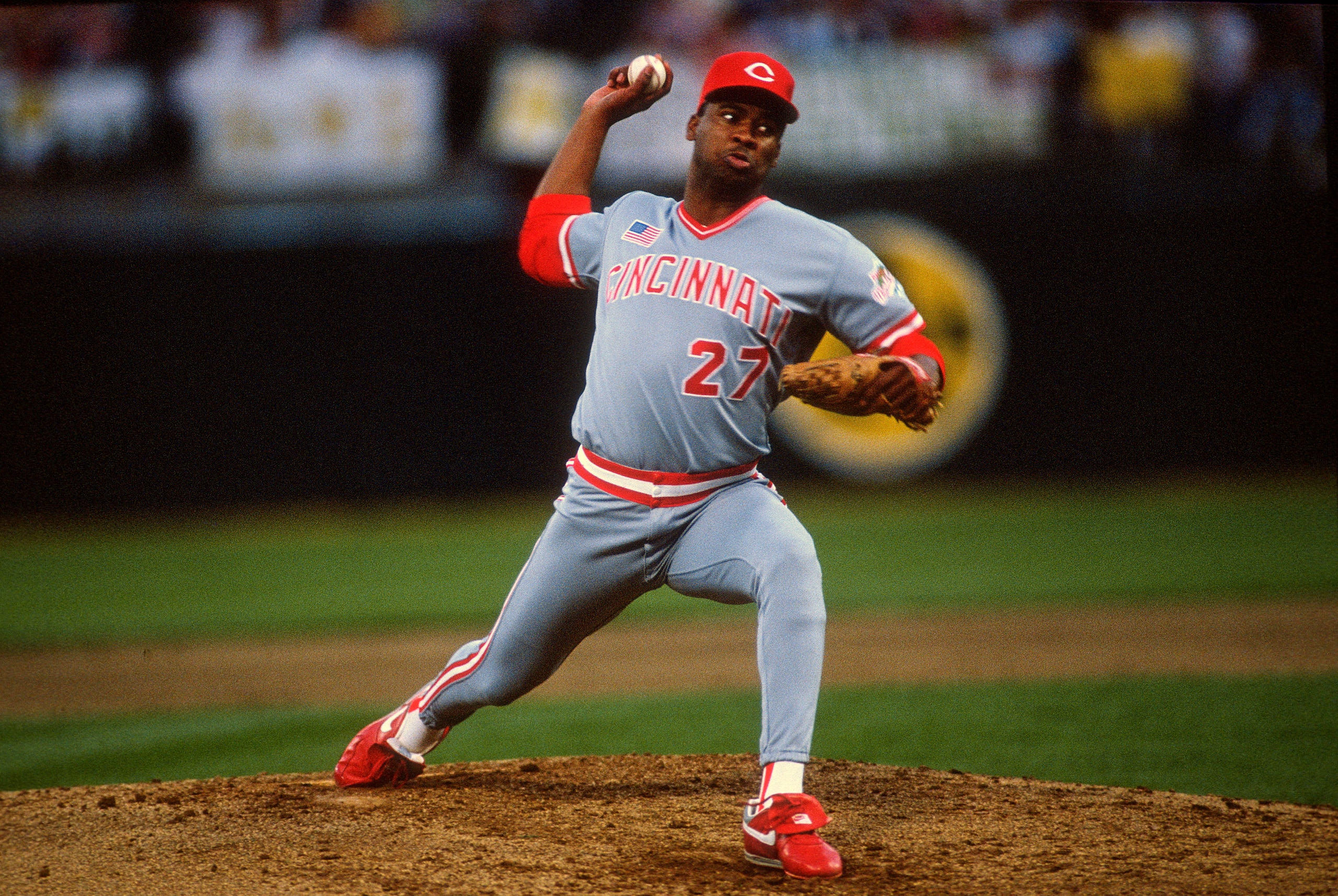
Stats: 72-43, 2.74 ERA (144 ERA+), 1.16 WHIP, 955 K, 1,111 IP, 29.6 WAR
Postseason: 3-0, 2.28 ERA, 1.12 WHIP, 29 K, 27.2 IP, One-time WS winner
WAR/100: 2.66
Jose Rijo only pitched five full seasons during the 1990s, and his 1,111 innings are by far the lowest total of any pitcher to earn a spot on this list.
His dominance during that half of a decade more than justifies his inclusion.
He was the ace of the staff for the Cincinnati Reds team that won a title in 1990. He posted a 148 ERA+ in 197 innings during the regular season before going 2-0 while allowing just nine hits and one run in 15.1 innings during the World Series to win MVP honors.
He ranked among the top six in the NL in ERA+ in each of his five full seasons during the decade:
- 1990: 148 (second)
- 1991: 153 (second)
- 1992: 143 (fifth)
- 1993: 162 (second)
- 1994: 136 (sixth)
All told, his 144 ERA+ for the decade trailed only Greg Maddux (162), Pedro Martinez (156) and Roger Clemens (151) among pitchers with at least 1,000 innings of work.
12. Chuck Finley
10 of 21
Stats: 135-108, 3.76 ERA (119 ERA+), 1.37 WHIP, 1,784 K, 2,144 IP, 44.6 WAR
Postseason: N/A
WAR/100: 2.08
Chuck Finley teamed with fellow lefty Mark Langston to give the California Angels one of the best one-two punches in baseball through the 1990s.
In 1990, Finley posted a career-high 7.7 WAR while going 18-9 with a 2.40 ERA (158 ERA+) and 177 strikeouts in 236 innings, good for a seventh-place finish in AL Cy Young voting.
That high innings total was a trend throughout the decade. He topped 200 innings eight different times, while also leading the AL with 183.2 innings pitched during the strike-shortened 1994 season.
His 1,784 strikeouts were good for the fifth-highest total of the decade, trailing only Randy Johnson (2,538), Roger Clemens (2,101), David Cone (1,928) and John Smoltz (1,893).
With a 7.2-WAR season in 1998, he was pitching just as well at the end of the decade as he was at the start.
11. Curt Schilling
11 of 21
Stats: 99-79, 3.31 ERA (125 ERA+), 1.13 WHIP, 1,561 K, 1,668.1 IP, 35.2 WAR
Postseason: 1-1, 2.59 ERA, 1.09 WHIP, 28 K, 31.1 IP
WAR/100: 2.11
Curt Schilling had the best seasons of his career during the early 2000s as a member of the Arizona Diamondbacks and Boston Red Sox.
Prior to that, he put together a solid eight-year run with the Philadelphia Phillies during the 1990s, putting together two of the most prolific strikeout performances of the decade:
- 1997: 17-11, 2.97 ERA (143 ERA+), 319 K, 254.1 IP, 6.3 WAR
- 1998: 15-14, 3.25 ERA (134 ERA+), 300 K, 268.2 IP, 6.2 WAR
He earned three straight All-Star nods from 1997 to 1999, and his 15 complete games in 1998 tied for the highest single-season total of the decade.
Before he emerged as a front-line starter, he also helped the Phillies reach the World Series in 1993 when he won NLCS MVP honors.
10. Kevin Appier
12 of 21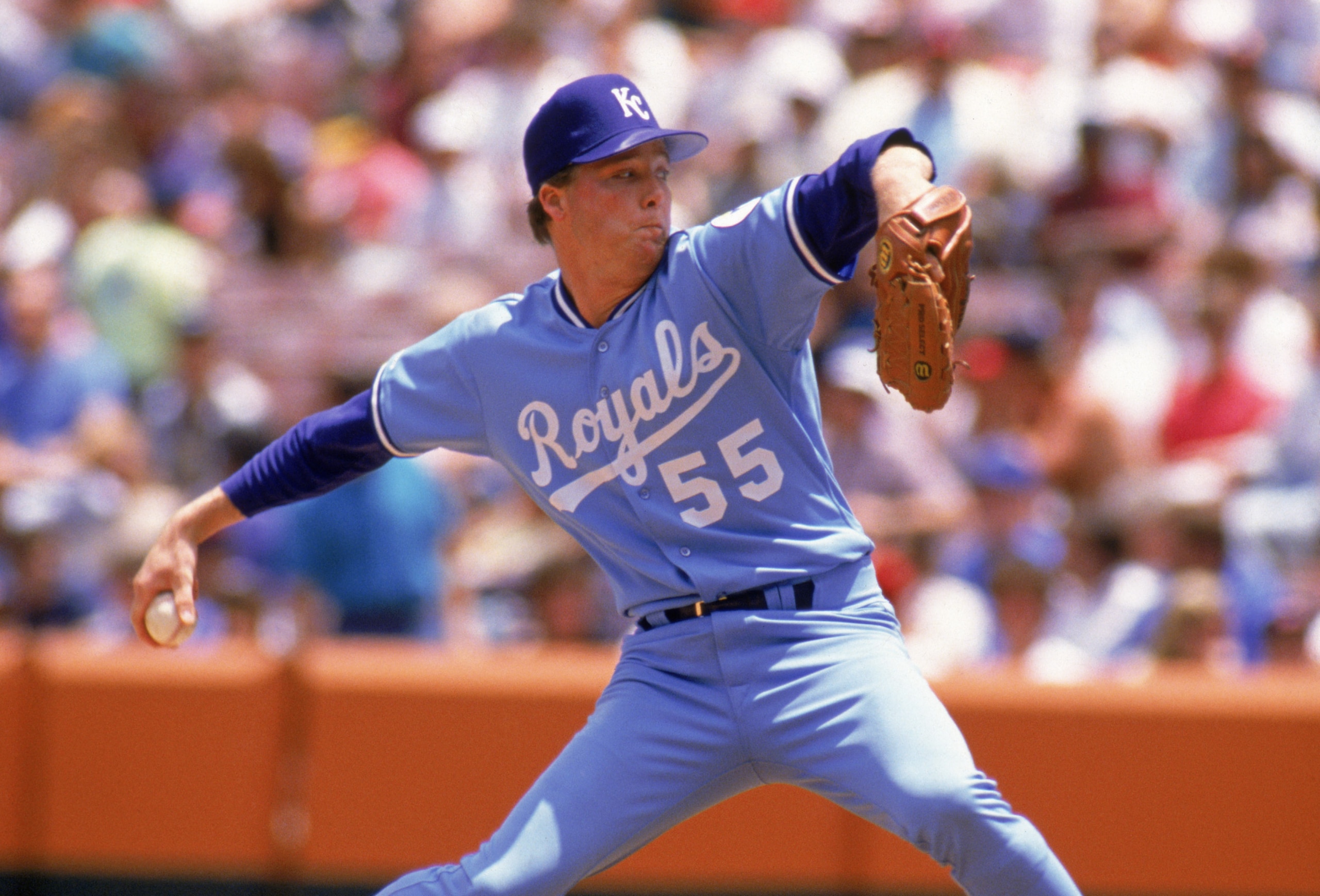
Stats: 120-90, 3.47 ERA (131 ERA+), 1.25 WHIP, 1,494 K, 1,867.2 IP, 47.6 WAR
Postseason: N/A
WAR/100: 2.55
Kevin Appier has a strong claim to the title of most underrated pitcher of the 1990s.
That'll happen when you're playing for a Kansas City Royals team that posted just two winning seasons and zero playoff appearances during the decade.
The No. 9 overall pick in the 1987 draft, Appier became a full-time member of the rotation in 1990 and went 12-8 with a 2.76 ERA and 127 strikeouts in 185.2 innings to finish third in AL Rookie of the Year voting.
From 1990 through 1997, he posted a 3.22 ERA and 140 ERA+ while averaging 30 starts and 205 innings per year. His 46.4 WAR during that eight-year stretch made him one of baseball's elite players.
Here's a list of all the pitchers and position players with more than 45 WAR during that span:
- Barry Bonds: 68.3
- Roger Clemens: 57.2
- Ken Griffey Jr.: 55.9
- Greg Maddux: 55.6
- Frank Thomas: 47.0
- Kevin Appier: 46.4
Impressive company for an oft-overlooked 1990s star.
9. John Smoltz
13 of 21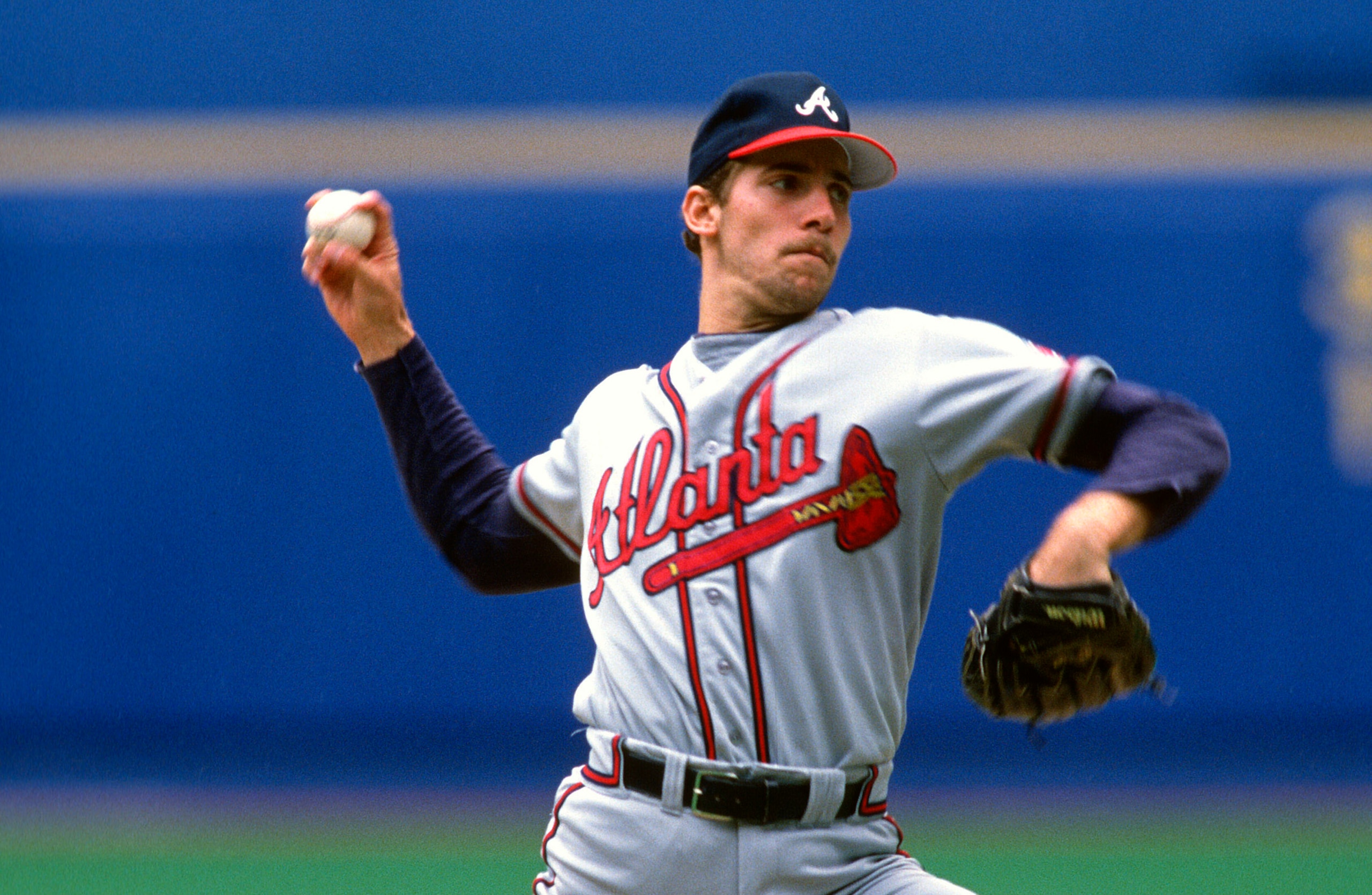
Stats: 143-95, 3.32 ERA (124 ERA+), 1.18 WHIP, 1,893 K, 2,142.1 IP, 39.8 WAR
Postseason: 12-4, 2.77 ERA, 1.16 WHIP, 173 K, 181.2 IP, One-time WS winner
WAR/100: 1.86
John Smoltz spent much of the 1990s pitching in the shadow of teammates Greg Maddux and Tom Glavine, but he was one of the decade's most dominant pitchers in his own right.
The only thing that separates Smoltz from those two is the fact that it took him a bit longer to reach his peak, which came during the second half of the decade:
- 1990-94: 161 GS, 64-57, 3.60 ERA, 110 ERA+, 1,086.0 IP, 15.8 WAR
- 1995-99: 154 GS, 79-38, 3.04 ERA, 141 ERA+, 1,056.1 IP, 24.0 WAR
The cumulative result was more than enough to earn him a place inside the top 10.
His best season came in 1996 when he went 24-8 with a 2.94 ERA, 1.00 WHIP and 276 strikeouts in 253.2 innings for a career-high 7.4 WAR to win NL Cy Young honors.
8. Kevin Brown
14 of 21
Stats: 143-98, 3.25 ERA (128 ERA+), 1.23 WHIP, 1,581 K, 2,211.1 IP, 48.1 WAR
Postseason: 4-4, 3.61 ERA, 1.19 WHIP, 68 K, 72.1 IP, One-time WS winner
WAR/100: 2.18
A solid starter during the first half of the decade while pitching for the Texas Rangers and Baltimore Orioles, Kevin Brown took his game to another level after signing a three-year, $12.6 million deal with the Florida Marlins prior to the 1996 season.
During the three-year stretch from 1996 to 1998, a strong case can be made that he was the best pitcher in baseball:
- 1996 (FLA): 17-11, 1.89 ERA (215 ERA+), 0.94 WHIP, 159 K, 233 IP, 7.9 WAR
- 1997 (FLA): 16-8, 2.69 ERA (150 ERA+), 1.18 WHIP, 205 K, 237.1 IP, 7.0 WAR
- 1998 (SD): 18-7, 2.38 ERA (164 ERA+), 1.07 WHIP, 257 K, 257 IP, 8.6 WAR
His 23.5 WAR during that three-year stretch trailed only Roger Clemens (27.8) among pitchers and only Barry Bonds (25.9), Ken Griffey Jr. (25.4) and Alex Rodriguez (23.6) on the position-player side.
He pitched the Marlins to a World Series title in '97 and then returned to the Fall Classic with the Padres in '98 after Florida traded him as part of an infamous fire sale in a blockbuster deal for a young Derrek Lee.
He parlayed that performance into becoming baseball's first $100 million man when he signed a seven-year, $105 million contract with the Los Angeles Dodgers prior to the 1999 season.
7. Mike Mussina
15 of 21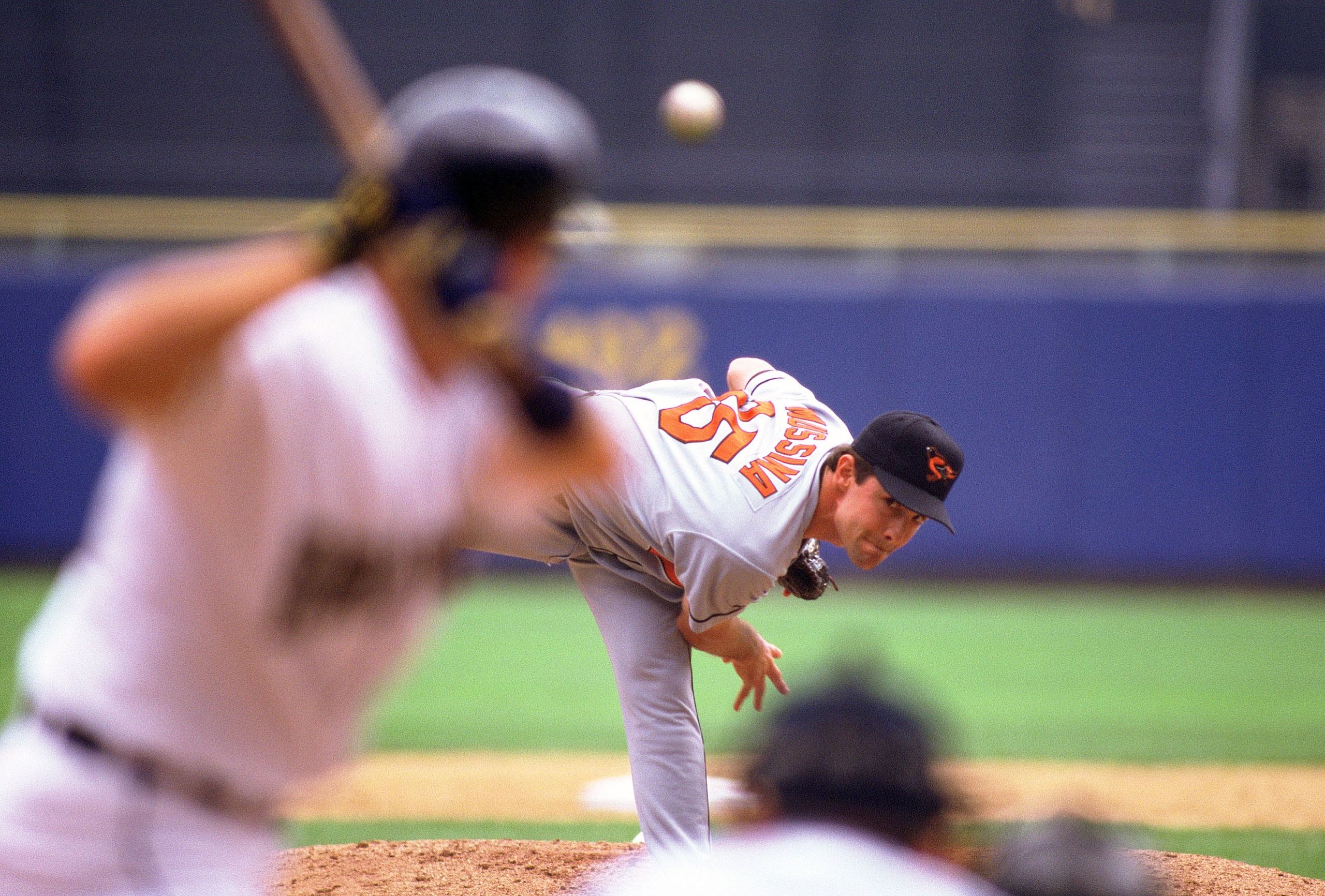
Stats: 136-66, 3.50 ERA (130 ERA+), 1.17 WHIP, 1,325 K, 1,772 IP, 42.0 WAR
Postseason: 2-1, 2.53 ERA, 0.87 WHIP, 53 K, 42.2 IP
WAR/100: 2.37
Mike Mussina got a late start to the decade, as his first full season in the Baltimore Orioles rotation came in 1992 after he went No. 20 overall in the 1990 draft.
He made up for lost time, going 18-5 with a 2.54 ERA, 1.08 WHIP and 130 strikeouts in 241 innings in '92 to earn his first All-Star nod and finish fourth in AL Cy Young voting.
He went on to earn five All-Star selections during the decade while finishing in the top five in Cy Young voting five different times as well.
The O's were a playoff team in 1996 and 1997, reaching the ALCS both years with Mussina to anchor the staff. He did his part during the '97 postseason with a 1.24 ERA in 29 innings.
Aside from his strong work toeing the rubber, he won four straight Gold Glove Awards to close out the decade, and he finished the 1990s with six seasons of at least 5.0 WAR.
6. Tom Glavine
16 of 21
Stats: 164-87, 3.21 ERA (129 ERA+), 1.29 WHIP, 1,465 K, 2,228 IP, 45.0 WAR
Postseason: 10-11, 2.89 ERA, 1.18 WHIP, 123 K, 171.1 IP, One-time WS winner
WAR/100: 2.02
Tom Glavine ranked second to teammate Greg Maddux in wins (164) and innings pitched (2,228) during the 1990s while earning the Opening Day start for the Atlanta Braves in 1990, 1992 and 1999.
A six-time All-Star during the decade, Glavine won a pair of NL Cy Young Awards and finished in the top three in balloting three other times.
He went 20-11 with a 2.55 ERA and NL-leading 153 ERA+ in 246.2 innings in '91 to take home the trophy for the first time while Maddux was still pitching for the Chicago Cubs. He claimed the hardware again in '98 when he was 20-6 with a 2.47 ERA in 229.1 innings.
He topped 200 innings eight times during the decade, with the 1994 and 1995 seasons sandwiched around the strike as the only exceptions, and he had a sub-3.00 ERA five different times.
With 91.9 percent of the vote, he skated into the Hall of Fame in his first year on the ballot in 2014.
5. David Cone
17 of 21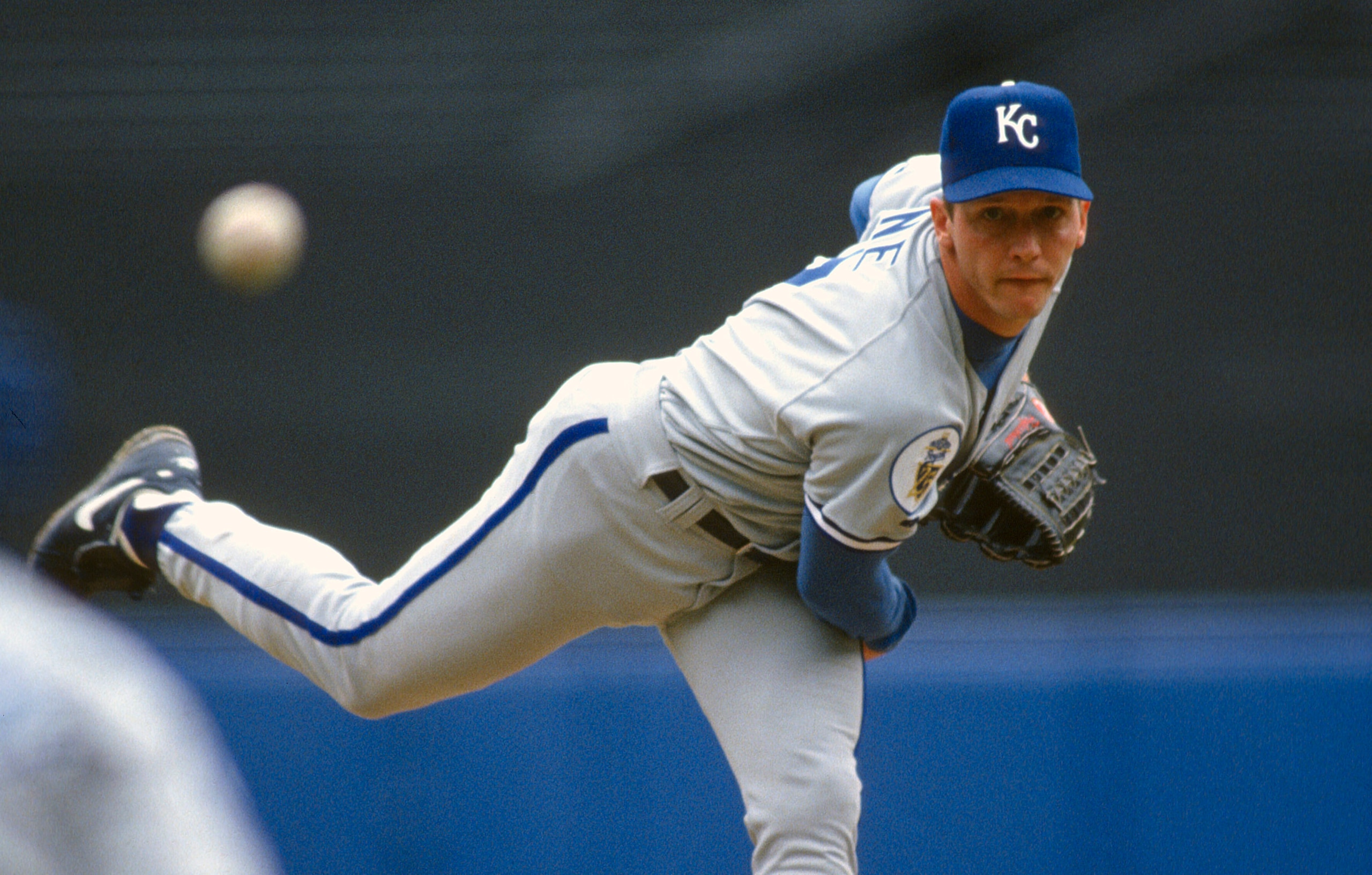
Stats: 141-85, 3.21 ERA (135 ERA+), 1.21 WHIP, 1,928 K, 2,017 IP, 52.9 WAR
Postseason: 7-2, 3.77 ERA, 1.39 WHIP, 85 K, 98 IP, Four-time WS winner
WAR/100: 2.62
David Cone won four World Series titles during the 1990s, first as a hired gun for the Toronto Blue Jays in 1992 and then as one of the anchors of the starting rotation for the New York Yankees dynasty.
He spent the first two-and-a-half seasons of the decade with the New York Mets, earning his second career All-Star selection in '92 before the Mets traded him to the Blue Jays that August in a deal that included Jeff Kent.
He signed a three-year, $18 million deal to return to the Kansas City Royals team that drafted him in 1993, becoming the highest-paid pitcher in baseball. He then won AL Cy Young honors in 1994 when he went 16-5 with a 2.94 ERA in 171.2 innings.
The Royals flipped him to the Blue Jays that offseason, and Toronto traded him again to the Yankees at the '95 trade deadline as a rental. He ended up re-upping with the Yankees in free agency, and he went 51-24 with a 3.23 ERA and 142 ERA+ over the final four years of the decade to help the team win a trio of World Series titles.
4. Pedro Martinez
18 of 21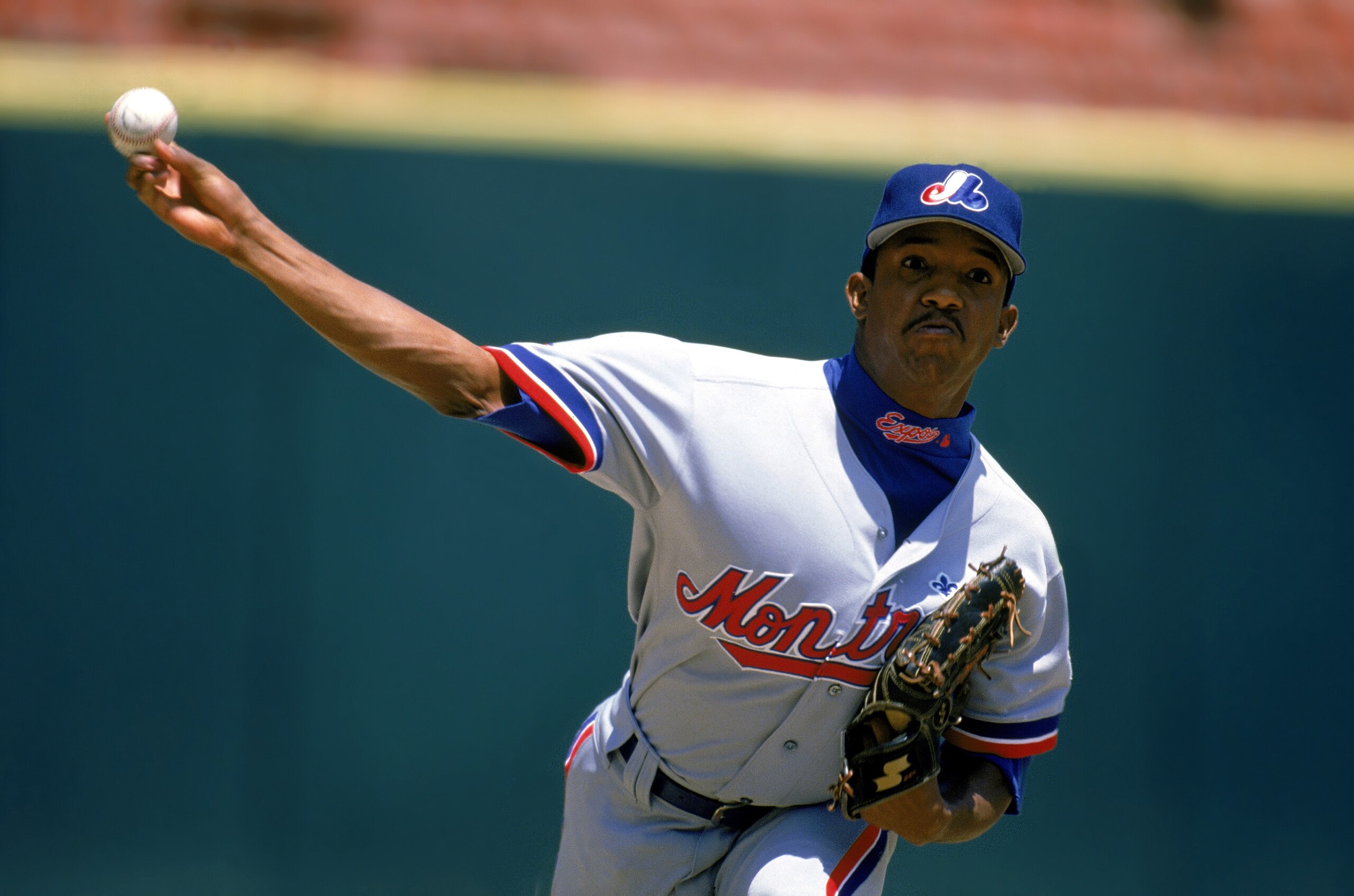
Stats: 107-50, 2.83 ERA (156 ERA+), 1.07 WHIP, 1,534 K, 1,359.1 IP, 40.5 WAR
Postseason: 3-0, 1.13 ERA, 0.71 WHIP, 31 K, 24.0 IP
WAR/100: 2.98
An electric reliever with the Los Angeles Dodgers to begin his career, Pedro Martinez posted a 2.61 ERA with two saves and 14 holds with 119 strikeouts and 57 walks in 107 innings in 1993 at the age of 21.
The ill-advised decision to trade him to the Montreal Expos that offseason for speedster Delino DeShields still stands as one of the worst trades in MLB history.
In his first three seasons with the Expos, he posted a 3.56 ERA and 121 ERA+ with 538 strikeouts in 556 innings, earning his first All-Star selection in 1996. Those are solid numbers, but they were in no way indicative of his impending dominance
The final three years of the decade marked the beginning of one of the most impressive stretches by any pitcher in baseball history.
- 1997: 17-8, 1.90 ERA, 219 ERA+, 0.93 WHIP, 305 K, 241.1 IP, 9.0 WAR
- 1998: 19-7, 2.89 ERA, 163 ERA+, 1.09 WHIP, 251 K, 233.2 IP, 7.3 WAR
- 1999: 23-4, 2.07 ERA, 243 ERA+, 0.93 WHIP, 313 K, 213.1 IP, 9.8 WAR
He won the NL Cy Young Award in '97, and the Expos sold high, shipping him to the Boston Red Sox in exchange for pitching prospects Carl Pavano and Tony Armas. He added another Cy Young Award in '99, and his next-level dominance continued through the 2003 season.
3. Randy Johnson
19 of 21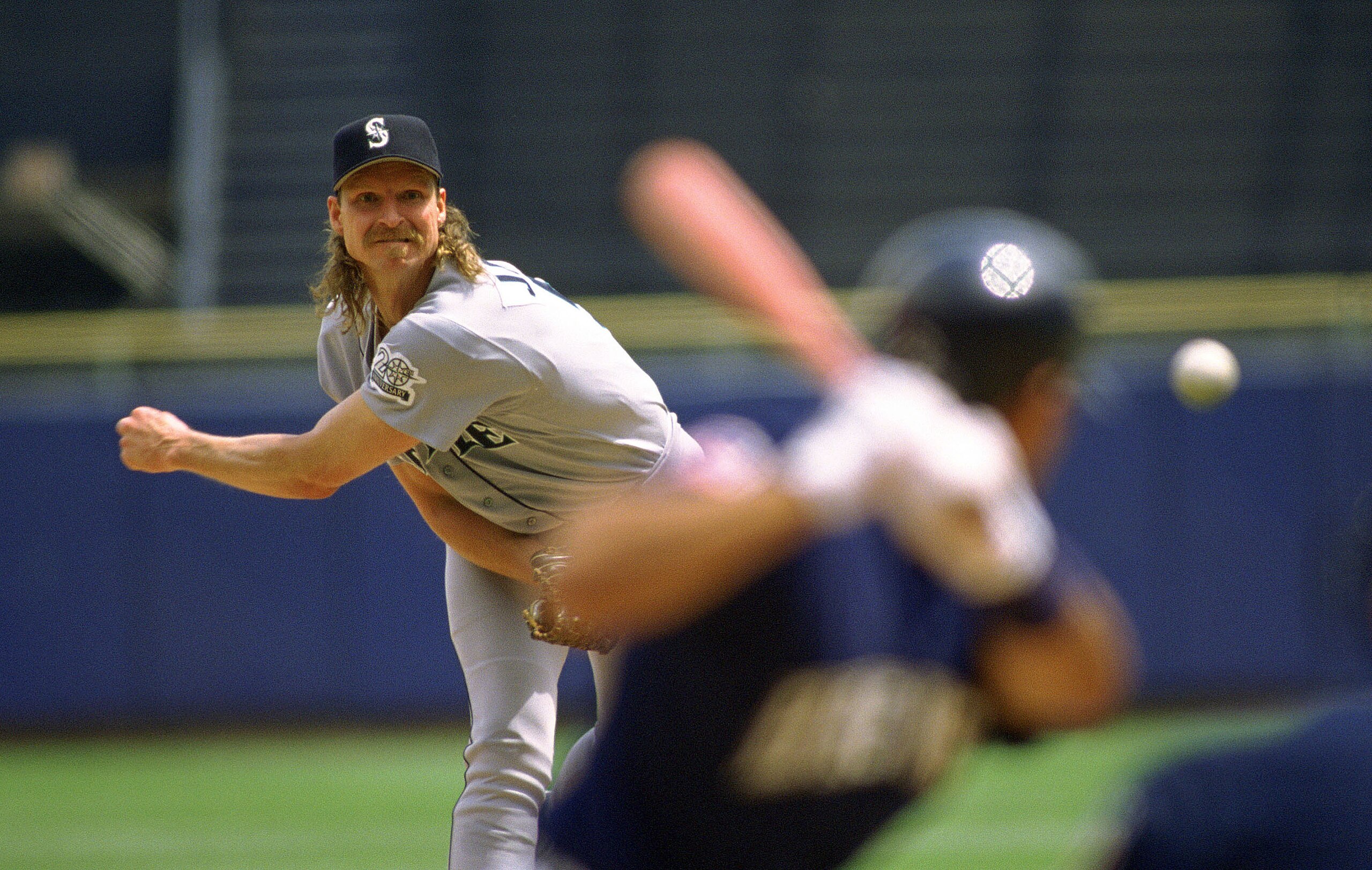
Stats: 150-75, 3.14 ERA (140 ERA+), 1.20 WHIP, 2,538 K, 2,063.1 IP, 52.1 WAR
Postseason: 2-6, 3.71 ERA, 1.15 WHIP, 73 K, 60.2 IP
WAR/100: 2.53
Randy Johnson began the 1990s by leading the AL in walks for three consecutive years, offering up free passes at a 5.9 BB/9 clip while posting a 3.79 ERA and 105 ERA+.
Then he turned a corner in 1993.
The flamethrowing southpaw went 19-8 with a 3.24 ERA and 308 strikeouts in 255.1 innings, while trimming his walk rate to a more manageable 3.5 BB/9. He finished second in AL Cy Young voting that season and ascended to the level of ace.
His peak with the Seattle Mariners came in 1995 when he went 18-2 while leading the AL in ERA (2.48), ERA+ (193), WHIP (1.05) and strikeouts (294) to take home AL Cy Young honors. That marked the fourth consecutive season that he led the AL in punchouts.
After injuries limited him to 61.1 innings in 1996, he went 20-4 with a 2.28 ERA and 291 strikeouts in 213 innings in 1997. That ended up being his final full season in Seattle, as the Mariners traded him to the Houston Astros at the deadline the following year. He went 10-1 with a 1.28 ERA in 11 starts with Houston post-trade.
He joined the Arizona Diamondbacks in free agency prior to the 1999 season and kicked off a run of four straight NL Cy Young wins by going 17-9 while leading the NL in ERA (2.48), ERA+ (184), strikeouts (364), innings pitched (271.2) and complete games (12).
Had his peak not stretched over two different decades, he would have had a strong case for the No. 1 spot.
2. Roger Clemens
20 of 21
Stats: 152-89, 3.02 ERA (151 ERA+), 1.18 WHIP, 2,101 K, 2,177.2 IP, 68.1 WAR
Postseason: 2-2, 3.46 ERA, 1.18 WHIP, 17 K, 31.1 IP, One-time WS winner
WAR/100: 3.13
Roger Clemens won the AL ERA title in 1990 (1.93), 1991 (2.62) and 1992 (2.41), and he took home his third career AL Cy Young Award in '91 when he also paced the AL in strikeouts (241) and innings pitched (271.1).
That three-year stretch was worth an impressive 27.1 WAR and cemented his place as one of baseball's elite pitchers, but the subsequent four seasons were a bit rocky.
He posted middling numbers in 1993 (4.46 ERA, 104 ERA+, 2.6 WAR) and 1995 (4.18 ERA, 117 ERA+, 1.9 WAR), and he hit free agency ahead of his age-34 season in 1997 with something to prove.
The Toronto Blue Jays took a chance that he'd return to elite form when they signed him to a four-year, $40 million contract, and that's exactly what he did.
- 1997: 21-7, 2.05 ERA, 222 ERA+, 1.03 WHIP, 292 K, 264 IP, 11.9 WAR
- 1998: 20-6, 2.65 ERA, 174 ERA+, 1.10 WHIP, 271 K, 234.2 IP, 8.1 WAR
Those seasons netted him his fourth and fifth AL Cy Young Awards. Toronto then traded him to the New York Yankees in exchange for David Wells, Graeme Lloyd and Homer Bush.
He closed out the decade by winning his first World Series ring in 1999.
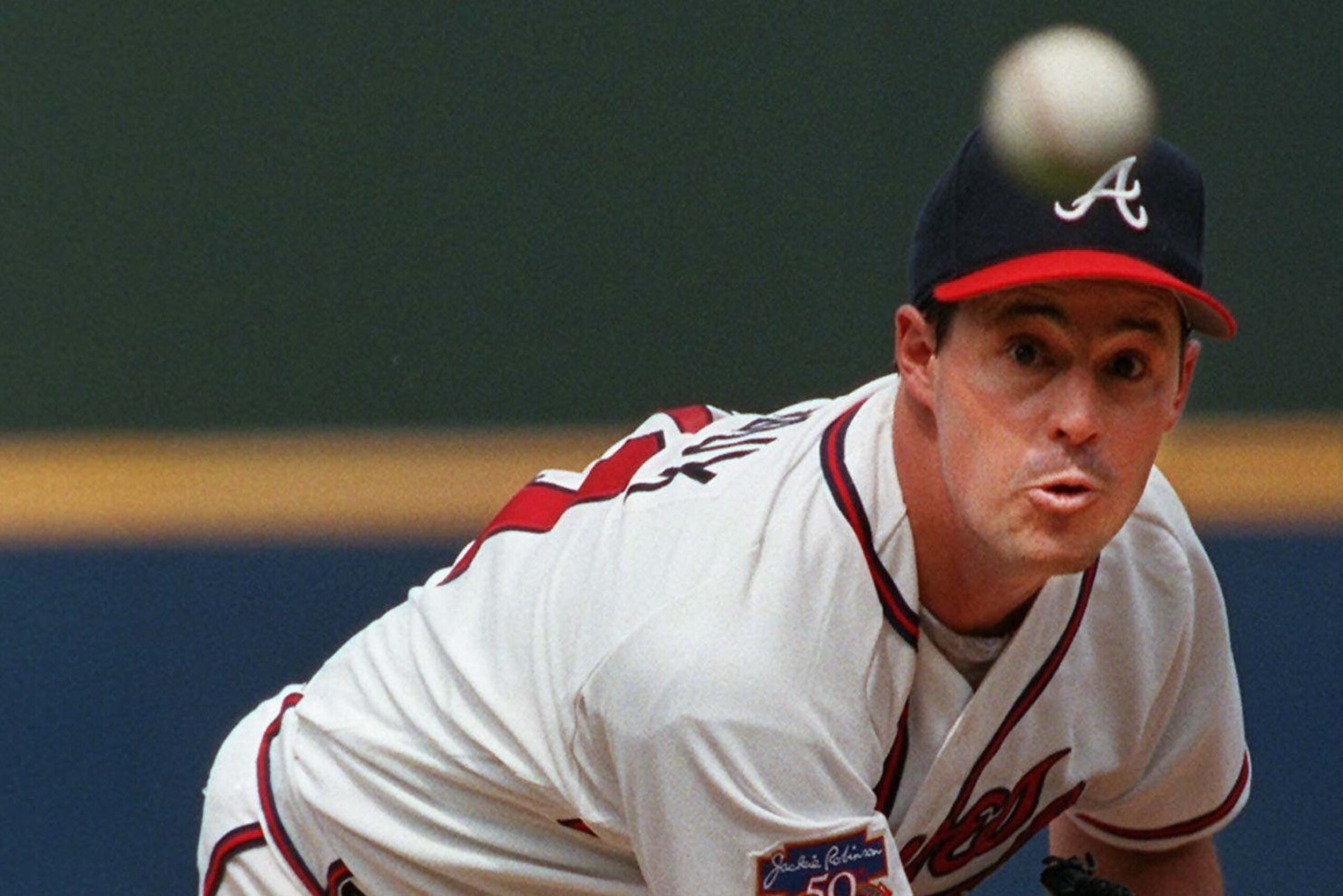
1. Greg Maddux
21 of 21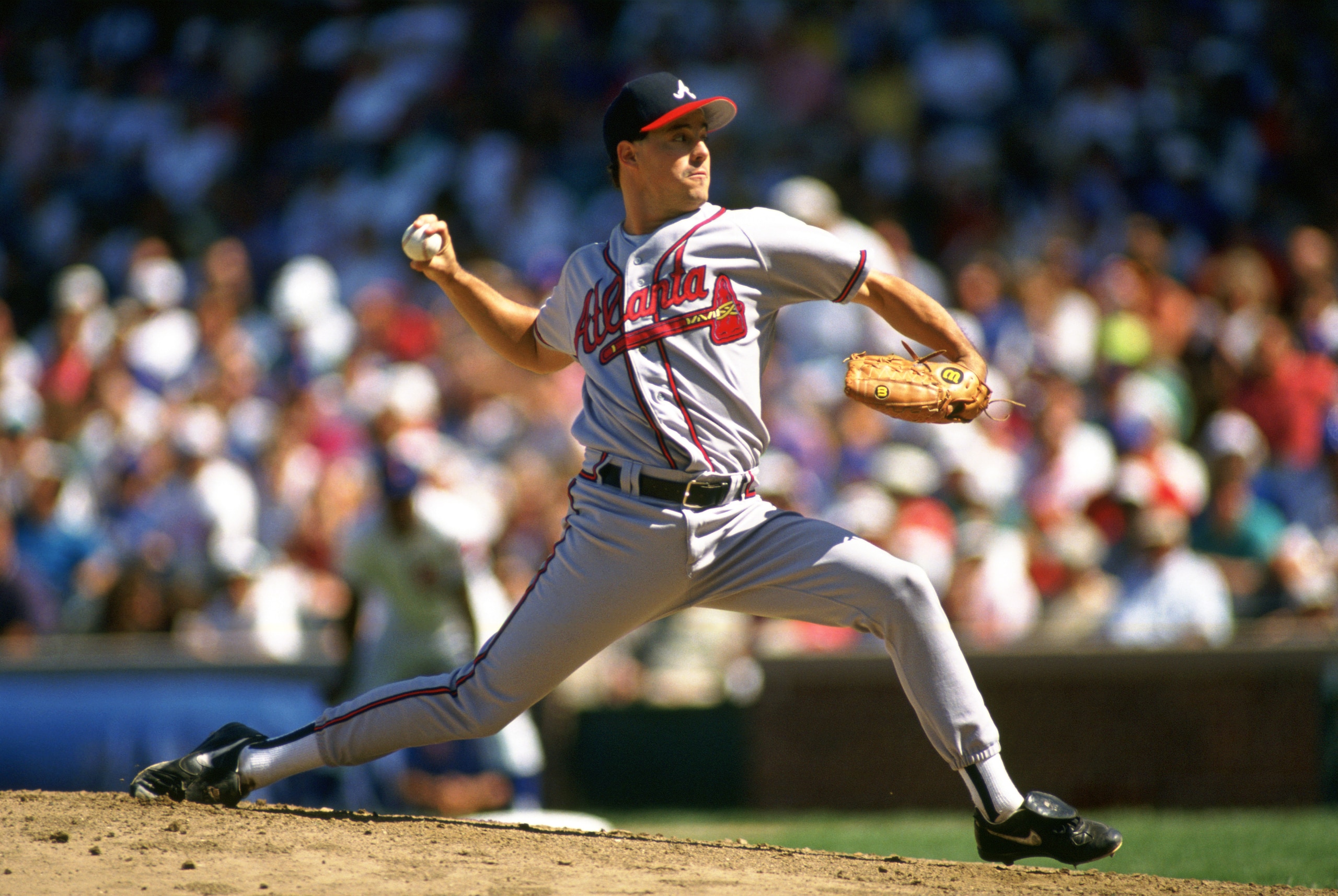
Stats: 176-88, 2.54 ERA (162 ERA+), 1.06 WHIP, 1,764 K, 2,394.2 IP, 65.4 WAR
Postseason: 10-9, 2.39 ERA, 1.11 WHIP, 99 K, 150.2 IP, One-time WS winner
WAR/100: 2.73
After winning his first Cy Young Award with the Chicago Cubs in 1992, Greg Maddux signed a five-year, $28 million contract with the Atlanta Braves in free agency.
He then put together one of the greatest runs in MLB history:
- 1993: 20-10, 2.36 ERA (170 ERA+), 1.05 WHIP, 5.8 WAR
- 1994: 16-6, 1.56 ERA (271 ERA+), 0.90 WHIP, 8.5 WAR
- 1995: 19-2, 1.63 ERA (260 ERA+), 0.81 WHIP, 9.7 WAR
- 1996: 15-11, 2.72 ERA (162 ERA+), 1.03 WHIP, 7.2 WAR
- 1997: 19-4, 2.20 ERA (189 ERA+), 0.95 WHIP, 7.8 WAR
- 1998: 18-9, 2.22 ERA (187 ERA+), 0.98 WHIP, 6.6 WAR
Tallying all that up, he went 107-42 with a 2.15 ERA and 195 ERA+ with a 0.96 WHIP in 1,407.1 innings, winning three more Cy Young Awards and four ERA titles. His 1994 and 1995 ERA+ marks rank fourth and fifth on the all-time single-season list, respectively.
Even at the end of that run when his ERA "ballooned," he had a 3.57 ERA and 126 ERA+ while going 19-9 and logging 3.2 WAR.
He did it all while posting a 6.6 K/9 rate, outthinking hitters rather than overpowering them.
All stats courtesy of Baseball Reference and FanGraphs unless otherwise noted.
Catch up on past "Best of the 1990s" articles: Catchers, First Basemen, Second Basemen, Shortstops, Third Basemen, Outfielders

.jpg?w=2560)
.jpg?w=2560 "Viral Dan Campbell Presser 💙")
.jpg?w=2560 "AD Trolls Bears WR on IG 😂")
.jpg?w=2560 "Cam Ward Says He's Not A Loser")
.jpg?w=2560 "Chargers Fall to 0-5 🤢")
.jpg?w=2560 "Report: Steelers WR to Miss 'Weeks'")