

Dak Prescott Owes Cowboys Nothing After Not Getting Extension
It's a saying that has long been attributed to Dallas Cowboys grand pooh bah Jerry Jones, who has been no stranger over the years to handing out huge contracts. However, the July 15 deadline to sign franchise-tagged players to a long-term deal has passed, and an extension to end all extensions in Big D did not happen. There were some late talks between the Cowboys and Dak Prescott's camp, per NFL Network's Ian Rapoport, but they couldn't come to an agreement.
The Cowboys and Prescott tried a last-minute "Hail Mary" of sorts, per NFL Network's Jane Slater, but that came up short. In failing to get a long-term deal done with their franchise signal-caller, the Cowboys are playing a dangerous game with the future of the organization.
.jpg?w=2560 "Seahawks Cardinals Football")
.jpg?w=2560 "49ers Seahawks Football")
According to Mike Fisher of CowboyMaven, the Cowboys recently made an offer to Prescott that would pay him $35 million per season over five years with about $106 million in guarantees. However, Prescott and his camp were looking for a four-year deal.
Given what ESPN's Jeremy Fowler said on a recent appearance on SportsCenter, the battle lines looked to have been drawn by both sides—and neither appeared inclined to budge.
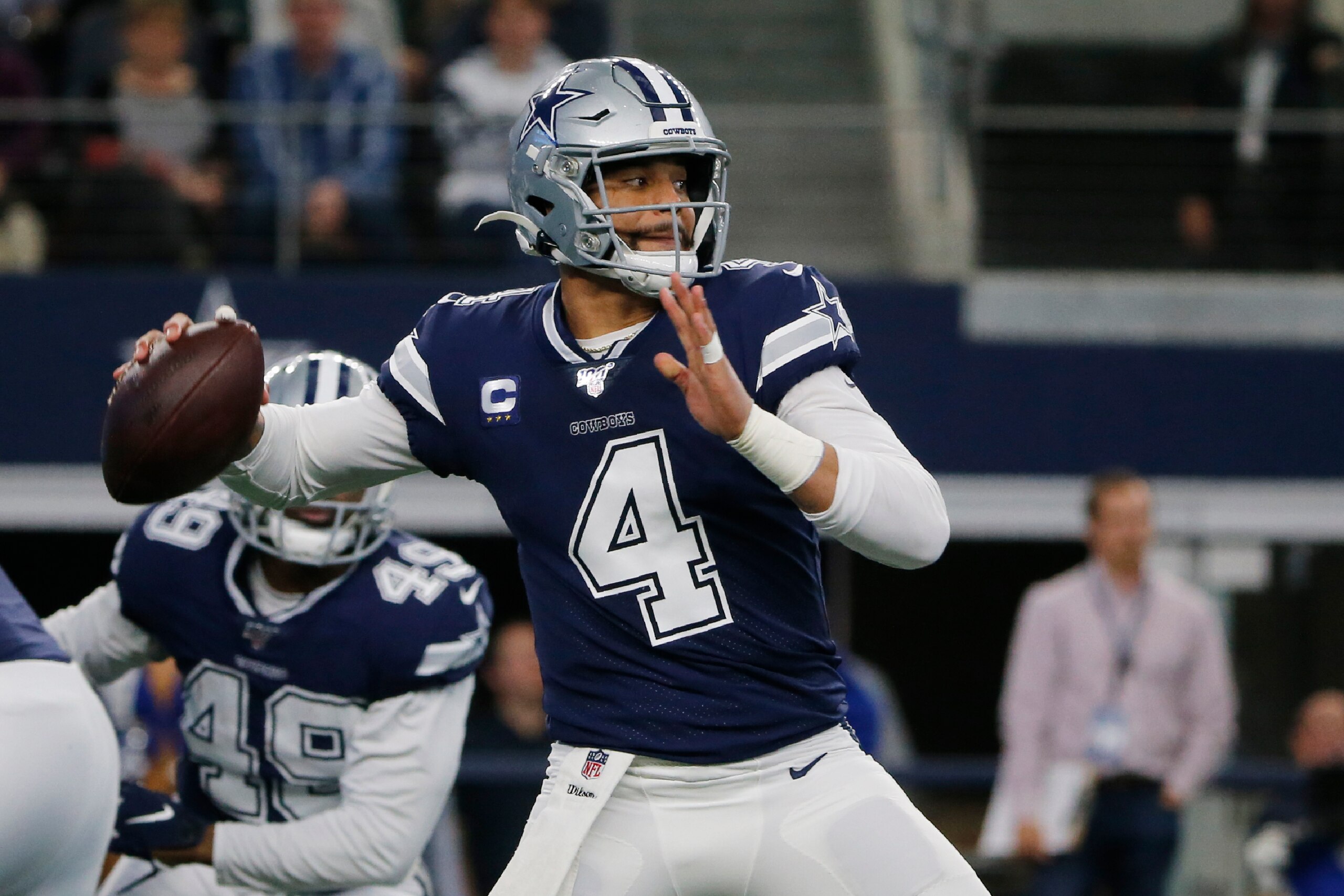
"I'm told the Cowboys are not worried right now. They're going to play this all the way up to the deadline, and they're hopeful that Dak Prescott will take their latest, best offer. Whether that's a new offer at the deadline or their old offer because they didn't hash anything out a few months ago. It's been very quiet since then, to the point where several league sources believe that nothing's going to get done here because Dak already signed his franchise tag tender. It's maybe conceding that nothing's going to get done, but the Cowboys feel they're in a good spot. They're prepared for him to play under the franchise tag if necessary. Dak wants almost a bulletproof contract, solid four-year structure."
At the last minute, there was a glimmer of hope. Per Slater, the two sides were close on a deal that would have landed Prescott a tidy $50 million signing bonus.
However, the clock struck midnight (or in this case, 4 p.m. ET), and that was that.
Prescott will now play the 2020 season under an already-signed franchise tender worth roughly $31.4 million. Doing the franchise tag dance all over again a year from now would bump that number up to about $38 million. Prescott would make around $70 million over two years—a number that would dwarf the $44 million Kirk Cousins made under back-to-back tags in Washington.
Per ESPN's Adam Schefter, those tags propelled Cousins to some rarefied air earnings-wise over the past handful of years.
Of course, that Cousins made the majority of that cabbage playing for the Minnesota Vikings is where the rather dangerous part of this game kicks in. That isn't to say that Prescott is a threat to leave Dallas anytime soon—it would be 2022 (at least) before that's a realistic possibility. But as things stand now, the franchise tag is just about the only leverage Dallas has. And as we saw with Cousins, that plan is far from flawless.
Before we go any further, let's dispel at least one busted narrative: that not signing Prescott long-term would somehow be a blessing for the Cowboys because he doesn't merit a megadeal.
Dak Prescott is admittedly not Patrick Mahomes. No one is talking about handing him a contract that averages $50 million a season, either. But Prescott also isn't Cousins.
As David Helman pointed out on the Cowboys' official website, Prescott was second in the league in passing yards last year with 4,902. He finished fourth in touchdown passes with 30. He slotted third in expected points added, behind only Lamar Jackson and Mahomes. He ranked fourth in total QBR behind Jackson, Mahomes and Drew Brees. His career mark for adjusted net yards per pass attempt (6.92) is tied with Philip Rivers for seventh-best in NFL history. Per NFL.com's NextGen Stats, he was the quarterback who most exceeded deep-ball passing expectations in the NFL in 2019.

He's also 40-24 as the team's starter and is a fraction of a percentage point behind Tony Romo for the highest passer rating in franchise history.
If Prescott isn't a top-five quarterback, he all but certainly is a top-10 one. And in the 21st-century NFL, top-10 quarterbacks get paid.
Given that expensive reality, it's becoming more and more difficult to imagine what the Cowboys hope to accomplish by dragging this out.
It's understandable that Dallas wants to tack a fifth year onto Prescott's extension, for a couple of reasons.
The first is obvious: Another year of team control is another year of team control. There's also the financial matter of a fifth year over which to spread Prescott's bonus—a hefty consideration for a team that has already handed big contracts to linebacker Jaylon Smith, wide receiver Amari Cooper and running back Ezekiel Elliott in recent years. With eight players under contract (counting Prescott) who have average annual salaries of $10 million or more, the Cowboys are up against the salary cap—again.
But Prescott has given no real indication he's willing to acquiesce to that request. And things aren't going to get any less expensive from here.
Barring a complete catastrophe in 2020, it's nearly impossible to imagine a scenario a year from now where the Cowboys would even be willing to consider moving on from Prescott. Provided he has another season that looks roughly like his first four, the Cowboys are going to want Prescott back leading the offense in 2021.
That leaves two options. The first is that second straight franchise tag of around $38 million—a tag that would balloon all the way over $54 million if Dallas tried to tag Prescott a third time in 2022. It's a fat chunk of change—a figure that would hit the Cowboys' cap in its entirety each season.
The second option is a do-over of this drama. Player and team go back to the drawing board and try to hash out an extension. Even with the economic uncertainties wrought by the COVID-19 pandemic hanging over the NFL, the odds of that deal becoming less expensive in 2021 are slim to none—not after Mahomes hit the jackpot and with a similar bonanza looming for Deshaun Watson of the Houston Texans.
NFL salaries do not go down—especially at quarterback.
Add in that Prescott would know at that point that he'd either hit free agency in 2022 or get $50 million (and then some) in guaranteed money for a single season, and Dallas would be in a worse negotiating position next spring than it is now.
That the Cowboys waited until the sand was almost out of the hourglass before making Prescott an offer that interested him doesn't instill a ton of confidence that things will be any less rocky in 2021 than they were in 2020
This time, the deadline didn't make the deal. Perhaps leverage will next season.
The problem is, Jones and the Cowboys don't really have any.
.jpg?w=2560 "Packers 49ers Football")
.jpg?w=2560 "Steelers Browns Football")
.jpg?w=2560 "Viral Dan Campbell Presser 💙")