

Patrick Mahomes, George Kittle and the NFL's All-Underpaid Team of 2020
Patrick Mahomes is the quarterback and captain of our 2020 NFL All-Underpaid Team. And no, we haven't been asleep for the last 10 days or so.
Forget that half-billion-dollar contract you've been reading about. Most of that half-billion comes in the form of "tomorrow bucks." Mahomes' cap numbers over the next three years are $5,346,538, $24,806,905 and $31,450,000, respectively. That's about $61.6 million over three years, far less that Ryan Tannehill ($86 million over the next three years) or Kirk Cousins ($97 million) earned in their recent extensions. The reigning Super Bowl champion and former MVP may be living large off his new deal by 2027 or so, but for now, he's the NFL's biggest bargain.
.jpg?w=2560 "Seahawks Cardinals Football")
.jpg?w=2560 "Packers 49ers Football")
As you might expect, the rest of our All-Underpaid Team is mostly populated by young stars still on their rookie contracts. To keep things from getting monotonous and provide the team with a little more leadership, we mixed in a few veterans whose contributions far outstrip their compensation.
Our underpaid starting lineups would only eat up about $97 million in cap space, Mahomes included, giving any general manager both a roster full of Pro Bowlers and an extra $100 million or so in cap space to spend/squander. But really, our All-Underpaid Team is even more affordable than that, because much of that $97 million in cap space comes in the form of signing bonuses which were paid out 2-4 years ago.
And yes, we selected a second quarterback for those of you who don't believe Mahomes is underpaid. After all, it's one thing to tell you to forget about a half-billion dollars; it's another thing to actually forget about a half-billion dollars.
Backup Quarterback: Gardner Minshew, Jaguars

Maybe Minshew is a true franchise quarterback in the making. Maybe he's just a groovy 2019 mirage. Either way, he'll earn only $675,000 in base salary to be the Jaguars' uncontested starter and the team's most marketable personality this year. Thanks to the way rookie contracts are structured, he'll earn only $850,000 in base salary next year, and he won't be eligible to negotiate an extension until 2022. Until then, maybe he can earn some extra cash with a jorts endorsement or something.
If Minshew continues to develop, he'll be in Dak Prescott's position in two years, earning $30-plus million for one year on the franchise tag while the Jaguars bungle his contract negotiations (because you know they will). Even if he fades as a starter, Minshew has positioned himself perfectly to eventually replace Ryan Fitzpatrick as the NFL's designated pesky/quirky backup for hire with funky facial hair. That job has paid Fitzpatrick about $60 million and counting over the years. So Minshew, like Mahomes, won't be underpaid forever.
Running Back: Chris Carson, Seahawks
Poor Chris Carson. He made the Seahawks roster as a lowly seventh-round pick in 2017, and offensive coordinator Brian Schottenheimer has used him like a rented stump grinder for the past two seasons. Carson had 315 touches for 1,496 scrimmage yards last season and earned only $645,000 in base salary for his labor.
Carson will earn more than $2.1 million in the final year of his contract this season thanks to built-in performance escalators, but he spent the offseason rehabbing from a hip injury. While he's expected to be ready for the start of the season, he's also entering his contract year as high-mileage damaged goods, which means he'll likely be low-balled in extension talks and wind up in the discount bin if he tests free agency. Carson may never get to cash in for his pair of 1,000-yard seasons.
Teams are so skittish about offering big contracts to running backs these days that it's better for a rusher to start his career as an all-purpose committee back than as a workhorse. For example...
Running Back: Philip Lindsay, Broncos
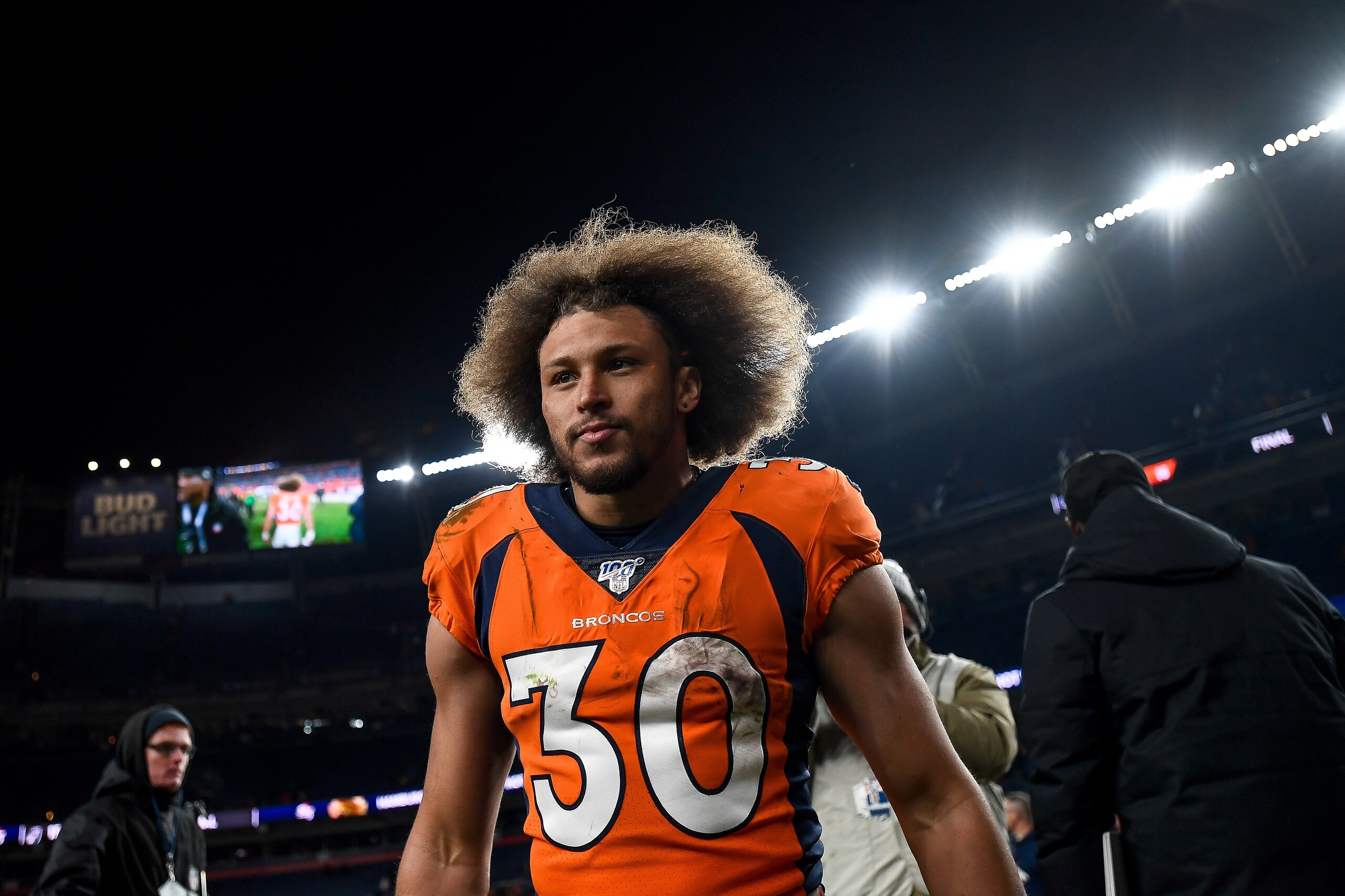
Lindsay earned a roster spot as an undrafted rookie in 2018 and quickly worked his way up to chairman of the Denver Broncos' running back committee. He earned a total of only $1.05 million in base salary for two 1,000-yard rushing seasons and is scheduled to earn just $750,000 this year as a platoon partner with newcomer Melvin Gordon, who is guaranteed $5 million in salary and bonuses.
If Lindsay can upstage Gordon the way Austin Ekeler did for the Chargers, he could earn a contract similar to the four-year, $24.5 million deal Ekeler signed this offseason. That still isn't much money for someone who is so central to the Broncos offense, but that's the problem with running backs: Many of them are grossly underpaid until the moment they are grossly overpaid. Given the choice, most would probably prefer the latter.
Wide Receiver: Kenny Golladay, Lions
Golladay led the NFL with 11 receiving touchdowns last season despite spending half the year catching passes from Jeff Driskel and David Blough. He will earn only $2.1 million in base salary in the final year of the rookie contract he signed as a third-round pick in 2017. Golladay has earned a total of about $2.4 million in compensation for a career which already includes two 1,000-yard seasons.
Not to tell Bob Quinn and Matt Patricia what to do, because they'll probably yell at me to sit up straight or try to trade me or something, but the Lions have about $30 million in cap space right now. They could easily whip up an extension that keeps Golladay happy for years. But hey, if they want to wait for him to hit the free-agent market and instead earmark that money for signing 36-year old Julian Edelman in 2022, that's their call. For now.
Wide Receiver: Robert Woods, Rams
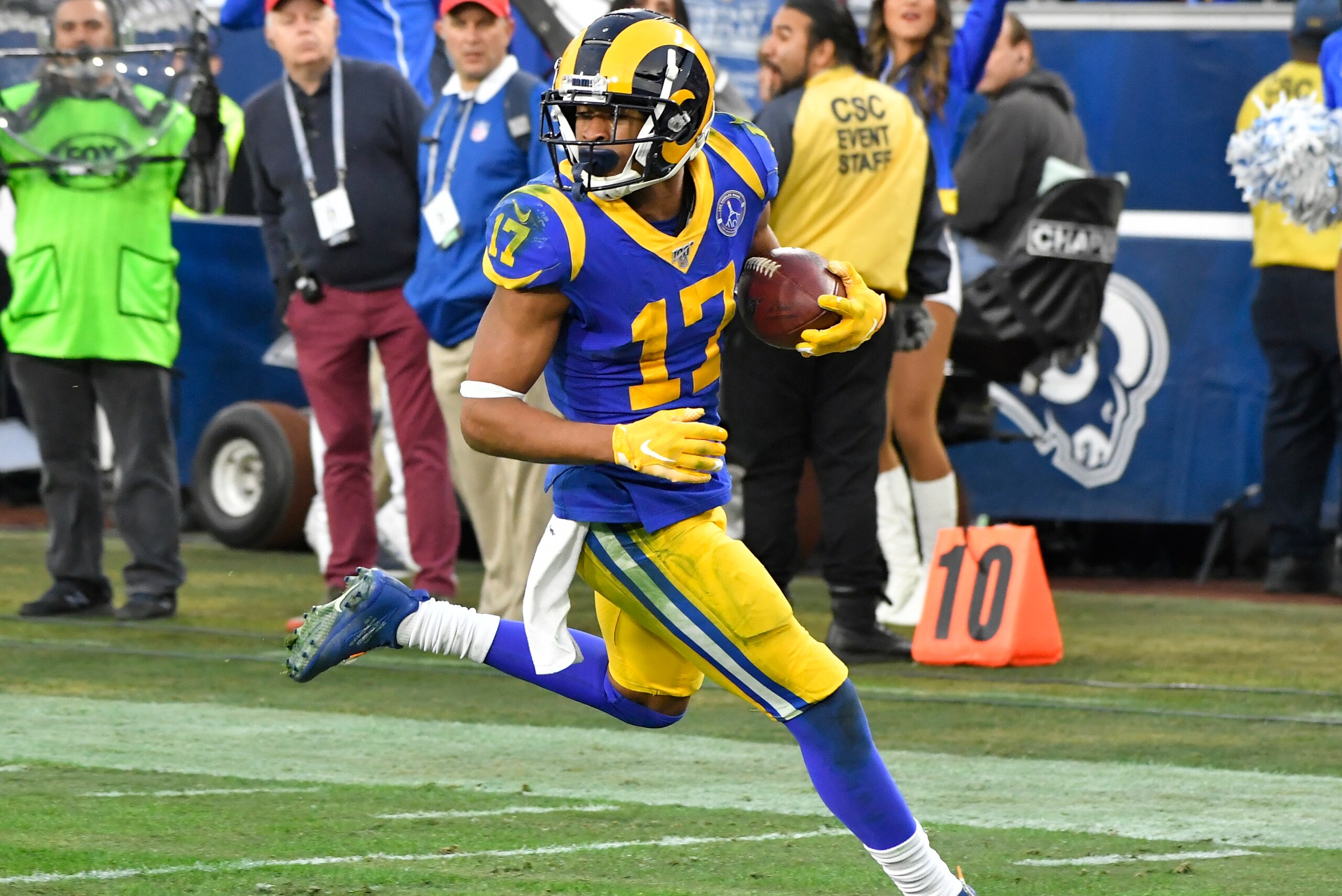
Instead of adding another young player on his rookie contract to our roster, let's spotlight an undervalued veteran. Woods is scheduled to earn only $5 million in base salary in 2020 as part of the five-year, $34 million deal he signed in 2017. Woods caught 90 passes for 1,134 yards and two touchdowns last year, went 86-1,219-6 during the Rams' 2018 Super Bowl run, may be the league's best blocking wide receiver and is useful on end-arounds, making him a versatile weapon and ideal system fit in the Sean McVay offense. He's an absolute bargain for a Rams team that has a habit of overpaying just about everyone else.
Tight End: George Kittle, 49ers
Kittle is one of the most obvious choices on this list. He wants more money after back-to-back Pro Bowl nods and 1,000-yard seasons, and he's likely to get that money sooner than later.
To underscore just how undercompensated Kittle is, here's a partial list of tight ends set to earn a higher base salary than Kittle ($2.1 million in the final year of his rookie contract) in 2020: Jesse James ($3.8 million), Darren Fells ($2.75 million), Lee Smith ($2.65 million), Maxx Williams ($2.85 million from a Cardinals team that doesn't even want to use tight ends), Jeff Heuerman ($3 million) and Virgil Green ($2.7 million after 99 receptions in nine NFL seasons). A Bengals special teamer named Cethan Carter who is listed as a tight end is slated to earn $2.1 million this year, roughly equal to Kittle. Good for Carter! But Kittle should earn much, much, much more than him.
Offensive Line: Ravens
The Ravens are set to spend roughly $25.2 million on their offensive line this year, the lowest figure in the NFL. Ronnie Stanley's $12.9 million fifth-year option accounts for roughly half of that dough, and Stanley is worth every penny. Retired All-Pro guard Marshall Yanda is eating up $4 million in dead cap space. Center Matt Skura costs the Ravens just $2.1 million, right tackle Orlando Brown a mere $750,000 on his rookie contract, and others—from ageless backup tackle Andre Smith to a half-dozen contenders for the starting guard spots—all average well under $1 million per year.
What are the Ravens getting for an offensive line that costs them less than what the Vikings pay Kirk Cousins? Just a unit capable of helping them average more than 200 rushing yards per game, win 14 games and protect reigning MVP Lamar Jackson. That's all.
Edge-Rusher: Everson Griffen, Free Agent

Griffen, who recorded eight sacks last season and earned four Pro Bowl nods in the last five years, remains unsigned at press time. The ice-cold market for Griffen's services has been one of the quiet mysteries of this offseason. Chris Tomasson of the St. Paul Pioneer Press recently speculated teams may be wary of the mental health concerns that prompted Griffen to miss several games in 2018, which would be a foolish reason for teams to shy away from a productive pass-rusher who performed well last season. But NFL teams do lots of things for foolish reasons.
This story will inevitably end with the Patriots signing Griffen to a league-minimum, incentive-laden deal and making the rest of the league look silly yet again. Until then, Griffen is earning exactly $0.00. It's hard to get more underpaid than that.
Edge-Rusher: Joey Bosa, Chargers
It's easier to find an underpaid quarterback than an underpaid edge-rusher. Thirty edge-rushers have contracts worth at least $10 million per year, while only 18 recorded 10 or more sacks last season, so there aren't many outperforming their contracts. If you are a productive sackmeister, you're either well-paid or still on your rookie deal. And because top edge-rush prospects are often drafted early in the first round, even the guys on rookie contracts are doing just fine. Myles Garrett is indeed underpaid with a $4.6 million base salary this year, but just about everyone else on our All-Underpaid Team would happily trade places with him.
Bosa isn't exactly going hungry with a $14.4 million base salary this season. But the total five-year, $40 million value of his contract has been an absolute steal for the Chargers. In his four NFL seasons, Bosa has recorded 40 sacks, has three double-digit sack seasons, made two Pro Bowls and become a key cog in the team's dime-heavy defensive tactics.
Bosa's next contract will launch him into the $20-million-per-year range, whether the penny-pinching Chargers (who haggled their way into a hassle with Bosa as a rookie) like it or not.
Defensive Tackle: Poona Ford, Seahawks
Ford, a favorite among draftniks and tape-grinders alike, has earned $1.05 million over his first two seasons after making the Seahawks as an undrafted free agent in 2018. He has proved to be a stout run plugger in the middle of the defensive line. Players like him rarely break the bank—teams prefer to spend their defensive line money on sack producers—but Ford deserves a heck of a lot more than the league minimum.
Defensive Tackle: Lawrence Guy, Patriots
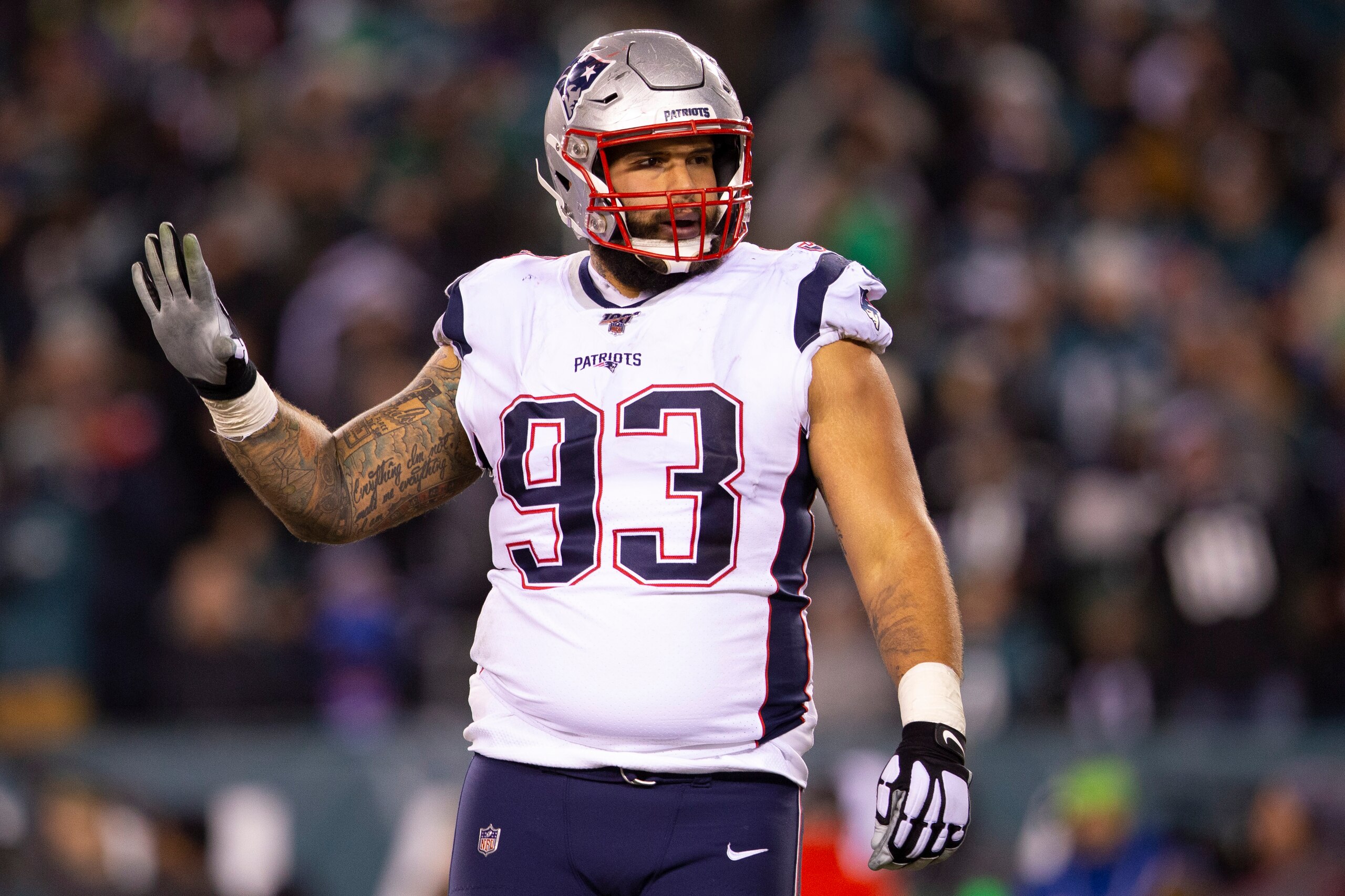
Guy is slated to earn only $2.9 million in base salary in the final year of his four-year contract with the Patriots, though a variety of bonuses will push his compensation into the $4 million range. Guy's stats won't blow your mind (five sacks over the past three seasons), but he's a classic Bill Belichick system fit who can slide all over the defensive line, stopping the run and providing valuable support services.
Guy's Approximate Value last season was 14, per Pro Football Reference. By contrast, Julian Edelman's was 10 and Tom Brady's was (gulp) 11. Based on those examples, Approximate Value is pretty darn approximate, but it's fine statistical shorthand for "Guy was a starter for one of the league's best defenses, so he had to be doing something right."
The Patriots turned the 30-year old Guy into a Super Bowl-caliber starter after he bounced around the Colts, Chargers and Ravens rosters for years. He's a prime candidate to sign a gonzo free-agent contract next year with the Lions, Dolphins or some other team run by former Belichick acolytes. Hang in there, Lawrence: Doing your job for the Patriots always pays off in the end.
Linebacker: Darius Leonard, Colts
Leonard was named an All-Pro and led the NFL in tackles as a rookie, made the Pro Bowl while intercepting five passes and recording five sacks last year, and he's slated to earn $1.1 million in base salary this season and just under $1.5 million next year on the rookie deal he signed as a second-round pick.
The moral of the story for players: stay as productive and healthy as you can until that rookie contract expires. The moral of the story for teams: draft wisely with those second-round picks and you'll be able to pay Pro Bowlers peanuts for years.
Linebacker: A.J. Johnson, Broncos
Johnson's NFL career did not begin until he was 26 due to 2014 sexual assault charges for which he was eventually acquitted. He earned a roster spot with the Broncos in 2018 and reached the starting lineup last season. He's become one of the best players on a star-studded defense, and he's slated to earn only $750,000 this year.
Linebacker: K.J. Wright, Seahawks

Our All-Underpaid Team needs a veteran in the middle of the defense to make pre-snap adjustments and such. And who would be better for that task than Wright, who started for one the best defenses of the last decade? Wright has slipped a bit from his days among the Legion of Boom supporting cast, but he's still a starter for a playoff team, and he provides a decade of experience and a Super Bowl ring for the low base salary of $5 million, plus some bonuses.
Cornerback: Tre'Davious White, Bills
All first-round picks receive four-year contracts with fifth-year options. But there's a big dollar difference between getting picked toward the top of the first round and the bottom.
White, the 27th overall pick in 2017, will make only $1.8 million in base salary this season and $10.2 million if he plays through his fifth-year option in 2021. As mentioned earlier, Myles Garrett will earn $4.6 million this year and is scheduled for $15.1 million next year as the top pick in the same draft.
White was a first-team All-Pro last year, led the league with six interceptions and is a big reason why the Bills are now a playoff team.
The Bills currently have the cap space to sign him to an extension. They should get to work on that.
Cornerback/Safety: The McCourty Twins, Patriots
Devin McCourty is a 32-year old multipurpose defensive back with three Super Bowl rings who is coming off a five-interception season in 2019. Jason McCourty is a 32-year old (they're twins, folks) cornerback whom Bill Belichick scooped up after the Titans and Browns decided he was washed (heh). He has since proved to be a capable starter for the last two seasons for one of the NFL's best defenses.
Together, the McCourty twins will provide unmatched leadership and Patriots Way secrets for less than $5 million in combined base salary.
The first Patriots Way secret they should provide is just how Belichick keeps acquiring premium talent for such low prices.
Safety: Budda Baker, Cardinals
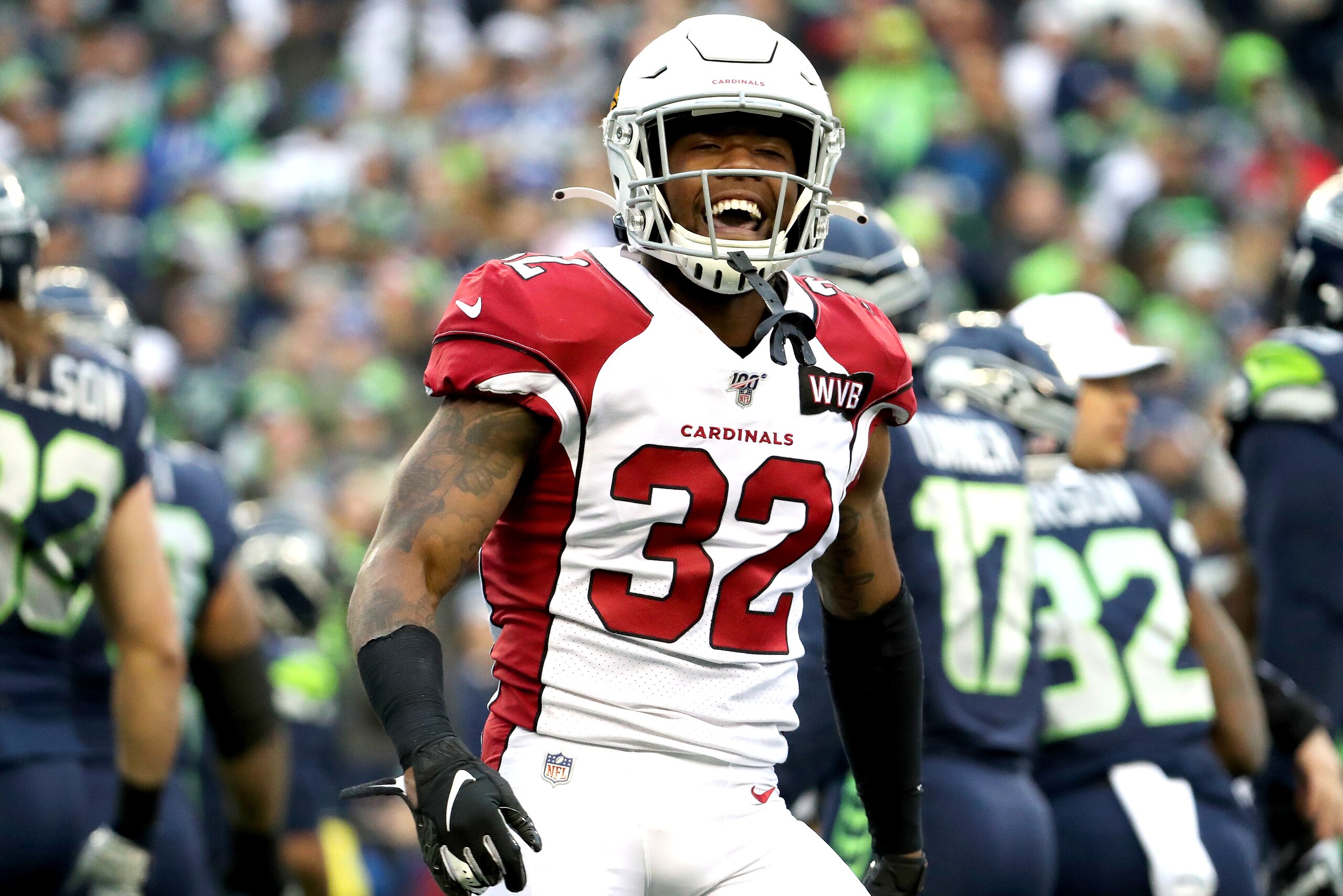
Baker led the NFL with 104 solo tackles last year, per Pro Football Reference. He made the Pro Bowl at safety in 2019 and was an All-Pro special teamer as a rookie in 2017. He's an undersized mighty-missile type who can line up anywhere from free safety to slot corner to surprise edge-rusher, and his services will cost the Cardinals only $1.4 million in base salary during the final season of his rookie deal.
Kicker: Joey Slye, Panthers
You didn't think we would forget about kickers, did you?
Slye is slated to make only $675,000 as he battles Graham Gano, who missed last season with a leg injury. He was 8-of-11 beyond 50 yards on field goals last year and recorded a touchback on a whopping 94.3 percent of his kickoffs.
Slye missed a few extra points (31-of-35), but a kicker who can nail 55-yarders will eventually figure out extra points. After all, a kicker who all but guarantees that every opposing drive starts at the 25-yard line is worth a heck of a lot more than $675,000, even if he shanks a short one now and then.
All salary figures via Over the Cap.
Mike Tanier covers the NFL for Bleacher Report. Follow him on Twitter: @MikeTanier.
.jpg?w=2560 "Steelers Browns Football")
.jpg?w=2560 "Lions Cardinals Football")

.jpg?w=2560 "Cam Ward Says He's Not A Loser")