What Went Wrong for Ronaldinho: From World's Best No. 10 to Prisoner No. 194
One of the world's top defenders in the late '90s, Carlos Gamarra witnessed Ronaldinho's rise to fame in Brazil but was never actually what you may call a close friend. Yet, when he heard that the former Barcelona player had been thrown behind bars in Asuncion, the Paraguayan legend felt compelled to pay him a visit out of respect.
Gamarra spent a whole morning with Ronaldinho inside the country's maximum-security Agrupacion Especializada jail. That day, a particular image stuck with him.
"Honestly, I was impressed by the number of children surrounding him, asking for pictures, autographs. We all know he's a global star, but that really surprised me," he says.


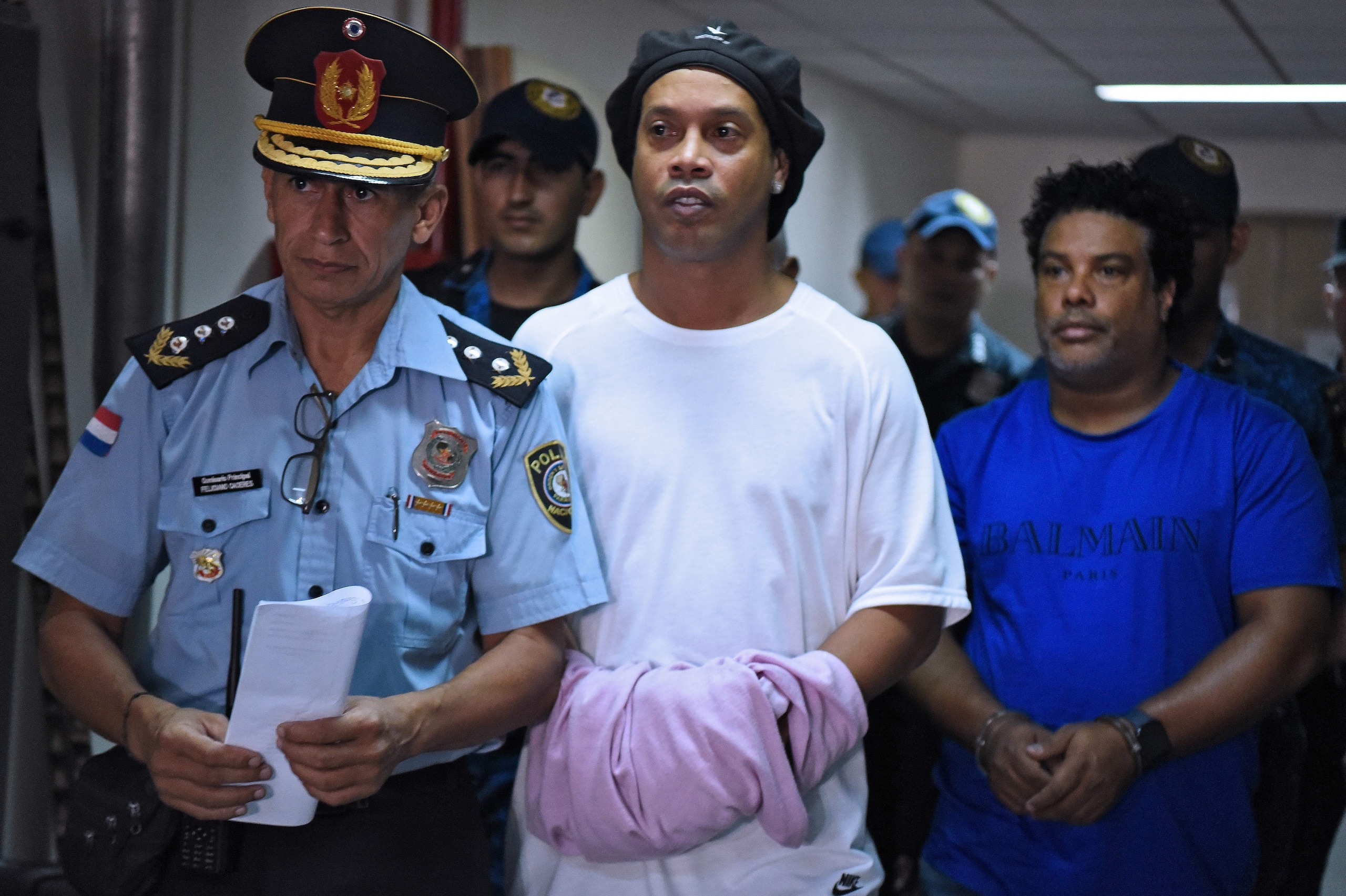
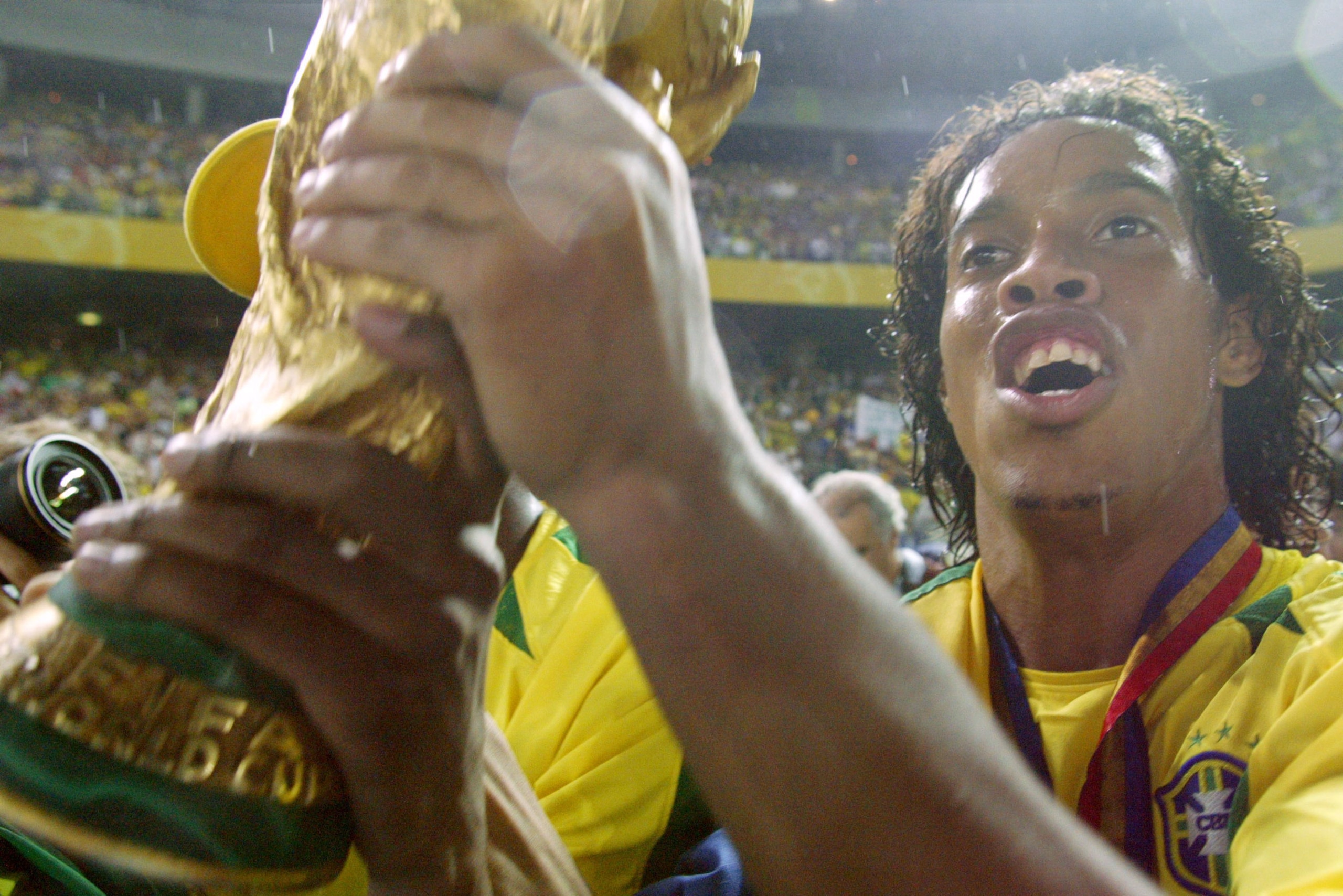
Ronaldinho and his older brother and manager, Roberto de Assis, were incarcerated on March 6, on suspicion of using fake passports to enter the country. Every day, groups of kids would gather in front of the complex hoping to be allowed in and get a selfie with the Brazilian, even though most of them would be too young to remember the famous No. 10's World Cup win in 2002 or his Ballon d'Or triumph in 2005.
During Ronaldinho's first week or so in prison, prison warden Blas Veras even organised what was jokingly referred to as "Ronaldinho's mini-tour," so the young fans could meet him for a brief moment at the outside patio of prison.
"With the coronavirus crisis, I couldn't do that anymore. It was a shame. Ronaldinho enjoyed having them around," he explains.
The man who ruled football with a wide, buck-toothed grin before the emergence of Lionel Messi and Cristiano Ronaldo remains a popular figure, despite having officially retired in 2018.
However, when he turned 40 in March, the celebrations consisted of just him, his brother and a cake brought by one of his lawyers into his small Paraguayan cell.
It's fair to assume that this was not what the renowned party-goer Ronaldinho would have had in mind for such an occasion.
At that point, the Brazil wizard was supposed to be receiving tributes from the football world.
Instead, in his own homeland, the biggest TV network, Globo, was holding discussions on whether to cancel a three-episode special of his career that had cost them months of production time. Eventually, they decided to go ahead with it.
Meanwhile, Ronaldinho tried to maintain a routine in prison.
Inmates at Agrupacion Especializada jail have to deal with mosquitos from a nearby river and the risk of getting dengue fever, while one of the three prison blocks houses dangerous criminals.
However, Ronaldinho spent most of his time in another area with 25 inmates and, among other privileges, had a TV in his cell. According to Globosport, he watched Atletico Madrid's 3-2 win over Liverpool in the UEFA Champions League from his cell.
In total, Ronaldinho was in prison for 32 days.
Last week, following his lawyers' fourth request, a Paraguayan judge finally decided to release him from jail into house arrest after he and his brother paid $1.6 million in bail and agreed not to leave the country.
The judge relayed his ruling to them in a WhatsApp video call. At the end of it, wearing his traditional black beret, Ronaldinho just gave him the "hang loose" sign and smiled.
Since then, he has been staying at the Palmaroga hotel, which has an average rate of about $64 per night, in central Asuncion, just three kilometres away from the penitentiary where he was imprisoned for over a month. Guards have been controlling the perimeter of the building.
How did one of the greatest players of all time end up like this?
The immediate temptation—and it's an understandable one, considering his post-retirement fame back home as the "king of the random gigs"—was to take the first pictures of him having a kickabout in prison as just another chapter in Ronaldinho's colourful story. This time, though, there was no reason to laugh.
So far, 15 people have already been detained in the case, which began with the false passports allegedly used by Ronaldinho and his brother when entering Paraguay on March 4, but that has since snowballed into an investigation into a possible money-laundering scheme.
One of Ronaldinho's lawyers, Adolfo Marin, insisted that the Brazil icon thought he had received the passport and documents "as a gift."
"He didn't know he was committing a crime. He's daft," Marin told Folha de S. Paulo.
Such a statement might sound a bit harsh, but it's not regarded as completely inappropriate by those familiar with his inner circle.
While his incredible talent mesmerised fans and made him football's brightest star in the early 2000s, Ronaldinho never seemed in charge of his own life or aware of what was going on around him.
The fact that many of his compatriots didn't see his photo in handcuffs as a massive shock says it all about how far his prestige had sunk.
"He has always been so focused on playing that, when Brazil were kicked out by Cameroon from the 2000 Olympic Games, he didn't even know about the golden goal rule and stayed there looking confused, wondering what was happening," recalls Diogo Olivier, a football columnist for Zero Hora who has followed Ronaldinho for the duration of his career.
"But at some point, there's got to be a limit to all that. If you are a 40-year-old, you must realise that if you enter a foreign country with a fake passport, you are going to be detained. At such an age, you need to have some responsibility in your decisions.
"Ronaldinho has this reputation for being in the dark when it comes to off-the-pitch matters. And the worst part is that it's indeed true. He doesn't have a clue about his business.
"Ronaldinho's family built a bubble for him and said, 'You go there and play and let us handle the rest.' And he was thrown inside that bubble very early because his potential was ridiculous. So he has been there since the age of 14 and never really had to worry about anything else. I truly believe that he could not have known for sure what he was doing in Paraguay. I truly believe in it."
Throughout Ronaldinho's entire journey from a modest Porto Alegre background to stardom, it was Assis' job to make sure this bubble was never penetrated by any negativity.
A former footballer himself, the man Ronaldinho usually calls "patrao" (boss) was a breakthrough star at Gremio, having lifted the Brazilian Cup in 1989. At the time, he was seen as a future international, but instead of waiting for a call-up, he accepted a lucrative offer from Sion in Switzerland, a decision that disrupted his rise and ultimately sealed his destiny as a journeyman.
In his late 20s, playing in Japan, he was already taking care of Ronaldinho's career from afar, turning down bids from PSV Eindhoven and trying to shield his brother from the same mistakes he made.
Assis was not just an older brother to the smiling boy. After their father died in tragic circumstances, drowning in their swimming pool, Assis became the man of the house.
The Assis Moreira family had moved into that luxurious home just a few months before their father's death.
The house had been a reward from Gremio following Assis' decision to sign a new contract and refuse a proposal from Torino. In order to put those memories behind, Assis decided to get rid of the pool a while later.
Having gone through all that together, it should not come as a surprise that Ronaldinho trusts Assis blindly.
The main issue, however, is that Assis also has a reputation for being greedy, which has ended up causing trouble for the FIFA 2004 and 2005 world player of the year on multiple occasions.
Despite being widely known as Ronaldinho Gaucho (an adjective used to describe those born in the Rio Grande do Sul state), Ronaldinho is far from a hero in his hometown—quite the opposite in fact.
He can't even walk the streets of his hometown of Porto Alegre these days because of past rows with his boyhood club, Gremio. In both of them, Assis played a major role.
Firstly, by taking Ronaldinho to Paris Saint-Germain at the end of his contract in 2001 and leaving the Brazilian team without a single penny; and later, on Ronaldinho's return home 10 years later, when he encouraged a bidding war between Flamengo, Palmeiras and Gremio only to choose the Rio de Janeiro side in the end.
"Despite all that, Ronaldinho still sees Assis as a guy that gave up his youth to take care of his family, so there's an enormous debt of gratitude between them," Olivier argues.
"When they went through a tough time, it was Assis who tackled the problem and even retired from football earlier to take care of Ronaldinho."
Vinicius Grissi, a football pundit for Bandeirantes and 98 FM, adds: "It's difficult to say that this unconditional trust was Ronaldinho's biggest mistake. After all, Assis' influence on his life has been enormous since his early playing days.
"In other words, even with such a great talent, he may not have reached as far as he did if he didn't have a person by his side. It's no secret that off the pitch Ronaldinho has never been someone who decided his own future. It has always been in somebody else's hands, especially his brother."
This sort of dependence is not strange at all among Brazilian players.
"We've had Adriano and his father, a relationship of much affection, but also reliance. Neymar and his dad, too, even though this one is slightly different—less emotionally dependent and more based on the complete trust in decisions. I think that they are possibly the best comparison we can make to Ronaldinho and Assis," argues Leonardo Bertozzi, a football analyst for ESPN.
"When Ronaldinho left Milan and came back to Brazil, Assis sat with three teams to negotiate, saying different things to each one of them.
"Ronaldinho could have been firmer and made his voice more heard in such situations, but he clearly didn't."
Right now, while still in custody in Paraguay, he's certainly got plenty of time to think about past mistakes from Room 104 at the Palmaroga hotel.
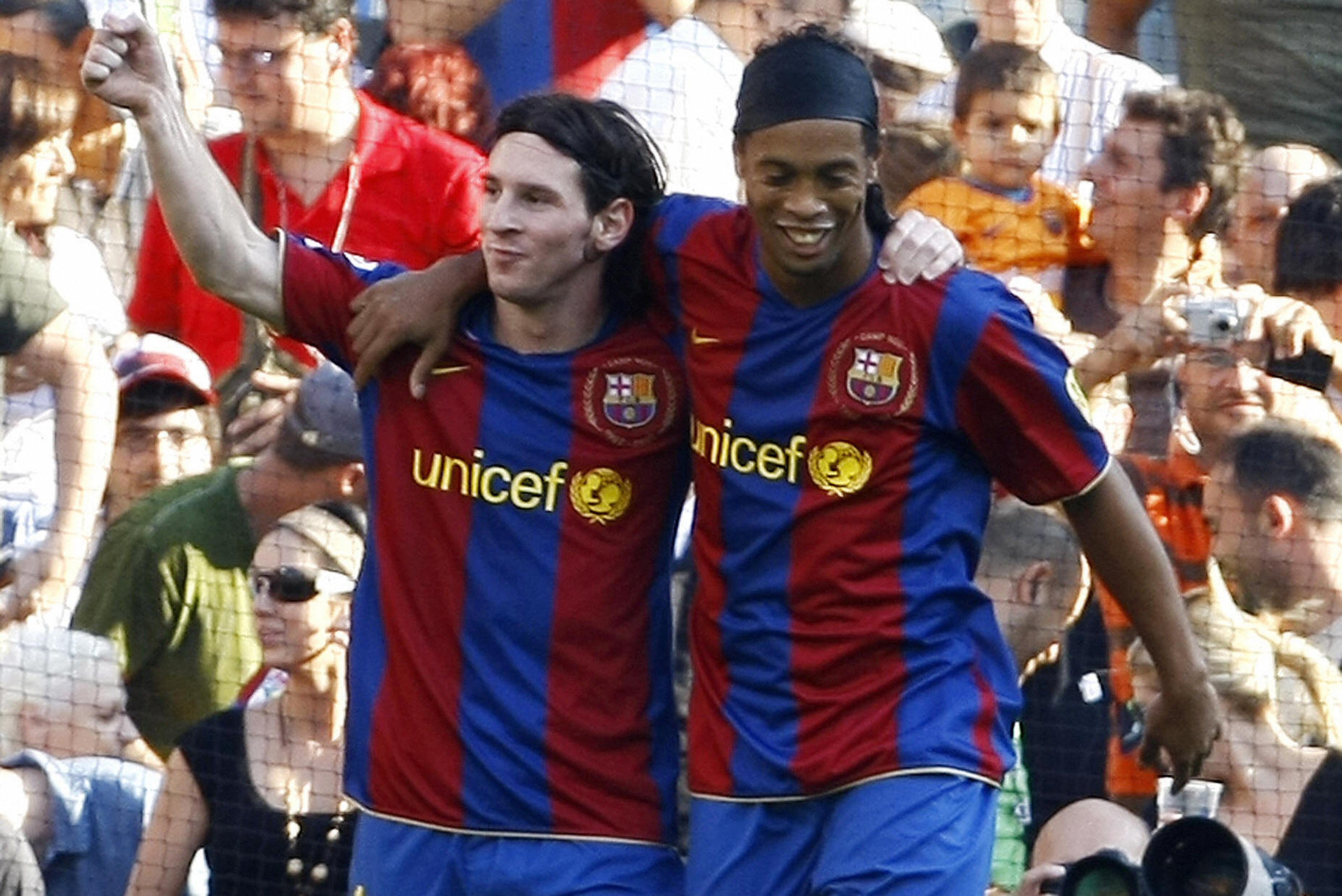
In recent years, his name was dragged into controversies such as an unpaid $2.5 million fine for environmental damage, having his Brazil passport confiscated, being rumoured as a possible senate candidate for the country's far-right-wing party, advertising for shady companies and standing trial on an alleged pyramid scheme.
Ronaldinho has endured a rough fall from grace, but at 40, he can still ensure that his football legacy is not fully destroyed by his post-retirement activities.
"[Diego] Maradona always comes to my mind in such cases—a very problematic character, who also had his share of messes. I still remember the image of him escaping from Italy in 1991 amid the whole [cocaine] scandal," Bertozzi says.
"Obviously, the human being's reputation can be affected in those circumstances, but the memories from the player will certainly find a way to impose themselves."
"Ronaldinho was the only guy who could have really matched Pele's status. I watched him since the very beginning and I've never seen anyone as talented with the ball. With a bit more discipline out of the field, he could have been a much bigger player, someone to win five Ballon d'Or crowns," Olivier concludes.
Instead, Ronaldinho has seen himself go from arguably the world's best No. 10 to Prisoner No. 194 in a Paraguayan jail. His biggest challenges now lie off the pitch.
Follow Marcus on Twitter: @_marcus_alves
.jpg?w=2560 "Packers 49ers Football")
.jpg?w=2560 "Lions Cardinals Football")
.jpg?w=2560 "Report: Steelers WR to Miss 'Weeks'")
.jpg?w=2560 "Cam Ward Says He's Not A Loser")
.jpg?w=2560 "Buzz: MHJ Hired Agents for Trade")
.jpg?w=2560 "Chargers Fall to 0-5 🤢")