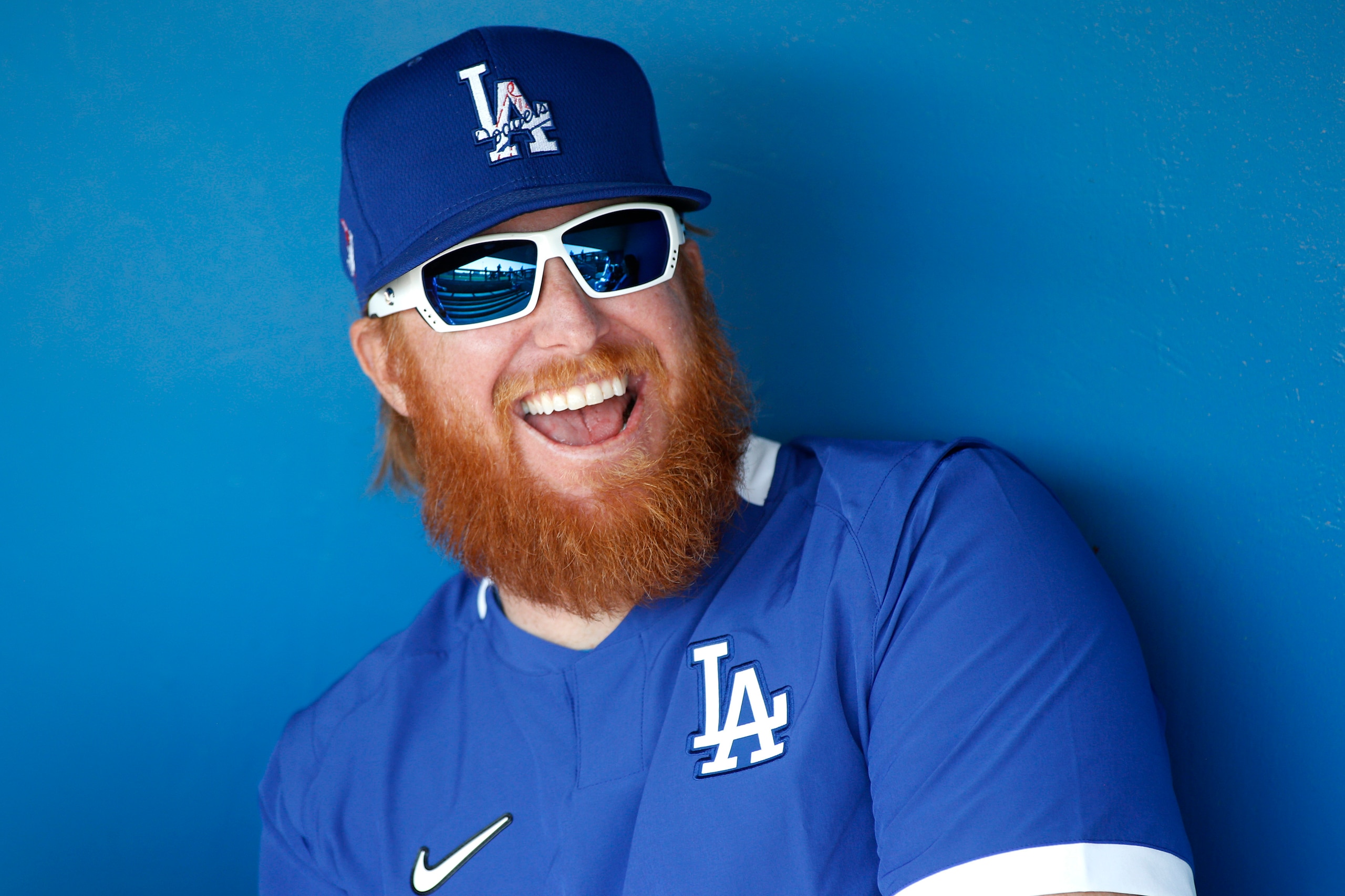


Los Angeles Dodgers third baseman Justin Turner recently suggested to Access SportsNet: Dodgers that Major League Baseball should consider ending this season's games with a home run derby instead of an indefinite number of extra innings.
"Instead of playing 17 innings, you get one extra inning," Turner said. "You play the 10th inning, and [if] no one scores, then you go to a home run derby. You take each team's three best hitters and you give them all five outs, and see who hits the most homers."
Turner seems to be proposing it just for the 2020 season as a means of getting more games into a shorter schedule without drastically increasing fatigue-related injuries.
But what if it was proposed as a full-time solution?
The actual format could certainly be tweaked. Maybe it's five outs for just one hitter, or perhaps they go straight into the derby after the ninth inning. But rather than getting hung up on those minor details, we've come up with a "seven-game series" of pros and cons in regard to the general idea of replacing (some) extra innings with a mini home run derby.
Be sure to chime in with your thoughts in the comments. Whether the proposal tickles your fancy or grinds your gears, why do you feel that way?
Pro: More Home Runs
1 of 7
Save for the occasional (and unforeseeable) bid for a no-hitter, the home run derby is the most exciting event in every MLB regular season.
I couldn't tell you the last time I watched even a second of an MLB All-Star Game, but I end up watching most of the derby every July. It doesn't matter who's in it or who wins, it's just fun to watch dudes relentlessly mash taters for a few hours.
So why not try to pepper some of that excitement throughout the regular season?
Rather than settling in for an indefinite number of innings of one team trying to manufacture a run against the opposing team's bullpen, we would have a concrete stopping point after which the star batter(s) from each team get to determine the winner in a matter of minutes.
Sounds awesome to me. Maybe the NBA could do something similar with a three-point shootout—though games lasting twice as long as designed isn't exactly a thing in basketball.
And while the home runs from derbies obviously would not count toward a player's HR total for the year, we could track them separately and utilize them in the ever-present quest to decide how clutch a player is.
Con: More Home Runs
2 of 7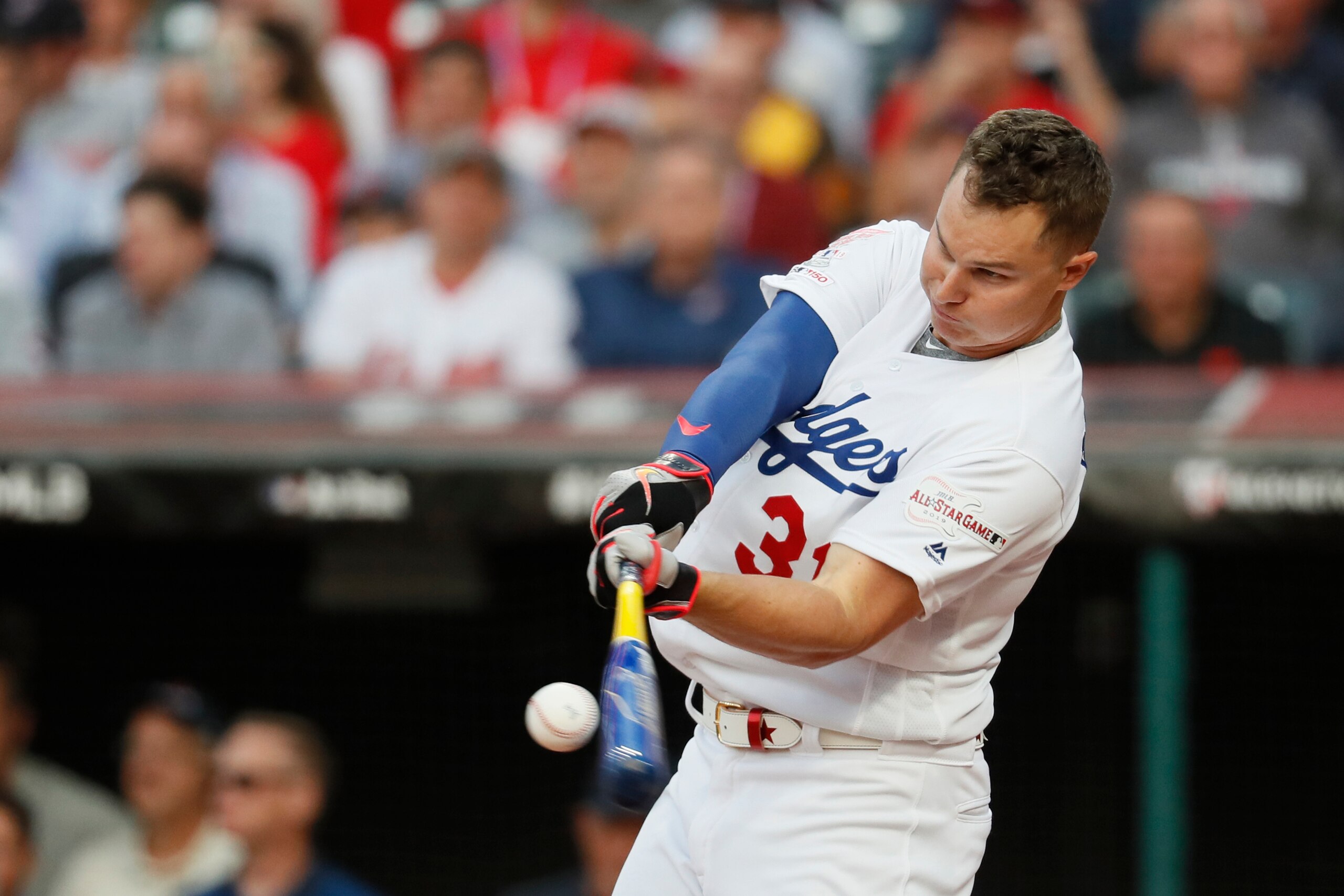
Allowing games to be decided by a home run contest is also allowing games to be decided by payroll.
While it would be fun to watch a Yankees-Astros game come down to Aaron Judge, Giancarlo Stanton and Gary Sanchez swinging for the fences against Alex Bregman, George Springer and Jose Altuve, teams like the Tigers, Rays, Marlins, etc. would be sacrificial lambs in this proposed tiebreaking format.
Home run hitters already get ridiculous offers from deep-pocketed teams once they hit free agency, but that would only get worse if guys like Jorge Soler, Josh Bell and Renato Nunez—who don't hit for average, aren't great on defense, but can smack a ball 400-plus feet on command—suddenly have increased value in a derby environment.
Also, having "mini derbies" throughout the season devalues the main home run derby. Just last season, there were 208 extra-inning games. While that doesn't specify how many innings each game went, even if only half of them necessitated a derby, that still averages out to roughly one derby per team per month.
While the current "hit as many home runs as you can in three minutes" HR derby format would still be fun and different, the novelty of it would certainly wear off if there were five or six mini derbies per week.
Pro: No More Destroying the Bullpen to Chase 1 Win
3 of 7
This is the main reason Justin Turner suggested they implement this idea for the 2020 season.
Though the amended schedule for the season is nowhere near complete, the assumption is that things will be condensed—fewer days off, mandatory doubleheaders, etc. Maybe they'll expand rosters to 30 players to help account for the added strain on pitching staffs, but it would still be a disaster if teams had to survive a 15-inning game as either part of a doubleheader or the day before or after a doubleheader.
At that point, you're talking about 33 innings in the span of about 24 hours. If your starters for those three games each go seven innings, it wouldn't be that bad. But what if one of the starters gets shelled or injured in the first inning and now you've got to stretch that bullpen another six innings?
It could snowball in a hurry, and it would take a few days to recover from that type of scenario.
And the worst part of the long extra innings games is that it's an unexpected strain. One-inning guys are suddenly asked to get six or nine outs; then they need two to three days off to recover. The long relievers might need to go five innings, and then they're unavailable for a while after what essentially amounts to a regular start.
While a different solution to that problem would be to just call it a tie if they're still knotted up after 10 innings, no one likes it when a game ends in a tie. Let the mini derby decide it.


Con: No More Hilarious Lineup Maneuvering to Survive an 18-Inning Affair
4 of 7
It has somehow been almost a full decade since it happened, but one of my favorite random regular-season games in MLB history was the August 24, 2010, game between the Houston Astros and the Philadelphia Phillies.
In the bottom of the 14th inning, Philadelphia first baseman Ryan Howard was ejected for arguing balls and strikes after his fifth strikeout of the night. Unfortunately for the Phillies, they used the last of their position players on a double switch in the top half of the 14th. So left fielder Raul Ibanez moved to first base, and pitcher Roy Oswalt manned left field.
Naturally, the first pitch of the 15th inning was a fly ball to Oswalt. (He made the catch.) And the second pitch of the 15th inning was to Wandy Rodriguez—a starting pitcher who was pinch-hitting for a relief pitcher. And with the Phillies trailing by two in the bottom of the 16th inning, Oswalt came up with two outs and two men on base for what would have been one of the most epic home runs of all time. Instead, he weakly grounded out.
Those types of ridiculous scenarios—and the looming possibility of a walk-off home run throughout the bottom half of every inning—are what make games that go 14 or more innings. As fans, you eventually cross the line from "Is this game ever going to end?" to "I hope this game never ends!" And that has grown even more fun in the era of social media when everyone starts talking about the same game that hardly anyone cared about five hours ago.
By instituting a derby after nine or 10 innings, we would be eliminating some of the most entertaining situations from the regular season.
Pro: Guaranteed "Call Your Friends" Drama
5 of 7
Though we'd be losing the occasional "Turn on the game, there's a pitcher playing left field" text messages, there would likely be a significant increase in friends telling friends to turn on the TV for an upcoming mini derby.
As previously mentioned, the possibility of an Astros-Yankees derby would be top-notch theater. I couldn't care less about those two teams, but I'd be flipping through the channels like Hamm in Toy Story 2 trying to find that game if they were tied in the 10th inning and on the verge of a derby to declare the victor.
Actually, never mind the channels, because there's a near-100 percent chance I would pay for an MLB.tv subscription for basically the sole purpose of watching those derbies. (Provided it's not a game involving one of the four teams that are blacked out on MLB.tv in the Charlotte market, even though there's not a single MLB stadium within 250 miles of here. Blackout policies are so dumb.)
The luster would eventually wear off, but it would come back with a vengeance in the final few weeks of the season with playoff races potentially impacted by mini derbies.
If they were to implement this idea, it would be fascinating to see a graph of TV ratings comparing the 11th innings of games in 2019 to the 2020 mini derbies in what would have been the 11th inning. Safe assumption that the latter would have significantly more viewers.
Con: The 'Baseball Purists' Would Complain to No End
6 of 7
As a whole, baseball fans are significantly more averse to change than fans of other sports.
If the NFL adopted some of the best things about the XFL, most people would be pleased. The NBA teased the "Elam Ending" during the 2020 All-Star Game and makes minor rule changes just about every year, and hardly anyone complains.
But suggest a rule that relief pitchers be required to face a minimum of three batters and baseball fans react like you're recommending we start playing chess without knights from now on. Don't even get those "purists" started on whether there should be a designated hitter or instant replay/challenges.
Those people would jump straight through the ceiling if MLB considered changing the extra-inning format to include a home run derby.
Even if it was explicitly stated that it would only be implemented for this atypical 2020 season, there would still be diatribes about the sanctity of the game being compromised, about the impact on the record books, and about it being terribly unfair to make such a substantial change after free agency.
As cool as the derby idea may be, it's almost worth it to keep the status quo just so we can avoid hearing from those curmudgeons all year long.
Pro: Games End in a Timely Manner
7 of 7
This is probably the most compelling argument in favor of a derby ending: Not only does it save bullpen arms, but it also gets everyone home at a reasonable hour.
Back when I lived in northern Virginia, I rode the D.C. metro to Washington Nationals games at least a dozen times per season. It was convenient until a weekday game with a 7 p.m. start time went into extra innings and everyone in the stadium had to decide whether they wanted to watch the end of the game or actually catch the last train home. I'm sure fans in New York, Chicago and other cities face similar predicaments on a semi-regular basis.
Even without that public transportation factor, who the heck wants to spend five hours at a regular-season baseball game—especially considering they stop selling beer in the seventh inning? I'm committed enough to do it. I once baked in the July sun without once leaving my seat while keeping score during a single-entry doubleheader. But most people don't have the attention span for 14, 16 or 18 innings of baseball.
The Red Sox and Yankees would probably still find a way to make games last five hours, but add a derby and the vast majority of games would be guaranteed to finish in under four hours.
That's still longer than pretty much everything other than Big 12 football, but a four-hour cap is better than nothing.


.jpg?w=2560 "Raiders Could Start Mendoza")
.jpg?w=2560 "Rodgers Iced Out on Plane 💎")


.jpg?w=2560 "🚨 Week 8 AP Top 25 Poll")
.jpg?w=2560 "Blockbuster Trade Idea To Shake Up the Eastern Conference 🎇")