2020 NFL Draft: Strengths and Weaknesses for Top Prospect at Each Position
The 2020 NFL draft is shaping up to be a memorable one. Elite prospects are waiting at several of football's most important positions, and there should be plenty of intrigue surrounding the early selections.
Of course, even seemingly ideal players carry flaws—and you can bet that teams will look for them in the lead-up to the April 23-25 event.
We'll examine the top player at each position (save for special teams) based on Bleacher Report draft analyst Matt Miller's pre-combine big board, considering their strengths and weaknesses while determining their general NFL outlooks.
Quarterback: Joe Burrow, LSU
1 of 11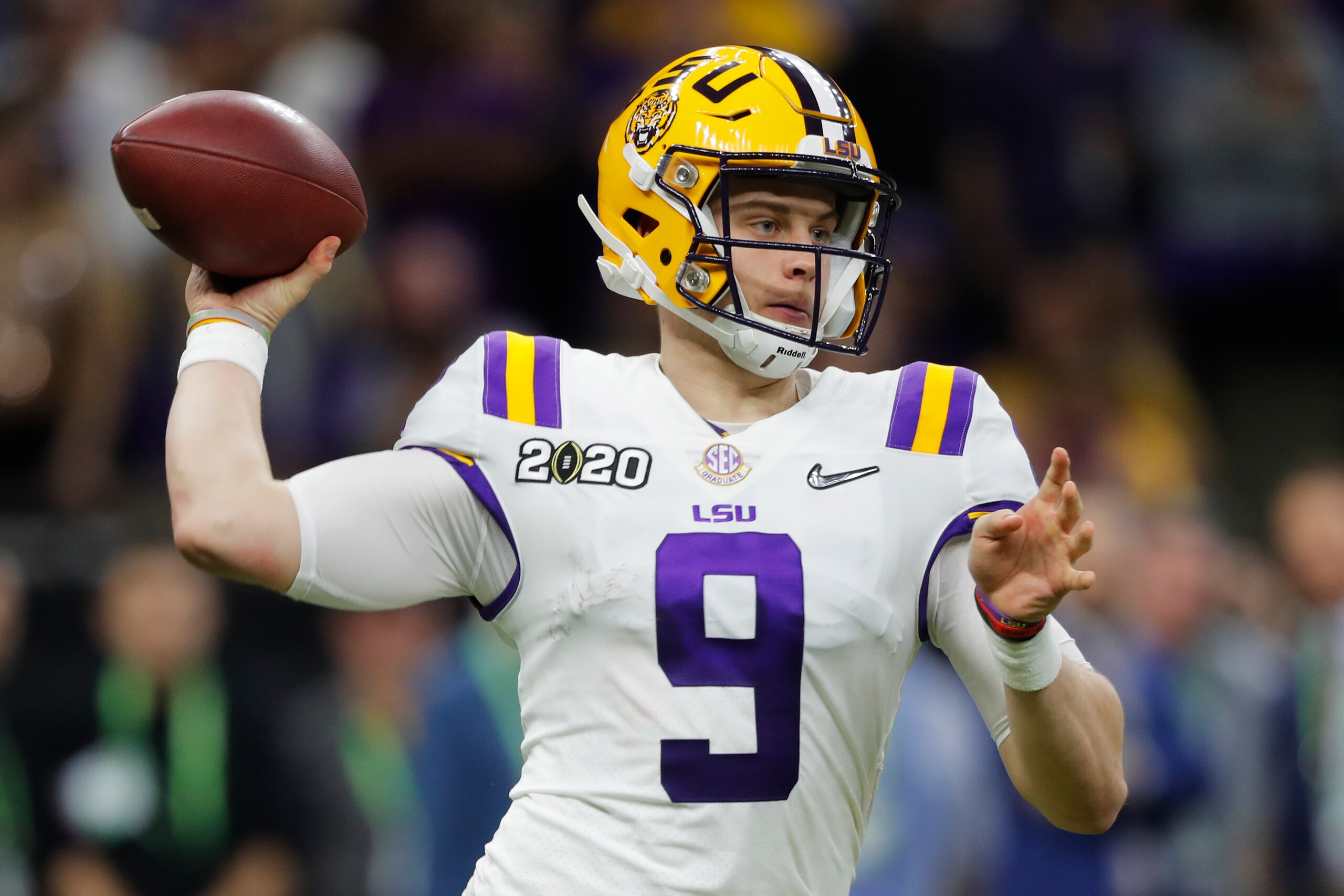
Strengths
Though he doesn't possess a cannon, LSU's Joe Burrow has starting arm talent. He showed the ability to diagnose plays and identify the open receiver in his two starting seasons at LSU, including a tremendous 2019.
Last season, Burrow passed for 60 touchdowns, won the Heisman Trophy and delivered a national championship to Baton Rouge. His ability to thrive under pressure has enticed many NFL decision-makers.
NFL teams also love his confident personality.
"One team executive said the two most remarkable people he's ever met in the NFL were Peyton Manning and Russell Wilson. He put Burrow in that same category," Bleacher Report's Mike Freeman tweeted.
At 6'3" and 221 pounds and with tremendous athleticism, Burrow is well-built to play quarterback in the NFL.
Weaknesses
As mentioned, Burrow does not have ideal arm strength. He also has hands that measured just 9 inches at the combine. While subpar hand size shouldn't diminish what Burrow accomplished at LSU, that, along with below-average arm strength, could be an issue in bad weather conditions.
Burrow also just has the one year of high-end production. He couldn't earn the starting job at Ohio State, transferred to LSU and then was just OK in 2018. It's fair to wonder how much of Burrow's 2019 season was a result of his talent and how much of it was a perfect storm of his supporting cast, opportunity and the arrival of passing-game coordinator Joe Brady.
Outlook
Though not as physically gifted as Alabama's Tua Tagovailoa or Oregon's Justin Herbert, Burrow is healthy and ready to be a day-one starter. The NFL won't be too much for him, and he should be an above-average quarterback early.
Burrow could require the right system to fully blossom—not unlike 2016 No. 1 overall pick Jared Goff. However, he has perennial Pro Bowl potential.
Running Back: D'Andre Swift, Georgia
2 of 11
Strengths
Georgia running back D'Andre Swift might not be the biggest back in this draft class, but his compact 5'8", 212-pound frame is capable of shouldering an NFL workload. Swift had 196 carries in 2019 and 163 the year before. He averaged more than six yards per rush in each of his three seasons.
Swift also possesses above-average field vision, allowing him to recognize and hit running lanes before defenders have a chance to react. Unlike some young NFL backs, he shouldn't struggle to find running room early in his career.
Teams should also be able to rely on Swift as a receiver. He had 56 receptions over the past two seasons.
Weaknesses
Though solidly built, Swift isn't the sort of battering ram who will consistently push the pile or wear down defenses. He ran the 40-yard dash in 4.48 seconds, so he's plenty fast enough, but he doesn't pack consistent home run potential.
Fumbles could also be a concern. Though he didn't spit out balls like a JUGS machine, Swift did fumble roughly once every 65 carries this past season. That translates to roughly once every two or three games in the NFL, which would likely lead to trust issues for his offensive coordinator.
Outlook
Swift has enough of a feel for the game that he should become a starting running back early in his career. Like Philadelphia Eagles back Miles Sanders, Swift should also be a legitimate dual-threat from the moment he steps onto an NFL field.
Ball security will likely determine whether teams trust Swift to be an every-down back as a rookie. However, he has the potential to be a Pro Bowler within his first couple of seasons.
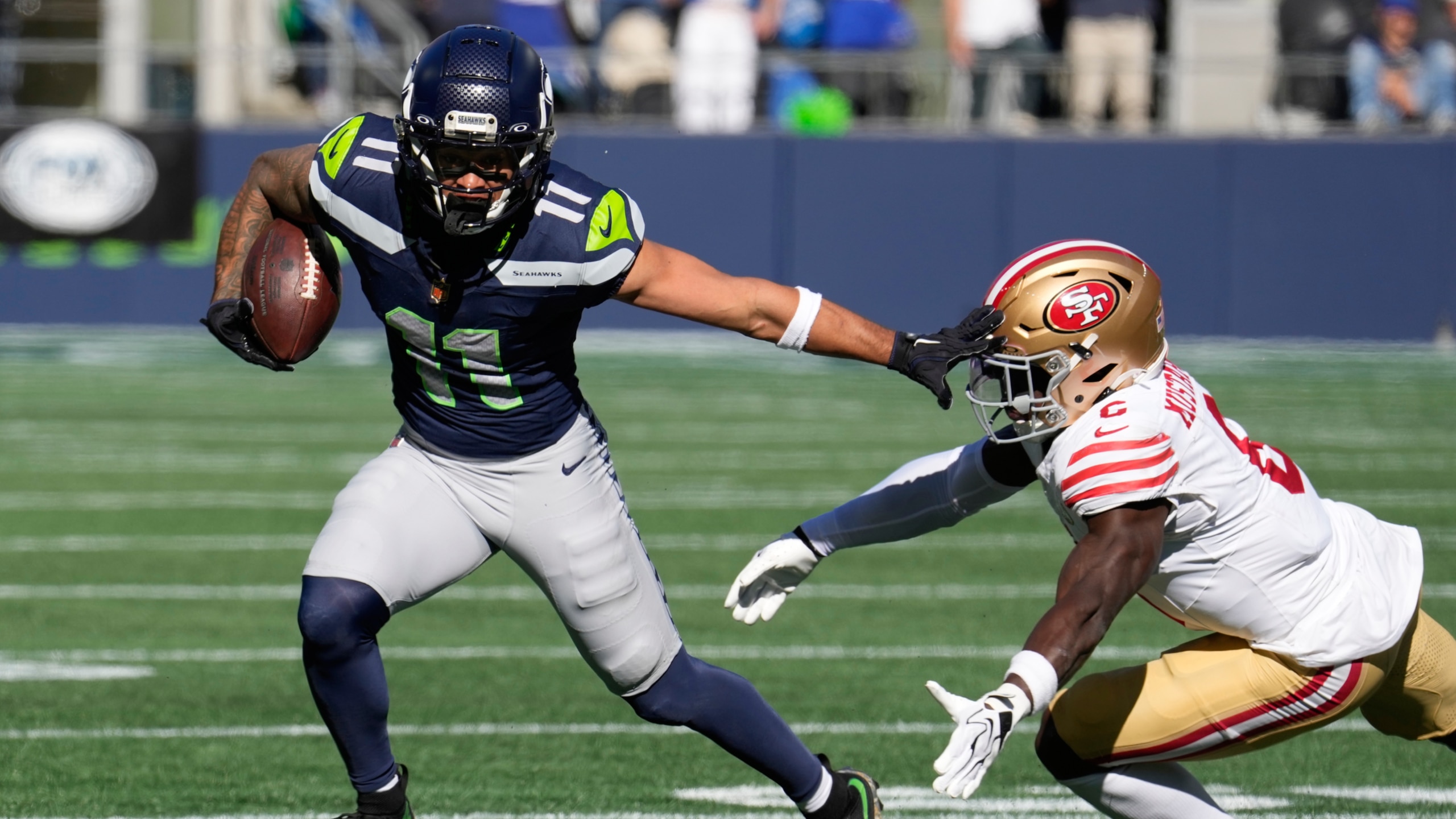
Wide Receiver: Jerry Jeudy, Alabama
3 of 11
Strengths
For teams seeking a polished route-runner with enough speed to be a deep threat, there isn't a better 2020 prospect than Alabama's Jerry Jeudy. The Crimson Tide star did not produce 2,478 receiving yards over the past two years by accident.
"He's among the cleanest, smoothest route-runners you'll find in the last decade of pass-catchers," Miller wrote in his most recent mock draft. "That, plus his agility and speed, makes him the most likely to have a major impact early in his rookie season."
Jeudy should have zero trouble adapting to the pro game and shaking proven defensive backs with his precision cuts and subtle fakes. Though he isn't a burner, his 4.45 speed is enough to threaten secondaries at the third level.
Weaknesses
Jeudy is about as polished a receiver prospect as teams could hope for. Size and physicality are his only questionable attributes, as he measured in at 6'1" and 193 pounds at the combine—a little on the light side for a perimeter pass-catcher.
Though Jeudy isn't downright small, like 2019 first-round pick Marquise Brown (5'9", 170 lbs), he doesn't have his elite speed either. The 20-year-old Alabama star won't fly past deep safeties and could struggle against physical cornerbacks in press coverage.
Outlook
Provided he lands with a potent passing attack, Jeudy could be a Pro Bowler in his inaugural NFL campaign. He shouldn't experience much of a learning curve and could be a team's No. 1 option right away.
Jeudy won't physically overwhelm opponents, but he could have a Terry McLaurin-like rookie impact as a high-end all-around receiver.
.png?w=2560)
Tight End: Cole Kmet, Notre Dame
4 of 11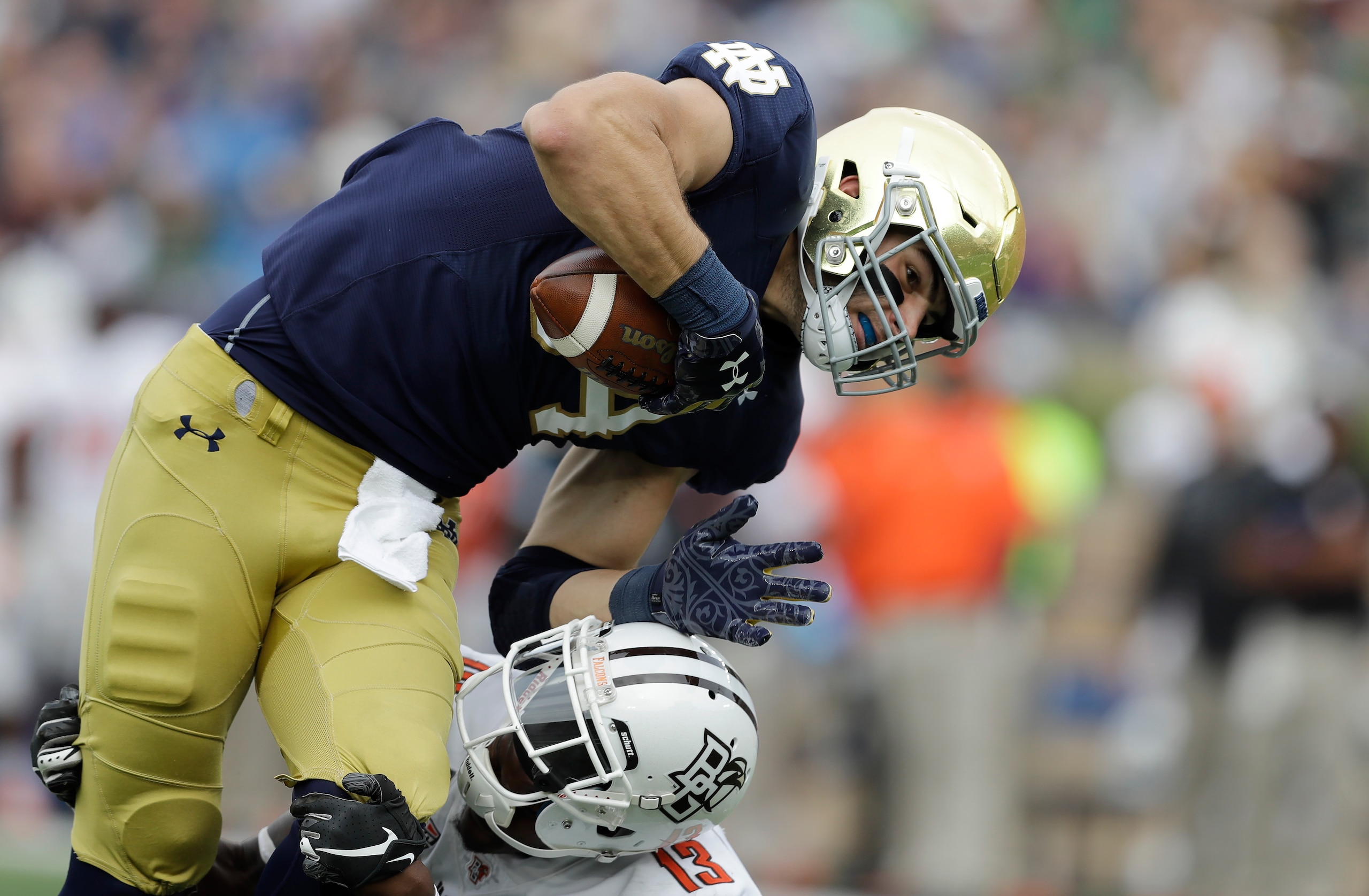
Strengths
At 6'6" and 262 pounds, Notre Dame's Cole Kmet has the build of an NFL tight end. Though he didn't consistently dominate, he was plenty productive in 2019, catching 43 passes for 515 yards and six touchdowns.
Kmet ran a 4.7-second 40-yard dash in Indianapolis to go with a 37-inch vertical and a 123-inch broad jump. The former Fighting Irish standout is both quick and explosive. He should be a fine pro receiving tight end.
Physically, Kmet compares favorably to 2019 first-round pick T.J. Hockenson—the 6'5", 247-pound Lions tight end posted a 4.7-second 40, a 37.5-inch vertical and a 123-inch broad jump.
Weaknesses
Kmet isn't the polished blocker Hockenson was when the latter came out of Iowa last year. The Notre Dame prospect's technique is underwhelming, and his play strength is questionable—interestingly, Kmet did not participate in the bench press.
Kmet doesn't have a large sample size of production either. He was good in 2019 and close to invisible before that. He had just 15 receptions in 2018 and two catches as a freshman in 2017.
Outlook
Kmet is likely to be a one-dimensional tight end early in his career, and that's OK for teams that want a receiving boost. He should help stretch the field as a rookie and provide a solid outlet on underneath routes.
However, teams that are looking for the next Rob Gronkowski or George Kittle won't find him in Kmet—at least not right away.
Offensive Tackle: Jedrick Wills Jr., Alabama
5 of 11
Strengths
When one examines the strengths of Alabama offensive tackle Jedrick Wills Jr., strength itself is a good place to begin. Though he didn't participate in the bench press at the combine, Wills put plenty of play strength on film and was rarely overpowered by opposing pass-rushers. Also a tremendous athlete, Wills has the perfect skill set for any team in need of a blindside pass protector.
Wills ran a 5.05-second 40 and produced a 34.5-inch vertical at 312 pounds. He isn't simply a combine performer either.
"You see some of that explosiveness in the vertical that shows up when you watch him on tape," NFL Media's Daniel Jeremiah said, per NFL.com.
A two-year starter on Tua Tagovailoa's blind side, Wills is polished and ready to start immediately.
Weaknesses
Some teams could be concerned about Wills' transition from the right side to the left—Tagovailoa throws left-handed—but it shouldn't be a major issue. Neither should Wills' lack of ideal length, though it is an understandable concern.
At 6'4" and with 34¼-inch arms, Wills is a bit shorter than fellow left tackle prospects Mekhi Becton (6'7") and Andrew Thomas (6'5"). Keeping pass-rushers at arm's length could be an occasional issue.
Outlook
Wills is a pro-ready offensive tackle, and while there could be some growing pains during his transition from right to left tackle, he should start from day one.
He has the potential to be an All-Pro at left tackle by the end of his rookie contract, even if a team leaves him on the right side to begin his career.
Interior Offensive Line: Cesar Ruiz, Michigan
6 of 11
Strengths
Michigan's Cesar Ruiz is the most complete center in this class, and he could immediately grab the attention of center-needy teams such as the New England Patriots—depending on David Andrews' recovery from a blood clot issue.
Both physical and athletic, Ruiz is solid in pass protection and when springing the interior rushing attack. He has adequate size at 6'3" and 307 pounds, and he's quick enough to pull from the interior if the running scheme calls for it.
Ruiz ran a 5.08-second 40 at the combine.
Since he's capable of playing both center and guard, Ruiz's positional versatility will endear him to teams during the predraft process.
Weaknesses
Though Ruiz is a sound technician, he lacks the raw power to overwhelm bigger, stronger defenders one-on-one. He did perform 28 reps in the bench press in Indianapolis, tied for 14th-most at the combine, so this shouldn't be a major issue in the NFL.
Ruiz is also on the shorter side, which is presumably why he's an interior lineman to begin with.
Outlook
Ruiz should be an early starter at either center or guard. While he may not develop into a perennial All-Pro, he has the traits and technique to be a consistent long-term starter.
Interior Defensive Line: Derrick Brown, Auburn
7 of 11
Strengths
Auburn's Derrick Brown is the defensive tackle prospect to target at the top of Round 1. With a strong combination of size (6'5", 326 lbs) and explosiveness (5.16-second 40, 108-inch broad jump), Brown can be a true disruptor.
"The Auburn big man reminds of Vita Vea given his awesome penetration skills, ability to shut down the run and upside as a pass-rusher," Miller wrote. "It's rare to see a defensive tackle legitimately triple-teamed by opposing offensive lines, but that was the case for Brown multiple times throughout the 2019 season."
Brown still racked up 54 tackles, four sacks, four passes defended and two fumble recoveries in 2019.
Weaknesses
Given his size and lack of elite speed, Brown is probably limited to being an interior lineman or nose tackle. That shouldn't be an issue for most teams, but those favoring positional versatility along the line could have him a bit lower on their draft boards.
Brown isn't likely to be a stat-racker, but that's more of a negative for fans and box-score scouts than it will be for NFL teams.
Outlook: Brown is one of the top defensive prospects in this class. While he may not produce the numbers needed to be a rookie Pro Bowler, he will have Pro Bowl value to whichever defensive line employs him.
A team can draft Brown and not worry about its defensive anchor for the next decade or more.
Edge-Rusher: Chase Young, Ohio State
8 of 11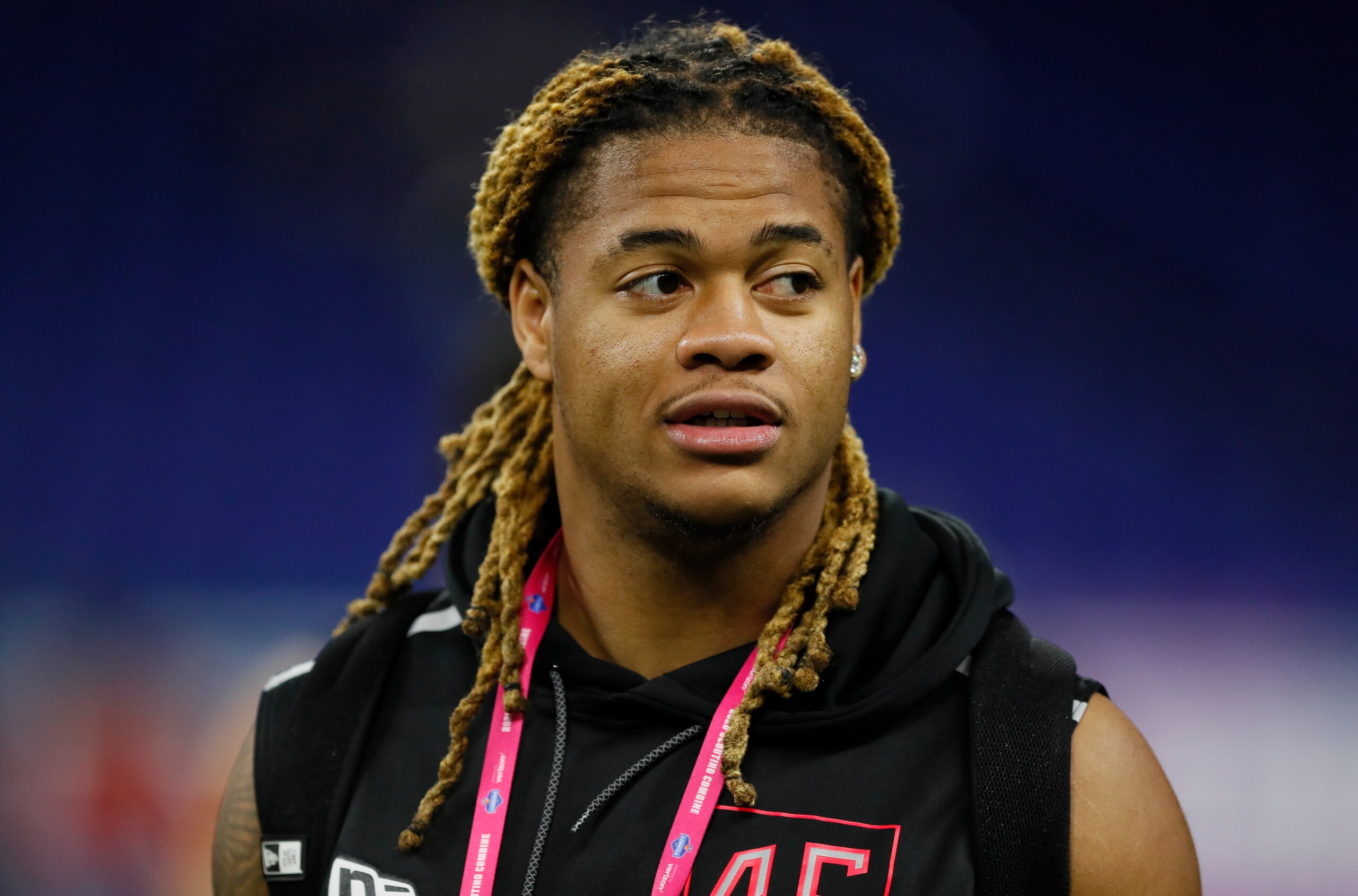
Strengths
Ohio State pass-rusher Nick Bosa was the No. 2 pick a year ago. He went on to rack up nine sacks, win Defensive Rookie of the Year and help the San Francisco 49ers reach the Super Bowl. Former teammate Chase Young might be a better prospect.
Young amassed an incredible 16.5 sacks and 21 tackles for loss in 2019. A hulking 6'5" and 264 pounds, he has the combination of size, length, athleticism and drive to be great.
"After hearing his interview, it almost made me think about AD ... Aaron Donald," Los Angeles Rams defensive lineman Michael Brockers said on NFL Network. "His thought process is: 'I want to be great. I don't care about nothing else. I want to be great—just me.' That self-motivation is going to take him a long way."
Weaknesses
Young chose not to work out at the scouting combine, which is understandable, given how little he has to prove. However, that could be seen by some as a lack of a competitive mentality (it isn't).
Young is most effective as an edge-rusher but can be a liability when setting the edge in the run game. That's a small concern for teams that seek a dominant sack artist, but it's worth mentioning that Young isn't quite a complete defender.
Outlook
Young should already be considered the early favorite for 2020 Defensive Rookie of the Year. The 20-year-old is just as polished a pass-rusher as Bosa was a year ago, and he's not coming off an injury-marred season like his ex-college teammate.
Whichever franchise drafts Young should expect a high level of production right away and All-Pro potential within his first two seasons.
Linebacker: Isaiah Simmons, Clemson
9 of 11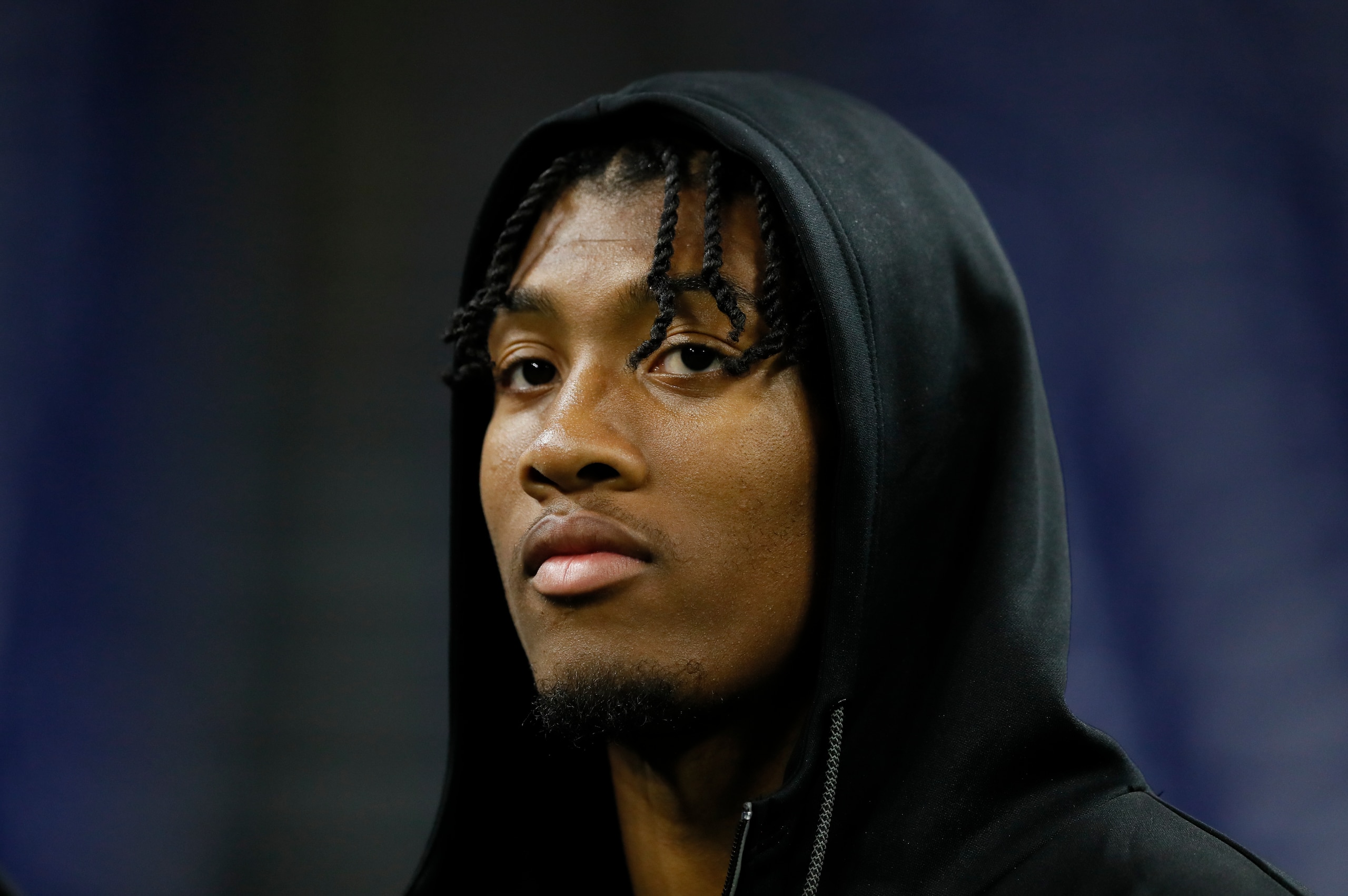
Strengths
If not for Young, Clemson hybrid defender Isaiah Simmons might be viewed as the draft's top defensive prospect. He is a supreme athlete, logging a 4.39-second 40 and a 39-inch vertical in Indianapolis at 6'4" and 238 pounds.
However, it's not just athletic skill that makes Simmons the top linebacker in this class. His versatility is key. The Tigers standout played virtually every position in the back seven this past season, and he never appeared out of place.
Simmons can be used as an off-ball linebacker, a pass-rusher, a cornerback and a safety, which should lead to tremendous schematic flexibility. With Simmons on the field, a team could switch to sub-package alignments without changing personnel.
Weaknesses
Though he possesses adequate size for a combination linebacker-defensive back, Simmons isn't built to be a thumper. He is more of a chase-and-tackle defender, and he could struggle to disengage from blocks at the second level.
Because he isn't a typical single-position defender, teams could struggle to find an ideal fit for Simmons. He risks being a very good all-around defender and never elite at any one position.
Outlook
Regardless of where a coaching staff envisions playing Simmons, whatever franchise takes him will have a versatile impact defender right away. Even if he is never an All-Pro, Simmons can fill several roles during his career.
Cornerback: Jeff Okudah, Ohio State
10 of 11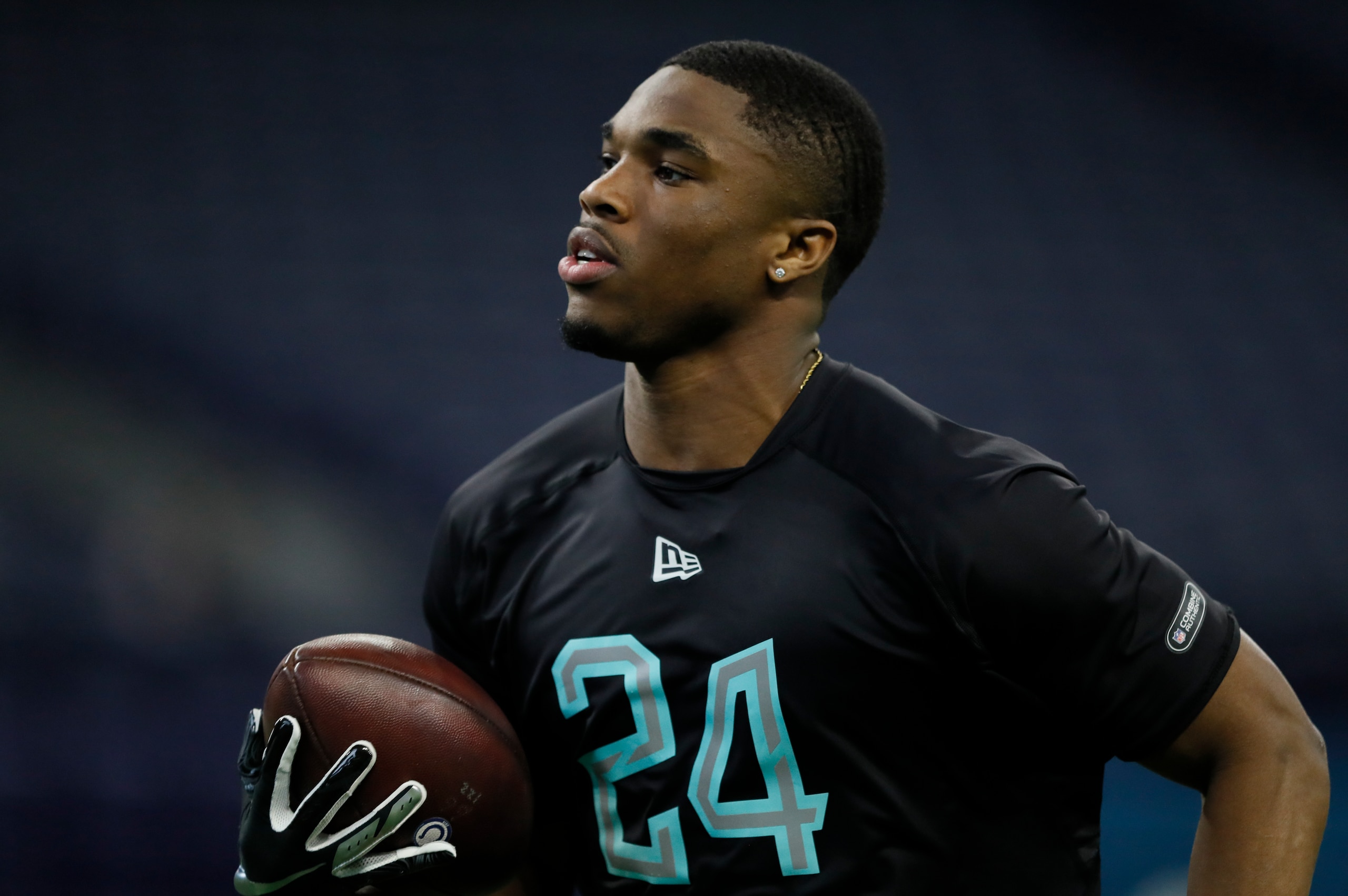
Strengths
While Simmons may not carve out an All-Pro campaign as a rookie, Ohio State cornerback Jeff Okudah has the potential to do exactly that. Seemingly custom-built to be an NFL cornerback, Okudah possesses the length, speed and ball skills of a shutdown pass-defender.
At the combine, the former Buckeyes star posted a 4.48-second 40 and a 41-inch vertical at 6'1" and 205 pounds. More importantly, he put together a season's worth of elite game tape in 2019. Physical at the point of contact and sticky in coverage, Okudah is likely to be the NFL's next elite cover man.
"While there's no such thing as a perfect prospect, Okudah is pretty close," The Ringer's Robert Mays wrote.
Weaknesses
Okudah's weaknesses are few, but they exist. He doesn't possess elite speed or strength (11 reps in the 225-pound bench press). Though he's physical enough to win hand fights with receivers, downfield blockers can overpower him.
Like many an elite cornerback prospect before him, Okudah isn't the most consistent or physical tackler in open space.
Outlook
Okudah should be a day-one starter on the outside, and he should have little trouble matching up with most receivers he faces as a rookie. Like former teammate Denzel Ward, he should be a rookie Pro Bowler, though Okudah's long-term upside is even higher.
Within the next couple of years, Okudah could be viewed as a better NFL player than both Ward and former Buckeye and 2017 first-round pick Marshon Lattimore.
Safety: Xavier McKinney, Alabama
11 of 11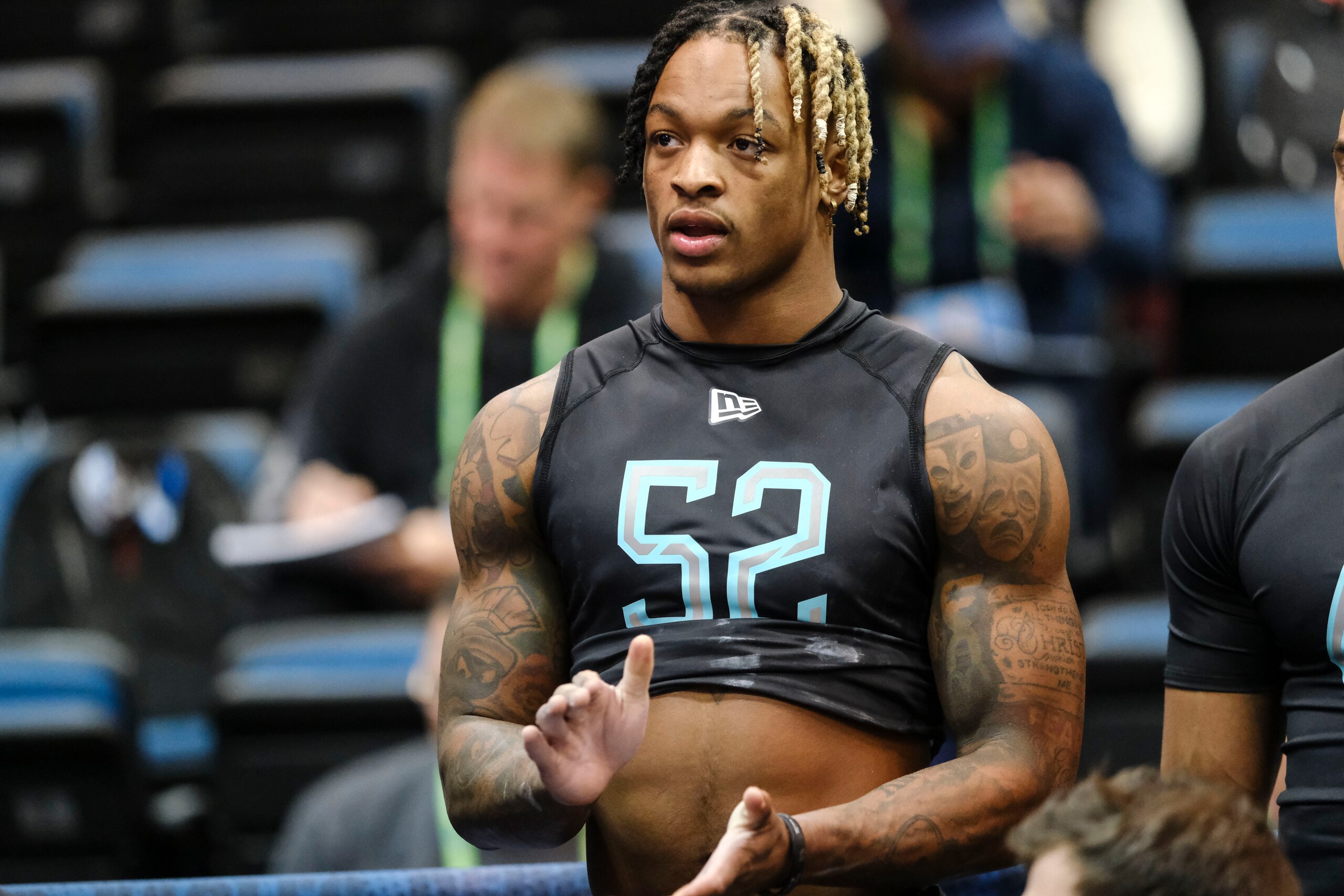
Strengths
Alabama safety Xavier McKinney possesses a good combination of athleticism, size (6'0", 201 lbs), quickness and tackling ability. He didn't complete his combine workouts because of cramps, but he did rack up 19 reps on the 225-pound bench press and produce a 122-inch broad jump.
McKinney also has plenty of versatility.
"He can rock the strong safety spot with good tackling skills but is also fluid and athletic enough to play free safety or line up in the nickel," Miller wrote.
Regardless of a team's need on the back end, McKinney should be atop its safety big board.
Weaknesses
While he has adequate quickness, McKinney does not possess elite speed—he ran a 4.63-second 40 at the combine. He can man the nickel position if needed but could be a liability one-on-one against top-end speedsters.
McKinney is a solid open-field tackler, but he isn't a big hitter. While he's more than capable of playing in the box, he won't be an enforcer over the middle.
Outlook
A gifted, versatile safety, McKinney should have a quick path to a starting role. His best fit is at free safety, but whichever team drafts him will find a way to get him on the field immediately.
While not as elite a prospect as some top guys at other positions, McKinney is a legitimate first-round talent and should be a solid, longtime starter.
.jpg?w=2560 "Bills Rams Football")
.jpg?w=2560 "Grading WWE Raw 🔠")