
The NFL's 10 Toughest Contract Decisions This Offseason
The NFL offseason is a time for hope. Even the worst teams have the potential to dramatically improve their rosters through free agency and the draft.
Of course, adding fresh talent isn't the only goal of the offseason. While teams—and fans—can hope to land a prospect like Chase Young or a free agent like Jadeveon Clowney, it's just as important to keep key players in the fold.
Deciding which players to retain or extend can be challenging depending on cap space, organizational direction and team fit.
NFL teams will have to make several tough contract decisions in the 2020 offseason. Here, we'll rank the 10 most difficult.
Honorable Mention: Young QB Extensions
1 of 11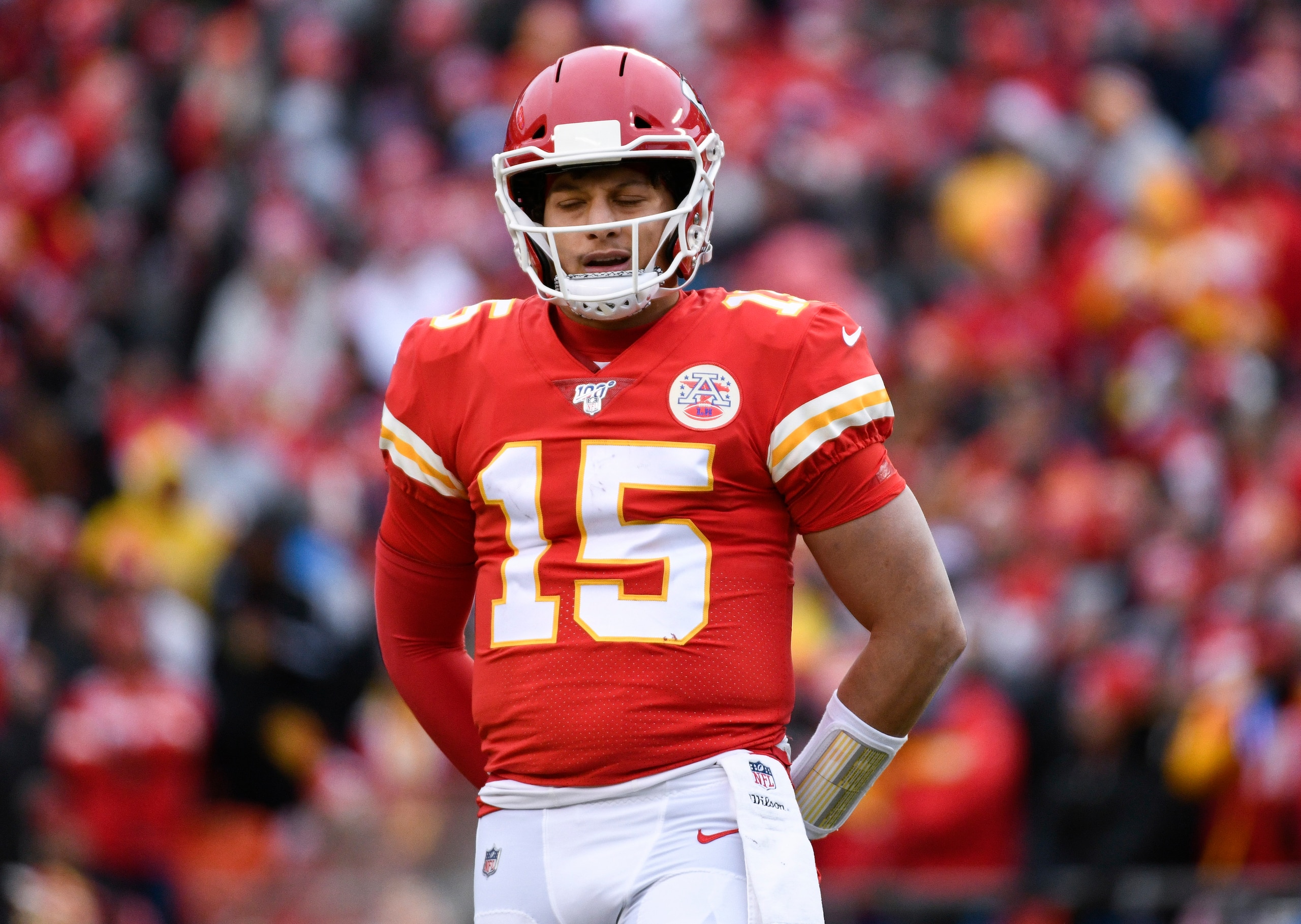
Before digging into the top 10, it's worth mentioning the three first-round quarterbacks from the 2017 draft. Mitchell Trubisky, Patrick Mahomes and Deshaun Watson are all eligible for contract extensions. Their franchises—the Chicago Bears, Kansas City Chiefs and Houston Texans, respectively—must decide if now is the right time to extend them.
For Chicago, Trubisky has yet to establish himself as a high-end franchise quarterback. Mahomes and Watson are Pro Bowl signal-callers, however, making the decision on them trickier.
The Texans and Chiefs aren't obligated to extend their quarterbacks. If their fifth-year options are exercised, Mahomes and Watson can be under team control for two more seasons at a tremendous rate.
On the other hand, giving an extension now could result in a better long-term deal. The going rate for quarterbacks isn't going to go down. A deal in the range of $35 million per season—what Russell Wilson got in 2019—may seem like a bargain in two years.
The Los Angeles Rams decided to give Jared Goff an extension after thee seasons. Given his inconsistent play in 2019, Los Angeles may now feel that it was premature.
There is a lot for teams to consider, even if the need to make a decision isn't pressing.
10. Tampa Bay Buccaneers: LB Shaquil Barrett
2 of 11
Was Shaquil Barrett's 2019 season a fluke? The Tampa Bay Buccaneers have to figure that out, making their looming contract decision a difficult one.
Barrett was nothing short of spectacular in 2019. The sixth-year edge-rusher amassed 58 tackles, 19.5 sacks, an interception and six forced fumbles. What's concerning is that he had only shown flashes during his four previous seasons with the Denver Broncos (he didn't play as a rookie in 2014).
Coming into 2019, he had 14.0 career sacks and seven forced fumbles.
Tampa Bay has to determine if Barrett is a one-year wonder and/or how to best protect the franchise from that possibility. He is scheduled to hit the free-agent market, and he is going to command a ton of attention as a 27-year-old coming off a 19.5-sack season.
The good news for Tampa is that Barrett wants to stay where he is.
"I don't think I'm going anywhere," he recently said, per Eduardo A. Encina of the Tampa Bay Times.
If the Buccaneers retain Barrett, they run the risk of getting burned by a flash-in-the-pan season. Financially, though, they could absorb the hit. They're scheduled to have more than $91 million in cap space—which is why this decision falls at the bottom of the list.
9. Dallas Cowboys: Dak Prescott
3 of 11
The second-easiest—but still difficult—decision on the list involves the Dallas Cowboys and quarterback Dak Prescott.
Retaining Prescott is an absolute must. Yes, he failed to deliver a playoff berth this season, but he did pass for 4,902 yards with 30 touchdowns and 11 interceptions. The chances of lucking into a young quarterback of his caliber are slim.
The challenge will be in deciding how best to keep him and how aggressively to pursue a long-term deal.
Prescott is a high-end starter, but he hasn't yet reached the level of elite signal-caller. However, given the cyclical nature of quarterback contracts—the latest long-term deal is almost always the biggest—Dallas may have to pay him like one.
The franchise tag is an option, as it would give Prescott another year to showcase his potential ceiling. However, tagging a player like wideout Amari Cooper or cornerback Byron Jones would then be impossible.
"Sources said the only way that Cooper will not hit the market is if the tag is placed on him, but there is obviously only one tag to go around per team," CBS Sports' Jason La Canfora wrote.
Clearly, Prescott is a bigger priority than Cooper or Jones, but if there's an option that allows the Cowboys to keep two or even three of their top pending free agents, it has to be considered.
.jpg?w=2560 "Packers 49ers Football")
.jpg?w=2560 "Seahawks Cardinals Football")
.jpg?w=2560 "Steelers Browns Football")
8. San Francisco 49ers: Arik Armstead
4 of 11
For the San Francisco 49ers, deciding whether to re-sign defensive end Arik Armstead is a matter of cap space and roster depth.
In a vacuum, it makes sense to re-sign the pending free agent. Armstead was phenomenal for the 49ers during the 2019 regular season, finishing with 54 tackles, 10.0 sacks and two forced fumbles.
The problem is that San Francisco has plenty of depth along its defensive front.
With players like Dee Ford, Solomon Thomas, Nick Bosa and DeForest Buckner on the defensive line, should re-signing Armstead be a priority? San Francisco cannot afford to commit to all of these promising young defenders over the long term.
Using the franchise or transition tag on Armstead isn't a realistic option. The 49ers are projected to have just under $16 million in cap space in the offseason. Last year's franchise tag value for defensive ends was over $17 million. The transition tag value was over $14 million.
Extending Armstead could be possible, but it would likely lead to a future parting with Thomas, Buckner or a different player. One potential solution is to also extend Buckner, who is set to carry a cap hit of $14.4 million on his fifth-year option.
The good news is that losing Armstead wouldn't leave San Francisco with a bottom-tier defensive line.
7. Jacksonville Jaguars: Yannick Ngakoue
5 of 11
Though he does have one Pro Bowl appearance on his resume, Jacksonville Jaguars defensive end Yannick Ngakoue is still one of the most underrated defenders in the NFL. In 2019, he racked up 41 tackles, 8.0 sacks, six passes defended, an interception and four forced fumbles.
Unsurprisingly, the Jaguars hope to retain Ngakoue.
"I would say that's priority No. 1 to make sure that he comes back to Jacksonville and he's a Jacksonville Jaguar," general manager David Caldwell told reporters.
Ngakoue is as important as any member of Jacksonville's defense. However, the Jaguars have to decide how much of a priority he can be. They're projected to have only $1.3 million in cap space, meaning other players will have to go just to ink him to a below-market deal.
Signing Ngakoue to a below-market deal isn't likely to happen either, as 24-year-old defensive stars don't hit free agency often.
The Jaguars have to determine whether they can afford to lose Ngakoue to free agency and where they can trim the roster if they cannot.
6. Carolina Panthers: James Bradberry
6 of 11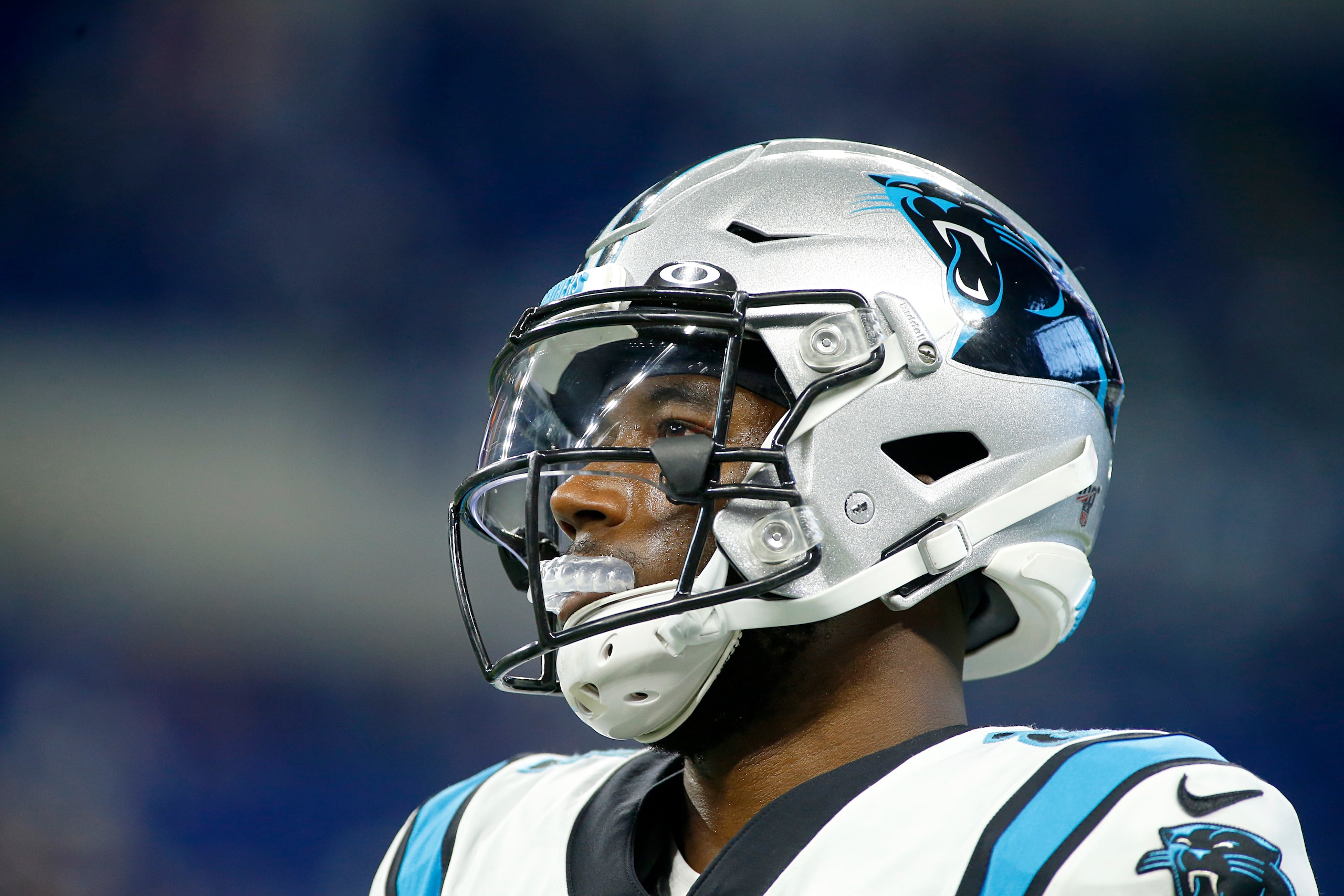
When a team has a No. 1 cover corner, it's usually a good idea to hang on to him. This is what the Carolina Panthers seem to have in four-year veteran James Bradberry.
While the 2016 second-round pick has never been named to a Pro Bowl, he has held his own against the likes of Michael Thomas and Julio Jones in the NFC South. He finished 2019 with 65 tackles, 12 passes defended and three interceptions. He has an impressive 47 passes defended in his career.
Looking strictly at the player, the decision to sign Bradberry to a long-term deal should be easy. However, he is going to be a hot commodity if he reaches free agency, and he is looking to get paid.
"I feel like I'm a top corner in this league," Bradberry said, via the team's official website. "And I want to be compensated as such."
This puts Carolina in a tough spot because it could be rebuilding without quarterback Cam Newton this offseason. While the Panthers aren't cash-strapped—they're projected to have $27 million in cap space—they also aren't positioned to outbid everyone on the open market.
Using the franchise tag is an option, though based on last year's value of $16 million, it would leave them with limited space.
Carolina has to decide how much it values Bradberry as a franchise building block.
5. Atlanta Falcons: Austin Hooper
7 of 11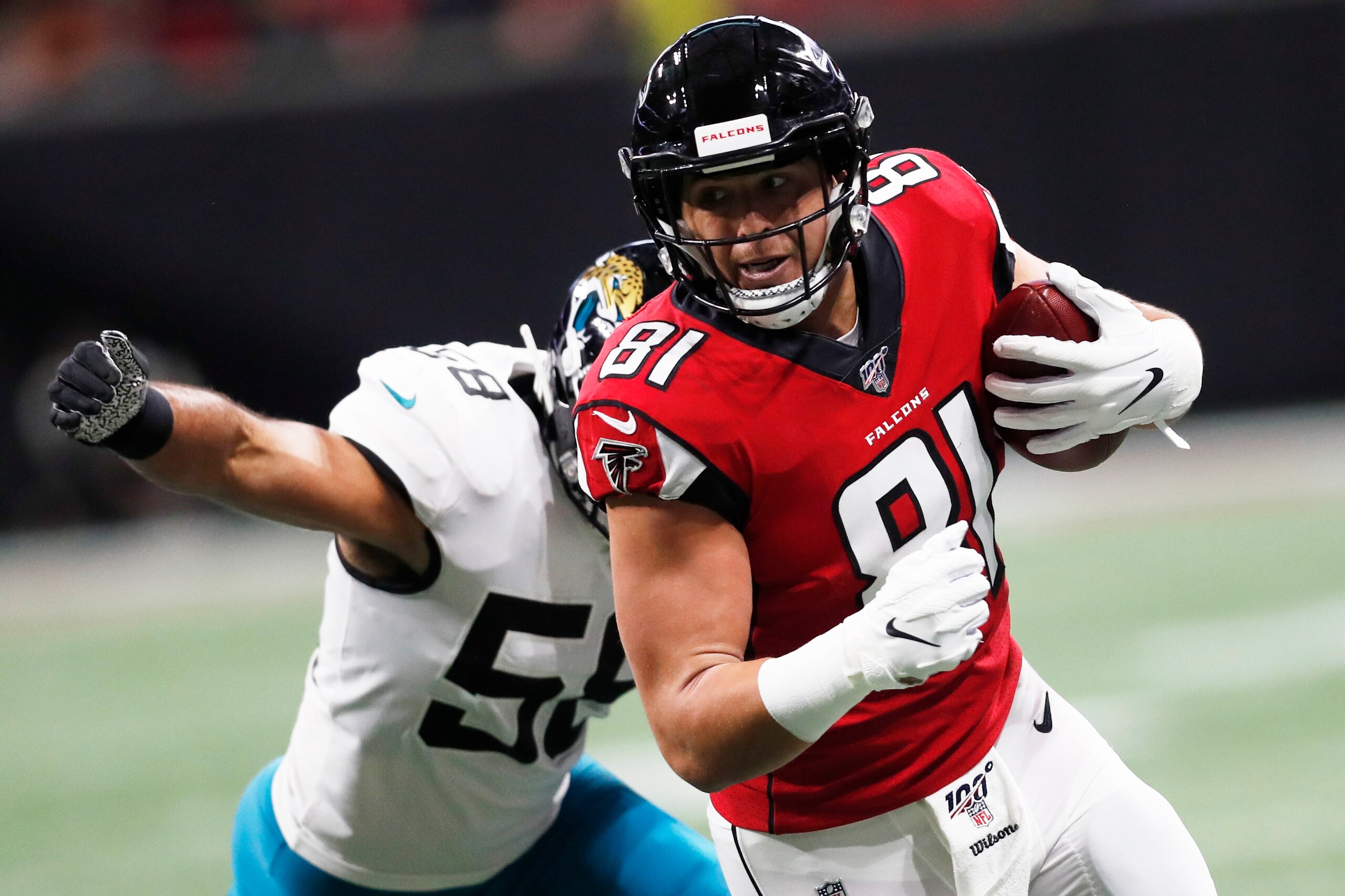
Over the last two seasons, tight end Austin Hooper has emerged as an elite receiving threat for the Atlanta Falcons. He was a Pro Bowler in 2018 and was arguably even better in 2019 when he finished with 787 yards and six touchdowns in 13 games.
He is unquestionably a valuable piece of the Falcons offense.
"He's been a guy that has shown the production," head coach Dan Quinn said, per D. Orlando Ledbetter of the Atlanta Journal-Constitution. "Down the field, seam pass, he's got really good hands. He's an excellent red-zone target."
Clouding Hooper's future is the fact that Atlanta is projected to be over the cap this offseason. The Falcons will have to trim some of the proverbial fat to have a shot at retaining Hooper, who will be coveted in free agency.
Atlanta also has to weigh his value against those of its other pending free agents, notably linebacker De'Vondre Campbell.
As well, the Falcons have to determine if Hooper can be easily replaced in an offense that features Matt Ryan, Julio Jones and Calvin Ridley. They aren't short on offensive talent.
4. Pittsburgh Steelers: Bud Dupree
8 of 11
The Pittsburgh Steelers have a difficult decision to make involving linebacker Bud Dupree, though not because of the player himself.
Re-signing Dupree, who is coming off an 11.5-sack season, seems like an obvious choice. The Steelers don't have many pending free agents, with Dupree and defensive lineman Javon Hargrave the most critical.
However, retaining him isn't a windmill-slam decision. Like Shaquil Barrett, Dupree has just one season of high-end production. He had never had more than 6.0 sacks in a season before 2019 and had just 11.5 sacks over the previous two.
More importantly, Pittsburgh has to weigh his value against the value of bringing in players at other positions. The Steelers are projected to have just $1.6 million in cap space and need to trim some roster dollars.
Even if they create enough cap space to re-sign Dupree, doing so could leave them with no flexibility with which to enter free agency. The tag isn't a realistic option either given the cap situation.
While extending Dupree appears a logical choice, there's a lot more to be considered than one quality player.
3. Minnesota Vikings: Multiple Defensive Backs
9 of 11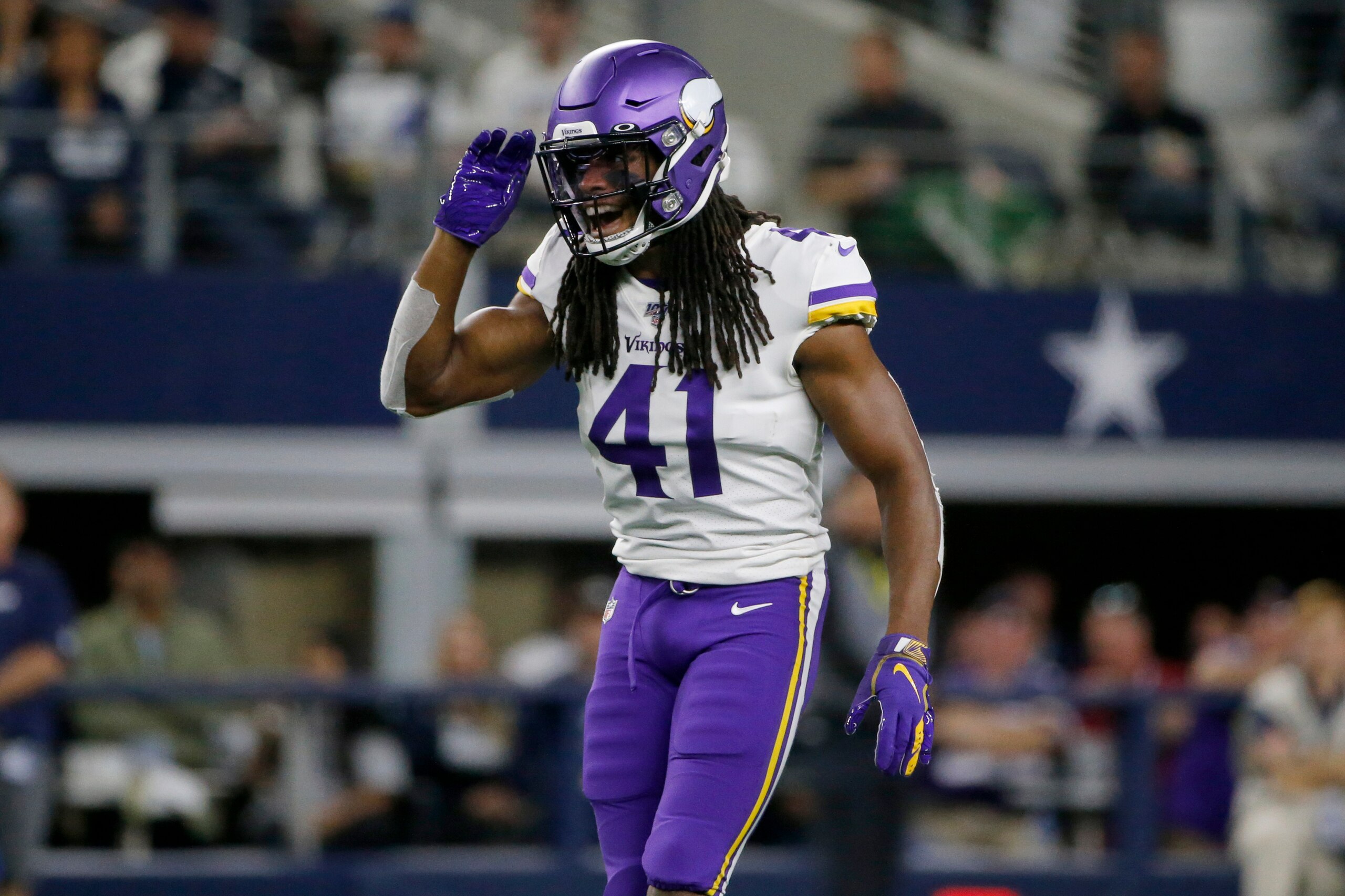
Our two most difficult decisions involve quarterbacks, which shouldn't be a surprise given the importance of the position. However, the Minnesota Vikings have a looming quandary that will be nearly as critical and perhaps even more challenging to sort out.
A trio of talented Vikings defensive backs—Trae Waynes, Mackensie Alexander and Anthony Harris—are poised for free agency. Valuable backup Andrew Sendejo is also slated to hit the open market.
The Vikings relied heavily on their defense in 2019, and they're projected to have less cap space than any other team this offseason.
There is virtually no way Minnesota can keep all of its key defensive backs heading into the 2020 season. Even keeping more than one seems like a stretch. Re-signing one may be possible, but then the Vikings face the difficult task of deciding which to prioritize.
2.. New Orleans Saints: Drew Brees
10 of 11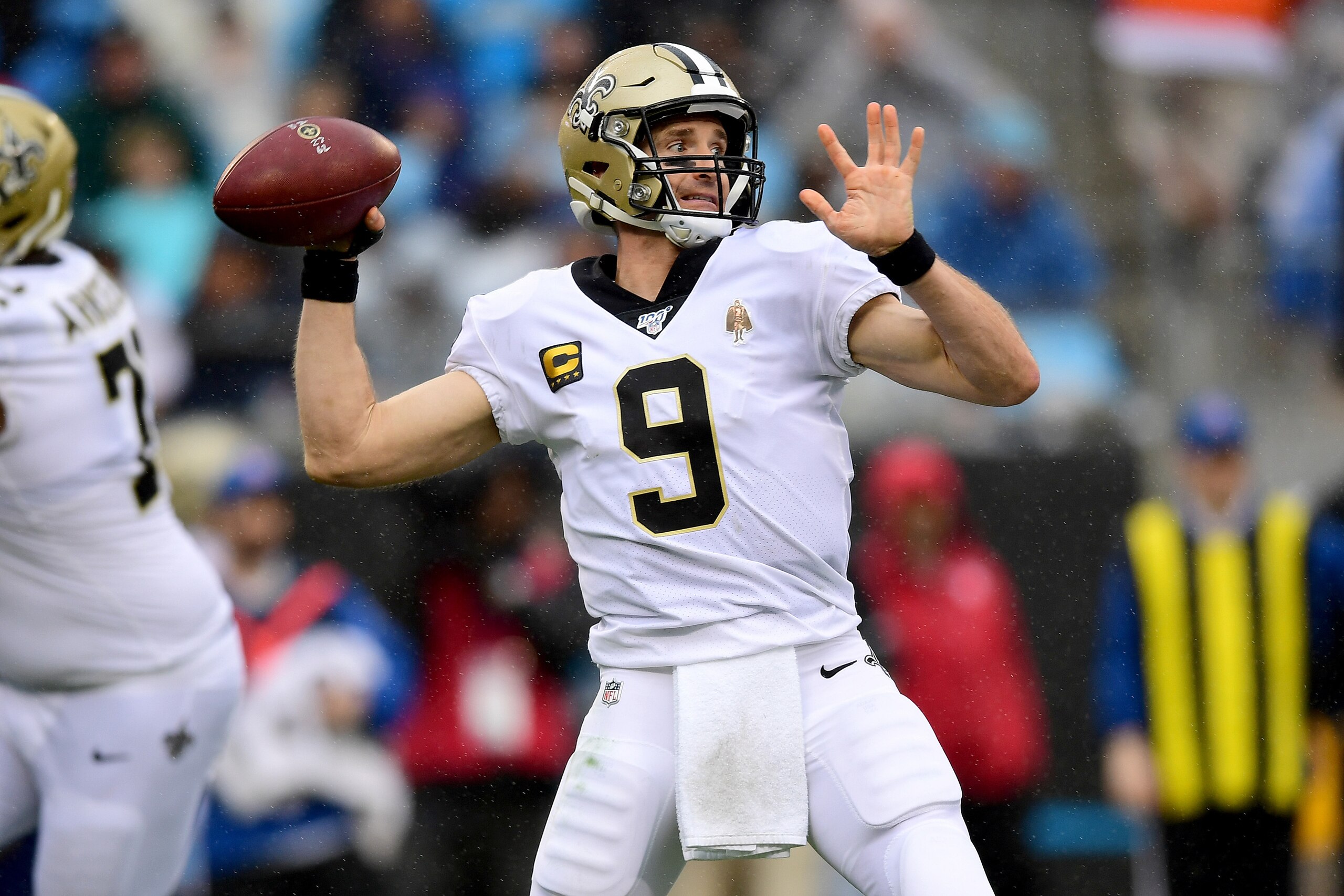
Several high-profile veteran quarterbacks are scheduled to reach free agency, including Tom Brady and Philip Rivers. However, the New Orleans Saints have a truly tough choice to make with Drew Brees.
What makes Brees' situation especially tricky is the phantom year on his contract. He has a cap hit of $21.3 million for 2020, all of it guaranteed. However, that year will automatically void March 18, and the Saints would have to pay out the money even if Brees wasn't on the roster.
New Orleans could renegotiate his deal, pushing the owed money back and keeping him under contract for 2020. This would seem like an easy choice—especially since Brees played well in 2019—but the presence of backup Teddy Bridgewater adds another tricky element.
At some point, New Orleans will have to bite the proverbial bullet, eat the money it owes Brees and transition to his successor. Bridgewater has spent two years in Sean Payton's system, went 5-0 as a starter while Brees was sidelined this year and could conceivably be that successor.
The problem? Bridgewater is also scheduled to become a free agent.
At first blush, the obvious move is to extend Brees before March 18, avoid paying $21 million to not have a star quarterback and push for a championship again in 2020. However, the potential long-term implications for the franchise mean this decision isn't so easy.
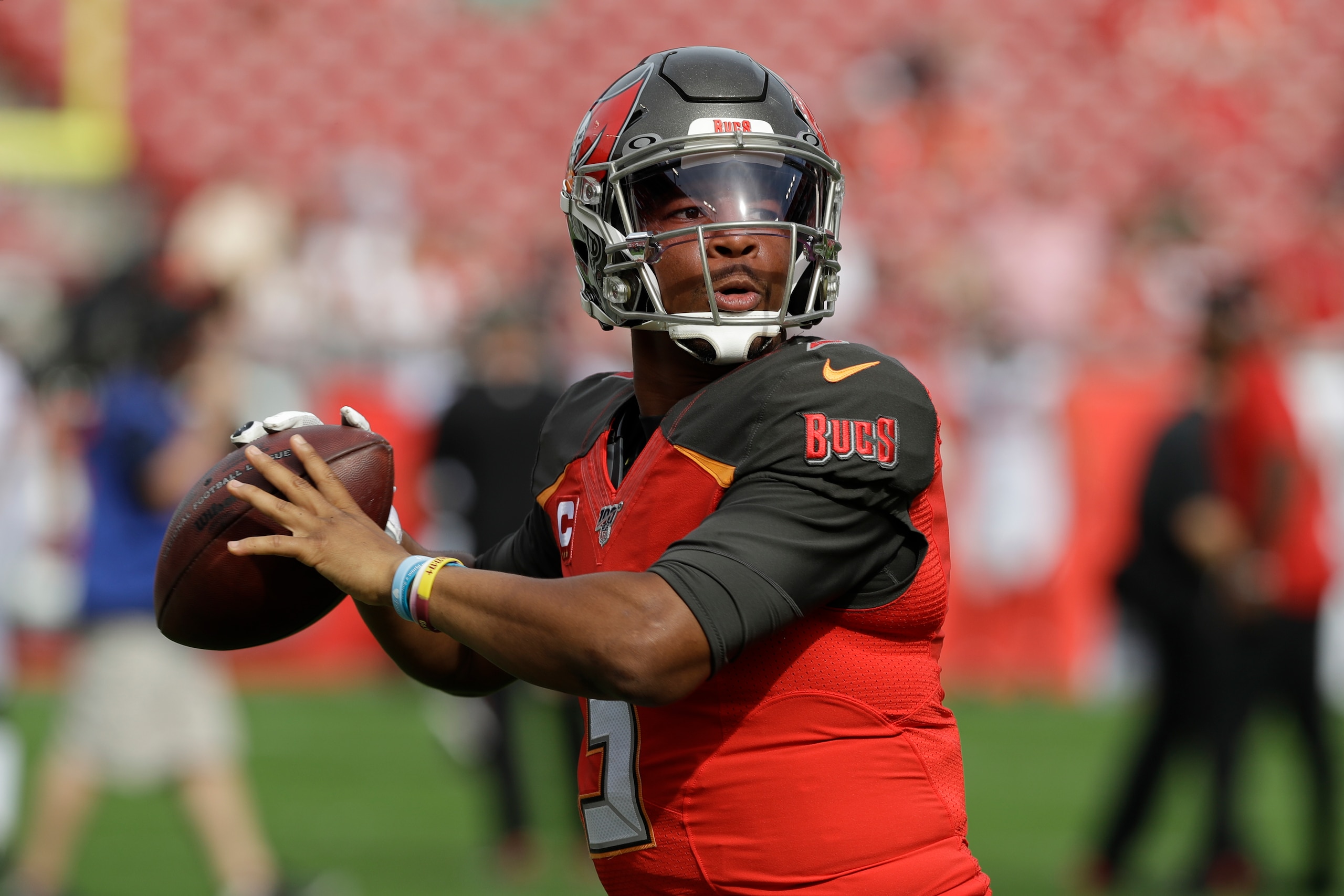
1. Tampa Bay Buccaneers: Jameis Winston
11 of 11
There is a lot to unpack with Buccaneers quarterback Jameis Winston. His talent as a passer is unquestionable. He has the arm strength, accuracy, pocket movement and athleticism to be one of the best quarterbacks in the league. However, he also has a decision-making problem: He too often makes bad ones.
Consider that Winston passed for 5,109 yards and 33 touchdowns this season—but also threw 30 interceptions. He is the first player in league history to have at least 30 passing scores and 30 picks in the same campaign.
The decision regarding Winston is the most difficult of this offseason because of all the options and repercussions.
Tampa Bay can choose to extend him, tag him or let him walk. Tagging Winston would give head coach Bruce Arians another year with which to evaluate him, but it would also cost the team a lot of coin. Last year's non-exclusive franchise tag value for quarterbacks was $24.9 million. Using the tag would also mean the Buccaneers have to make this decision again in the 2021 offseason.
Extending Winston would likely be the cheaper long-term option, but then Arians could be stuck with a quarterback he isn't sold on.
"[If] we can win with this [quarterback], we can definitely win with another one too," Arians told reporters Monday.
Perhaps most importantly, signing Winston in any fashion would likely mean the Buccaneers miss out on an intriguing rookie quarterback class and a free-agent pool that includes Brees, Brady, Bridgewater and Rivers.
At the same time, letting him go could cost Tampa Bay a generational talent—if he ever curtails his bad habits.
All contract and cap information via Spotrac.
.jpg?w=2560 "Lions Cardinals Football")

.jpg?w=2560 "Cam Ward Says He's Not A Loser")