
Exposing MLB's Worst Contracts Entering 2019
Assembling MLB's worst contracts gets tougher every year.
While Manny Machado and Bryce Harper eventually got paid the superstar money they deserved, few others cashed in too handsomely this offseason. With most franchises looking to mitigate long-term risk, a majority of veterans settled for one- or two-year pacts.
Patrick Corbin, the most likely winter signing to appear in a future installment of this article, was the only player besides Harper and Machado to receive more than four years. At $140 million, he also walloped Nathan Eovaldi (four years, $68 million) as free agency's highest-paid pitcher. (Dallas Keuchel and Craig Kimbrel remained unsigned as of Tuesday, March 26.)
This is obviously good for clubs, as overpaying players for their twilight years is bad business. For the players, not so much.
Teams would be more willing to allocate rich deals to veterans if not for the ability to control young players for six big league seasons. In cases of service-time manipulation inflicted upon Kris Bryant and Ronald Acuna Jr. among many others, it becomes closer to seven.
Most of the highlighted players, as a result, locked down their money years ago.
In order to be considered, a player must be under contract for at least two more seasons. Length often trumps the average annual value in damage, which is why the types of deals discussed below are growing extinct.
Also, these contracts are judged based on the remaining years, not the original deal. That said, Dustin Pedroia, Evan Longoria and even Joey Votto have already provided too much surplus value on their current contracts to include in good conscious.
Finally, there's no malice intended to the players themselves. All of them are now earning way more than their true worth only because the inverse held true early in their careers.
That's the way this flawed system was designed to work. They just happened to hit the open market at the right time.
Honorable Mentions
1 of 11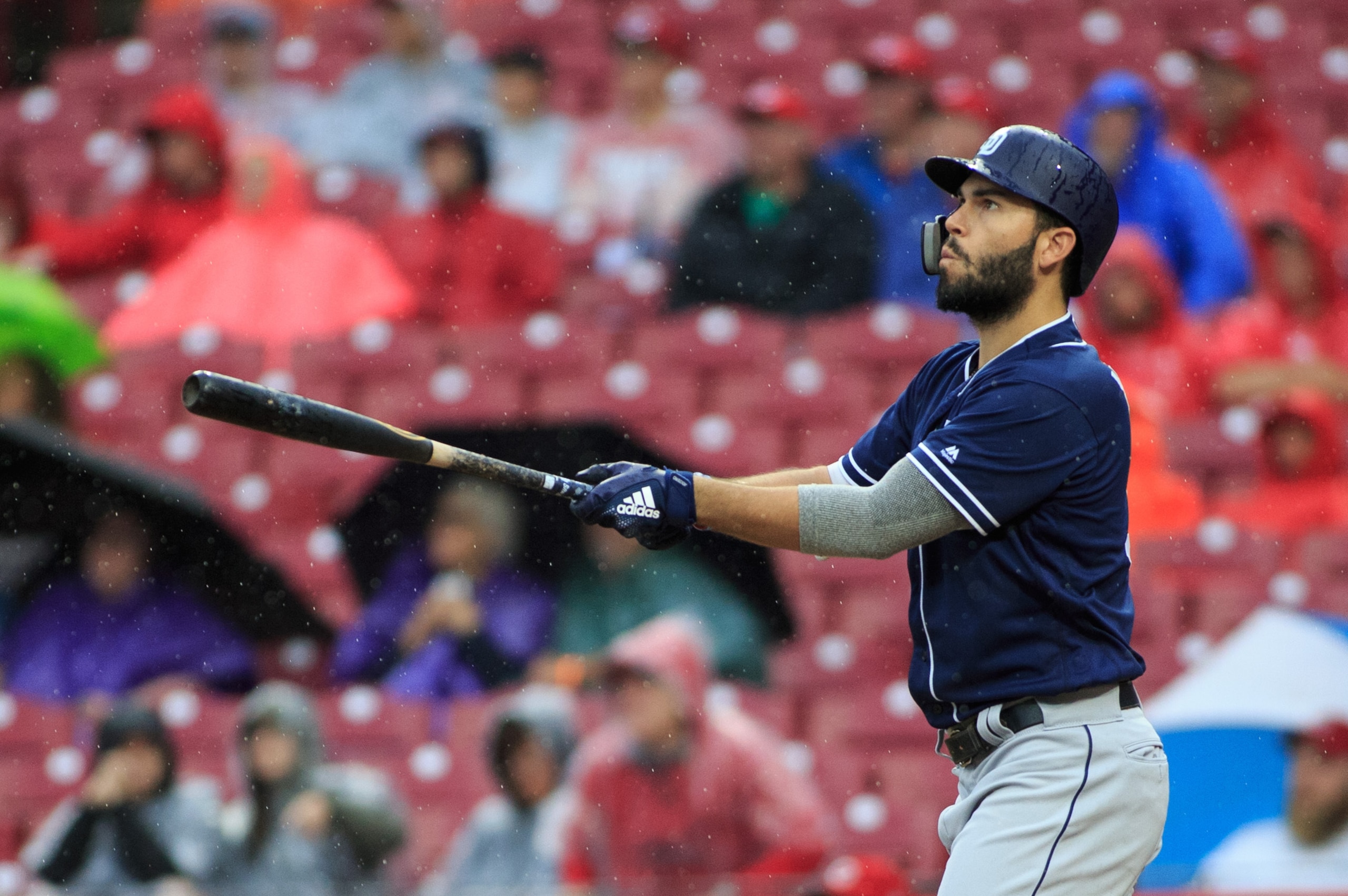
Too Soon to Call
Eric Hosmer, 1B, San Diego Padres: 7 Years, $123 Million (player opt-out after 2022)
Yu Darvish, SP, Chicago Cubs: 5 Years, $101 Million (player opt-out after 2019)
Dexter Fowler, OF, St. Louis Cardinals: 3 Years, $49.5 Million
Alex Cobb, SP, Baltimore Orioles: 3 Years, $43 Million
Let's not declare these contracts untenable just yet. Hosmer has bounced back and forth between mediocre and marvelous, and the 29-year-old first baseman at least has durability on his side. Darvish can't say the same, but he could rebound from a forgettable 2018 if healthy.
Cobb didn't sign until late March last year, so let's see how he fares with a full spring training under his belt. Fowler recorded a .363 on-base percentage during his first season with the St. Louis Cardinals in 2017, so perhaps he can repair last year's career-low .278 clip.
Almost Over
Felix Hernandez, SP, Seattle Mariners: $27.9 Million
Matt Kemp, OF, Cincinnati Reds: $21.8 Million
Alex Gordon, OF, Kansas City Royals: $20 Million
Russell Martin, C, Los Angeles Dodgers: $20 Million
Although overpaid in 2019, these players only have one year left under contract. Besides, Hernandez and Gordon have especially provided plenty of good memories to justify the deals for their current squads.
10. Jason Heyward, OF, Chicago Cubs
2 of 11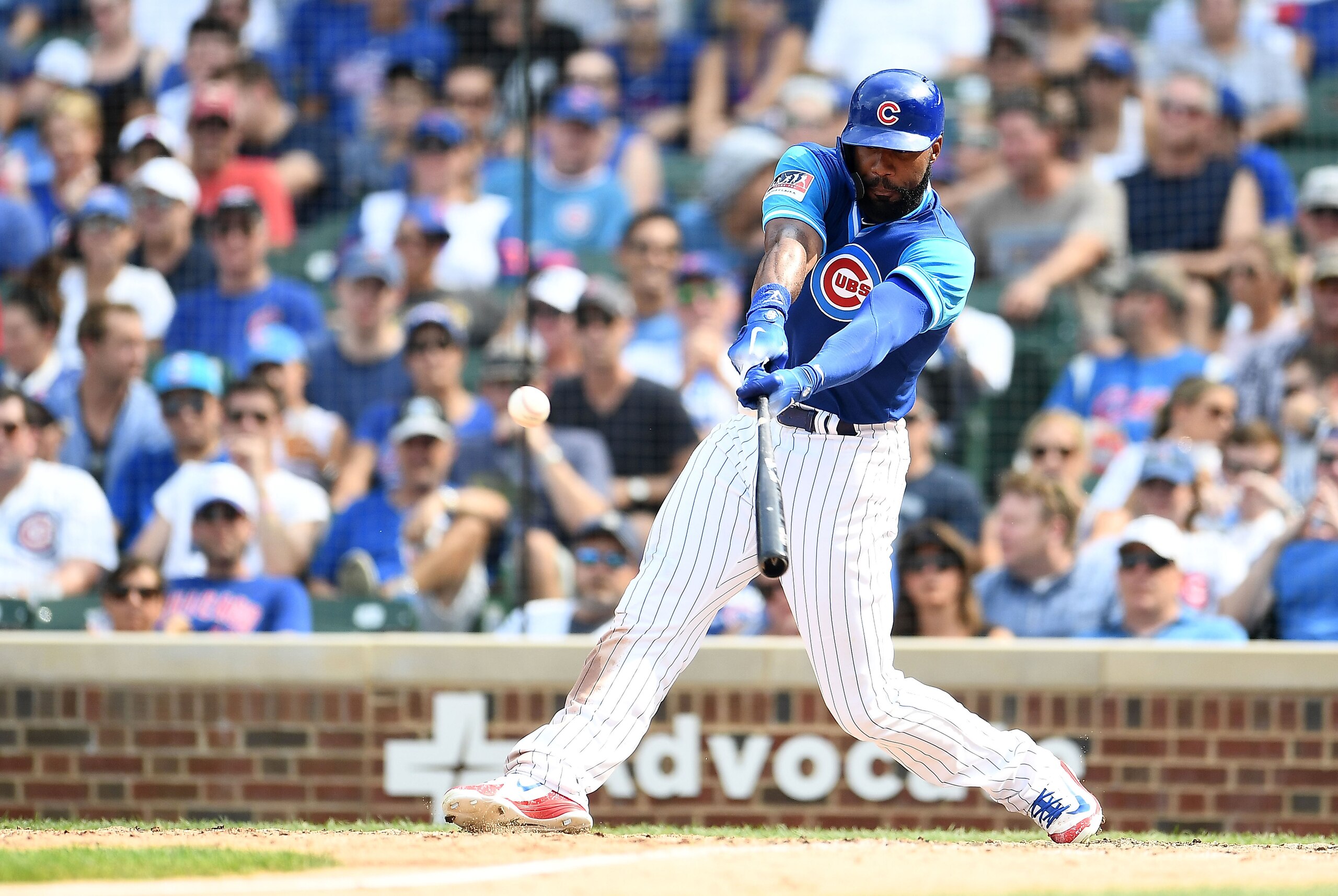
Remaining Contract: Five Years, $106 Million
Jason Heyward has something no other player here has with his current squad: a World Series triumph.
Had the Chicago Cubs not broken their title drought in 2016, trading Gleyber Torres to rent Aroldis Chapman would go down as one of the worst transactions in franchise history. They generally get a pass since the move netted them a relief ace necessary to win it all.
Heyward doesn't seem to receive the same leniency. Perhaps it's because he was abysmal (.104/.140/.167) during their championship run. There's also a difference between wondering what if and watching a pedestrian hitter make All-Star money.
Considering he hit 27 homers while on the cusp of stardom in 2012, it's maddening to see the highly compensated outfielder manage just 26 combined long balls over three seasons in the Windy City. Once a prized prospect expected to deliver prolific offense, he has generated a subpar 85 weighted runs created plus (wRC+) with the Cubs.
This contract could devolve into a calamity if the 29-year-old's defense wanes over the ensuing five seasons.
On the flip side, he could remove himself from this dubious group simply by replicating last year's near-average (99 wRC+) offensive production. Unlike most other players included, he's a healthy, quality starting position player because of his glove and batting eye.
Is a rousing speech worth $184 million? After going over a century without a championship, Cubs fans may give that question some serious thought.
9. Jordan Zimmermann, SP, Detroit Tigers
3 of 11
Remaining Salary: 2 Years, $50 Million
In the current landscape, it's hard to fathom a player of Jordan Zimmermann's ilk netting a five-year, $110 million deal.
There's some hindsight bias in play, as he carved out a pristine 3.14 ERA in the previous five seasons before joining the Detroit Tigers. Yet no organization's algorithm would now spit out such a gaudy value for a pitcher with 7.3 strikeouts per nine innings (K/9) over that same stretch. He also became the first pitcher to receive a $100 million contract after undergoing Tommy John surgery.
Nobody could complain if Detroit were simply overpaying a solid No. 2 and 3 starter while contending. In the far harsher reality, Zimmermann has posted a 5.24 ERA and 6.4 K/9 in three seasons with the Tigers, who have lost 98 games in consecutive seasons.
At this point, they would probably settle for last year's 4.52 ERA and 1.26 WHIP if the 32-year-old can offer more than 131.1 innings. Perhaps that could at least turn him into a tradable commodity during the summer of 2020.


8. Wei-Yin Chen, SP/RP, Miami Marlins
4 of 11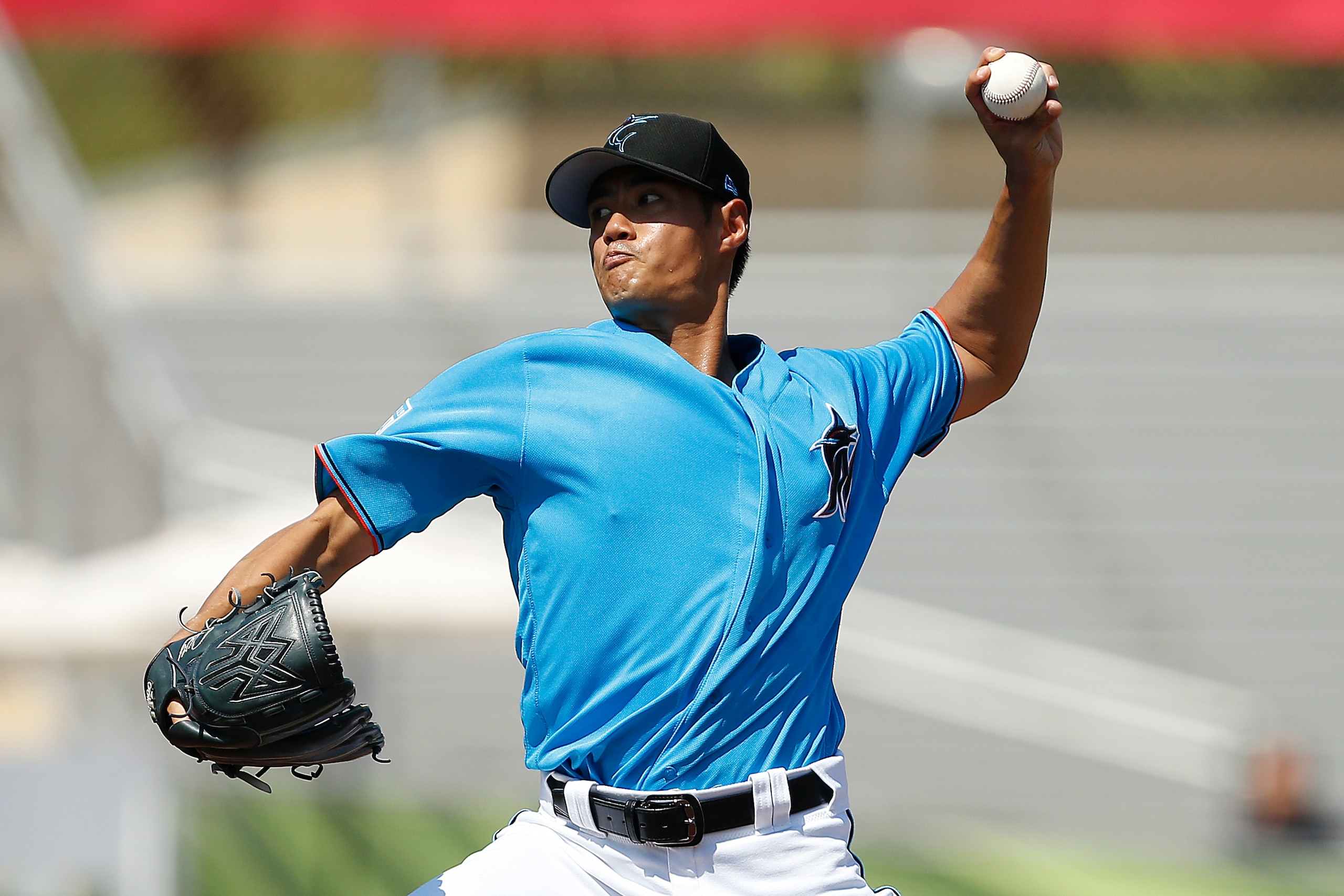
Remaining Contract: 2 Years, $42 Million ($16 million conditional player option for 2021)
While Christian Yelich, Marcell Ozuna and J.T. Realmuto make a combined $27.9 million in 2019, the Miami Marlins will pay Wei-Yin Chen $20 million to work out of the bullpen.
After elbow injuries limited him to 33 innings in 2017, the southpaw surrendered a 4.79 ERA in 26 starts last season. Per Jordan McPherson of the Miami Herald, the 33-year-old will shift to a relief role.
This at first seems like a commendably bold decision for a rebuilding team to value merit over salary. However, it also benefits financially from containing his workload.
In order to unlock a $16 million option for 2021, Chen must pitch 360 innings in the next two seasons or 180 in 2020. He'll also need to end 2019 away from the injured list and stay healthy in 2021's spring training, but the Marlins won't have to worry about those scenarios if they restrain him now.
Chen hasn't even reached 135 frames with the Marlins, so he was unlikely to earn that extra year regardless of his role. While the frugal franchise has shed payroll by trading all of its stars, the Marlins are stuck with the declining pitcher as their priciest player for two more years.
7. Yoenis Cespedes, OF, New York Mets
5 of 11
Remaining Contract: 2 Years, $58.5 Million
Fans would have revolted had the New York Mets not re-signed Yoenis Cespedes following the 2016 season. Revisionist history has now created a far different response.
A decade ago, a top-tier slugger probably could have easily earned six or more years after steering his squad to the World Series and postseason in subsequent seasons. Cespedes, who opted out after the first season of a three-year deal in 2016, signed a four-year pact after tallying a 136 wRC+ and 31 homers.
Since agreeing to the latest arrangement, he has played in just 119 games in two seasons. After undergoing surgery on both heels to remove bone spurs, he's not guaranteed to play at all in 2019.
A healthy Cespedes can still rake, but the Mets must contend while absorbing his $29 million payroll hit this season. Given the nagging, long-term nature of his foot injuries, they must then hope they're not saddled with another David Wright-like situation.
6. Johnny Cueto, SP, San Francisco Giants
6 of 11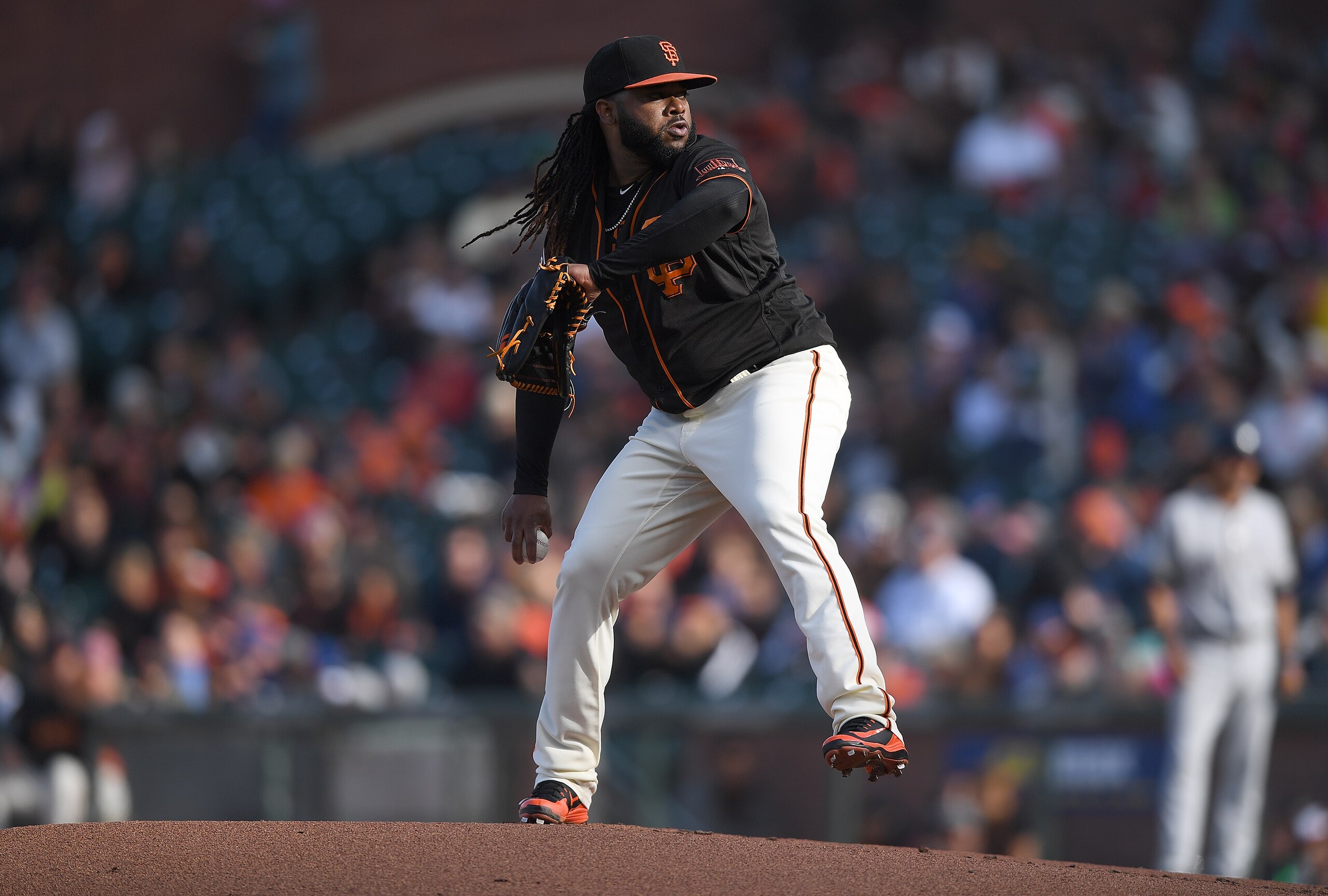
Remaining Contract: 3 Years, $63 Million ($22 million club option with $5 million buyout for 2022)
At least Johnny Cueto opened his six-year, $130 million agreement with a 2.79 ERA in 219.2 innings for the San Francisco Giants.
He's not necessarily doomed to play out the final three years as a massive liability to their ledger. The 33-year-old, who has dropped 20 pounds while rehabbing from Tommy John surgery, is aiming toward returning this September.
Even if the Giants end up playing all of 2019 without their second-highest-paid player behind Buster Posey, Cueto could at least salvage some value during the final two seasons.
They shouldn't feel too optimistic about that prospect. Before getting shut down at the start of August, Cueto amassed just 38 strikeouts in 53 innings. His four-seam fastball dipped to an average velocity of 89.4 mph.
The Giants may be grateful to get the diminished 2017 version of Cueto, who began to decline with a 4.52 ERA and 22 home runs allowed.
5. Ian Desmond, 1B/OF, Colorado Rockies
7 of 11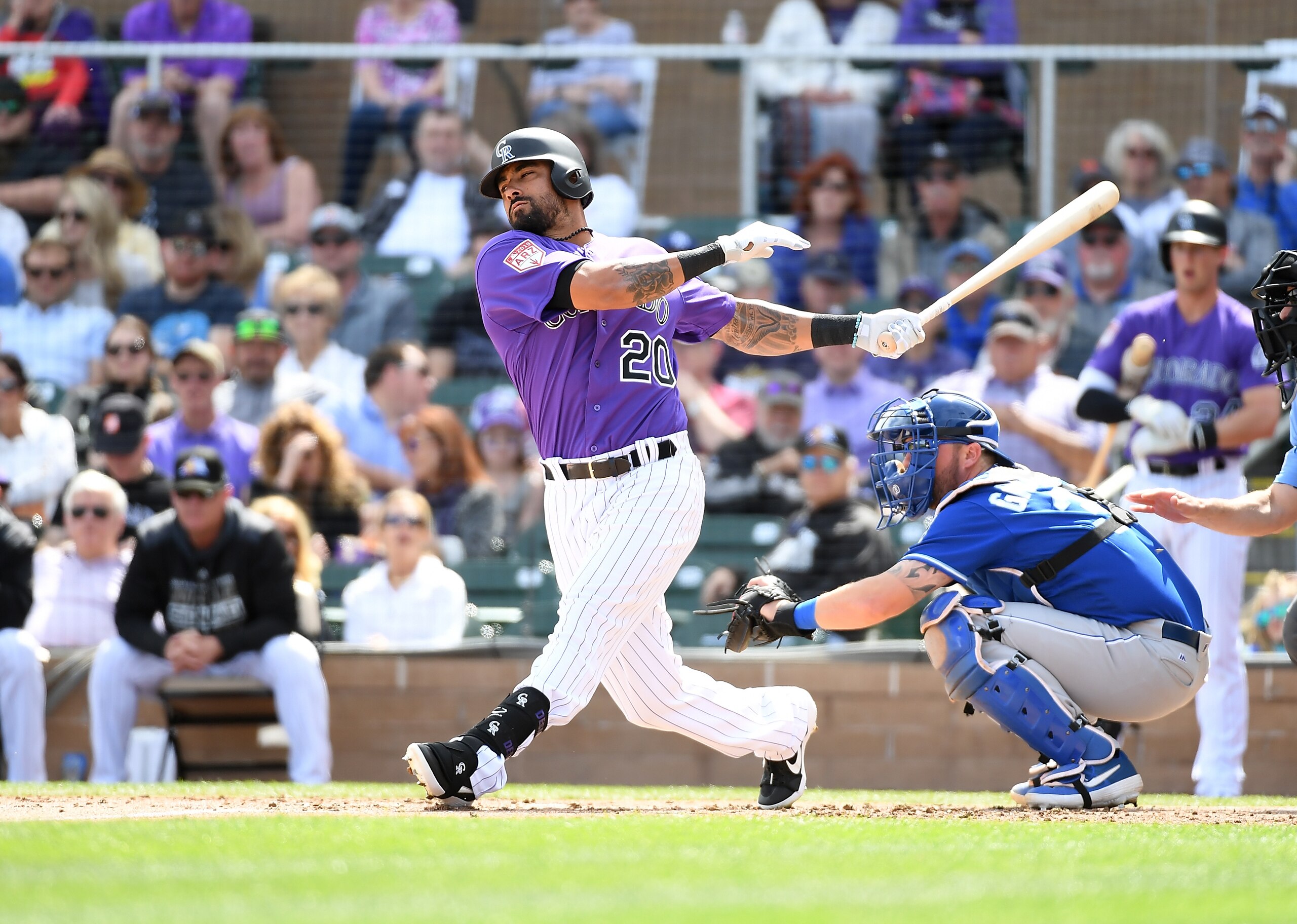
Remaining Contract: 3 Years, $38 Million ($15 club option with $2 million buyout in 2022)
Ian Desmond's remaining earnings are chump change compared to some other players highlighted. The Colorado Rockies also already withstood the worst annual hit when paying him $22 million to post an 81 wRC+ and minus-0.7 fWAR last season.
Still, $40 million (factoring in the buyout) is still an awful lot of money to pay a position player who can't even succeed in Coors Field.
In his two seasons with the Rockies, Desmond has hit .249/.314/.377 at home. Pitcher German Marquez has batted .315/.315/.407.
They would have gotten better production out of Ryan McMahon, Raimel Tapia or a bargain-bin signing a la Mark Reynolds at a fraction of the cost. If not for his lofty salary, the Rockies would have benched the sub-replacement Desmond a long time ago.
Since they signed the former shortstop with intentions of moving him to first base, this deal never made sense in the first place. All of those factors make Desmond one of MLB's worst contracts despite a comparably tamer salary.
4. Jacoby Ellsbury, OF, New York Yankees
8 of 11
Remaining Contract: 2 Years, $42.3 Million ($21 million club option with $5 million buyout in 2021)
Nobody should feel too bad for the New York Yankees. They have the resources to withstand a bad deal, and they're probably not operating aggressively enough if they never whiff on a high-priced star.
Besides, they had to realize some risk when plucking Jacoby Ellsbury away from the Boston Red Sox. After narrowly missing AL MVP honors in a spectacular 2011, he played just 74 games in 2012 and 134 in 2013.
Since signing with the Yankees, he averaged 130 games over four seasons before missing all of 2018 with multiple injuries. Another bout of plantar fasciitis is delaying his timetable for this season's debut, as he just recently resumed baseball activities.
He hasn't exactly earned his lofty pay when on the field. Ellsbury, a .297/.350/.439 hitter in seven seasons with the Red Sox, has batted .264/.330/.386 for his current club.
Throw in oblique and hip issues endured last year, and one must wonder what—if anything—the Yankees can reasonably expect from Ellsbury. If Aaron Hicks beats him back from the shelf, the 35-year-old will almost certainly return to a bench role.
That's assuming the Yankees aren't too proud to hide evidence of a regrettable decision in the dugout.
3. Miguel Cabrera, 1B, Detroit Tigers
9 of 11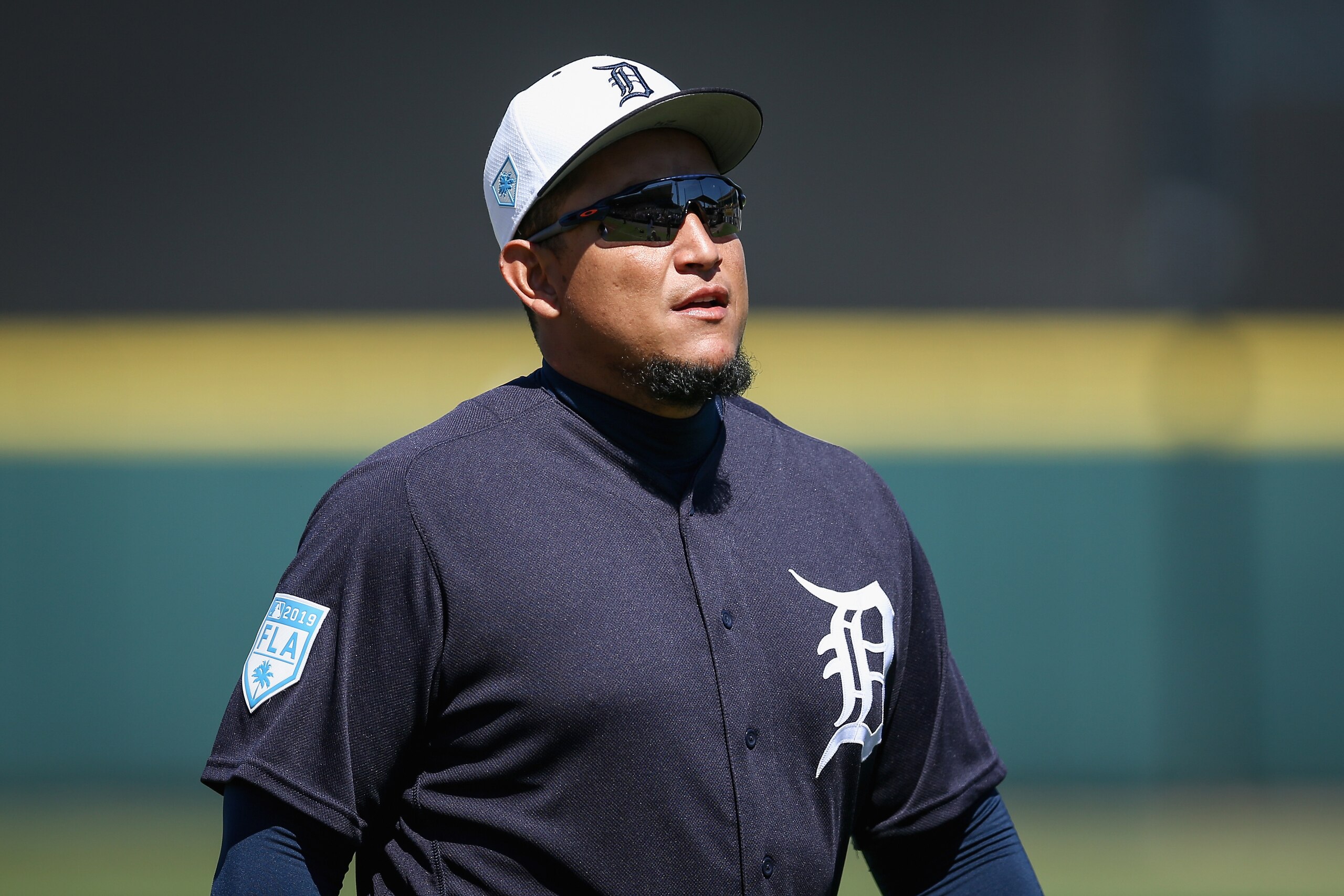
Remaining Contract: 5 Years, $154 Million ($30 million club option with $8 million buyout in 2024)
Miguel Cabrera offers another case study for why so many teams are terrified of committing to long-term deals.
Fresh off earning AL MVP honors in consecutive seasons, the Detroit Tigers awarded their superstar an eight-year, $248 million extension. Although he never again reached Triple Crown heights, he at least provided three more seasons of stellar offense before falling off a cliff and hitting .249/.329/.399 with minus-0.1 fWAR in 2017.
At least there's some hope of Cabrera salvaging some value. While limited to just 38 games in 2018, he sported a much-improved .299/.395/.448 slash line before rupturing his left biceps tendon.
Coming off a strong spring, Cabrera told The Athletic's Jayson Stark that he's driven to defy Father Time:
"I don't care what people say. They say, like, 'You're old. You don't hit the ball the same.' … There's a lot of expectations that I can't do it anymore. So I've got to show people. I've got to show them it's not about what some people say I can't do anymore. It's about going out in that stadium and do it. Show people this is what I love, this is what I do."
A healthy Cabrera could still deliver above-average offensive results, but the Tigers should have never expected this deal to end gracefully. The first baseman turns 36 in April, and they'll have to soon think about making him a permanent designated hitter to preserve his bat.
2. Albert Pujols, 1B/DH, Los Angeles Angels
10 of 11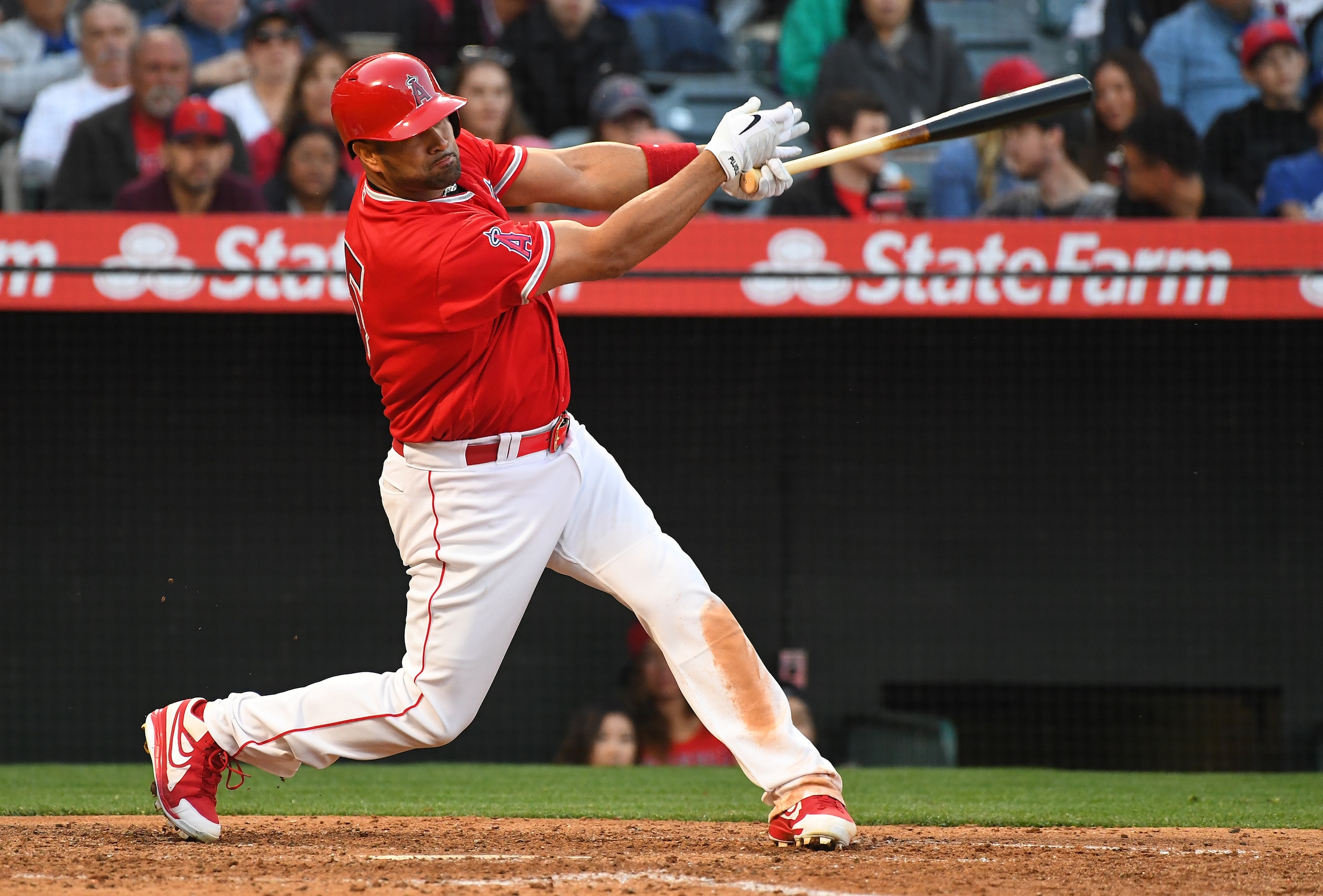
Remaining Contract: 3 Years, $87 Million
This would be a far easier pill to swallow had the Los Angeles Angels received vintage Albert Pujols after poaching him from the Cardinals.
They had to anticipate some rough years down the line when signing a 32-year-old to a decade-long covenant. Eventually overpaying a future first-ballot Hall of Famer is a perfectly fine tradeoff if getting MVP-caliber production out of the gate. Pujols, however, began the arrangement with what was then the worst season of his career (.285/.343/.516) in 2012.
He has only gone downhill since. In seven seasons with the Angels, Pujols has batted .260/.315/.453 with a 110 wRC+. Lucas Duda, who owns a career 118 wRC+, made the Kansas City Royals after signing a minor league contract.
Younger fans may not remember the man who warranted this monumental contract, but Pujols hit above .310 with a slugging percentage over .560 in each of his first 10 big league seasons. He has batted .241 and .245 in the past two years, respectively.
Making matters worse, the backloaded deal will pay him $28 million in 2019 with a $1 million increase in each of the final two years. That's a lot for a below-average (and replacement-level) designated hitter.
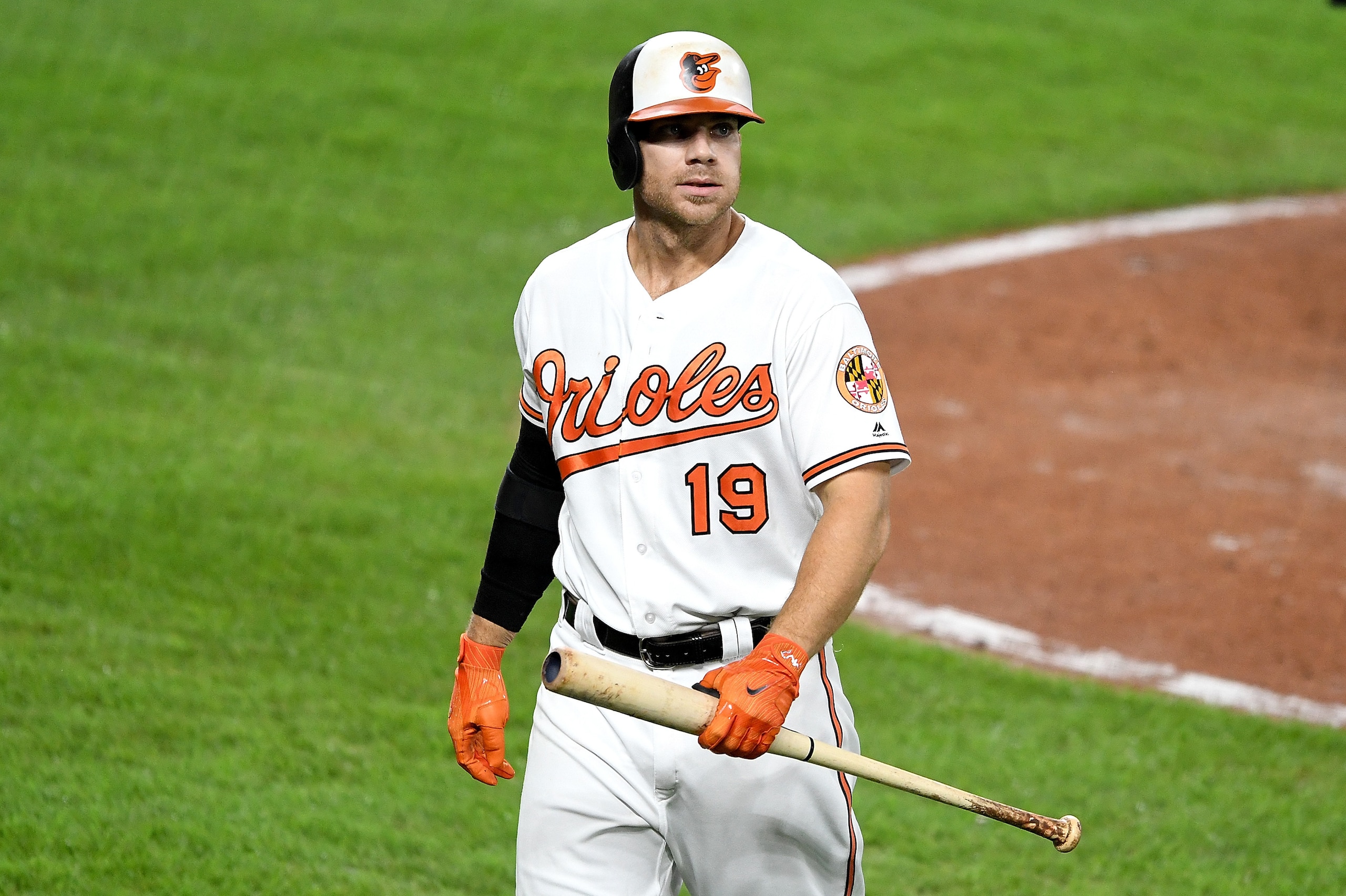
1. Chris Davis, 1B/DH, Baltimore Orioles
11 of 11
Remaining Contract: 4 Years, $68 Million
The worst team in baseball is paying the worst player in baseball more money than A.J. Pollock and Andrew McCutchen recently earned on the open market.
A mundane Double-A player could have performed better than Chris Davis, who inexplicably logged 522 plate appearances in a historically bad season for the Baltimore Orioles. As noted by FanGraphs' Jay Jaffe, the maligned designated hitter finished with the worst single-season batting average of all time (.168) from a qualified hitter with the lowest fWAR (minus-3.1) of the 21st century.
Per FanGraphs' dollar values, Davis was worth a ghastly negative-$24.9 million in 2018. Rather than giving anybody else the opportunity, they compounded their losses to avoid the embarrassment of benching someone with a $17 million salary.
Somebody needs to explain the concept of sunk costs to the Orioles before Davis exasperates the damage over the next four years.
Note: All advanced statistics courtesy of FanGraphs unless otherwise noted. Salary information obtained from Cot's Baseball Contracts.

.png?w=2560)



.jpg?w=2560 "Jonathan Taylor Landing Spots 📍")




