

NFL Rookies In The Worst Spot To Succeed In 2018
Not all landing spots are created equal for rookies coming out of the NFL draft, especially in terms of the potential immediate impact.
It might have nothing to do with the player or the talent. Even a great player drafted into a tough situation will have difficulty in his first year. The same could be said about a top rookie landing in a spot where the potential for instant impact is low, based on the depth chart or the talent around him.
There are a few notable NFL newcomers who have landed in situations where it might be difficult to produce right away.
Here's a look at the rookies in the worst spots to succeed in 2018.
QB Josh Allen, Buffalo Bills
1 of 8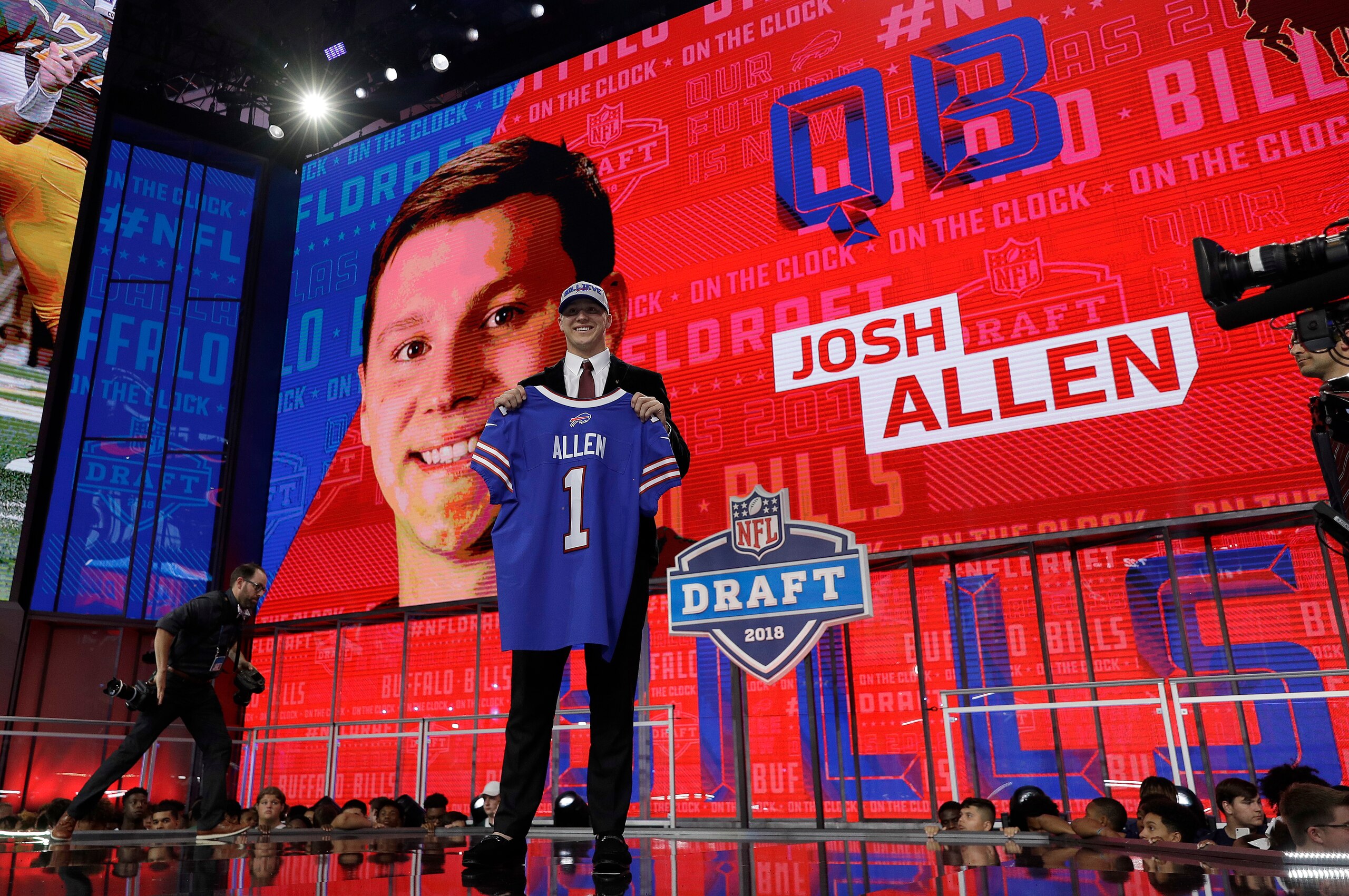
Josh Allen has a big arm and prototypical size, but he needs significant development in just about every area of playing quarterback, including one of the most important: accuracy. There's also no guarantee Allen will even play as a rookie, despite the fact that he was the seventh overall pick and the Bills paid AJ McCarron backup-level money in free agency.
If Allen plays in 2018, he'll likely be surrounded by a tough situation on offense. Veteran running back LeSean McCoy could ease some of the pressure, but the Bills lack top talent at receiver and are currently attempting to rebuild the offensive line. Those factors would be difficult to overcome for most quarterbacks to overcome, let alone an underdeveloped rookie.
Patience will be required. The opportunity to shine might be limited for Allen in 2018, but big things could be in his future if the Bills can develop his skill set and build the offense around him.
WR Courtland Sutton, Denver Broncos
2 of 8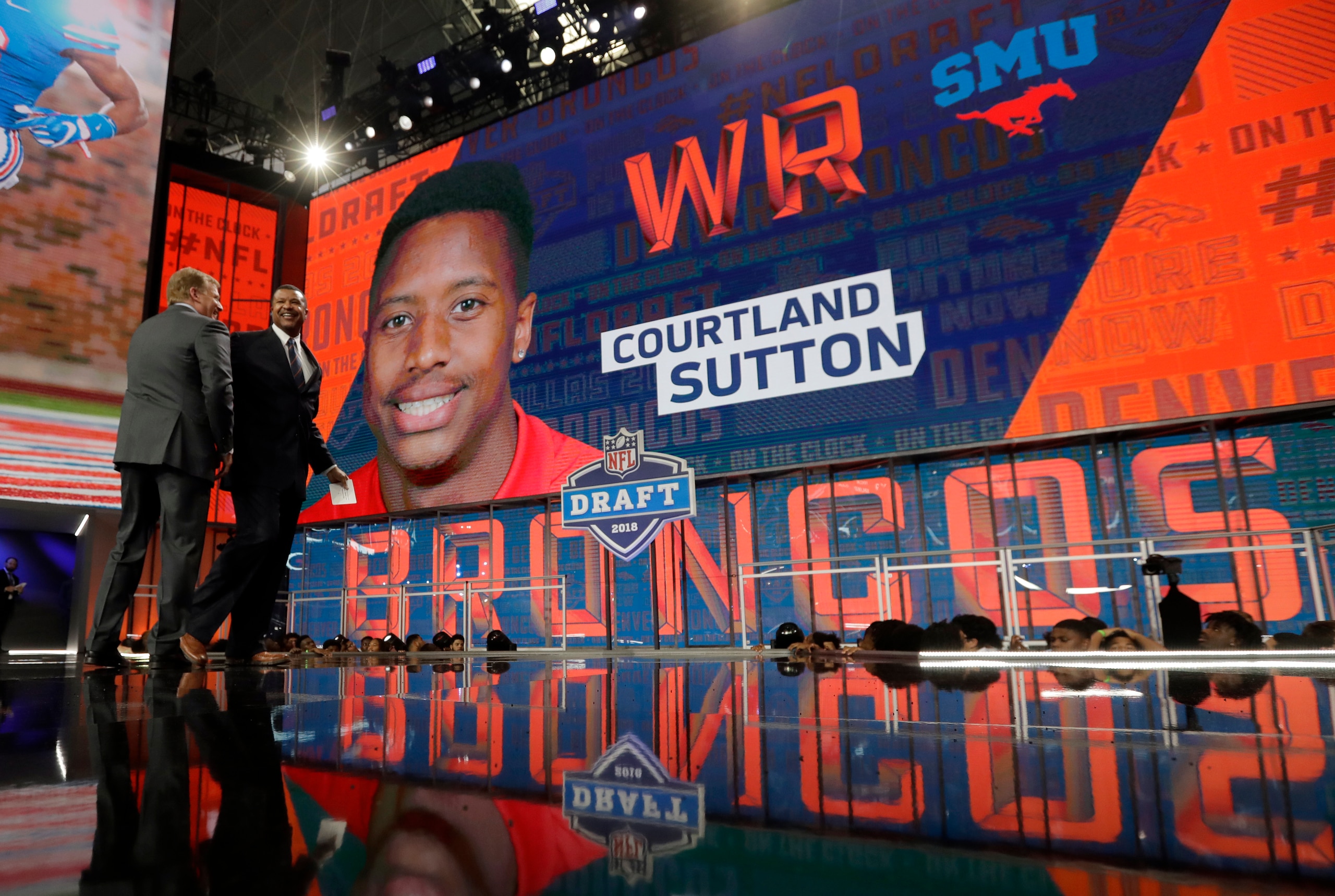
There's a lot to like about Courtland Sutton's game: He has impressive size and quickness and a history of production coming out of SMU. And he should have terrific future value in Denver because the Broncos will almost certainly part ways with Demaryius Thomas (and possibly Emmanuel Sanders) after 2018.
Immediate impact, however, could be limited.
Sutton will be no better than the third option in the passing game for Case Keenum, who arrived in Denver after a breakout season in Minnesota. Thomas and Sanders figure to eat up most of the targets, and the Broncos will likely ask 2017 third-round pick Carlos Henderson to pick up the slack in the slot.
If Sutton can win a role as the go-to third receiver, he might have some early impact. But receivers are far from guarantees in terms of production as rookies, especially when buried behind two established veterans. Broncos fans might have to wait a year before Sutton steps into the spotlight.
WR DJ Chark, Jacksonville Jaguars
3 of 8
Two factors make it unlikely that DJ Chark produces in a big way during his rookie season in Jacksonville.
For starters, the Jaguars have at least four receivers they like on the depth chart: Marqise Lee, Donte Moncrief, Dede Westbrook and Keelan Cole. Chark might have a hard time getting snaps as a first-year receiver.
Even if he does, he will likely enter the NFL with a simplified route tree focused on vertical routes. That could really complicate his production potential because Jaguars quarterback Blake Bortles has increasingly struggled to push the ball down the field with any kind of consistency in recent years.
Chark has terrific speed and an ability to win deep, but don't expect his one-dimensional skill set to produce big results for the Jaguars in his first year.


RB Rashaad Penny, Seattle Seahawks
4 of 8
Rashaad Penny arrives in Seattle with good size, burst and tackle-breaking ability, but physical attributes and natural talent as a runner can only overcome so much. The Seahawks still need to be much better along the offensive line for Penny to come in and be the kind of game-changing player you expect from a first-round running back.
The Seahawks added right guard D.J. Fluker in free agency and drafted Jamarco Jones, but it's hard to envision the starting five up front being considerably better than the group that consistently struggled to block for the run in 2017.
Seattle didn't have a running back break 300 yards last season. The three backs with the most carries—Eddie Lacy, Mike Davis and Thomas Rawls—combined to average 2.95 yards per carry over 195 attempts.
Penny has the traits to be a productive runner right away, but he's landed in a tough spot. He'll face high expectations as the go-to option while running behind one of the NFL's most suspect offensive lines.
RB Nick Chubb, Cleveland Browns
5 of 8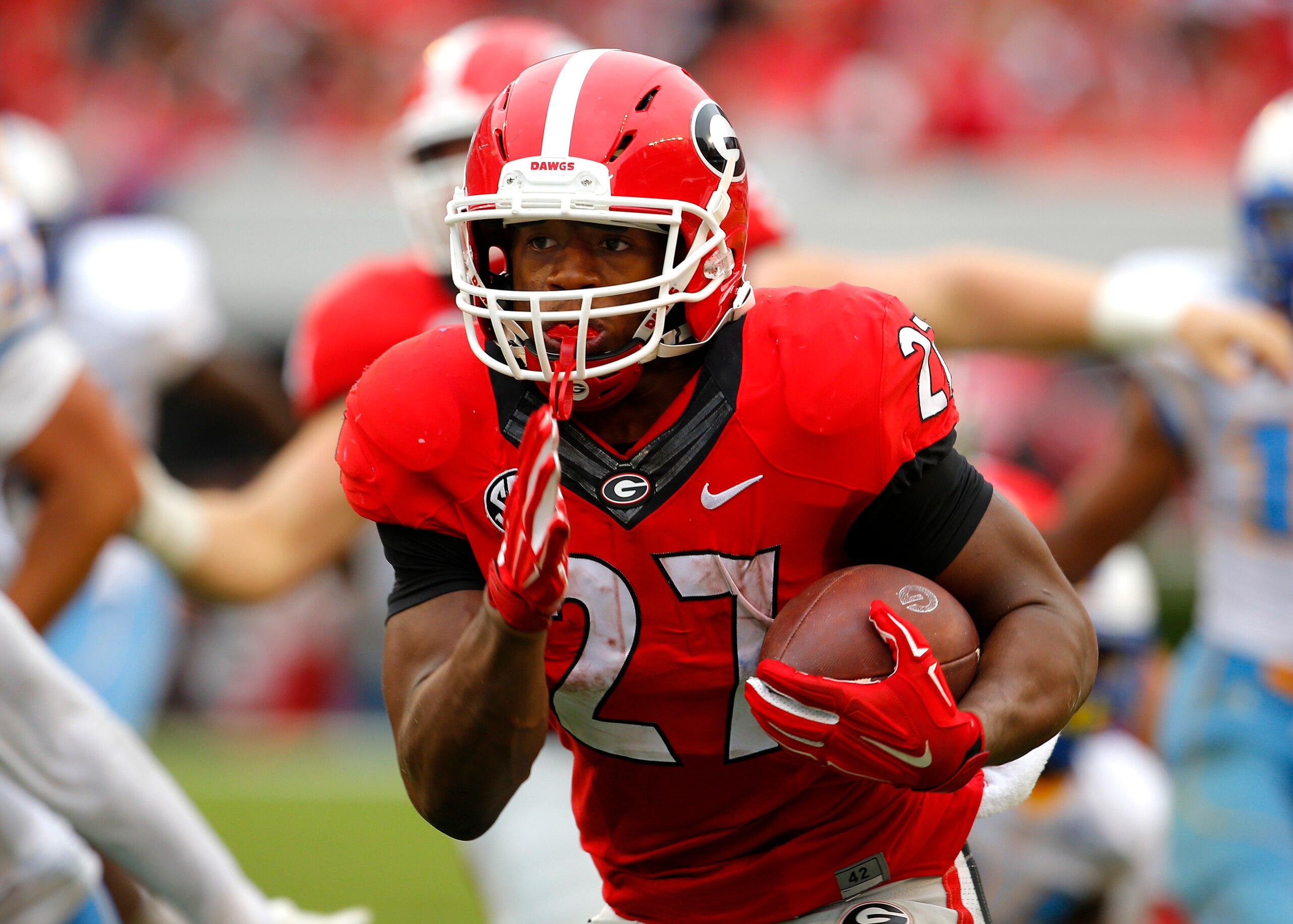
Nick Chubb could eventually become the No. 1 running back in Cleveland, but it wouldn't be surprising if he spent his rookie season as the No. 3 option in the Browns backfield.
Cleveland signed veteran Carlos Hyde in free agency, and the versatile Duke Johnson has a lock on third-down and passing game duties. Unless Chubb can immediately send Hyde to the bench and secure a role as the go-to option on early downs, he'll likely have limited production as a rookie.
That's OK. Chubb was excellent as part of a timeshare with Sony Michel at Georgia and should eventually develop into a productive two-down runner in Cleveland. Long-term, he and Johnson could form a dynamite duo. That's the nice part about adding a veteran like Hyde: Chubb can ease into the pro game without the pressure of needing to immediately produce.
WR D.J. Moore, Carolina Panthers
6 of 8
Like most of these selections, this has nothing to do with D.J. Moore's talent or even his fit with the Carolina Panthers. He's great, and it won't be long before he's Cam Newton's favorite target. That said, there are a lot of mouths to feed around Newton, meaning less for Moore to chew on as a rookie.
The Panthers have running back Christian McCaffrey, tight end Greg Olsen, receiver Devin Funchess and versatile weapon Curtis Samuel back from last year's offense, and the offseason saw them add veterans Torrey Smith and Jarius Wright to the wide receiver depth chart.
Moore will eventually find his way near the top of the veteran quarterback's options, but he'll definitely have to earn it. Even if he does, Moore's output as a rookie could be less than expected as Newton and offensive coordinator Norv Turner attempt to keep everyone happy.
WR Antonio Callaway, Cleveland Browns
7 of 8
It's almost hard to believe the Browns now have a roster that'll make it hard for talented players to get on the field, especially at the skill positions.
That's the problem facing rookie receiver Antonio Callaway in 2018: Will he have any real opportunities while playing behind Josh Gordon, Jarvis Landry, Corey Coleman, David Njoku and Duke Johnson in the passing game?
Callaway has legitimate playmaking talent and could have battled for early playing time in a more favorable situation. He'll now have to fight for scraps in Cleveland. That's a good thing for the increasingly interesting Browns offense, but bad for the fourth-rounder's first-year production.
RB Mark Walton, Cincinnati Bengals
8 of 8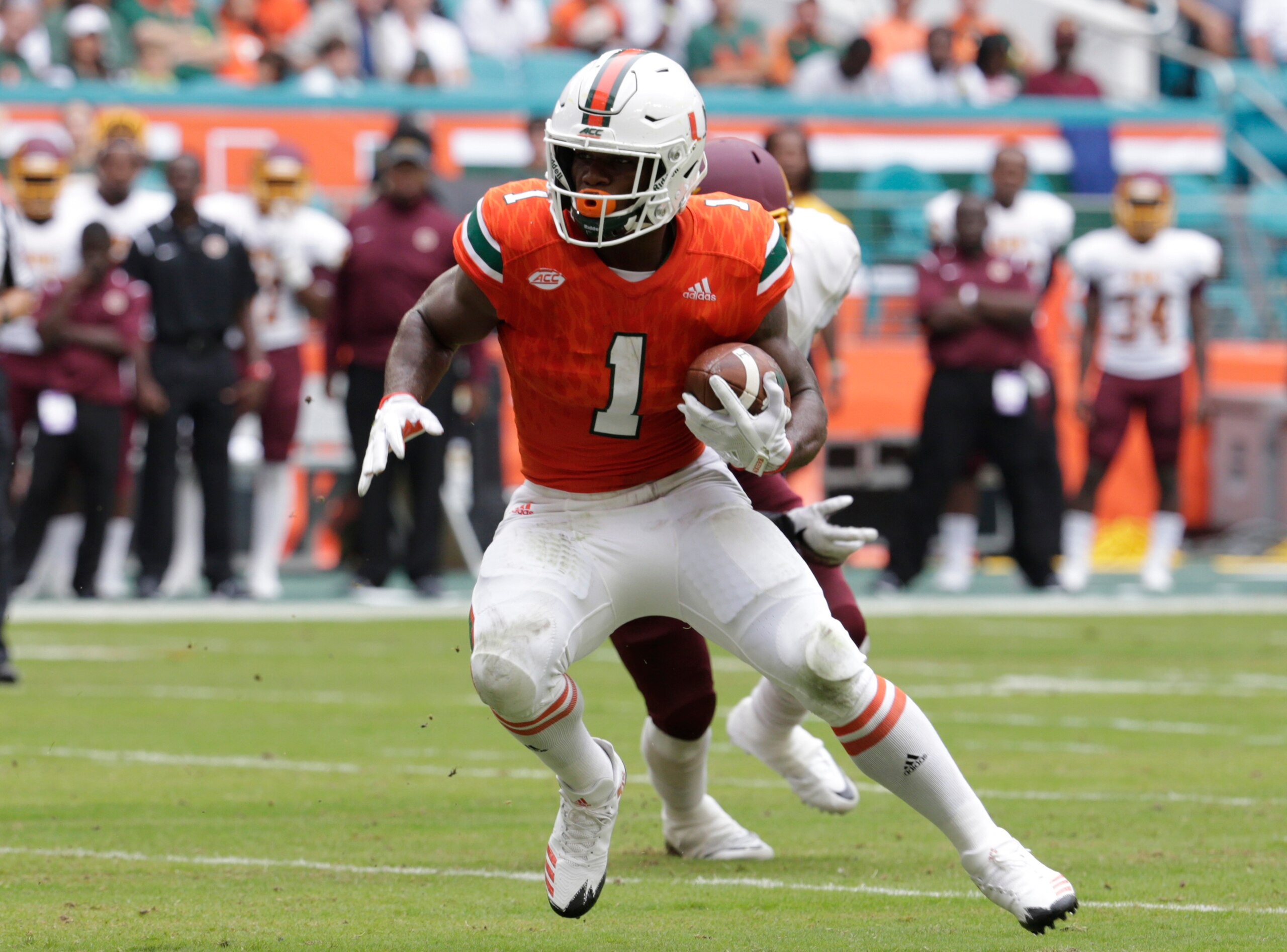
One of the sleeper running backs of the 2018 class will likely remain a sleeper as a rookie. Miami's Mark Walton is an explosive, versatile runner with three-down potential at the next level, but he'll now be buried behind Joe Mixon and Giovani Bernard for at least the next season in Cincinnati.
The Bengals also have former Atlanta Falcons fifth-round pick Brian Hill on the roster, so there's no guarantee Walton will even open as the No. 3 option.
He probably could have battled for a legitimate role as a third-down back in another NFL city, but it's difficult to see how Walton gets on the field for more than a handful of snaps as a rookie for the Bengals—barring serious injury to Mixon and Bernard, of course.
.jpg?w=2560 "Cardinals Giants Football")
.jpg?w=2560 "Jets Dolphins Football")


.jpg?w=2560 "Mahomes' Wife Trolls Kubiak 💀")