

Given the nature of this Chicago Bears rebuild, one would think almost any prospect is a great fit provided the value is right.
As if.
Plenty of teams can eliminate a player from a draft board outright, and the front office in Chicago, led by general manger Ryan Pace, isn't an exception. Reasons can range from off-field flags to injury histories to simple schematic fits, let alone Pace and Co. not agreeing with a consensus value on a prospect.
It's worth identifying and examining some of these players the Bears should avoid outright.
As always, take a list like this with a grain of salt. This time last year, Leonard Floyd fell into this classification for some, and hindsight already pegs him as a great selection given his production as a rookie under defensive coordinator Vic Fangio.
A necessary disclaimer out of the way, let's take a look at a handful of players the Bears shouldn't consider at all this year.
Marshon Lattimore, CB, Ohio State
1 of 10
If the Bears want to take Marshon Lattimore, it'll need to happen at No. 3 or on a brief trade back.
That said, Pace might not fall in love with the medical red flag around the Ohio State product.
No doubt Lattimore is a talent. He's 6'0" and 193 pounds with the athleticism to shadow receivers all over the field, if not act as a lockdown talent. His transition will take some time, though, after he only played one full year at the college level.
The reason for the inexperience is why the Bears should avoid him—Lattimore had chronic hamstring issues that required surgery. The year after the operation, he couldn't finish a full season because the problem popped up again.
For the Bears, a corner at No. 3 isn't ideal after signing two boundary players in free agency. A corner with an injury history is a no-no.
Mike Williams, WR, Clemson
2 of 10
If the Bears move down and decide an offensive weapon is the way to go, it's better to go out and get a Corey Davis or a tight end like David Njoku rather than Clemson's Mike Williams.
The Bears tried the "jump ball wideout" thing with Alshon Jeffery. While the Bears probably wouldn't mind still having Jeffery around, Williams is going to have some initial problems adapting to the pro level.
Williams might be 6'4" and 218 pounds, but he's slower than some would prefer (he didn't run the 40-yard dash at the NFL Scouting Combine) and had random bouts of drops. A neck injury that helped hold him out of most of the 2015 season often goes overlooked because he posted gaudy numbers playing with Deshaun Watson.
The Bears need something more dynamic in a wideout, especially when possibly trotting out a rookie sooner or later. Kevin White and Cameron Meredith already flaunt alluring upside and it's worth waiting to see how Markus Wheaton and Kendall Wright pan out, so there isn't much more room for another developmental player who might have a hard time adapting to the pro level. Other possible first-round weapons can at least create separation and make plays after the catch as rookies.
Obi Melifonwu, S Connecticut
3 of 10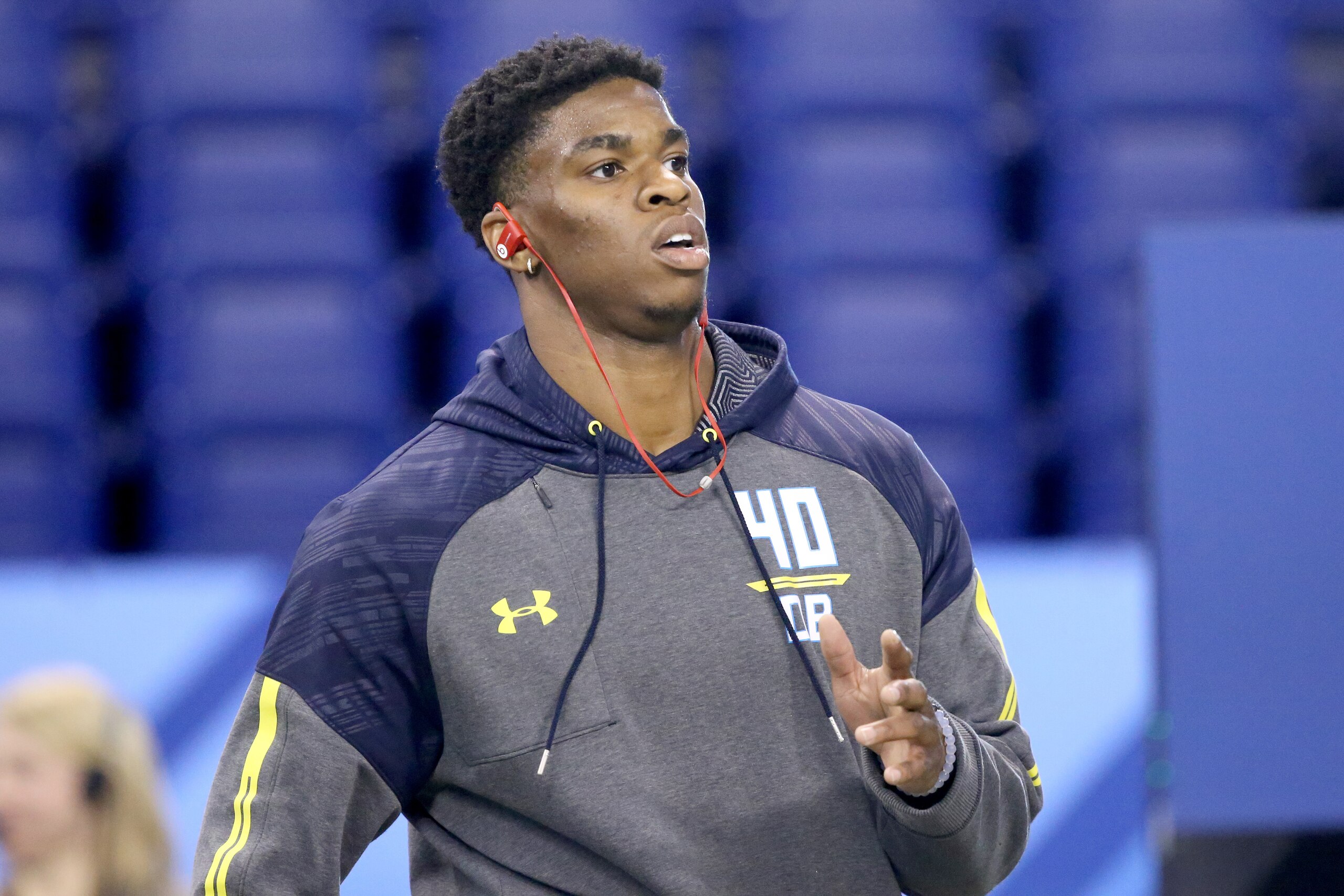
Obi Melifonwu is this year's freakishly athletic safety who may or may not pan out.
Translation—he's not a value for the Bears.
Yes, Melifonwu is 6'4" and 224 pounds and ran a 4.4 in the 40-yard dash. Yes, he's billed as a line-of-scrimmage prowler who can eliminate tight ends and violently shut down the run.
But problems with his fit in Chicago abound. For one, the Bears play in the same division as Aaron Rodgers. Melifonwu is a target for a pass-happy team every time he steps on the field. Compared to the natural coverage abilities of other draft prospects like Budda Baker and Jamal Adams, Melifonwu is an unnecessary gamble.
And if we're talking about a second-round value, Baker might be there. If Fangio really covets an enforcer type like Melifonwu, the Bears might as well draft Jabrill Peppers and get a two-for-one value given the Michigan product's ability as a returner.
.jpg?w=2560 "Colts Football")
.jpg?w=2560 "Chiefs Giants Football")
.jpg?w=2560 "Titans Colts Football")
Dalvin Cook, RB, North Carolina
4 of 10
It's a long, long shot the Bears take a running back at all in the 2017 draft after Jordan Howard's breakout year.
Still, one can almost hear the cries for a talent like Florida State's Dalvin Cook if he falls to the second or third round.
Not a great idea.
Cook is a special talent with the ball in his hands. He has great vision and patience and can score from anywhere on the field.
The positives stop there. Cook has three notable injuries since high school, a slew of arrests and notorious fumbling issues. Add NFL money to the arrests and it's hard to know how Cook can pan out. Add NFL-sized defenders hitting a back with fumbling issues and it's the same outlook.
If the Bears want to add a complement to Howard, Cook isn't the choice, no matter how far he falls. Howard himself is proof the position doesn't need to be addressed early.
Takkarist McKinley, Edge, UCLA
5 of 10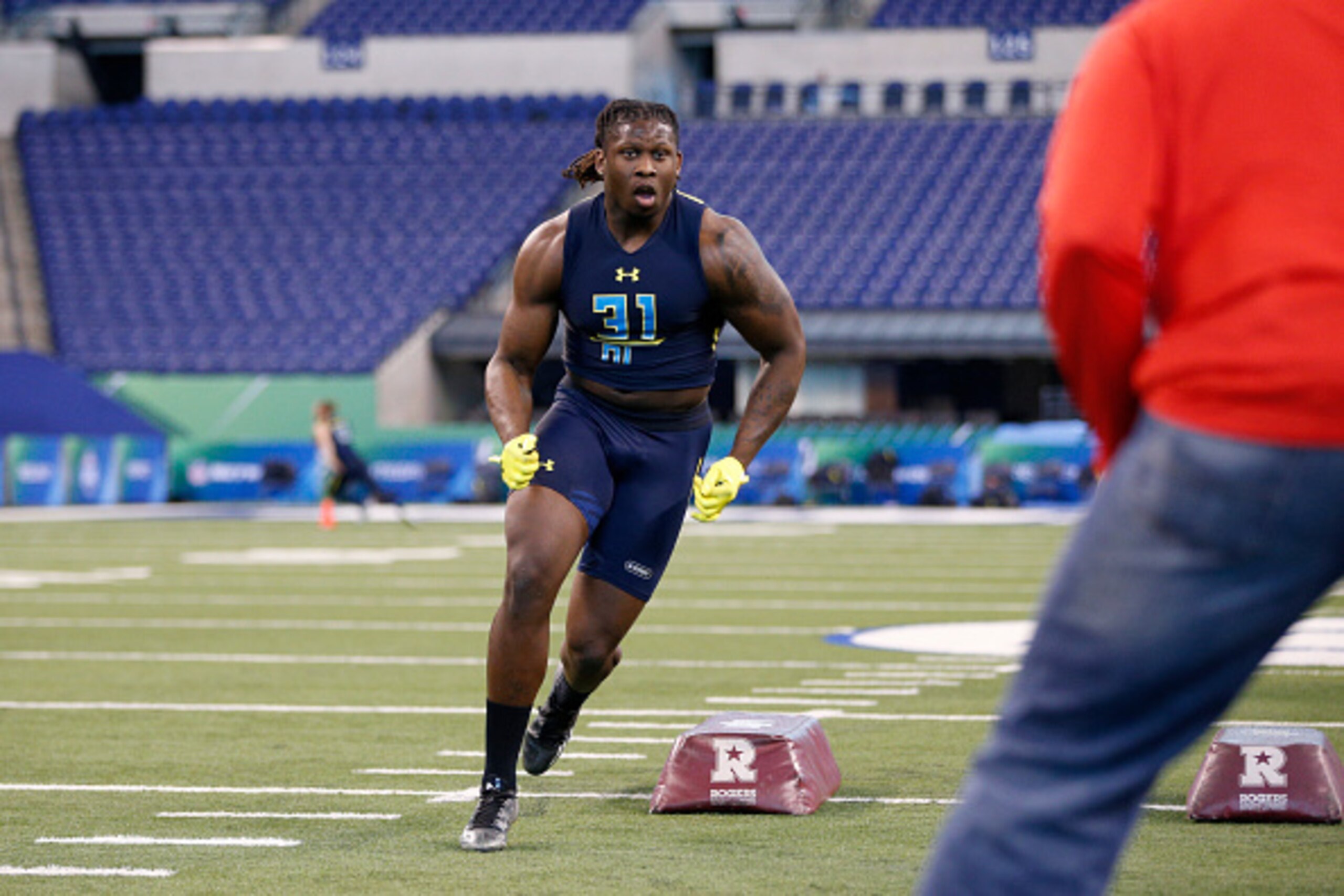
Takkarist McKinley is bound to be over-drafted.
McKinley is 6'2" and 250 pounds of high-energy rushing with athleticism and flexibility to get around the edge and fluster the timing of an offense.
But he's also raw and the coaching staff he lands with might dictate his pro outlook. Chicago has the staff in place to handle the task, yet Floyd, Pernell McPhee and others will keep him out of a starting rotation for a while, barring injuries.
The Bears are better off finding a depth rotational rusher later in the draft, no matter how alluring McKinley's upside might look. This is especially the case given McKinley admitted he'll miss the next four to six months due to shoulder surgery.
This isn't a major ordeal, though McKinley missing an offseason program his rookie year isn't ideal. The problem is when it gets paired with his value, as teams likely still covet him in the first round. This won't work for the Bears, not when they can get a high-upside project in the third round who won't start his pro career watching from the sidelines.
Sidney Jones, CB, Washington
6 of 10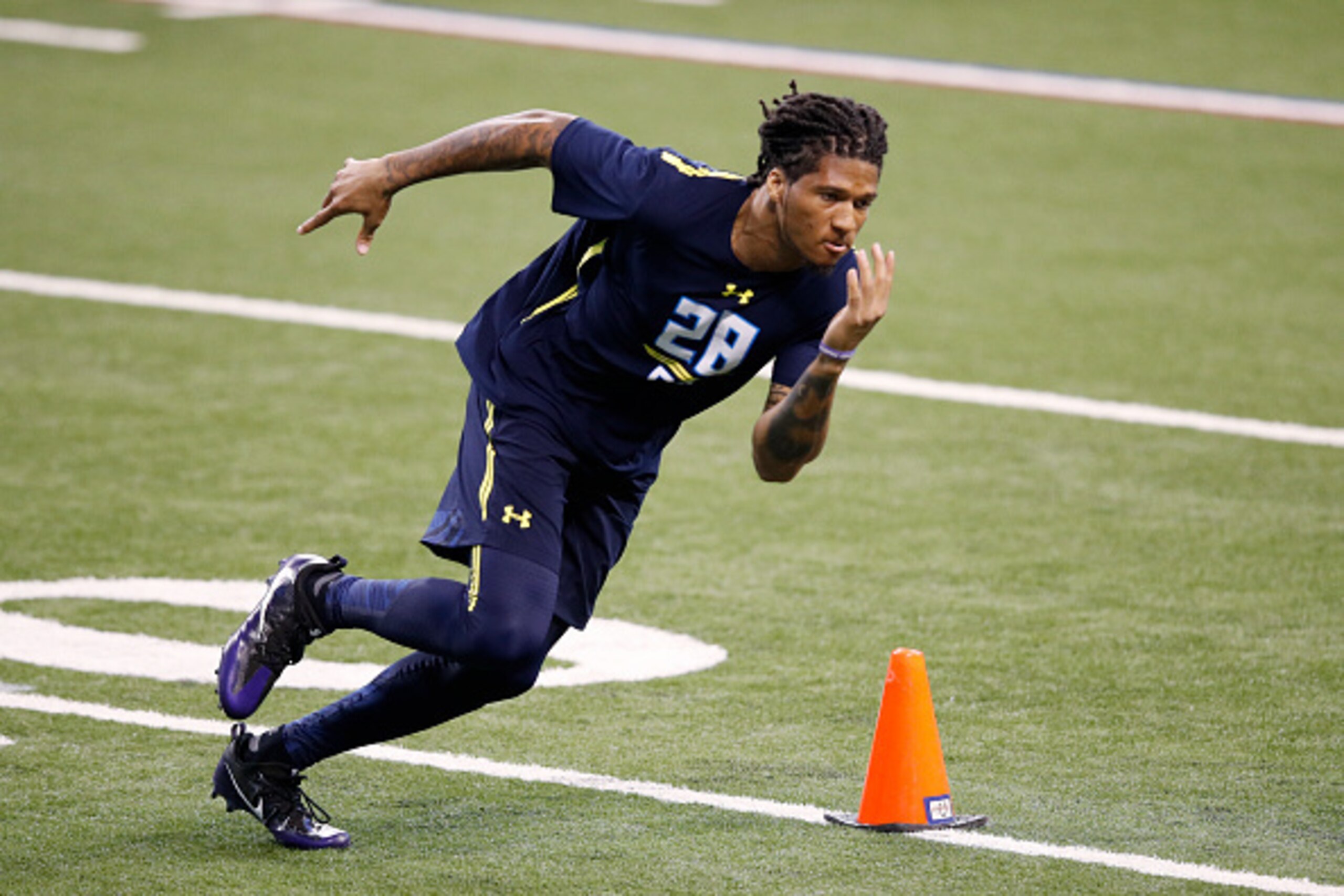
There's a worthwhile argument suggesting Washington's Sidney Jones as the draft's top cornerback.
Then Jones ruptured his Achilles tendon during a workout recently.
Jones might miss all of 2017 and that just won't do for the Bears. He's a slender 6'0" and 186 pounds who looks oddly similar to former teammate Marcus Peters. But this is on tape before the injury and there's nothing to guarantee Jones can ever recover his same speed and burst again.
As mentioned, the Bears added two boundary guys and have a bevy of capable slot names. While waiting to see if these guys pan out, plus the continued waiting game with Kyle Fuller, Jones doesn't really fit anywhere, even if the Bears hold him out his entire rookie year.
The Bears need another rookie class on the field right now while one of the league's most extensive turnover processes continues. Jones is a talent, but a roll of the dice on his post-injury athleticism isn't worth taking, even if he falls out of the first.
Jonathan Allen, DL, Alabama
7 of 10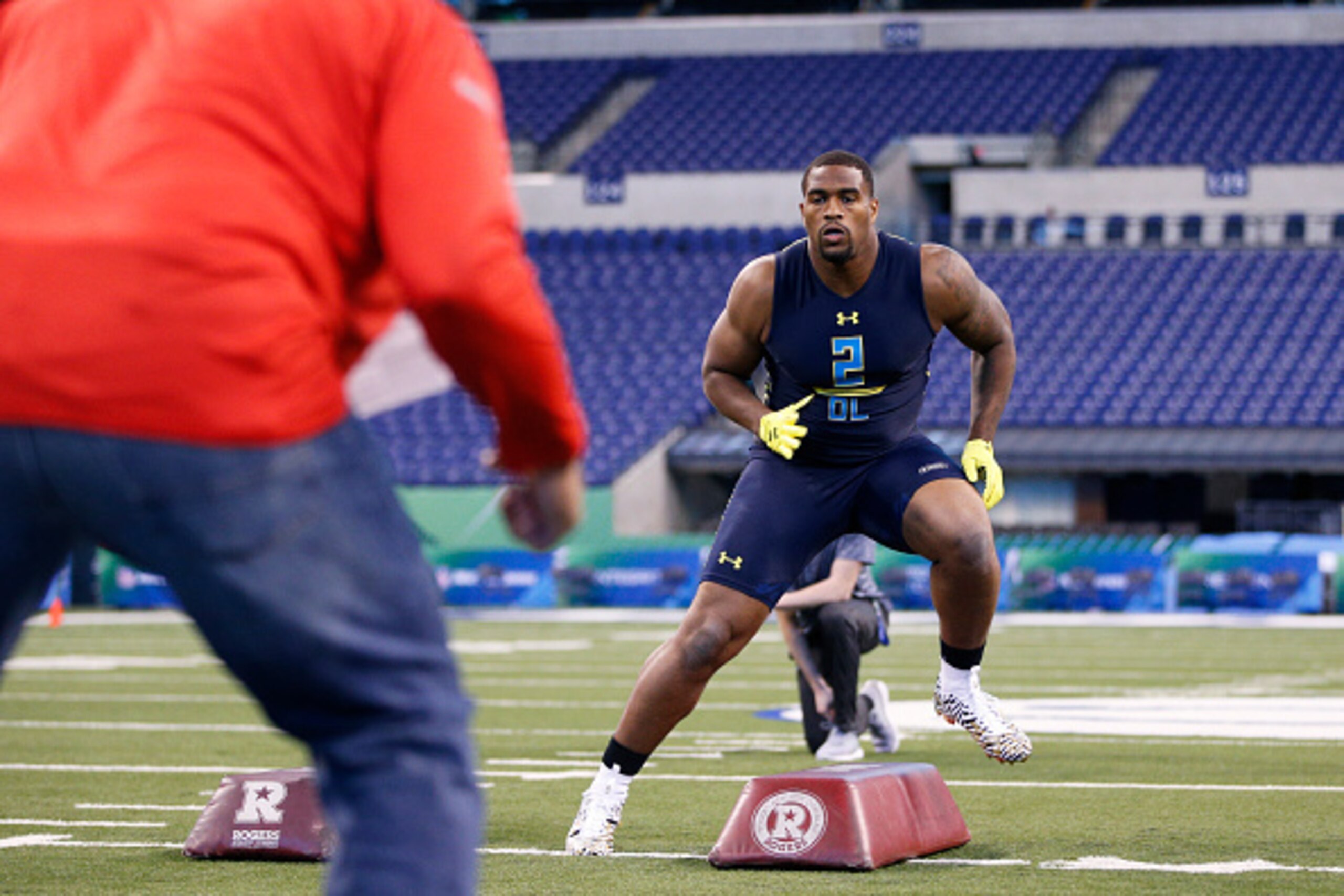
Jonathan Allen is a player the Bears should avoid for the same reason as Lattimore.
Allen looks like a monster talent on paper: a 6'3", 286-pound force who can rush the passer from the inside or out. But shoulder arthritis is something popping up as a red flag the longer the draft process continues.
A tweet from Bleacher Report's Matt Miller says it all: "Talking to scouts about Jonathan Allen. Definite concerns about shoulders. Feeling he'll drop to 12-17 range."
The injury outlook isn't the lone reason the Bears should avoid Allen. At Alabama, Allen was always surrounded by the best of the best talent. This won't be the case in Chicago, where he'll have to stand out on his own while getting used to the fact he isn't the biggest or fastest player in the trenches anymore, not by a long shot.
Even if the Bears trade down in the first, they can find a better value.
Taco Charlton, DE, Michigan
8 of 10
Taco Charlton is an odd potential pick for the Bears.
He's not a good value at No. 3, nor is he a great fit from a schematic standpoint should the Bears trade down and have their eyes on a rusher.
Charlton, who has had whispers of inconsistency chase him throughout his career, is more of a four-lineman player who has the burst and bend off the edge to be effective if he wants to be.
At 6'6" and 277 pounds with inconsistency an asterisk next to his draft grade, one has to wonder how Charlton will hold up if asked to kick inside and rush the passer. He's a late bloomer with little in the way of proven experience. Teams are drafting players for what they are, not how they started, but up-and-down play even as a starter makes it hard to gamble on what Charlton currently is.
No doubt Fangio could find a use for Charlton and mold him to his liking, but teams will over-draft the Michigan product based on a few key traits the Bears won't value as highly.
Brad Kaaya, QB, Miami
9 of 10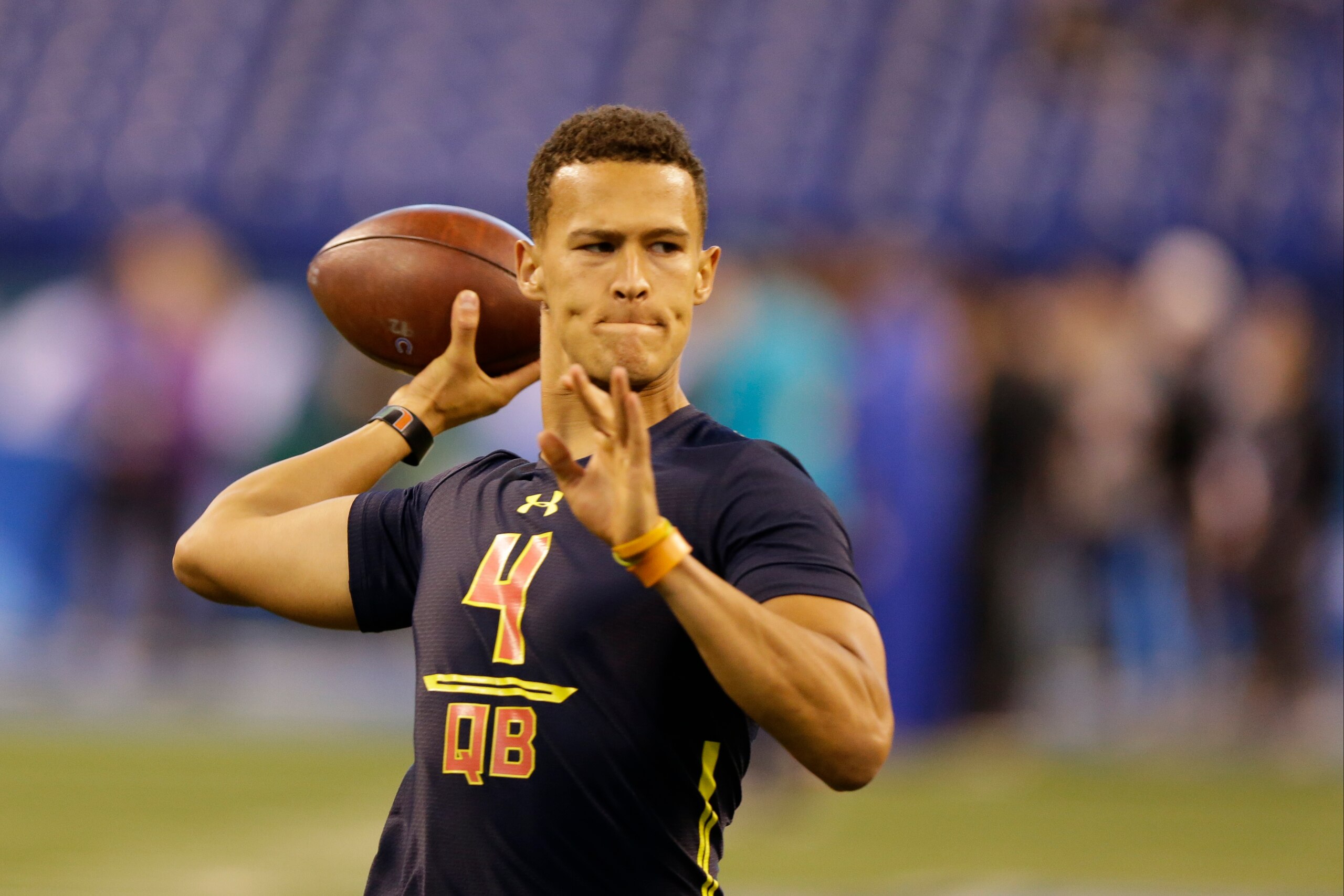
Many names pop up here and there when discussing potential mid-round picks if the Bears decide to grab a quarterback later in the draft and sit him for a year or more.
Miami's Brad Kaaya tends to lead the list and has received some general hype as of late.
But realistically—a quarterback with an average arm isn't going to cut it in the Windy City.
Teams will fall in love with Kaaya's personality and mechanics. But he's smaller at 6'4" and 214 pounds, and the problems that pop up on film aren't easy to forgive. He consistently holds onto the ball too long and his arm strength doesn't have the zip to succeed at the pro level.
Look at it this way—CBSSports.com' Dane Brugler compared him to Jared Goff and NFL.com's Lance Zierlein compared him to Cody Kessler. Pro comparisons aren't everything, but Kaaya's personality and ability to make reads get trumped by his negatives that aren't guaranteed to go away at the next level.
When it comes to finding a quarterback the Bears can draft later, guys like Jerod Evans and Joshua Dobbs are better options.
Davis Webb, QB, California
10 of 10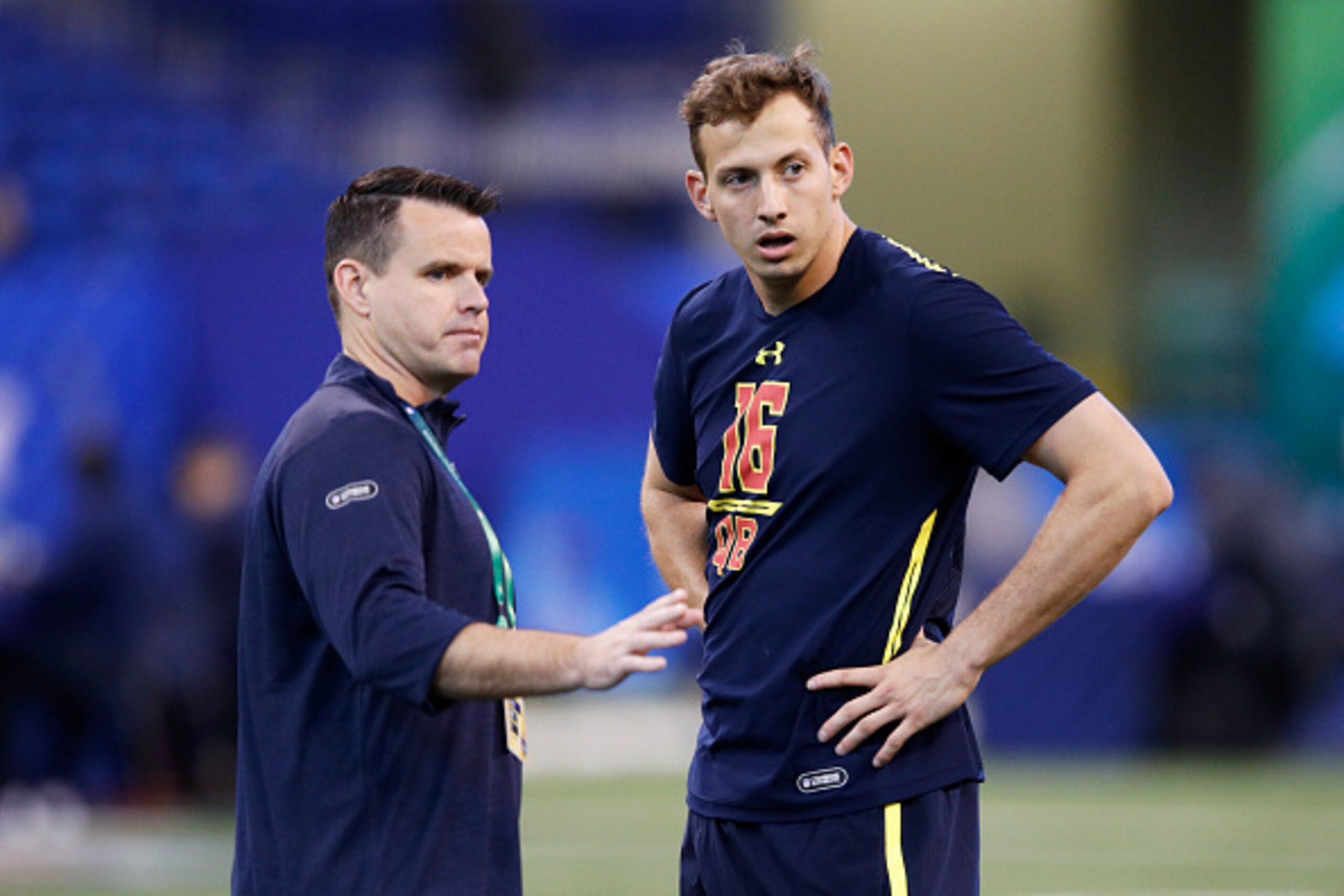
The late hype around California quarterback Davis Webb screams smokescreen.
Webb hasn't been anywhere near the first-round conversation for most of the process and wasn't a notable name during the collegiate season. He has good size at 6'5" and 229 pounds, but Webb rarely threw the ball down the field and has a tough learning curve ahead after system offenses at Texas Tech and California.
Teams have apparently told Webb he's a first-round talent, but it's a definition that will vary by franchise and the intention of such a statement is unknown.
This isn't to say Webb won't succeed at the NFL level. But Pace has said time and again he wants a guy who elevated his program. Webb isn't that, and he's a guy who has a steep learning curve at the next level, and 65 percent of his throws were inside of 10 yards, according to Zierlein.
System and usage are flags here, making Webb a must-avoid player for a Bears team that can't afford to miss a chance at a franchise quarterback yet again.
.jpg?w=2560)
.jpg?w=2560 "Cardinals Giants Football")







