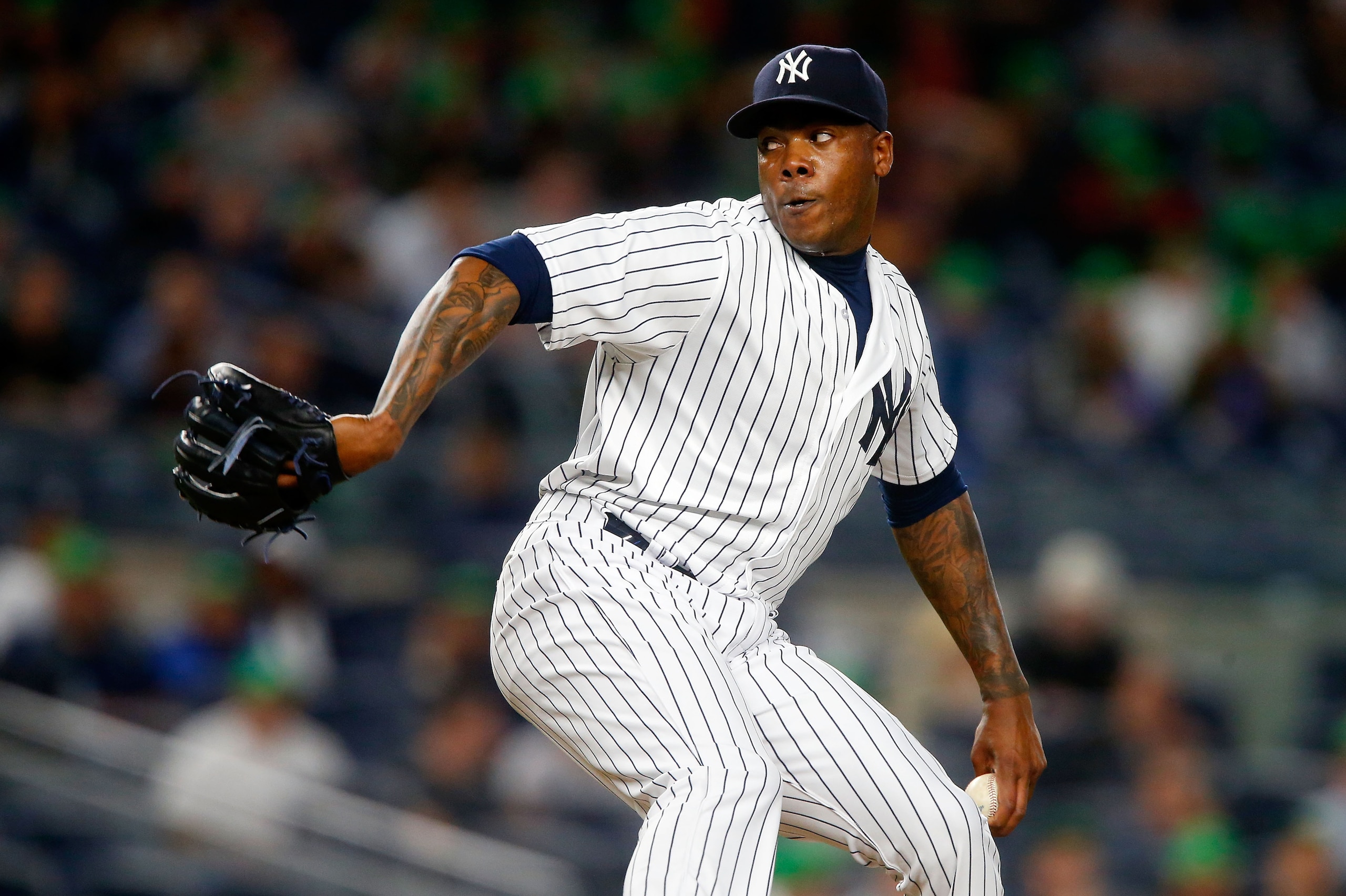

MLB Spring Training 2017: The Top 10 Relief Pitchers to Watch
Major League Baseball is becoming a joint run by relief pitchers. For that reason alone, they'll be a group worth watching during spring training.
Let's focus on 10 relievers to watch in February and March.
The same rules of thumb used in our other positional previews—starting pitchers, outfielders and first basemen—apply here. We're looking at relievers worth monitoring because they have questions to answer.
Some are coming off injuries and/or poor performances in 2016. Others pitched well throughout but were asked to pitch perhaps too much for their own good. Others are battling for jobs.
Now that you know the rules, all you have to do is read on.
Seth Maness, [Somewhere]
1 of 10
2016 Stats
| G | IP | K/9 | BB/9 | Opp. OPS | ERA | FIP |
| 29 | 31.2 | 4.5 | 2.3 | .735 | 3.41 | 3.71 |
Player Outlook
Seth Maness isn't here because he's a particularly interesting pitcher. He's here because he's quite the medical curiosity.
The right-hander's 2016 season ended in August when it was announced he needed Tommy John surgery. Nobody seemed to notice when it was later revealed he actually had a different surgery.
As outlined by Derrick Goold at the St. Louis Post-Dispatch, Dr. George Paletta performed a so-called "primary repair" of Maness' ulnar collateral ligament. It involved a "repair and buttressing of the existing ligament at the bone, not Tommy John's reconstruction of the ligament."
The recovery from Tommy John generally takes a year. Maness, however, will be throwing for scouts February 6. He'll be less than six months removed from his surgery.
"Everyone in baseball should be following this," said Jeff Berry, Maness' agent.
Of course, there's no telling how Maness' showcase will go. Even if it goes well, he'll then have to find a new team after being non-tendered by the St. Louis Cardinals.
But if all goes well, Maness could soon be living, breathing and throwing proof that Tommy John surgery may not be the only answer to baseball's recent elbow crisis.
Greg Holland, Colorado Rockies
2 of 10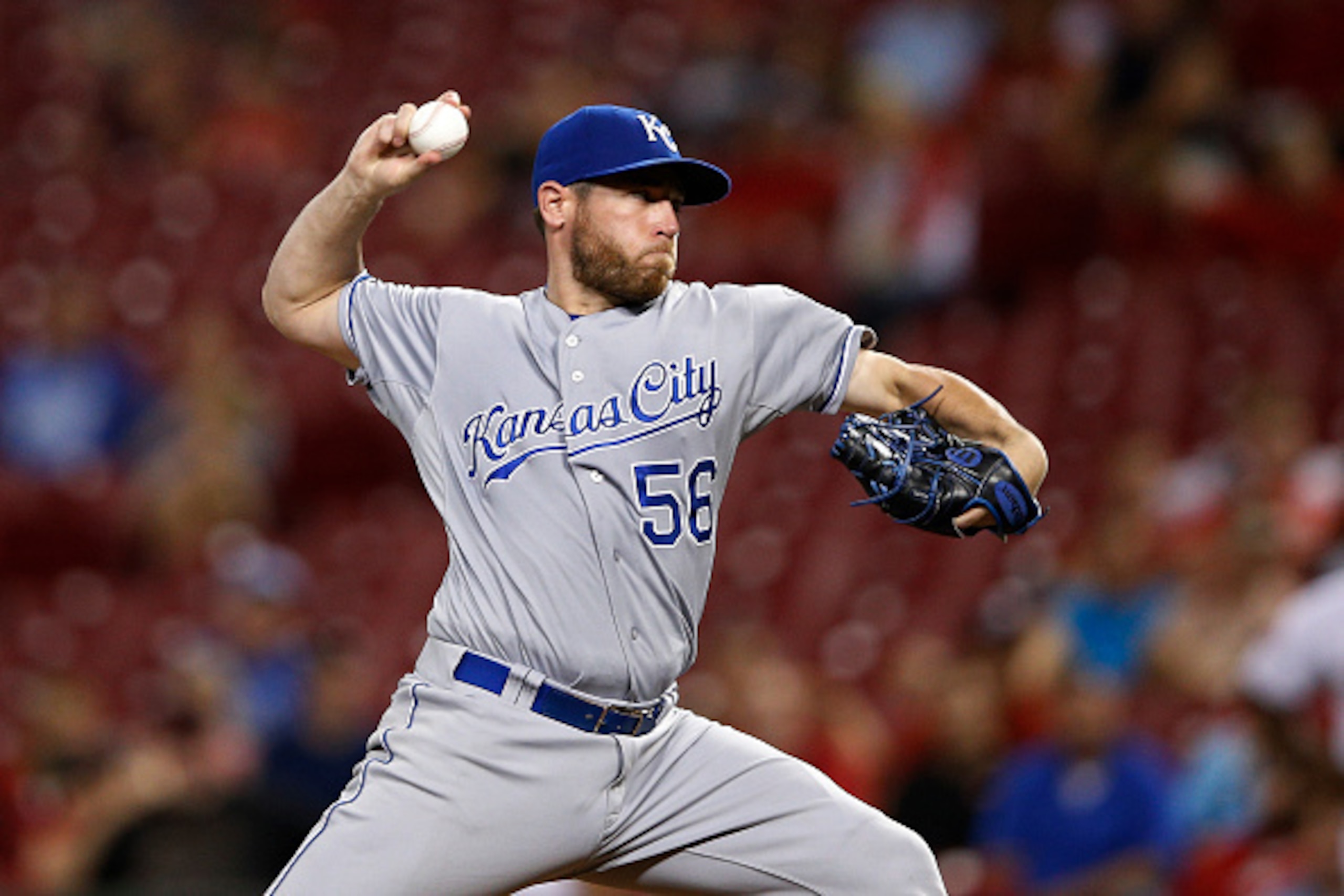
2015 Stats
| G | IP | K/9 | BB/9 | Opp. OPS | ERA | FIP |
| 48 | 44.2 | 9.9 | 5.2 | .692 | 3.83 | 3.27 |
Player Outlook
And now for a pitcher who might be looking at Maness with jealous eyes this spring.
After sitting out 2016 recovering from Tommy John surgery, Greg Holland will soon be back on the mound. The former Kansas City Royals closer landed with the Colorado Rockies on a one-year deal Wednesday, as Jeff Passan of Yahoo Sports was first to report.
Holland was once one of the league's nastiest relievers, peaking with a 1.32 ERA and rate of 13.4 strikeouts per nine innings across 2013 and 2014. As such, not a bad roll of the dice on Colorado's part.
Whether the Rockies will get anything like peak Holland in 2017, however, is a good question.
Holland had slipped from his peak even before he went in for Tommy John in October 2015. He had struggled mightily with his control and didn't have the same stuff. His average fastball had fallen to 93.6 mph from 95.8 mph in 2014.
There's no guarantee Holland's velocity will bounce back. When he held a showcase last November, Joel Sherman of the New York Post reported Holland was sitting at 89-90 mph. How much will he build on that?
The Rockies—and everyone else—will begin to find out this spring.
Wade Davis, Chicago Cubs
3 of 10
2016 Stats
| G | IP | K/9 | BB/9 | Opp. OPS | ERA | FIP |
| 45 | 43.1 | 9.8 | 3.3 | .537 | 1.87 | 2.29 |
Player Outlook
Speaking of former Royals closers, how about Wade Davis?
The Chicago Cubs turned to Davis after they saw what free-agent closers were being paid and said, "Nope." They dealt for his walk year in 2017, and it only cost them four years of Jorge Soler.
I say "only" in a half-joking sense. From one perspective, Davis should be worth it. From another...maybe not?
The right-hander didn't have a bad year in 2016, but it also wasn't on par with his 2014 and 2015 seasons, when he posted a 0.97 ERA and permitted just a .429 OPS. Davis' production slipped in 2016, and the picture is further distorted by the time he missed with an arm injury.
Davis did come back from that to strike out 19 batters in 14 innings. But he also allowed a .679 OPS and had a curiously low arm slot.
The Cubs won't be in panic mode if Davis continues to show signs of mortality this spring. Their bullpen has other good arms in it, including the ones attached to Pedro Strop, Hector Rondon and Koji Uehara.
All things being equal, though, they'd surely prefer to get peak Davis.


Craig Kimbrel, Boston Red Sox
4 of 10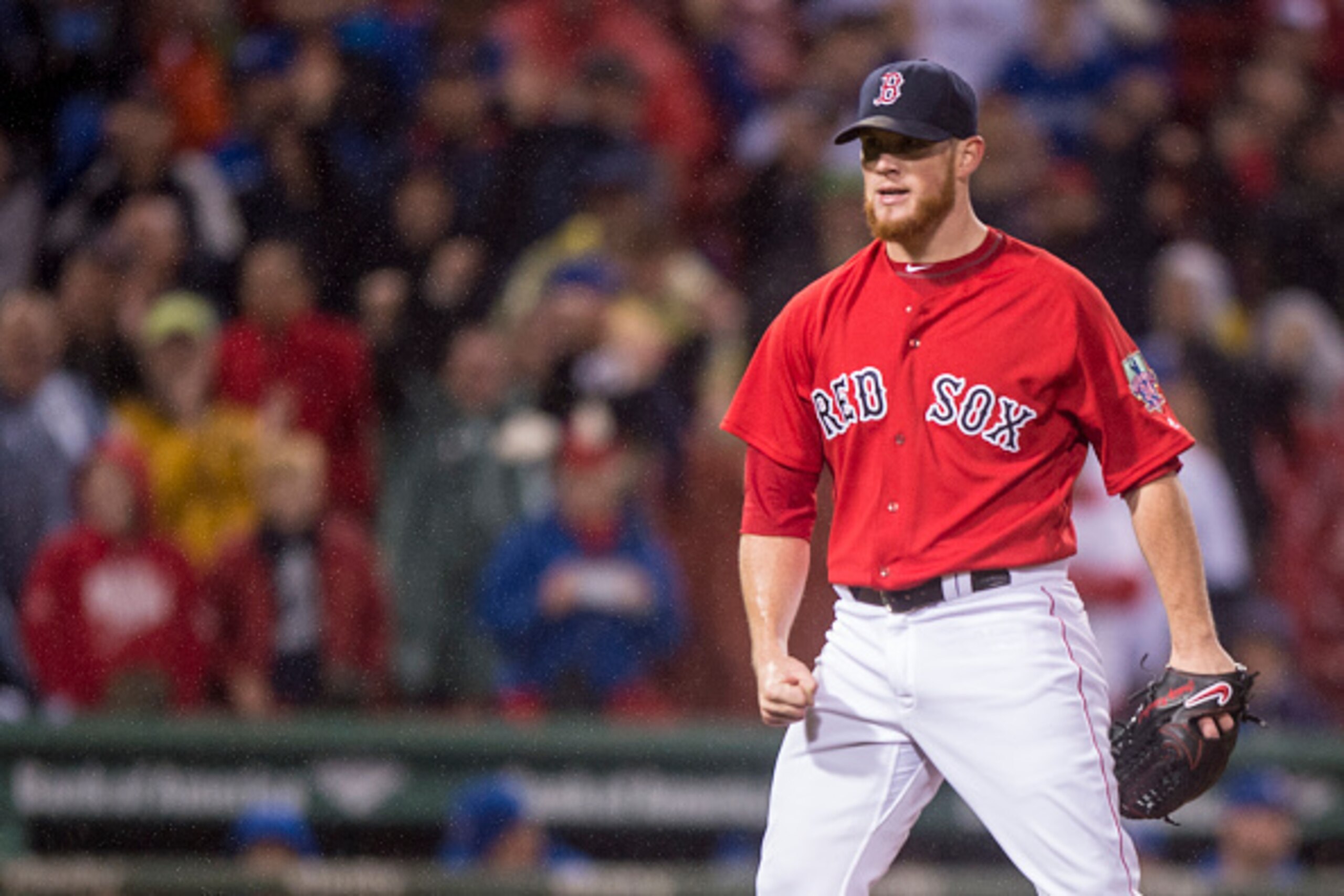
2016 Stats
| G | IP | K/9 | BB/9 | Opp. OPS | ERA | FIP |
| 57 | 53.0 | 14.1 | 5.1 | .539 | 3.40 | 2.92 |
Player Outlook
Craig Kimbrel is yet another brand-name closer who's coming off a rough year.
Like Davis, Kimbrel wasn't bad in 2016. The Boston Red Sox wanted a flame-throwing reliever who would do the job more often than not, and that's what they got.
Kimbrel wasn't nearly at his best, however. Although he continued to strike batters out at a high rate, he also struggled with walks and attracted hard contact at a career-worst rate.
To boot, the right-hander needed to have surgery on his left knee in July. He struggled even more after he came back, walking 6.8 batters per nine innings and continuing to surrender hard contact. The velocity he lost sure looks like a related point for the latter.
Given that Kimbrel is heading into his age-29 season with plenty of wear and tear in his background, there's no escaping the sense that last year may have been a warning. His journey has taken him from "elite" to "merely good." At what point will he take the next step to "just OK" or worse?
If Kimbrel comes out throwing darts with good control, the Red Sox will be able to breathe easy knowing (or at least sensing) this is a question for another season.
If not, they may have to rethink their bullpen.
Huston Street, Los Angeles Angels
5 of 10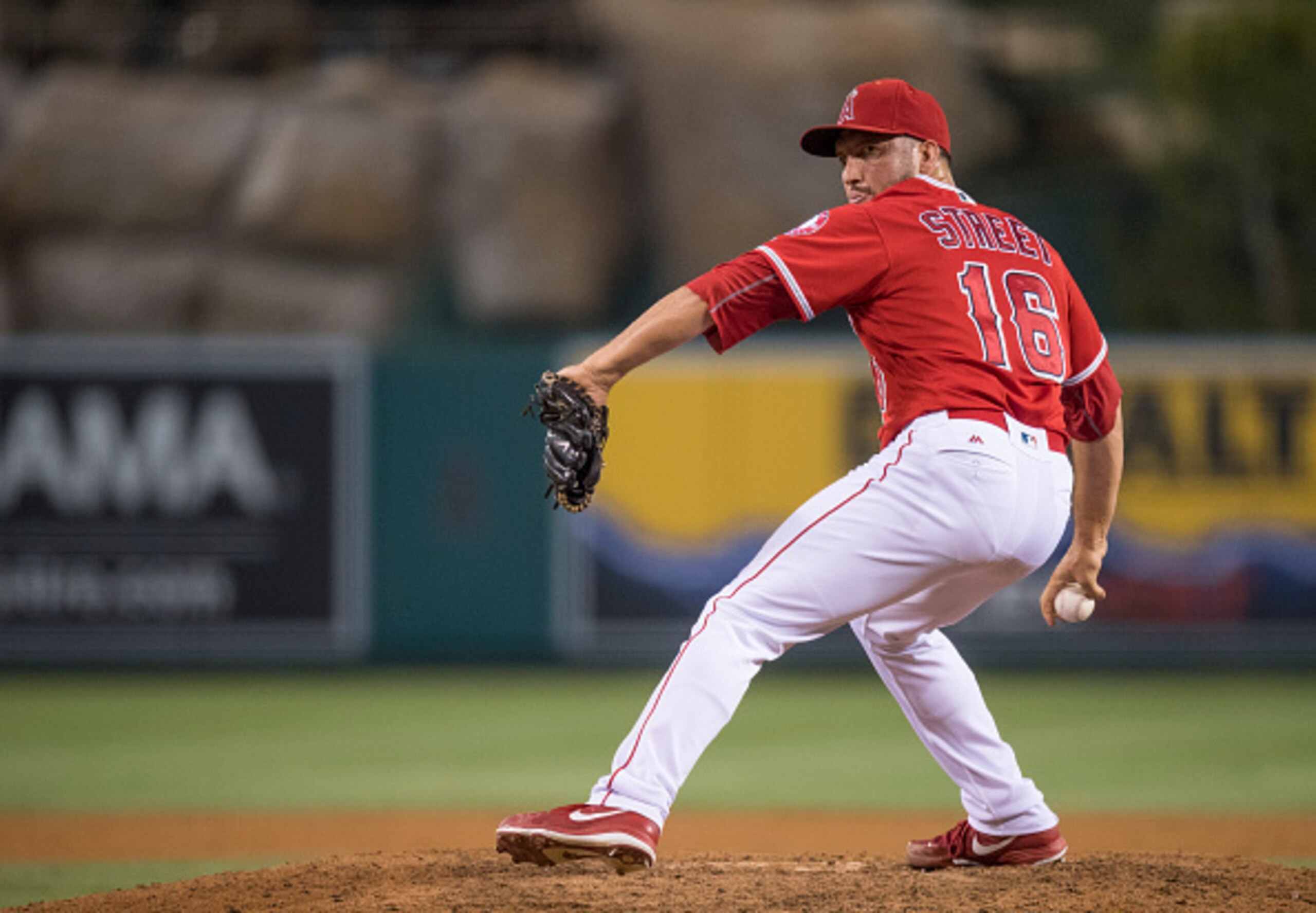
2016 Stats
| G | IP | K/9 | BB/9 | Opp. OPS | ERA | FIP |
| 26 | 22.1 | 5.6 | 4.8 | .975 | 6.45 | 6.41 |
Player Outlook
Huston Street is a different variation on the theme we've been working on.
Without velocity to blow hitters away, Street normally relies on keeping the ball down and suppressing hard contact. He could do neither last year. His pitches drifted up, and his hard-contact percentage skyrocketed to 36.7. Ergo, he put up horrible results.
Street's health also broke down. He suffered an oblique strain early in the year and later needed knee surgery. All told, hard times for the 33-year-old.
Now the word is the Los Angeles Angels aren't taking it for granted that Street will bounce back.
As ESPN.com's Jerry Crasnick reported at last December's winter meetings, Angels skipper Mike Scioscia is planning on having a closer competition this spring. If Street wants his usual job back, he'll have to earn it over Cam Bedrosian and Andrew Bailey.
It may not hurt Street's cause that he's the big-money guy with a $9 million salary set for 2017. But after what happened in 2016, there's no blaming the Angels for not assuming he'll be good for that.
Shawn Kelley/Blake Treinen, Washington Nationals
6 of 10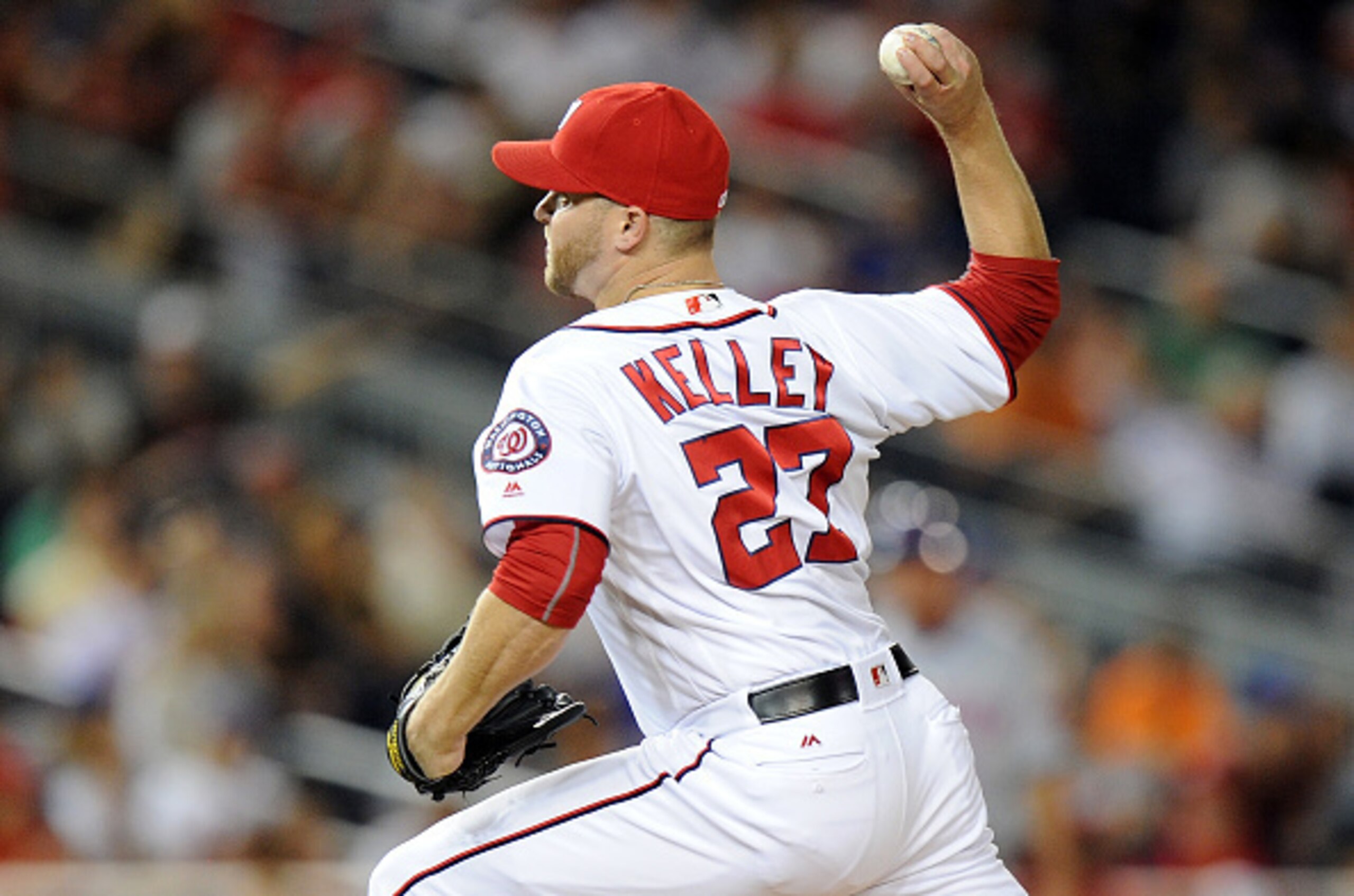
2016 Stats
| Player | G | IP | K/9 | BB/9 | Opp. OPS | ERA | FIP |
| Kelley | 67 | 58.0 | 12.4 | 1.7 | .635 | 2.64 | 2.97 |
| Treinen | 73 | 67.0 | 8.5 | 4.2 | .648 | 2.28 | 3.62 |
Player Outlook
Now for a closer competition that doesn't feature a brand name. Hence, the two-for-one special.
It's not for lack of trying that the Washington Nationals don't have a proven closer. They had a shot to re-sign Mark Melancon and were also linked to Aroldis Chapman and Kenley Jansen.
But they whiffed on all three. Cue manager Dusty Baker's shrugging his shoulders at what comes next.
"Who knows if we have [a closer] in-house or not?" Baker said in December, per Jamal Collier of MLB.com. "Most guys don't come out of college or the minor leagues as a closer. They evolve into a closer. Next thing you know, voila! We've got a closer."
That is generally how it goes. In this case, the two guys with the best chance to evolve into a closer are Shawn Kelley and Blake Treinen.
Although they have little closing experience between them, it's not hard to picture that either can do the job. Kelley already has closer-quality strikeout talent. That's something Treinen lacks, but he does have mid-90s heat and a penchant for ground balls with a career 62.6 ground-ball percentage.
There are the contestants. May the best man earn the ninth.
Trevor Rosenthal, St. Louis Cardinals
7 of 10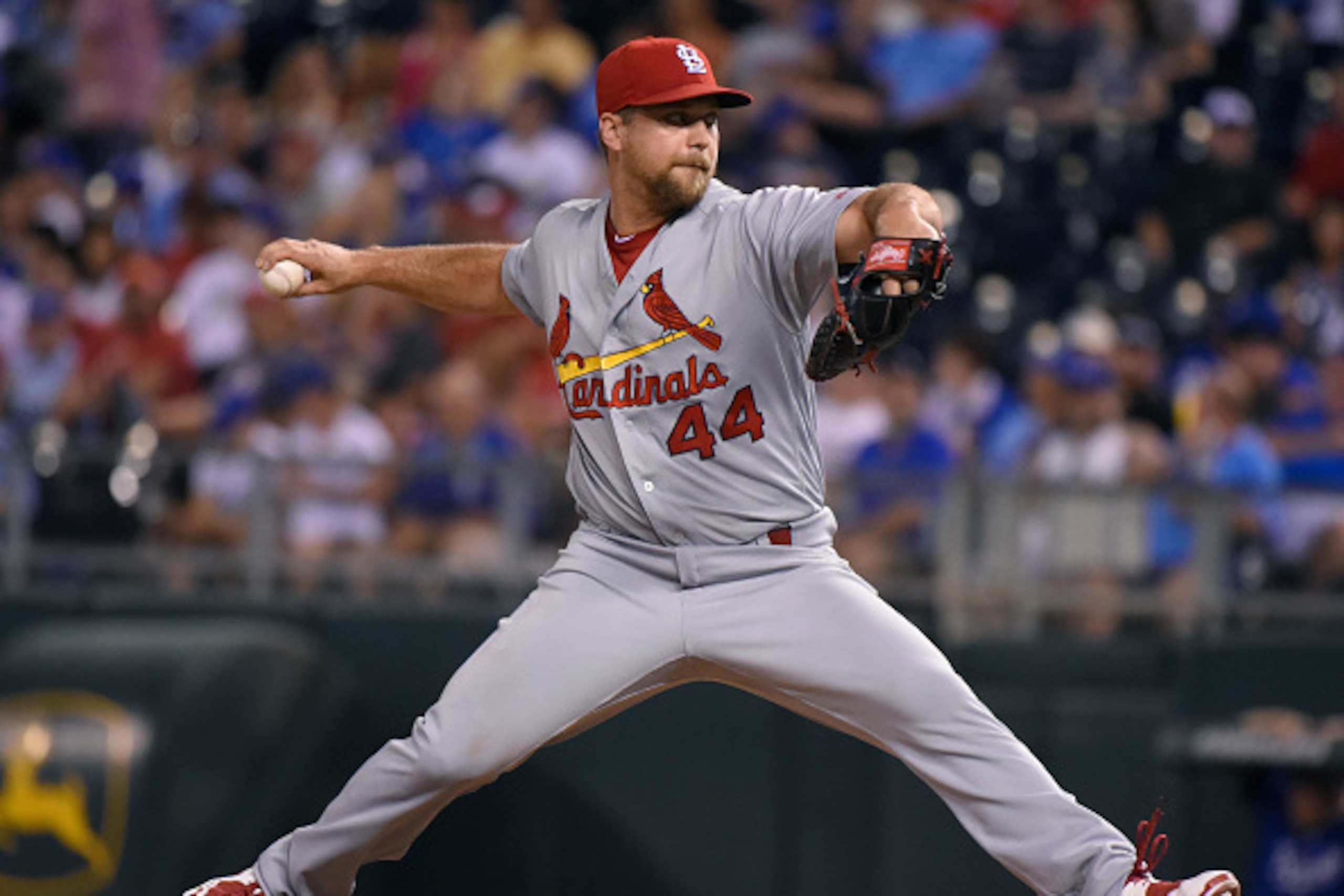
2016 Stats
| G | IP | K/9 | BB/9 | Opp. OPS | ERA | FIP |
| 45 | 40.1 | 12.5 | 6.5 | .792 | 4.46 | 3.72 |
Player Outlook
Trevor Rosenthal is another former closer set to compete for a job this spring, but with a twist.
Rosenthal's top priority during Cardinals spring training will be putting his 2016 season as far behind him as possible. He continued to throw hard, averaging 97.1 mph on his heater. But his walk rate reflects how he often had no idea where the ball was going.
To make matters worse, Rosenthal is yet another guy who had to overcome an injury when he wasn't struggling. A bad right shoulder landed him on the disabled list in July.
However, seeking to right the ship won't be the only task Rosenthal faces this spring. The Cardinals also want to stretch him out.
"As you start to think about bullpen structure and multiple innings, it makes sense to have people prepared to do more than just a one-inning stint," general manager John Mozeliak said in November, per Goold.
The indication is that the Cardinals mean to see if Rosenthal can be made into an Andrew Miller clone: an electric reliever who can pitch more than one inning at a time.
Say, while we're talking about Miller...
Andrew Miller, Cleveland Indians
8 of 10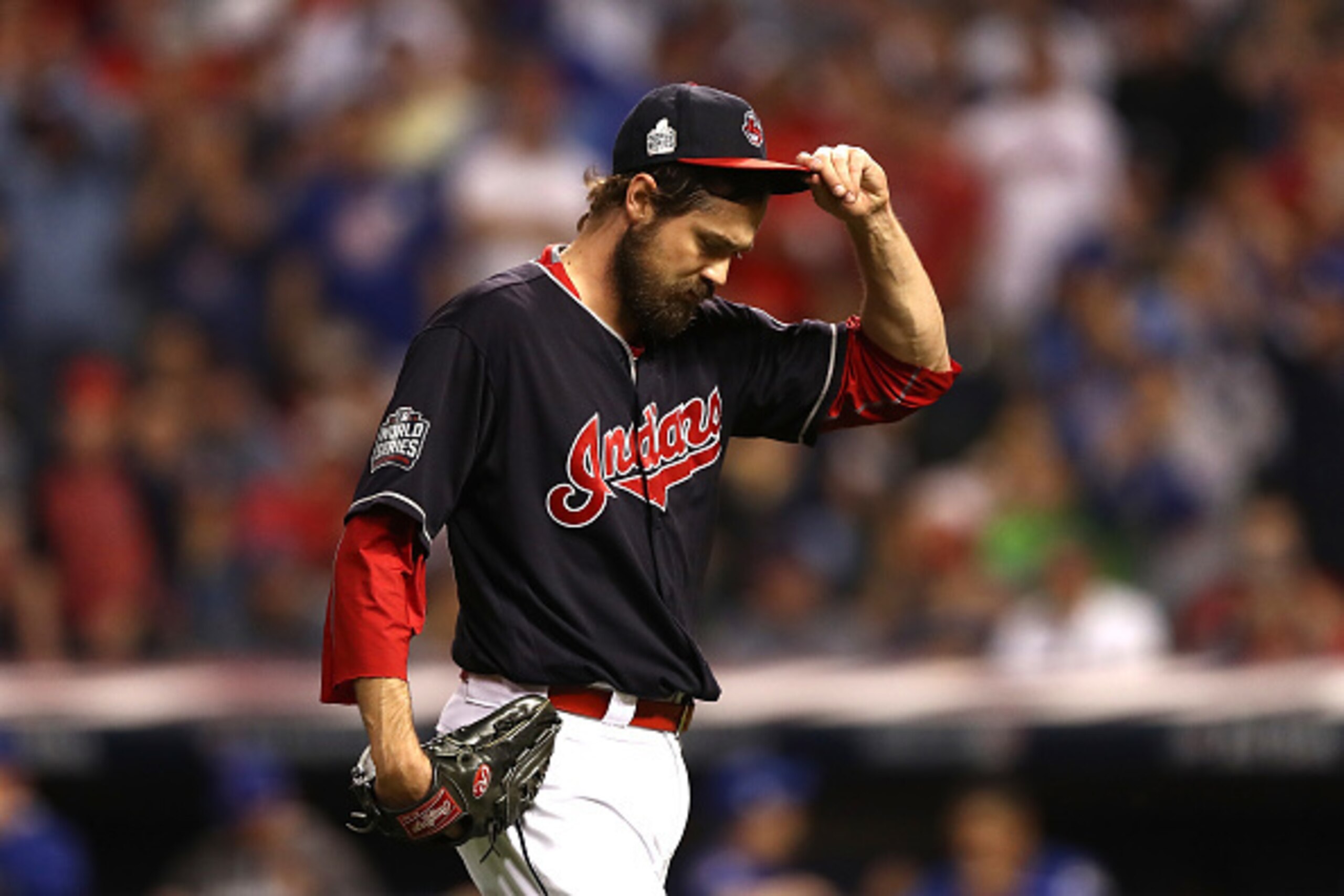
2016 Stats
| G | IP | K/9 | BB/9 | Opp. OPS | ERA | FIP |
| 70 | 74.1 | 14.9 | 1.1 | .487 | 1.45 | 1.68 |
Player Outlook
Before anyone else becomes Andrew Miller, let's remember that Andrew Miller was Andrew Miller first.
The left-hander was a dominant force in 2014 and 2015, racking up a 2.03 ERA and striking out 14.7 batters per nine innings. He further upped his dominance last season and applied it to more innings.
Miller recorded more than three outs in eight of his 26 regular-season appearances with the Cleveland Indians, as well as in all 10 of his postseason appearances. In all, he logged 93.2 innings.
Trouble is, that's more than enough innings for there to be a looming concern over whether Miller feels ill effects in 2017.
Said looming concern isn't eased by how Miller was pitching at the end of his 2016 journey. After carving through hitters in his first eight postseason appearances, he faltered and looked out of gas in the last two he made. By then, his arm slot was significantly lower than it had been at the start of the season.
If Miller puts all that behind him, the Indians can look forward to a full season with arguably baseball's best reliever. They would still need their other relief ace to bounce back, however...
Cody Allen, Cleveland Indians
9 of 10
2016 Stats
| G | IP | K/9 | BB/9 | Opp. OPS | ERA | FIP |
| 67 | 68.0 | 11.5 | 3.6 | .584 | 2.51 | 3.31 |
Player Outlook
He doesn't get the headlines, but Cody Allen is also very good.
In fact, he's been good like clockwork ever since 2013. He's averaged 72 appearances with a 2.50 ERA and 11.8 K/9. Not Miller-level stuff, to be sure, but enough to qualify Allen as one of the top relievers in the game.
He kept it rolling in the postseason last year. Allen appeared in 10 games and logged 13.2 innings, allowing not a single earned run and striking out 24 batters.
With a total of 81.2 innings, however, Allen worked 11.1 more frames last year than he ever had in a single season. And like Miller, there were times when he appeared to be feeling his workload. His arm slot was out of whack during the postseason, and he wasn't pitching with his best velocity by the time Cleveland got to the World Series.
It would be a big boost to the Indians bullpen if Miller makes a strong recovery from last year's heavy workload. But if Allen doesn't also make a strong recovery, that boost will only be worth so much.
Aroldis Chapman, New York Yankees
10 of 10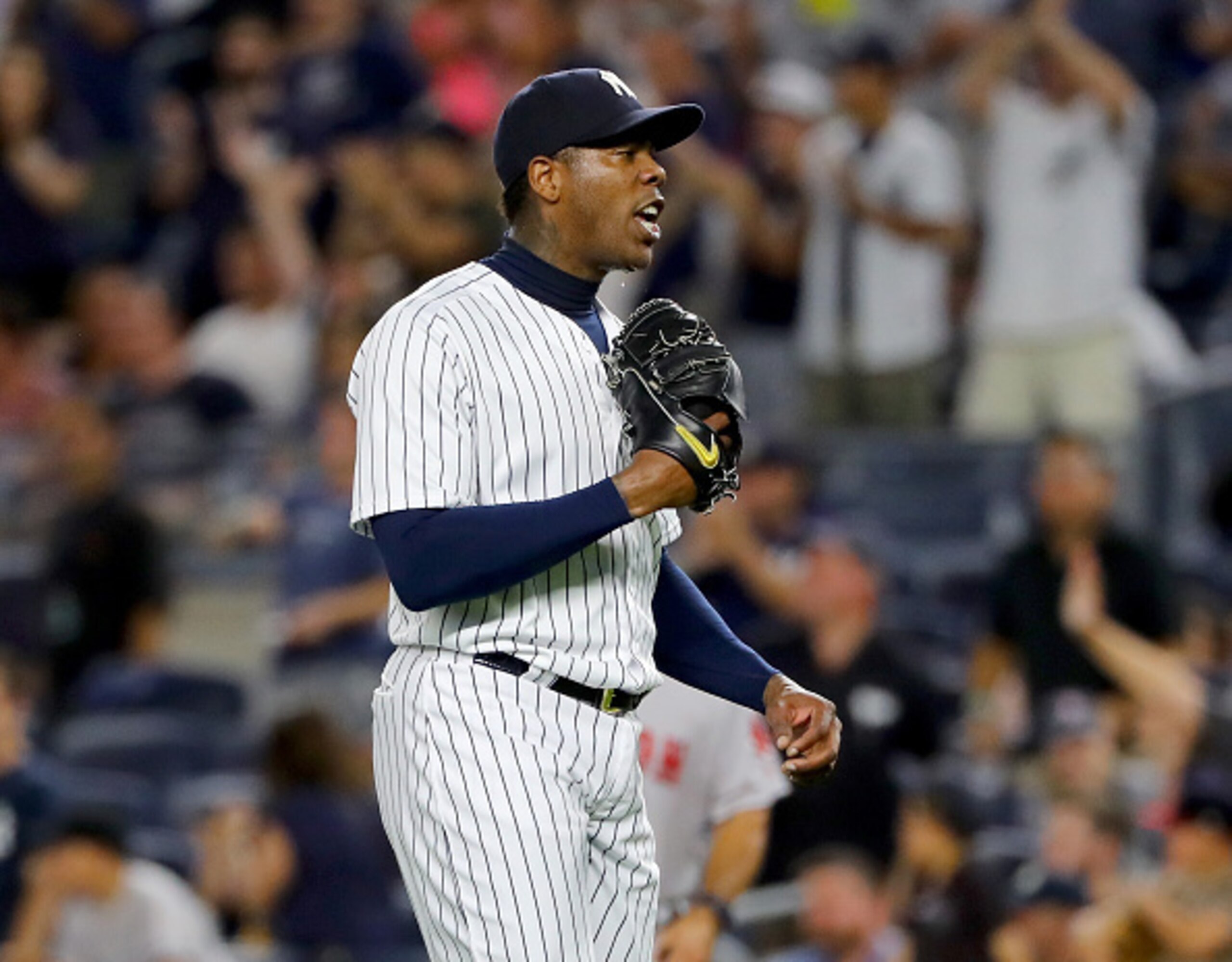
2016 Stats
| G | IP | K/9 | BB/9 | Opp. OPS | ERA | FIP |
| 59 | 58.0 | 14.0 | 2.8 | .452 | 1.55 | 1.42 |
Player Outlook
To wrap up our series on relievers who may have worked too much in 2016, we have Aroldis Chapman.
Whether Chapman is worth the record $86 million he got from the New York Yankees is a good topic for debate. It doesn't require much to justify he's the right guy to be the richest-ever reliever, though. He's thrown many more 100 mph fastballs than anyone else en route to a 2.08 ERA and 15.2 K/9.
Despite partaking in the Cubs' deep postseason run, Chapman's advantage (for lack of a better word) coming out of 2016 is that he didn't pitch for an extra month. He missed the first month of the year serving a suspension.
Nonetheless, Chapman pitched 73.2 innings, and whereas Miller and Allen only looked gassed by the end, Chapman was obviously gassed. His velocity dipped in the postseason and seemed to be all used up by the time Cubs skipper Joe Maddon used him in Game 7 of the World Series.
"I think [Maddon] was wrong in the way he used me," Chapman said to reporters in December. "He abused me a bit on how much he made me pitch, and sometimes he made me pitch when I didn't need to pitch."
There's no style to Chapman's game. It's all stuff. The Yankees will have a serious problem on their hands if he can't recover what he lost in last year's postseason.
Data courtesy of Baseball-Reference.com, FanGraphs, Brooks Baseball and Baseball Savant.

.jpg?w=2560 "49ers LB Suspended for Headbutt")
.jpg?w=2560 "Buzz: MHJ Hired Agents for Trade")

.jpg?w=2560 "AD Trolls Bears WR on IG 😂")
.jpg?w=2560 "Report: Steelers WR to Miss 'Weeks'")