

2016 May Finally Be Year NFL Executives Learn Real Value of QB Position
If you look around the NFL, there is a game-shifting trend happening leaguewide. After years of being labeled as a "passing league," the NFL's top quarterbacks are no longer pulling out games, at least in the first third of the regular season.
The New Orleans Saints' Drew Brees, Indianapolis Colts' Andrew Luck, Carolina Panthers' Cam Newton, San Diego Chargers' Philip Rivers and Arizona Cardinals' Carson Palmer are the faces of their respective franchises—and arguably among the 10 most valuable players in the league. As a collective, though, their teams have a combined for a 7-17 record in 2016.
This season, the NFL's salary cap—the amount of money teams allowed to spend on their roster for a single season—is $155.27 million, according to the NFL Players Association. This past offseason, the Colts signed Luck to a five-year, $123 million contract, which Spotrac reports included $87 million in "practical guarantees," $22 million more than the next quarterback in the NFL.
TOP NEWS

New NFL Power Rankings 📊
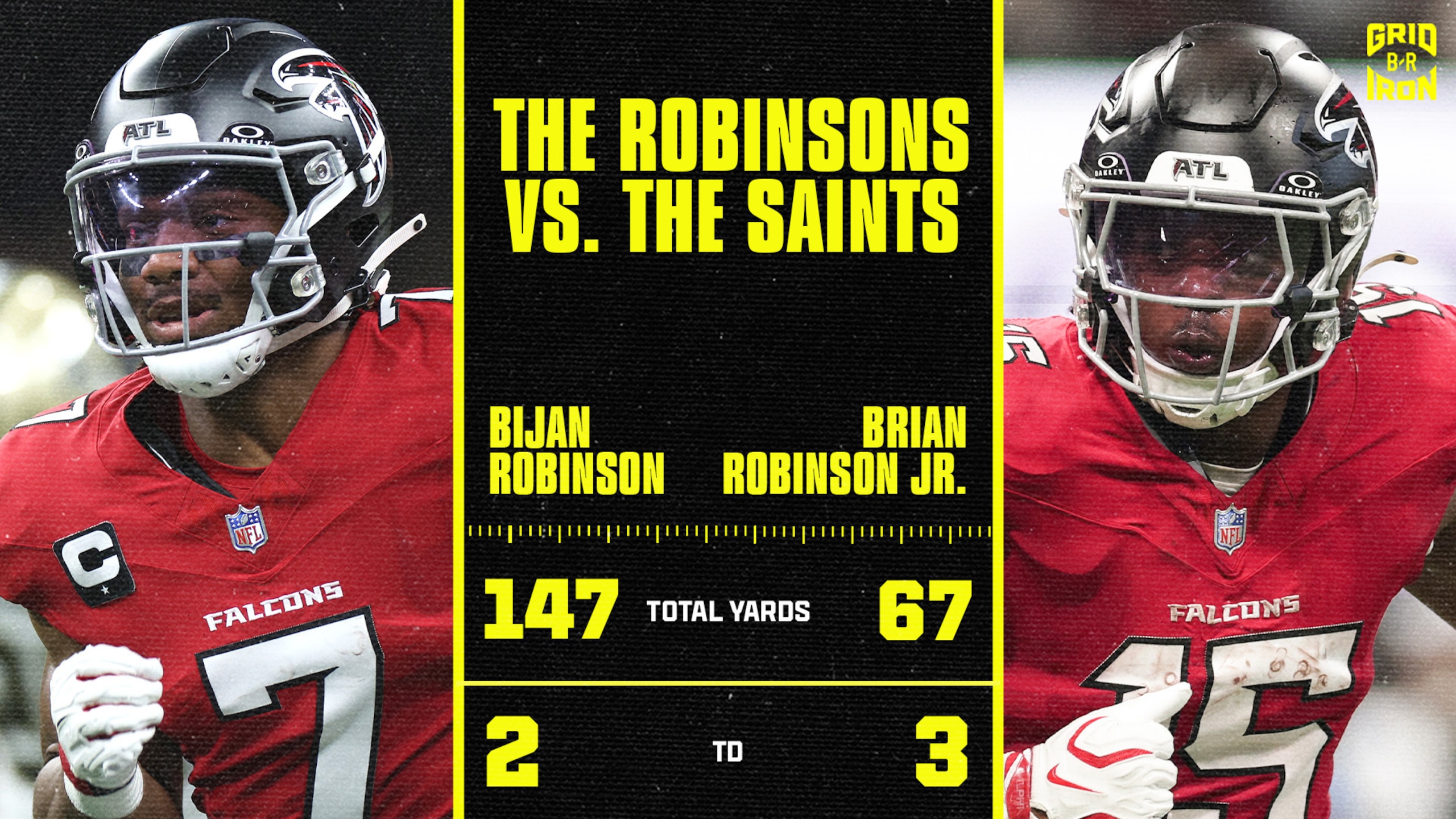
The Robinsons POUND the Rock 🪨
Takeaways from Falcons' dominant MNF win
Between 2008 and 2010, the trio of Ben Roethlisberger, Rivers and Eli Manning, all 2004 first-round picks, signed contracts between $87.4 million and $97.5 million, with the cheapest deal on an average-year basis being Rivers' six-year, $91.8 million contract.
Just over a half-decade ago, Rivers' $15.8 million-per-year contract was one of the highest in the league. Now, in terms of quarterbacks, he would rank 24th in the league with that same deal, placing him immediately above the names of Ryan Fitzpatrick, whom the New York Jets didn't want to commit to until the late summer, Robert Griffin III, a fallen star on a prove-it deal, Chase Daniel, a backup passer, and Jared Goff, a first-round rookie who has yet to throw a single regular-season pass.
The NFL salary cap has risen since 2009, but quarterback contracts have grown even faster. For reference, in 2009, when Rivers signed his second contract in the league, NFL teams were allotted $123 million to spend on their players.
With Luck making nearly $10 million more per year on his second contract relative to Rivers' second contract, including making about as much in just guarantees as Rivers has made over the course of his entire deal, one has to begin to ask whether teams are spending too much money on quarterbacks.
In public, Indianapolis' general manager, Ryan Grigson, who won executive of the year honors in 2012 and just handed Luck that new contract, told Fox Sports Radio that his quarterback's new deal was a hindrance to building his franchise's defense (h/t ESPN.com's Mike Wells): "We have a defense that is work in progress. ... When you pay Andrew what we did, it's going to take some time to build on the other side of the ball."
Wells added: "The Colts have finished 20th or worse in defense in three of the four seasons Grigson, who was hired in 2012, has been general manager. All four of those years were while Luck was under his rookie contract."
Having a quarterback isn't enough anymore. There was a bit of shift between the 2014 and 2015 NFL seasons that would suggest this trend started before this fall, though.
Football Outsiders' DVOA metric does an amazing job at valuing exactly how effective specific units on the field are for each team, not only measuring success but adjusting for the quality of opponents. In 2014, only four of the 12 teams in the playoffs had either a top-four running game or top-four defense, per Football Outsiders.
On the flip side, five of the 12 playoffs teams in the NFL that season didn't have a top-10 running game or a top-10 defense. In 2015, only two teams without a top-10 running game or defense were able to make the playoffs. Meanwhile, half of the playoff pool was composed of squads with either a top-four running game or top-four defense.
Here are what the one-loss teams in the NFL look like, according to DVOA:
- Minnesota Vikings: 5-0, 32nd rushing offense, third defense.
- New England Patriots: 4-1, 24th rushing offense, 24th defense.
- Pittsburgh Steelers: 4-1, 16th rushing offense, 20th defense.
- Oakland Raiders: 4-1, fourth rushing offense, 29th defense.
- Denver Broncos: 4-1, 21st rushing offense, fourth defense.
- Dallas Cowboys: 4-1, first rushing offense, 25th defense.
- Atlanta Falcons: 4-1, second rushing offense, 26th defense.
- Seattle Seahawks: 3-1, 27th rushing offense, first defense.
- Philadelphia Eagles: 3-1, 15th rushing offense, second defense.
- Green Bay Packers: 3-1, seventh rushing offense, eighth defense.
This year, of the 10 one-loss teams in the NFL through five weeks of play, seven of them have top-four running games or defenses per DVOA, with the Green Bay Packers on the verge of cracking both thresholds with the seventh-ranked running game leaguewide and the eighth defense, according to the math.
The only one-loss teams without a top-10 running game or defense in the group are the New England Patriots and the Pittsburgh Steelers, whose top running back, Le'Veon Bell, just returned from suspension.
The Patriots are not only one of the two teams to post less than stellar success on the ground and on the defensive side of the ball while finding success this season, but they were one of the two playoff teams in 2015 to not rank among the top 10 in either rushing offense or defense, while falling along those same lines in 2014, when they led the NFL with a 12-4 record.
The NFL's franchises are still modeling themselves after the AFC run that Peyton Manning and Tom Brady had over the last decade or so. If you look at the numbers, though, the Patriots are somehow winning with an approach that isn't consistent with the rest of the high-end teams in the league over the last two seasons.
On top of that, you only have to point to the Patriots' success with Jimmy Garoppolo and Denver's Super Bowl run with a shell-of-himself Manning to question whether any quarterback is worth $30 million per year, a number the NFL should reach in the next few seasons based on its current growth rate.
Of those teams with a one-loss record, six quarterbacks, Garoppolo, Jacoby Brissett, Trevor Siemian, Paxton Lynch, Dak Prescott and Carson Wentz, made the first starts of their careers this season. One other quarterback, Shaun Hill, made his first start since 2014 and another, Sam Bradford, was traded for a week before the regular season kicked off.
This whole idea of picking a savior quarterback to be your ride-or-die week in and week out seems more of a cliche than a successful plan of action in October 2016. Even established quarterbacks on winning teams, such as Russell Wilson and Aaron Rodgers, have hindered their offenses at points this season, as their squads have won in spite of them, not because of them.
Only three of those 10 one-loss teams haven't had any drama surrounding their quarterback position: the Steelers, Oakland Raiders and Atlanta Falcons. The Raiders and Falcons have the fourth- and second-best running games in the league per DVOA.
These defense and ground-game trends aren't just found at the top of the league, either. There are six two-loss teams in the NFL, and four of them rank in the top 10 of DVOA in either rushing offense or defense, with the Houston Texans and Los Angeles Rams just missing the cut with the 12th- and 13th-best defenses in the league:
| Team | Wins | Losses | Run Off. | Def. |
| Buffalo | 3 | 2 | 6th | 11th |
| Baltimore | 3 | 2 | 20th | 5th |
| Houston | 3 | 2 | 30th | 13th |
| Los Angeles | 3 | 2 | 29th | 12th |
| Washington | 3 | 2 | 10th | 23rd |
| Kansas City | 2 | 2 | 31st | 9th |
For nearly two decades, "face of the franchise" was synonymous with "quarterback" in the NFL. Now, particularly in the NFC, this is changing, as the dominant identities for most squads are either as a balanced threat on the offensive side of the ball or are shifted to the defense.
There are six NFC teams with one or no losses. Four of them, the Minnesota Vikings, Seattle Seahawks, Philadelphia Eagles and Green Bay Packers, are playing significantly better on the defensive side of the ball this season. Another, the Dallas Cowboys, is caught between passers and will have a big decision to make when Tony Romo gets healthy.
The golden era of quarterbacking in the NFL might just be over. While the play of those elite quarterbacks isn't dwindling, the impact a single player can make under the league's cap structure does limit their effect.
If having Rivers, Brees or Luck keeps you from building a Bronco- or Seahawk-like defense, then your chances to win games in the fall have diminished, as both 2015 and 2016 have taught us, let alone decrease your chances at a winter playoff run.
Maybe this is when the NFL steps in to make another rule to throw the balance in favor of offenses again, but all of the best, most dominant teams in the NFL are either attacking in multifaceted ways or are leaning on their defenses, a far cry from when everyone emulated Manning's Colts.
Grigson isn't wrong for what he said. He's wrong for his actions. As an NFL general manager, you need to stay ahead of the curve, as you're in a business with a structured market and limited resources.
You need to take some risks because "the right way" to build your team in 2016 isn't the same as it was in 2011. Nor will it be in 2021. By falling in line with what everyone else does, you can point and blame the market, but if you don't adapt, you will be out of a job—nearly three-quarters of the league have named a new head coach since 2012.
The new conversation around quarterback contracts will be changing soon, judging by the climate of the 2016 season. No longer is the battle trying to acquire a passer at any cost, handing over a blank check when given the opportunity, but to properly value game managers at the position, allowing for cornerstones of team identity to come from the defensive side of the ball.

.jpg?w=2560 "Rams Eagles Football")
.jpg?w=2560 "Grading WWE Raw 🔠")


.jpg?w=2560 "Injury-stricken Seahawks signing veteran RB")
