
Swiss Army Knives: The Best Positionless Stars in Sports
One thing that makes team sports so special is that every player has a defined role that adds value to the ultimate goal of winning; except, that is, for great positionless sports stars—unique athletes that have excelled without playing a specified position.
Professional team sports are reliant on drafting players who possess skills and characteristics that make them ideal for positions that can help teams win.
But what do you do with athletes who aren't built for one role but can in fact contribute to the team in multiple ways, without being outstanding in any one area?
The analytics crowd may arrive at a different answer, but for many teams, acquiring a player with a diverse skill set is often done under the cover of drafting the best athlete available.
The list of superior athletes who had a measurable impact on their team without excelling at a single position is a small one.
But they are proof that not being defined by one set of skills isn't always a negative when it comes to professional sports.
And as this is not a ranking of the best athletes without a true position, there is no honorable mention.
Draymond Green
1 of 8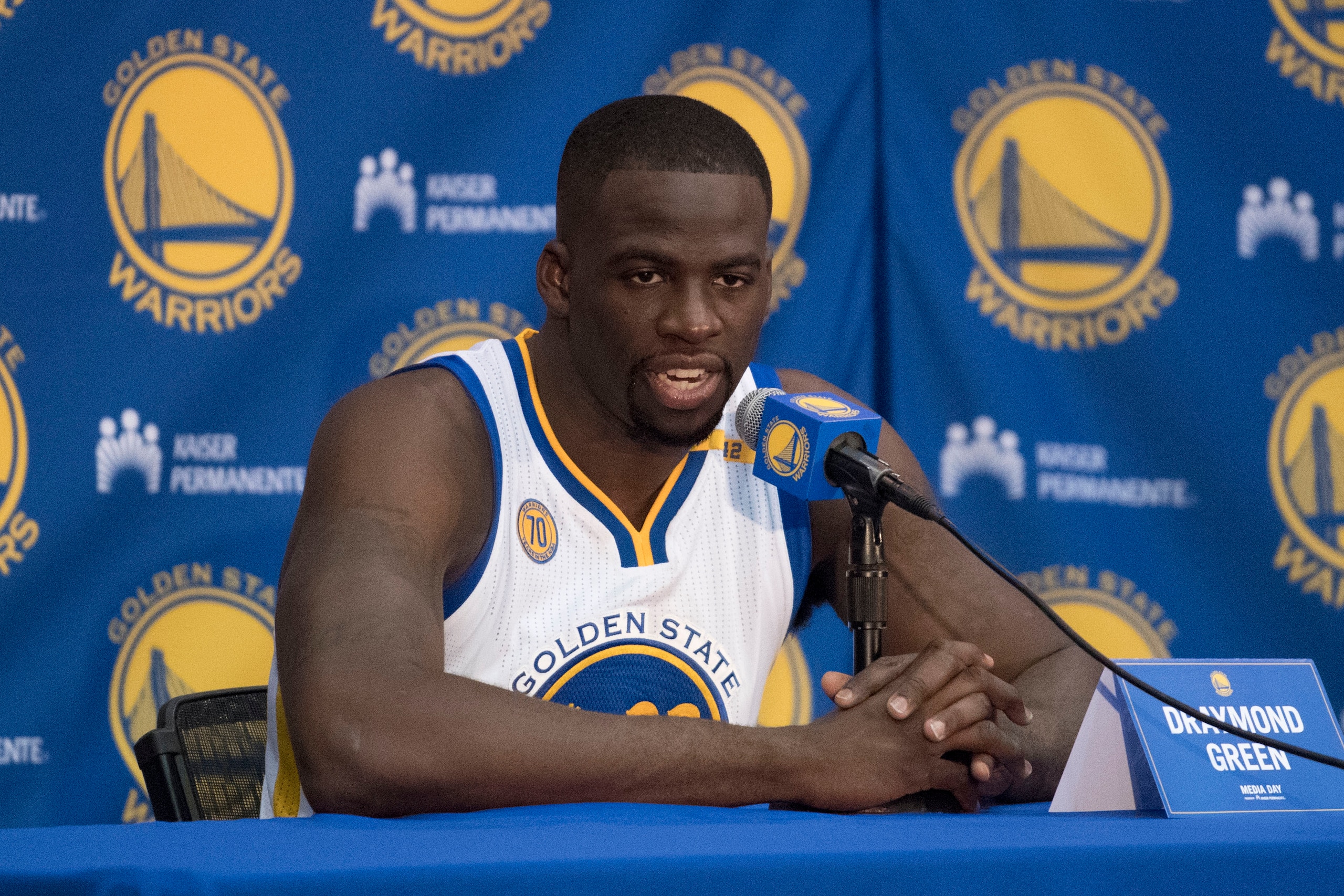
Green is the axis upon which the entire Golden State Warriors system rotates, and over the past three years, he has become one of the most versatile and productive players in the NBA.
But what position does he play?
He’s listed as a forward, but in the scheme that the Warriors employ, Green often plays center and defends 7-foot behemoths that outweigh him by 50 pounds or more.
Green is only 6'7", but his long wingspan and length allow him to man multiple positions, and he can even switch onto lightning-quick point guards, denying their drives to the paint.
He’s strong enough to box out in the paint and fast enough to keep up with shooters, which means that he can guard all five positions.
On offense, Green has the size to post up centers but also possesses an effective three-pointer, which forces defenders to leave their comfort zone.
In the killer small-ball lineup the Warriors have used to devastate the NBA over the past two seasons, Green is slotted as the only "big," but his defense, rebounding, passing, shooting and ability to handle the ball make that system work to perfection.
Nicole Auerbach of USA Today recently analyzed how Green and the Warriors have embraced the concept of the "positionless player," in which players with a diverse set of skills are simply called a "big" or a guard, instead of being assigned a more specific designation.
What makes Green so unique is that he can do many things well, which means that unlike a shooting specialist, if his shot isn’t falling, Green can still make an impact in other areas, especially on defense.
Despite his third-place billing in the Warriors pecking order, it was arguably Green’s Game 5 suspension in the 2016 NBA Finals that turned the tide for the Cleveland Cavaliers and cost the Warriors a second consecutive championship.
That’s all you need to know about the value of the NBA’s premier positionless player.
Darren Sproles
2 of 8
Last year, in his 11th NFL season, Darren Sproles led the league in punt-return touchdowns for the second straight year, and also added three rushing touchdowns and a receiving touchdown to cement his place as one of the best positionless players in NFL history.
Sproles made his second straight Pro Bowl in 2015 for his all-around effort, which is a considerable achievement for a football player who turned 33 this June.
But that’s what makes him so special.
He is listed as a running back, but at 5'6", 190 pounds, Sproles has never had the bulk for feature-back duty.
His value is in the diverse ways teams have used his talents, including as a slot receiver and kick-return specialist.
Proving his versatility, Sproles set the NFL record for all-purpose yards in the 2011 season, amassing 2,696 yards.
Through Week 5 of the 2016 season, Sproles has 2,963 career rushing yards, 487 receptions for 4,339 yards, 10,989 total return yards and 58 touchdowns.
Last year Jeremy Rucker of NFL.com ranked Sproles on his list of the greatest undersized players in NFL history, citing his talent as a premier receiver out of the backfield, and the fact that since 2005, he leads all running backs in receiving yards and touchdown passes.
Percy Harvin
3 of 8
Coming out of Urban Meyer's dominant University of Florida program, Harvin was considered a multipurpose threat who could handle 20 rushes a game, catch five passes and return punts and kickoffs.
In other words, he was Darren Sproles 2.0.
Although Harvin retired after the 2015 NFL season, and despite his propensity to exhibit knucklehead behavior, there’s no denying the breathtaking skills he brought to the field.
Harvin spent his first four seasons with the Minnesota Vikings and set the team record with five kickoff-return touchdowns.
The Vikings used Harvin as a change-of-pace runner who often caught bubble screens and turned losses into positive yards.
Harvin, who also lined up as a slot receiver, ended his career with 351 receptions for 4,020 yards and 22 touchdowns.
He also amassed 4,127 yards in kickoff returns.
As a running back, Harvin rushed for 916 yards in 145 attempts, for five touchdowns and a robust 6.3 yards-per-carry average.
When the Vikings traded Harvin to the Seattle Seahawks, Pete Prisco of CBSsports.com characterized him as a talented athlete who could run crossing routes, catch screens and make defenders pay when they tried to tackle him one-on-one.
That’s pretty much the textbook definition of a positionless player.
Harvin’s 87-yard kickoff return for a touchdown on the first play of the second half of Super Bowl XLVIII shut the coffin door on the Denver Broncos.
Harvin ended that blowout game with 137 all-purpose yards.
He was a versatile player who was a threat to house it every time he touched the ball, but unfortunately, ill health shortened his career, proving that he wasn’t durable enough to fill the role of an everyday back.


.jpg?w=2560)
Franz Beckenbauer
4 of 8"Der Kaiser" was one of the 10 best players of all time, and has few peers when it comes to his grace and elegance on the pitch.
But despite Beckenbauer’s placement in the FIFA hierarchy of great practitioners of the beautiful game, the truth is he didn’t have a set position.
In fact, only soccer purists probably realize that Beckenbauer was not a forward. Or a midfielder. He was a defender.
Or was he?
Yes, he often started games as a sweeper, the last line of defense in front of the goalie, but what made Beckenbauer a legend is that he became the world’s first attacking sweeper.
This meant that he would start on the back line in defense, then weave his singular brand of dribbling magic to work his way up the pitch and present an impossible matchup for a slack-jawed defender.
He was the first soccer defender who made the defenders on the opposing team quake with fear that he would make one of his signature runs through their ranks and net a goal.
Very few soccer players are skilled enough to switch mindset from an attacking forward to a defender in the blink of an eye, but that’s what made Beckenbauer so special.
His pitch vision was unparalleled, and he was as fit as an Olympian, able to move up into a defensive midfield position, orchestrate an attack and then fall back toward his goal to repel a counterstrike.
Beckenbauer’s accomplishments include winning the 1974 World Cup with the West German national team, four Bundesliga championships with Bayern Munich and three Champions League titles, also with Bayern.
His impeccable artistry is one of the reasons Raphael Honigstein of ESPN FC ranked him as one of the 10 greatest captains in soccer history.
Mookie Betts
5 of 8
The Boston Red Sox wunderkind tore up the American League this season, showcasing the promise he’d flashed as he worked his way through the farm system as a shortstop and second baseman.
Diehard Sox fans aside, many MLB fans may not realize that Betts—who has played multiple positions in the outfield, but mostly right field—may end up becoming one of the best second basemen in baseball, whenever Boston legend Dustin Pedroia retires, that is.
And that should scare everyone in the AL East, because it means that Betts’ superlative 2016 season in which he hit .318, collected 214 hits, drove in 113 runs, smacked 31 home runs and stole 26 bases was merely the amuse-bouche for what promises to be a gluttonous feast.
Think about it.
Betts will likely lose the AL MVP to Mickey Mantle clone, Mike Trout, but the fact that Betts will make Trout sweat a bit is a testament to how scary good the 24-year-old is, and folks, he’s playing out of position.
Betts has and always will be a natural second baseman, but with Pedroia still far from his sell-by date, Betts has played center field and right field, and done both well.
His ability to play three positions is evident of his outsize talent, and it may seem strange to call him a positionless player.
But what other description makes sense for a player whom scouts viewed as the next great second baseman, and is now proficient at two outfield spots?
As Brian MacPherson of the Providence Journal points out, Betts’ ability to excel as a multipositional player is a tribute to his athleticism and work ethic.
And he's only just started his assault on what could end up becoming a legendary career.
Giannis Antetokounmpo
6 of 8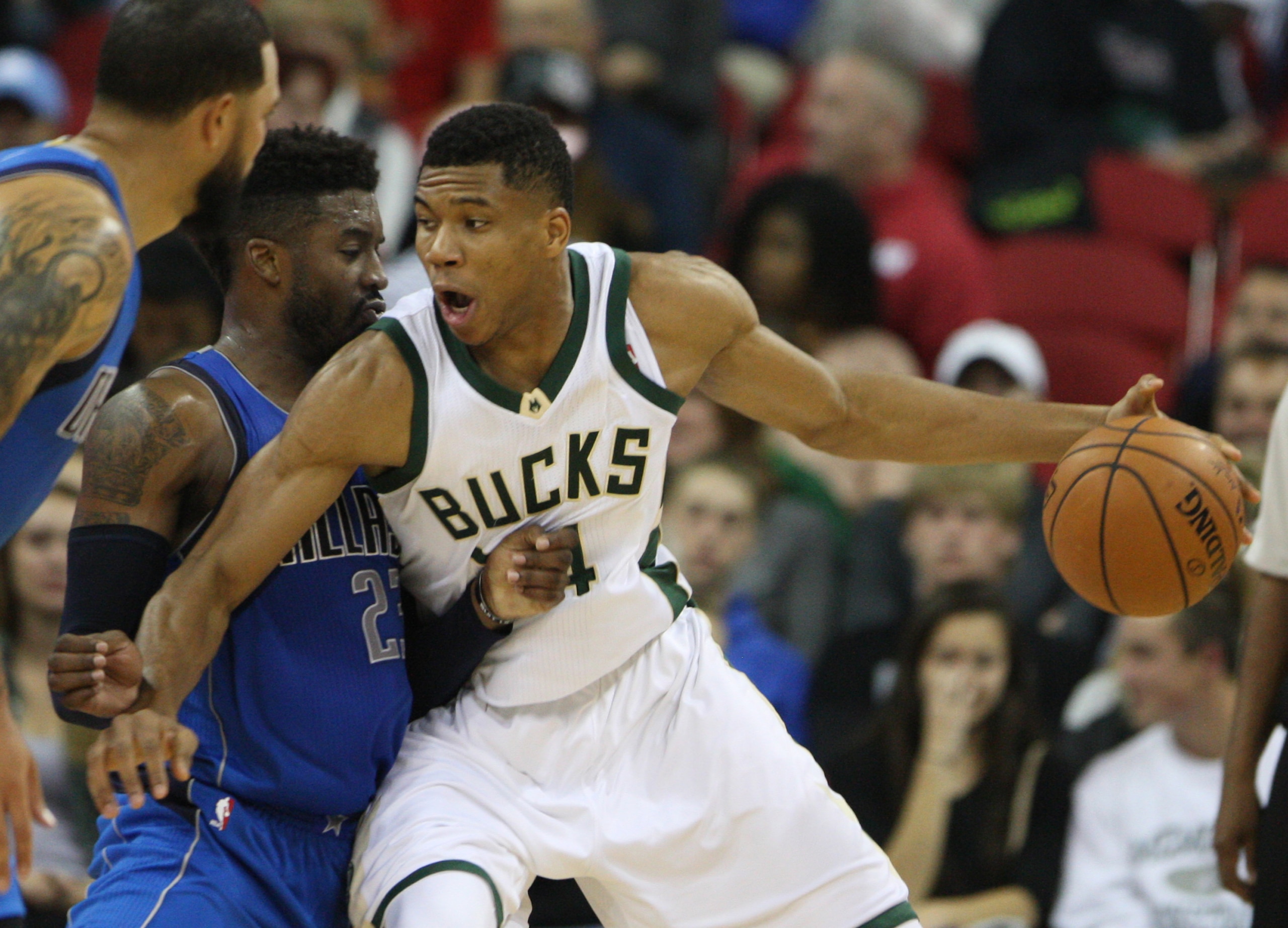
The Greek Freak is truly a wonder to behold.
At 6'11", the Milwaukee Bucks player who most basketball experts would have slotted at power forward or center, played point guard last season.
And did it well.
Wait, what?
Antetokounmpo has also played power forward, shooting guard and small forward, so much like Draymond Green, he’s rewriting the rules about what a position really means in the NBA.
In old-school basketball, the Greek Freak would have been instructed to man the post, block shots, dunk and take six fouls when necessary.
But in the golden era of perimeter-dominated basketball, Antetokounmpo’s uncanny passing, shooting and ball-handling skills make his switch to point guard last year not only logical, but backed up by metrics.
As John Schuhmann of NBA.com reveals, the Bucks offensive efficiency improved six points per 100 possessions when Antetokounmpo played the 1, versus when any other player ran point while Antetokounmpo was on the floor.
The Bucks also saw a marked improvement in three-point shooting with the converted point guard on the floor, mostly because he improved spacing for perimeter shooting.
And although Bucks coach Jason Kidd has named Antetokounmpo the team’s starting point guard, he still figures to see time at small forward, power forward and center.
It remains to be seen just how far Kidd will take this intriguing experiment, but for now, the fearless coach is committed to giving his budding superstar the keys to the team's offense.
Wayne Rooney
7 of 8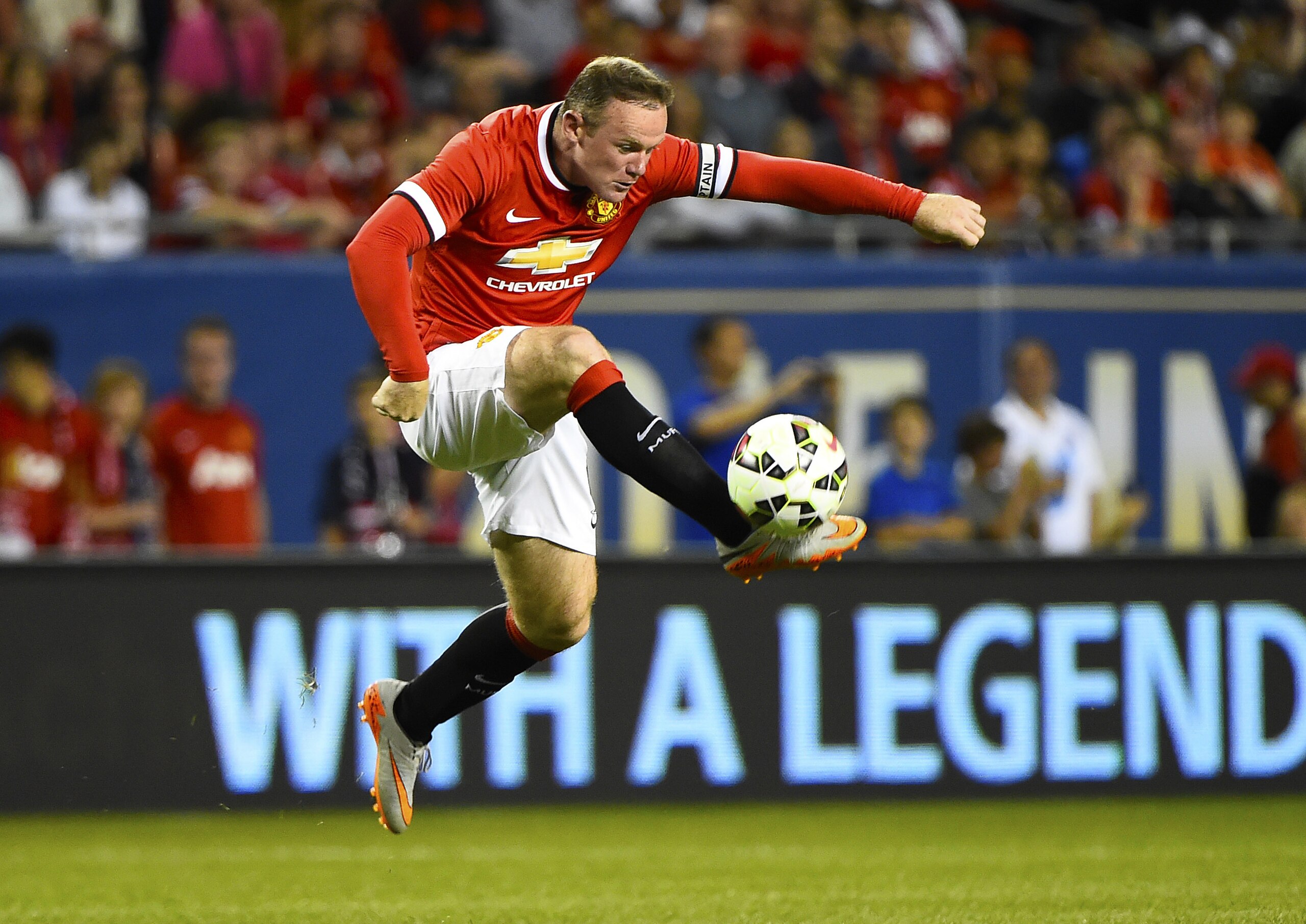
Wayne Rooney remains one of the biggest soccer enigmas of the past decade.
He’s graced with speed, power and an explosiveness that has resulted in many spectacular goals.
But he also disappears for large sections of soccer matches—especially in global tournaments such as the World Cup—and his working-class playing style is often compared unfavorably to the two shining lights of soccer, Cristiano Ronaldo and Lionel Messi.
And maybe the reason Rooney disappoints so often on the biggest world stage is that he’s essentially a soccer player without a true position.
Rooney has the stamina to play center midfield, the defensive aggression to play defending midfield, the power to play as striker and the speed to run on either wing.
Because of this lack of a singular position to explore his skills, Rooney may actually be a tad underrated, given that he roams all across the pitch without one true purpose like, say, Ronaldo, who knows from the first whistle that his job is to score and look beautiful, a task he accomplishes with stunning proficiency, though not always in that order.
But Rooney hasn’t exactly been a slouch when it comes to scoring goals.
Entering the 2016-17 Premier League season, he had netted 193 goals in 435 appearances for Everton and Manchester United, and scored 51 goals as a member of the England national team since 2003.
But it’s been clear that for all his versatility, his skills over the past two years have diminished, and as Michael Cox of ESPN FC recently wrote, Rooney’s positionless play was always an asset until he lost his explosive power, which now makes him a liability for his club team, Manchester United.
And as long as age remains undefeated when it comes to sports stars, Rooney—for all his accomplishments as a true elite player for the past decade-plus—may end up a victim of his own multifaceted skills, which have consigned him to being damned with the faint praise of "Jack of all trades, master of none."
Ben Zobrist
8 of 8
It’s probably fair to say that Ben Zobrist prefers the term "positionless player" to "utility player," but the fact remains that though he’s listed as a second baseman for the Chicago Cubs, he's played more than half of his games since the 2008 season in the outfield and at shortstop.
At 35, Zobrist is a late bloomer with refined skills, who is also a switch-hitter who avoids strikeouts and reads pitches with uncanny accuracy.
He won the 2015 World Series as a member of the Kansas City Royals and earned All-Star appearances in 2009, 2013 and 2016.
He has a lifetime batting average of .266, with 643 RBI, 145 home runs, 1,287 hits and a .358 on-base percentage.
Zobrist exemplifies the type of baseball player that can excel in a game that’s increasingly dominated by sabermetrics.
When he was playing for the Tampa Bay Devil Rays and then-manager Joe Maddon, Zobrist’s unique skill set gave Maddon multiple lineup options that fit the situational playing strategy the Rays perfected.
That’s probably why Bill Chastain of MLB.com dubbed Zobrist the "Father of Utility" for his proficiency wherever he played on the field.
And it’s definitely the reason Zobrist now plies his trade for Maddon with the Chicago Cubs and delivered a stellar season, batting .272, with 76 RBI and 18 home runs.
.jpg?w=2560 "Rams Eagles Football")
.jpg?w=2560 "Falcons Saints Football")
.jpg?w=2560 "Injury-stricken Seahawks signing veteran RB")

.jpg?w=2560 "2 NFL Officials Suspended")

