It all happened so fast and was so lethal. Instantly, it struck that this was so them: breathless, swift from front to back and beautifully brutal.
And yet, there was something different about it, too.
From a rare, quiet moment at San Mames, Barcelona had exploded from the centre circle to the goalmouth with just four acts and in matter of seconds. Sergio Busquets had picked out Luis Suarez with a one-touch pass. Suarez had spun to find Arda Turan on the wing, who in turn crossed for the surging Ivan Rakitic to head home.



On the touchline, Luis Enrique threw his arms triumphantly into the air and followed that with two jubilant fist pumps. This was a significant goal for him.
In a 1-0 win over Athletic Bilbao on Sunday, Rakitic's strike sealed Enrique's 100th win as Barcelona manager in just his 126th game, beating the mark set by Pep Guardiola by 13 matches. Perhaps more importantly, though, the goal and the outing it came in hinted that, 100 wins in, Enrique isn't figuratively sitting still. Instead, he's continuing to innovate and adapt, looking to add new elements to his side.
That's not easy to do after an avalanche of success, but here Enrique is doing it.
On the surface, Rakitic's goal at San Mames might have looked very characteristic of Enrique's Barcelona with its blistering finish. In that sense it was, but what led to it was an example of something subtly different that the Catalans appear to be working on this season.
Indeed, the Croatian's header hit the back of the net with the clock reading 20:41. If the attacking sequence had seemed as though it had lasted only a handful of seconds, it hadn't; it had begun with a throw-in in Athletic's half a full minute earlier, and what followed became a theme of the night.
Once the ball was put back in play, Barcelona actively retreated a little despite controlling possession. Knowing Athletic's intention was to press, the visitors encouraged their hosts to do it, with Gerard Pique, Samuel Umtiti, Sergi Roberto and Jordi Alba passing the ball between themselves for almost a minute in their own half to lure Athletic onto them. And it worked.
The instant Ernesto Valverde's men committed three men toward the ball, Alba played it through them to Busquets, and from there Barcelona were off, finding the net in seconds. They'd hit Athletic on the break but had achieved it through control of the ball rather than concession of it.
All night they did it.
According to WhoScored.com, Roberto (91), Pique (86), Umtiti (86) and Alba (84) had more touches than anyone from either side. That's not exactly groundbreaking, but it was notable how deep they were prepared to do it, consistently involving goalkeeper Marc-Andre ter Stegen in passing sequences deep in their own half, drawing Athletic's press higher and higher to expose the spaces behind it with sharp balls and hard running. The heat map is striking.
Sunday wasn't the first time we've seen it, either.
In the first leg of the Spanish Super Cup against Jorge Sampaoli's high-pressing Sevilla, Barcelona demonstrated the same thing, as we noted here at Bleacher Report:
"Then came the second half. Adjusting their collective stance, Barcelona sat a little deeper, luring a frenetic Sevilla into traps and exposing their systematic vulnerabilities. Lucas Digne was excellent at left-back. Denis Suarez stood out in midfield. Messi and Luis Suarez wreaked havoc on the break.
From Barcelona, it was an exercise in using Sevilla's own pressure against them. Instead of recklessly fighting Sampaoli's bold outfit, they absorbed their threat, reacting with thought and clear heads to seize an advantage amid a volatile dynamic.
"
So, is this all down to Enrique? Perhaps not entirely, but certainly to some extent.
Barcelona's players are capable of reacting to their opponents and adapting on the fly, but the fact we've seen this from the Catalans for prolonged periods against two pressing sides in a matter of weeks suggests it's something that's being consciously developed. And it's significant because it's a direct response to an issue Barcelona have faced.
Since his arrival in 2014, Enrique has set about making Barcelona faster and a little more volatile. The suffocation of Guardiola's teams has been replaced with a certain freneticism, paving the way for more end-to-end football in which Enrique's trio of devastating forwards can dictate results.
The club's success in that time speaks for the effectiveness of the method. Enrique's Barcelona have won eight of the 10 trophies they've contested, ripping most clubs apart in the process. But with a little less control, they've also been troubled at times by sides that have come at them.
At the beginning of last season, Athletic shocked them 4-0 at San Mames in the Spanish Super Cup by biding their time and then pressing in numbers. Malaga then gave Barcelona a fright in the league in January with a similar approach, and Levante followed suit in February.
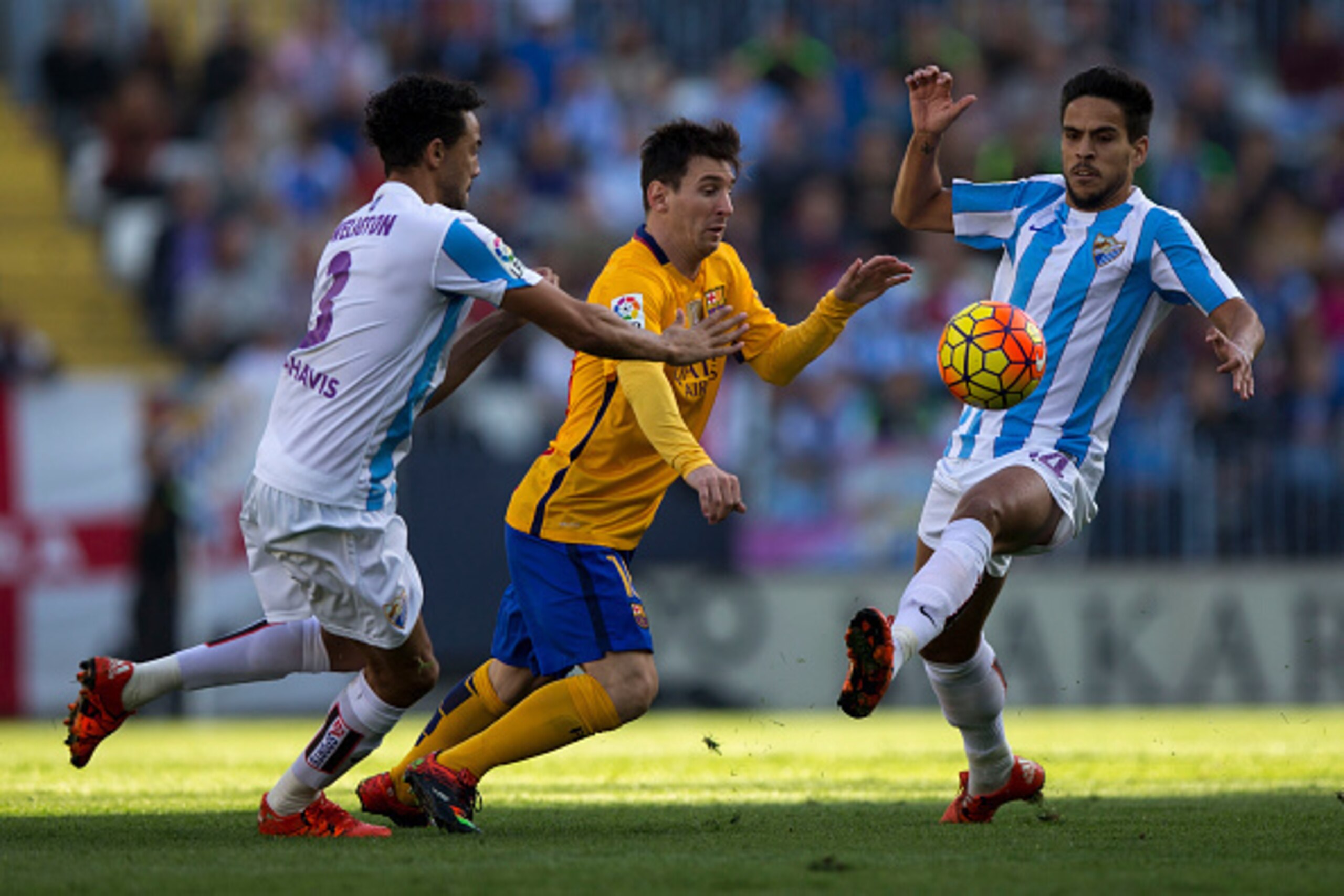
In each instance, Barcelona's response was to attempt to beat the pressing by playing around it. They dominated possession like they did against Athletic on Sunday, but instead of absorbing the press to play through it, they pushed the ball to the flanks, as illustrated by WhoScored.com's heat maps for Barca against Malaga and against Levante.
It's important to note that Enrique was without key figures in those games. Pique was missing for the former, while Busquets was absent for the latter. But the difficulties his team experienced amid such tactics seem to have prompted Enrique to oversee the development of another tool, another recourse. Another weapon.
On Sunday, they showed that it's already effective.
"It was a wild match," Enrique said of the clash at the post-match press conference at San Mames. "The pace of play was uncharacteristically fast for this time of the season. We knew they would apply pressure, and they made it difficult to play out from the back. On the bright side, we were able to fend off that pressure very often, such as in the spectacular goal we scored."
It's true that the method Barcelona utilised against Athletic was only a small deviation from the norm of Enrique's tenure to date. The possession dominance and front-to-back speed were still there, and it was only the starting point that was adjusted. Still, it's important.
From Enrique and his team, it's evidence of their recognition that football never stands still. Opponents adapt and react; staying ahead of them involves doing the same, adding new elements and continually evolving.
Barcelona, subtly, appear to be doing that. One hundred wins in, Enrique is still innovating.

.jpg?w=2560 "Seahawks Chiefs Football")



.jpg?w=2560 "Latest Peyton-Colts Rumors")