

NFL Needs a Thoughtful Response to National Anthem Protests
It was my job to make teenagers stand for the Pledge of Allegiance for nearly 20 years.
I am a former public high school teacher. New Jersey state law requires students to stand for the pledge if they are physically capable of standing. Technically, students must also place their hands over their breasts and recite the pledge as well, but practicality dictated that they at least stand in respectful silence. Exceptions who had "conscientious scruples against such Pledge" were rare.
When the Rodney King verdicts were announced, everyone still had to stand for the pledge. The morning after Columbine: Stand for the Pledge. The Wednesday morning after 9/11: Stand. After the O.J. verdict, after the 2000 election: Stand and stand. The day after two seniors from my school died in a car accident? Put aside your grief and stand for the Pledge of Allegiance.

Black kids, white kids, Christian kids, Jewish kids, Muslim kids, rich kids, poor kids, angry kids, popular kids, nonconformists in black trench coats, kids bound for the Ivy League and kids wearing court-mandated ankle bracelets: They were all expected to stand for the Pledge of Allegiance every morning no matter what was happening in the world.
I often sympathized with the students who did not wish to stand. But there was a law to uphold, safety and order to preserve, and the rights and feelings of 25 people to protect. One student is angry about police brutality, another's father is a cop. One wants to protest the war, the other has a brother in Afghanistan. For 30 seconds, none of that was allowed to matter.
And, of course, teachers are not legally allowed to grab teenagers by their collars and lift them from their desks even if they are so inclined. Enforcing the rule wasn't as easy as barking an order.
So I have a small sense of what the NFL is about to go through in the wake of Colin Kaepernick's seated protest during the national anthem last Friday night. No, adult athletes are not teenagers and should not be treated as such, and the NFL is not a public school with pledge laws on the books. But getting everyone to do the same thing, while at the same time respecting individual rights and enforcing necessary boundaries, takes a great deal of finesse. And we all know that the NFL is not good at finesse.
The NFL needs a plan and policy for dealing with future protests, whether by Kaepernick, players who agree with Kaepernick, players who vehemently disagree with Kaepernick or any other politically or socially sensitive issue moving forward. Breaking news: We are entering a tense, contentious political period. Kaepernick plans to keep protesting—in military-friendly San Diego in a few days—and it's naive to think that no other players will join him or engage in other demonstrations.
It's difficult to chart a proper course of action for the NFL when modern political discourse only allows us to have one of two opinions on Kaepernick:
OPINION A: If these ignorant, entitled athletes don't want to earn millions playing a children's game thanks to the sacrifices of the brave men and women of the armed forces, they should be banned from the league and deported.
OPINION B: All forms of self-expression are equally wonderful, and anyone who is insulted or outraged by Kaepernick is obviously either a howling racist or lacks the enlightenment and self-actualization to move beyond symbolic gestures of outmoded ideas like patriotism, the way me and my friends at the organic co-op have.
Your opinion is probably more nuanced than either of those. Still, everyone who disagrees with you will likely just lump you into one of those two camps. But the NFL, with a constituency of thousands of players and employees—plus responsibilities to the community that come from being a high-profile employer and civic presence—can't afford this kind of binary thinking.
Unfortunately, the NFL only has two default responses when a major societal problem is about to become a major football problem:
RESPONSE A: Cram head deeply into sand, wait for problem to become an all-consuming crisis.
RESPONSE B: Issue heavy-handed orders, impinge on basic rights and freedoms, and thereby contribute to problem becoming an all-consuming crisis.
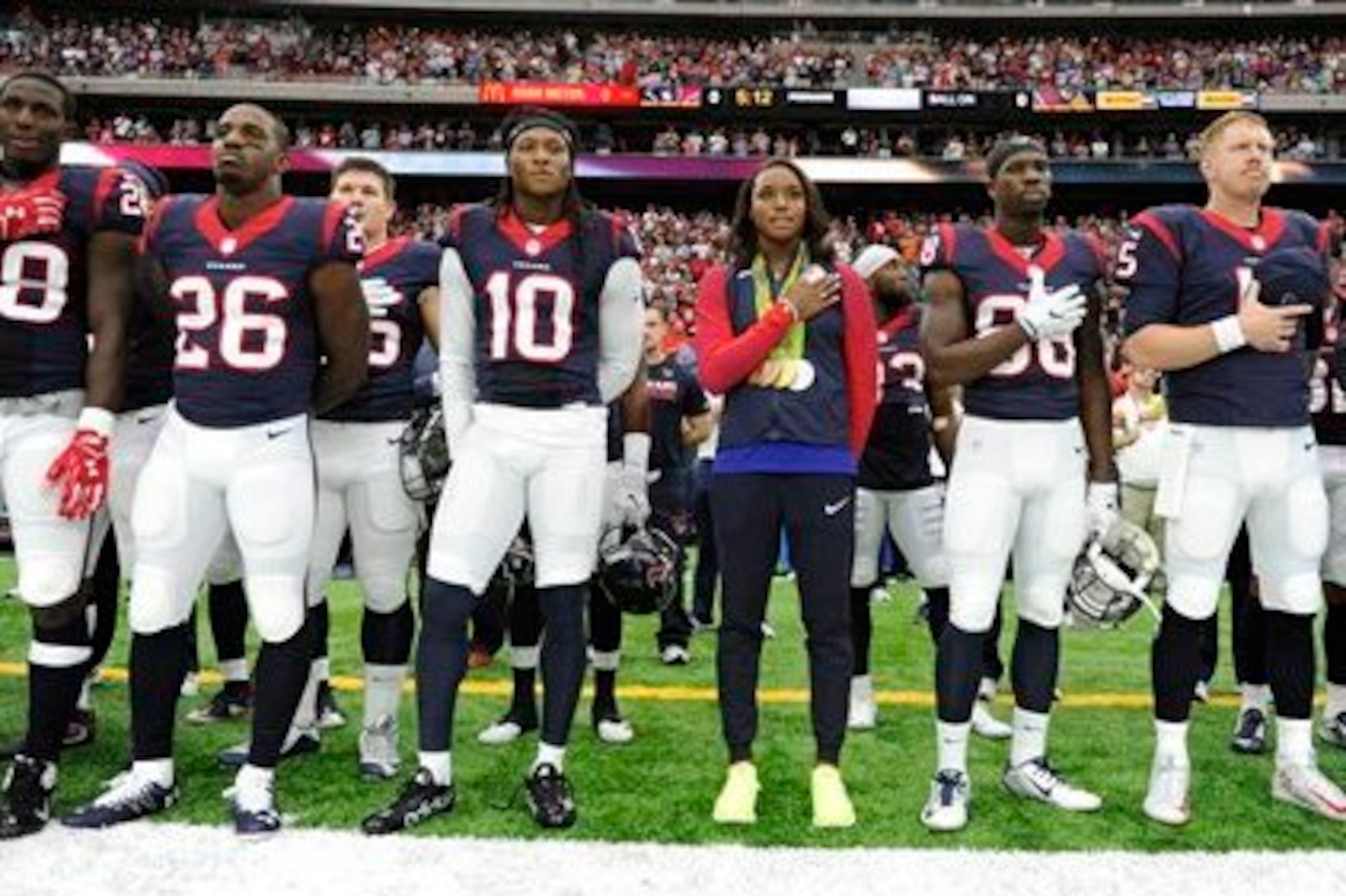
Response B lines up roughly with Opinion A. There are fans who would be happy to see Roger Goodell issue six-game suspensions for anyone who remains seated during the anthem. The NFL does not plan to do this—the league issued a statement encouraging but not requiring players to stand—and almost certainly doesn't have the right to do this, no matter how broadly it interprets the "conduct detrimental" clause in the collective bargaining agreement. It's also a horrendous idea, but that never stops the NFL.
Opinion B lines up roughly with Response A and probably sounds more enlightened and compassionate. Let a million flowers grow, Moonchild. But the NFL is responsible for the safety of tens of thousands of spectators. We already have Kaepernick jersey-burners. It's not far-fetched to imagine brawls erupting, on the field and off, if the national anthem becomes a forum for a dozen different political statements from all over the spectrum.
We like to forget that the NFL is a for-profit business when we hop on the righteousness soapbox. The league has responsibilities to sponsors and corporate partners. Players are employees, the field a workplace. Games cannot become be-ins. The NFL can't lapse into its usual Angry Caesar mode, but it has the right and responsibility to do a little managing.
So how does an authoritative body respect individual rights, encourage free expression, remain more or less neutral on controversial topics, uphold traditional institutions, placate stakeholders, preserve law and order, and stay focused on its primary task (entertaining people with football) at the same time?
There is no recipe or rulebook. But there is an approach that works, one that public school teachers like me often take years or decades to master. It involves communication, compromise, flexibility and a light touch (but still a touch) with discipline and penalties. The NFL tends to go 0-for-4 with four strikeouts on those virtues. But if it wants to address Kaepernick-like protests without stumbling straight into the middle of a culture war, this is a great time to learn.
One overarching philosophy before we hit the bullet points: Preserving the right to protest and protecting the authority and values of the NFL is NOT A ZERO-SUM GAME. Both can happen simultaneously, and sides can emerge stronger. It's an obvious point that is getting lost as public discourse quickly descends into a tug-of-war between two extreme positions.
With that said, here is what the NFL needs to do.
1. Take a clear position. The NFL wants all players to stand during the national anthem. There is nothing wrong or unusual about that. So the NFL should restate that desire clearly, explicitly and in an open statement to the players—not a brief statement to the press like the one it issued this weekend.
The league's statement must be a request. Not an order. It should also include reasons for standing during the national anthem that go beyond the wishes of multimillionaire owners and season ticket holders. We honor the anthem out of respect for military personnel and their families. We represent a broad set of values that kept us unified through the civil rights movement, the Vietnam War, Watergate, 9/11 and so on.
A little sympathy and empathy wouldn't hurt either. The NFL knows how serious and important this is to you. But there are valid reasons why the national anthem is serious and important to us.
Kaepernick and other players may know all about the sacrifices of veterans but still feel compelled to protest in this manner. Given that possibility, the NFL might be surprised at what asking nicely and explaining its reasoning instead of issuing a decree can accomplish.
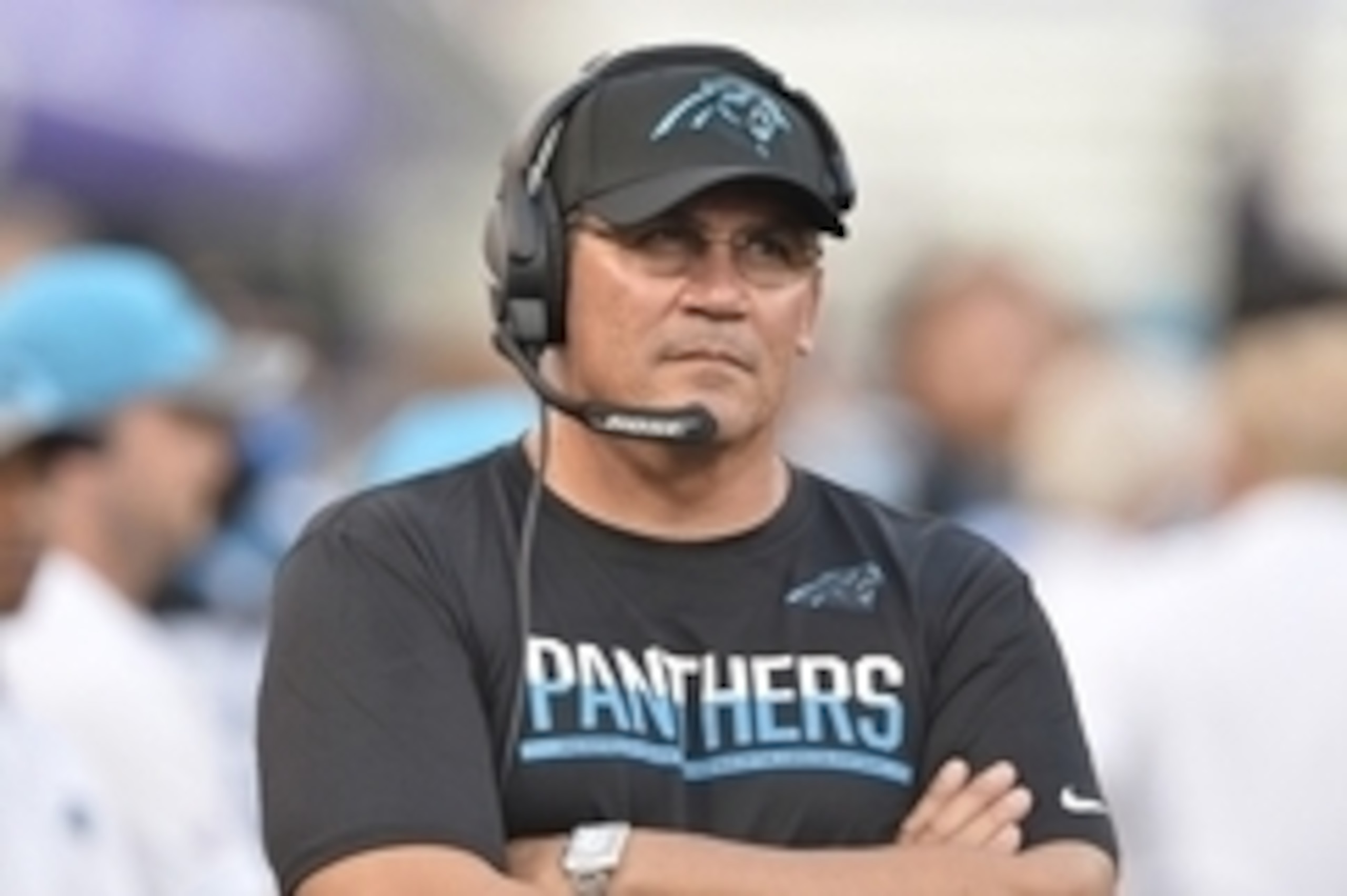
Taking a position is a two-way street. The NFL should issue guidelines to coaches and owners as well. Rex Ryan has already voiced his distaste for protesting during the anthem, while Ron Rivera made more conciliatory remarks. Other coaches and owners will weigh in as soon as they hold press conferences, and their opinions will run from "live and let live" to "Traitors will be cut." Just as potential protesters could benefit from a refresher on what the anthem means for millions of Americans, management needs its own set of talking points and reminders about the difference between productive (united we stand…) and counterproductive (if you hate America so much…) communication on this topic.
I used to tell students that they should recite the Pledge of Allegiance out of respect for America, but that they were obligated to stand out of respect for the people who respect America: their parents, classmates, neighbors, me and so on. Most kids stood. And many of the ones who were motivated by social injustice decided to express their anger in less incendiary, more productive ways.
2. Offer alternatives. Protest doesn't have to occur during the national anthem. It can occur when players leave the tunnel. It can happen at the 50-yard line after the game. It can be a gesture or a moment before the coin toss or during the fighter-jet flyover. It can happen during a public service announcement broadcast on television or inside the stadium.
If you offer protesters good alternatives, two things happen. First, you give them incentive to do something you want. Second, you give them an opportunity to actually strengthen their cause.
There are many NFL players who would stand beside Kaepernick in demonstration in other circumstances but would never sit down during the national anthem. Give them a chance to join hands at the 50-yard line or raise their fists while leaving the tunnel, and the seventh-round picks can express themselves without fearing for their jobs and getting an earful from grandpa. Meanwhile, the NFL gets to preserve the national anthem.
Offering a separate forum for protest is another old classroom technique: Don't sit there, start a club or a petition. It's another mutual compromise. Mutual compromise is good, no matter what your Twitter feed tells you.
3. Encourage organization. Authority should never tell protesters how to protest because most protests are, at the core, about overreaching authority.
Still, a league policy that favors organized protest over scattered individual political statements can help maintain order and empower players to speak out. Again, these are not mutually exclusive and should not be thought of in that way.
We've seen enough political protests in the last five years to know the drill. Hundreds of thousands of organized citizens can march without incident. But a few dozen firebrands can cause fear and mayhem. Responsible advocates for social change welcome the former and condemn the latter.
An organized protest with clear leadership (Kaepernick, team captains, union reps, experienced activists, whoever) is better for everyone than scattered acts of self-expression here and there: louder, stronger and ideologically clearer, while at the same time less likely to cause the league, home team or host city an unanticipated problem.
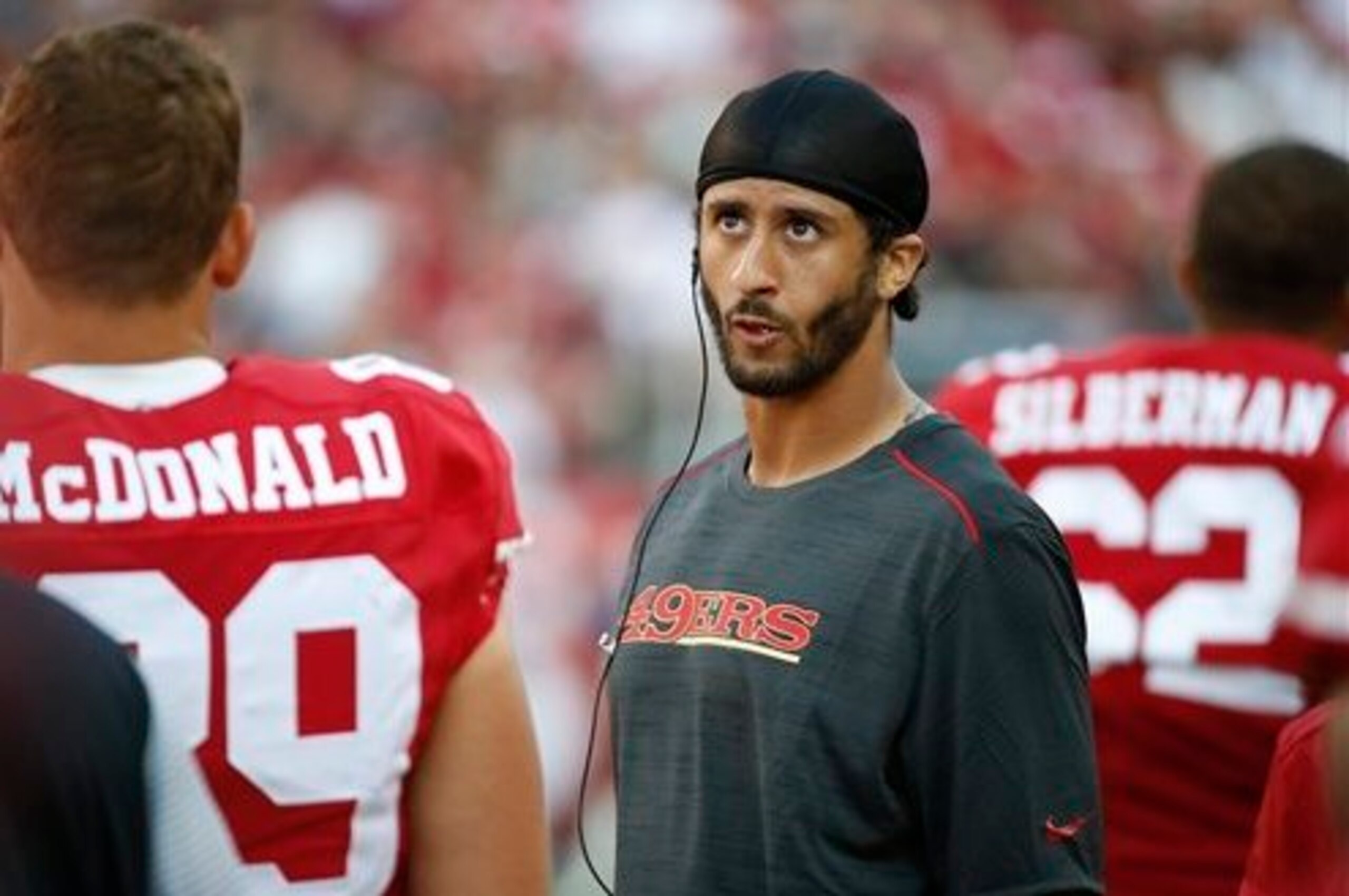
Kaepernick suggested that more robust demonstrations are on the horizon.
"There are things that I have in the works right now that I'm working on to put together in the future and have come to fruition soon," he told reporters on Sunday.
As idealistic and unrealistic as it sounds, he and the NFL should work together, just as the local government and police work with organizers of a march down Main Street.
4. Appeal to (and learn from) authority. When a student refused to stand for the Pledge of Allegiance, I would often ask them what their parents and role models felt about the decision. Did you tell your parents you were doing this? Your pastor? Your uncle who served in Vietnam? Your great aunt who marched on Birmingham? What did they say?
There's something paternalistic about asking a grown man like Kaepernick if he consulted with his elders before speaking his mind. But there is also a legitimacy to the question. Sitting during the national anthem is a powerful form of protest. Anyone willing to make such a strong statement should be clear about what they stand for and who they stand with.
Kaepernick said on Sunday that he did not consult with anyone before his protest, not even sociologist and author Dr. Harry Edwards, who literally wrote the book (several of them) on activism by athletes of color and whom Kaepernick calls a "good friend."
Whether or not Kaepernick sought specific advice from Dr. Edwards, the NFL should seek specific advice from Dr. Edwards. The league should also reach out to civil rights leaders, veterans groups, sociologists, police organizations, politicians and even Black Lives Matter.
The goal should not just be to find authoritative voices to take the opposite side. It should be to understand the vectors of demonstration, how organizers on all sides typically protest and respond to protest, differentiate mainstream opinions on racial and social issues (again, on all sides) from fringe opinions and so on. The NFL needs a thorough sense of what's coming, from what direction and why.
And, yes, soliciting experts who are sympathetic to the cause but still take management's side can help management get its way. Ideally, all parties learn and grow from the experience.
5. Establish boundaries. At some point, the NFL may have to lay down the law.
Imagine an angry player waving his arms to incite the crowd instead of sitting silently or raising a fist. Kaepernick may not protest in this way, but the next individual might. Imagine the kind of belligerent behavior we see at some political rallies taking place on the sideline, then spilling into the crowd. Players have fought during warm-ups, just because they are adrenaline-pumped rivals. Imagine Bengals versus Steelers becoming alt-right versus Black Lives Matter during the "Star Spangled Banner." It's not an off-the-wall scenario.
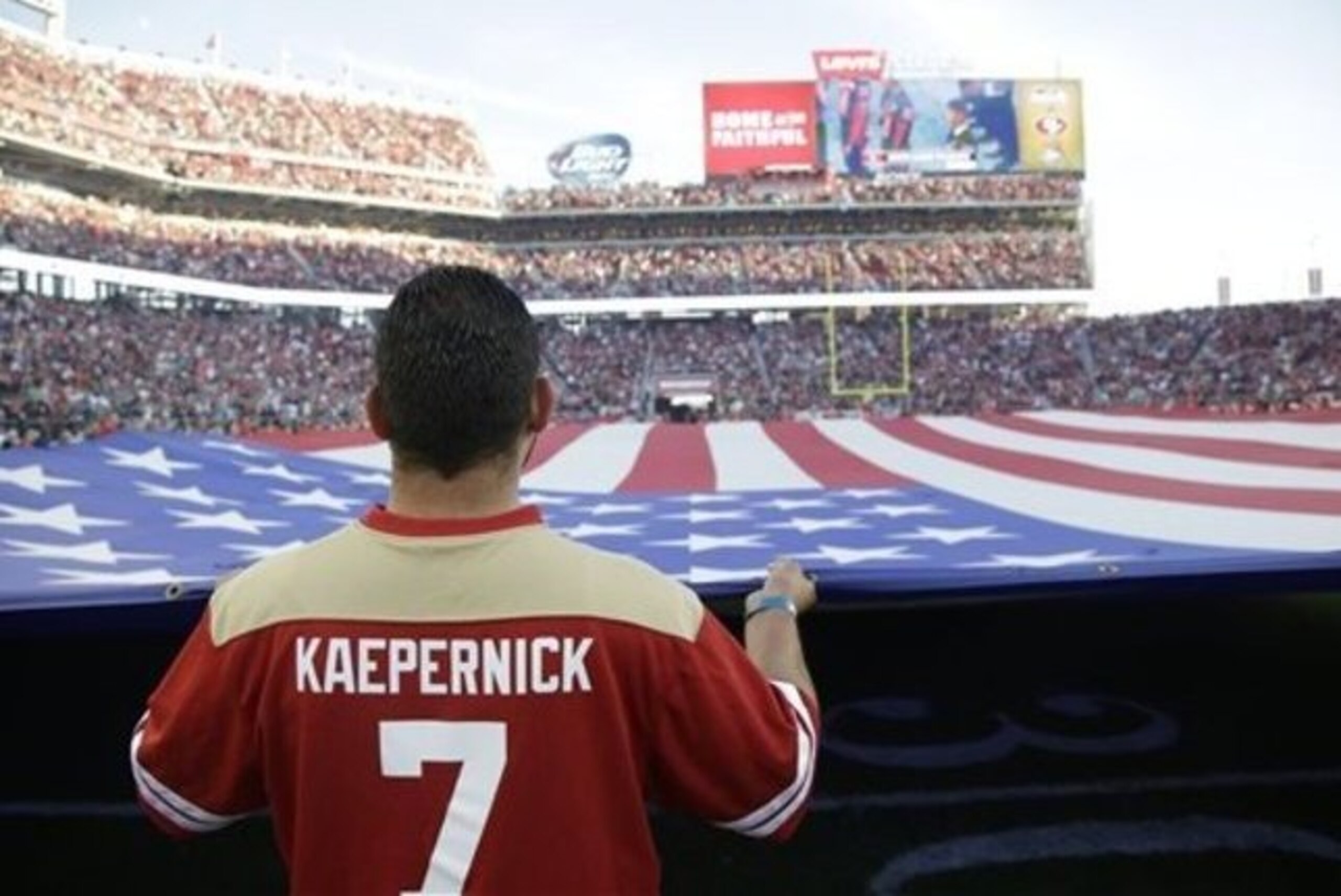
If the NFL offers some real opportunities for peaceful demonstration, it then preserves its right to set boundaries. Maybe players sit or raise their fists but don't walk around or disrupt others. They may line up or remain on the bench but not approach the crowd or engage other players. My freedom to swing my elbows ends at the tip of your nose, and the freedom to protest the national anthem slams into the "conduct detrimental" clause the moment an individual makes it difficult for other people to express themselves.
Yes, the NFL can and should do this. Employees in a work environment have limits upon our self-expression. Yelling at a customer might get you fired. Recklessly criticizing a sponsor could get me fired. There is one all-important caveat: Discipline should be the absolute final step in the process, not the first and only step.
There's a final takeaway from a few decades in the classroom that I can offer the NFL: Preserve the peace. The ultimate no-win scenario in school is a red-faced teacher screaming at a student to stand up while everyone from the principal to the police arrive to defuse the situation. That's a failure of leadership. Sometimes, you have to let the student sit for a day or two, explaining your expectations afterward and calling parents in the evening instead of acting like a sheriff. The NFL may have to allow some protests that make fans angry and sponsors nervous while the repercussions of Kaepernick's action settle in.
Bullying a protester into silence is not just un-American but ineffective. It's a perfect way to spawn thousands more protesters. Compassion and compromise allow protests to coalesce into movements, organizations and even political parties, their rough edges sanded down a little when grassroots protests become black-tie fundraisers.
Once they feel they have the power to really create change, those one-time rebels—still hungry for justice and fighting for their causes every single day—inevitably find themselves standing up for a minute before the game for the singing of the national anthem.
Mike Tanier covers the NFL for Bleacher Report. Follow him on Twitter @MikeTanier.

.jpg?w=2560 "LA Premiere of \"Chad Powers\"")




