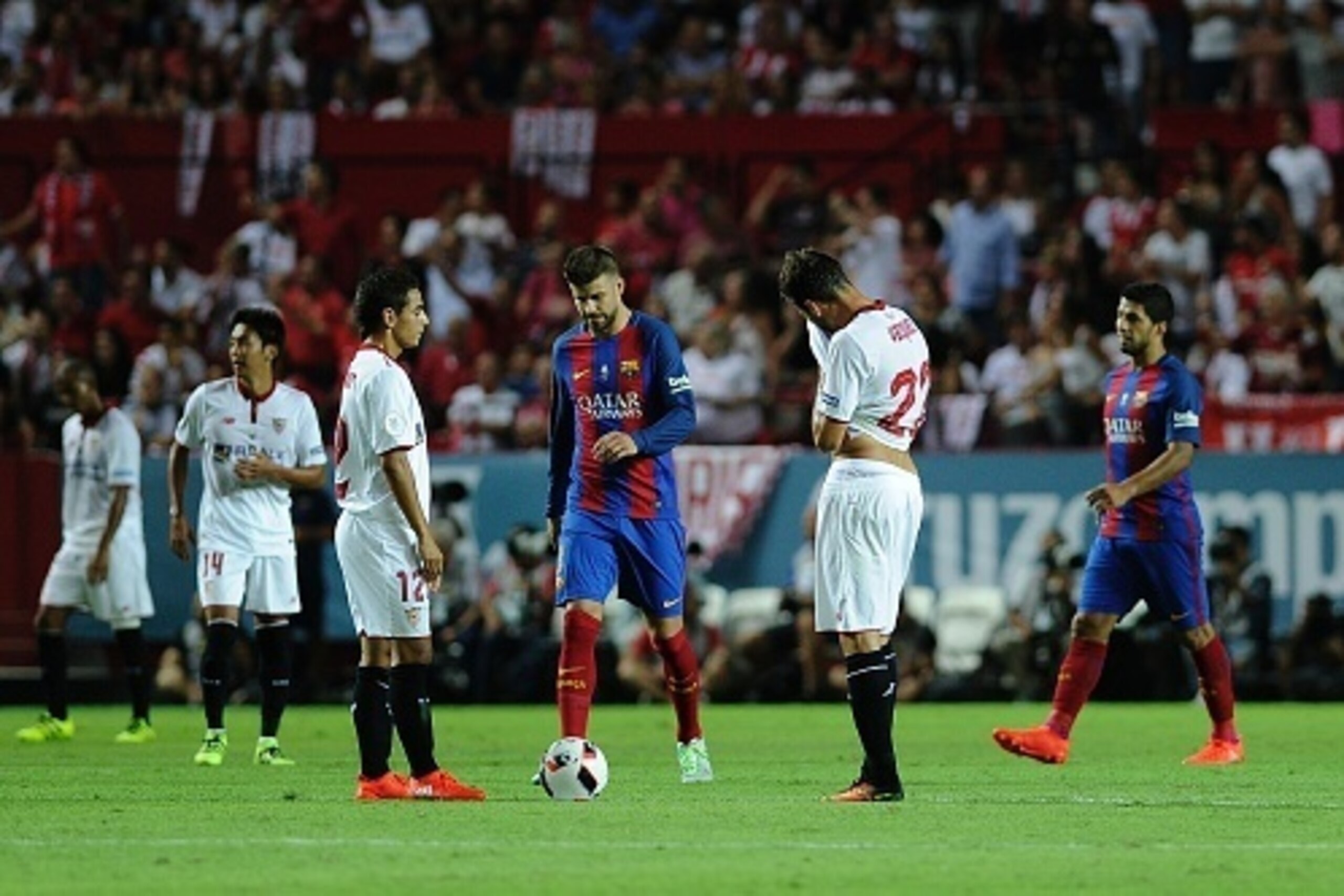
The August heat of Seville had been as sweltering as ever. With the clock approaching midnight, Sevilla's players—drenched in sweat, exhausted and barely moving—trudged off the pitch at the Ramon Sanchez Pizjuan. As manager Jorge Sampaoli had promised, his team had aggressively and boldly fought Barcelona with an unwavering vigour.
But Barcelona, in their own way, had fought back, and they were better at it.
It's an established trait that's too often overlooked.


In a raucous Pizjuan, Sunday night's first leg of the Spanish Super Cup had been a frenetic affair. Urged on by their demanding new boss and the ferocity in the stands, an ambitious Sevilla had regularly unsettled their glamorous guests. They'd pressed them, they'd harassed them and, at times, they'd seized the initiative from them.
And yet, by night's end, the result was all too familiar: Barcelona, 2-0.
"We showed a lot of enthusiasm, but we need to show more football than enthusiasm," said Sampaoli at the post-match press conference. "In the second half we ran more than we played. It activated the opponent's counter-attacks. These kinds of teams make you pay for mistakes. They deserved the victory."
Sampaoli is a compelling character, and already he's the point of greatest intrigue heading into the new La Liga season. But what he's attempting in Spain's south is a stylistic revolution, and what Sunday's first leg highlighted were both his own side's current limitations as well as the multidimensional strength of their opponents.
In the buildup, the Argentinian had spoken to the press of his team's intent, outlining the vision of his coaching: "The best way to defend against a team that likes to play well with the ball is trying to take the ball from them, keep possession and hurt them that way."
This is the Sampaoli philosophy. A disciple of Marcelo Bielsa, the former Chile boss speaks regularly of attacking and rebelling, of controlling one's own path and not accepting the status quo. It's a message that's constant, drilled into his players' minds over and over.
"We must be brave," he told reporters ahead of his team's clash with Real Madrid in the UEFA Super Cup. "I won't accept being dominated on the pitch."
Sevilla weren't on that occasion. And they weren't against Barcelona, either.
In an adventurous 4-1-3-2 on Sunday, the Andalusians played like an outfit desperate to reject the notion they were the "little" team. The defensive line was high; centre-back Gabriel Mercado was all force; Vitolo and Mariano were prominent down the right flank; and the midfield pressed with intent without the ball and attacked flat-out with it.
It was encouraging, but it was also chaotic. And that was the problem.
Though Sevilla demonstrated the intensity their manager demands, they were devoid of the clarity in thought that's also necessary. Challenges were rash, the system became messy, cohesion up front was nonexistent and Luciano Vietto was unconvincing.
Sampaoli's assessment, then, that "we ran more than we played" couldn't have been more accurate. Barcelona resisted and then picked them off, and Wednesday's second leg looks almost like a formality because of it.
This is the side of Barcelona that's too often glossed over.
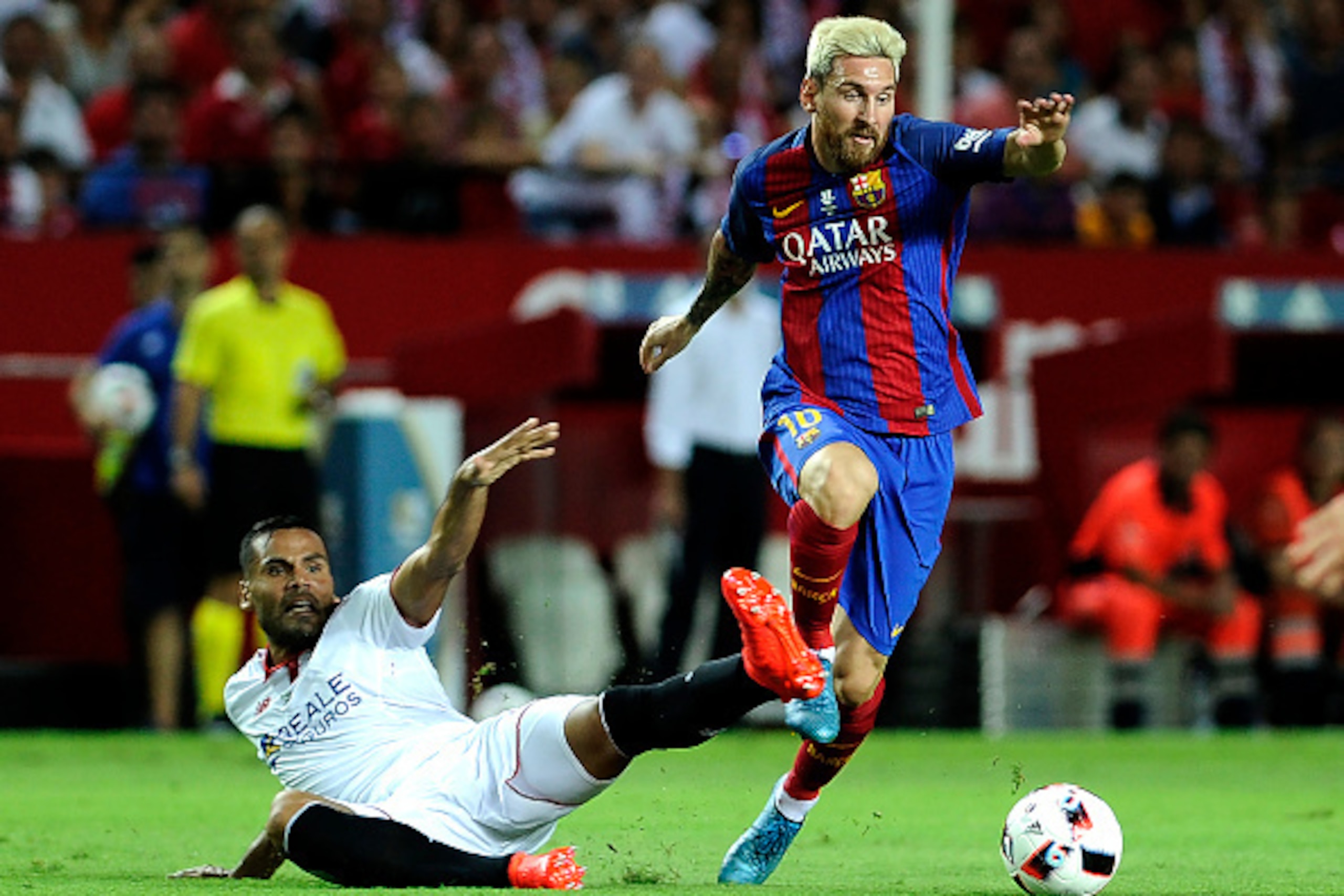
For almost a decade now, the world has marvelled at the Catalans' artistry and invention, and since the current incarnation's calibration fell into place in early 2015, the obsession that has grown for Lionel Messi, Luis Suarez and Neymar has obscured so much of what makes Barcelona, Barcelona.
Suddenly, it's only ever about them: the trio, the trident, the three amigos, MSN. Them again. Them over and over.
When Barcelona went to London last season to face Arsenal, the Telegraph referred to the arrival of them as "a kind of state visit." The Daily Mail's match report contained the names of only three Barcelona players. Yeah, those three.
Barcelona are so much more than that, and they showed it Sunday at the Pizjuan.
In Seville, Luis Enrique's men were taken out of their comfort zone, particularly in the first half as Sevilla charged at them. The hosts' pressuring of Gerard Pique and Javier Mascherano was fierce, and Sergio Busquets and Andres Iniesta were targeted in midfield, the latter limping off after a heavy collision.
In the face of such an approach, it's easy to wobble. Think of other big sides with a technical existence: In Spain, Real Madrid have often struggled structurally when harassed in recent years; in England, Manchester City and Arsenal have routinely succumbed to the same.
But Barcelona don't.
In a manner that was quietly characteristic, the Catalans responded to Sevilla on Sunday by meeting the physical challenge and reacting to it on the fly.
In the opening half, Enrique's men resisted Sevilla's force despite the questions that wrongly linger around their capacity for such. In doing so, their air of complete supremacy was temporarily dented, but rarely did they look genuinely threatened—and that's significant.
Then came the second half. Adjusting their collective stance, Barcelona sat a little deeper, luring a frenetic Sevilla into traps and exposing their systematic vulnerabilities. Lucas Digne was excellent at left-back. Denis Suarez stood out in midfield. Messi and Luis Suarez wreaked havoc on the break when possession was won.
From Barcelona, it was an exercise in using Sevilla's own pressure against them. Instead of recklessly fighting Sampaoli's bold outfit, they absorbed their threat, reacting with thought and clear heads to seize an advantage amid a volatile dynamic.
It was classic Barcelona.
Last season, Enrique's side took every blow their opponents' had but never succumbed to them. Their season wasn't perfect, as seasons never are, but when challenged, they never ceased competing. Thinking. Responding. Fighting. Looking for solutions.
Atletico Madrid threw everything at them in two battles in the league. Malaga and Levante went at them, too. So did Eibar. So did Villarreal at the Camp Nou. So did Sevilla in the Copa del Rey final.
But Barcelona won on each occasion anyway, just as they did on Sunday.
"Without the ball, they made it very complicated with man-marking. It was very hard to find passes," Enrique said to the press after the 2-0 win in Seville. "But in the second half we changed some things and the team did better, creating more opportunities and finding our forwards more easily."
This is the steeliness that Barcelona have. It's not one of brutality, nor is it one that sees them fight fire with fire. But there's a mental fortitude that's always there. The belief, the conviction: It never wavers.
Already, Barcelona have one hand on another trophy, and it's because they're about so much more than style.




.jpg?w=2560 "Latest Peyton-Colts Rumors")
.jpg?w=2560 "Chiefs, Steelers Eye WR Trades")