

How the NFL Cheats: Ball Tampering
Whether you call it breaking the rules, bending the rules or just getting creative with the rules, cheating has always been a part of the NFL and always will be. This is Part 5 in a Bleacher Report series on how NFL players and teams seek out some advantage, any advantage, over their competition. Part 1 was on the use of foreign substances, Part 2 on gaining an extra edge at home, Part 3 on what goes on at the bottom of a pile and Part 4 on spying on opponents.
Deflategate might finally be in the past when Tom Brady returns from his four-game suspension this weekend. If we're lucky, we may never hear another word about quarterbacks deflating, inflating or tampering with footballs in any other way.

.jpg?w=2560 "Rams Eagles Football")
.jpg?w=2560 "Falcons Saints Football")
But that won't mean they're not still doing it.
In so many ways, Brady is unlike any quarterback who has played the game. But in this one way, he is like virtually every quarterback who ever played the game: He likes his footballs a certain way.
For as long as footballs have had air valves, quarterbacks have been doing what they need to do to make those footballs feel right in their hands.
Packers quarterback Aaron Rodgers has admitted to liking his footballs overinflated. How do they get that way?
Jeff Blake, who played for the Jets, Bengals, Saints, Ravens, Cardinals, Eagles and Bears in a 13-year career, saw a lot of people doing the kinds of things to footballs that got Brady suspended.

Blake said in a 2015 interview with Nashville's WGFX-FM (via ESPN.com's Paul Kuharsky):
"I'm just going to let the cat of the bag, every team does it, every game, it has been since I played. Cause when you take the balls out of the bag, they are rock hard. And you can't feel the ball as well. It's too hard. Everybody puts the pin in and lets just enough air out of the ball that you can feel it a little better. But it's not the point to where it's flat. So I don't know what the big deal is. It's not something that's not been done for 20 years.
"
He is not the only quarterback to make such a statement. Don Majkowski, who played for the Packers, Colts and Lions in the 1980s and '90s, told Bleacher Report a similar story.
"There was a little tampering with taking the pins they inflate balls with and letting a little air out," he said. "There was some of that happening on the sidelines. It was just a little bit. The ball was probably still within legal weight. When it was zero degrees or minus 5 degrees and those balls were rock-hard, it helped to take a little bit of pressure out. In the cold, it was impossible to hold."
Matt Leinart, who was with three teams over a seven-year career, took to Twitter to announce:
Former Falcons, Lions, Bears and Chargers quarterback Erik Kramer preferred his football to have a certain feel.
"I did state my preference on how I would like the ball to be to the equipment guy," he said. "I preferred them a little softer; not a lot. Maybe a pound. At times they would feel very hard and slick."
The surface of the football also is an issue to many QBs.
"Some guys like the beads more prominent; some guys like it to feel like it's broken in a little," Browns quarterback Josh McCown said. "When you open a fresh box from Wilson, the beads can be thick or not. It's kind of luck of the draw. So quarterbacks go through it and get the ones they are most comfortable. Sometimes they come with that sheen on. Some guys like it. Others don't. It can have a little bit of a slick feel."
On the Tuesday before Super Bowl XXXVII, Buccaneers quarterback Brad Johnson and Raiders quarterback Rich Gannon met to film a milk commercial. The former Vikings teammates got around to talking about the balls that would be used for the game. They agreed they didn't want them to be slick.
"Back then, you weren't allowed to touch the balls before the game," Gannon said. "The Chargers were responsible for the balls because it was their stadium. We used their facility. After practice one day, I asked if I could see the balls. I was told no."
Johnson was more persistent. He told the Tampa Bay Times' Rick Stroud he tipped two ball boys $7,500 to break in 100 game balls. At the time, no one was allowed to work with footballs prior to the game. What Johnson did was not legal, but it also was not punished. His admission came 12 years after he broke the rules.

The standards for quarterbacks tinkering with footballs have clearly changed, one longtime NFL front office man said. "The league used to just call the team and say, 'Stop screwing with the football.' Then it was over. The league wasn't trying to catch somebody and punish them."
Prior to 1995, footballs were delivered to the stadium and not given to the teams until near game time.
"So many guys complained about the game balls during that period," Majkowski said. "The referees had the balls right until the minute we came out on the field, and they gave us brand-new balls right out of the box. The equipment guys had a couple minutes. They tried to rub them down with wet towels to get the film off. That was the extent of it. They were so slick it was ridiculous. Rock-hard. You couldn't even palm it and hold it. It would slip right out of your hand.
"It affected me a lot. People would ask, 'Why do you start off the first half so slow and then play so much better in the second half?' To be totally honest, it was because you had more control over the balls when they were broken in."
Some quarterbacks during the late 1980s and early 1990s subsequently began to wear gloves. Among them were Jim McMahon, Phil Simms and Randall Cunningham.
In 1995, a rule change allowed teams to prepare footballs to the satisfaction of quarterbacks, who were given clearance to toss footballs at the stadium in pregame warm-ups. That's when the funny business began. And it was kickers and punters who led the way.
In a 1999 story, Sports Illustrated's Jack McCallum reported Bears kicker Jeff Jaeger and punter Todd Sauerbrun would overinflate, underinflate, then overinflate footballs, then put them in a sack with wet towels and run them through a dryer.
"I played for the Raiders with Jeff Gossett, and he was a baseball guy," Jaeger said recently. "Baseball players rub balls up with mud and everything. They are never playing with a brand-new ball. So why should we? In pregame, we would talk with other kickers. What do you do? We'd put them in the dryer with wet towels to break down the wax on them, break them in so they had a little bit of give."
Jaeger noticed that in some stadiums, the footballs were overinflated.
"The biggest example I would say was Minnesota," he said. "Mitch Berger was a strong guy, but holy smokes. He was kicking them up in the stands on kickoffs. In some of those domes, they played with the same balls for consecutive games. An old ball gets kind of rubbery, so it has a lot more give. From my perspective, every time you went to play there, it was great."
In 1997, the NFL instituted a $10,000 fine for tampering with the football. It was increased to $25,000 the following year.
Berger set an NFL record for touchbacks with 40 in 1998. Giants general manager George Young, who was co-chairman of the competition committee, had seen enough. He called for a more drastic change.
So in 1999, the NFL introduced the K-ball. The 12 special balls were sealed in boxes with anti-tampering tape and delivered to the officials' rooms in stadiums shortly before game time.
"When they brought out the K-ball, it was like, 'Oh my God,'" Jaeger said. "At first they wouldn't even let you touch them. It was straight out of the box. It had that wax on it, hard as a rock, no give."
The leaguewide field-goal percentage dipped from 79.6 in 1998 to 77.7 in 1999.
A series of tweaks to the rulebook helped kickers get their grooves back. In 2002, the home team equipment staff was allowed to help prepare the K-balls under the jurisdiction of officials. In 2005, a representative from the visiting team was allowed to get involved in the process. In 2007, the teams were given more time—two hours and 15 minutes—to get the balls ready, but they'd have to do it with help from a "K-ball coordinator."
Rules were relaxed for quarterbacks as well. In 2006, teams were allowed to prepare and test 12 footballs during the week, and use those footballs on game day once approved by officials.
"You play catch with them for the week and get a feel for how it's going to be," McCown said.
According to a 2013 story by the New York Times' Bill Pennington, the Giants have an elaborate process to prepare balls to Eli Manning's liking that includes brushing the ball for 45 minutes, soaking the ball with a wet towel, brushing it a second time, then scrubbing it on an electric spin wheel.
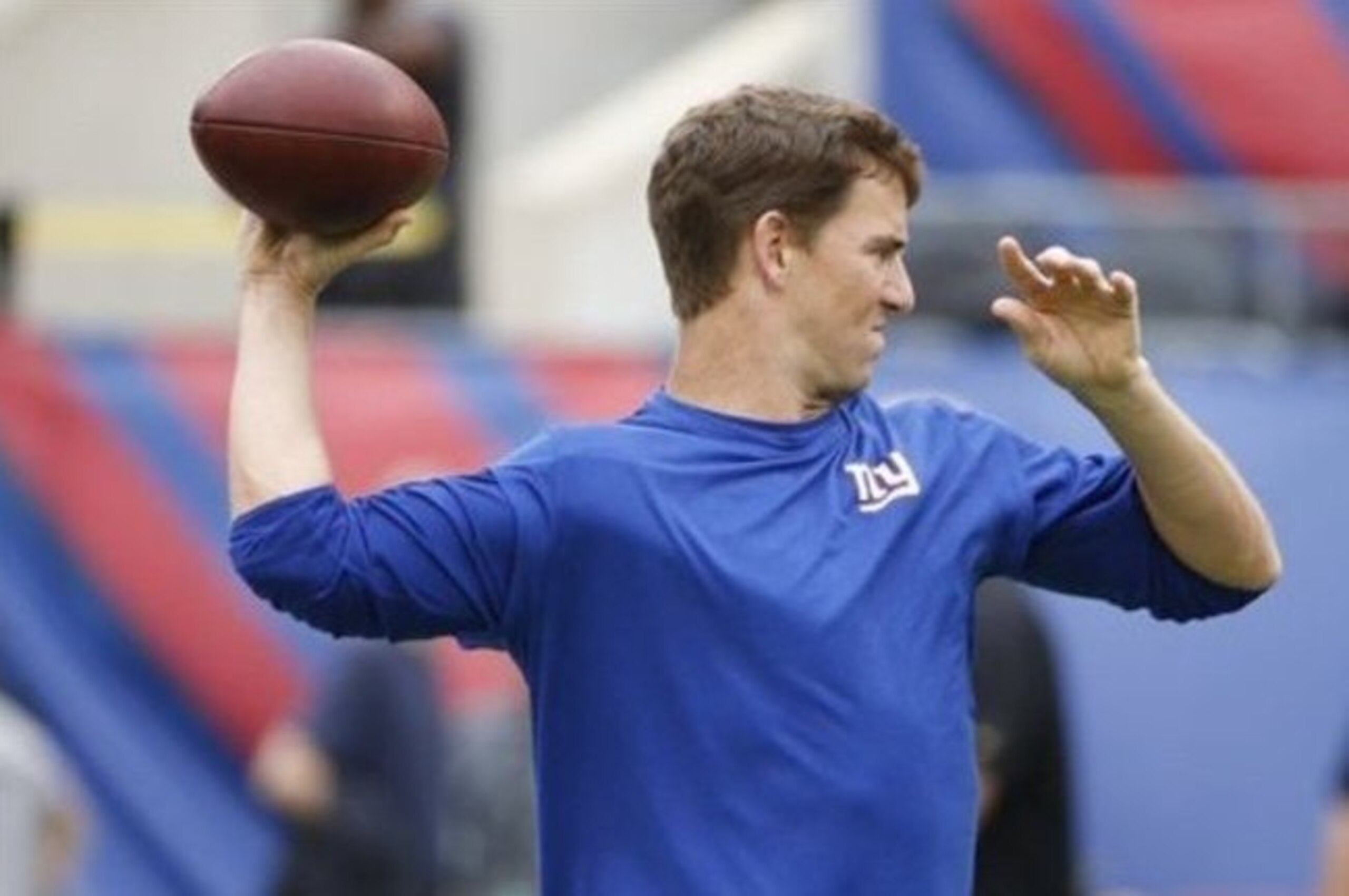
The teams are not supposed to use the balls for practice, but there is no practical way to enforce that.
Now and then, officials do disallow footballs at game time if they look too worked over. But mostly, the way the NFL sees it, it's good for business for quarterbacks and kickers to like the feel of their footballs.
As long as they don't cross the PSI line.
Dan Pompei covers the NFL for Bleacher Report. Follow him on Twitter: @danpompei.
.jpg?w=2560 "Texans-Mixon Released Football")
.jpg?w=2560 "Commanders Eagles Football")
.jpg?w=2560 "Grading WWE Raw 🔠")



