.jpg?w=2560 "NFL Draft Football")

Making Sense of 2026 NFL Draft's Worst Picks
Not every NFL draft pick is a success. Truthfully, the majority won't be. While draft weekend is filled with hope and positivity, reality eventually tells a different story.
Bleacher Report grades every single pick throughout the entirety of draft weekend. Not every selection is deserving of an A or B. In order to grade properly, the entire scale must be used and some picks won't be well-received.
Obviously, grading is subjective and a lot has to play out over the course of the next few years. But instant-reaction grades are based on situational awareness, with an understanding of where specific teams are and how the event itself is unfolding.
An NFL front office's job goes beyond just making picks. It must understand value relative to what others are doing and how to manipulate the draft to its benefit. The Baltimore Ravens and Philadelphia Eagles are impeccable in this regard. Others fail this part of the test time and time again.
Five particular selections received an outright F or D during this year's event and could be viewed as the worst from the entire weekend. At this point, it's more fruitful to try and figure out why those organizations made those choices at those points and see how those players can help them in the long run.
Miami Dolphins: OL Kadyn Proctor, Alabama
1 of 6.jpg?w=2560 "NFL Draft Football")
The Issue: Situationally, the Miami Dolphins failed to provide their roster with the best possible outcome by trading down and handing the Dallas Cowboys this year's No. 1 overall prospect, Caleb Downs, instead of taking the defensive back for themselves.
How to Make it Work: Incoming offensive lineman Kadyn Proctor must play to his enormous potential on a consistent basis, particularly at a premium position.
The Dolphins entered this year's draft as the league's worst team on paper. They were set to have the class' best prospect regardless of position fall into their lap with this year's 11th overall pick.
Instead, they flipped picks with the Dallas Cowboys in order for Jerry Jones to make the draft's best standalone selection. Miami did receive a pair of fifth-round picks in return, even though it already owned seven picks among the first 100 selections and didn't need extra assets.
To make matters worse, Miami traded back into the first round and surrendered a higher pick than those acquired to take a different defensive back.
Despite everything, Proctor has the physical capabilities to eventually validate the Dolphins' decision. The Alabama left tackle graded as a top-five pick entering the 2025 campaign. However, he struggled through some inconsistency, particularly earlier in the campaign. He recommitted himself midseason and played well enough down the stretch to earn first-team All-American honors.
Few offensive-line prospects in history have had Proctor's combination of size (6'7", 352 lbs) and movement skills. In the 20-year-old's case, he needs to remain committed, continue to hone his technique and keep his weight down.
"He's unique. He's rare," general manager Jon-Eric Sullivan told reporters. "He's a 350-pound man with unique athletic traits that can play four spots across the line of scrimmage—left tackle, right tackle, both guards…We brought him in on a 30 visit. I could feel his conviction and his desire to be a good football player and do the things that he needs to do to be the best pro that he can be. All I can tell you is that there wasn't another one in the draft like him, period."
Initially, the Dolphins plan to cross-train Proctor and start him at left guard. It's not unusual practice to move a tackle inside for a year or two to protect him and help in his development. Plus, Miami continues to evaluate incumbent left tackle Patrick Paul, who has two years remaining on his rookie contract.
In the end, Proctor has franchise left tackle written all over him, in which positional value would trump selecting a potential All-Pro safety, like Downs. If that scenario doesn't eventually materialize, the Dolphins outright blew this pick.
Minnesota Vikings: DL Caleb Banks, Florida
2 of 6.jpg?w=2560 "Vikings Draft Football")
The Issue: Caleb Banks is a massive and mega-talented defensive tackle, who barely played during his final season on campus and has significant concerns over previous foot injuries.
How to Make it Work: A healthy career and continued progression from Banks is the only way to validate this selection.
Fifteen years ago, the Cleveland Browns chose Phil Taylor with the 21st overall pick in the 2011 draft class. What does that have to do with the Minnesota Vikings? Prior to Caleb Banks' selection in this year's first-round, Taylor was the last oversized, talented defensive tackle chosen within the same range who also had significant concerns over previous foot issues.
Taylor played five seasons in the NFL before his career ended. Typically, foot issues don't disappear when it comes to men over 300 pounds, who require the power to drive through the ground and displace other 300-pound men.
But the Vikings thought Banks was worth the investment. To be fair, Banks was projected as first-round talent entering the 2025 campaign. Unfortunately, the 6'6", 327-pound defender played in only three games due a broken bone in his foot.
The in-season injury wasn't a standalone incident, either.
"Banks has struggled with foot injuries over multiple seasons," Terrance Biggs of Pro Football Network noted. "In the last game of Florida's 2023 season, he suffered a foot injury that sidelined him for the Gasparilla Bowl and spring practices leading into 2024.
"After returning, he dealt with another foot issue, missing the first two games of the 2024 season. Upon his return, he again left the LSU game due to another foot injury that required surgery, missing the next seven games before returning for the final two weeks of the season."
Once again, Banks broke a bone in his foot at this year's NFL Scouting Combine. The Vikings still pulled the trigger, because Minnesota's decision-makers felt they had a good grasp on Banks' health and his talent was well-worth the first-round investment.
"I think we have the best doctors in the country, if not the world," interim general manager Rob Brzezinski said, "and we have complete confidence in them. There's nothing without risk in any player you select, but we feel very good about where Caleb will be when it's time to go to training camp. And so we're comfortable with the injury."
On the flip side, Brzezinski added: "You don't find guys like this. He's got all the ability in the world. I told him, I don't even think he realizes how good he can be. And with our coaching staff and the work he's going to put in, I think the sky's the limit."
First-round picks tend to be a 50-50 proposal even in optimal situations. Banks has an added strike against him before walking into Minnesota's building. The Vikings must now cross their fingers and hope the defensive lineman can stay on the field.
The pick was the type of high-risk, high-reward opportunity multiple other franchises wouldn't have considered, particularly among the top-20 selections.
Jacksonville Jaguars: TE Nate Boerkircher, Texas A&M
3 of 6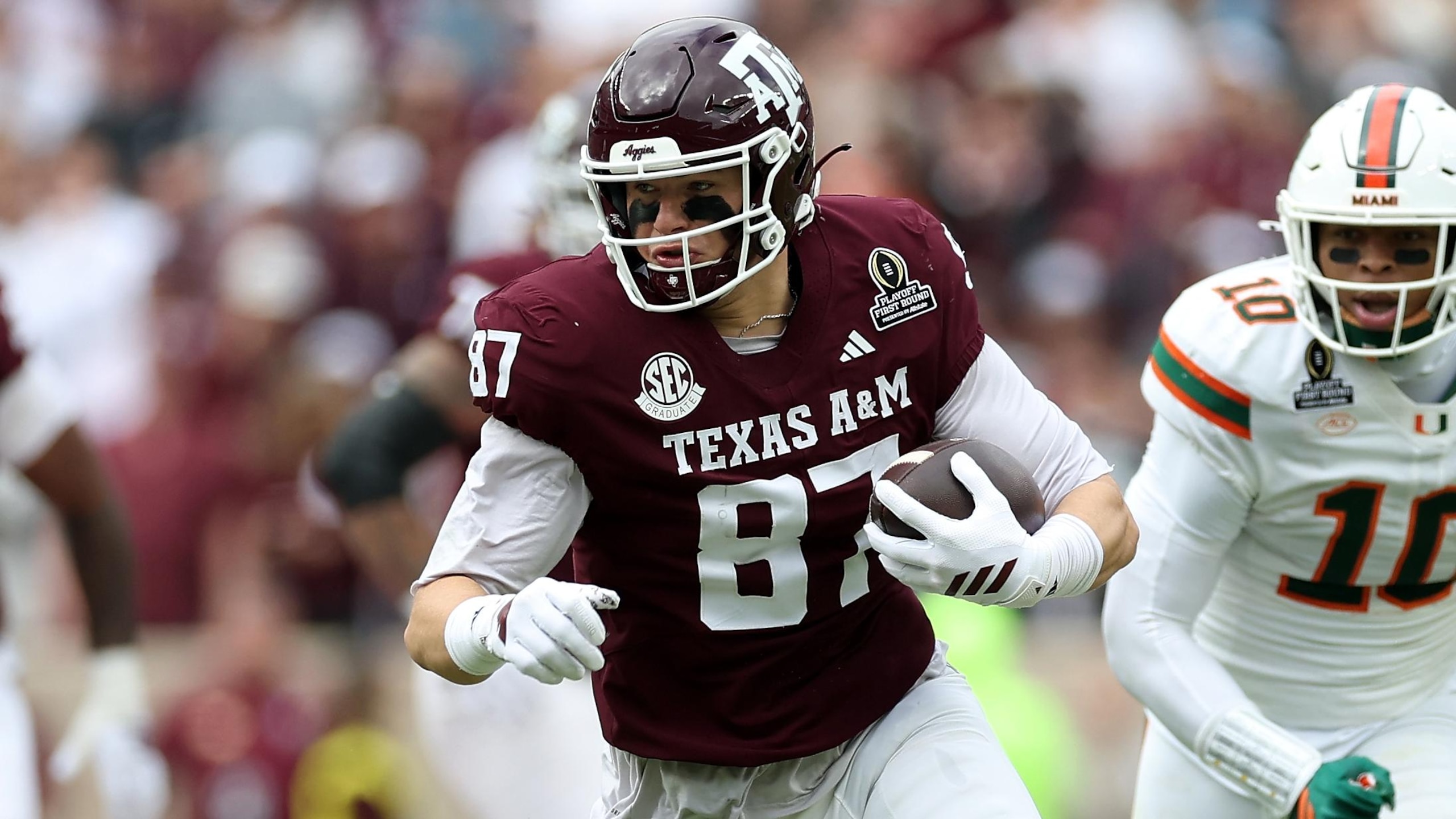
The Issue: The Jacksonville Jaguars spent their initial draft pick of the 2026 class on an overaged, blocking tight end who produced next-to-nothing as a receiver.
How to Make it Work: Nate Boerkircher needs to be more than a culture-setter; he must produce and show far more in both phases than he did at the collegiate level, while doing so from the onset of his professional career.
Many were left stunned when the Jaguars chose Boerkircher with the 56th overall pick—the franchise's initial draft pick after trading away its first-round selection as part of the previous year's Travis Hunter deal—and made him the class' TE3.
Prior to that point, he wasn't even viewed as a Day 2 possibility. The B/R Scouting Department graded him as the 185th overall prospect and the class' 17th-best tight end.
An argument can definitely be made that the NFL's continued evolution is trending back to heavier reliance on 12- and even 13-personnel, where teams want multiple tight ends on the field and require those who can play in-line and block. This transition was seen throughout the class and should be taken into account.
For the Jaguars, they fully acknowledged the shifting landscape and their own plans to move forward with heavier and more physical personnel.
"Ultimately, we were jacked to end up with a player that we all have a ton of appreciation for, knowing that as we look forward to the next evolution of the Jacksonville Jaguars and our team in 2026; it's going to involve heavier tight end groupings that can tap into the current trend in the NFL, and Nate offers that," general manager James Gladstone told reporters.
Here's the thing: The response comes across as playing catch-up instead of being trendsetters. Furthermore, the heavier personnel groupings become limited if those on the field aren't contributing in multiple areas.
In Boerkircher's case, 38 catches in five collegiate seasons, even 19 during his final campaign, isn't good enough. He must emerge as more of a threat in the passing game for the Jags offense not to become predictable when he's on the field.
Furthermore, Boerkircher will turn 25 before he plays in his first NFL game. Other predominant blocking tight ends among this year's class were more productive and younger.
So, the Jags' new Y Option has a major uphill climb to be the type of player Jacksonville's decision-makers think can fit in perfectly with the team's culture, help establish a more physical brand of football, improve as a pass-catcher and play well enough for everyone to forget the 18 other tight ends that were selected after him.
.png?w=2560)
New England Patriots: QB Behren Morton, Texas Tech
4 of 6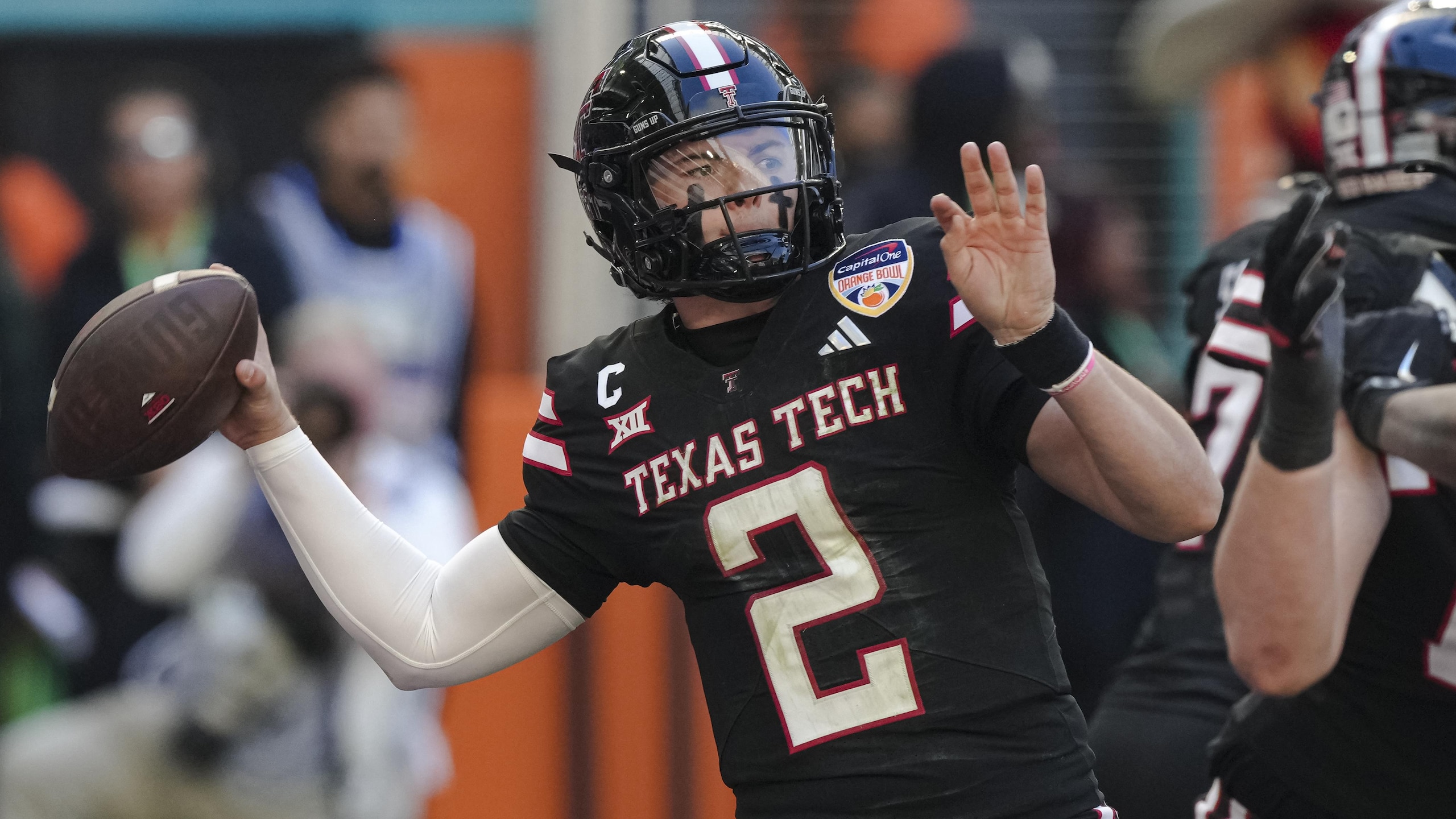
The Issue: The New England Patriots spent a seventh-round pick on a backup quarterback option with little physical upside when other, better possibilities remained on the board.
How to Make it Work: Behren Morton earns his spot as New England's QB2 and becomes Drake Maye's long-term backup.
A seventh-round draft pick doesn't seem to quite fit alongside the previous three draft picks that received an F much earlier in the process. Morton's addition to New England's roster became problematic, because the Patriots were clearly taking a flyer on a player they liked even though he presents little upside for the organization.
The Patriots could have still addressed quarterback and gotten someone else with more growth potential to eventually become the team's primary backup quarterback and spot-starter as insurance if/when Maye suffers an injury.
Again, this inclusion needs to be contextualized, because it's not a significant investment as one of the draft's final 25 picks. Morton may not even make the Patriots' active roster, though that approach could be seen as a waste of a selection. The Texas Tech product wasn't even graded among the B/R Scouting Department's Top 300 prospects.
The knocks on Morton's game are significant.
"Lacks high-end arm talent and strength," B/R scout Dame Parson wrote. "Morton isn't an anticipatory thrower; he tends to be a 'wait and see' passer waiting for his receiver to break and clear the defensive back.
"The fifth-year senior signal caller is easily confused by post-snap coverage changes. He is indecisive in the pocket and holds on to the football for too long, allowing defensive line pressure to get home. ... Over nearly three years, the Red Raiders' QB has undergone shoulder surgery, suffered multiple lower-leg injuries, battled a tricep strain, and has been sidelined for concussion protocol."
Clearly, the Patriots saw things differently.
"I mean, that's the first thing that stands out, is the toughness," executive vice president of player personnel Eliot Wolf told reporters. "He played through a lot of stuff. He's been beat up, but he's played through a lot of stuff. He's got a live arm. He's really smart. He's been productive. He's played a lot of football, and he's a really good fit for the type of offense that we want to run."
LSU's Garrett Nussmeier, who also played through injury in 2025, was also available and showed far more high-level play and talent throughout his collegiate career.
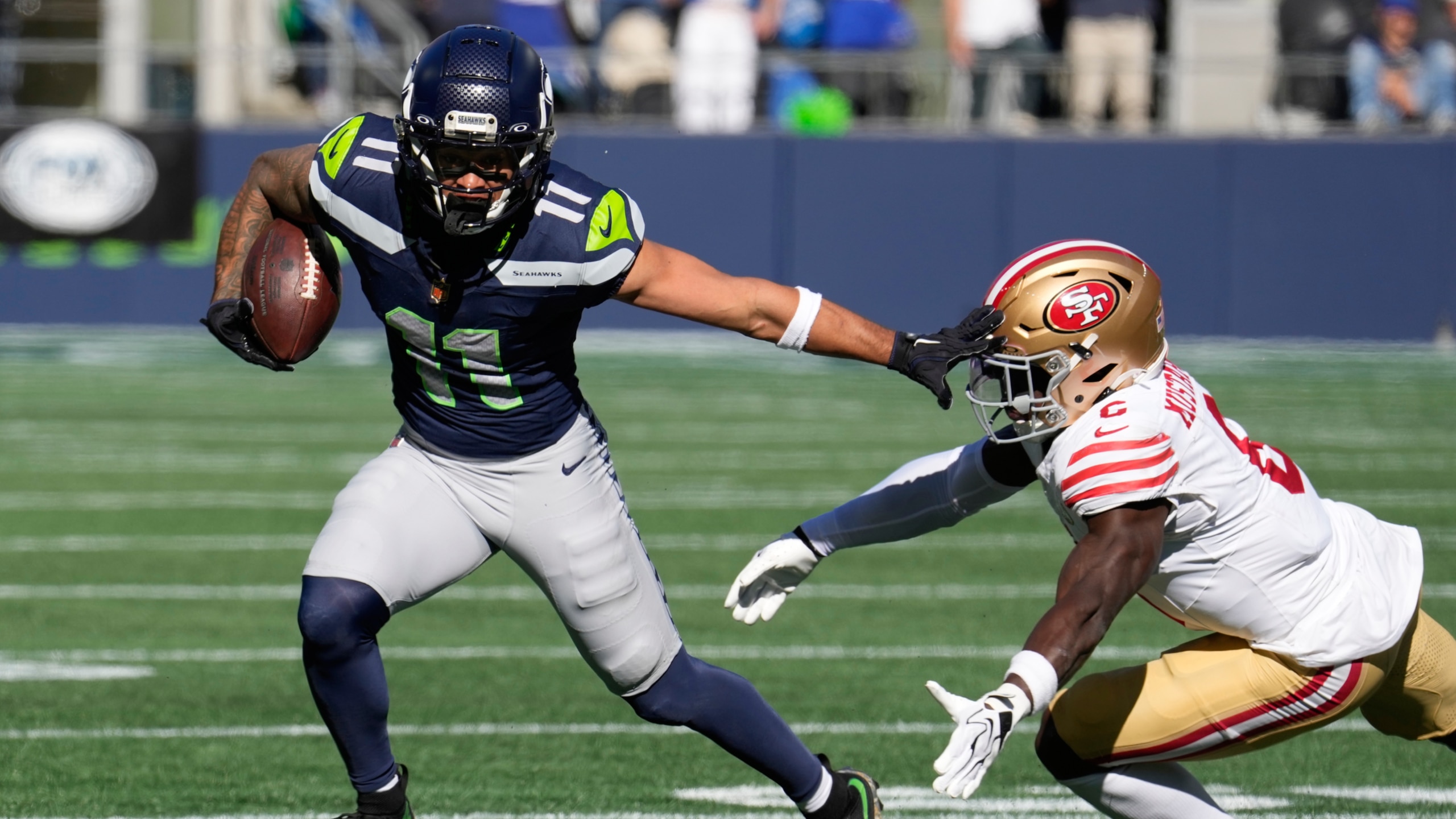
Chicago Bears: WR Zavion Thomas, LSU
5 of 6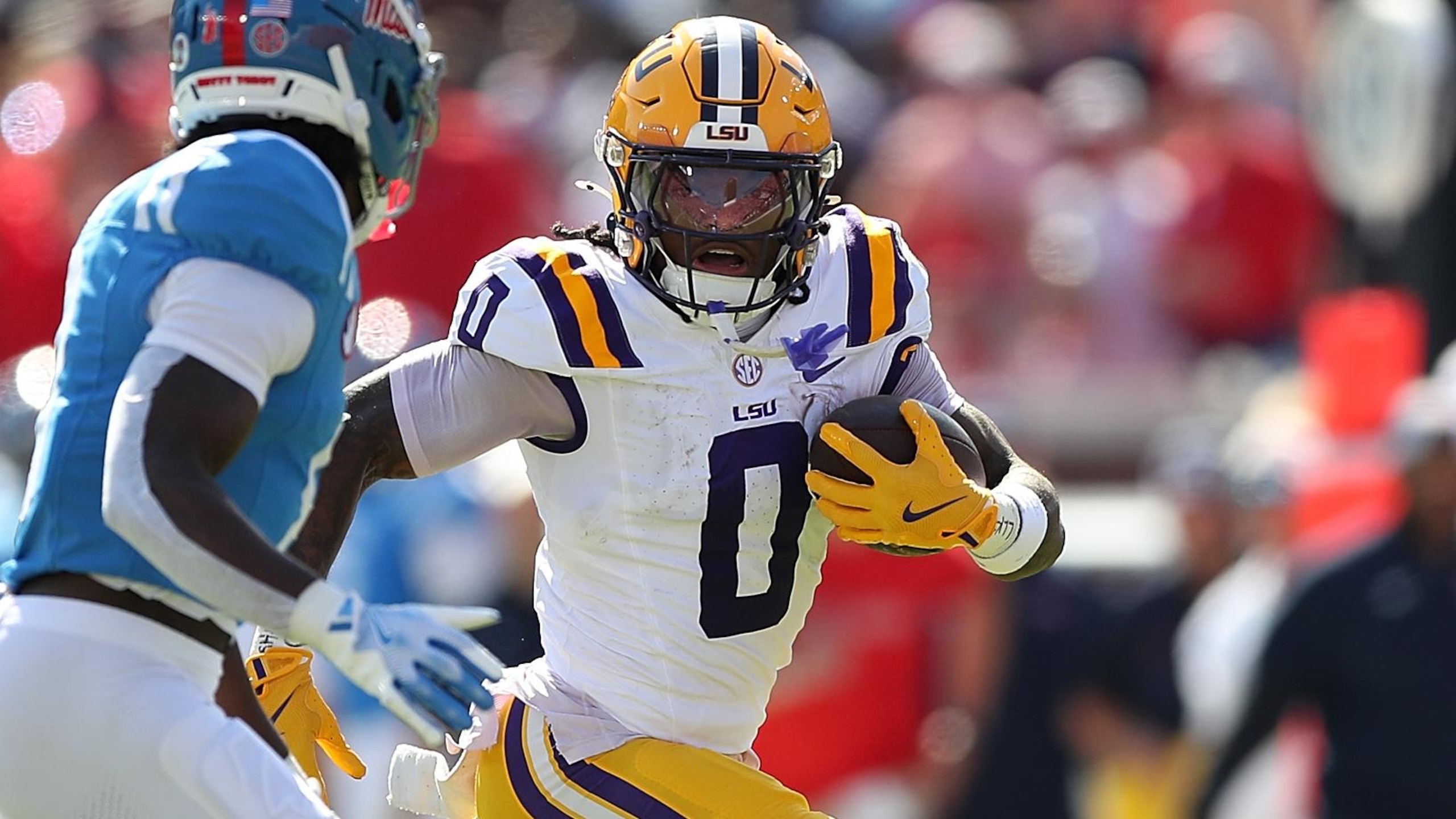
The Issue: The Chicago Bears had pressing needs along the defensive front and reached for a developmental wide receiver on Day 2 that probably won't do much in Year 1.
How to Make it Work: Zavion Thomas can step up and immediately contribute on special teams, while showing enough growth and understanding of the offense to start stealing wide receiver reps as a rookie, then continue that development into the following seasons.
The NFL falls in love with speed, even if that speed isn't accompanied by a well-rounded skill set.
Thomas has speed to burn after posting an official 4.28-second 40-yard dash at this year's NFL Scouting Combine. At the same time, the LSU product never posted more than 503 receiving yards in any single season.
As of now, the Mississippi State transfer is a developmental project. Even so, the Chicago Bears spent a third-round pick to claim the wide receiver. The B/R Scouting Department had Thomas graded as the class' 250th-best prospect.
"Rounded intermediate route breaks," Parson wrote. "Inconsistent route sharpness for optimal separation. Underwhelming collegiate production. Vertical stem lacks urgency; doesn't quickly close the space between him and the cornerback."
Straight-line speed can be weaponized, but it usually requires some variance to exploit a defense. Otherwise, opponents know what to expect and can easily key on a speedster's limited skill set.
The Bears even acknowledged that Thomas has plenty of work before getting on the field, at least offensively.
"So this is a tough system," general manager Ryan Poles told reporters. "It's going to be a challenge for him to break through quickly (on offense). But we're going to open that competition up for all of these guys coming in. I think we feel really good about the return ability that he has. And then he'll be with the rest of the guys to learn the offense, how does he do that, how fast does he come along? We all talk to our receivers and it's a challenging system."
To be fair, Thomas has extensive return experience, with an opportunity to contribute on special teams early in his career. But Kaden Wetjen was the best returner in this year's class and didn't hear his name called until 32 picks later.
Furthermore, the Bears waited three more rounds before adding anything to their defensive front despite obvious needs. Michigan's Jaishawn Barham, Florida State's Darrell Jackson Jr., Southeastern Louisiana's Kaleb Proctor and Oklahoma's Gracen Holton were all chosen during the next 20 picks.
Thomas must surprise and contribute something more than just special teams sooner rather than later. If not, his selection will not be well-received for a franchise that had specific needs to help elevate an ascending squad.
Tennessee Titans: WR Carnell Tate, Ohio State
6 of 6.jpg?w=2560 "NFL Draft Football")
The Issue: The Tennessee Titans passed on elite talent in order to address a specific need.
How to Make it Work: Carnell Tate must develop into a legitimate No. 1 target and help elevate Cam Ward toward franchise quarterback status.
The Titans' decision to select Tate with this year's fourth overall pick was the class' first head-scratcher. The selection wasn't anywhere near as poor as those already mentioned, but it should be questioned to some degree based on how the board fell and the talent that remained available.
Tennessee definitely needed a wide receiver to help Ward in the quarterback's second season. Generally speaking, Tate was expected to be the first wide receiver selected, which he was. He now enters a situation where he will be fed touches and potentially thrive as the focal point of the Titans' passing attack.
"Well, he's a bigger, vertical guy," general manager Mike Borgonzi told reporters. "The route running, very efficient, his route running. I thought he had exceptional ball skills to be able to track the footballs, catch radius downfield. I think he's going to be a great fit in this offense. And you know, he's 20 years old last year playing at Ohio State. He's a young kid. ... But Tate has the ability to play big downfield. That's the one thing, all these contested catches downfield, his ability to go up and catch the football, contort his body in certain ways. I think it's going to be great for Cam (Ward)."
It's difficult to dispute anything that Borgonzi stated and Ward could have easily been the selection of the New York Giants or Cleveland Browns (before trading down) over the following two picks.
Even so, Tate was not graded as an elite prospect. He ranked 10th overall on the B/R Scouting Department's final draft board. Many felt Arizona State's Jordyn Tyson was the better wide receiver prospect if he received a clean medical evaluation. Furthermore, the wide receiver class was deep once again, with 12 selected during the draft's second day.
Whereas, the Titans did pass on three of Tate's former collegiate teammates—Arvell Reese, Sonny Styles and Caleb Downs—who were all graded higher to address a specific need and were almost universally viewed as elite prospects in this particular class.
Tennessee could have given Robert Saleh his version of Fred Warner in Sonny Styles, then the team could have been even more aggressive trading back into the first round for Omar Cooper Jr. or waited and chose someone like Denzel Boston, Chris Brazzell II or Ted Hurst a little later in the process.
For Tate, his biggest obstacle may be proving his worth as a legitimate NFL WR1 after never serving in that role at the collegiate level. Ohio State's embarrassment of riches at the wide receiver position has previously produced those who made a similar leap in status. Tate now needs to prove it on the field.
.jpg?w=2560 "Bills Rams Football")

.jpg?w=2560 "Grading WWE Raw 🔠")
.jpg?w=2560 "Monday Night Raw Blog 🔴")