


It was late, it was hot and everyone was exhausted, but Real Madrid had won and that was all that mattered. The how was irrelevant, for now at least.
Down on the San Siro pitch, soaked in sweat and with euphoria temporarily extinguishing the ache of limbs, Madrid's players threw Zinedine Zidane into the air. As a manager, the Frenchman had secured the Champions League at the first attempt, propelling Madrid to their 11th European Cup overall, his revival of their season after taking over midway through complete.
On the surface, this was the essence of Madrid: stars, leaders, grandeur, glory, style, cups. And yet, in a way, it wasn't quite.

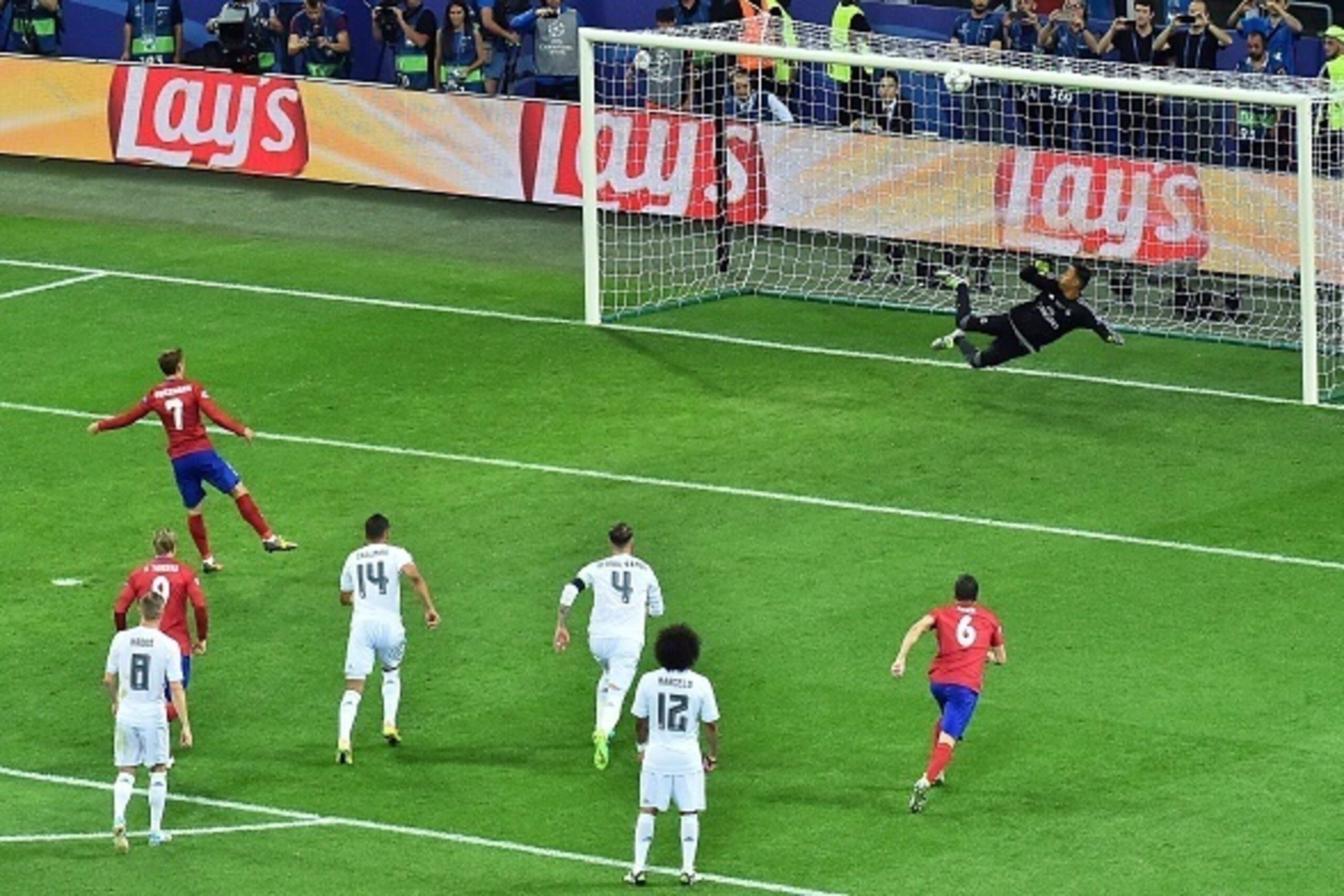
This had been a curious performance from Europe's traditional kings. They'd started in a blaze and had gone ahead early, but just when it had looked as though they were ready to romp to the line, they became conservative and reactive.
In the second half, Atletico Madrid established control and then dominated: The ball belonged mainly to them, Antoine Griezmann missed a penalty and Yannick Carrasco levelled things up.
Barely moving by the end, Zidane's men made it to penalties to win it. But to get there, they'd conceded more than 52 percent possession to Atletico, per WhoScored.com, sitting and waiting for Diego Simeone's men, counter-attacking the counter-attackers.
Who had seen that coming? In the two previous rounds, Atletico had recorded possession figures of 26 percent, 23 percent, 26 percent and 27 percent in four straight clashes with Barcelona and Bayern Munich. Based on that, no one had expected them to dictate terms to Real.
Except Simeone and his players.
"Casemiro offers them defensive steel," the Argentinian had said at his club's open media day a week earlier. "I expect they'll play on the counter, as they have been doing up until now in the competition." Midfielder Koke had said the same: "[Real Madrid's] strengths are in defence and on the counterattack. They've greatly improved with Casemiro in midfield."
Such comments could have been interpreted as a challenge from Atleti, daring Real to go for it and expose themselves. But there was also something striking in the observations: Atleti saw Real as functional rather than explosive; they spoke of a change in their cross-city rivals; and in Zidane, Simeone saw a pragmatist rather than a stylist.
And in Milan, that pragmatism won—which was the only thing that mattered.
But will that change now?
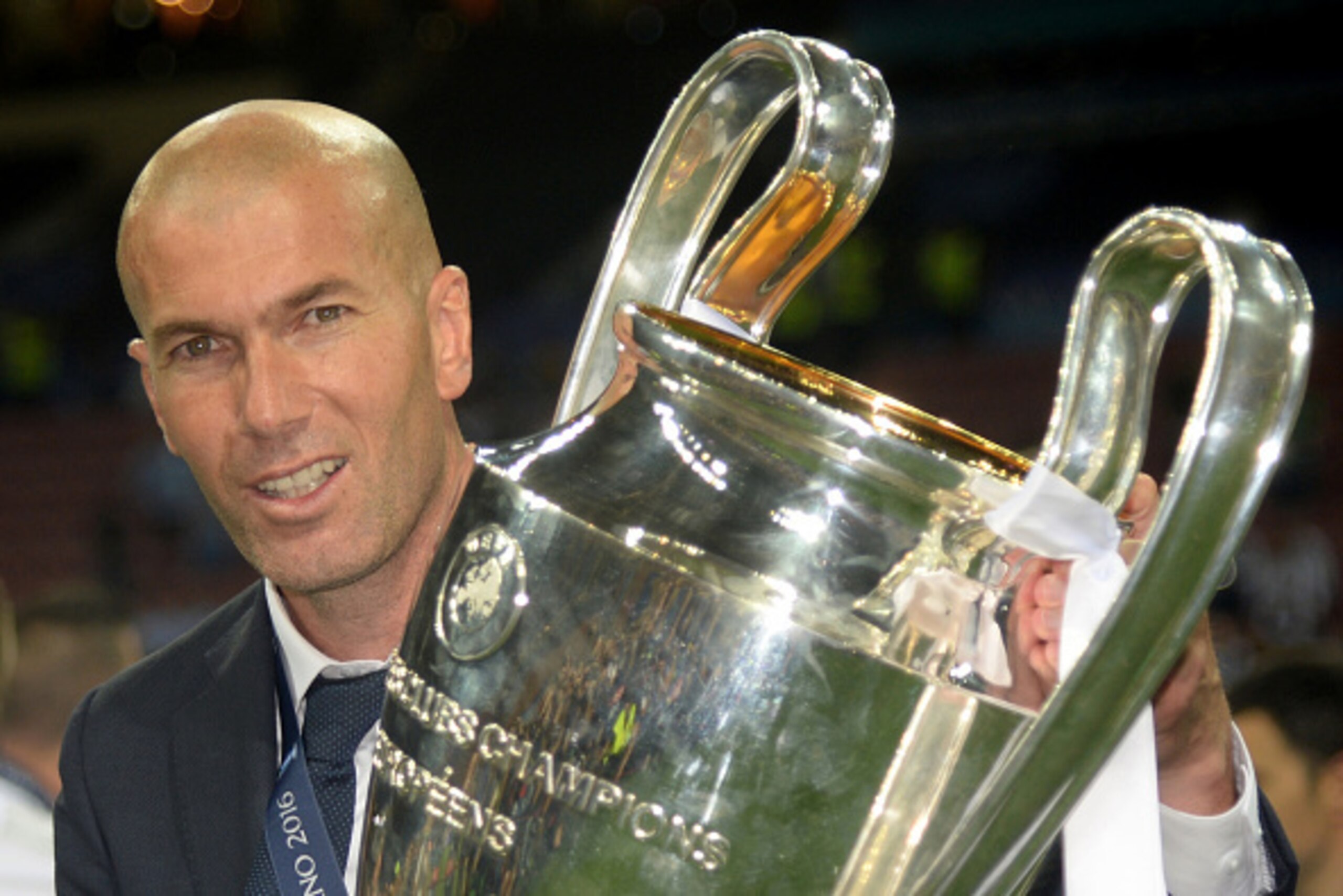
As Zidane prepares to embark on his second season in charge of Madrid, the question of style is an intriguing one.
Like Europe's other behemoths, Real Madrid is a club at which history is expected to be upheld. How you win is as an important as winning itself, and there's an obligation to dominate and to attack, to inspire and to amaze.
Recent managers will attest to that. Vicente del Bosque was sacked in 2003 for not being dynamic enough in character despite having just lifted the league title. Fabio Capello was discarded four years later because of his conservatism, he too a league winner that year. More recently, style also played a role in the downfalls of Jose Mourinho and Rafa Benitez at the Bernabeu; it wasn't the sole reason, but it was a reason.
The interesting aspect here, then, is whether this applies to Zidane. Will he be stylish? Does he need to be? Are the rules different for him?
At the time of the club icon's appointment in January, there was an anticipation that the essence of Zidane the player would become the essence of Zidane the manager. With a Galactico managing Galacticos, one envisaged Madrid exuding a cocktail of power and grace, but the reality was different.
After a blazing start under the Frenchman, Madrid sacrificed a degree of expression for much-needed balance. Following meetings with Atletico and Roma in late February and early March—games in which Real's flawed structure was exposed—Zidane oversaw a significant shift in emphasis.
In midfield, the defensive Casemiro was introduced, marginalising the creative James Rodriguez and Isco. From the bench, the hard running and discipline of Lucas Vazquez became the manager's go-to alternative. The team's shape also became more of a 4-1-4-1—positioned deeper, Casemiro withdrawn and Gareth Bale and Cristiano Ronaldo starting from slightly further back.
Following that chaotic affair with Roma, Madrid were different: They were reactive against Las Palmas; they waited for Barcelona instead of going for them; they were notably patient during the "remontada" against Wolfsburg; they showed Manchester City significant respect; and they opted for caution against Atletico.
Throughout, Zidane spoke regularly of resilience, of the importance of work, of "suffering." The sense of the collective pleased him, and results proved the approach was the right one, too.
Zidane's first 20 games in the league yielded 53 points—the highest of any team in Spain in that time and the best 20-game start for any Madrid manager in history—and by season's end, the European Cup was his.
But the lingering question now is whether more is expected from here.
On precedent, the conclusion one reaches is yes. More will be necessary; additional style will need to be fused with the feeling of balance to keep satisfying the Bernabeu.
And yet Zidane is a unique case, and that complicates assessments.
An icon, a reference point, a past and present hero, the 44-year-old carries a goodwill factor in his position that few have ever matched. It affords him a little leeway and gives him time, negating doubts and breeding a sense of security.
The nature of his appointment has helped in this respect as well, empowering him in a way that distinguishes him from predecessors. Benitez never had the authority Zidane does now. Carlo Ancelotti before him didn't, either.
But it's also intriguing to ponder whether Zizou's task has shifted now that the honeymoon phase has passed. Have the expectations changed? Does the lapse of time alter his existence? Will style become central to his ongoing survival?
For his part, Zidane has already shown this summer that he recognises the need to avoid standing still and to force through constant evolution. As noted by Bleacher Report's Karl Matchett, Real's boss has begun crafting a reworked shape in pre-season, trialling a 4-4-2 reminiscent of the system favoured by Ancelotti during the club's scorching run in late 2014.
Whether Zidane intends to make it his preferred shape is hard to tell. He's currently operating without stars Ronaldo, Bale, Karim Benzema, Luka Modric and Toni Kroos.
But what's clear is that he is searching for alternatives and options to add to last season's template, exploring the interesting possibilities that surround a number of faces—Alvaro Morata and Mateo Kovacic initially; perhaps James and Isco next.
It's important to note, though, that systems alone don't reflect the essence of one's management; their application and the mentality behind them does. And for Zidane, it was Simeone who neatly highlighted his essence thus far: structure over flamboyance; balance above all else; pragmatism rather than style.
Who does Zidane need to be now?


.jpg?w=2560 "Latest Peyton-Colts Rumors")


.jpg?w=2560 "Landing Spots for Trade Candidates 📍")
.jpg?w=2560 "Ugly Jets Scoring Stat 😳")