Fantasy Football 2016: Quarterback Rankings, Sleepers and Risks to Avoid
Wait. That's the counsel you'll often hear when it comes to drafting quarterbacks in fantasy football.
We've witnessed an interesting shift in the disparity between the real and fantasy football markets over the past several seasons. As one of the rarest commodities in the league, starting quarterbacks are more important and precious than ever in the real NFL, but in fantasy football, the position has been devalued. In the NFL, the franchise tag for quarterbacks is nearly 30 percent higher than the next-closest position, per ESPN.com.
It's just the application of basic economic principles. The majority of fantasy football leagues are comprised of either 10 or 12 teams, lessening the burden on the market to supply starting-caliber talent at the position. Simply put, the quarterback position has been devalued due to the fact that the vast majority of fantasy leagues ask managers to start one signal-caller per week, as opposed to the 32 the NFL demands.
This isn't to say quarterbacks aren't important in fantasy football; they are. Last season saw the Carolina Panthers' Cam Newtown deliver MVP-worthy production in both real and imaginary football, as his 23.3 fantasy points per game in ESPN standard leagues were tops for the year and stand as the sixth-best season at the position since 2001.
The reason Newton's season was so beneficial to his fantasy investors was the massive profit margin his production provided in 2015, as he was drafted at pick 116 on average, per Fantasy Football Calculator, as the 15th quarterback off the board. Newton is now going at pick 28 as the top signal-caller in fantasy this summer, a massive shift in market appeal. Even if Newton delivers another stellar campaign, the potential for profit has diminished.
JJ Zachariason of numberFire explained his take on the position:
"Fantasy football is a supply and demand-driven game. Forget fantasy points and scoring for a second and focus on roster construction. You’re starting double – sometimes triple – the amount of running backs and wide receivers as you are quarterbacks and tight ends. You need players at those positions more. There’s a reason average draft position data, each year, show those two positions being selected repeatedly at the beginning of drafts. It’s not because they’re fun or easy to predict – it’s because they’re necessary.
While quarterback is the single-most important position on a football field, it’s not in fantasy. This supply and demand way of thinking shows just that – there’s a ripple effect that spreads to so many areas of fantasy football because the demand for the quarterback position is so inherently small.
"
This isn't to suggest you can't succeed by investing in the elite tier at the position. You can. Each league plays host to a unique marketplace, so getting Newton in the fourth or fifth round in a patient market can still present value, but the general late-round QB assessment highlights the idea of a single position in the context of all skill positions at running back and wide receiver, where we deploy more players and should be willing to leverage more risk and draft capital.
The real goal for investors this season should be to source the next massive profit at the position, not to pay for the supposed cost certainty of a star commodity.
To succinctly offer an example of this pitch, Newton averaged 30 percent more fantasy points per game in ESPN standard leagues as the top fantasy quarterback last season than the 12th quarterback in per-game output, the Washington Redskins' Kirk Cousins. The 12th quarterback can be considered replacement level for our purposes, meaning we can assume 12 teams and 12 starting fantasy arms in an average-sized league. At running back, Devonta Freeman of the Atlanta Falcons averaged 66 percent more points per game than the 24th tailback, the New England Patriots' LeGarrette Blount. With more demand for the tailback position, lack of supply is now of paramount concern.
With this market theory established, join us in discussing our rankings at quarterback as we canvas the position for studs, sleepers and risks heading into the new campaign.
Ranking the Top 40 Signal-Callers for Fantasy Football in 2016
1 of 4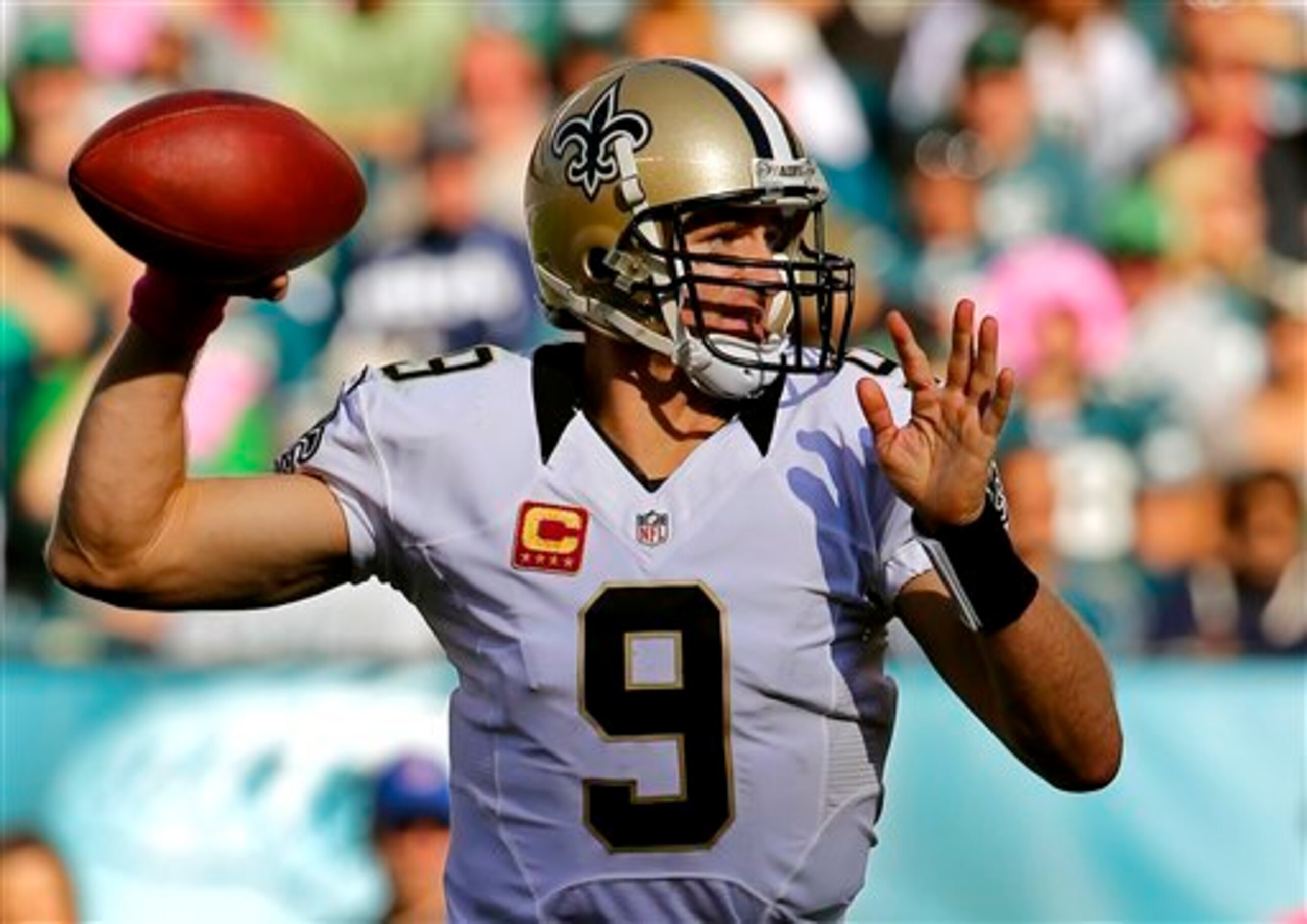
Below, you'll find our rankings for the top 40 signal-callers in fantasy football on the doorstep of the 2016 season. The average draft position column, acknowledged as "ADP," reflects data from Fantasy Pros. You'll notice some quarterbacks don't even have an ADP registered; this is because they aren't being drafted in enough formats to populate on the index.
We advise you to develop a custom cheat sheet of sorts at the position. Exporting a rankings list at Fantasy Pros is one savvy way to acquire a spreadsheet at the position. The real key is adjusting and augmenting the ranks to fit your own scoring format and your specific evaluation of the quarterback position.
Do you think the Tampa Bay Buccaneers' Jameis Winston makes a massive leap in production this season? Go ahead and bump him up. Is Blake Bortles of the Jacksonville Jaguars due for significant regression in the scoring department? Reflect that in your rankings. Too often we allow a binary set of ranks decide between two players or determine the entire market. These are our fantasy teams to manage throughout the fall, so taking ownership of the rankings process is an empowering strategy to employ.
| 1 | Cam Newton | CAR | 7 | 1 |
| 2 | Aaron Rodgers | GB | 4 | 2 |
| 3 | Russell Wilson | SEA | 5 | 3 |
| 4 | Andrew Luck | IND | 10 | 4 |
| 5 | Drew Brees | NO | 5 | 5 |
| 6 | Carson Palmer | ARI | 9 | 7 |
| 7 | Eli Manning | NYG | 8 | 9 |
| 8 | Ben Roethlisberger | PIT | 8 | 6 |
| 9 | Philip Rivers | SD | 11 | 11 |
| 10 | Tom Brady | NE | 9 | 8 |
| 11 | Blake Bortles | JAC | 5 | 10 |
| 12 | Derek Carr | OAK | 10 | 12 |
| 13 | Tyrod Taylor | BUF | 10 | 16 |
| 14 | Kirk Cousins | WAS | 9 | 14 |
| 15 | Jameis Winston | TB | 6 | 17 |
| 16 | Tony Romo | DAL | 7 | 13 |
| 17 | Andy Dalton | CIN | 9 | 15 |
| 18 | Matthew Stafford | DET | 10 | 18 |
| 19 | Marcus Mariota | TEN | 13 | 19 |
| 20 | Joe Flacco | BAL | 8 | 26 |
| 21 | Ryan Tannehill | MIA | 8 | 22 |
| 22 | Ryan Fitzpatrick | NYJ | 11 | 24 |
| 23 | Matt Ryan | ATL | 11 | 20 |
| 24 | Jay Cutler | CHI | 9 | 28 |
| 25 | Alex Smith | KC | 5 | 23 |
| 26 | Robert Griffin | CLE | 13 | 27 |
| 27 | Brock Osweiler | HOU | 9 | 25 |
| 28 | Teddy Bridgewater | MIN | 6 | 21 |
| 29 | Blaine Gabbert | SF | 8 | 34 |
| 30 | Colin Kaepernick | SF | 8 | 31 |
| 31 | Sam Bradford | PHI | 4 | 30 |
| 32 | Jared Goff | LA | 8 | 29 |
| 33 | Trevor Siemian | DEN | 11 | |
| 34 | Case Keenum | LA | 8 | |
| 35 | Jimmy Garoppolo | NE | 9 | 36 |
| 36 | Dak Prescott | DAL | 7 | 35 |
| 37 | Paxton Lynch | DEN | 11 | 32 |
| 38 | Carson Wentz | PHI | 4 | 33 |
| 39 | Mark Sanchez | DEN | 11 | |
| 40 | Josh McCown | CLE | 13 |
Let's evaluate some of the more compelling topics to consider at the position and from these specific rankings.
The top four quarterbacks don't inspire much drama. It's a safe and star-driven collection with high floors. The Indianapolis Colts' Andrew Luck had an abysmal 2015, but we're willing to look past this due to his injuries in a worst-case campaign. The Colts could realistically give up the most raw yards in football this season, thus Luck could be a busy man behind center and conversely lead the league in attempts and yardage himself.
Why Drew Brees over Ben Roethlisberger?
Many ranks around the industry have the Pittsburgh Steelers' Ben Roethlisberger ranked fifth at the position and the New Orleans Saints' Drew Brees sixth. As far as we see it, there is no precedent or even predictive evidence for this shift, as Brees claims four of the top 18 fantasy seasons in per-game production at the position since 2010. Roethlisberger's best fantasy season in per-game production came last season, and it ranked 28th over this span at the position, which is to say his fantasy ceiling (his peak) and his floor (lowest expected pace) aren't comparable to Brees' elite standards.
There is an argument to be made for Brees to be higher, given his immense resume of volume-driven production and elite efficiency. Roethlisberger's dwindling cast of pass-catchers is also reflected in our rankings.
Why Eli Manning over Ben Roethlisberger?
It seems aggressive to have the New York Giants' Eli Manning above Roethlisberger, but Manning's volume-driven offense delivers a higher floor and similarly high ceiling as Roethlisberger's. The Giants are built to pass on nearly every snap, even with the construction of their reception-friendly backfield. Roethlisberger did his best statistical work with vertical maven Martavis Bryant in the fold, but Bryant's season-long suspension curbs the enthusiasm enough to promote Manning above Big Ben in our estimation. Rotoworld's Evan Silva detailed the loss of Bryant for Roethlisberger's prospects:
"Martavis Bryant was a difference maker. Whereas Roethlisberger has averaged 331.2 passing yards with 43 touchdowns in 22 career games played with Bryant, Ben's passing-yard average dips to 269 yards with 35 TDs in his last 22 games sans Martavis. The offseason "hope" was that Pittsburgh could seamlessly replace Bryant with a combination of Ladarius Green and Sammie Coates. Green (concussions, ankle) can't so much as practice and looks doubtful for Week 1. Coates is getting beaten out by Eli Rogers and Darrius Heyward-Bey.
"
When to take Tom Brady
Replacement value is the concept of how readily we can source a commodity on the waiver wire or open market at a certain position. Given the single-position nature of quarterback and the supply-and-demand relationship we discussed in the intro, quarterback is a relatively easy position to find quality replacement commodities. Just think about the Jacksonville Jaguars' Blake Bortles or the Buffalo Bills' Tyrod Taylor from last season as assets at the position sourced from the waiver wire in most leagues who provided above-average fantasy production for relatively low investments.
That brings us to the New England Patriots' Tom Brady, who is still dropping dimes, as we witnessed in the team's third preseason game, via the NFL. Given the replacement level at quarterback is easy to access, having Brady as a top-10 option isn't so bold.
You can confidently invest in Brady at a deflated price point; he was second only to Newton in fantasy points per game last year in ESPN standard scoring and led the position through Week 14 before the team took the foot off the pedal over the final stretch. Sourcing a replacement asset like Matthew Stafford of the Detroit Lions or Winston shouldn't prove difficult or expensive for most managers, and Brady represents an elite asset once his four-game suspension ends.
Surging Sophomores: Jameis Winston and Marcus Mariota Offer Fantasy Upside
2 of 4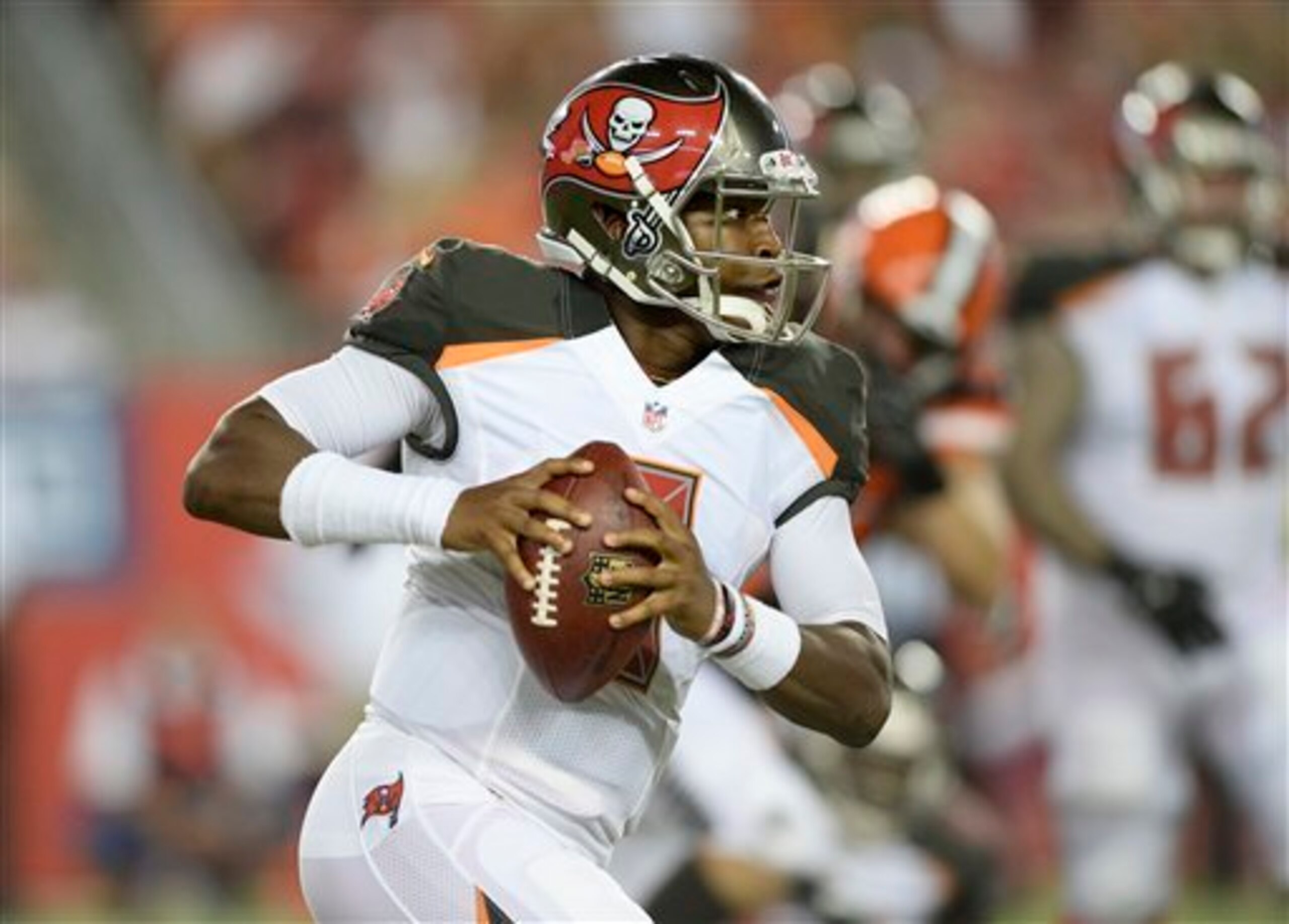
Tape guru Greg Cosell of Yahoo Sports praised Jameis Winston of the Tampa Bay Bucs this offseason for his ability to orchestrate a complex NFL offense fresh out of Florida State:
"There’s a lot to like about Winston, and we could get a good sense of who he is as a quarterback because the Buccaneers did not run a simple offense. This was a full-throated NFL passing game last season. There was no sense that Dirk Koetter’s offense (Koetter was the Bucs’ offensive coordinator last year, and was promoted to head coach in the offseason) was geared toward a rookie who was still learning. There were a ton of concepts in the offense, both under center and from the shotgun. The offense did not seem to be simplified. Winston handled it all well and showed he understands many of the important nuances of playing quarterback. He has an innate feel for playing quarterback from the pocket. He has a natural sense of anticipation and throws the ball in rhythm. His ability to read coverage, and hold and move safeties with his eyes, stood out.
"
With Koetter at the helm, Winston getting back healthy and rangy targets such as Vincent Jackson, Austin Seferian-Jenkins and Mike Evans, the potential for this Tampa passing attack to become formidable is legitimate.
A slimmed-down Winston looks more spry and agile in the early returns from preseason action, and he quietly produced six rushing touchdowns last season. While the conventional wisdom is that his rushing success will regress, it's possible he can sustain his ground game and only add to the fantasy fun with increased volume and efficiency in the air. For the price of a backup quarterback, Winston offers real QB1 upside.
Sticking with the surging sophomore angle, the Tennessee Titans' Marcus Mariota could build on what was already a fun fantasy effort as a professional freshman last season. If we remove his injury-riddled Week 15 at New England that saw him leave early, Mariota finished 10th in ESPN standard fantasy points per game among signal-callers as a rookie. That's not a clerical error; the former Oregon Duck produced 18.1 standard fantasy points per game while facing injuries, a coaching change and a depleted receiving corps.
Head coach Mike Mularkey has promised an uptick in designed runs for Mariota, per Mike Florio of Pro Football Talk. That would not only lighten the box without an extra safety or dime linebacker for the backfield, but it would also add immense fantasy value to a player who possesses a 40-yard dash time in the 96th percentile at the position among prospects since 1999, per MockDraftable. Shares of Mariota don't cost much, and with real rewards on the way in this unique offense Mularkey is building, pairing Winston as your pocket asset and Mariota as the rushing weapon at the position could prove intriguing this season.
QB Values: Matthew Stafford and Tyrod Taylor Have QB1 Upside
3 of 4
The Detroit Lions' Matthew Stafford and Buffalo Bills' Tyrod Taylor have taken different paths to starting NFL gigs. Stafford is the cannon-armed SEC product who went first overall in the draft, while Taylor is the sixth-round pick out of Virginia Tech deemed filler for much of his career before last season.
Either way, both present value as investments for fantasy managers this season. Once the Lions removed Joe Lombardi and installed Jim Bob Cooter at offensive coordinator in late October last season, Stafford averaged the sixth-most fantasy points at the position from that point (Week 8) on.
Over those nine games, Stafford was 10th in QBR at the position (68.3) and second in completion percentage (69 percent) while recording a rich ratio of 2.2 touchdowns to 0.4 interceptions per game over that successful stretch. All this while still maintaining a volume-driven passing attack that saw him average just over 36 attempts per game.
The loss of superstar and Canton-bound receiver Calvin Johnson to retirement is an undeniable loss, but it has likely served to deliver increased value to Stafford's fantasy stock, given his price is deflated sans the super wideout. You can land Stafford as QB18 in drafts, per Fantasy Pros, but top-10 upside is in reach for a player who displayed rare success with the new offensive direction employed over the second half in 2015.
Taylor was seventh in QBR last season and eighth in fantasy points per game using ESPN standard scoring. Did you know Taylor averaged more rushing yards (40.6) than Cam Newton (39.8) last season? You do now.
With this high rushing floor and the presence of a potentially deflated defense, Taylor could become a full-fledged statistical star in 2016. The lack of an honest pass rush and a depleted secondary in Buffalo spell upside for the passing game.
The premise behind the Bills' lackluster defensive potential is that a negative game script (i.e. trailing to opponents and needing to keep pace with opposing offenses) could propel Taylor to increased snap and pass volume. More plays for a true playmaker is invited, especially as Taylor is going 16th at the position, per Fantasy Pros. Pairing Stafford and Taylor is affordable and could prove profitable.
"The Bills defense averaged a sack every 33.9 pass attempts when opposing QBs used a straight drop last season. 32nd in league, NFL AVG: 16.4
— Steve Palazzolo (@PFF_Steve) August 26, 2016"
Going a bit deeper, we find some late-round value or streaming interest in the Baltimore Ravens' Joe Flacco. Yes, the guy who was 23rd in fantasy points per game among quarterbacks last season. The reasoning is volume, as Flacco was on pace for well over 600 pass attempts last season and would have challenged the San Diego Charges' Philip Rivers for the league lead in attempts had he played a full season at his per-game rate.
An ACL injury ended the forgettable 2015 campaign, but that doesn't mean we can't find streaming interest in Flacco this season. Streaming, to explain, is a strategy that sees managers look for the best matchups and opportunities among available waiver-wire assets each week. Flacco will go undrafted in a majority of fantasy leagues, as his ADP as QB26, per Fantasy Pros, suggests. This isn't a pitch for you to pay for Flacco on draft night, but you should consider him in Marc Trestman's fantasy-friendly scheme during ideal matchups this season. Don't be surprised if Flacco is a waiver warrior and a DFS (daily fantasy) gem during certain stretches this season.
Going even deeper, what about Robert Griffin III in Cleveland? We know the risks are real for a player plagued by injuries and turnovers over the past several seasons, but QB whisperer Hue Jackson could develop some fun box scores for the former top prospect. With a proven vertical arm, Griffin led the league in QBR on passes of at least 10 yards downfield as a rookie. Jackson's vertically inclined offense and the Browns' collection of big-play receivers could prove fun in DFS and deep leagues at times this season.

.jpg?w=2560 "Seahawks Chiefs Football")
Matt Ryan and Teddy Bridgewater Are Avoidable Arms in Fantasy Football
4 of 4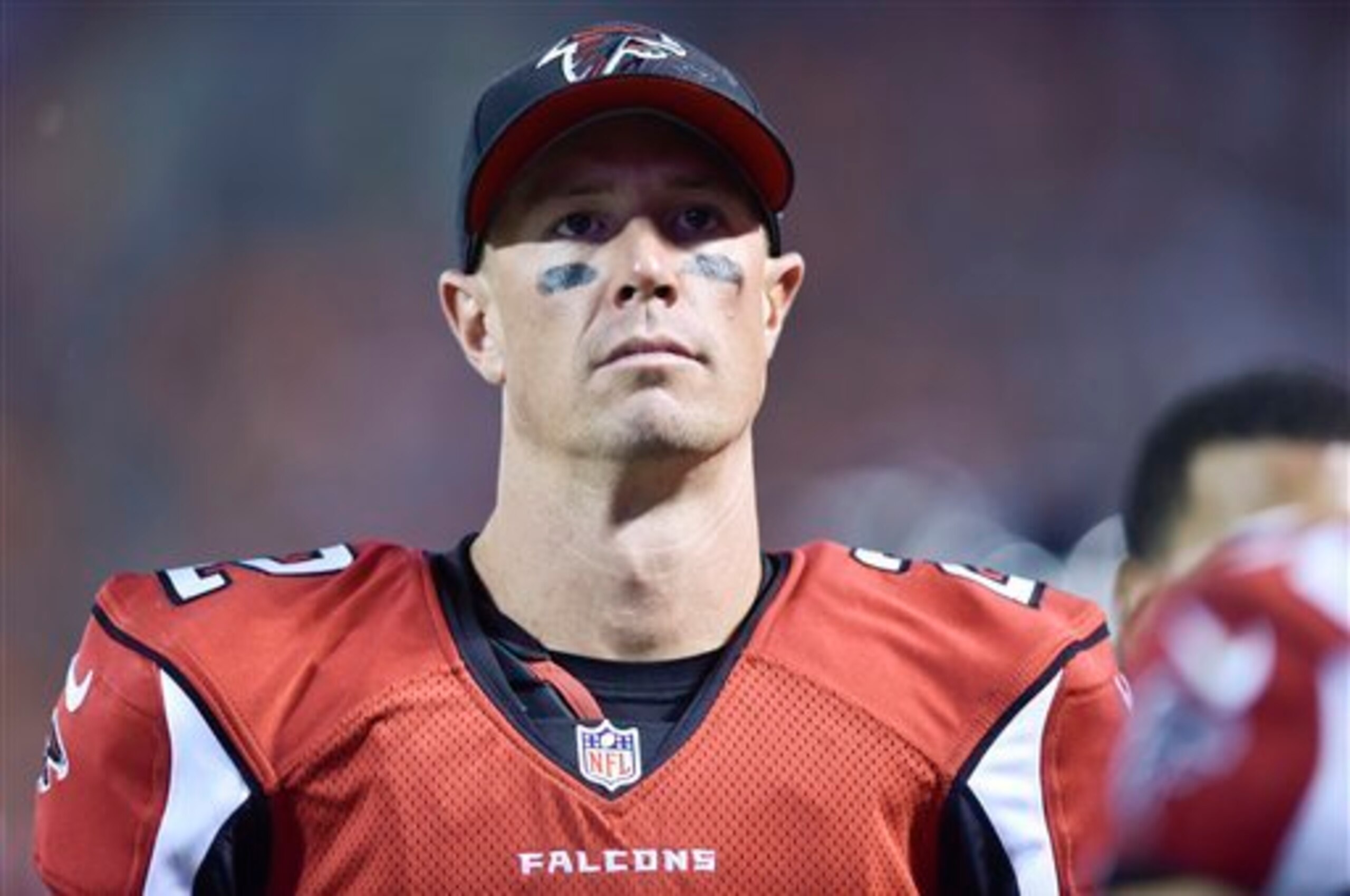
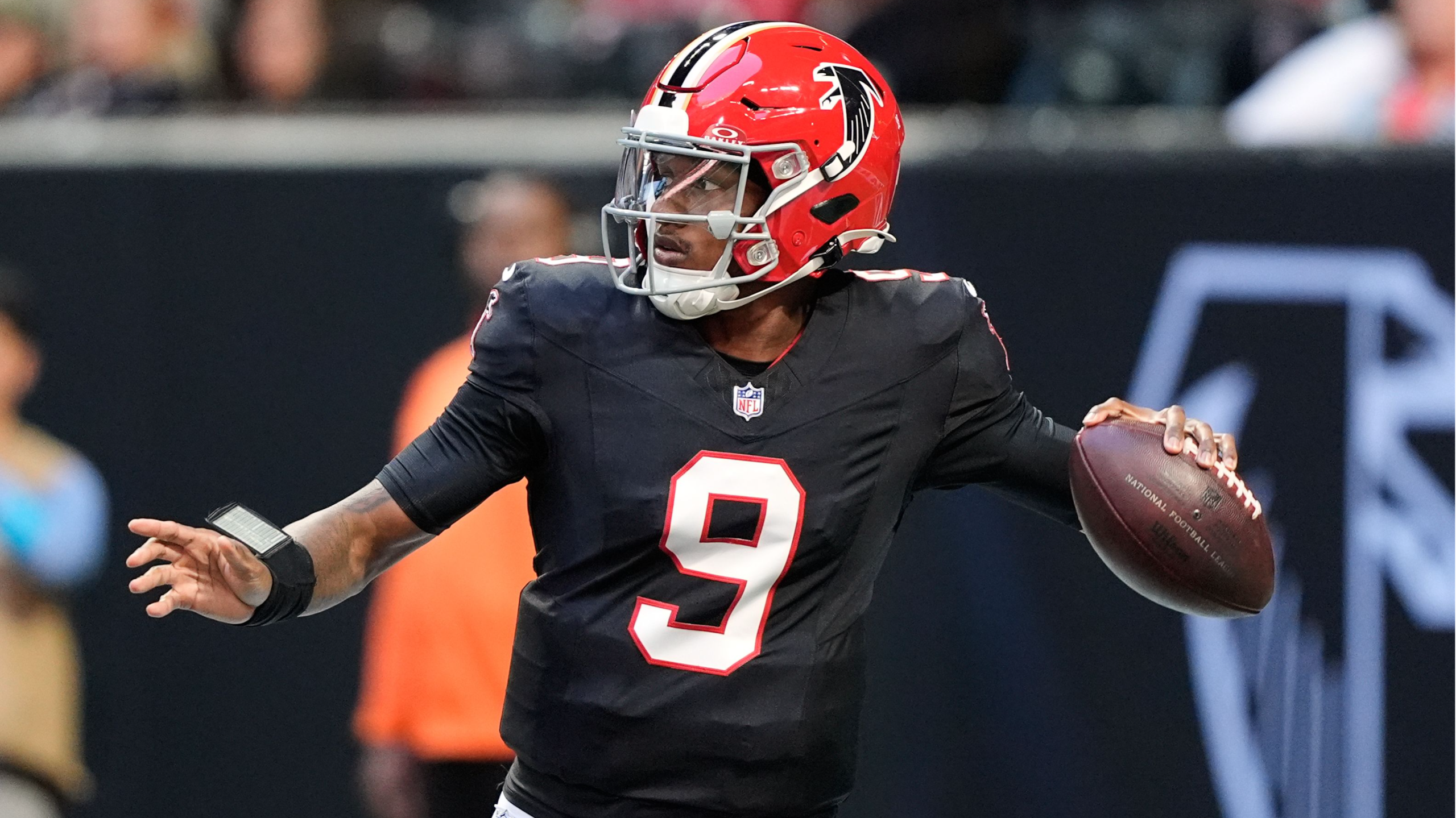
The Atlanta Falcons' Matt Ryan has been disappointing in both real and fantasy football over the past several seasons. This excerpt from ESPN.com's Matthew Berry's list of lists reveals the mediocrity of Ryan's statistical exploits of late: "In the past five seasons, there have been only three instances in the NFL where a QB has thrown 600 passes, completed at least 66 percent of them, but FAILED to throw at least 29 touchdowns: Matt Ryan, 2013; Matt Ryan, 2014; Matt Ryan, 2015."
Talk about condemning evidence of a low-ceiling fantasy asset. To continue this assessment (or attack, in some sense) on his fantasy stock, Ryan was 28th in fantasy points per game among signal-callers last season in ESPN standard leagues. Taking this into account for the current market, Ryan has looked inefficient and ineffective in the red zone again this preseason.
The best-case outcome for Ryan is likely a finish on the threshold of the top 10 at the position, but this potential is mitigated by the fact his positional peers such as Stafford and Taylor are found in similar ranges with higher respective ceilings. Simply put, you can find better value with more upside at a similar draft price to Ryan, who is going 20th at the position on average, per Fantasy Pros.
It's not exactly groundbreaking to suggest avoiding the Minnesota Vikings' Teddy Bridgewater in fantasy football. This after Bridgewater had the fewest touchdown passes (14) in a full 16-game season (all starts) for a signal-caller since Joe Flacco back in 2008.
With the Vikings' passing attack proving so conservative—Bridgewater was 30th in yards per dropback last season (6.0)—finding upside in the outcome spectrum for this passing offense proves difficult. Much like with Ryan, we'd rather invest in an upside-laden asset for our second quarterback than in the low-ceiling setup Bridgewater delivers.
Fantasy data and quarterback data such as QBR and completion rates were sourced from an ESPN database.



.jpg?w=2560 "Latest Peyton-Colts Rumors")