
Hurdles Champ Aries Merritt Set to Fly Again 9 Months After Kidney Transplant
It's not the sterile smell of a preoperative hospital room that strips you of more than your clothes. It's fear. Fear of what happens next, after the nurses knock you out and wheel you to surgery.
That's what exposes your emotions for all to see and hear.
It was at this moment of truth last September 1 at an Arizona hospital when a chatty young woman, resting comfortably in a bed, managed to crack jokes, tell stories, fill the place with her laughter and otherwise ignore the IV stuck in her arm.
TOP NEWS

🚨 NC State Fires Head Coach

Malachi Toney Sets ANOTHER Record

Heat, Giannis were down by 20+ in each of their 3 losses
In another bed, on the other side of a curtain, also tubed up, was a world-class and well-decorated athlete, fit and lean and powerful, who felt his throat tighten and facial muscles stiffen—the symptoms that surface right before a person totally freaks out.
"She was all full of joy and happiness and I was like, 'I'm gonna die now,' and that there's a chance this will not work out and I will not wake up," he says. "Everything hit me right there."
The tears gushed all at once. Overcome by sudden frailty, he wondered about the unfairness of it all and how this surgery could alter his life. But his fears weren't completely self-centered. He looked to his right and worried about the woman's welfare, too, and so Aries Merritt was also overcome with guilt.
What am I doing asking my healthy sister for her kidney?
In 2014, there were 17,107 kidney transplants in the U.S., according to the National Kidney Foundation, and 5,537 came from living donors. But this was the first one done on the world's fastest hurdler in his prime.
He's also the defending Olympic gold medalist in the 110-meter hurdles. And now, amazingly, nine months after successful kidney transplant surgery, he's a favorite to make the U.S. team for the 2016 Games in Rio de Janeiro.
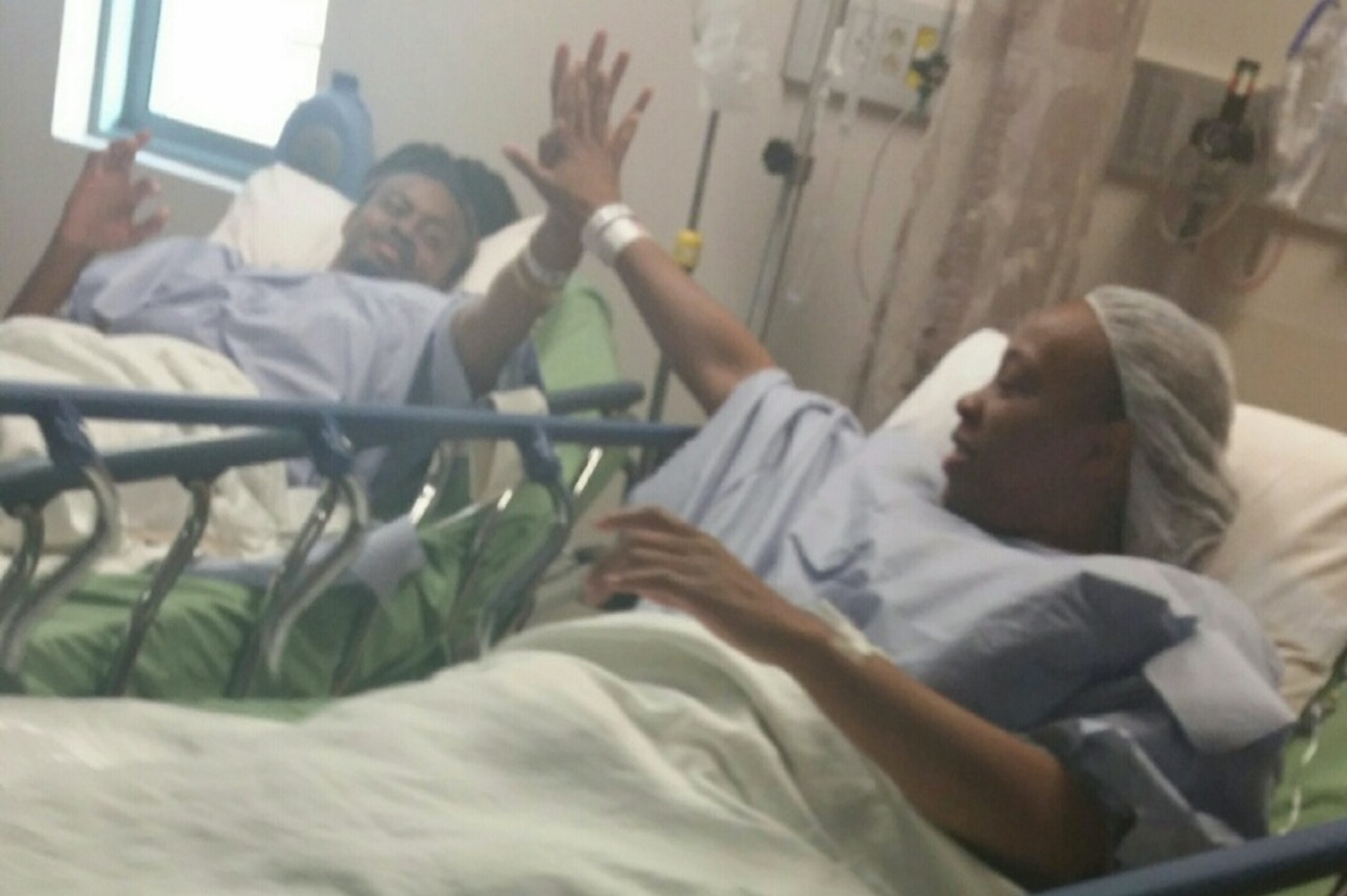
On the morning of the surgery, LaToya Hubbard picked up her brother at the Phoenix airport after his exhausting flight from Beijing, where he finished third at the IAAF World Championships in Athletics. Merritt showed her the bronze medal, an astonishing prize considering his doctors' estimate that he'd competed with both diseased kidneys functioning at 15 percent.
He'd known about his condition for a little more than a year yet refused to get the transplant done until after the Worlds, because that's what competitors do.
For the entire 2015 track and field season, Merritt played a dangerous game of dare with his kidneys, pushing the limits of his health and his doctors' wits.
He was like a driver trying to reach a faraway destination on a half-tank of gas: As the needle creeps to "E" and the warning light flickers, the grip on the steering wheel tightens.
They went straight from the airport to see their mother, then headed for the hospital and got prepped for surgery, Hubbard trying her best to keep the mood light and give him perspective, as any older sister would do.
In the 110-meter high hurdles, the best are conditioned to sprint over the 42-inch barriers as closely as possible without crashing. In 2012, he had done so cleanly and in world-record time. She reasoned: "You're a master at clearing the 10 hurdles placed in your lane. What's one more?"
Well, this one was a pole vault, and he wasn't holding a pole.
"The doctors heard me bawling, came in and said everything's OK," says Merritt, who quickly offered them a second opinion. "No, everything's not OK."
Merritt's 11th-hour meltdown was in contrast to his ability to hold it all rock-solid together, which he'd been doing since the fall of 2013, when his body first felt weakened and weary and wrong. That was unusual for someone who was then 28 and in supreme shape.
Initially, Merritt thought he'd caught the flu while running meets in chilly Europe. He checked into the Mayo Clinic that winter for tests and wound up staying longer than he'd thought. It took doctors months, until May 2014, to diagnose the issue.
He suffered from collapsing focal segmental glomerulosclerosis, a rare genetic kidney disease. He also had a virus, and the one-two punch staggered him.
"I would get tired just walking up a flight of stairs," he says.
This was a shocking revelation to someone who, less than two years earlier, had finished a dream season in track. In 2012, Merritt took every major title there was to win: U.S. indoor, world indoor, Olympic trials, London Olympics, Diamond League (the so-called regular season for the sport); and in his final race, he captured the world record in 12.80 seconds.
No American can have a better year in any single event.
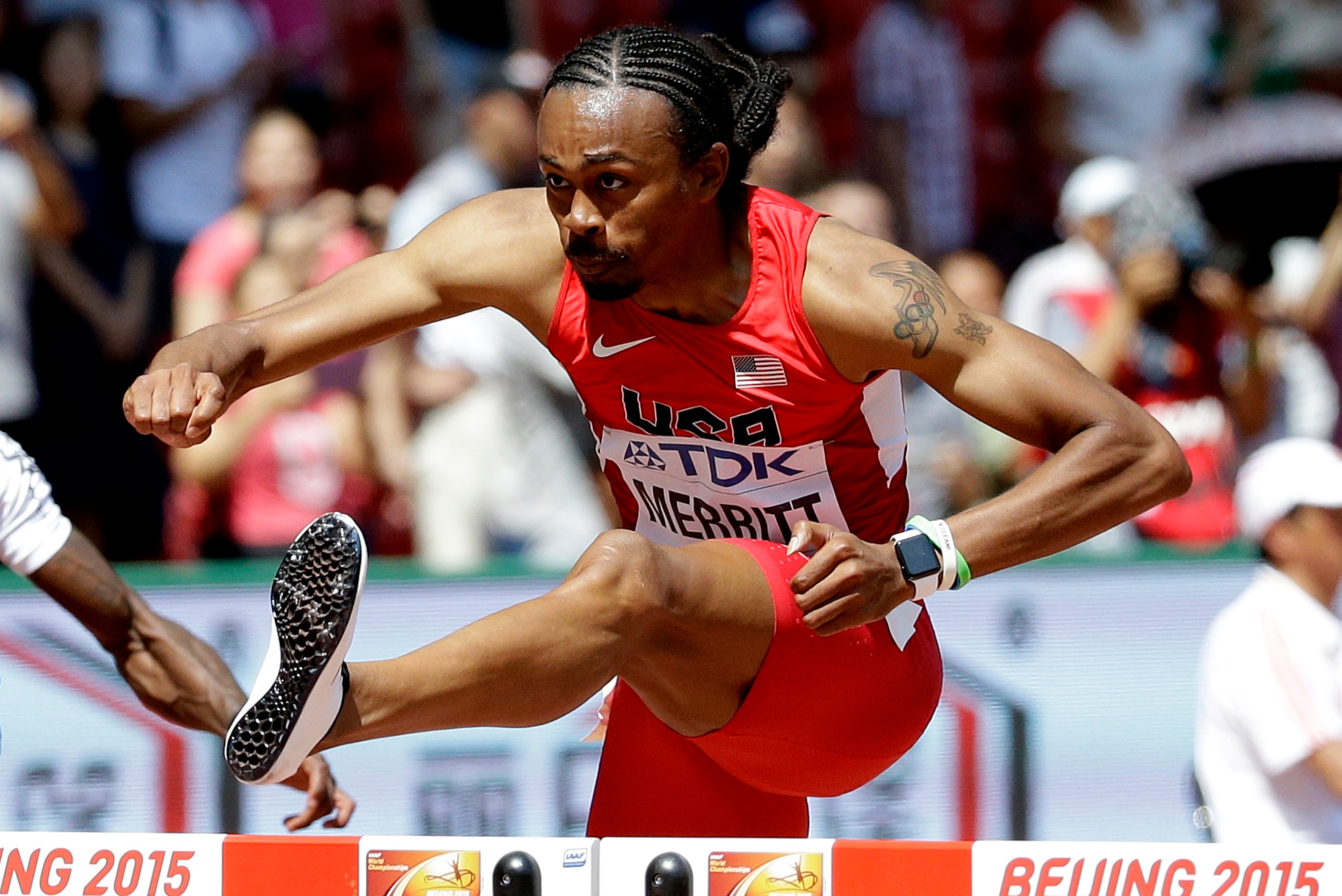
The world-class standard time for the 110-meter hurdles is 13 seconds. That year, Merritt ran under it 10 times. Not only did 2012 make him the world's No. 1 hurdler by a mile, but it also stamped him as one of the best hurdlers of his generation.
"Once you catch rhythm, hurdlers can hold that rhythm well," says his coach, Andreas Behm. "Aries caught fire early and it carried him through the year. I told him that it had been an amazing year and that he wasn't going to have another like that. We can only strive toward that."
When the kidney disease caught hold, Merritt became a shadow of his 2012 self. His times were in the mid-13-second range, he couldn't get on the medal podium, and after he left the Mayo Clinic, nothing improved.
The only thing that increased was the outside chatter. His competitors and the track world began to stir. People asked. He shrugged. At first.
When word reached him that rumors were spreading about performance-enhancing drugs being the reason for his decline, Merritt went public.
"When I heard that, I said, 'OK, I need to set the record straight,'" he says. "I've never used drugs. I felt like I was being attacked. The fans didn't know, the critics didn't know, so it was time for them to know. Here I was, trying to compete with almost no blood in my body.
"It's hard enough to do this sport when you're healthy, let alone injured, let alone with kidney dysfunction, having no basic body chemistry. I was pretty much trying to do the impossible just so I could have a normal life, even though I was no longer normal at that point."
After Merritt competed at the Prefontaine Classic at the end of May 2015, his doctor summoned him with grim news: His condition had worsened, and he needed to seriously rethink the idea of training to make the U.S. team for the World Championships in Beijing in late August.
"He has a lab that shows where you were at before and where you're at now, and the breakdown was vicious," says Merritt. "I lost 40 percent kidney function in a matter of months. It was mainly from training. Being an athlete actually quickened the condition."
That was when Merritt was first told he'd need a transplant by March 2016 at the latest.
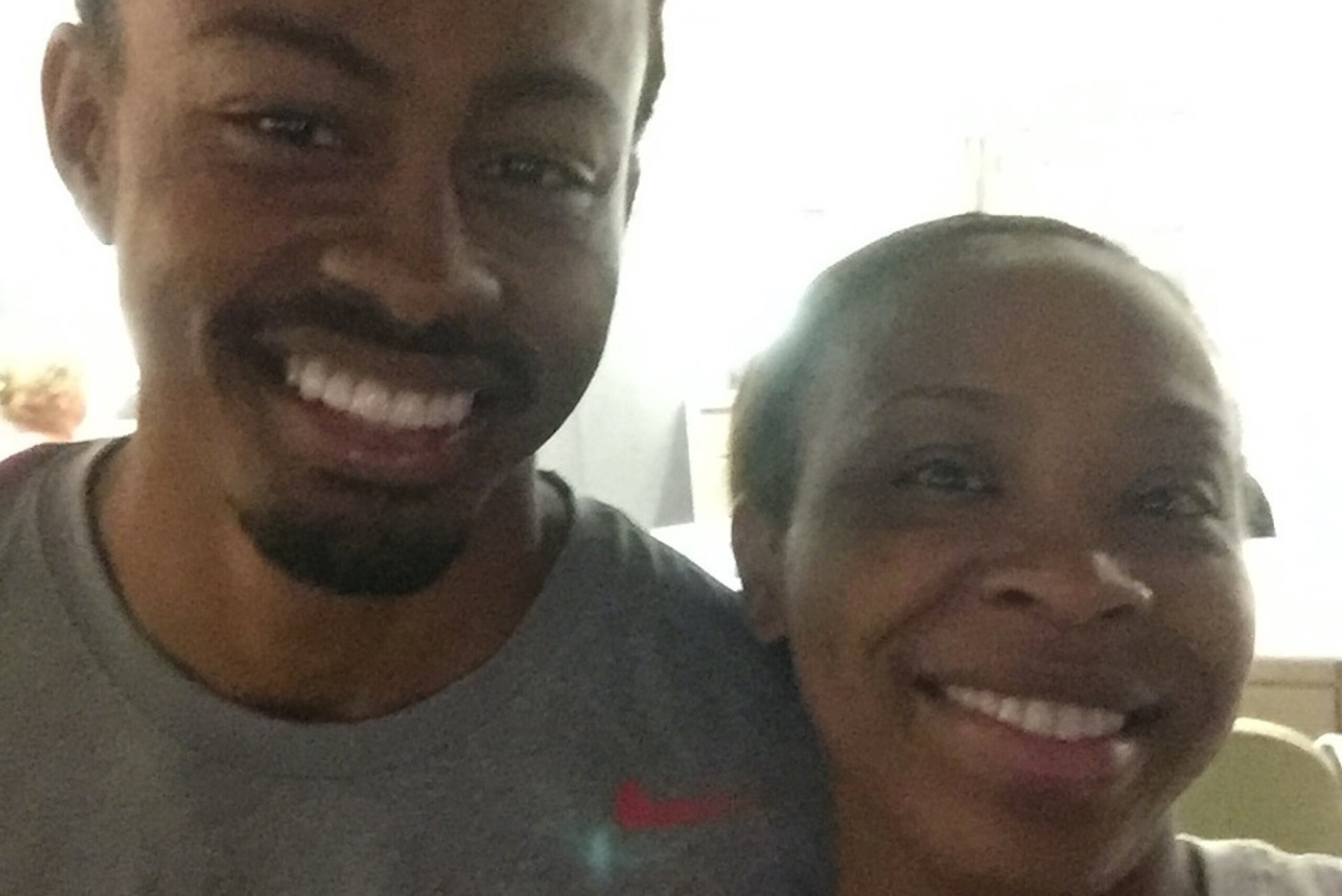
"If I didn't get it by then," he says, "I'd run the risk of having no kidney function and be on dialysis and my career would be over."
He underwent a biopsy. Doctors poked a hole through his kidneys. He couldn't train for a week. Otherwise he'd develop a blood clot. That threw off his preparations for the U.S. trials in late June in Eugene, Oregon, where only the top three finishers make the team for the Worlds.
A far bigger challenge was getting a new kidney. The wait list could take three years. That wasn't an option. So he turned to his best match for a donor, his only sibling. He called Hubbard and stammered.
"Toya, I'm at the Mayo and this is what's going on."
"All right, I'm going to get tested to see if I'm a match."
Merritt didn't have to ask, or rather, Hubbard didn't wait for him to ask.
They grew up outside of Atlanta, raised by a single mother, although in practice Merritt had two mothers. LaToya, eight years older, was bossy and protective, constantly reminding him about chores and studying, and just being a smothering presence.
"I was mean to him at times, but it was out of love," she says. "I wanted him to learn responsibility. I couldn't teach him how to be a man, but I could show him how to be a better person. If somebody isn't teaching you that, then you end up running around here like some of these knuckleheads. I never gave him that chance."
Merritt finally put down his video games long enough to run on the Wheeler High School track team, where by his own estimation he was a good but not great sprinter.
And then, while engaging in horseplay with another runner, he hopped a fence. The track coach just happened to walk by and see how natural it looked. A future Olympian was born.
Merritt broke tons of records at Tennessee. Only the great Renaldo Nehemiah of Maryland had ever run faster in college, and in the years since, only Devon Allen of Oregon has.
He is 6'1" but has the legs of a small forward, which gives him an advantage. Nobody in the world is quicker between the hurdles, and Merritt has made every World Championship and Olympic team since 2008.
Hubbard was along for the ride, making him peach cobbler, attending every big meet and staying in touch with her brother almost daily—something she continues to this day, given his condition, although "staying in touch" isn't how she puts it.
"Actually, I harass him every day," she says.
Merritt ignored doctors' advice and trained throughout last year. He was determined to make another U.S. team and go to Beijing. He did. Then doctors said the poor air quality in China wasn't good for his condition. He went anyway and finished third.
"They said I was headed down a bad path, and I just shrugged and said I'd deal with that when I get there," he says.
Back home, Hubbard went through rigorous testing, getting blood drawn, scans, EKGs, more testing and having meetings with doctors and also psychiatrists, because donors can have emotional issues. She was also the mother of a daughter, Lela, now 22 months old, and that was taken into account.
Having delivered her daughter via C-section actually helped calm Hubbard in the prep room because she figured nothing could be worse.
"At least that's what I thought at first," she says. "Giving a kidney is harder. I could barely get out of bed. It's a different type of pain. They had to give me a double dose of medication."
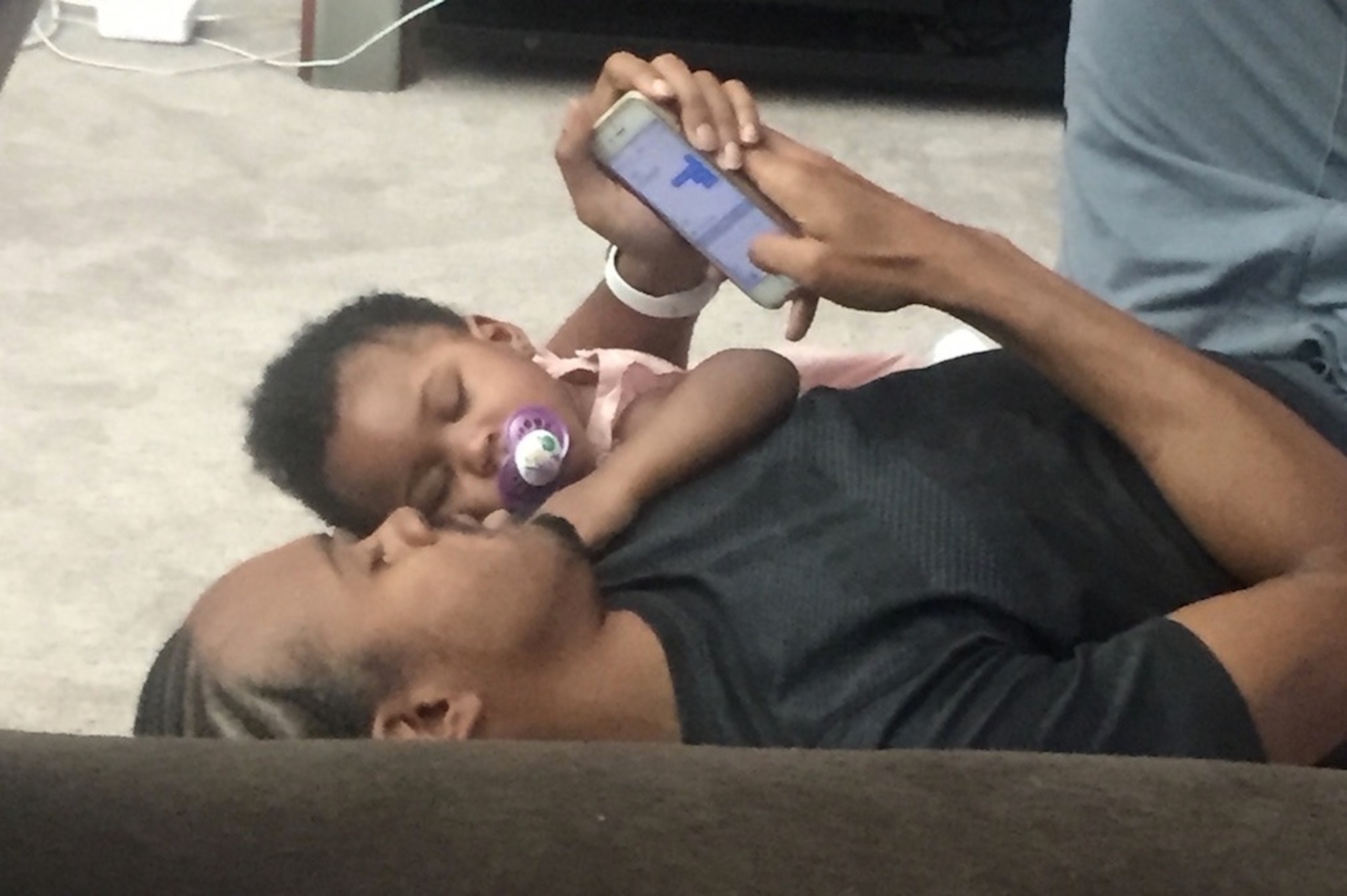
Merritt's body accepted the new kidney without any issues, and it was implanted just beneath the right side of his abdomen. He now has three kidneys, but only one that functions.
After surgery, Merritt needed seven weeks off before resuming training in Phoenix, where he lives. But he developed a hematoma, a buildup of fluid, and needed a second surgery to implant the new kidney deeper. That meant several more weeks of recovery and killed his chances of returning for the indoor season.
His coach says his first attempt at hurdling five months ago was comical: Merritt felt like a newborn calf and looked like one, too. Behm took a cautious approach, even with the Olympics looming.
"We didn't want to kill him," he says. "Actually, that's a bit extreme, but we had to slow his roll a bit. I just wanted to make sure everything was right. Because he came back with a different physiological makeup, we weren't sure what his body could tolerate in training. His kidney is on his trail-leg side, so we were like, 'Please don't let anything rip apart while he's hurdling.' It took him a month to feel comfortable in the movement process."
Merritt's right arm brushes his abdomen at each hurdle. Before the surgery, there'd been no bump, but now, hidden beneath an upside-down, "L"-shaped, seven-inch scar next to his navel…
"It's obvious it's something there," he says. "There's a fat buildup to protect the kidney."
Merritt was behind schedule in his training, but his speed remained intact, and the technique habits and muscle memory of a successful hurdler are hard to break.
Asked where Merritt stood, Behm is firm: "He'll be ready to compete at the trials."
Merritt's outlook is both short- and long-term. He wants to compete beyond Rio. Alonzo Mourning and Sean Elliott both resumed their NBA careers after kidney transplant surgery.
Merritt is track's answer to that, although one slight miscalculation over a hurdle could mean the difference between going to Rio or sitting at home after failing to finish in the top three at the U.S. trials—which, because of American dominance in the sport, is often as tough as, if not tougher than, the Olympics.
He's had five meets since surgery, finishing fifth at the Drake Relays in his debut and sixth in Qatar, getting disqualified in Shanghai, winning in Beijing and then finishing fourth at Prefontaine, the tune-up for the trials.
Merritt suffered a slight groin pull in that tune-up, but doctors told him that was unrelated to the surgery. His best time for the season is 13.24 seconds. Just six hurdlers in the world have run faster.
Behm says Merritt is roughly at the pace he was at in the years prior to surgery.
Merritt knows he'll be pounced upon by NBC and almost every international media outlet if he's wearing the Team USA uniform after a banner showing in Oregon. The qualifying round for the hurdles is on Friday.
"Should I make the team and run well and get a medal, or even win, obviously it would be worth more than my 2012 because of everything I've gone through, the pain and depression and this roller coaster of emotion," he says. "My face is going to get ugly if I cross that finish line and get a medal. People have no idea. I'm trying to make an Olympic team nine months after transplant surgery. That's unheard of."
Unofficially, his first race, post-op, happened the day after surgery. He and his sister got to talking from their beds, and despite her obvious pain, she staggered and rose before he did.
She'd set out to do that because she's the bossy older sister, always trying to set an example.
If Merritt does medal in Rio, she wins too, and she expects to take a victory lap as well. They are no longer separated by twin beds in a hospital room, or even by eight years. They are literally joined at the hip.
"A part of me is a part of him," she says.
.jpg?w=2560 "NBA Gambling Charges")
.png?w=2560 "Week 8 Winners & Losers 📊")

.jpg?w=2560 "Jonathan Taylor Landing Spots")
.jpg?w=2560 "Aikman Blasts Cowboys WR 🫣")