

Ultimate Guide to NHL Free Agency 2016
Blame the Tampa Bay Lightning.
On Wednesday, the Lightning re-signed pending unrestricted free agent Steven Stamkos to an eight-year contract extension. This is good news for Tampa Bay, because locking down one of the league's rare elite talents—a move the team noted on Twitter—is good news:
TOP NEWS
Mark Scheifele Landing Spots 📍
Ranking Top 10 NCAA Men's Hockey Players for 2026-27 Season
-(2).jpg?w=2560 "Bleacher Report")
Opening Week Power Rankings 📊
Stamkos is that. Since his breakthrough Richard Trophy-winning performance in 2009-10, he's scored 289 goals, more than any other player, save Alex Ovechkin. And the two are separated only because Ovechkin has played more games. Stamkos is the best pure shooter in the sport, with a 17.7 shooting percentage over that span; the next-best player with at least 1,000 shots is down at 15.0 percent (Brad Marchand).
The trouble is, rather than the focus being on a bidding war centered on perhaps the best pure goal scorer in the world, it shifts to secondary targets. Teams that had hoped to bring in a franchise-altering centre now have to refocus, instead prioritizing a scoring winger or a less dynamic piece down the middle.
Still, there are good players out there, and at least one solid option at every position. The strength of the class is in scoring wingers, including players with unique skill sets and miles left on their tires. This is our look at the best of the lot that will be available starting July 1 at noon ET.
The All-Free-Agent Team

Free agency isn’t a cure for all problems, but at every position there is at least one prominent player who can help. For NHL teams with specific positional needs, that’s good news; however, there are no guarantees these players will come cheaply.
For those who want a longer list, we have also ranked the top 20 players going into free agency.
Left Wing: Milan Lucic
The Chicago Blackhawks and Pittsburgh Penguins can win all the Stanley Cups they want with speedy, undersized lineups; the NHL’s love affair with big, nasty players isn’t ending anytime soon.
It helps if those guys can play, and Lucic can. He averaged 54 points per 82 games over the last three seasons. For at least the front end of his next contract, the 28-year-old will be a top-line offensive player who adds a unique physical dimension.
Centre: David Backes
Backes is a decent consolation prize for teams that need a good centre. He's not as good as Stamkos, but there just aren't many 6’3”, 221-pound two-way centres who can handle tough assignments and chip in on both special teams like Backes. He is 32, so interested clubs will want to be careful about term.
Right Wing: Kyle Okposo
Okposo doesn’t bring the same physical dimension as Lucic, but he’s another big forward (6'0", 217 lbs) with skill. Other than Stamkos, Okposo is the only skater in free agency to average more than 70 points over an average 82-game run the last three years. He ranks 23rd league-wide in even-strength points per hour over that span.
Left Defence: Brian Campbell
Several teams struck before the opening of free agency, acquiring the rights to expiring contracts of talented defencemen and re-signing those D-men.
Even if Keith Yandle and Alex Goligoski were still on the market, though, Campbell would arguably be the best available player. The 37-year-old won't stay in the league forever, but he had a stellar 52.5 percent Fenwick rating for the Florida Panthers last year; he’s topped 50 percent in that metric every season on record.
Right Defence: Jason Demers
By default, Demers is the guy. A good, versatile defenceman, the 28-year-old Demers is the only right-shooting rearguard on the market who is a bona fide top-four NHL defender.
Goalie: James Reimer
Reimer is a competent if unspectacular NHL starter. By even-strength save percentage, he ranks 22nd in terms of the 61 goaltenders to play at least 2,000 minutes of five-on-five hockey over the last three seasons. That puts him in the same range as Marc-Andre Fleury, Semyon Varlamov and new Toronto Maple Leafs starter Frederik Andersen.
How Did the Stanley Cup Finalists Do It?

Before a franchise runs out and signs a bunch of these players, it isn’t a bad idea to take a look at what the league’s most recent successful teams have done in free agency. For our purposes, that means last year’s conference champions: the Pittsburgh Penguins and the San Jose Sharks.
The Penguins mostly built their roster through the draft, with players such as Sidney Crosby and Evgeni Malkin coming by virtue of early selections. They added some other important skaters through trade, including the entirety of the successful HBK Line: Carl Hagelin, Nick Bonino and Phil Kessel.
They did, however, add a few free agents.
Matt Cullen may be the most instructive example. He scored 16 times for Pittsburgh in the 2015-16 regular season. And although nominally the team’s fourth-line centre, he was repeatedly bumped up to Crosby’s line when head coach Mike Sullivan opted to shorten his bench. He filled an important depth role for the low price of $800,000.
Cullen’s an example of the kind of player available for cheap most years. He turns 40 early next season and is at the tail end of a long, distinguished career. He had just 25 points in 2014-15, and it would have been easy for the Pens to write him off. Instead, they took a chance and were rewarded with a player who dramatically outperformed his contract.
Pittsburgh also made use of Conor Sheary, who joined the organization as an undrafted college free agent. That’s a good way to add talent, but those signings generally happen prior to July 1. Meanwhile, Eric Fehr had a disappointing season after signing a three-year contract, although he played a depth role in the postseason.
The Sharks leaned more on free agency as an approach to team building, something I wrote about during the Stanley Cup Final. San Jose got value from free-agent winger Joonas Donskoi, signed out of Europe—but two unrestricted free agents were vital to its efforts as well.

Paul Martin signed a four-year contract with a cap hit just under $5.0 million in the summer of 2015, and it paid immediate dividends. He’s now 35 years old, so there’s some risk over the remainder of the deal. But in his first season with the club, he performed well as the "steady Eddy" partner to offensive dynamo Brent Burns. Martin’s quiet, efficient, positional game was the perfect complement to one of the league’s best scoring defenders.
Joel Ward is also 35 and in a similar situation, having signed a three-year deal with the Sharks. Like Martin, he was immediately effective, playing all three forward positions and contributing on both special teams. He scored 21 goals in the regular season and added seven more in the playoffs.
There’s no one-size-fits-all approach to free agency, but the success of these two teams demonstrates there’s a role for free agents to play.
For the Sharks, a good but not great team trying to win immediately, it made sense to take some risk by adding useful, well-rounded NHL talent. Those risks paid off both during the season and over the course of a deep playoff run.
Pittsburgh is an even more interesting case, because the Penguins demonstrated that even for teams with a limited budget, free agency can be rewarding. There are value contracts to be had, and in some cases, those older veterans just trying to stay in the league another year can outperform their contract price.
July 1 Isn’t Just About Unrestricted Free Agents
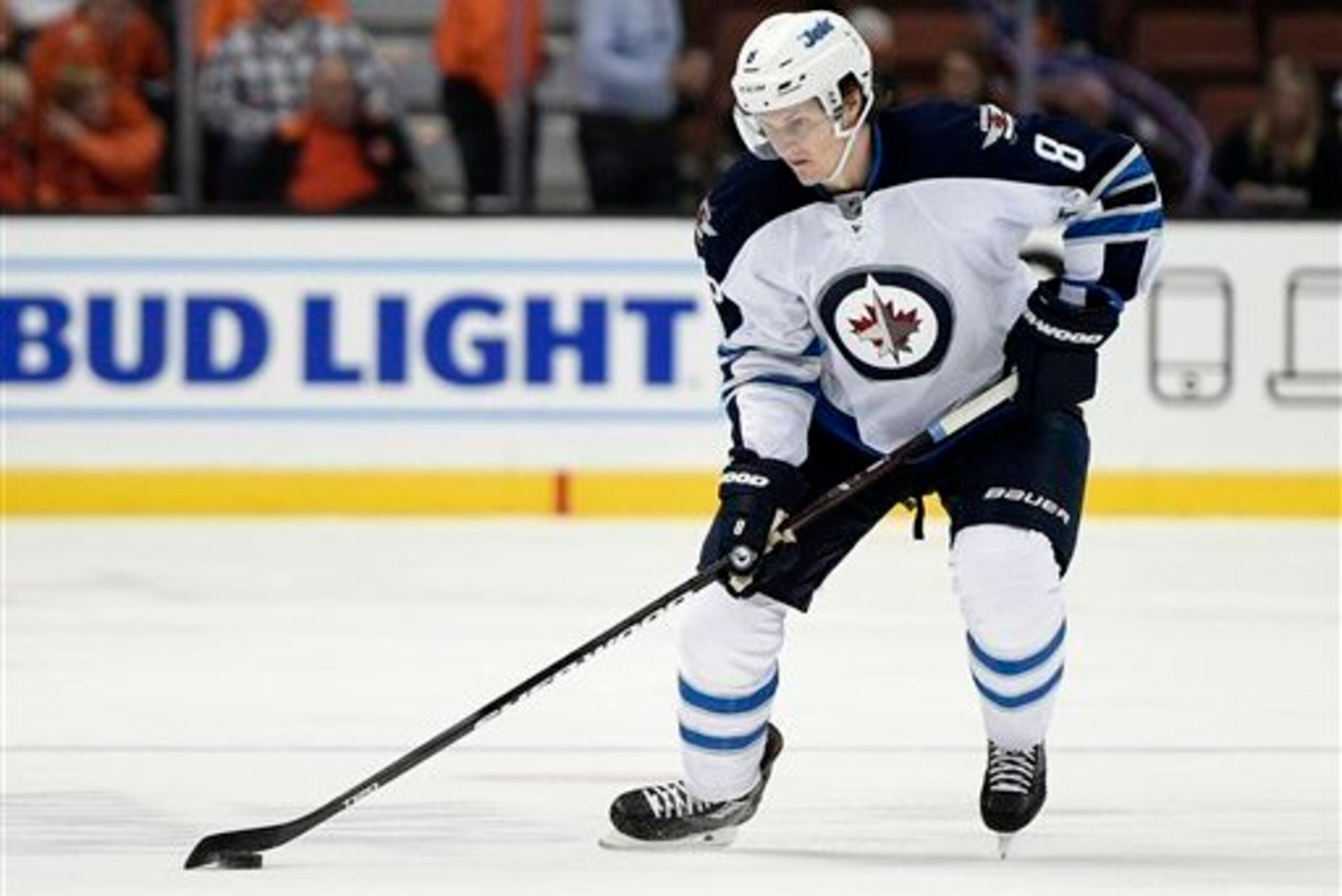
As Wednesday's trades of P.K. Subban for Shea Weber and Taylor Hall for Adam Larsson demonstrated, the post-draft period of the summer isn't just about free agency. It's possible we haven't seen the last of the trading period, either; there are still plenty of teams looking to improve.
Then, of course, there are the restricted free agents to consider. These players are young and technically available to the highest bidder but come with a cost: Their current teams have the right to match any contract offer. If an offer isn’t matched, there’s a significant draft-pick penalty for the acquiring team:
| Less than $1,239,226 | Nothing |
| Over $1,239,226 to $1,877,615 | Third-round pick |
| Over $1,877,615 to $3,755,233 | Second-round pick |
| Over $3,755,233 to $5,632,847 | First- and third-round picks |
| Over $5,632,847 to $7,510,464 | First-, second- and third-round picks |
| Over $7,510,464 to $9,388,080 | Two first-rounders, a second-rounder and a third-round pick |
| Over $9,388,080 | Four first-round picks |
As a result, RFAs are rarely signed. Writing for Bleacher Report, Dave Lozo noted the trend in last year’s look at free agency:
"This is why restricted free agents are more restricted than free. Only three RFAs (Niklas Hjalmarsson, Ryan O’Reilly, Shea Weber) have signed offer sheets since 2008, and the original team matched each of them. Dustin Penner in 2007 is the only player in the past 18 years to sign an offer sheet and not have it matched.
"
Still, there’s a possibility this year will be different, especially with so many teams tight to the salary cap. One area of interest is on defence. Unrestricted free agency offers a limited array of options. As a result, players such as Hampus Lindholm of the Anaheim Ducks and Jacob Trouba of the Winnipeg Jets will look tempting.
On Tuesday, CSN’s Joe Haggerty pointed to the lack of trades as a contributing driver of potential offer sheets, writing that, according to a source, the Boston Bruins “are preparing an offer sheet” to land Trouba. With precious few right-shot defencemen available otherwise, it’s easy to imagine why Boston would consider such a radical move.
Where Will Everyone Sign?
Unrestricted free agents face a difficult decision. In a league where players are assigned to NHL teams based on the luck of the entry draft and where the opportunity to control their fates comes rarely, each signing decision is a personal one that involves a careful analysis of the costs and the benefits—an analysis nobody outside of an individual player's camp can adequately perform.
On the other hand, it can be a lot of fun to match free agents to teams. Here are my predictions for some top players:
| C David Backes | Blues | $5.25 million | Four years |
| LW Mikkel Boedker | Avalanche | $5.25 million | Five years |
| LD Brian Campbell | Stars | $6.0 million | Two years |
| RD Jason Demers | Devils | $5.5 million | Five years |
| LW Loui Eriksson | Canucks | $5.5 million | Five years |
| LW Andrew Ladd | Ducks | $5.5 million | Five years |
| LW Milan Lucic | Oilers | $6.25 million | Seven years |
| RW Kyle Okposo | Sabres | $7.25 million | Seven years |
| G James Reimer | Flames | $2.5 million | Two years |
| C Eric Staal | Wild | $4.5 million | Three years |
Those are just my guesses, though. Readers should feel free to chime in with their own views in the comments section.
Statistics courtesy of Hockey Reference.com, NHL.com and Stats.HockeyAnalysis.com. Salary information courtesy GeneralFanager.com.
Jonathan Willis covers the NHL for Bleacher Report. Follow him on Twitter for more of his work.


.jpg?w=2560 "NFL investigating 2 referees for separate viral exchanges")

.jpg?w=2560 "Report: Chiefs Contact Hill's Agent")
.jpg?w=2560 "OBJ Calls Out Giants After Release")
.jpg?w=2560 "Tyreek makes another cryptic post amid Chiefs rumors")


.jpg?w=2560 "Greenlaw Talks Payton Exchange")
