

Why Turnovers Have Been England's RBS 6 Nations 2016 Surprise Package
England fans, ex-players and journalists have bemoaned England’s failure to win turnovers at the breakdown since the retirement of Neil Back in 2003.
Back, standing at just 5'10", was the last high-quality scavenging openside to wear the Red Rose. But, despite all the obituaries of England’s ability to fashion turnovers, it has been the team's surprise package so far in the 2016 RBS Six Nations.
TOP NEWS

New NFL contenders starting to emerge after Week 4
.jpg?w=2560 "Cardinals Giants Football")
NFL investigating 2 referees for separate viral exchanges

Deion Playbook Found at Hotel
England? Excelling at the breakdown, winning turnovers? Without a proper fetcher and having to make do with two blindsides in the back row? It sounds counterintuitive, and all the more so if one notes captain Dylan Hartley’s post-match comments from Rome, where England triumphed 9-40.
Hartley’s review was hardly complimentary of England’s breakdown play, as recorded by the Daily Telegraph: “We've got higher standards. At the breakdown we were off the money. We have to tighten up.”
Hartley, though, was being harsh on his charges. England’s starting back row might have misfired at the breakdown, but as a whole team, the performance against Italy at the ruck was one of the best in recent memory. In fact, according to the RBS 6 Nations Matchcentre, they recorded an astonishing 17 turnovers.
So far in this year's Six Nations, the next-best turnover display was from the French, with eight against Ireland.
Not all of these England steals were at the breakdown, but nonetheless, it’s a very encouraging statistic.
England’s tries alone suggest a vast improvement in these areas. George Ford’s first-half try came from a superb clear-out inside the Italian 22-metre line won thanks to good rucking from Mike Brown and George Kruis’ athletic claim (see video above).
Similarly, Jonathan Joseph’s third score was made possible by a turnover following a powerful hit by the rapidly improving Kruis.
In fact, the breakdown was excellent in the second half, either mirroring or causing the sharp rise in England’s performance, as a 9-11 half-time lead was extended by 29 points.
The introduction of Maro Itoje—really a second row but operating from No. 6—was encouraging. Writing in the Guardian, Robert Kitson said: “[The] young Saracen did enough at the breakdown alone in the last half-hour to justify his promotion.”
Turnovers were won all over the field and from unusual places. Lightweight wing Anthony Watson even stole the ball from the centre Gonzalo Garcia.
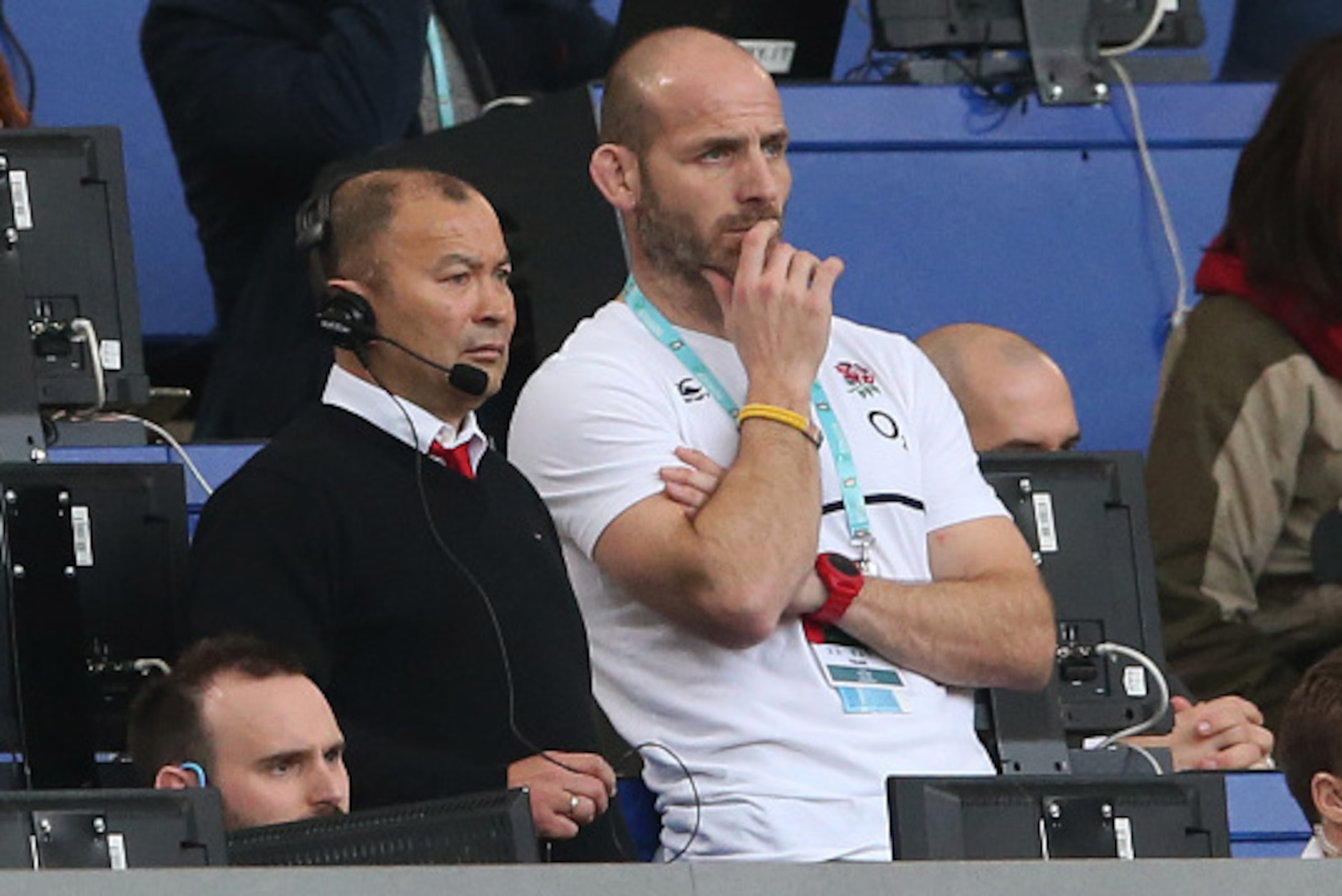
After the win against Scotland, England head coach Eddie Jones highlighted to Sky Sports that the breakdown was one of the two areas his side would focus on most leading up to Italy, and he received a positive response.
England, though, were not undone at Murrayfield in this area, despite the Scots fielding two specialist fetchers in John Barclay and John Hardie. The stats show that England won the turnover count seven to four. Jones, however, requires more.
Jones has enlisted the help of former Australia flanker George Smith, winner of 111 caps in the back row, as an informal breakdown adviser, and given England’s previous ineptitude at the ruck, it is tempting to see the coach and the veteran Wasps player as part of this mini-renaissance.
England, moreover, still have a lot of work to do to become a fiercely competitive side in the contact area. While it is great to see back-three players and tight forwards turning over ball, much more is expected from the back row. If Billy Vunipola plays at No. 8 and is the premier ball-carrier, the onus must be on the flankers to scavenge.
England must demand more from Chris Robshaw and James Haskell on the floor, but nonetheless, their breakdown play—from being ineffectual at the World Cup and for aeons before that—has been the team’s surprise package thus far in the Six Nations.
.jpg?w=2560 "Titans Giants Football")


.jpg?w=2560 "Ward Nearly Walks Out of Presser 😳")
