Kevin Mitchell and the 10 Best British Boxers Who Never Won a World Title
Legendary heavyweight George Foreman once said: "When I was a boxer, I wanted to be champion of the world, not the richest man in the world."
While money and fame can be a by-product of success in the ring, fighters crave belts.
The hours spent pounding the streets to lose weight, the rounds of sparring in the gym and a dedication to a controlled diet are all sacrifices made in the pursuit of glory.
However, not all those hopeful of ruling at the highest level go on to achieve their dream.
In announcing his retirement, lightweight Kevin Mitchell had to face up to the realisation he would never get his hands on a world title.
The Londoner joins an unwanted list of talented British fighters who never became world champions—but does he rank in the top 10?
Here, Bleacher Report has attempted to rank the Brits who, for whatever reason, failed to clear the final hurdle.
Honourable Mentions
1 of 11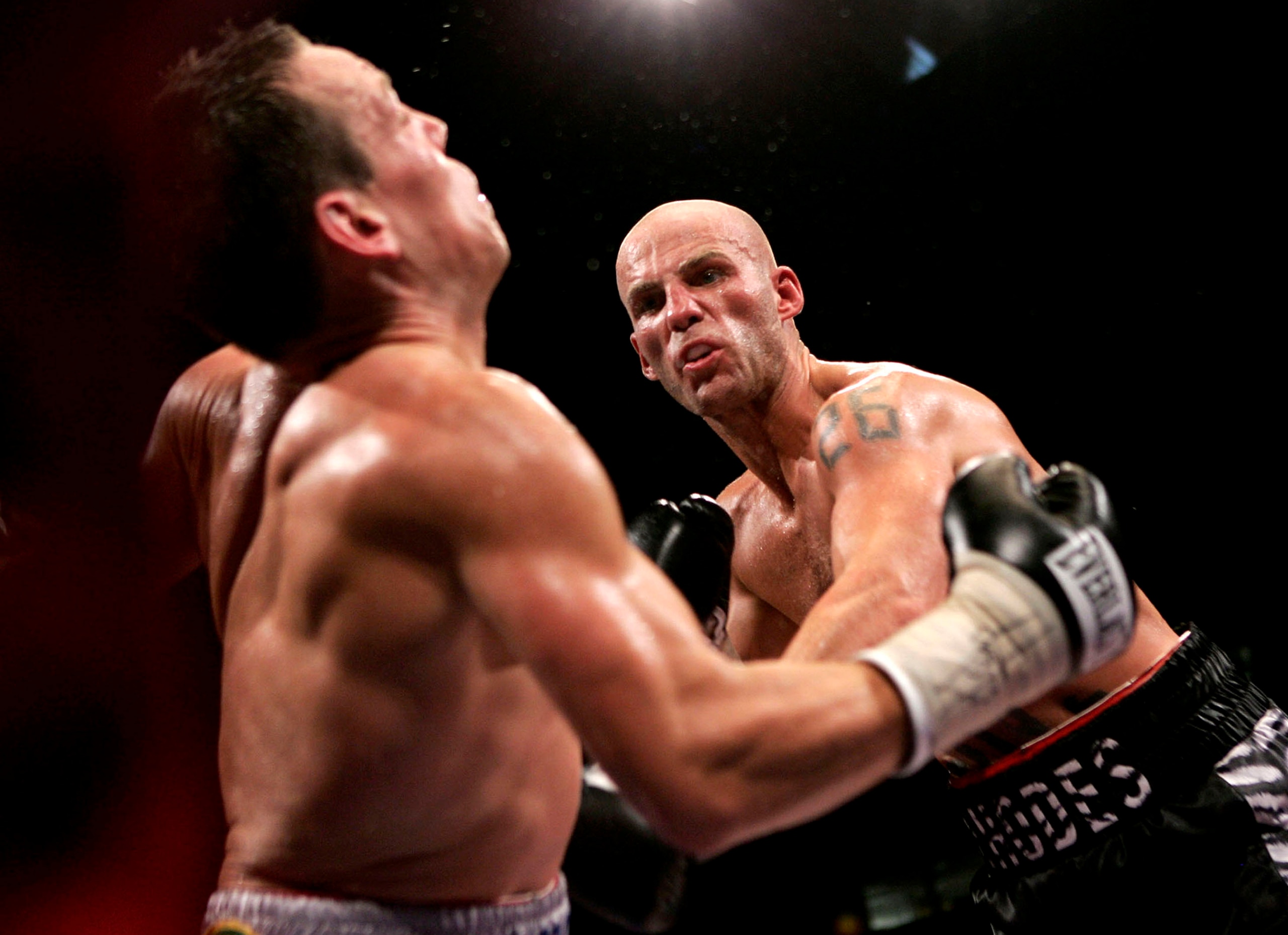
Working out who made the cut took hours, even days, of contemplation. OK, maybe not that long, but there were some tough calls.
Ernie Roderick had two unfortunate situations occur—the first was fighting against the great Henry Armstrong for a world title, while the other was the second world war interrupting him during the prime of his career.
Thomas Watson—also known as Seaman Tommy Watson—was a dominant force in the featherweight division, only to fall short in his bid to dethrone world champion Kid Chocolate in 1933.
Kirkland Laing had the talent in the 1980s, but issues outside the ring curtailed his chances of living up this potential. Still, he does have a win over the legendary Roberto Duran on his record.
Jock McAvoy, Owen Morrison and Tony Sibson were also considered for selection for the top 10.
From the modern era, Ryan Rhodes missed out on the vacant WBO middleweight belt after losing on points to Otis Grant. He tried again to win a world title at the very end of his career, only to be knocked out by Saul "Canelo" Alvarez in Mexico.
There were plenty of others who could have been included—feel free to point out any obvious omissions via the comments section.
10. Henry Cooper
2 of 11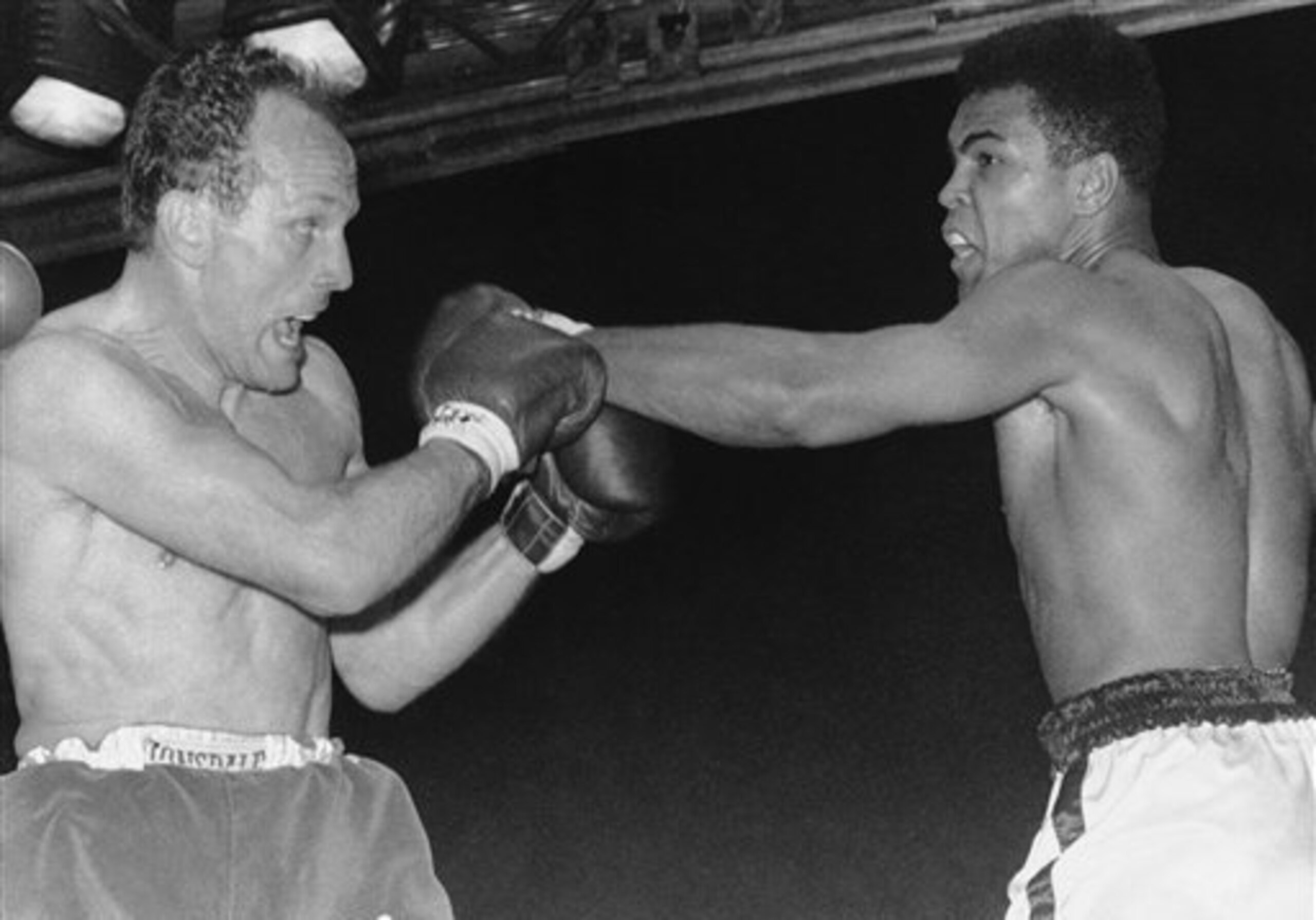
Something of a sentimental selection, Sir Henry Cooper won the hearts of the British public—and the friendship of his most famous opponent—but fell short in his attempt to become a world champion.
The heavyweight had the misfortune of being around in an era that not only saw just one recognised world champion, but also happened to include some legendary names in the division.
He fought the biggest heavyweight of the lot, in terms of reputation at least, in Muhammad Ali.
The 1963 bout at Wembley Stadium in London saw Cooper hold his own through five rounds. However, in the sixth, the challenger suffered a cut so bad over his left eye that the bout had to be stopped.
Our Henry, known for his huge left hook, never got another shot at world glory.
He finished his career with a 40-14-1 (27 KOs) record, having won the British, Commonwealth and European belts.
Cooper—who was awarded a knighthood—died in 2011 at the age of 76.
Ali said of his former foe, per Gareth A Davies of the Telegraph: "Henry always had a smile for me; a warm and embracing smile. It was always a pleasure being in Henry's company. I will miss my ole friend. He was a great fighter and a gentleman."
9. Kevin Mitchell
3 of 11When he won an ABA title at the age of 18, Kevin Mitchell was viewed as a future world champion.
The Hammer (39-4, 29 KOs) twice failed in attempts to deliver on his early promise, while the other two defeats in his pro career were in bouts for interim world titles.
His loss to Scotsman Ricky Burns—who held the WBO lightweight title at the time—in 2012 saw him stopped in Round 4 by a bigger, stronger opponent.
However, it is the defeat to WBC champion Jorge Linares in 2015 that will forever haunt the Londoner.
Mitchell dropped his Venezuelan opponent to the canvas in Round 5 but couldn't force a stoppage. In a pulsating fight, his window of opportunity quickly closed.
With his face a bloody mess and a huge welt growing by the minute next to his left eye, the home favourite was stopped in Round 10 at the O2 Arena in the English capital.
While he has now hung up his gloves, Mitchell hopes to pass on some of his knowledge by becoming a trainer.


.jpg?w=2560 "Cardinals Giants Football")
8. Michael Watson
4 of 11
Michael Watson fought three times for a world title—his last failed attempt left him fighting for his life.
The Londoner—who started out at middleweight before moving up to super middle—played his part in a glorious era for British boxing.
He ended Nigel Benn's unbeaten record in 1989, becoming the Commonwealth champion in the process.
However, after the win over Benn, he did not fight again for another 11 months. The period of inactivity proved costly, as he was stopped by WBA middleweight champion Mike McCallum.
Chris Eubank narrowly held on to his WBO title against Watson when the two Englishmen met in 1991, with the quality of the bout leading to a rematch later the same year.
But, the fight for the WBO's vacant super middleweight belt saw Watson not only lose but suffer serious injury.
Watson—who celebrated his 50th birthday in March, 2015—was in a coma for 40 days and had six operations to remove a blood clot.
Benn was a fan of his compatriot, telling Tom Gray of The Ring magazine: "I had a lot of respect for Michael because he was a great guy. His career didn’t go the way it should have because he was inactive for long periods of time. Michael could have gone much further—if he’d been promoted properly."
7. Nel Tarleton
5 of 11Nel Tarleton fought in an astonishing 148 bouts in his long career, a number that is even more impressive considering he had only one lung.
Tall and thin, what he lacked in power he made up for in skill and stamina.
Nella—who was born in Liverpool, England—won the British and Commonwealth titles at featherweight.
However, he came up short in two fights against National Boxing Association champion Freddie Miller. The American won both times on points, even though the bouts were staged in Tarleton's back yard.
A bout of pneumonia early in 1937, followed by a car crash, forced Tarleton to take a break from boxing. He returned to action in Oct. 1938 and carried on fighting until 1945.
Tarleton (119-21-8, 42 KOs) died in 1956 just two days before his 50th birthday.
6. Alan Rudkin
6 of 11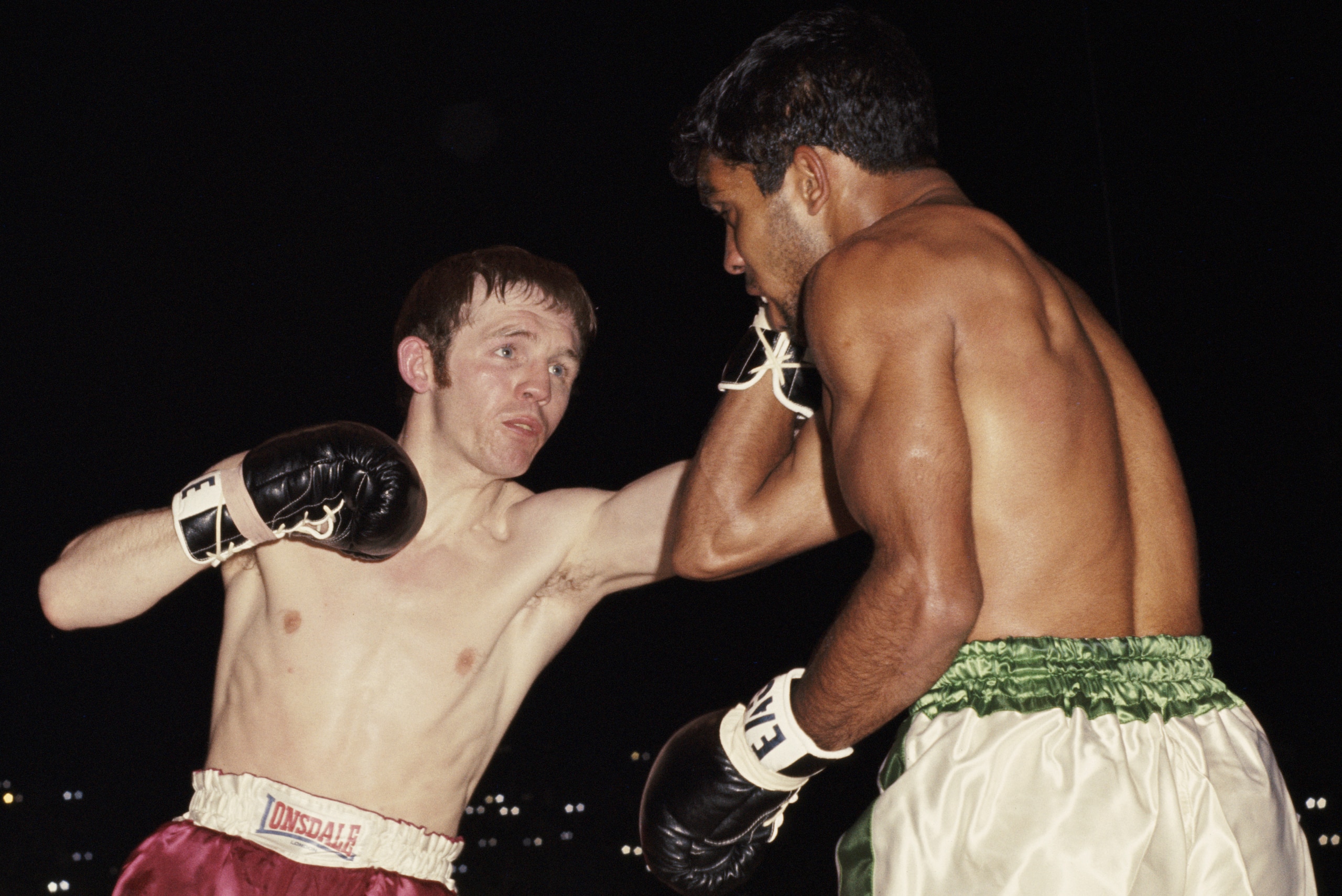
Alan Rudkin (42-8, 15 KOs) was born in Wales but was very much at home in Liverpool, England.
In a time when the city was gripped by The Beatles, the bantamweight was a big deal locally in the 1960s.
But, while he challenged three times for the undisputed world title abroad, he never managed to have success at the very highest level.
There is, though, little disgrace in losing to a trio of great names.
Rudkin was beaten on points by Fighting Harada in 1965 in the WBA and WBC champion's back yard in Japan then fell to a split-decision loss against Australian Lionel Rose in Melbourne four years later.
Unbeaten Mexican Ruben Olivares made sure the judges were not needed in 1969, knocking the Englishman out in Round 2.
Awarded an MBE in 1973, Rudkin died after collapsing in the street in 2007. He was 68.
In writing the boxer's obituary, boxing journalist and television commentator John Rawling noted in the Guardian: "Undoubtedly one of the finest that Britain has ever produced in his division, he would probably have reached the peak of his profession in any other era."
5. Len Harvey
7 of 11How good was Len Harvey? Well, he managed to win the British title at middle, light heavy and heavyweight—all in the space of a year.
The fighter from Cornwall, England, defeated domestic rival Jock McAvoy in 1939 at light heavyweight to be recognised as a world champion by the British Boxing Board of Control.
However, in his two attempts to win National Boxing Association titles—seen at the time as the belt to define who was world champion—he came up short.
Harvey lost to Marcel Thil of France at middleweight in 1932 then suffered a knockout in Round 15 when challenging light heavyweight champion John Henry Lewis in 1936.
He joined the Royal Air Force in the second world war and ended his career with a defeat, surrendering the British and Commonwealth titles at light heavy to Freddie Mills.
Harvey—who died in 1976 at the age of 69—is a member of the International Boxing Hall of Fame.
4. Dave Charnley
8 of 11
Lightweight Dave Charnley won the British, Commonwealth and European belts in his pro career.
The Dartford Destroyer also fought a wonderful trilogy against American Joe "Old Bones" Brown.
Charnley was stopped in the duo's first meeting in Texas due to cuts in 1959, while the rematch—staged at Earl's Court in London two years later—saw Brown retain his world title on points.
Although the Englishman came out on top in the third and final fight in 1963, Brown was no longer world champion by then.
Charnley's final record of 48-12-1 (27 KOs) was hurt by three defeats in his last four outings, the last of them after moving up in weight to take on Emile Griffith.
After retirement, he switched to owning hair salons and also entered the world of property development. He died in 2012 at the age of 76.
Journalist Kevin Mitchell wrote Charnley's obituary for the Guardian, commenting: "Light on his feet, he advanced on his opponents from a southpaw stance like a tiger closing on his prey. He had a wicked left, thrown hard and straight."
3. Owen Moran
9 of 11Owen Moran never backed down from a fight, both in and out of the ring.
The fiery featherweight from Birmingham, England, travelled to the United States to face the biggest names.
In an excellent profile of the boxer, Mike Lockley wrote in the Birmingham Mail: "Moran’s five years in America—from 1908 to 1913—were littered with street altercations and he took particular pride in picking on New York cops. In fact, he decked a porter minutes after arriving in America."
Moran failed to dethrone world champion Abe Attell twice in 1908, with the bouts being scored as draws after a combined 48 rounds.
The pair met again in 1910, with their third bout also being drawn.
Moran recorded a win over Battling Nelson but fell short against Ad Wolgast in a third attempt to claim a world title, albeit the knockout blow was said to have landed below the belt.
His career fell flat in the final stages—Moran won just three of his final 10 bouts.
He died in 1949 at the age of 64.
2. Herol Graham
10 of 11Herol "Bomber" Graham had three failed attempts at winning a world title.
A product of Brendan Ingle's gym in Sheffield, England, Graham (48-6, 28 KOs) was a skilful practitioner who reeled off 38 straight wins at the start of his professional career.
He had a nasty habit of keeping his hands low, leading to his downfall at the highest level.
The switch-hitting fighter missed out on the WBA title at middleweight in 1989 after coming out on the wrong end of a split-decision result against Mike McCallum.
He looked set to get the better of Julian Jackson the following year in a battle for the vacant WBC belt.
However, having dominated proceedings, Graham was caught by a right hook in Round 4 that knocked him out cold.
After a four-year hiatus between 1992 and 1996, the Nottingham-born fighter returned at super middleweight. His career ended with a loss to IBF champion Charles Brewer in 1998.
Respected journalist Steve Bunce of the Independent said of Graham: "He was beautiful to watch, impossible at times to hit and that is why nobody wanted to risk being connected with him; Marvin Hagler, Tommy Hearns and Sugar Ray Leonard all knew his name but opted never to utter it in public."
1. Jim Driscoll
11 of 11Welshman Jim Driscoll went from the fairground booths to the boxing ring during a career that was temporarily halted by the first world war.
The man nicknamed Peerless Jim won the British and Commonwealth featherweight titles before travelling to the United States.
He faced world champion Abe Attell in 1909 but, despite holding the upper hand over the course of the 10-rounder, the no-decision verdict stopped him claiming the belt.
Rather than wait for a rematch, Driscoll boarded a ship to return to Britain the next day to make sure he fulfilled a commitment to appear in a charity event in Wales, per Sean Davies of BBC Sport.
An attempt to become European champion at lightweight in 1910 resulted in Driscoll (53-4-6, 35 KOs) being disqualified for butting Freddie Welsh.
After fighting for the final time in 1919, Driscoll died six years later at the age of 44. He has since been inducted into the International Boxing Hall of Fame.
Do you agree with the rankings? It's all a matter of opinion—feel free to share yours in the comments section.
.jpg?w=2560 "Hill Injury Update Football")
.jpg?w=2560 "Titans Giants Football")

.jpg?w=2560 "Tyreek makes another cryptic post amid Chiefs rumors")