

F1 2016 Head-to-Head: Max Verstappen vs. Carlos Sainz at Toro Rosso
The Red Bull-owned Toro Rosso team is unique in Formula One in that it exists for the benefit of one of its rivals.
The team's goal is to take talented but raw youngsters from the Red Bull Junior Team and refine them into finished products who are ready to step up to the main Red Bull squad whenever a vacancy arises.
Sebastian Vettel is the most well-known and successful product of this system, while Daniel Ricciardo and Daniil Kvyat also earned a promotion after a season or two at Faenza.

.jpg?w=2560 "Rams Raiders Football")

But for all the analysis and effort that goes into selecting suitable candidates, most Toro Rosso kids fail to make the cut.
Scott Speed, Sebastien Bourdais, Sebastien Buemi, Jaime Alguersuari and Jean-Eric Vergne all saw their F1 careers stall when they reached the end of their times at Toro Rosso, while Vitantonio Liuzzi hung around near the back of the field for a few seasons before following them into the wilderness.
Success is possible, but the statistics show that a driver is twice as likely to fail.
So when Max Verstappen and Carlos Sainz Jr. stepped up to Toro Rosso at the start of 2015, the weight of the world was immediately piled upon their young shoulders.
Both knew the score. Making the right sort of impact would give them a shot at the life they had always dreamed of; but if they failed to shine, their F1 careers would be over before they had truly begun.

Verstappen and Sainz Jr. took different routes to the pinnacle of single-seater motorsport.
The younger of the two, Verstappen—just 17 when he made his racing debut—was plucked straight from his first season of European Formula Three and thrust into the spotlight as the youngest-ever driver to sit on an F1 grid.
When his promotion to a race seat was announced in the summer of 2014, he had entered just 13 race weekends in single-seaters, contested a total of 39 car races and won 10 of them. His lack of experience drew comparisons with Kimi Raikkonen—a veteran of just 23 races when he made his F1 bow back in 2001.
And as was the case with Raikkonen, some felt he should not be driving the car. Jacques Villeneuve, the 1997 world champion, was an especially vocal critic, feeling Verstappen's promotion was undeserved. He told Autosport in August 2014:
"It is the worst thing ever for F1 because it will have two effects. It will either destroy him or, even if he is successful right away, then F1 will be meaningless.
What will F1 be? It will be nothing. It doesn't do any good for anyone.
It does a good splash of publicity now for Red Bull but putting a Red Bull helmet on his head for four years [before F1] probably would have been better.
"
But others had no issue with the youngster's promotion, including double world champion Fernando Alonso. Speaking to Sky Sports News HQ, he said:
"I think it is just one number on your passport, the age.
At the end of the day you need to be ready for the challenge and be ready for Formula One grands prix. Some people are ready at 17, some people are ready at 28—that is what we don’t know.
So before saying anything we need to see how Verstappen does next year and after six to eight races we can see if he was ready or not. But at the moment anyone is ready.
"
Both viewpoints had their merits—putting a 17-year-old onto an F1 grid was a risk, but as Alonso says, if a driver is good enough, he's old enough. Red Bull certainly thought this way, but with such limited experience, it was difficult to say whether Verstappen would flounder or flourish when he made his F1 debut.
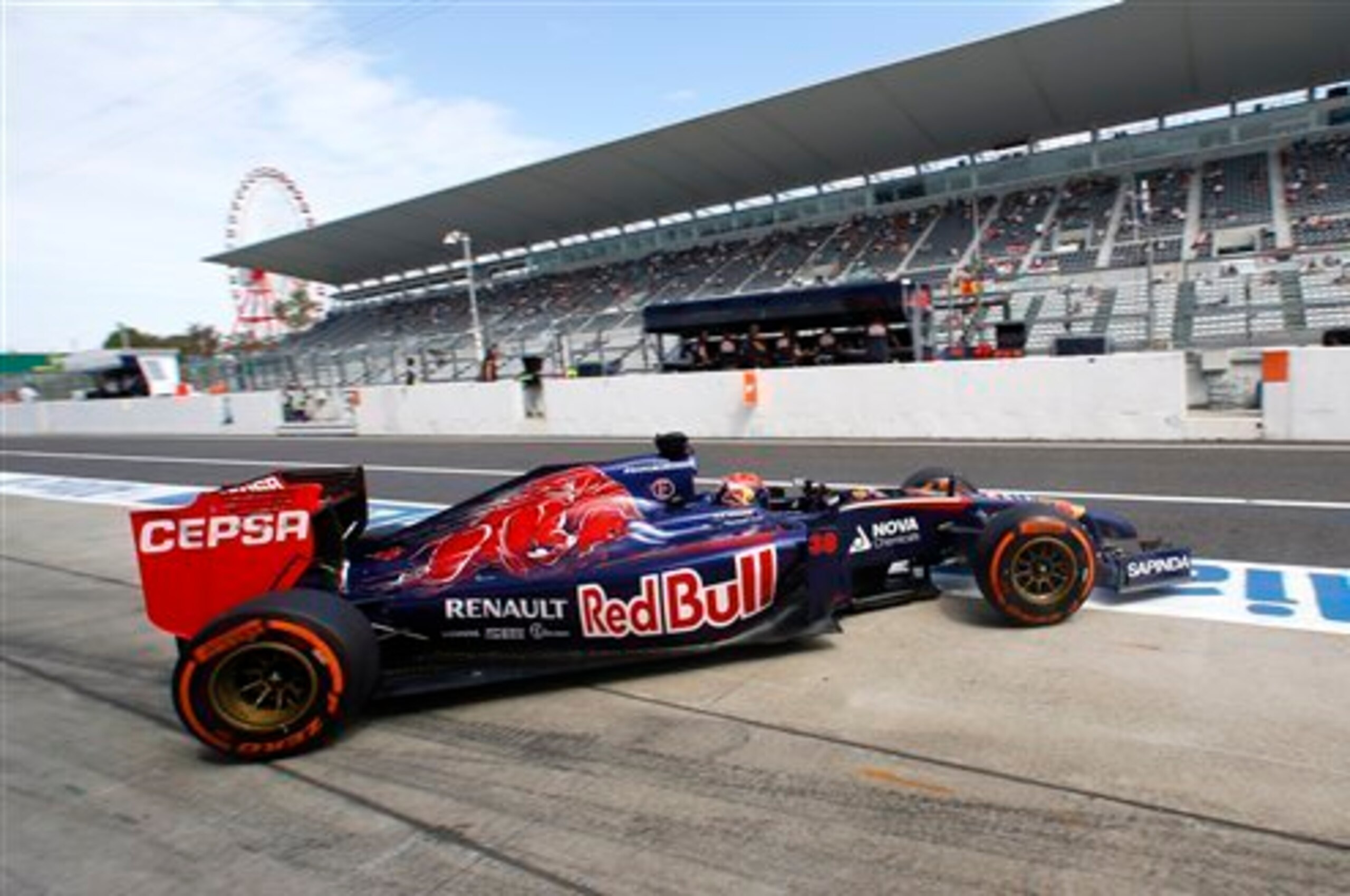
There were no such question marks over the promotion of Sainz. Though just three years older than his new team-mate, the Spaniard had a wealth of experience behind him when he became a Toro Rosso driver a few months after Verstappen.
His climb up the motorsport ladder had been more traditional, starting with Formula BMW in 2010 and ending with an impressive, title-winning year in Formula Renault 3.5 in 2014. On the way, he took part in Formula Renault, F3 and GP3—per Driver DB, his post-karting, pre-F1 career amounted to 165 races.
But there were nonetheless a few doubts regarding Sainz. His age wasn't an issue, but his junior record, impressive in part, was worryingly patchy.
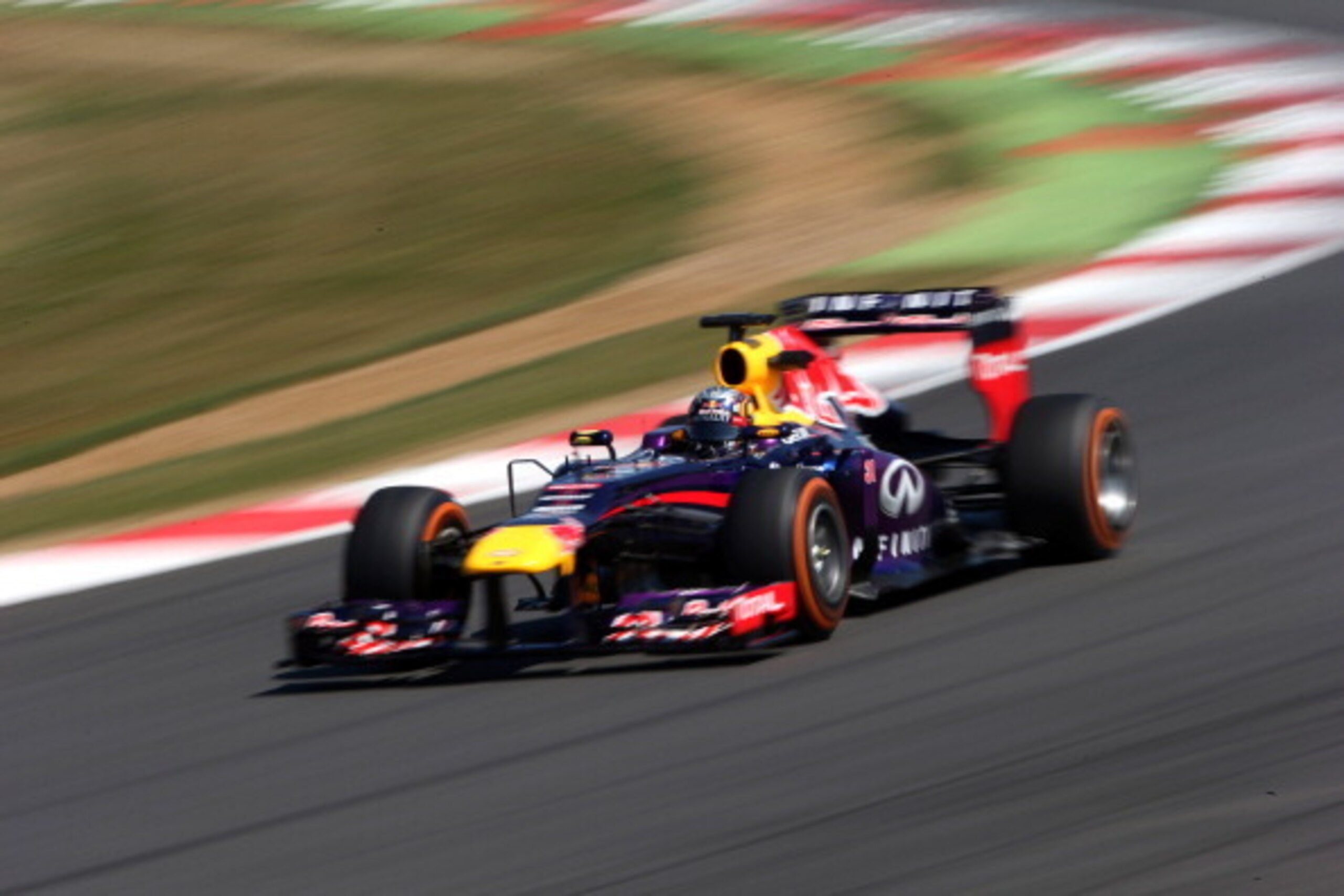
Sainz beat then-team-mate Kvyat to the title in the 2011 Formula Renault 2.0 Northern European Cup. He also defeated the Russian—now a driver with Red Bull in F1—in the standings of the more prestigious Formula Renault 2.0 Eurocup in the same year.
But in 2012, the Spaniard failed to impress. Two of his Carlin team-mates—Jack Harvey and Jazeman Jaafar—comfortably beat him in the British F3 standings, and regular team-mate William Buller came out on top in the F3 Euro Series.
Sainz moved to GP3 in 2013 and reunited with former team-mate Kvyat, who had remained in FR 2.0 for an extra year. The pair drove for the Christian Horner-linked MW Arden team—with drastically different fortunes.
A strong end to the campaign saw Kvyat win the championship at the final race weekend of the season, taking three victories on his way to a total of 168 points. Sainz could only manage 10th in the standings, recording a best finish of second and scoring just 66 points.
Kvyat leapt to the top of the Toro Rosso candidates list, and the team rewarded him with a race seat in 2014, while Sainz switched to Formula Renault 3.5 in a desperate bid to revive his F1 dreams. The experience gained from a handful of 2013 outings in the series proved invaluable, and he dominated the season with seven wins from 17 starts.
The Spaniard had risen to the challenge under intense pressure and landed a move up to F1—but which Carlos Sainz Jr. would turn up when the 2015 season got underway?
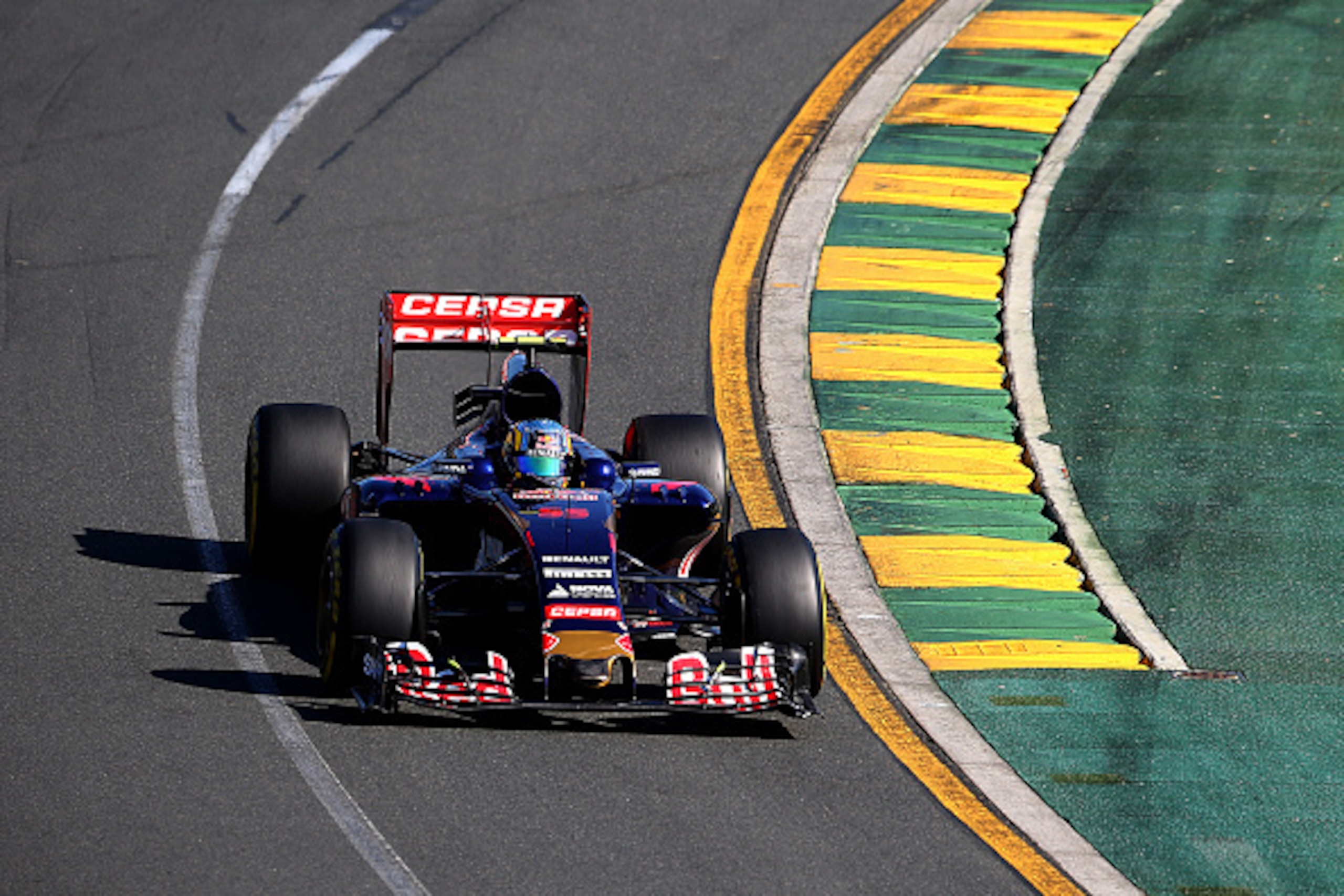
It took only a handful of races to remove any doubts about either driver's ability to cope at the highest level. Sainz got off to a flying start with seventh on the grid and points on his debut in Australia, while Verstappen broke his own duck with a brilliant drive to seventh in Malaysia.
On the way, the Dutchman gave us the first glimpse of his impressive wheel-to-wheel driving ability, going around the outside of Ricciardo at Turn 1 and passing Sainz in unconventional—but spectacular—fashion late in the grand prix.
Reliability issues took their tolls on both men's points tallies, robbing each of a number of early-season scores. But for the most part, they suffered equally—and their on-track performances were also of a broadly similar level.
And that level was generally excellent, given they were both rookies. Following the Spanish Grand Prix, where both Sainz and Verstappen had qualified a half-second ahead of the two Red Bulls, Helmut Marko issued a clear warning to the senior team's drivers to up their games.
The Red Bull advisor told Kleine Zeitung (h/t Motorsport.com), "Our established guys need to look out. Paradoxically, the more inexperienced ones did the better job," before adding that Sainz and Verstappen were "something extraordinary."
It was high praise indeed from the man who guided Vettel and Ricciardo to the top, and it was nothing less than the two rookies deserved.

On Saturdays, it was Sainz who seemed to have the better pace, and after nine rounds of the championship, he led the intra-team qualifying battle 6-3. Verstappen had tended to be better in the races, but he had also made a number of race-ending errors—something Sainz, at this stage, was yet to do.
Verstappen earned two penalty points and a grid drop for crashing into Romain Grosjean at Monaco, and at Silverstone, he spun out after just three laps. But he nonetheless reached the halfway stage of the season with more points than his team-mate—10, to Sainz's nine.
These totals were far lower than they should have been—the STR10 was too good to only score 19 points from the opening nine races. Reliability had been the main culprit, with bad luck costing the team far more points than bad driving.
But at the Hungarian Grand Prix, the team's fortunes finally shifted—at least, they did on one side of the garage—and Verstappen's season truly exploded into life.
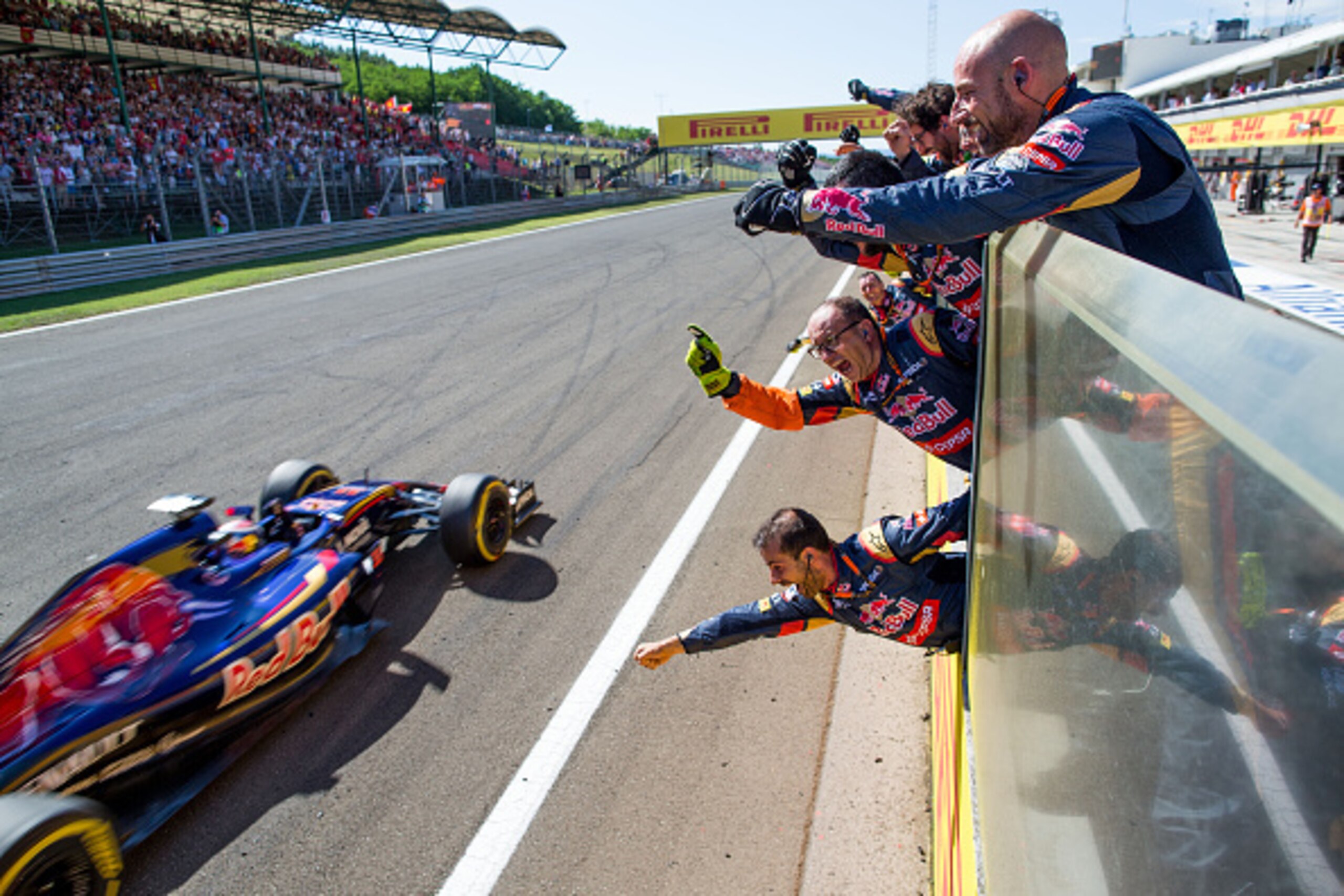
The Dutchman finished fourth at the Hungaroring to take his season tally to 22 points, and the battle between the two Toro Rossos was mostly one-way traffic from this point on.
It's true that Sainz encountered far more reliability trouble in the second half of the season, but Verstappen seemed to discover an extra gear, and the Spaniard simply did not have an answer.
In the 10 races from the Hungarian Grand Prix onward, Verstappen finished in the points eight times—including a string of six consecutive top 10s—to finish the year 11th in the drivers' standings with an impressive total of 49 points.
Sainz only managed three additional points finishes in the second half of the year, taking his points tally to just 18.

Furthermore, errors began to creep into his driving. A heavy crash in practice forced Sainz to start from the back of the grid for the Russian Grand Prix, and two weeks later, another mistake—this time in qualifying—left him 20th for the start of the United States Grand Prix.
It would be unfair to say Sainz went backward as the season progressed, and the reliability troubles he encountered massively magnified the difference between him and Verstappen. They ended the year separated by 31 points—a gulf that tells a wholly inaccurate story.
But there's no escaping the fact that Sainz did not appear to improve throughout the year as a rookie normally would.
Verstappen, by contrast, certainly did. As he gained experience, he became not only quicker in the races but less prone to errors—and his single-lap pace improved as well. By the end of the season, he silenced even his harshest critics, and the F1 team principals in Autosport's annual poll voted Verstappen the fourth-best driver of the year.
Sainz didn't even make the top 10.

The 2016 season will be pivotal in the careers of both drivers. Verstappen's performances in 2015 marked him out as a future world champion; he knows that if he can build on what he has already achieved, the F1 world will be his oyster.
A number of top teams are likely to have vacancies ahead of 2017, and Sky Sports F1's Martin Brundle expects both Ferrari and Mercedes to show an interest—while Red Bull, who have the youngster under contract, will no doubt also be in the mix.
If Verstappen can maintain his performance level throughout 2016, a promotion to Red Bull looks likely.
But if he moves up yet another gear and starts to beat Sainz easily and regularly, other teams will probably start to circle. If the big boys decide he is worth whatever it would cost to buy him out of his Red Bull contract, Verstappen could find himself with a choice between two or three of the top seats in F1.
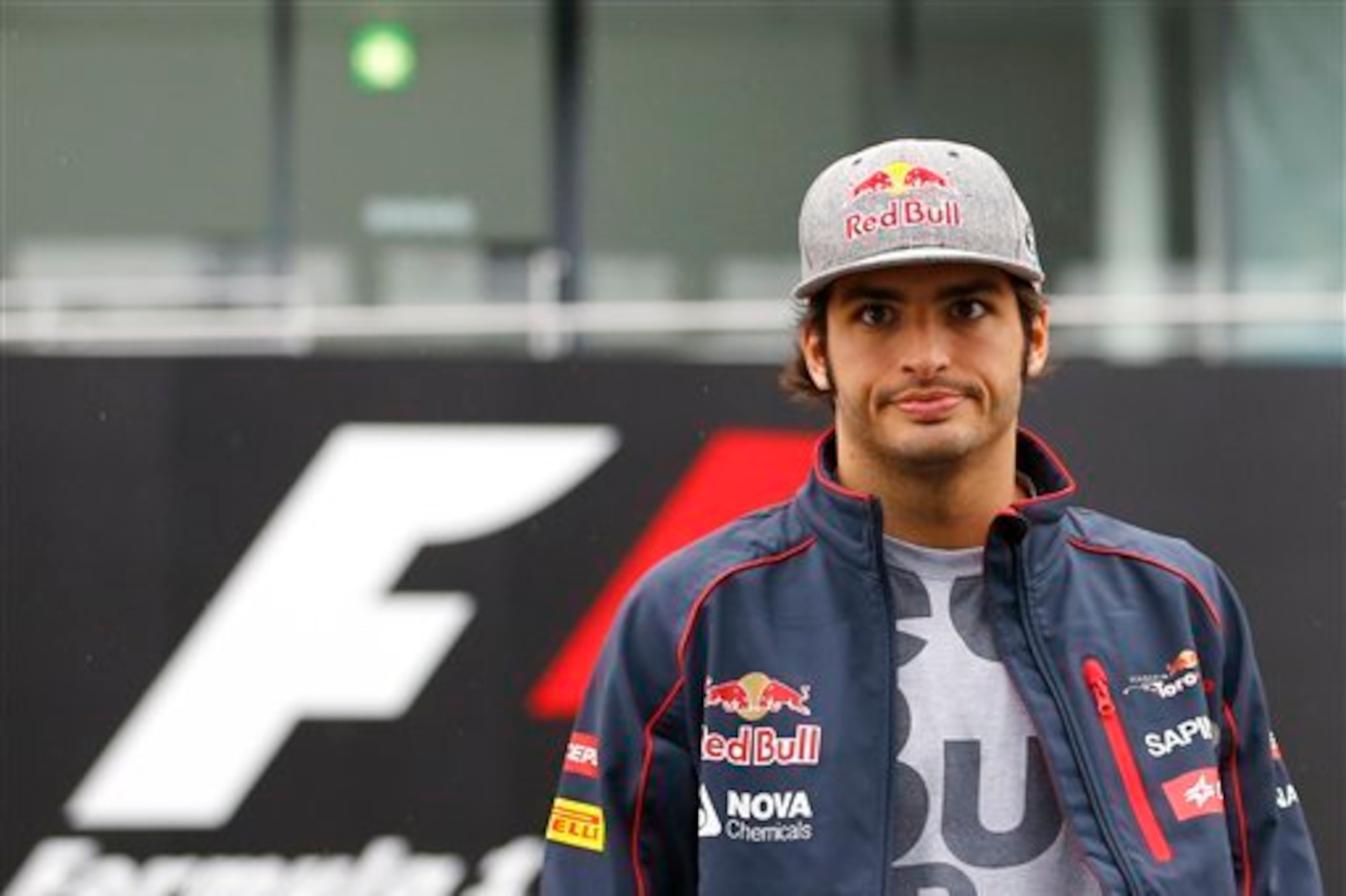
Sainz is in a somewhat different boat. He drove well in 2015 and had a good debut year, but "good" is not enough for Red Bull—or for any team that can afford to pick a driver based on his talent alone.
Jean-Eric Vergne was good, as was Sebastien Buemi, but Toro Rosso cut both of them loose, and neither looks likely to ever race in F1 again.
In order to avoid that fate, Sainz needs to up his game and show the world he is an extraordinary talent, too. He must prove to Red Bull that he is as good as Verstappen—or at the very least, that he is better than one of the Austrian team's current drivers.
Unless something truly remarkable happens between now and the end of the year, there'll be a maximum of one free 2017 seat at the main Red Bull team. The probability is that Verstappen will be first in line—but if he goes elsewhere, the door might remain open for Sainz to step up instead.
But that will only happen if Red Bull consider him to be a better prospect than either Ricciardo or Kvyat.
.jpg?w=2560 "Steelers Saints Football")

.jpg?w=2560 "Packers Safety Slams Refs 🤬")

.jpg?w=2560 "🚨 Week 8 AP Top 25 Poll")

