

Who's to Blame for Auburn's Struggles in 2015?
Two different Auburn Tigers teams have taken the field in the last several weeks.
Neither of them are as successful as what the Tigers were predicted to be this season, but one is clearly better than the other.
One of those teams handled Texas A&M on the road last weekend for a huge win and started Saturday's game against Georgia with an impressive opening-drive touchdown.
.jpg?w=2560 "AP Poll Top Five Week 9")
.jpg?w=2560)
But then the other team, one that blew opportunities to win against Mississippi State, Arkansas and Ole Miss, checked in sometime later. That team only put together 15 yards of offense in the second half and was unable to hold onto a lead against a struggling Bulldog squad.
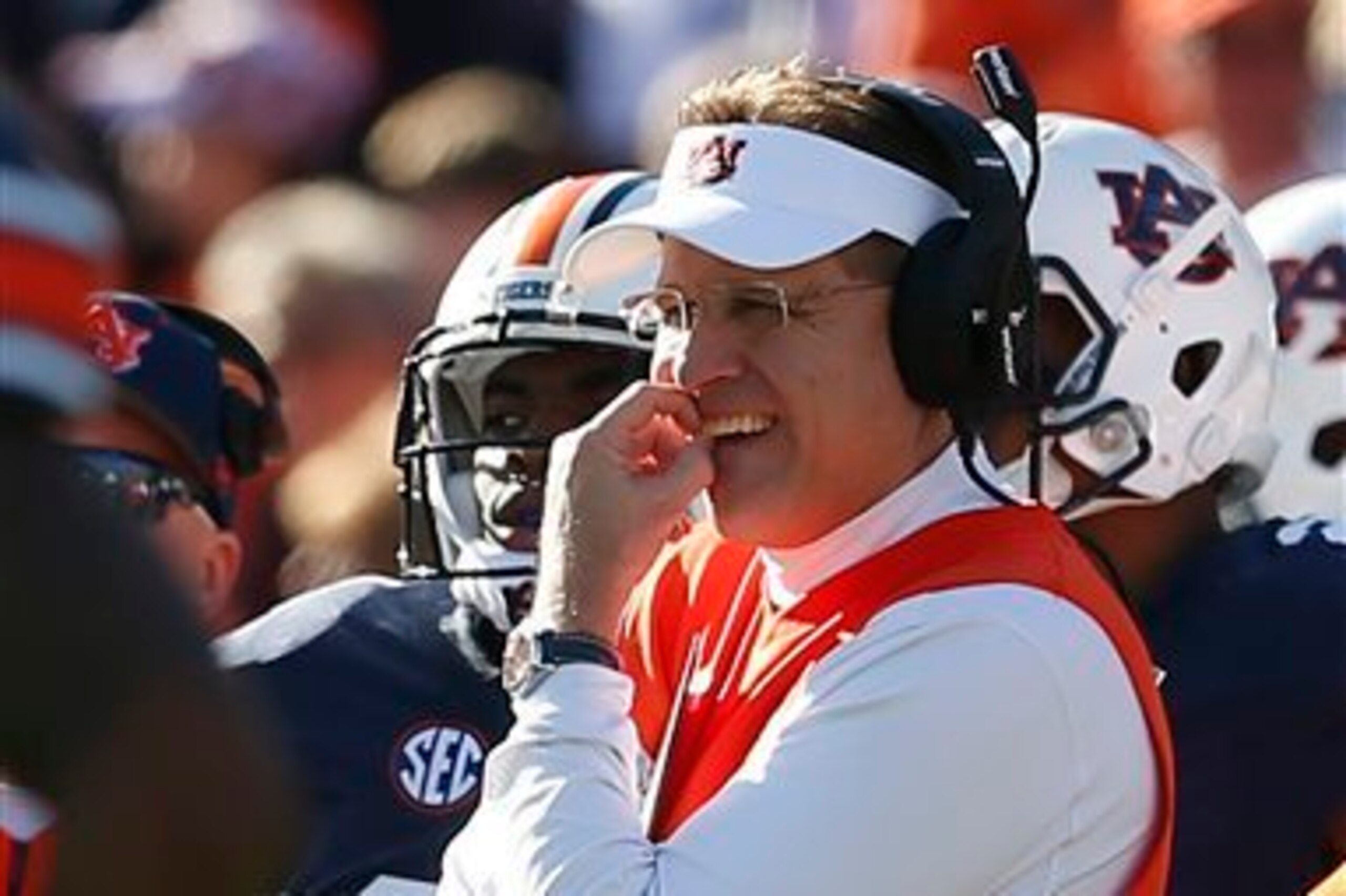
Although the way these two Auburn teams have played look quite different, they're both led by the same head coach—Gus Malzahn.
Just a week after relieving a ton of pressure with a win against Texas A&M, Malzahn was the subject of intense criticism on another Saturday afternoon in Jordan-Hare Stadium as Auburn fell, 20-13, to rival Georgia.
"Obviously, in the second half we didn’t get it done," Malzahn said in quotes emailed by Auburn. "Uncharacteristic, we had three turnovers. We had been protecting the football extremely well, and the three turnovers were big. The special teams touchdown with the game tied was also uncharacteristic as well."
Two weeks ago, in a 27-19 loss at Ole Miss, Malzahn and his offensive staff's play-calling in the red zone came under fire.
On Saturday, the decision to pull starting quarterback Jeremy Johnson for Sean White played a huge role in the disappointing home loss.
Johnson led Auburn to a quick offensive start for the second week in a row, as the Tigers walked down the field for a 75-yard touchdown drive. The starter-turned-backup-turned-starter completed his first four passes of the game, mostly short routes to wide-open receivers.
Then, early in the second quarter, Johnson sailed a pass to an open Tony Stevens on third down. Georgia picked off the pass and used the good field position to tack on its first three points of the game.
With Johnson, Auburn scored again before halftime. He went into the locker room 7-of-11 passing for 24 yards and an interception. Those numbers weren't good, but they weren't abysmal—the yardage was affected by the steady diet of screens and quick passes.
But after Johnson missed on a third-down deep ball early in the third quarter, Malzahn went to White, who would go 1-of-5 passing for one yard.
"We knew we were going to play both quarterbacks," Malzahn said. "We made that call before the game and just felt like that was a good time to put him in there...We went three-and-out and it obviously didn’t work out, but that was our thought process.”
The injured leg that kept him out of the game against Texas A&M didn't look much better, as White had zero mobility in the pocket or accuracy on his passes. He struggled against Georgia's increasing pressure and gave away a crucial fumble in the fourth quarter.
Malzahn even admitted after the game that White was less than 100 percent, according to James Crepea of AL.com:
And while Johnson was far from impressive at quarterback, he at least had two healthy legs and the ability to move around when needed. White looked off from the first couple of drives.
When he finally came back into the game, Johnson converted a fourth down with a scramble on a drive that resulted in a Ricardo Louis fumble at the goal line. He finished 14-of-22 through the air for 61 yards.
| Yards per Play | 4.98 | 1.67 |
| First Downs per Drive | 2.29 | 0.00 |
| Points | 13 | 0 |
| Passing Yards | 61 | 1 |
| Rushing Yards (minus sacks) | 213 | 14 |
| Turnovers | 2 | 1 |
Auburn's major struggles in the first half of the season were surprising, but at least they seemed to make logical sense.
Johnson didn't have any confidence at quarterback, and his replacement was a redshirt freshman with zero experience. The rushing attack only had one consistently healthy workhorse.
Auburn lost its best all-around receiver due to a dismissal (D'haquille Williams), and the defense was continuing to struggle from its woes of the last two seasons.
But over the last few weeks, Auburn has created a deadly one-two punch with Peyton Barber and Jovon Robinson at running back—even though, in another head-scratcher, Robinson only touched the ball four times in the second half.
The defense has turned the corner, too, although its great success has come against two frustrated offenses in Texas A&M and Georgia.
Auburn was Johnathan Ford's finger away from keeping the Bulldogs from scoring an offensive touchdown. White's fumble led to points for Georgia, but Auburn only made it three.
The Tigers' inconsistency in the second half of the season, though, seems to be more self-inflicted. That falls on Malzahn, from his play-calling to his all-around decision-making.
Georgia scored 17 of its 20 points during the time span White played quarterback. Johnson wasn't playing well, but the decision to bench him changed momentum in the game.
Auburn's offense went from "just enough" to "nothing at all."
Of course, Auburn is most likely still going to make a bowl game this season, as it should pick up win No. 6 against Idaho next weekend.
Malzahn probably isn't in danger of losing his job right now, either, although this mess of a 2015 season should put him squarely on the hot seat heading into 2016. He will need improvement on the offensive side of the ball and in the win column.
But Auburn has looked like two different teams several times this season—and there have been a few instances when both have showed up on the same day.
Recently, Malzahn's decision-making has determined which one of those teams takes the field.
That's been the difference between a decent eight- or nine-win season and one that looks destined to finish at .500 heading into a low-grade bowl.
Game statistics courtesy of StatBroadcast. Unless otherwise noted, other statistics courtesy of CFBstats.com.
Justin Ferguson is a college football writer at Bleacher Report. You can follow him on Twitter @JFergusonBR.



.jpg?w=2560 "Raiders Could Start Mendoza")


.jpg?w=2560 "Rodgers Iced Out on Plane 💎")

.jpg?w=2560 "Packers Safety Slams Refs 🤬")

.jpg?w=2560 "Fantasy Waiver Wire Stars 🤩")