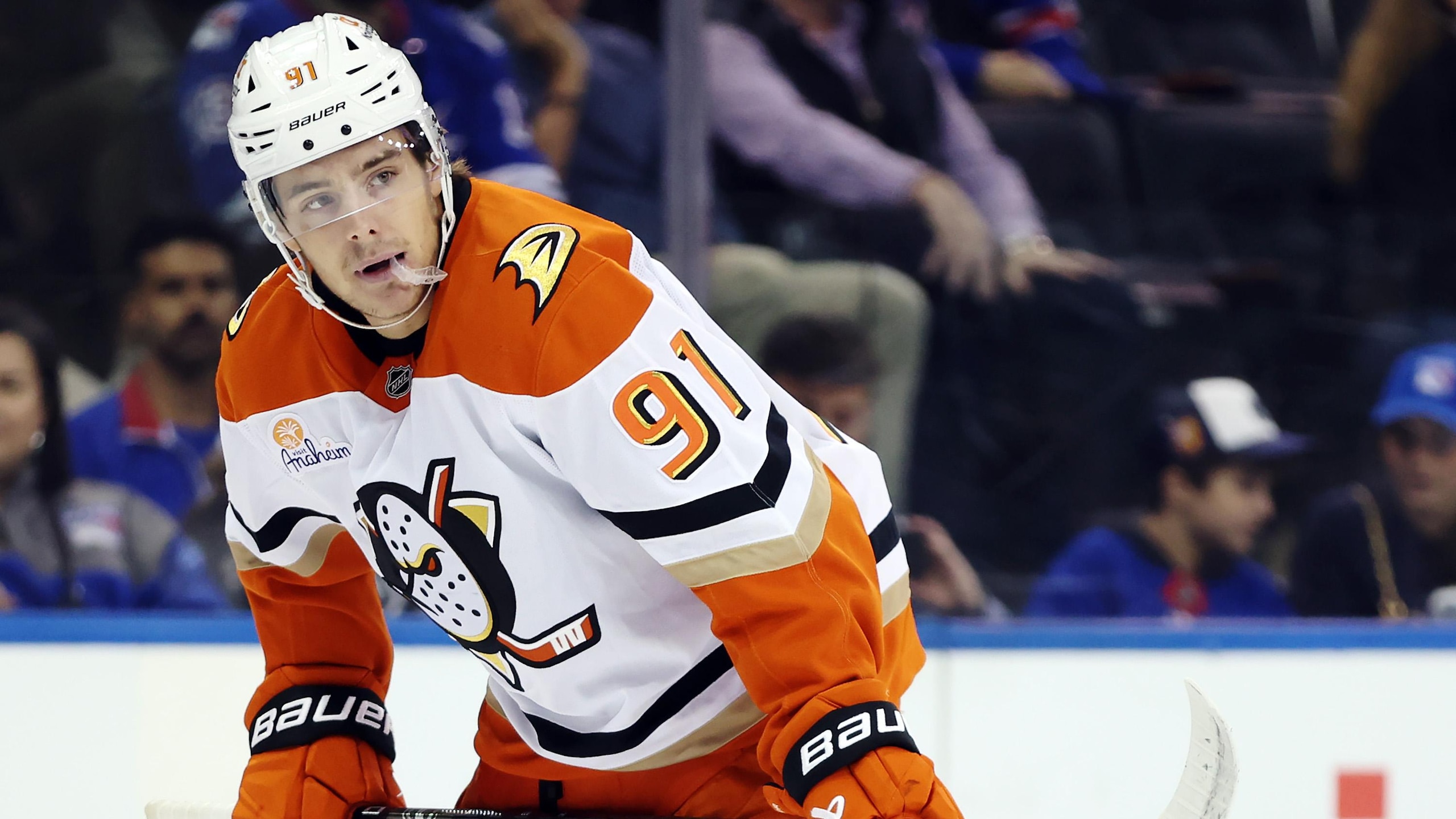

Pros and Cons of Ducks Matching Leo Carlsson's $90 Million Offer Sheet From Flyers

Leo Carlsson will officially remain a Duck.
Anaheim matched the Flyers' record-setting offer sheet for the 21-year-old center Thursday. With the five-year, $90 million deal carrying an $18 million AAV, he becomes the NHL's highest-paid player.
The Flyers don't get their long-coveted No. 1 center, but they keep the four first-round picks that would've gone to the Ducks had they let Carlsson go. Meanwhile, the Ducks keep their franchise cornerstone, but at an extremely steep price that will complicate future roster construction.
There are plenty of pros—and a few cons—to the Ducks matching Carlsson's offer sheet.
Let's break it all down.
Pro: This Entire Saga Was Good for the League
1 of 5
We're in a period of change for the NHL, with the new CBA and a rising salary cap.
This has led to two years of free-agency duds, but teams have had to get more creative when taking big swings, so we're all finding new entertainment in that.
The Flyers have had a hole at No. 1 center as one of the final steps in their rebuild, and they weren't going to find the solution to that in this free-agent market. Tendering an offer sheet to Carlsson was pricey, but it was a legitimate way for the Flyers to try to meet their first-line center need with a player who would be the perfect addition to their core.
Meanwhile, it reminded the Ducks and every other team that they should stay on top of their negotiations, lest a hungry team with cap space like the Flyers could come and swoop in on their best RFAs. With fewer options in the actual free-agent market these days, offer sheets like this are a creative way to make moves.
The threat of an offer sheet keeps things juicy and keeps healthy pressure on in-house front offices to negotiate quicker.
Pro for the Ducks: (Most of) The Core Stays Together
2 of 5
Imagine the Ducks spent years drafting and putting together the young, exciting core they finally have, they make it to the playoffs, then they lose the most important player at the center of it all? Yeah, that would be an extreme bummer.
Look, the cap space eaten by Carlsson's contract is going to make for some tough decisions when other members of this core are due for a raise down the road. But as for now, the team this front office has assembled that finally made it to the playoffs is more or less sticking together. They already re-signed RFA defenseman Pavel Mintyukov. Next up is extending RFA forward Cutter Gauthier, who is also coming off a breakout season.
If the Ducks can take care of that without too much drama, they've set themselves up to build on last season.
Con for the Ducks: This is Still an Overpay
3 of 5
As impressive as Carlsson's first seasons in the NHL have been, as much potential as he has, and aside from the fact that he hasn't yet hit his prime, the highest-paid NHL player in the league still hasn't hit 30 goals or 70 points in a season.
Obviously, this situation is all about context: The Ducks had to either overpay Carlsson or let him go altogether after he signed the Flyers' offer sheet. They're aware that this is an overpay, too, considering Carlsson reportedly approached them to negotiate a $15 million AAV, which they declined.
Still, let's take a look around the league. Connor McDavid's got a $12.5 million AAV. Nathan MacKinnon's got a $12.6 million AAV. Jack Eichel? $13.5 million. Auston Matthews? $13.25 million.
Overpaying is the name of the offer sheet game, but there's no denying Carlsson's got some work to do to live up to this contract.
.jpg?w=2560 "NHL Trade Grades Connor Hellebuyck")
Con for the Ducks: They Still Have to Pay Cutter Gauthier
4 of 5
Gauthier had an insanely good sophomore season and was crucial in getting the Ducks to the playoffs, with 41 goals and 69 points in 76 games. He followed that up with four goals and 12 points in his first 12 NHL playoff games. Safe to say the RFA is due for a significant raise coming off his entry-level contract right now.
After the offersheet and the Mintyukov deal, the Ducks have just around $9,973,395 in projected cap space, per PuckPedia. In the past, an RFA with this much promise would go in the $8-10 million AAV range. The cap rising and the $18 million for Carlsson could increase Gauthier's price tag.
The Ducks probably went into this offseason thinking they'd be able to get all of this done without making too many moves; now they may have to trade a roster player to do so.
Con for the Flyers: They'll Need to Find a Plan B
5 of 5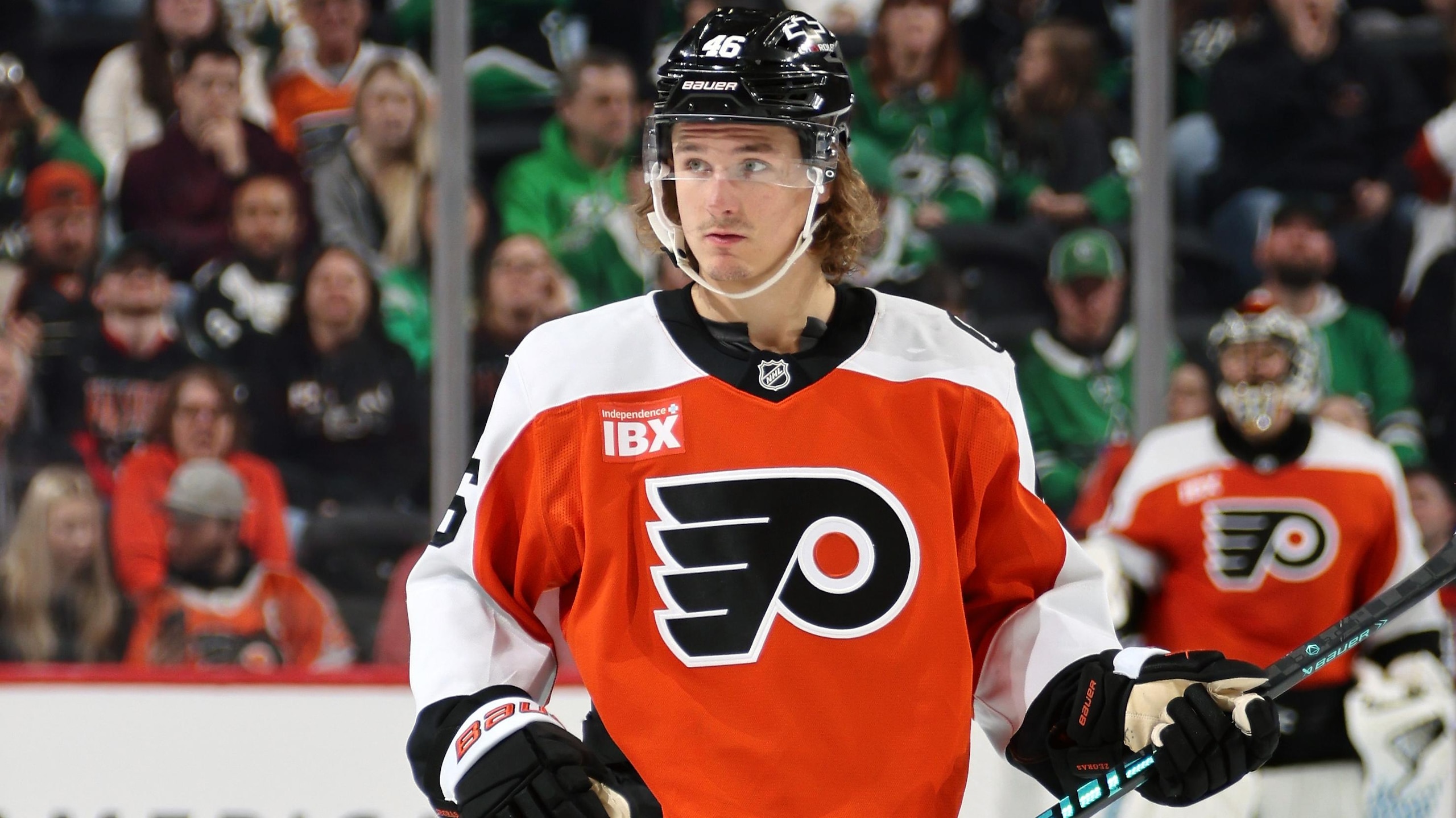
So, the Flyers didn't get their elusive No. 1 center, and the clock is ticking as they look to build on last season's trip to the playoffs.
The Flyers have made several big, unsuccessful swings to improve this roster so far this offseason. They went for Carlsson, Zach Werenski, and John Carlson, and ended up with none of the big names. What now?
They won't be able to acquire a center who'll move the needle quite like Carlsson, but they could still bolster their center depth as a whole. Maybe Shane Wright could use a change of scenery after a few disappointing seasons in Seattle?
Perhaps run back the offer sheet playbook and try to do the same to Columbus by signing Adam Fantilli. Whatever the next move is, general manager Daniel Briere will have to find a new solution for an old problem.




.jpg?w=2560 "Jonathan Taylor Landing Spots 📍")





