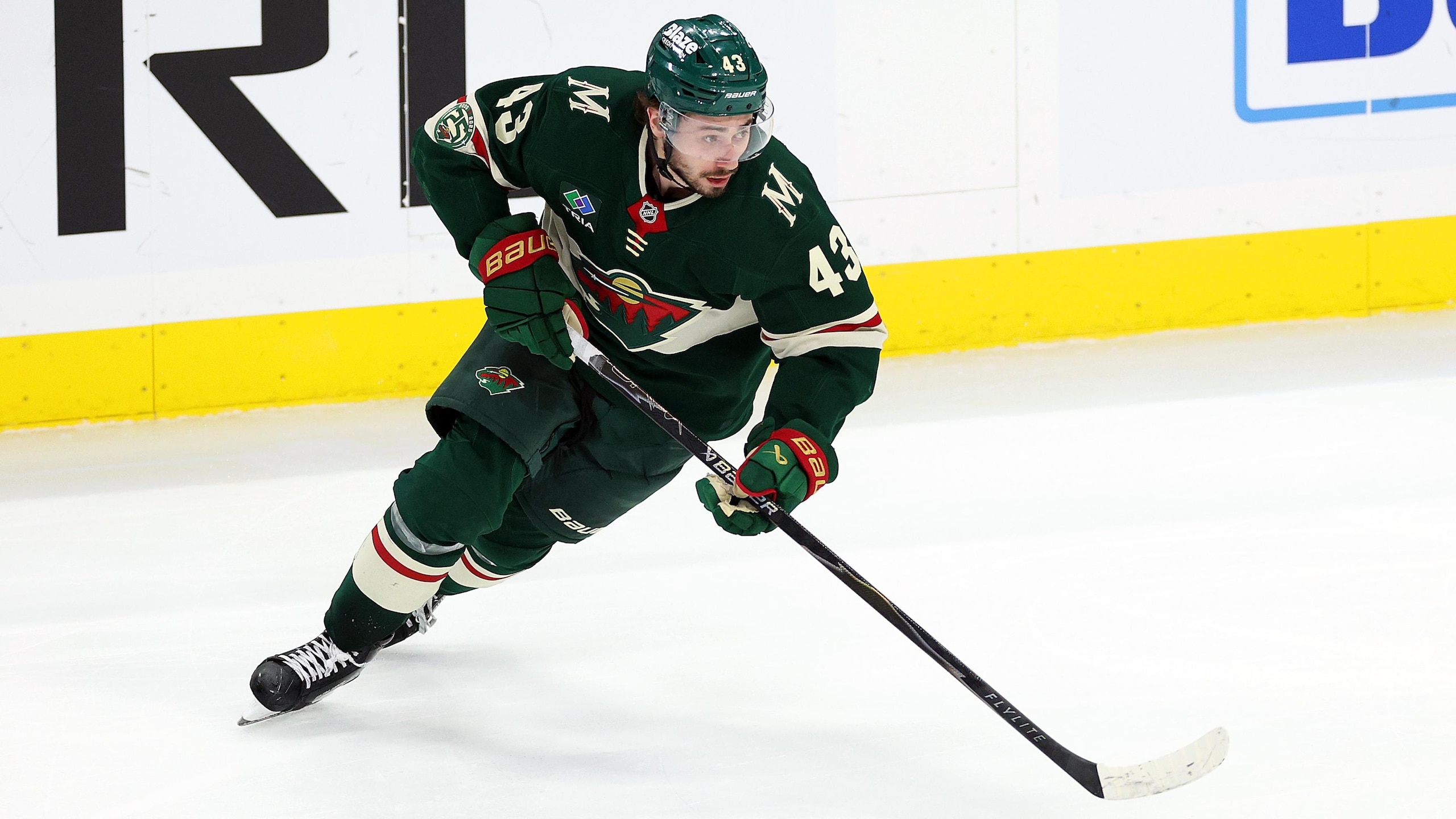


Quinn Hughes is going to be one of the bigger storylines in the NHL going into and during the 2026-27 season.
In the short term, he remains with the Minnesota Wild, which is great news for the team. They are a top contender in the Western Conference, and Hughes is expected to be a major part of that as one of the league's best (and most productive) defensemen.
Along with forward Kirill Kaprizov, he gives the Wild an outstanding 1-2 punch of superstars that could, and likely should, be the foundation of a contending roster.
As soon as the Wild acquired Hughes during the 2025-26 season from the Vancouver Canucks it took them to another level and significantly raised their ceiling.
From a long-term outlook, there are a lot of concerns for the Wild and Hughes, and all of them relate to whether or not he will re-sign there before next summer.
He is entering the final year of his contract, and there is a strong belief that he will end up with the New Jersey Devils to join his brothers, Jack Hughes and Luke Hughes.
It's not exactly a secret that they all want it to happen. When Quinn was still playing in Vancouver, Jim Rutherford basically came out and said that Hughes had made it clear he wants to one day play alongside his brothers, and that might be a bigger driving force behind his future decisions than any amount of money the Canucks could have offered.
He is one year closer to being able to make that decision.
It would be remarkably easy to pull off if both Hughes and New Jersey simply remained patient throughout the season.
The Devils also have the future salary cap flexibility and the positional need to make it happen.
But what if they did not want to wait that long? What if Minnesota did not want to risk letting him walk for nothing in 10 months? Is there a trade option that could be had here?
Let's play armchair general manager and try to cook up a couple of hypothetical trade options that might work for both teams.
The Pure Hockey Trade
1 of 3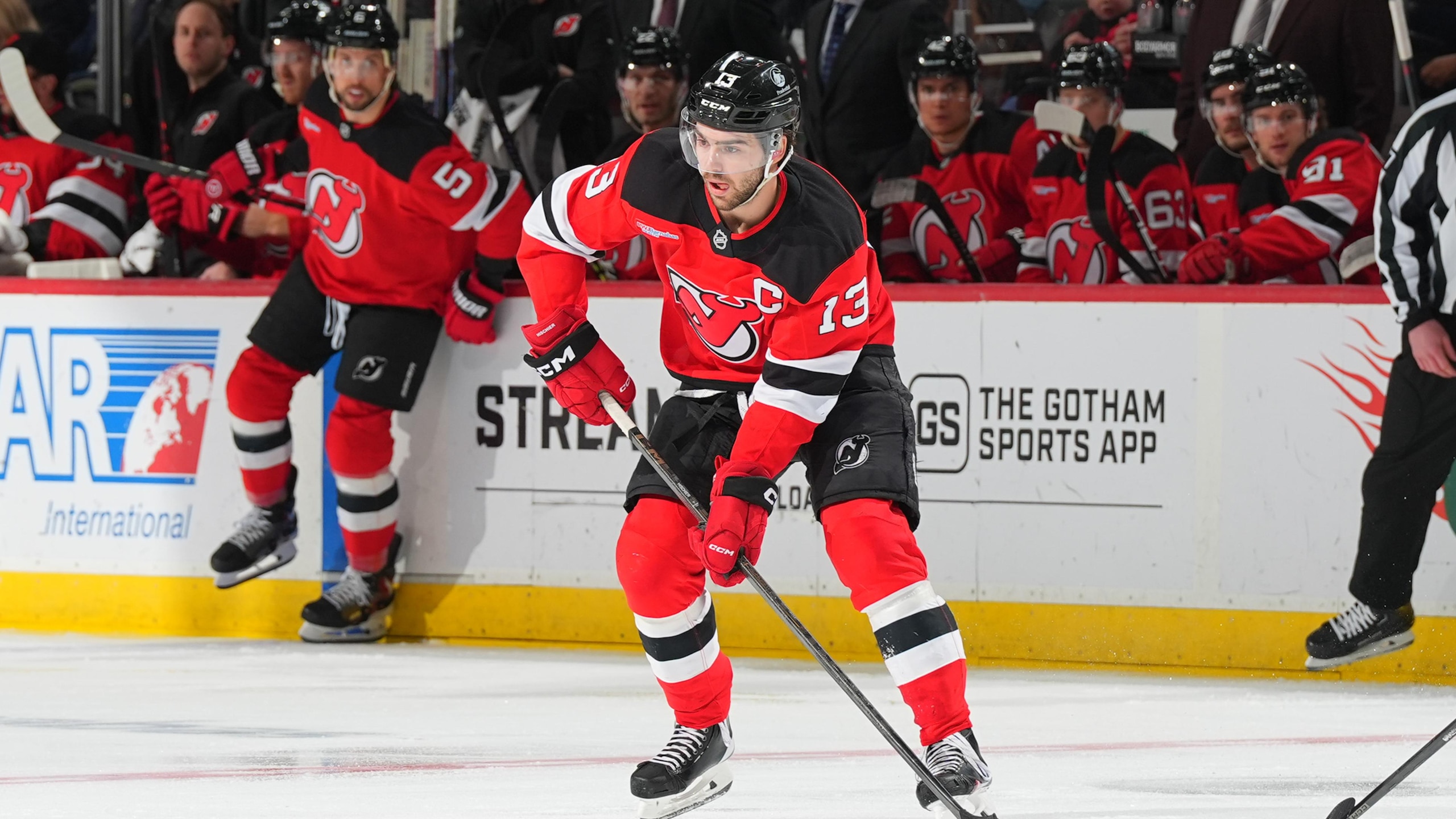
Minnesota gets: Nico Hischier
New Jersey gets: Quinn Hughes
This is simply a pure hockey trade. A one-for-one deal that helps both teams fill a major need on the current NHL roster.
The Wild get the top-line center they need, giving them a potentially outstanding 1-2 punch down the middle with Joel Eriksson Ek. While neither player is an MVP-level cornerstone, they are both outstanding two-way players that can play a full, 200-foot game. Another top-line center is exactly what the Wild need for both now and in the future.
The Devils get a superstar, No. 1 defenseman that would fit in with the core group of players, while also giving them the Hughes brother trio.
Need for need, it makes sense on paper.
This is also one of those ideas that probably only makes sense on paper and loses a lot of its appeal the deeper you dig into it. Especially for the Devils.
This idea might have been more sensible when Hischier's long-term future with the Devils was still in some doubt. He was also entering the final year of his contract going into the offseason, but signed a five-year, $58.5 million extension.
Does anybody clearly say no to this deal?
The Devils do. While it makes sense from a hockey and need perspective, their goal here is not just to simply get three brothers on the same team. It is also to compete for a Stanley Cup. Hischier would be a huge part of that plan.
Even with Hughes on the roster this season, the Devils probably would not be among the top favorites in the Eastern Conference, and that would be even truer if Hischier were not a part of the roster. Hughes is great, but they would need Hughes and Hischier together in order to compete.
If Hischier were the potential asking price, they could just be patient here. But we are just playing armchair GM here.
That does not mean there is no other potential deal that could work.
Futures and Draft Picks
2 of 3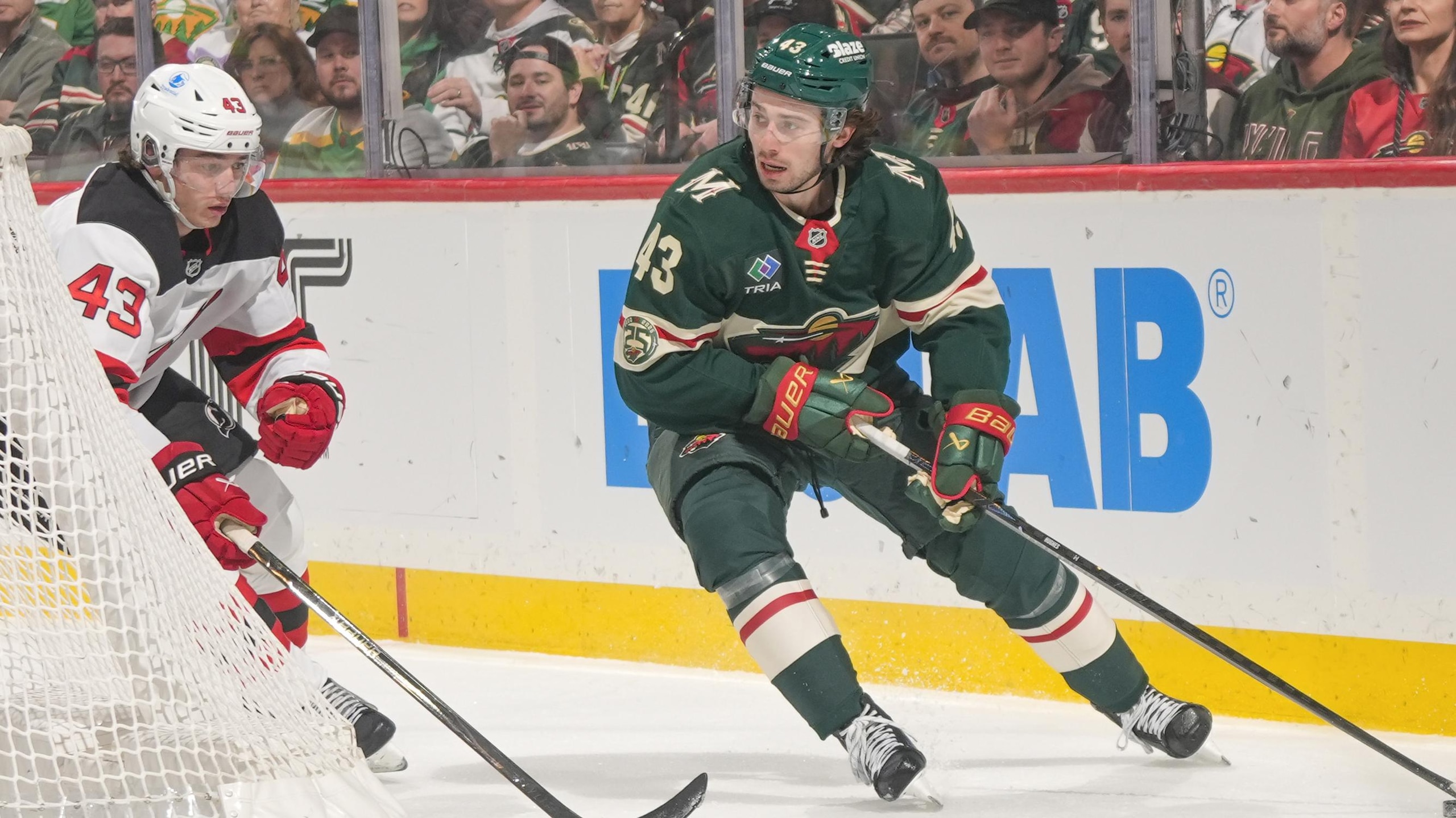
Minnesota gets: Two first-round picks, defense prospect Anton Silayev
New Jersey gets: Quinn Hughes
Figuring out trade values can be tricky, especially for the NHL's best players, because so few are traded during their primes.
We do, however, have some idea as to what a Hughes trade might look like because we have already seen one.
The Wild traded a first-round pick, top defense prospect Zeev Buium, young center Marco Rossi and prospect Liam Ohgren to acquire him with a year-and-a-half remaining on his contract.
We also saw Brady Tkachuk get traded earlier this offseason for three first-round picks. He had a lot of say in where he went and pretty much dictated his destination, limiting Ottawa's leverage in trade talks.
Any potential Hughes deal would fall somewhere in between these two scenarios.
With only one year remaining on his contract, that already knocks the value down a little bit from the initial trade involving him.
There is also going to be a far more limited market for him, given that every team in the league knows the contract situation. He might not have veto power over any deals, but he will still have full control over his long-term spot.
The Devils have the draft capital to pull off such a deal, as they own multiple first-round picks in each of the 2027 and 2028 draft classes. They could easily move two or even three of them to secure Hughes in advance.
Does anybody clearly say no to this deal?
The Devils would jump at it because they have the additional draft pick assets to move a few of them, and it would give them an additional year of Hughes without having to move anything off of the NHL roster (including, most specifically, a player like Hischier).
Anton Silayev is a fascinating prospect due to his size and skill and has the potential to be a really good NHL player, but he is still a prospect.
Sometimes prospects fail, or are not as good as you hope they will be. It's also arguable that the Devils have the defensive depth at the NHL level to take that chance, especially if it brings you Quinn Hughes in return.
The Wild, meanwhile, would likely say no because the deal does little to help them in either the short or long term.
They know they might lose Hughes after this season, but they also knew that going into it when they traded for him. They knew they were getting two Stanley Cup runs, hoping he would sign some kind of short-term deal to stay longer.
And who knows, maybe he still will.
But there's not really much incentive for them to put a dent in their Cup chances for this season to get future assets that might not pan out. The only potential value in those assets would be to turn around and flip them for another proven player in the short term.
Will you get a better player who fits better than Hughes? Not likely, but maybe.
Speaking of which, that brings us to the third potential idea....
The 3-Team Trade Idea
3 of 3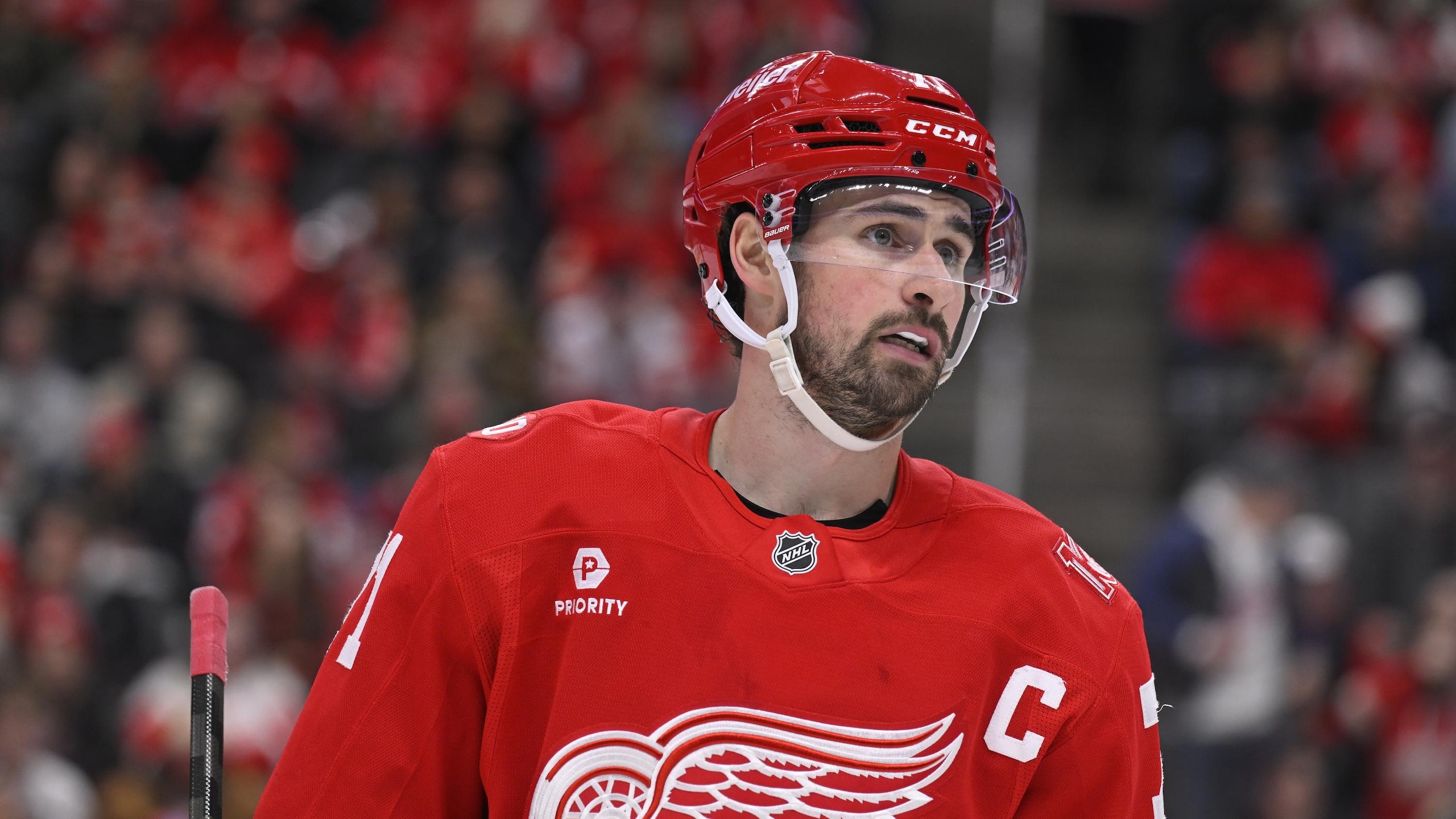
Minnesota gets: Dylan Larkin
New Jersey gets: Quinn Hughes
Detroit gets: Two first-round picks, prospect (and/or maybe Dougie Hamilton?)
Quinn Hughes and New Jersey are widely viewed as a potential future match, while Larkin has requested a trade out of Detroit and reportedly lists Minnesota among his preferred destinations.
Minnesota, as established above, badly needs a top-line center but may lack the assets Detroit would want for Larkin. New Jersey, however, might have exactly what Detroit is looking for.
Let's help everybody out here in one move: the Red Wings trade Larkin to the Devils, and then the Devils turn around and trade Larkin to the Wild for Hughes.
Does anybody clearly say no to this deal?
From a practical standpoint, the Red Wings would have to say no at this moment because they do not actually have a general manager who can make trades.
It is also pretty largely dependent on what the new GM wants to do with Larkin and how they want to handle that situation.
There's also the question of whether a new GM can smooth things over with Larkin and make him want to stay.
Was Larkin's issue a legitimate change of scenery request, or was it a Steve Yzerman issue? That still needs to be determined.
Given the Red Wings' 10-year playoff drought, it is reasonable to assume they want to end it this season—and they are more likely to do so with Larkin on the roster.
But can you bring him back after the trade request? Even with a new general manager? They could get multiple draft picks out of New Jersey that Minnesota would not have to offer, along with a potentially better prospect.
Would a new general manager want more established NHL players? Would they have any interest in somebody like, say, Dougie Hamilton as part of a package like this, given how much he could help them on defense and give them another viable top-four option along with Moritz Seider and Simon Edvinsson?
Even with Larkin they are still more than $19 million below the salary cap. Taking him out of the mix would move them to $27 million below. That's a lot.
At least Hamilton would eat up some cap space, and while he is not the player he was at his peak, he is still highly effective in a lot of ways. The Devils would also need to shed some salary to fit Hughes' contract in for this season.
From a hockey standpoint, the Hughes-for-Larkin trade-off would be a loss for Minnesota in terms of on-ice impact in the short term, but it would still satisfy a huge need for the next few years and make it so they are not potentially losing Hughes for nothing after the season.
Larkin still has five years remaining on his deal at what is for now a pretty reasonable $8.7 million salary cap number per season.
The Devils are paying a lot of assets, but they have the picks to spare, and it gives them another year of Hughes with this current core. There should be value in that.

.jpg?w=2560)

.jpg?w=2560 "Purdy Becomes Highest-Rated QB EVER 🤩")
.jpg?w=2560 "Grading WWE Raw 🔠")