
Grading Every Team's 2026 NHL Draft Class
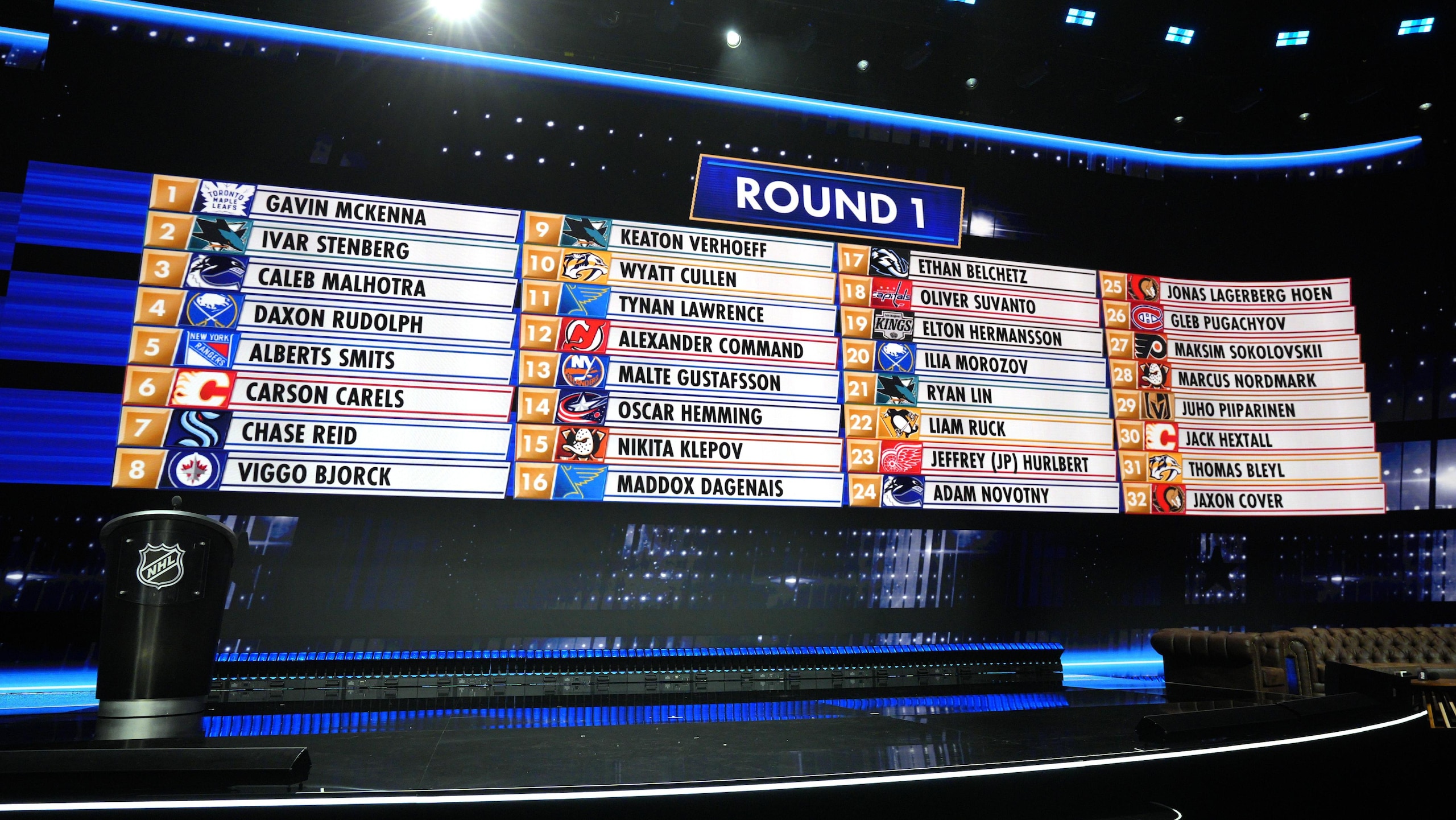
It's done. The NHL Draft is complete, with 223 young players off to join their new NHL organizations.
Only in hindsight will we fully understand the consequences of this draft class. But the 32 NHL teams don't get to make their decisions with the benefit of hindsight. They had to put their reputations on the line the last couple of days, assess the available players, and make their best guesses at how their careers will play out
So, I'm doing the same. How did all 32 teams do with their allotment of picks?
Keep in mind: I am grading the teams based on how they drafted relative to the draft capital available to them. This is not an isolated grading of the accumulation of talent. In theory, a team whose only pick was a seventh-round pick could get an A+ grade if I happen to think that team nailed that draft pick.
Let's get into it.
Anaheim Ducks
1 of 32
The Ducks came away with two wingers in the first round. Nikita Klepov was the player GM Pat Verbeek required to be available at 15th overall in order to execute the Mason McTavish trade with St. Louis. While I don't think he was a must-have player in that spot, it's an appropriate slotting. Klepov is a well-rounded, puck-dominant winger who will drive possession at 5v5 but also pull apart defenses on the power play. I like him as a potential two-way, 50-60 point NHL winger.
Marcus Nordmark, also picked with a McTavish draft pick, is fine at 28th overall, though he wouldn't have been my choice. In his best moments, he can put doubt in defenders gapping up against him on the rush. He has some nice hands and good shooting and passing qualities. I question the total product of his game, as he is invisible off the puck and fades in and out of games. Nordmark has second-line upside, but holes in his game make him more of a second-round pick for me.
Mathis Preston is one of the best day two picks. He's a boom-or-bust forward. He dices through defenses sometimes, and he has an awesome burst when skating in open ice from a standing start. He likes to try high-reward plays, and when they pay off, it's fun to watch. His decision-making is not good, though. He throws low-percentage passes into vulnerable spots too often. He isn't patient enough to let plays develop sometimes. He's going to get benched by his coaches a couple of times, and the question will be whether he learns the lessons necessary. He has top-six upside if he can make it all come together. A rare type of player to get at 50th overall.
That's three high-upside forwards. If just one reaches his potential, the Ducks won't care if the other two bust.
Grade: A-
Boston Bruins
2 of 32
I'm always hesitant to talk about goaltenders in general, let alone goaltenders I haven't seen. Yuri Ivanov is one of the youngest players in the draft and posted a .928 save percentage in Russian juniors. The Bruins have done good work scouting goaltenders, so I'll give them the benefit of the doubt there.
Winger Nils Bartholdsson in round three is, pound-for-pound, one of my favorite picks of this draft. Yeah, he's 5'10 and not a good skater for his size, but I like the rest of his game. Even if his cruise speed isn't great, his stop-starts and pivots are great, allowing him to lose defenders. He's a really good stickhandler. Despite his size, he can persevere through contact and win some board battles. Most importantly, these skills don't exist in a vacuum. He's able to make diverse combinations of plays to work his way out of his physical disadvantages throughout the run of play. The physical concerns are what they are, but in round three, all players have issues. I think he has the chance to make us all look back in five years and wish he had gone a full round earlier. Third-line upside with maybe even a chance to be the third-best forward on a second line.
I don't like most of their remaining picks, but they nailed their most valuable pick. Roberto Henriquez is also a nice find in round six. He's an athletic goaltender who posted a robust .921 save percentage in the USHL last season but needs a hands-on goaltending coach to refine his movements. Goaltenders are always great value deep into the draft. Give me the athletic netminder with upside over the 6'5" defenseman who needs a lot of luck to make the NHL in any capacity.
Grade: C+
Buffalo Sabres
3 of 32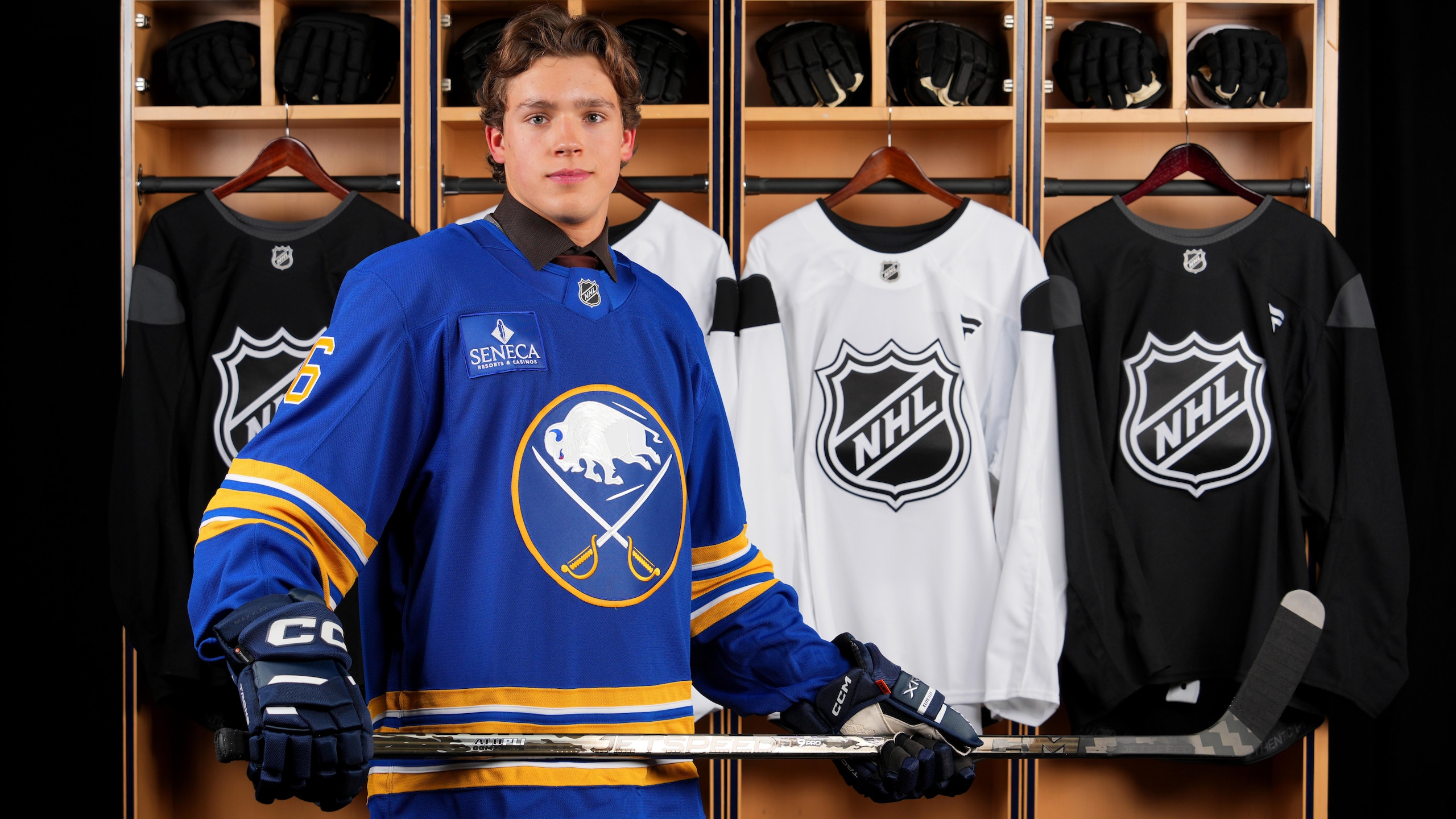
The Sabres were the main character of the weekend in more ways than one. They hosted the draft, moved Alex Tuch and Bowen Byram, and are reportedly in discussions about some big moves.
They also had two first-round picks, including fourth overall. Daxon Rudolph was an unorthodox selection; few, if any, scouts had him as the best defenseman in this class. At least offensively, I think he can live up to the investment. Rudolph has dynamic ability on the puck. Stickhandling, shooting, passing, it's all there. I like how he walks the blue line, and he can wrong-foot players marking him.
His production in the WHL last season was basically unprecedented, but I think he has work to do to become even average defensively, though he has the profile to get there. Rudolph wouldn't have been my pick at fourth overall, but I don't think it's an indefensible selection.
Ilia Morozov is a more rustic choice at 20th overall. He held his own as a 17-year-old at Miami University, who often had the ice tilted against them. And his minutes were not sheltered. He's a center who hits the areas of the ice you want from a checker. He forechecks hard, he plants himself in front of the net, and he doesn't cheat defensively. Morozov has good hands when he has time and space, but I worry about his skating. I think his upside is as a third-line checking center.
Fourth-round Forward Olivers Murnieks is pure vinegar, but his physical play could be enough to will him into a depth NHL role.
Grade: B-

Calgary Flames
4 of 32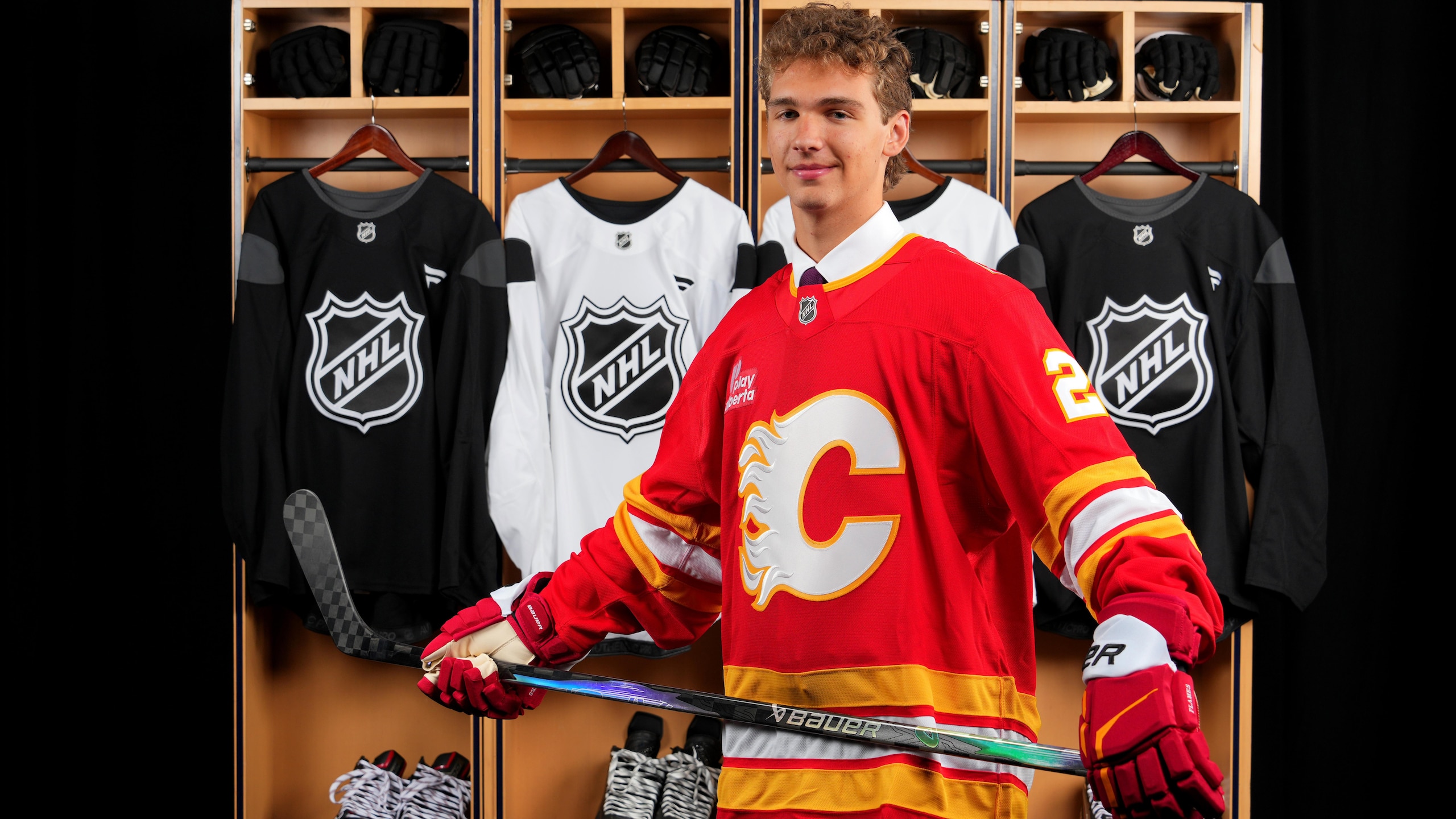
Having a good draft not only requires your own choices but also requires cards to be arranged in a favorable manner. The Sabres and Rangers took their pet projects at fourth and fifth overall.
That left Carson Carels waiting for Calgary at six. He's a do-everything defenseman. He plays an ambitious style and is aggressive defensively, loading up to hit players in open ice and ruthlessly blocking shots. Offensively, he is fearless in carrying the puck. His shot is hard. He has enough separation speed to beat forecheckers carrying up the ice. And the statistical profile is bright. I don't think there's enough high-end skill to become a No. 1 defenseman, but I like him as a very good No. 2.
Jack Hextall is also a very good value at 30th overall. There are questions about whether he sticks at center or moves to the wing, but I think he stays at center. He has the work ethic to stick. He's feisty pursuing pucks and chasing down puck carriers downstream. His catch-and-release is very good. It's not only off his stick and hard in a flash, but he reaches the top corners consistently. He needs to figure out how to become more involved offensively. I like the pick.
I also like some of their Day Two selections. Second-rounder Tobias Trejbel is a 6'4" goaltender who moves well without overshooting in the crease too often. He has starter upside. I wouldn't have traded up to grab him, however. Egor Barabanov was a nice snag in round four. He's a 20-year-old so the developmental runway isn't long, but he's a very clever playmaking forward. He needs to add some defensive and forechecking elements to his game because he doesn't have enough to make it as a top-six skill guy.
Simon Katolicky was one of the better fifth-round picks. He's big (6'4") and moves. Not a lot of skill or cerebral decision-making, but the physical tools alone, with some good coaching, could lead to an NHL future.
Grade: A
Carolina Hurricanes
5 of 32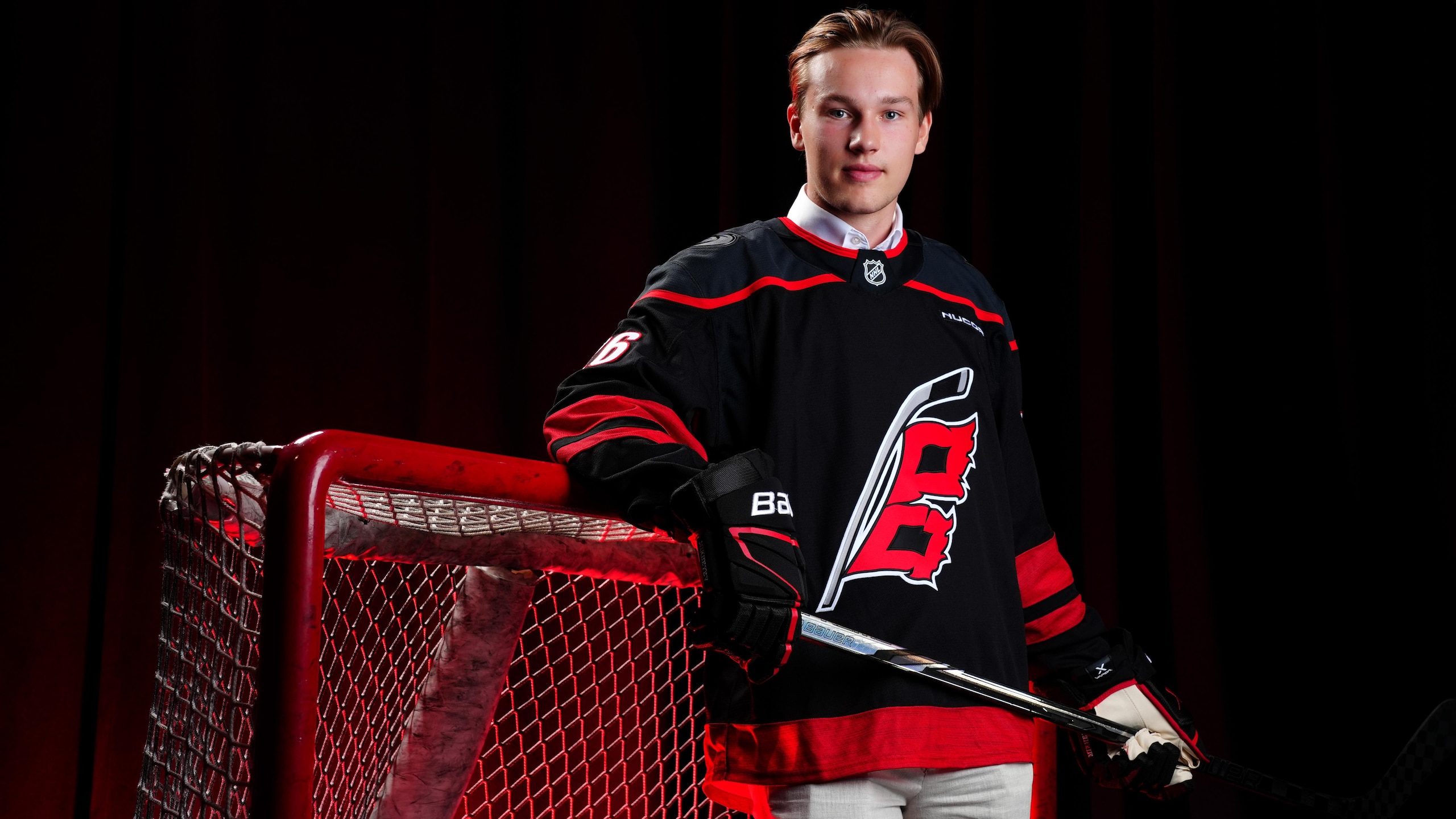
The Hurricanes did what they always do. They traded back multiple times, then swept up the forgotten talent while everyone else wore blinders to their personal pet projects.
William Håkansson is a rangy left defenseman. He's approaching 6'5" and has decent four-way mobility, giving him enough of a radius to clean up a lot of plays in the neutral zone. I don't think he has much offensive upside, but he has enough passing accuracy and vision to advance the puck up the ice. Certainly so in Carolina's dump-and-chase systems. He's an excellent fit for the Hurricanes' style of play, and he has second-pairing upside. The Hurricanes traded back twice and still landed a player who would have been a justifiable pick at the original 32nd overall.
From there, the Hurricanes took forwards who don't fit typical scouting profiles but provide unconventional upside. Wiggo Sorensen is an undersized forward, but he plays a smart and energetic game. He pesters puck carriers as F1 but also positions himself well as the last forward to cut off space. And his hands are superb. He handles difficult passes with ease. His first touch on the puck sets him up to make quick plays. He's poised and has some soft skills.
I also like Mikey Berchild, an undersized winger who is shifty with the puck in the offensive zone. Both he and Sorsensen fit the mold of Carolina's recent success stories in Stankoven and Blake, among others.
Grade: A
Chicago Blackhawks
6 of 32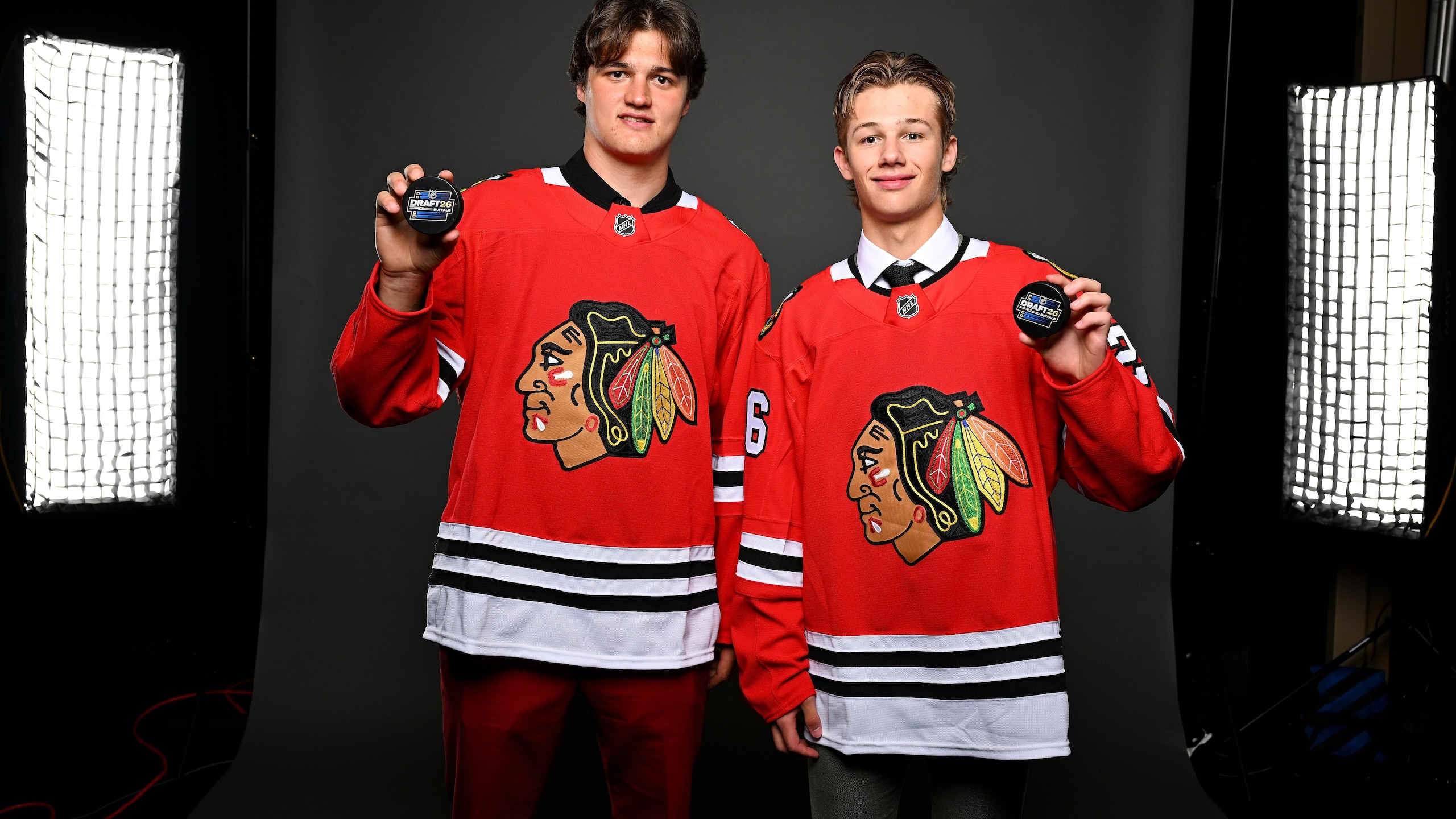
The Blackhawks did not have a first-round pick (they traded fourth overall for Bowen Byram), but they came away with two players with first-round upside.
Xavier Villeneuve is one of the most talented players in the draft. He's an undersized defenseman, and there will be questions about how well he can defend at the NHL level, but he has an awesome burst of speed, his 10-2 skating is strong, and he is a positive stickhandler and puck-mover. I like his ability to surf when defending against the rush, and I think his positioning is better than he gets credit for. The worries about a 5'10 defenseman in the modern NHL are fair, and he has an early birthdate. His skillset is not as good as Lane Hutson's. If he makes it, he's a dynamic top-four offensive defenseman and PP quarterback.
Ryan Roobroeck entered the season as a projected top-10 pick. He had a rough go of it. Some of that was out of his control; injuries held him back, and I didn't love his usage, but he also earned stern criticism from scouts I spoke with for his effort. Too often, he glided around the ice. But here's the good news. He's nearly 6'4" and has an above-average wrist shot. If he is put in the hands of the right coaches, he could become a modern NHL power forward. It's not often a team can grab someone with obvious first-line upside at pick 35.
Samu Alaluri is a poised puck-moving defenseman with depth upside. A fair pick in the third round.
The Blackhawks have the best group of young talent in the NHL. They took advantage of that buffer and took two big swings on boom-or-bust players. It's a great use of the picks available to them.
Grade: A
Colorado Avalanche
7 of 32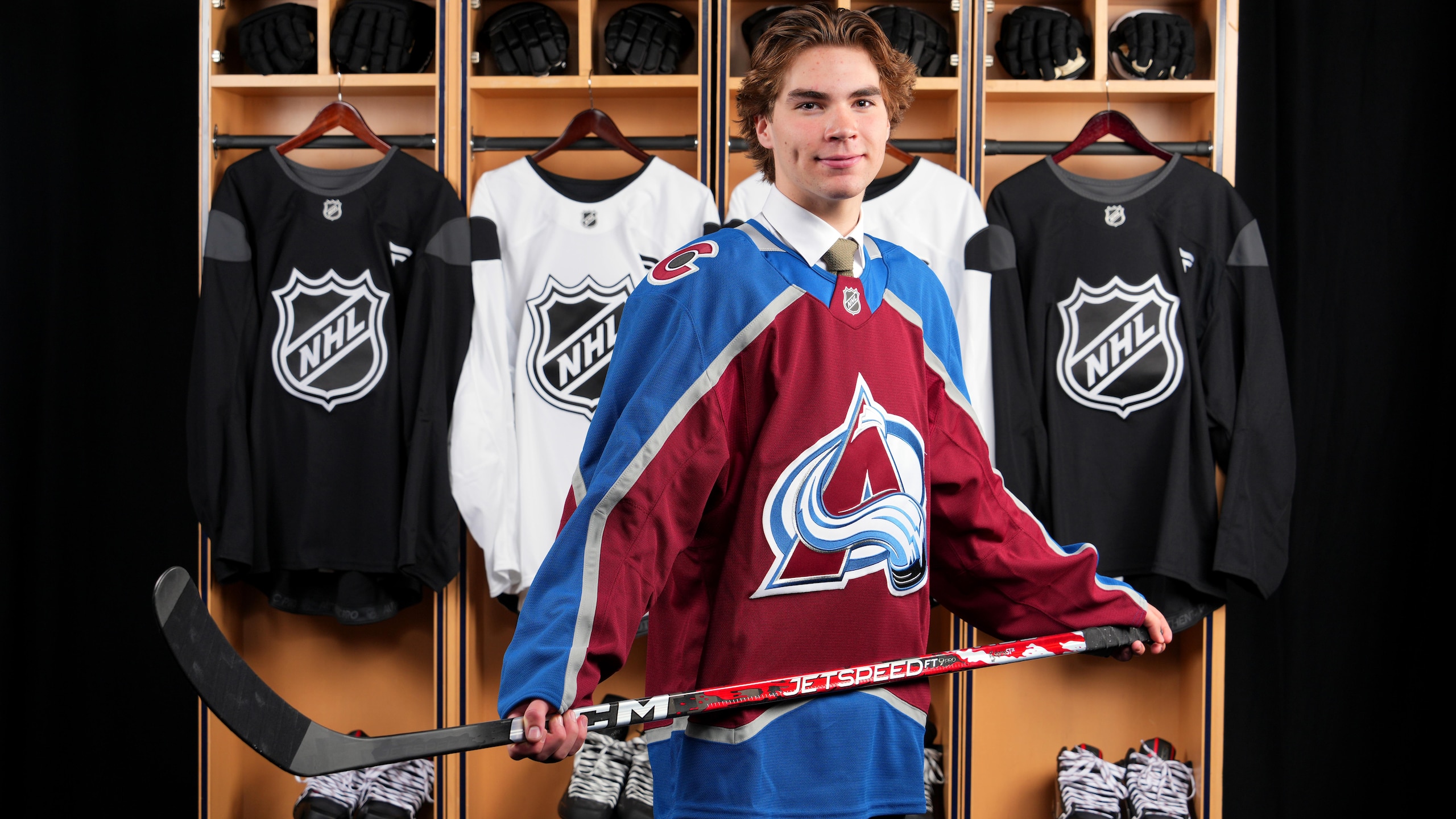
For the first time in a long time, Colorado had several draft picks available.
Egor Shilov is a high-risk, high-reward pick in round two. In the offensive zone, his ability with the puck is first-round caliber. And not the end of the round. He's really talented. The stickhandling is the stuff of highlight reels. He shoots with lightning-quick reflexes, and he finds some dangerous passing seams. The rest of his game is a big red flag.
He doesn't serve as connective tissue, which is especially a problem as a center. He's one of the least physical players I've seen in recent years. He is S-O-F-T. When he does engage physically, it's usually a half-baked effort. He has the offensive skills to be a difference-maker on the power play, but the rest of his game needs to catch up. He's not good enough to cost on pure skill, and the Avalanche won't waste any time on a third liner who refuses to play hard off the puck. But if he figures it out, he'll be a steal at 43rd overall.
Beckett Hamilton is almost the opposite at 74. What you see is what you get. He is a pure hustler, wins his puck battles, has a diligent defensive work ethic, and will bang in some goals through sheer effort. He purely projects as a bottom-six forward (likely fourth line), but he plays with an identity and could turn into the type of cheap depth Colorado needs to pair with its highly paid superstars.
Axel Elofsson is an enraging player to watch because his decision-making is just awful. But Elofsson is agile and can string together some quality passes from the point. He can beat forecheckers on zone exits with his feet. He is confident in making plays with the puck, including on his backhand. He sort of reminds me of Avs prospect Mikhail Gulyayev, but he needs a lot of instruction to become the 4/5 sheltered offensive defenseman he's capable of becoming. In round four, I'm fine with the bet on talent.
Grade: B+
Columbus Blue Jackets
8 of 32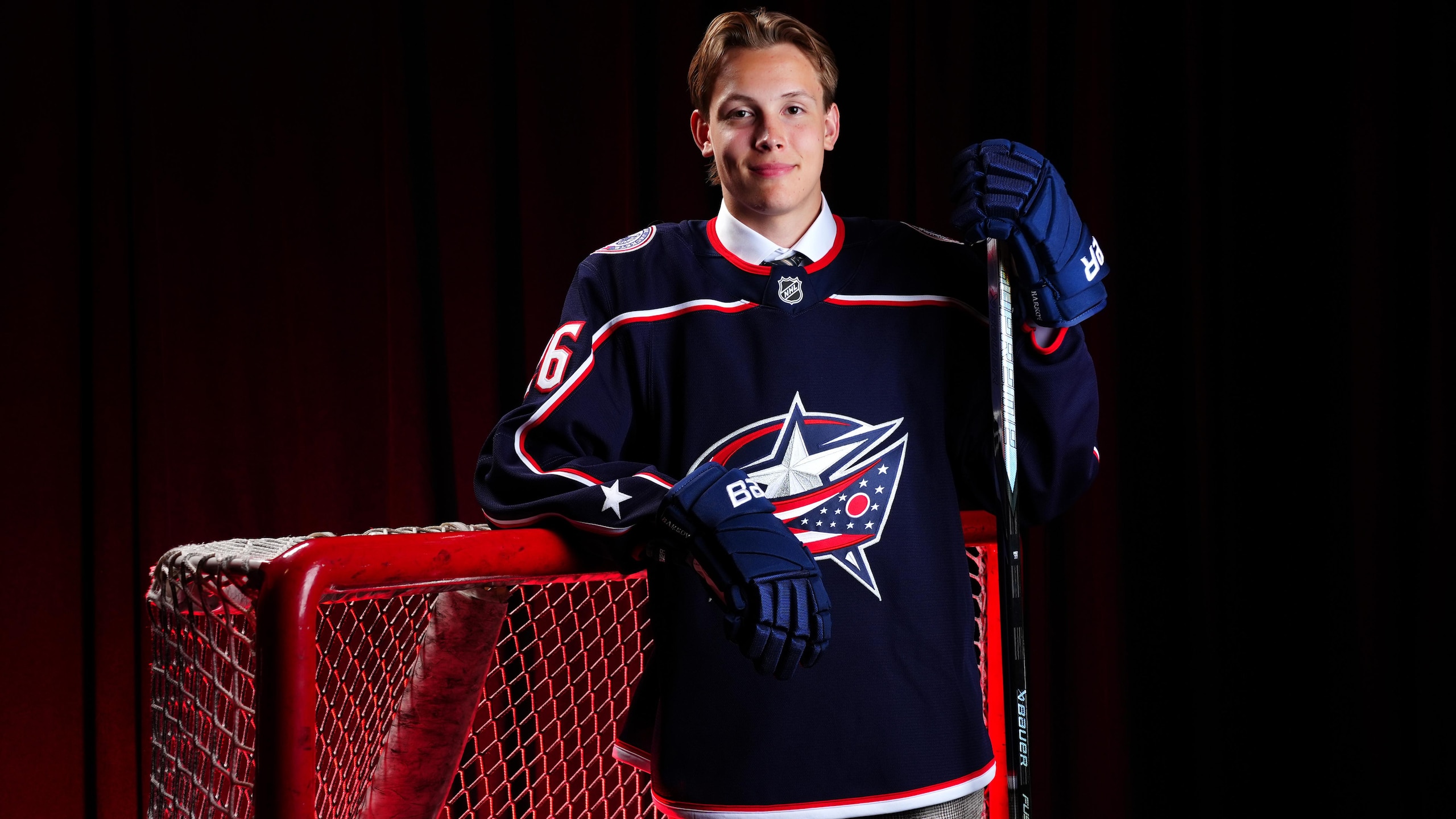
Oscar Hemming went higher (14th) than I had him on my board, but I get it. He's one of the strongest forwards in the draft despite being one of its youngest. He reminds me of Kaapo Kakko in terms of how he protects the puck along the walls and extends possessions. He easily shrugs off contact while carrying the puck. And he can bring the boom when hitting players. His wrist shot is a weapon. I've seen him beat goaltenders short side without traffic.
His skating concerns me, and he lost most of last season's developmental time to political tie-ups. His pivots are slow, and his straight-line speed is mediocre. I worry about his ability to play at higher tempos. Could he be just a third-line secondary scorer? That's my worry. He has a long developmental road as a young player who missed a year, so I certainly see what the Blue Jackets do in his potential to become a physical force and 30-goal scorer. We just differ on how likely that outcome is. Still a defensible pick.
The next two picks were respectable. Alessandro di Iorio (round three) has good speed when pushing the outside lane. He won't dictate play, but he has some ability to finish plays in the offensive zone. He's a loose cannon defensively, but the effort is there. With some coaching, he could be a bottom-six winger.
Evan Jardine, in round four, is a similar caliber prospect. When he's on his game, he's energetic and can be an unsung hero type in the offensive zone. Consistency eludes him, but he has bottom-six potential. A fair pick in round four.
Finally, seventh-round picks are always a shot in the dark, but I have time for Filip Novák. He's a speedy forward who can keep defensemen on their toes when pushing through the neutral zone.
Grade: B
Dallas Stars
9 of 32
Dallas only had one meaningful lottery ticket to work with here at 59th overall, and I think they got a fair player at that spot. Jakub Vanecek is a 6'2" left-handed defenseman who skates well for his size. He plays a responsible, no-frills defensive game, and he has just enough poise and touch on the puck to do his job breaking the puck out of the defensive zone. His game is a bit vanilla, but he has it in him to become a No. 4 or 5 defenseman with some refinement and a bit more physicality.
The remaining picks, albeit down the draft, were cynical. Low-upside prospects. They'll be lucky to get a fourth liner out of the group.
Grade: B-
Detroit Red Wings
10 of 32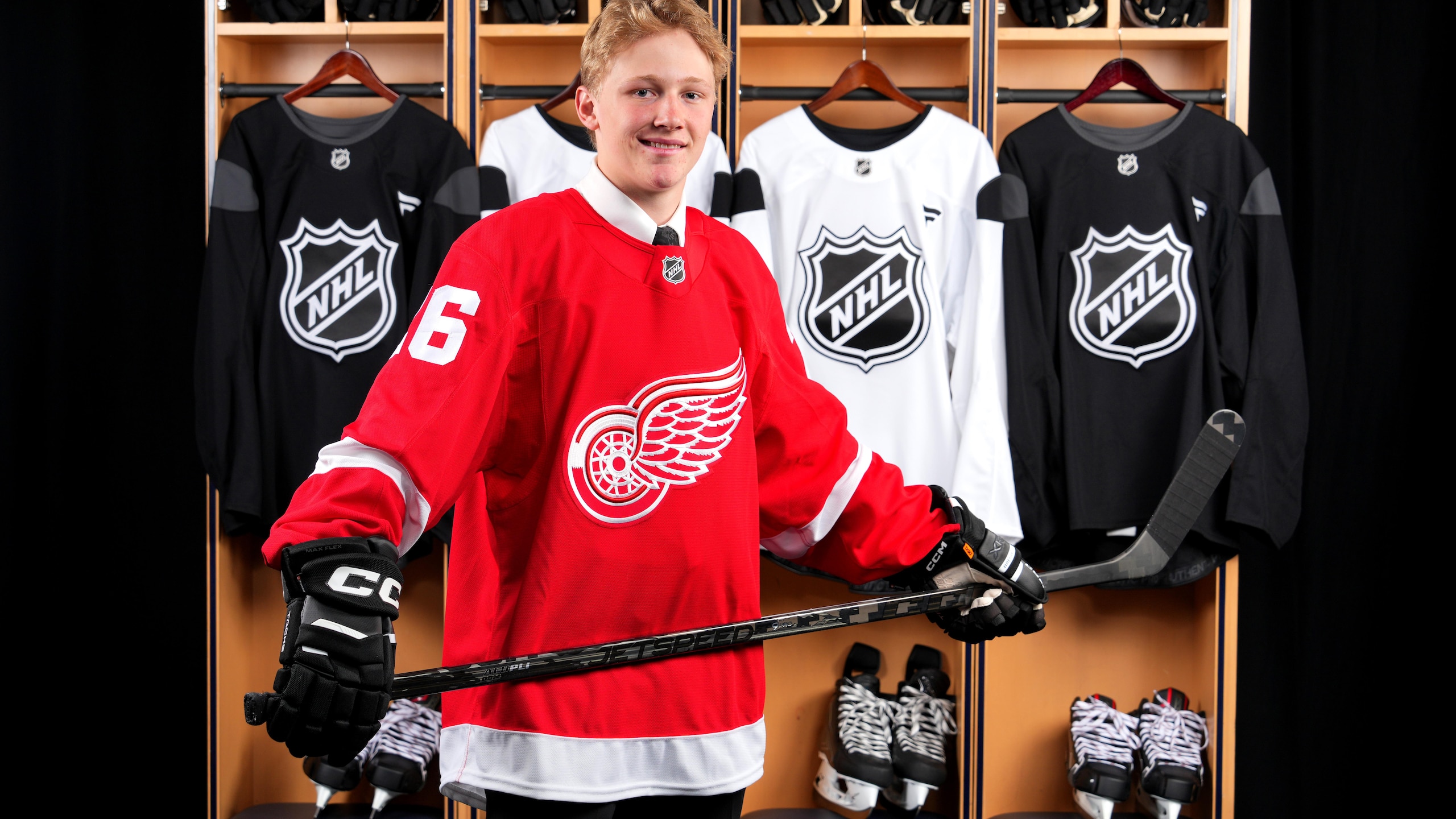
The Red Wings are having an existential crisis as an organization, and this draft class won't reverse that reality, but they did get some proportional value with their top picks.
Forward JP Hurlbert (23rd overall) has one of the best catch-and-release shooting motions in the entire draft. It's off his stick in a flash, and he can send it to the top corner with consistency. He scores off the rush or from a standstill. He can keep teams honest with playmaking as well, and his game off the puck is enough to buoy his offensive zone strengths. The big question is whether he'll have enough footspeed in the NHL to get himself into scoring positions. There's no doubt he'll beat goaltenders if he can.
Victor Plante (47th) is one of my favorites in round two. His defensive effort is admirable. He doesn't give up and will throw his body into danger to make desperation plays, even if he needs to clean up some details tactically as a center. His offensive touch is also bright, particularly in combination with his linemates. He makes quick plays off the cycle and surprises defenders sometimes with no-look passes into the slot. I think he has middle-six upside as a center, even if the probability shades more towards line three.
Grade: B
Edmonton Oilers
11 of 32
Forward Rudolfs Berzkalns is fine. He plays with pace and is very responsible defensively. He has an okay touch on the puck and hockey IQ. At 58th overall, I think the Oilers passed on upside, but he has relative certainty as an NHLer.
Malcom Gastrin (84th) lacks standout traits, and his junior production in Sweden is nondescript, but he is on the younger side and has a diverse skill set. You let him marinate in Sweden for three or four years, and maybe at the end, you have a bottom-six forward who can kill penalties and chip in the occasional goal.
Caden Harvey is a decent option in round six. He is a high-motor forward, and while 24 points in 68 games isn't the typical stat line for a credible NHL draft pick, he was buried on Windsor's depth chart last season, but the decks will clear when Liam Greentree turns pro and Jack Nesbitt and Ethan Belchetz head to the NCAA. He is a candidate for a post-draft breakout.
Grade: B-
Florida Panthers
12 of 32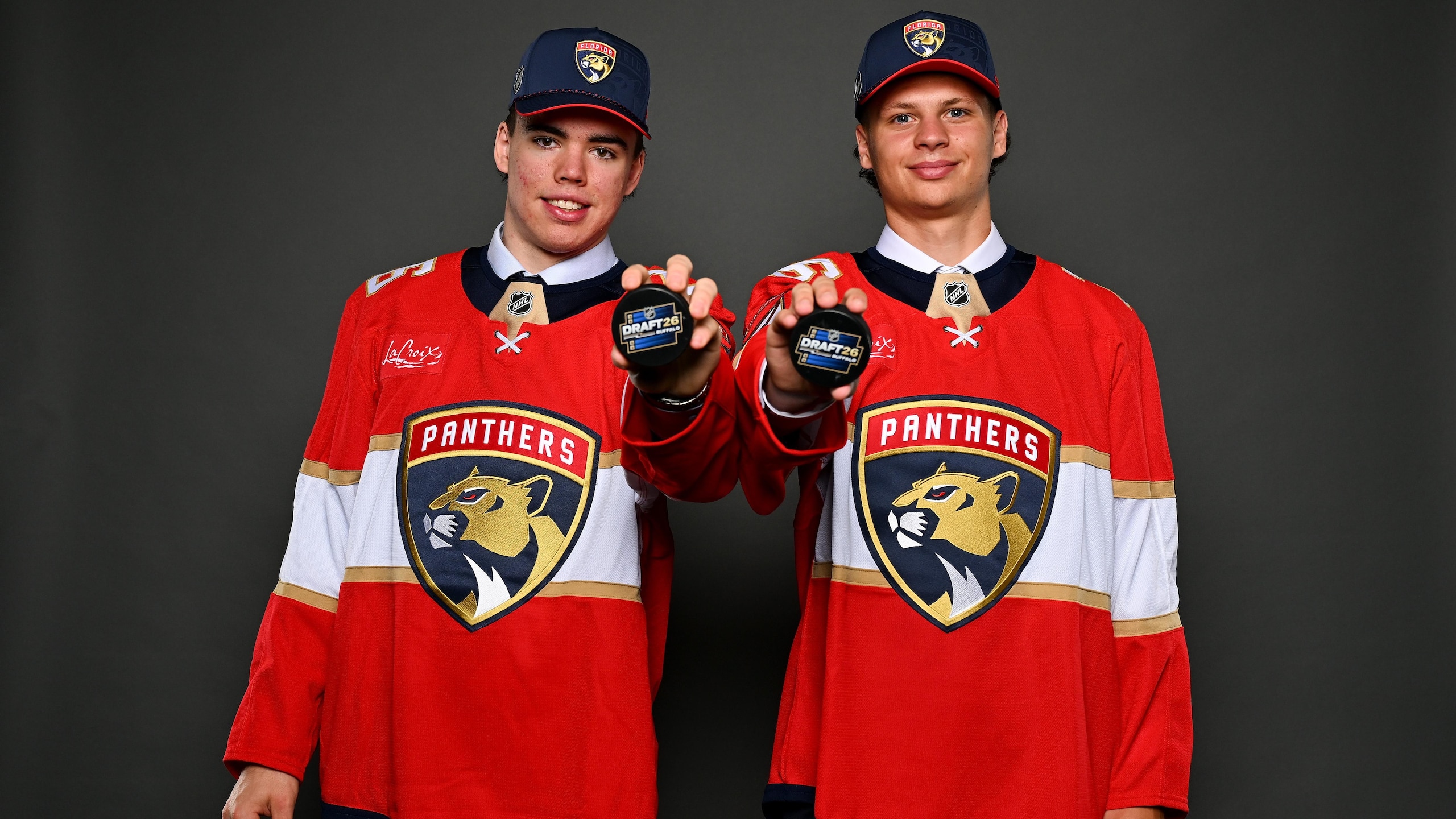
A rare season in which the Panthers had some legitimate draft capital to boast.
Simas Ignatavicius (40th) is a Lithuanian center who played in Switzerland this past season. He's a very versatile player. He plays a no-nonsense game and is easy to spot on the ice, and not only because of his usually tucked-in jersey. He is a fearless player, forechecking hard, blasting to the front of the net, and getting in shooting lanes to block shots. His softer skills don't stand out in any way, but he has enough to work with that, with some refinement, he is very easy to imagine as a future bottom-six NHL center.
Ryder Cali (48th) is a similar player in several respects. He works hard along the walls. I like his ability to hold pucks along the walls and his ambition in bringing pucks from the exterior towards the net. His decision-making with the puck is sometimes suspect, and he attempts passes that his skill set may not be a match for. But coaches love him for his strength and competitiveness, with some secondary scoring touch. He also projects as a bottom-six center.
Finally, Vilho Vahantalo is very raw, and his statistical profile is underwhelming, but he's 6'3" with plenty of room to add weight, and he can rocket the puck on net. He's worth a six-round flyer and one of the more intriguing picks deep into the draft.
The Panthers badly needed to add some baseline talent to the prospect pool, and I think they did about as well as they reasonably could have with the picks they held. Particularly in the second round.
Grade: A
Los Angeles Kings
13 of 32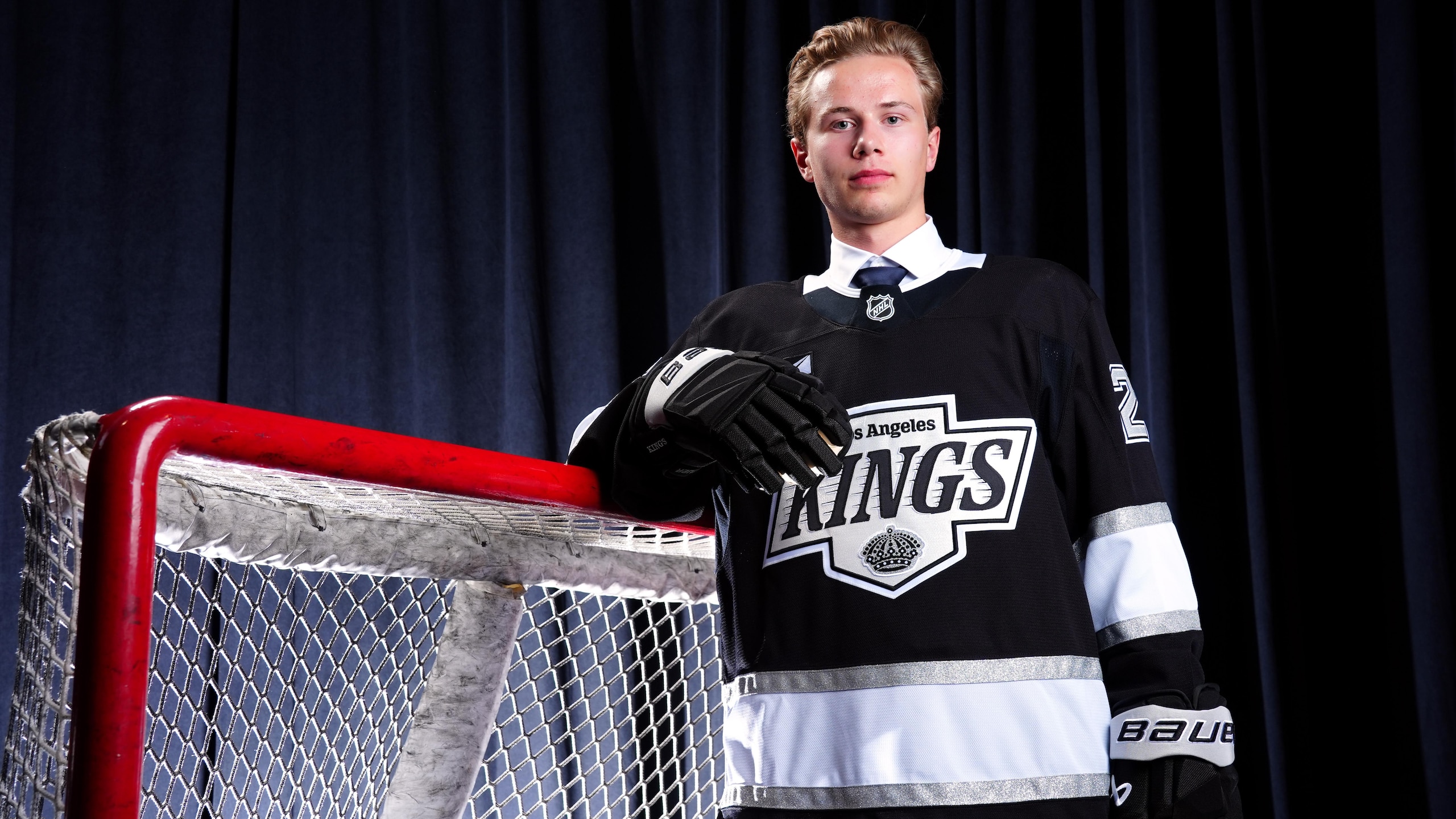
The Kings took a chance on pure, explosive offensive talent at 19th overall in Swedish winger Elton Hermansson. He lives to make plays with the puck on his stick. Wonderful stickhandling, vision, and quick hands to make it pay off with a quick wrist shot or a wonderful pass across the slot. He needs to more consistently engage in play off the puck to reach his upside or even make the NHL altogether, but he is a potential difference-maker offensively, and he's a righteous prospect to select at 19th overall.
I'd classify the rest of the draft as okay. Liam Lefebvre (46th) is a big project who is already 19 years old and has a lot of work to do on his skating just to make it to the NHL. But Adam Goljer (49th) is a fun offensive defenseman worth a late-round-two flyer.
I also like Blake Zielinski's (round three) and Tomas Vandenberg's (round four) games. They both have intense motors and enough supplementary offensive packages to grind their way into bottom-six NHL roles.
Grade: B
Minnesota Wild
14 of 32
It's the first draft for the Minnesota Wild without Judd Brackett, the scouting guru who has moved to Toronto's new front office. They didn't have much draft capital to work with, but I like what they did at 83rd overall.
Adam Andersson is a 6'4" center who plays a physical and defensively responsible game. He utilizes his reach to clean up plays around his own net front and prevent the opposition from getting opportunities in the slot. He's not flashy offensively but has enough hockey sense to contribute in the zone. I think he has third-line upside and a chance to become the go-to center for critical defensive zone draws. He could have gone 30 picks earlier than his 83rd overall slotting, as far as I'm concerned.
Kayden Lemire (round four) has limited but tangible upside as a physical defensive forward down the depth chart.
Grade: B+
Montreal Canadiens
15 of 32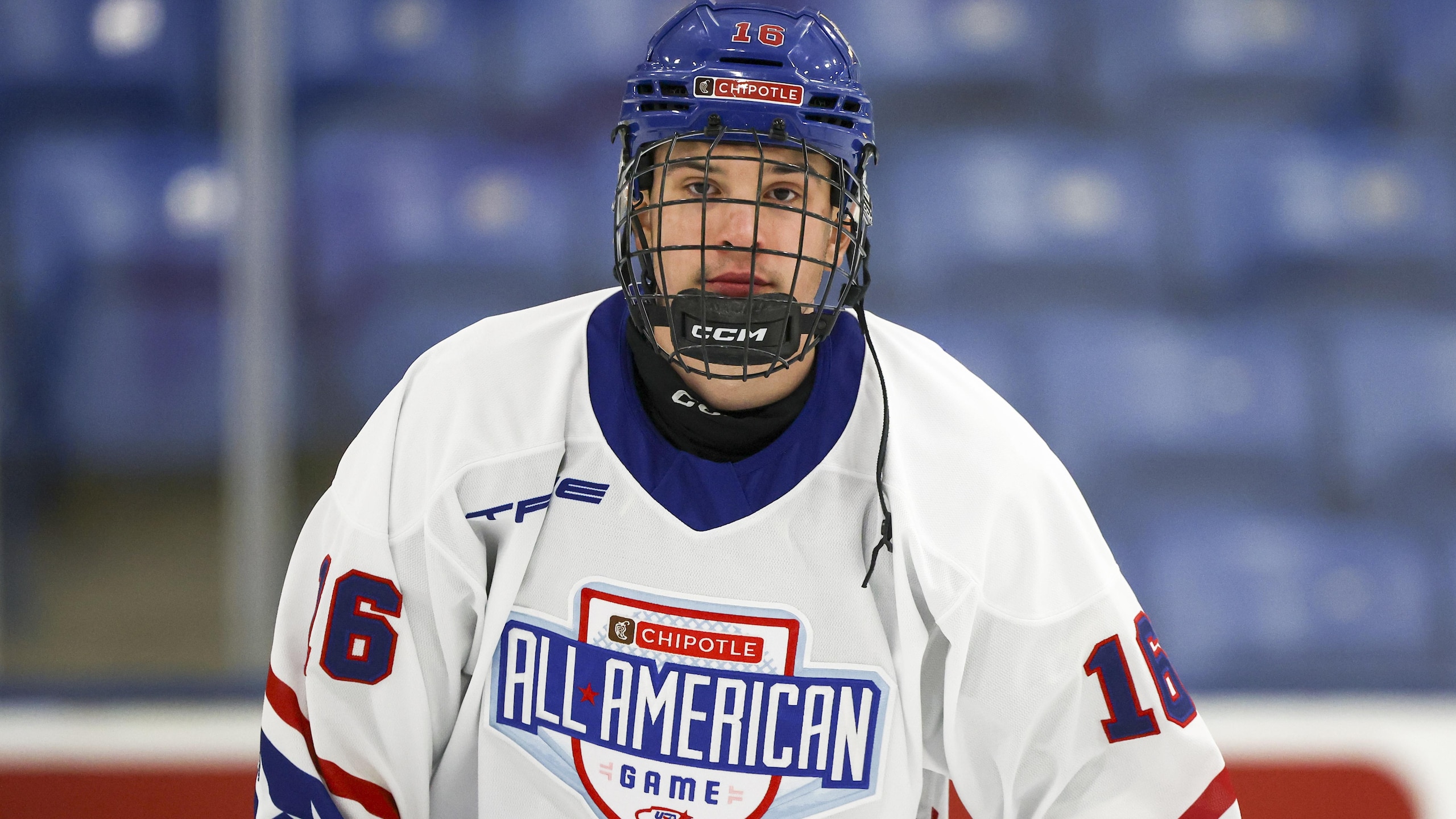
Gleb Pugachyov (26th overall) is a divisive player in this draft. Nobody doubts the intensity with which he plays. He's fast and physical. A bowling ball out on the ice that sees opposing players as its pins. He's more confident in his own offensive abilities than he should be. His hockey sense is lacking, and he isn't refined in his puck-handling. Maybe the right coaches get into his head, and he becomes a unique gamebreaker, but I think it's more likely he's an undisciplined bottom-sixer who nonetheless becomes a fan favorite for his playing style. He should have gone in Round 2.
Tomfei Runtso was a much more calibrated selection at 57. He has no major leaks in his game, but specifically, he is poised on the puck. A distributor from the backend and within the offensive zone, even if he lacks the speed or shooting ability to become a true top offensive defenseman or PP threat. He has second-pair upside.
I also like Parker Trottier as a sixth-round gamble. The winger has a lot of different abilities (even if they are fairly average), and I think he has the motor, habits, and determination to grind his way into a depth role in the NHL. Maybe even score a clutch goal or two.
Grade: C-
Nashville Predators
16 of 32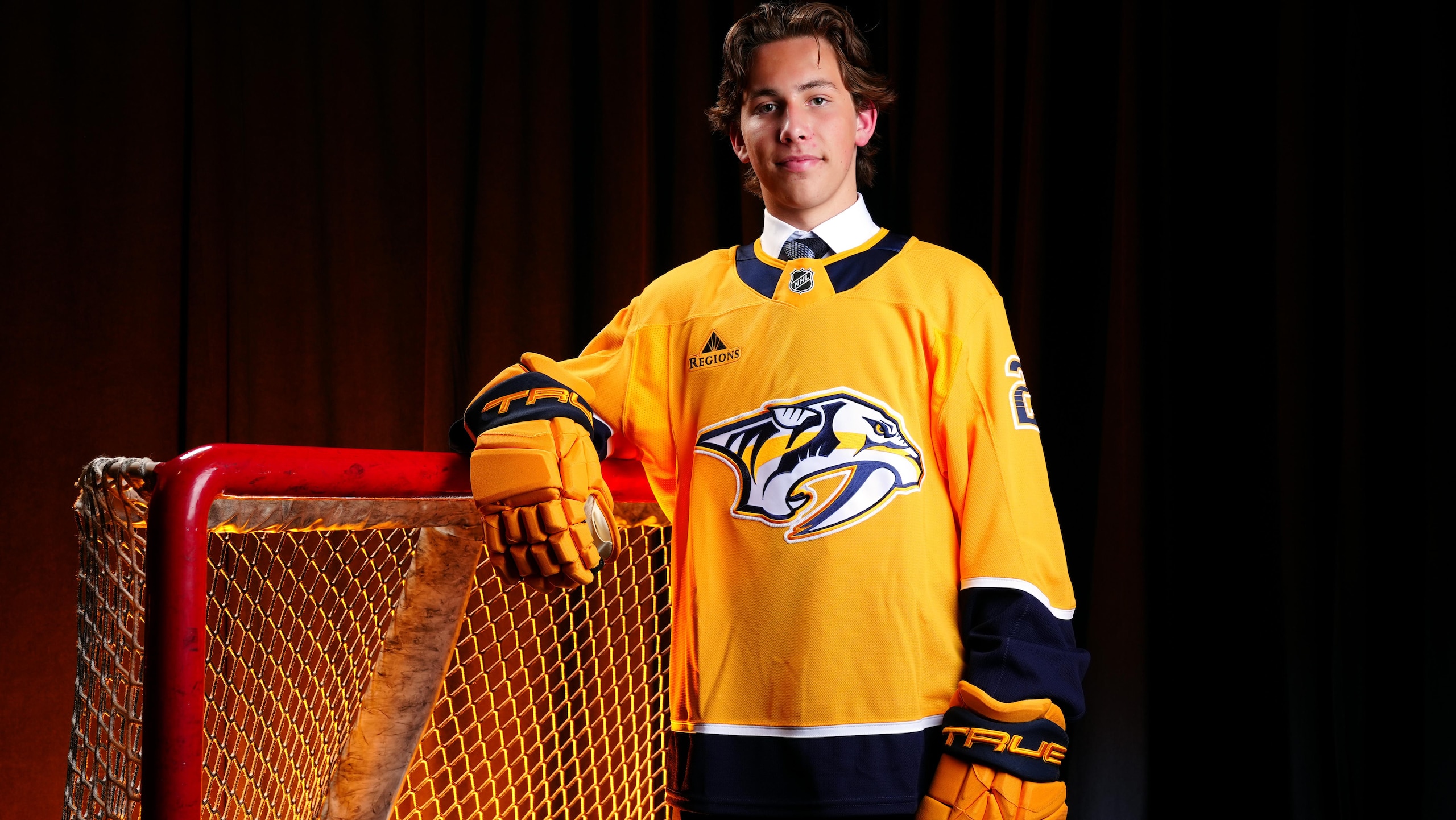
Wyatt Cullen, son of former NHLer Matt, is one of the most skilled players in the draft. He's a quick stickhandler who plays with pace. Everything he does with the puck is silky. He has some work to do on his 200-foot game, but with his bloodline and hockey IQ, he'll get there. I like him as a top-six winger who thrives on the power play from the halfwall. Maybe a 60-65 point producer. Good value at 10th.
Tommy Bleyl is a puck-moving defenseman. He's agile and shows a lot of escapability, whether that's beating the first forechecker or evading pressure at the top of the point. He's a solid distributor of the puck. The passing and shooting are good, but not great, and with his sub-six-foot package and average defensive capabilities, he will need to accentuate those offensive abilities to fulfill his top-four potential. I love the bet on upside at 31st overall, though.
I think Jakub Floris is appropriately slotted in round four. A big defenseman with some physical tools. Moves well, even if he doesn't have a high topline speed. Could turn into a No. 5 defenseman if he works on the tactical side of his defense. And maybe he chips in a few goals with his shot from the point as well.
Grade: A-
New Jersey Devils
17 of 32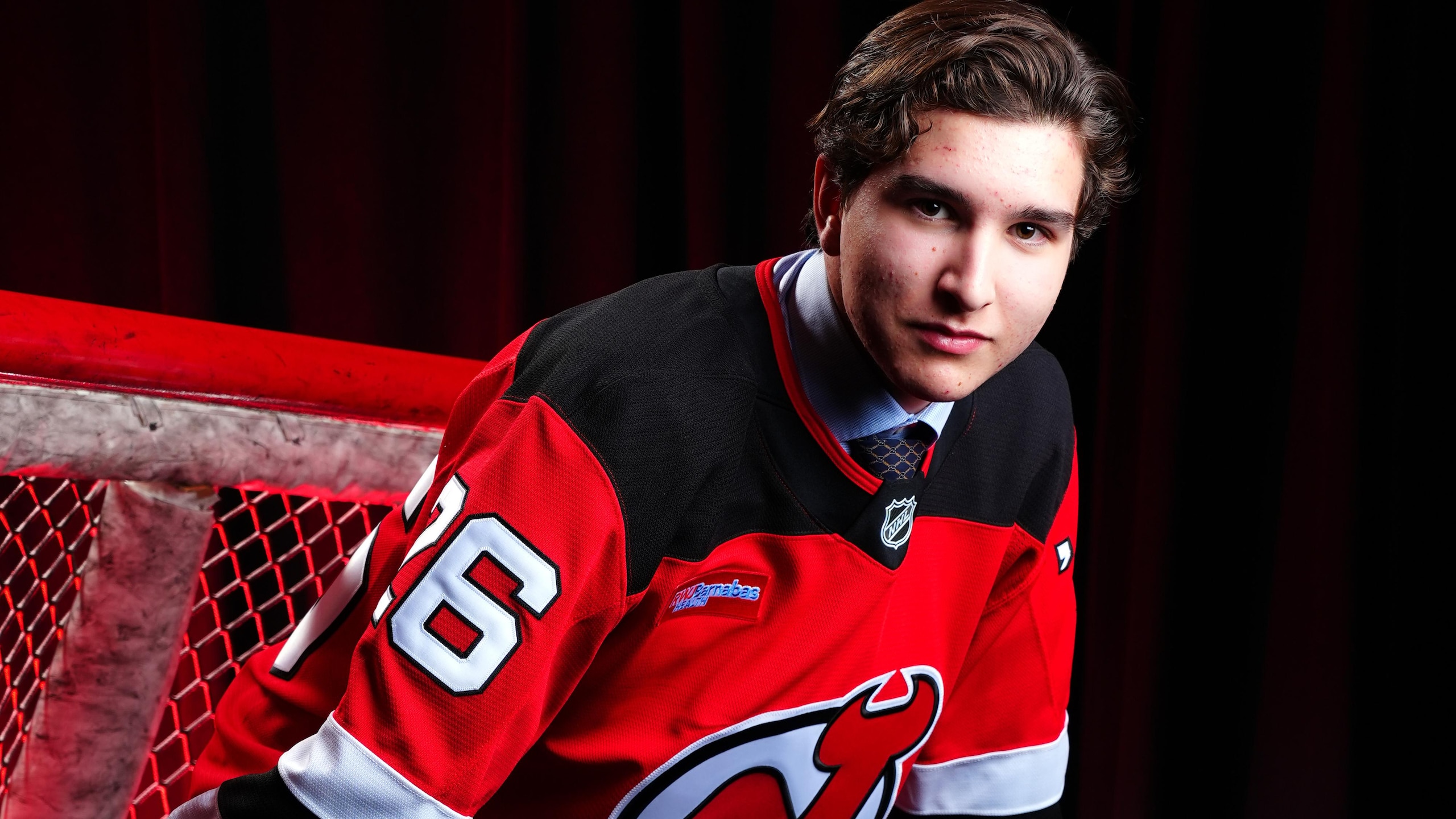
I don't think the Devils changed organizational dynamics with this draft class, but they added a group of solid players who reinforce the ranks.
Alexander Command is a jack-of-all-trades center. Everything he does is at a B- or B level. A good skater who has a gear to push past defenders while rushing the puck, though he stays to the outside too often for my liking. He's a diligent defensive center who works hard to get back and scans the ice on the backcheck. If he is to become a second-line center, he'll need to improve his soft puck skills and be more willing to operate on the puck in middle ice. If not, I like him as a high-end third-line center who consistently puts up 45 points. The Devils took him five or so picks earlier (12th overall) than I would have, but that's not the end of the world.
Matias Vanhanen (37th overall) was a re-entry player who performed well in the WHL this season. He does a lot to advance the puck through the neutral zone, and he has quick playmaking abilities in the offensive zone. He's a project I'd have taken later, but he is intriguing.
Nikita Shcherbakov (44th) is a projectable defenseman. He's at least 6'4" and moves well for his size. He played respectably against pros this season, particularly in the VHL (Russia's second tier), and he shows ephemeral moments of playmaking ability. He generally has good gapping and uses his reach well, but his overall game is still fairly raw. He's a project who will need some time but has No. 4 upside.
Grade: B-
New York Islanders
18 of 32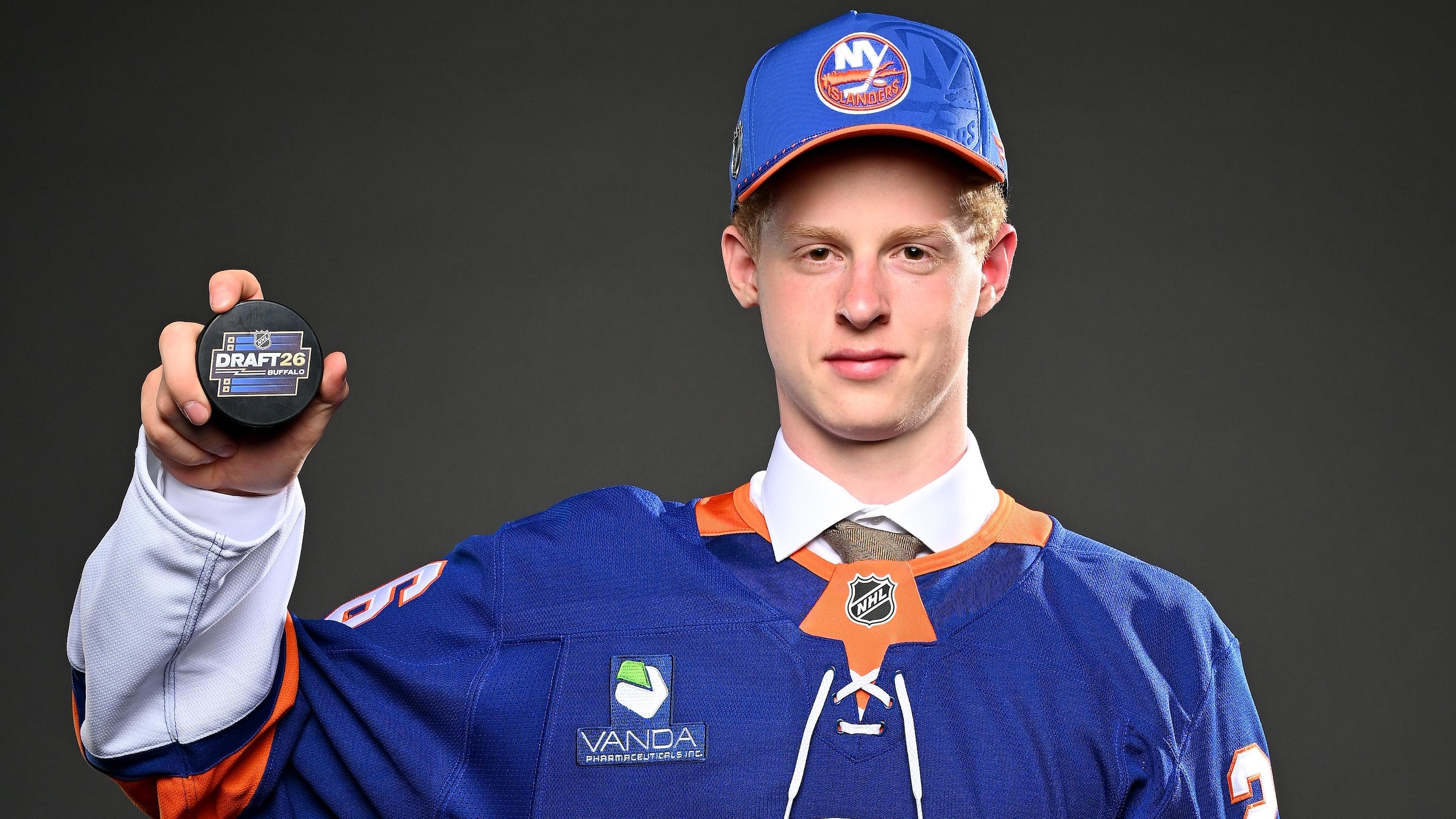
The Islanders had their big franchise-changing draft last season. This draft was calmer, more routine, and more efficient.
Malte Gustafsson is a dream shutdown defenseman. He's 6'4", has excellent mobility, and is not afraid to mix it up physically. I think his puck-handling abilities are only average, but he's going to provide some offense from the backend by tilting the ice in his team's favor and by joining the rush as the fourth man with his long stride. I liken him to Brady Skjei. He'll be a good complement to Schaefer on the left side. The Islanders are projected to have two awesome minute-eaters on the left side for 48 minutes per game.
Vladimir Dravecký is an undersized defenseman who can transition the puck up ice. He's an interesting pick in round five.
Grade: A-
New York Rangers
19 of 32
Look, I didn't have Alberts Šmits as the best, or second-best, or even third-best defenseman available, but I need to stress that the margins here are slim. I do not view this in the same light as when the Rangers drafted Lias Andersson seventh overall and immediately blew it. Šmits very well could become one of the best players in this draft class and justify his selection. He's just not the horse I would have bet on. Other very smart people disagree with me.
Šmits is a beautiful combination of size, speed, and ambition. I worry about his offensive upside and whether his stock rests on a false premise that his physical tools will grow exponentially. It's hard to deny what he's already capable of, though. He's a fearless, aggressive defender. He is confident in pushing the puck up ice. His shot is a bomb. He has a very safe floor as a second-pairing defenseman, and if he can learn how to combine his tools and process the game more quickly, he could be a unicorn.
I mostly love what the Rangers did after the first round. Ben MacBeath and Charlie Morrison are big defensemen who can skate. MacBeath, in particular, is a strong pick, as he has the offensive tools to develop into a decent puck-mover as well as a top-four defenseman.
Tomas Chrenko instantly becomes the best center prospect in the organization, which doesn't say much. Regardless, he's undersized but comes with a whole lot of offensive ability. He's quick and agile and can dish the puck. The big question is if he can succeed despite a lack of physical game, but late in round three, he's great value.
As often ends up the case with the Rangers, I have mixed feelings about some of their late-round choices, but I think they got the meat of this draft more or less right.
Grade: B+
Ottawa Senators
20 of 32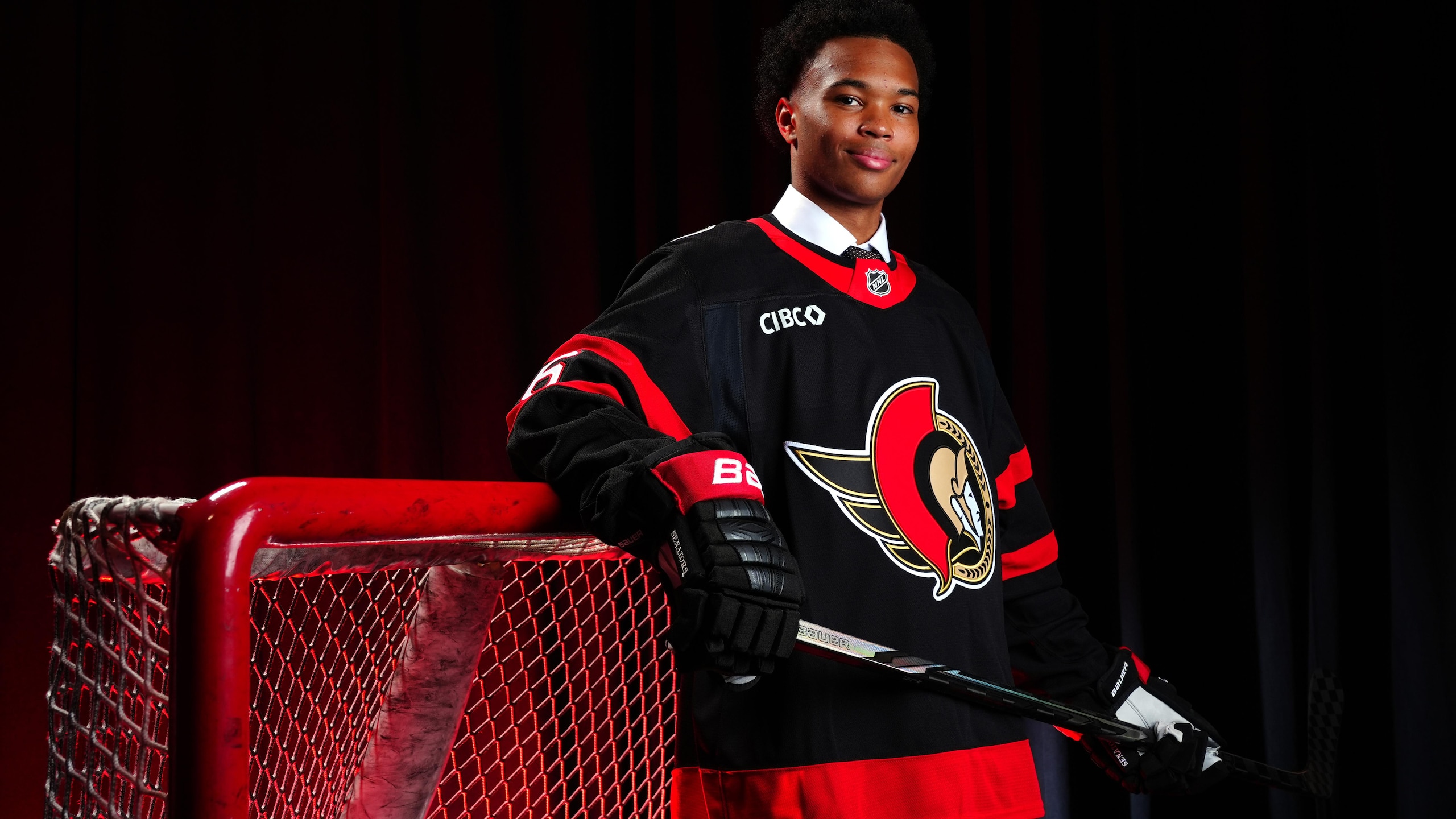
At the very least, the Senators seem to have shifted draft philosophy. Previously, they went for big, low upside players. In this draft, they took two huge risks with upside.
Jonas Lagerberg Hoen missed most of the season after getting injured in Fall 2025. He's a skilled winger who put up strong numbers in Sweden's J20 league during his brief availability. His shot is electric. He can tee off when it's put in his wheelhouse, but he can also create his own shot around defenders. The rest of his game is pretty average, but one also has to wonder what his perception would be had he had a full season of development. I don't know if I take this risk in round one, but he has the ability to live up to the slotting.
Jaxon Cover is one of the draft's best stories. From the Cayman Islands, Cover grew up playing roller hockey and only switched to ice hockey in recent years. One can see the influence of roller hockey in the way he skates and handles the puck. Cover has electric tools — speed, stickhandling — and his talent took over for the London Knights last season. He's going to have to figure out the nuances of the game as he moves up levels, and this is where you hope Ottawa has done its homework, but the ability with which he has already adapted to new, high levels of ice hockey is impressive. The Senators threw deep on third-and-short, and it will either result in a 50-yard completion or an interception.
Adam Nemec and Oscar Holmertz were appropriate values in round three. Nemec is less skilled than his brother but, as a forward, is a pitbull on the forecheck. He plays a strong defensive game, and I think he has enough playmaking ability to push for an NHL job as a bottom-six checking winger. Oscar Holmetz is not physical, which is tough for a center without high-end offensive skills, but he's a good skater who plays a smart game. I like the way he thinks the game defensively. He recovers a lot of his teammates' errors in the D-zone.
Grade: B-
Philadelphia Flyers
21 of 32
Maksim Sokolovskii (27th overall) is a 6'7" defenseman who moves well. The appeal should already be obvious. And he does play as big as he appears. He's probably the most physical defenseman in the draft. He knocks players over with the ease of a house of cards, and he has the mobility to do it consistently. If he makes it, and that seems fairly likely, there will be few players in the NHL like him.
I just don't see too much upside. He isn't very good with the puck, and while his skating is good for his size, it's not an active plus. I think the best-case scenario is a No. 4 defenseman who can't be used in any offensive situations. The Flyers need upside, and Sokolovskii doesn't provide it. I would have liked this a lot better if it had been 37th overall.
I do think Bret Liske earns some points back later in the second round. He's a well-rounded defenseman who will win the possession game for his team by defending the rush well and forcing dump-ins, then collecting pucks in the D zone and finding outlets. Nothing special or flashy, but a calibrated game in most facets that gives him No. 4/5 upside.
At 213th overall (round seven), the Flyers took defenseman Max Laatikainen. He's agile and can stickhandle tight to his body while rushing the puck. He lacks size or strength, but he was two days away from being eligible for the 2027 draft. I like this pick at the end of the draft.
Grade: C
Pittsburgh Penguins
22 of 32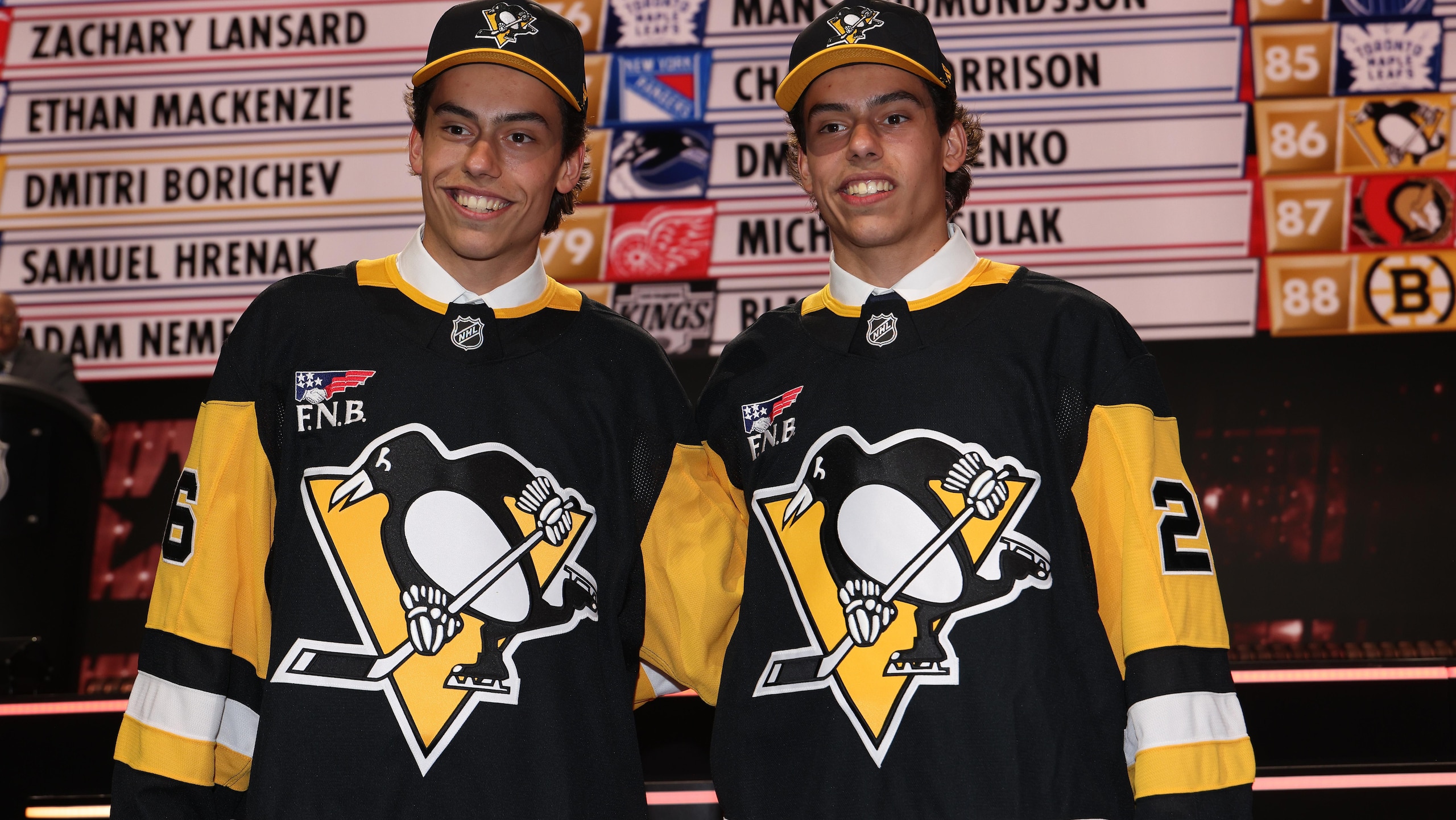
A very Kyle Dubas draft class.
Liam and Marcus Ruck, twins, have that Sedin-esque synergy, but they definitely aren't on the same level talent-wise. Liam is the group's shooter and the better player. His shot release is efficient and hard for goaltenders to read off the blade.
Marcus is a very good playmaker. In Medicine Hat, the two dizzied defenses with quick puck movement and player movement that took them all over the offensive zone. Their numbers belong in video games, but they benefited from Medicine Hat's loaded roster. They won't have that kind of possession advantage at the pro level, but if they can build some strength and accentuate their offensive abilities, then they could make special plays together in the NHL. The Penguins may have reached slightly on both individually in order to grab them, but it's hard to deny the multiplier effect they have together.
Tomas Galvas is an undersized defenseman who turned 20 in February and was passed on in the draft multiple times. He was a revelation at the 2026 World Junior Championship. His skating is phenomenal, and he commands the point with the puck. He has 4-6 upside as a puck-moving defenseman who features on PP2.
Grade: B
San Jose Sharks
23 of 32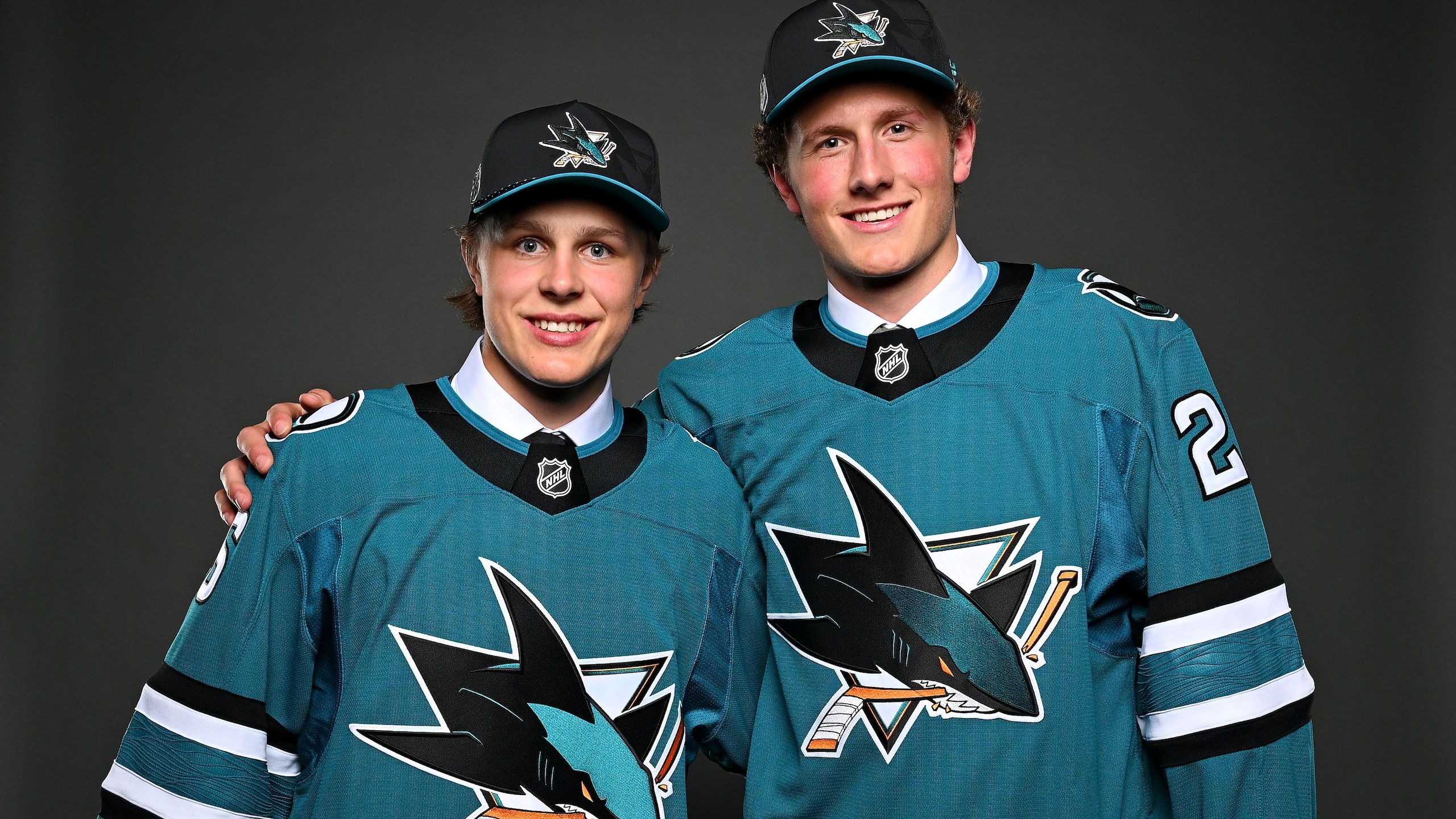
It doesn't get much better than this. Ivan Stenberg was the chalk pick at second overall, but there were a lot of people in the peanut gallery trying to talk San Jose out of it in favor of taking a defenseman. I think Stenberg is closer to McKenna than he is to the third-best player in this draft. He'll be an 80-90 point winger in the mold of Brandon Hagel.
Keaton Verhoeff's draft stock fell this season, and rightfully so, but I believe scouts overcorrected. I think he's right there with the other defensemen in this draft class — Reid, Carels, etc. — and I think his ceiling inspires comparisons to Aaron Ekblad. He's one of the younger players in this draft class and really challenged himself at North Dakota in the NCAA. Had he stayed in the WHL, he would have dominated and maybe gone higher.
Defenseman Ryan Lin is also another expected but still jolting drop down the draft board. He's one of the smartest players in this draft class. I love the way he manages the puck, and his defensive anticipation and route-taking are remarkable. Scouts are afraid because he's 5'11" and not particularly fast, but I don't care. I think he has a long career as a top-four NHL defenseman. Maybe better.
The Sharks could have literally forfeited their remaining picks, and it wouldn't have mattered. That being said, I think American Brady Knowling is a respectable pick as a goaltender in round four.
Grade: A+
Seattle Kraken
24 of 32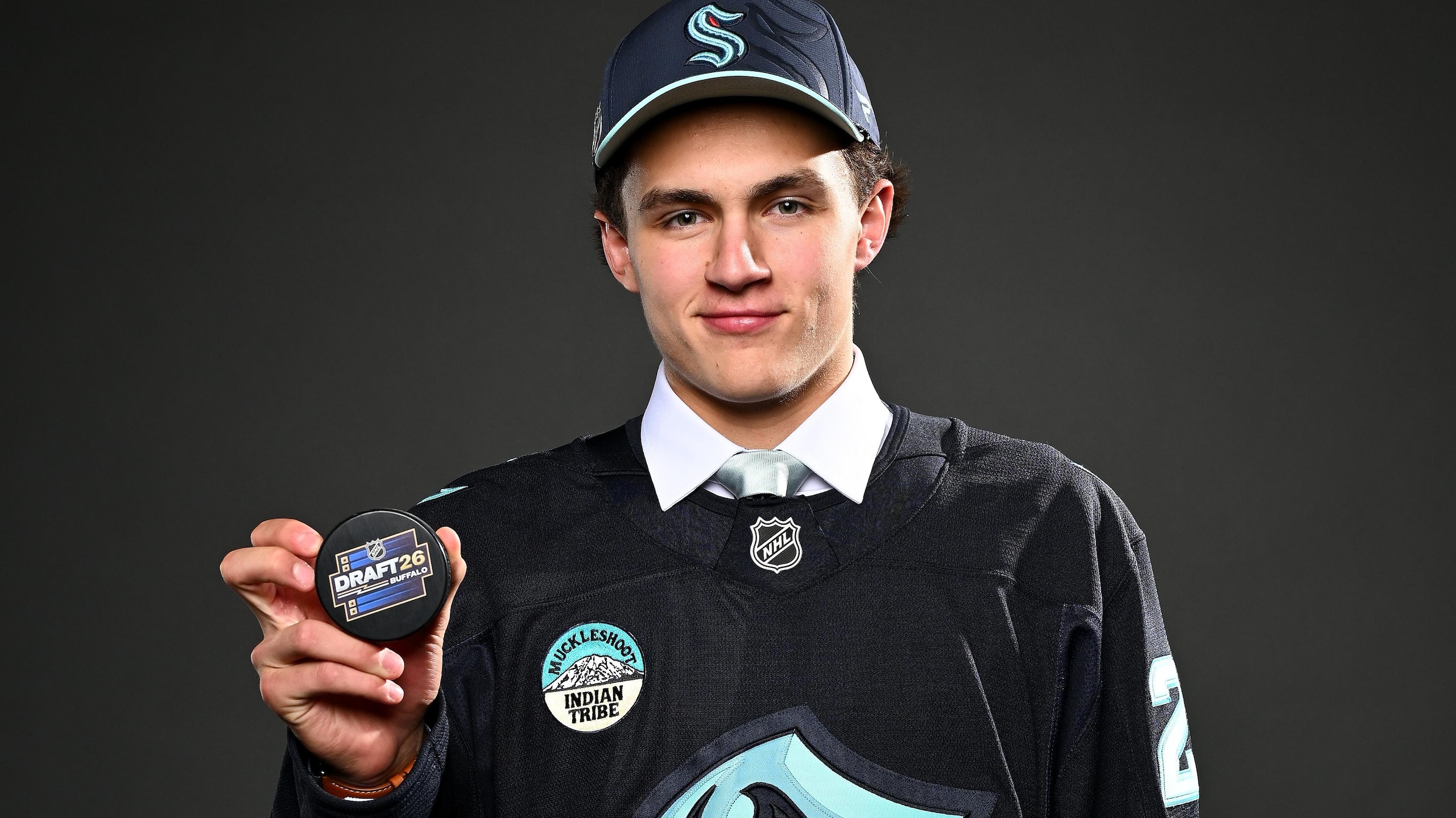
I'm lower on Chase Reid than most.
I worry that his playing style is more flash than substance, and that he was born in 2007, meaning he's had extra development time compared to his peers.
Even still, I can't fault the Kraken for being elated to grab him at seventh overall. His four-way mobility is special. He's a virtual guarantee to exit the defensive zone with the puck in possession, and he is a zone entry machine even when going up against numbers.
I think his in-zone game is only good, not great. He has a good shot and can walk the blue line, but I don't see a tactician or a high-end passer. I think he'll need a top-half-wall operator on the PP to dictate play. His defensive game is also hit-or-miss. He has the feet to keep up with just about anybody, but he is too passive in defending 1v1. In any case, he is the highest upside defenseman in the draft. If it all connects, we're talking about a superstar. More realistically, I see him as a Bowen Byram type.
Casey Mutryn is a high certainty, low upside winger. He's big and strong, he plays well within the cycle, and he has good hands around the net. He's also a reliable defensive winger. I think he's too limited as a contributor on the breakout, and his skating isn't powerful enough relative to his strength. He won't be helpful with transitions. I see third-line upside. I'd have bet on someone with a higher ceiling at 38, but his high floor does help the cause.
I don't really like the rest of their draft, though Olah Palme was a good value pick in round six. He plays a low-risk defensive game and is a good skater. He'll get four years in Finland to figure it out and could turn into a third-pairing defenseman.
Grade: B+
St. Louis Blues
25 of 32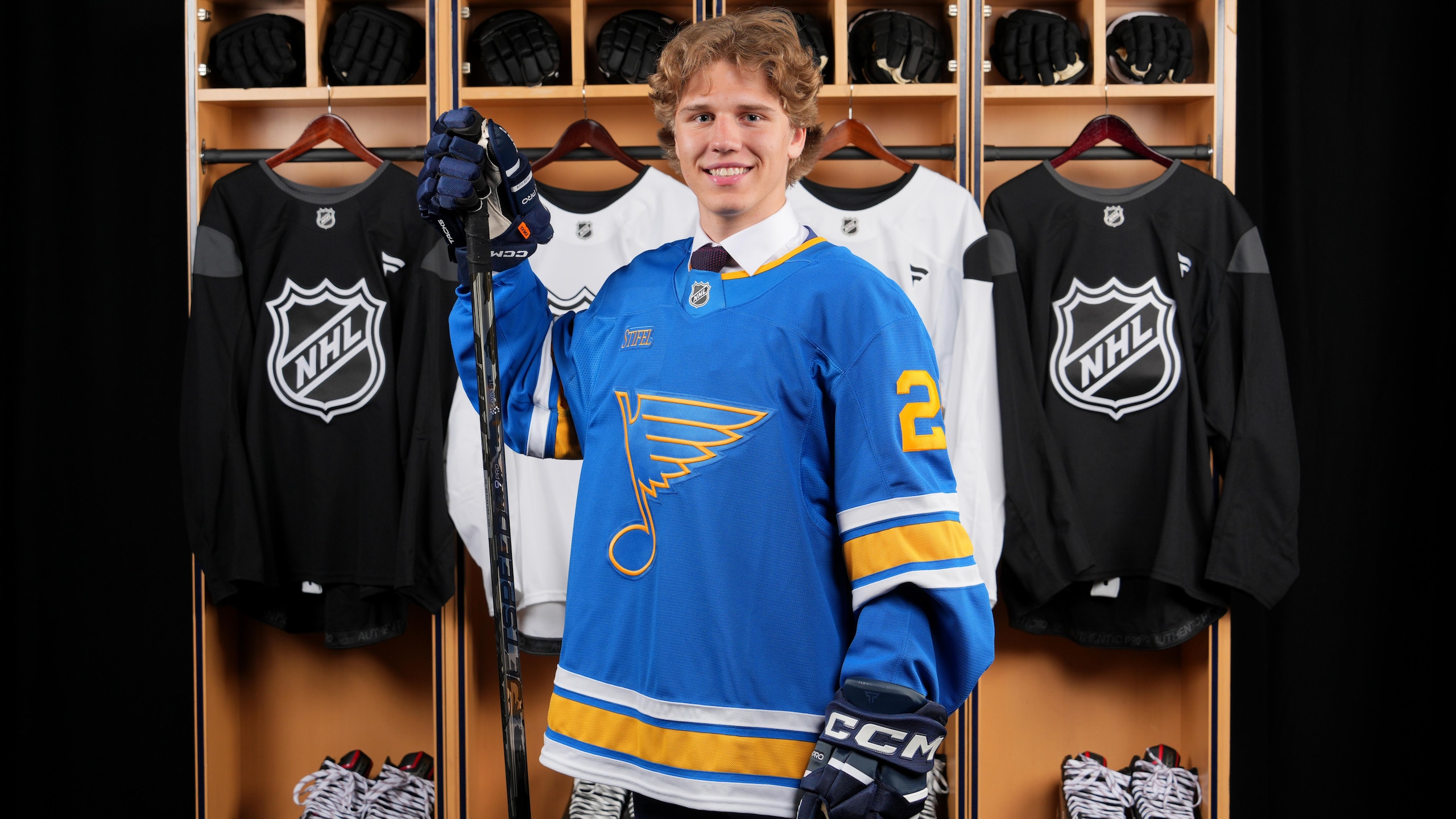
The Blues took two centers in the first round, and I like them both for where they were drafted despite offering different profiles. Tynan Lawrence is a fairly polished player. He has good north-south speed, he's hard on pucks, and he has good awareness in the offensive zone to support the cycle. Lawrence also has a hard wrist shot. He's a safe bet to become a middle-six center, with a lean towards the second line.
Maddox Dagenais is a big project, but there's a lot to like. He's 6'4", his shot is a bullet, and he uses his reach incredibly well to protect pucks or create separation from defenders. He's a bit bow-legged when skating, and he has a lot of work to do in order to figure out how to refine his raw skill to become a complete, mature player, but his upside is high, and I think he has the ability to become a middle-six center with a playing style that is hard to find.
Luke Schairer (75th) is one of my favorite defensemen available on Day Two. I think he could have gone 20-plus picks higher. He's a physical defenseman who doesn't put himself out of position and holds his own retrieving pucks on dump-ins. A potential No. 4 defenseman.
Nick Bogas (round five) competes his ass off and puts his body on the line, even if I think he lacks the refined skills to be more than a seventh defenseman in the NHL.
Lars Steiner is a great pick in round six. Size is all that holds him back from becoming a bottom-six energy winger with secondary scoring punch.
Grade: A-
Tampa Bay Lightning
26 of 32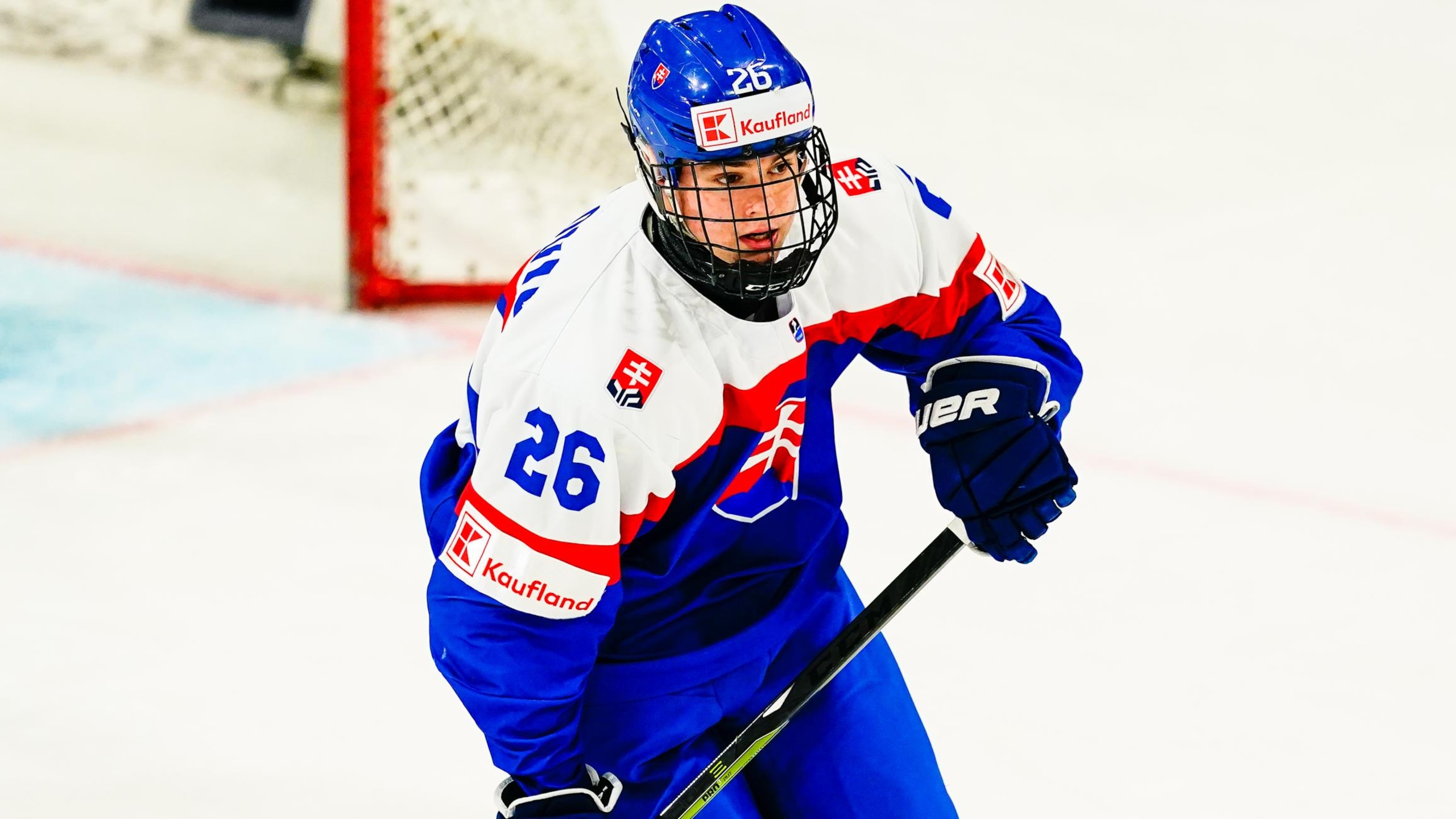
Look, the Tampa Bay Lightning's success speaks for itself, and no organization has turned depth prospects and generic minor leaguers into productive NHLers better than they have.
Still, some of their selections leave me perplexed. Oleg Kulebyakin is very creative with the puck in the offensive zone, but he's 5'10", his physical game is lacking, his skating is suspect, and his statistical profile in the relatively weak QMJHL doesn't present a strong counterargument to the eye test. He is talented, and Tampa often turns straw into gold. I just think they left more mature but equally talented plauyers on the board at 52nd overall.
Tomas Kralovic turns 21 in two months, and his statistical profile in Slovakia has been fine. He would have made sense as a free agent signing.
Morgan Anderberg is undersized and one of the oldest players in this draft class. His junior production is okay, and he didn't stand out in limited minutes in the Swedish Hockey League.
Every player Tampa drafted shows NHL upside if you squint, and consider me nervous about betting against the AHL Syracuse Crunch's ability to churn out NHLers. I just think Tampa outsmarted itself here. It's been a few years in a row where the Lightning has posted subpar draft classes.
Grade: D
Toronto Maple Leafs
27 of 32
At the end of the day, this all lives and dies by the success of Gavin McKenna. His puck skills are elite, but he has room for improvement in his skating and defensive game. I think the Leafs correctly chose him first overall and I think the bare minimum for him is a career as an 80-point winger, with upside as high as that of an Artemi Panarin; 100 point winger who challenges for awards.
I do like what the Leafs did with some of their later picks as well. Ethan MacKenzie (69th overall) showed well at the 2026 World Junior Championship, and he has the skating and puck poise to be a solid No. 4 or 5 defenseman who starts plays from the defensive zone.
Zac Olsen (73rd) has a lot of potential as an energy depth forward, and Måns Gudmansson (76th) is one of the best shutdown defensemen in this draft outside the lottery picks. He's a heavy hitter, but has another gear to reach if he can sometimes rely on his reach to break up plays.
Grade: A
Utah Mammoth
28 of 32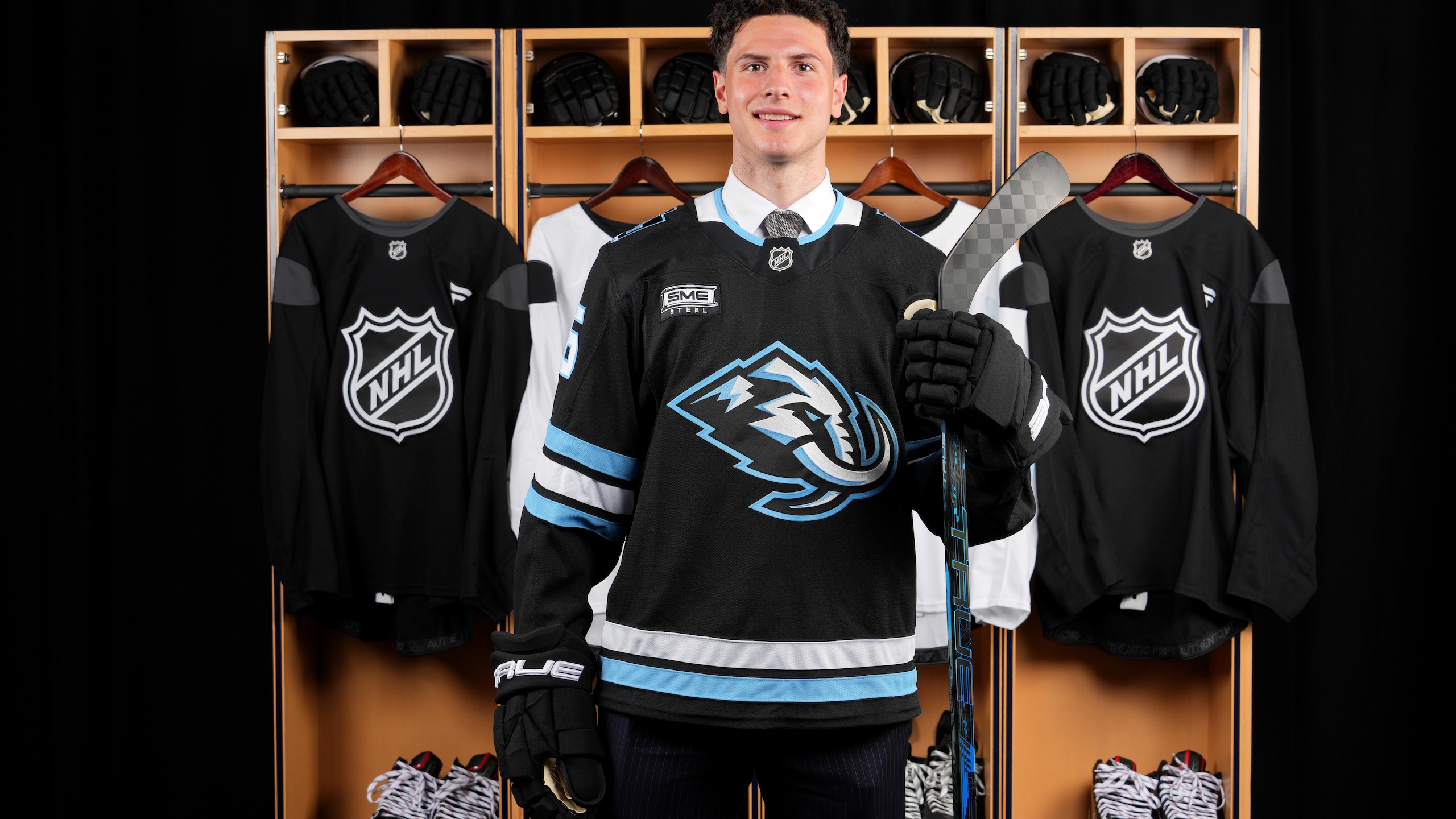
The Mammoth have a lot of uncertainty in this draft class, which is fine. They have a deep prospect pool and can afford some risks.
Ethan Belchetz is a 6'5" winger with really, really good hands. When he gains the zone in possession, he's able to use that size and skill to hold up play until reinforcements join and find a teammate. He plays at a fast tempo when necessary, and I like how he plays along the walls. Not only in terms of using his body to win battles, but also to find an escape with the puck on his blade.
The issue is that he is too deferential to his linemates. First-round picks Liam Greentree and Jack Nesbitt did the bulk of driving play on his line. He needs to be the focal point more consistently. He has upside as a first-line winger and also a safety net as more of a middle-six forward if it doesn't all bear out. I was nervous about ranking him on the border of the top-10, but at 17th overall, he's absolutely worth the swing on latent talent.
Winger Adam Valentini is a borderline steal late in the third round. He's a menace on the ice despite being just 5'10". He'll outwork everyone. He plays with a chip on his shoulder. He thinks the game well and has solid playmaking ability. He has it in him to become an energetic third liner who gives his team personality.
Theodor Knights (fifth round) is a defenseman who I think is a long way off from the NHL. He's big and physical, but his decision-making is poor, and he too often leaves the team vulnerable to odd-man rushes. He was a "do not draft" for me.
Grade: A-
Vancouver Canucks
29 of 32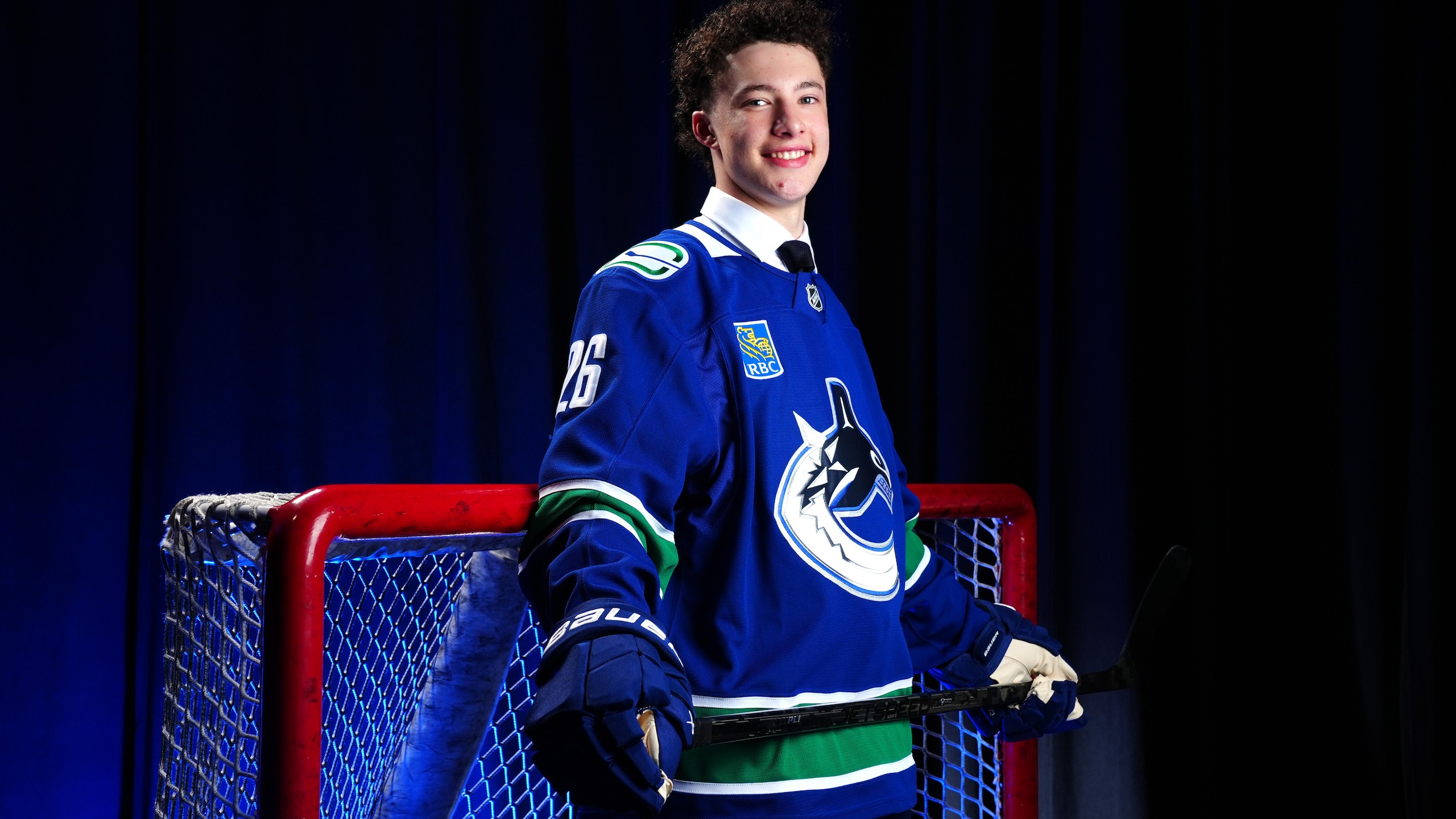
Caleb Malhotra is as sure of a bet to be a long-time NHLer as there is. His hockey IQ is through the roof, and he's put in a lot of work to build up his physical tools. He's going to be one of the top defensive centers in the NHL as soon as in a few years, a future captain, and I think he'll be a 55-60 point center. I see some first-line upside, but I also equally see a scenario where he peaks as a marquee third-line shutdown center. I compared him previously to former Minnesota Wild captain Mikko Koivu.
Adam Novotný is actually a prospect I quite like. His motor and work ethic are superlative, and he combines them with what I'll call a B-minus skill set. He won't control play with the puck, but he functions well in a cycle and has enough shooting and passing to hang with superior players. His work along the boards to win puck battles and keep plays alive is admirable. I think he could end up being the mucker as high as on a second line. One who puts up 40-45 points without meaningful PP time.
Brooks Rogowski (33rd overall) is 6'7" and moves fine for his size. He does a good job using his frame to move defenders around the net and create separation in the offensive zone. I'm not overly impressed by his soft puck skills or his decision-making. He has a lot of development ahead, though obviously, if he figures it out, he'll be a type of player few can match. Even still, he looks like a bottom-six center to me.
The pick I love the most is Niklas Aaram-Olsen (41st). He's a fast player, and he really rips the puck on net. He can score off the rush, which he creates for himself. He also catches passes and gets off a good shot, even if it's not teed up for him. Pound-for-pound, their best bet on upside in this draft.
I am whelmed. Vancouver didn't draft anyone completely out of slot here, but the Canucks are in a full-blown rebuild and desperately need players who can feature at the top of the lineup. I think they passed on upside with their first three picks, and that includes third overall. I can't bash any individual selection, but the total outcome leaves me wondering how long this rebuild will take.
Grade: B
Vegas Golden Knights
30 of 32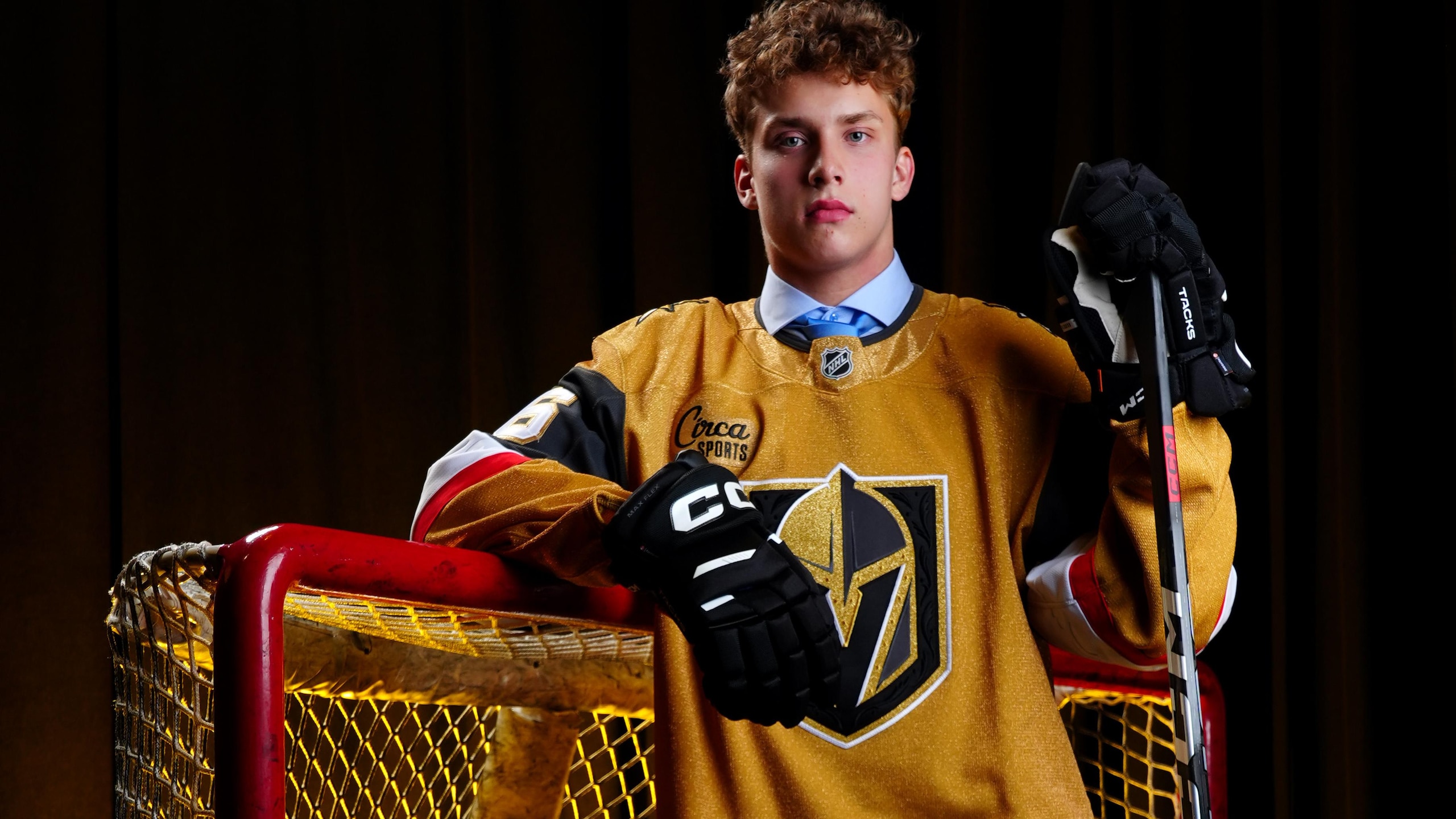
Juho Piiparinen is a toolsy defenseman. He has solid mobility and moves the puck at a proficient level from the back end. He isn't flashy, but he's calm and in control with the puck. His defensive gapping is sound, and he has decent size. I see him as a deferential player in the offensive zone long term, and his skating is only average, which limits his defensive upside. But I like the way he thinks the game and he has No. 4 defenseman upside. Maybe the 29th is a smidge earlier than I would have gone for Piparinen, but it's still within range.
I like the flyer on winger Jonah Sivertson in round four the most. He's already approaching 6'4", and he's an August birthday, one of the youngest in the draft. Sivertson is already a quality playmaker in the WHL. He has a lot of work to do to get to NHL speed, but Sivertson is something of a late bloomer with a long developmental runway still ahead of him. He has the profile of a player you look back on in five years and understand how he slipped through the cracks.
Grade: B-
Washington Capitals
31 of 32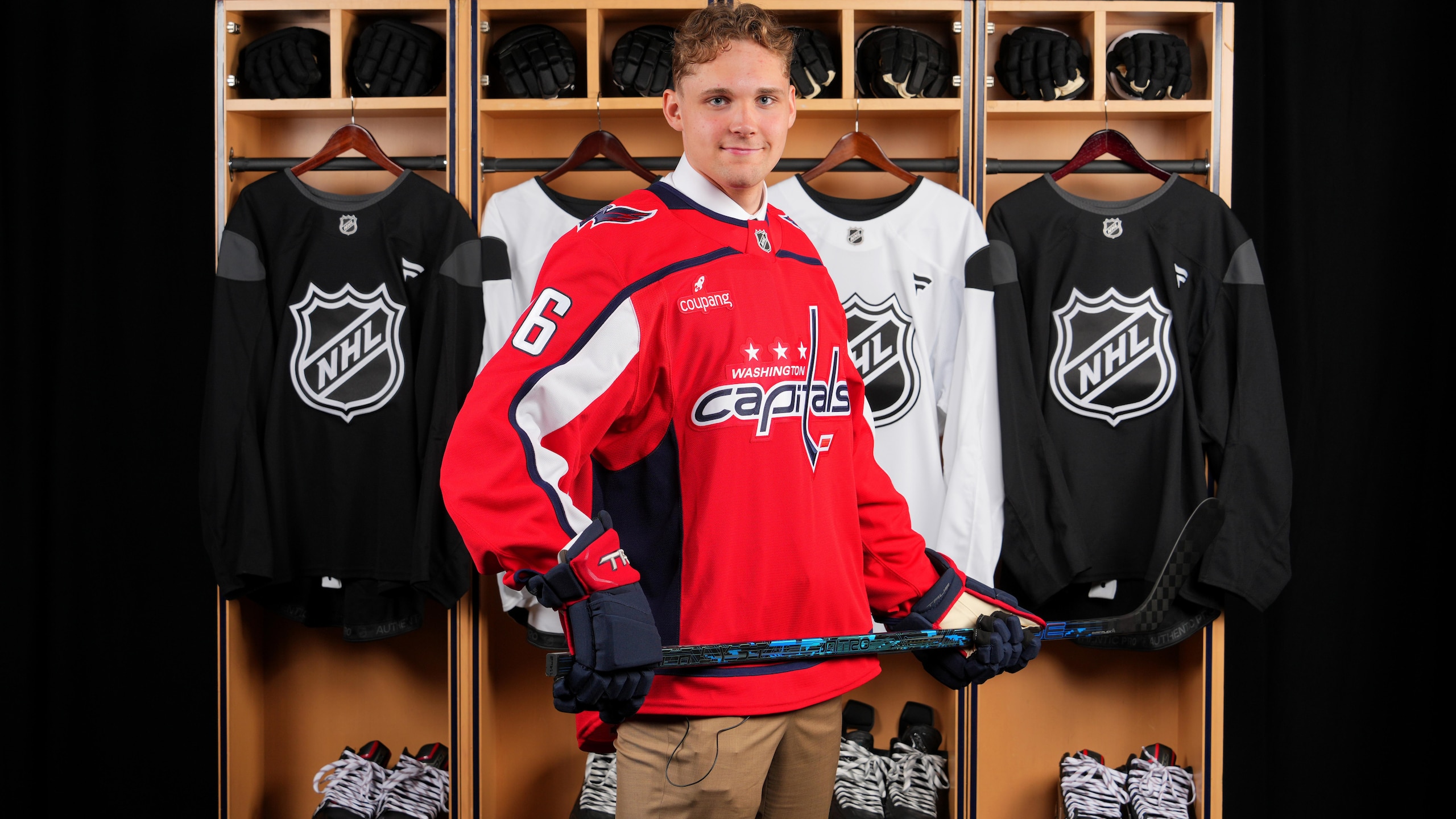
The Capitals get a market-rate return with their 18th overall pick. Oliver Suvanto is a strong center (6'3" and 200 pounds) who already physically outmatches players in Liiga, one of the best pro leagues around. He's really forceful in puck battles and leverages his size well. He's great defensively and excels in the faceoff dot.
I don't think his offensive upside is very high. He doesn't play with pace, his puck skills are uninspiring, and his foot speed needs work. I don't think he has a high ceiling, but he fairly comfortably projects as a third-line shutdown center. For me, Suvanto belonged closer to 25th overall.
Center Tyus Sparks (round four) is fine. A sub-six-foot center who is fast and plays with energy. He has enough contributions in transition play to be worth a mid-round pick despite a lack of size or major offensive upside. Logan Stuart (round seven) wasn't an NHL draft pick in my opinion, but we're splitting hairs there.
Grade: B-
Winnipeg Jets
32 of 32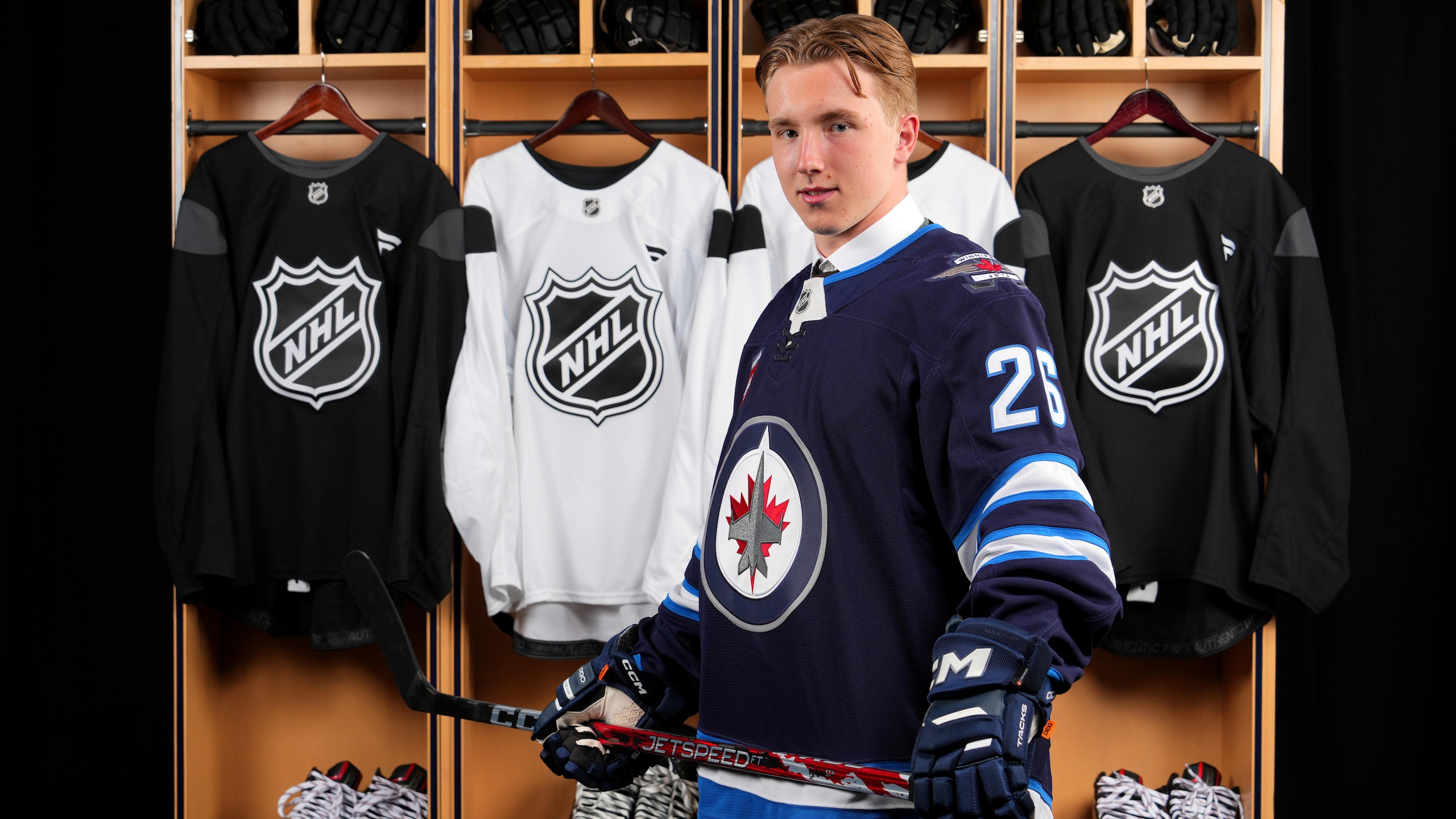
It was a wild ride for Viggo Björck up and down the draft lists this season, but in the end, he got justice.
The Jets should be pleased to acquire him with the eighth overall pick. He is an agile skater. He's highly cerebral. A great dictator and passer from the left half-wall. He is annoying and relentlessly pursuing pucks and chasing down puck carriers on the backcheck. I like his defensive acumen. He's undersized, sure, but he has already figured out plenty of ways to overcome that deficiency. Anyone truly worried about his ability to handle grown men should be calmed by his major success in the Swedish Hockey League and at the World Championship. His production in the SHL is on par with future NHL first-line centers. Even if size forces him to the wing (I don't think it will), he'll still be a dynamic top-six forward. Logan Stankovan comes to mind.
Noa Ta'amu (round seven) has enough physicality and puck-moving abilities from the back-end to become a bottom-pairing defenseman.
I could give or take the rest of their draft class. What's most important is that Winnipeg added a likely difference-maker at eighth overall.
Grade: A-
-(1).jpg?w=2560 "Bleacher Report")
.jpg?w=2560 "Simon Edvisson Landing Spots")
.jpg?w=2560 "Dalton In Line for Rare Stat 😬")