
Buyer Beware on These 10 MLB Trade Deadline Candidates
Make the right acquisition at MLB's August 3 trade deadline and you might be laughing all the way to the bank in October. But trade for the wrong guy and it could be the reason you miss the postseason altogether.
ESPN's Jeff Passan and Kiley McDaniel recently put together a list of this year's top 100 trade candidates. And while we surely could bicker for hours about the actual order of that list, let's just say the top 50 pretty well aligns with the rankings of the top hitters and top pitchers on the trade block that we've been churning out periodically over the past few weeks and months.
Well, within that top 50, there are a handful of coveted trade candidates with red flags.
Pitchers with FIPs, xFIPs or strand rates that suggest their ERAs are liable to balloon at any moment.
Batters with sky high BABIPs or expected batting average, slugging and/or weighted on base average marks that pale in comparison to the actual numbers they've been fortunate to achieve thus far.
Said players are presented in alphabetical order by last name, with statistics current through the start of play on Saturday, June 20.
Luis Arraez, 2B, San Francisco Giants
1 of 10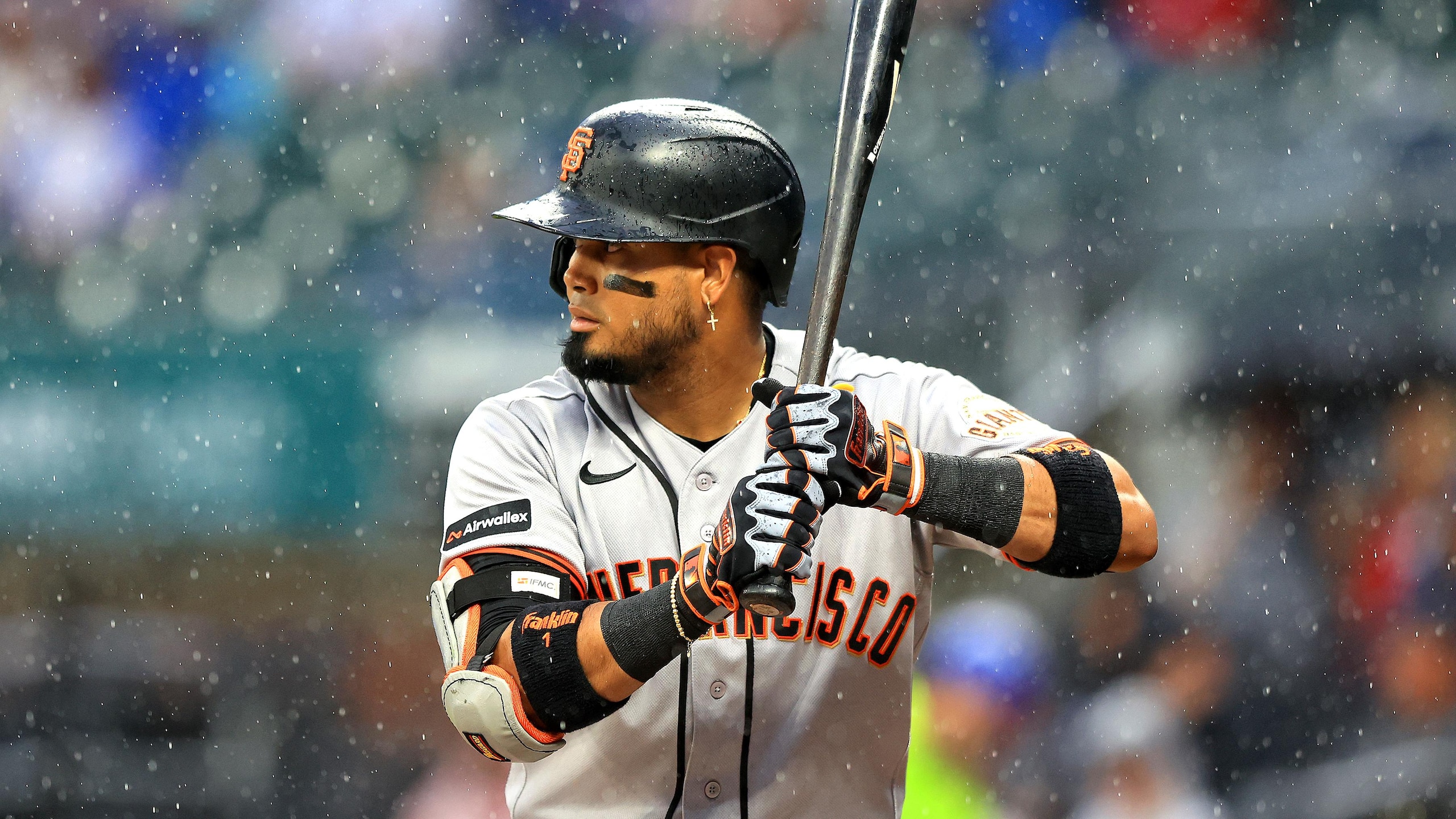
McDaniel/Passan Ranking: No. 13
Why He's a Coveted Trade Candidate
This three-time batting champ stacks hits like no other. Since the beginning of 2022, Arraez has 850 hits, which is 40 more than No. 2 on that list (Bobby Witt Jr.). And after spending the first seven seasons of his career as a liability in the field, Arraez has suddenly become one of the most valuable defenders in the game today, ranking fifth in the majors in outs above average.
Why Buyers Need Beware
Arraez obviously has a long history with a great batting average, to the point where his batting .321 probably feels perfectly sustainable.
However, he is defying his expected numbers like never before in his career, and a new team might be left holding the bag if he starts to regress in a big way.
Arraez is batting .321, but his expected batting average is .285. Granted, that is still doggone good by today's .240-ish standards, but a not-insignificant divide all the same.
He's also slugging 76 points better than he "should" be and has an expected weighted on-base average (.301) that is A) 43 points below his actual mark of .344, B) the lowest xwOBA of his career and C) not even in the 30th percentile among qualified hitters.
Prospective buyers know they're not getting a dozen home runs if they trade for Arraez, but they're probably banking on a .300 batting average. It might not (and perhaps even probably won't) happen, though.
Byron Buxton, CF, Minnesota Twins
2 of 10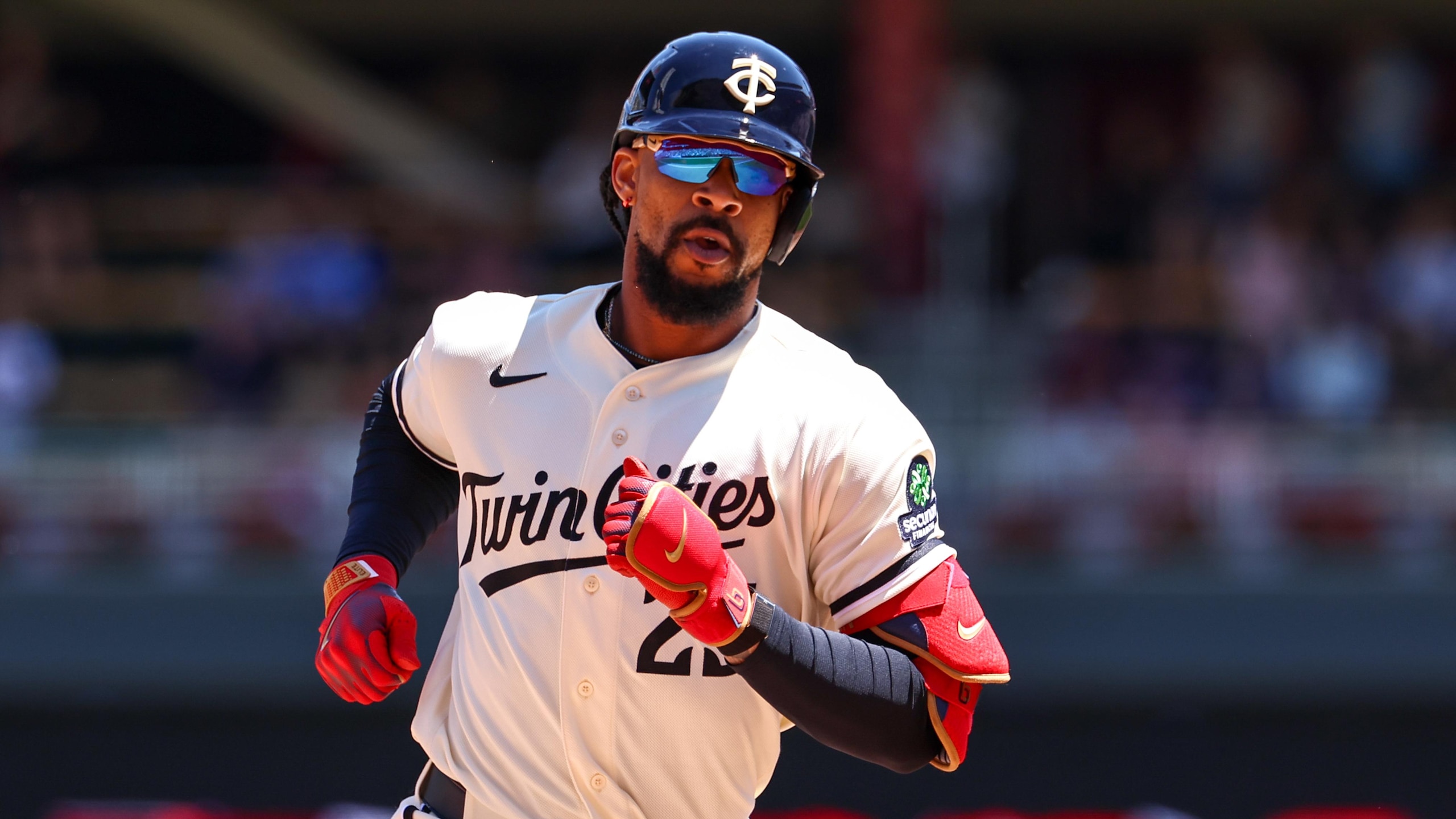
McDaniel/Passan Ranking: No. 2
Why He's a Coveted Trade Candidate
Buxton has a full no-trade clause and has repeatedly insisted that he's a Twin and wants to remain a Twin. But on the off chance that changes if the Twins start selling off other foundational pieces (i.e. Joe Ryan) at the deadline for a second consecutive year, Buxton is also darn near leading the majors with 23 home runs. He has been healthy enough over the past season and a half that there are bound to be teams calling daily in late July to find out if there's any wiggle room in that no-trade clause.
Why Buyers Need Beware
For starters, Buxton's home/road splits this season should be terrifying for any team looking to pry him away from Target Field. He's batting .328 with a 1.115 OPS at home compared to .228 and .758, respectively, on the road. No wonder he's happy staying in Minnesota.
Beyond that, Buxton has expected vs. actual differences that are a bit alarming.
He's hitting .273, but his expected batting average is .247.
He's slugging .588, but his expected slugging is .516. (Granted, .516 would still make him one of the best sluggers on the trade block. But trading for a top-five slugger and actually getting a borderline top-30 slugger would be a disappointment.)
And his xwOBA (.351) is almost 50 points below his actual wOBA (.397).
Throw in the injury history concerns that will never fully go away and the juice might not be worth the squeeze here. If Buxton is content to keep mashing solo home runs in Minneapolis, maybe we just let him live his best life.
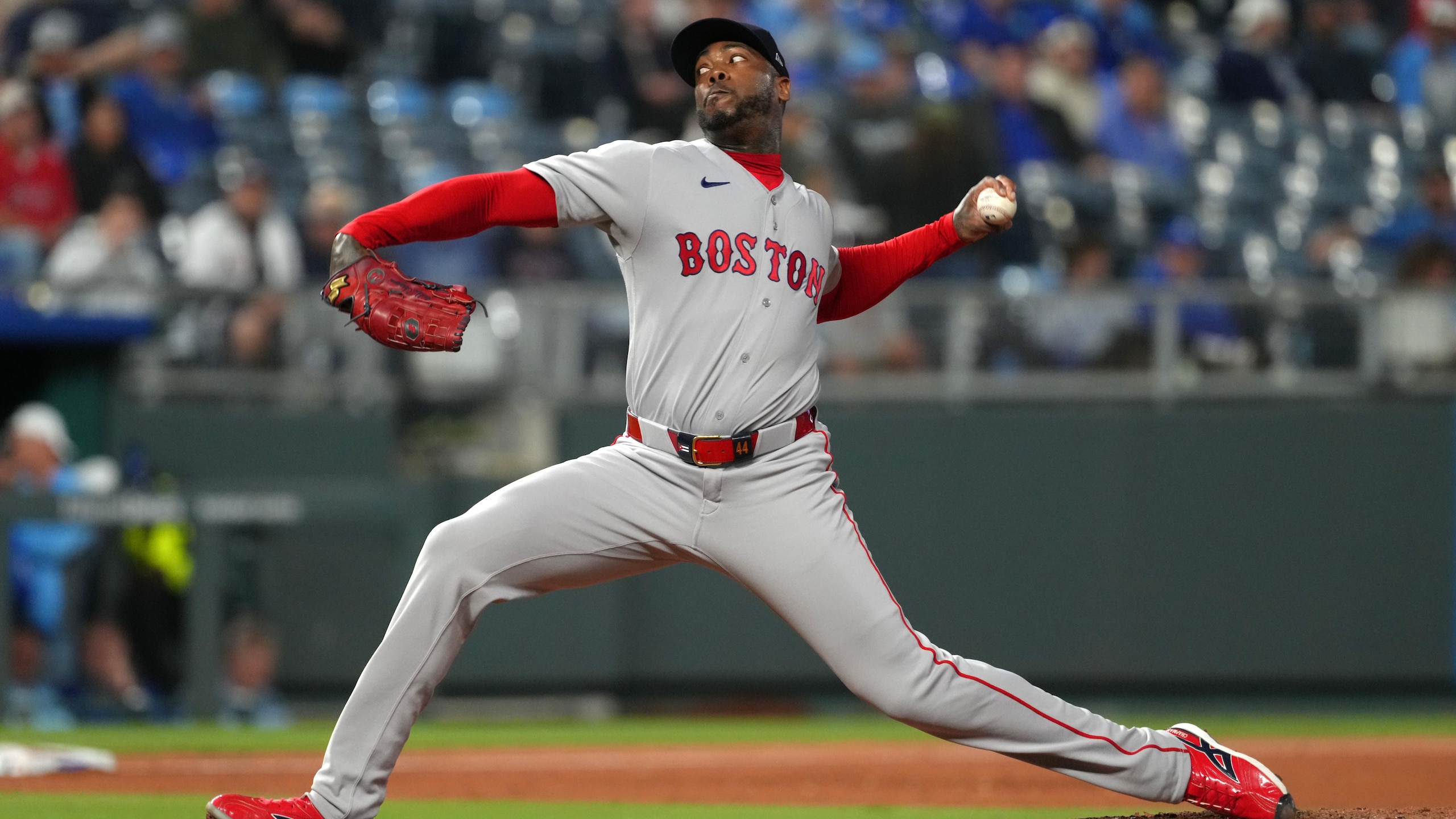
Aroldis Chapman, LHP, Boston Red Sox
3 of 10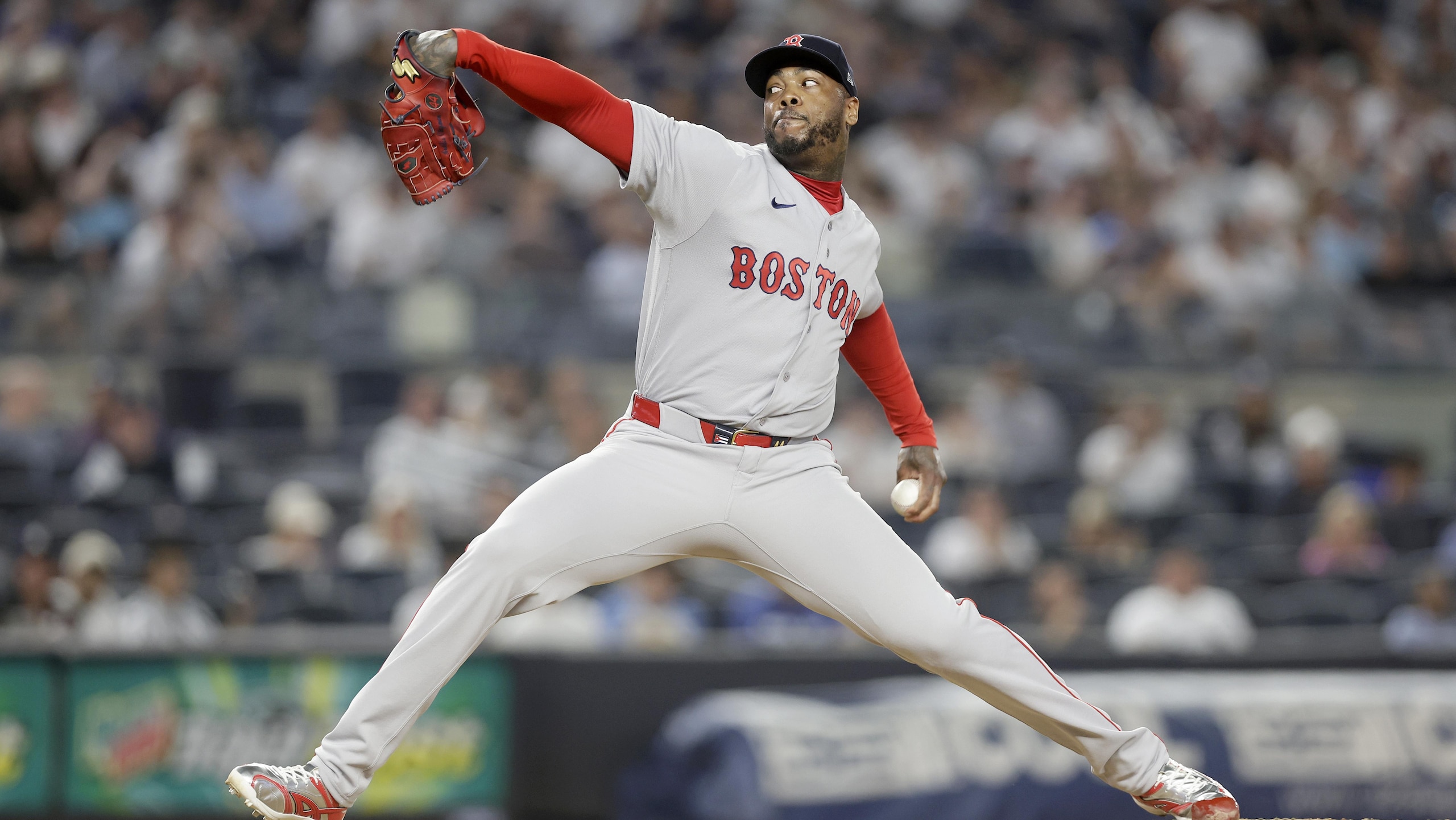
McDaniel/Passan Ranking: No. 8
Why He's a Coveted Trade Candidate
Lockdown closers appear to be going the way of the dodo bird. But even in his age-38 season, Chapman has been a remarkable exception to that rule. Boston hasn't provided him many, but he is 14-for-14 in save chances with a sub-1.00 ERA and a K/9 rate north of 12.0. And at 381 for his career, there's a decent chance he becomes just the ninth member of the 400 save club by the end of this season.
Why Buyers Need Beware
Chapman's 0.83 ERA looks fantastic. Better than Mason Miller's 0.90 ERA even.
The 2.61 xERA and 3.05 xFIP beside it, though? Not so fantastic, and a big indicator of impending regression.
Moreover, Chapman's average four-seamer velocity (96.8 MPH) isn't what it used to be. He'll touch 100 on occasion once he's good and revved up, but he's generally hovering at about two MPH below where he was last season, which was already a good 2-3 MPH below the flamethrowers he used to unleash on the regular a decade ago.
Could he still be a top 10 closer down the stretch and into the postseason, even if he posts a 3.00 ERA while throwing 96-97 MPH? Yeah, probably. At any rate, there are only eight pitchers at the moment with at least 10 saves and a sub-3.00 ERA.
But if a contender thinks it is trading for Mason Miller Lite or the 2016 version Aroldis Chapman, it may be sorely mistaken.

Willson Contreras, 1B, Boston Red Sox
4 of 10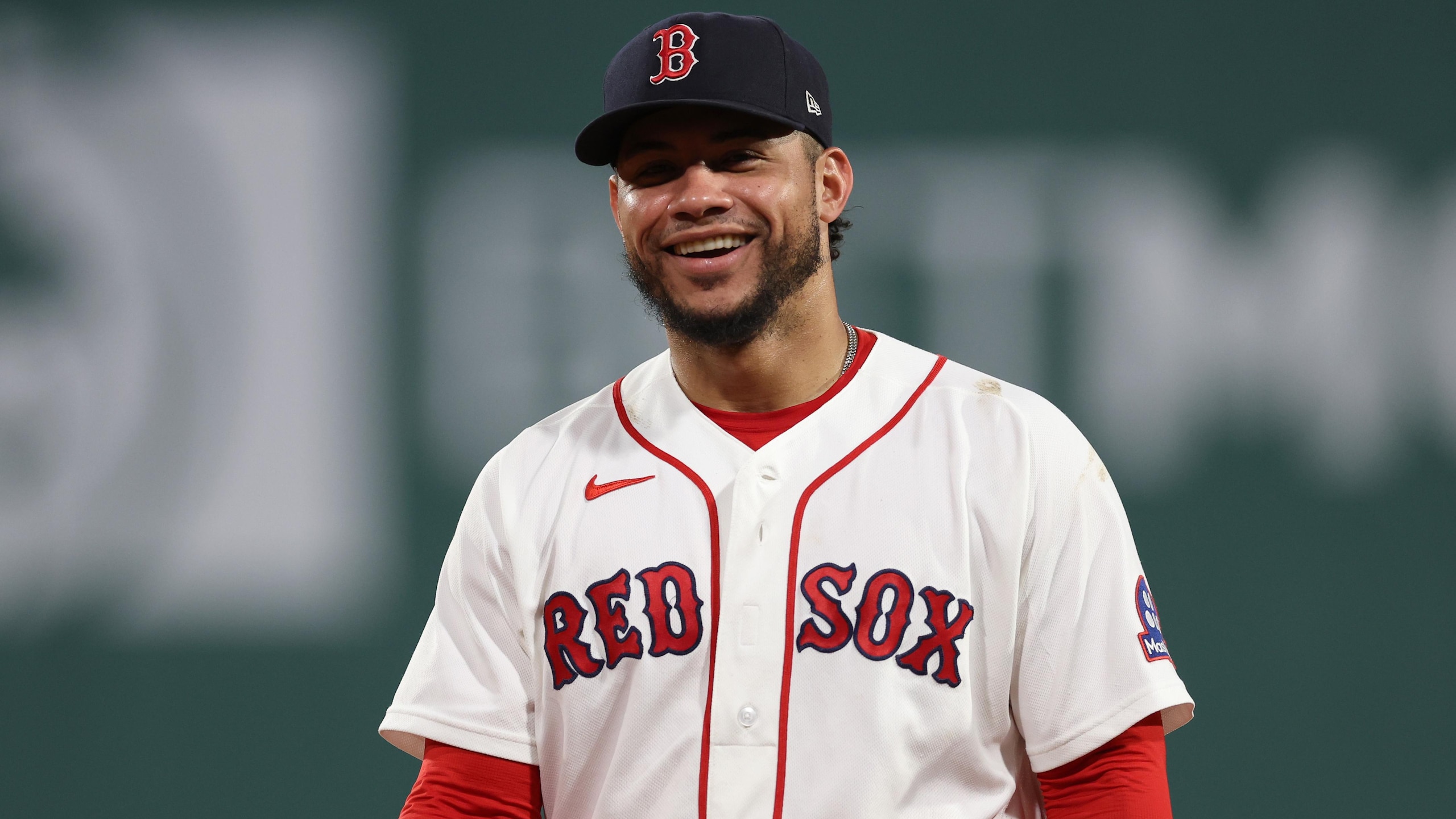
McDaniel/Passan Ranking: No. 9
Why He's a Coveted Trade Candidate
Contreras has been pretty much Boston's entire offense. Each portion of his triple-slash (.289/.382/.538) ranks No. 1 among Red Sox with at least five plate appearances, as do his home run (16) and RBI (44) totals. The former catcher is also an above-average defensive first baseman.
Why Buyers Need Beware
While Contreras doesn't have a specific data point that screams "Yikes," there are a fair number that bear mentioning.
His OPS at home is 112 points better than it is on the road. And it's pretty clear that he has adjusted his swing/approach for the Green Monster, resulting in both the steepest launch angle (16.5 degrees) and by far the highest pull rate (56.4 percent) of his career.
His xBA, xSLG and xwOBA are each 20-45 points worse than his actuals, while all three of his actuals are higher than in any other season of his career—at 34 years old with more than 6,000 innings' worth of catching mileage on his knees.
Contreras historically hits worse in August than in any other month. He also has a career-high BABIP of .350 and a career-high infield hit percentage (11.0), which almost certainly isn't sustainable.
And if things do go a bit sideways with Contreras, his remaining contract becomes a pain point.
St. Louis retained $8M to facilitate the winter trade to Boston, but Contreras is still owed about $5M in prorated salary after the deadline and at least $13M in 2027 before either a $20M club option or $7.5M buyout for 2028. (For that reason alone, let's just say we're not expecting a family reunion between Willson and William in Milwaukee this fall.)
Rico Garcia, RHP, Baltimore Orioles
5 of 10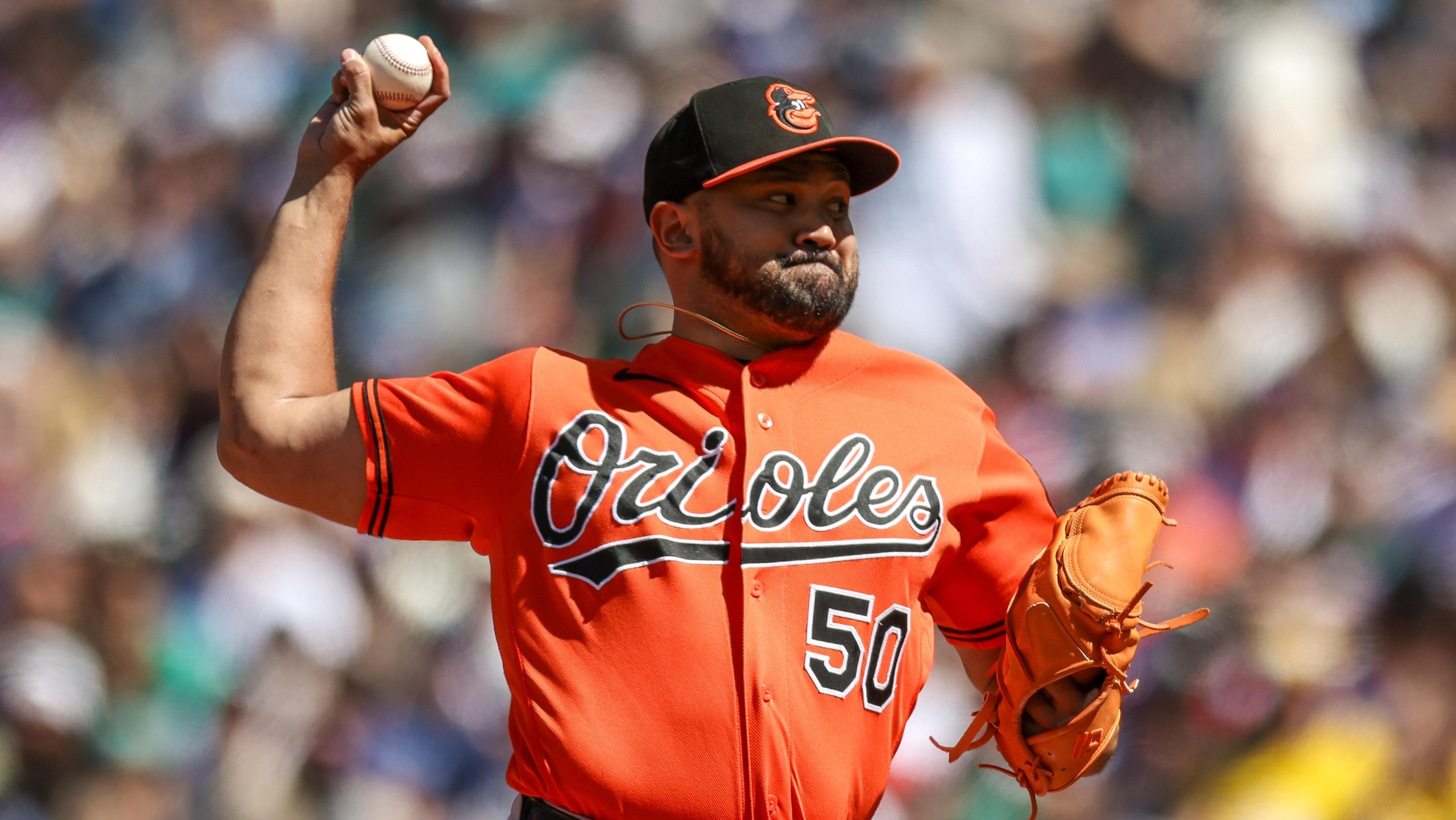
McDaniel/Passan Ranking: No. 48
Why He's a Coveted Trade Candidate
Garcia came out of nowhere with his unhittable stuff through the first seven weeks of the season, but he has amassed three wins, four saves and nine holds with a 1.76 ERA and a 0.72 WHIP. His four-pitch arsenal has kept opponents off balance, and he has good swing-and-miss stuff with a 9.7 K/9. And if he's even remotely the real deal, he is under team control through 2030.
Why Buyers Need Beware
Maybe you don't need our help reaching the conclusion that a 32-year-old journeyman suddenly becoming a borderline All-Star reliever might not be sustainable. But let's talk about it anyway.
Through 30.2 innings pitched, Garcia has a .123 BABIP against. This is patently absurd. Not only did he enter this season with a career BABIP against of .308, but in MLB history, the lowest recorded BABIP in a single season of at least 30 innings pitched was Alex Vesia's .143 mark in 2021.
Garcia has already regressed considerably from allowing just one hit in his first 19.0 innings pitched, but further regression is all but guaranteed.
He also has a 3.62 FIP and 3.39 xFIP for the year (as well as a 3.86 ERA over his last 11 appearances) to suggest that his exceptional ERA and WHIP very likely are not here to stay.
Furthermore, Garcia had a 5.27 ERA and zero saves in 70 career innings pitched in the majors prior to 2026. At least when Fernando Rodney randomly had that 0.60 ERA age-35 campaign in 2012, he had been a high-leverage, occasionally successful pitcher in the past. Garcia, on the other hand, appeared out of the blue in his 30s and might vanish just as suddenly.
Nathaniel Lowe, 1B/DH, Cincinnati Reds
6 of 10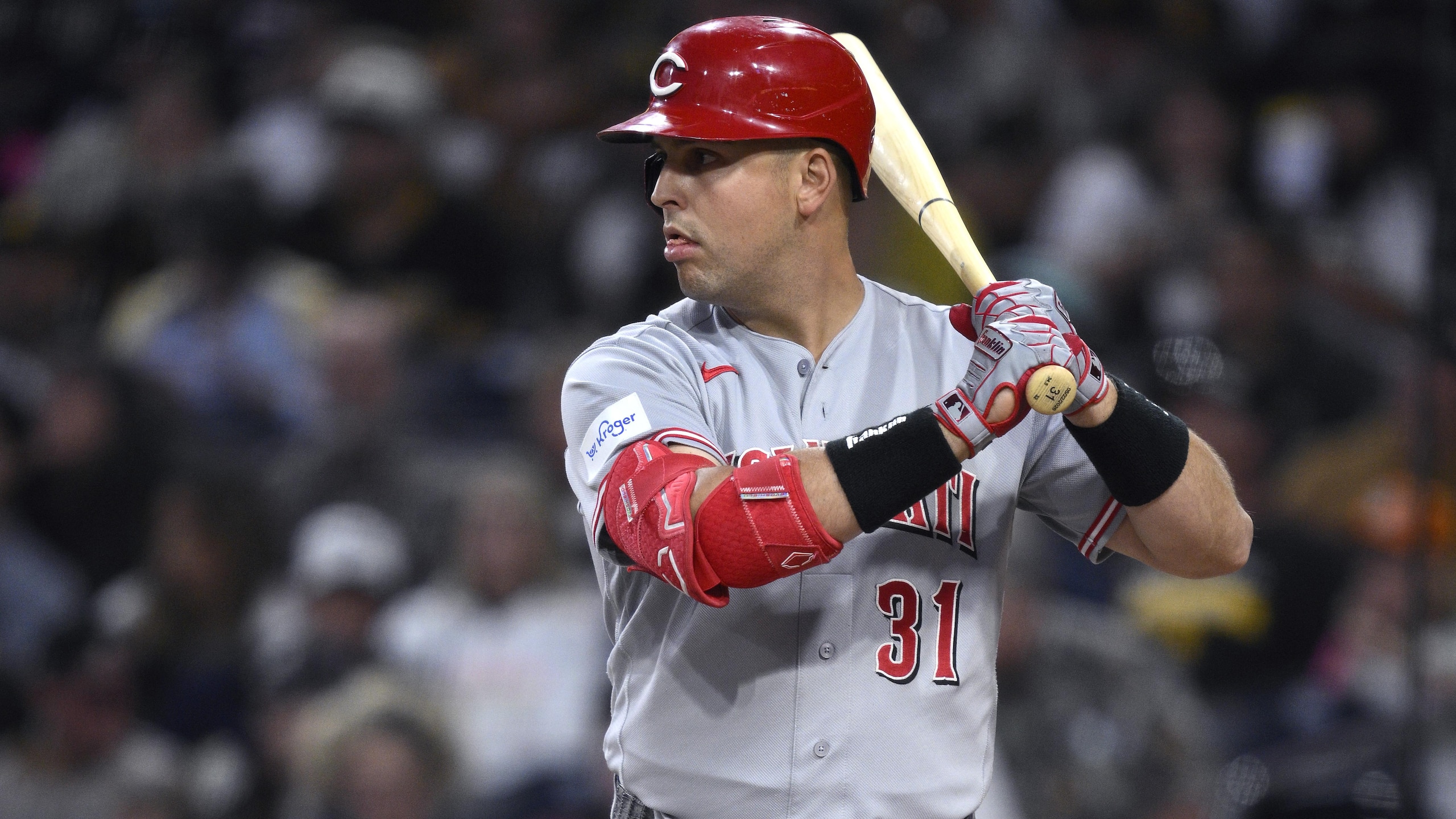
McDaniel/Passan Ranking: No. 45
Why He's a Coveted Trade Candidate
Lowe had a rough run through 2025 and was non-tendered by the Red Sox in November, but he seems to have rediscovered the swing that made him a Silver Slugger with the Rangers in 2022. Lowe is averaging one home run for every 20 trips to the plate and has an .829 OPS that would be the second-best of his career if the season ended today.
Why Buyers Need Beware
Lowe is only making $1.75M this season and will be a free agent this winter. The financial/time commitment here is so minimal that it hardly seems worth pointing out the red flags.
However, on a trade block that could be woefully lacking for big bats if neither Byron Buxton nor CJ Abrams is made available, there's bound to be some real interest in two months' worth of Lowe's .484 slugging percentage.
So, is it sustainable?
The batted ball data thinks so. In fact, it suggests he has been a bit unlucky thus far, with an expected slugging percentage of .493. Lowe's xBA and xwOBA are also slightly higher than his actuals.
However...
Lowe has done almost all of his damage at the Great American Launching Pad, which has been responsible for more home runs than any other venue in 2026. He has eight home runs and a .946 OPS at home compared to one and .724 on the road.
Lowe has also been completely unusable against left-handed pitchers, going 0-for-16 against them. He was similarly kind of good against righties and disastrous against southpaws last season, so he pretty well needs to be put in a platoon situation, preferably in a ballpark where balls routinely get put in orbit.
Casey Mize, RHP, Detroit Tigers
7 of 10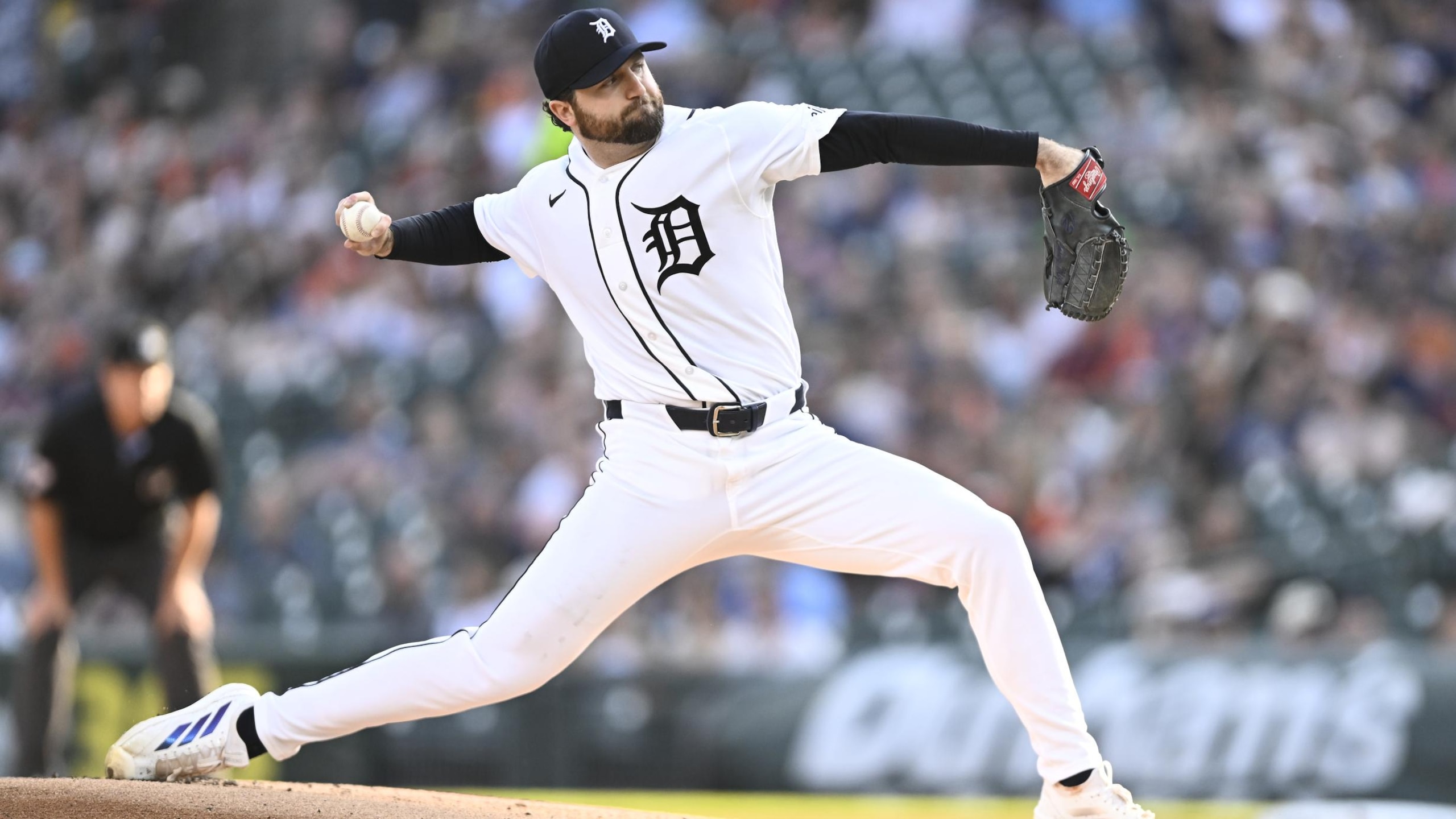
McDaniel/Passan Ranking: No. 16
Why He's a Coveted Trade Candidate
Mize was drafted No. 1 overall in 2018, was an All-Star in 2025 and has a 2.58 ERA through his first 10 starts of the current campaign. His strikeout rate (8.9 K/9) has never been higher. His WHIP (1.01) has never been lower. And while Tarik Skubal is understandably the "Tigers pitcher who is an impending free agent" that everybody wants, Mize—whose prorated salary if dealt at the deadline is roughly $2M—is the one that everybody could afford.
Why Buyers Need Beware
First and perhaps foremost, Mize is one of those unfortunate players whose middle name might as well be "if he can stay healthy." He has already been on the IL twice this season for a groin/adductor injury. And the average velocity on his four-seamer (93.4 MPH) has been more than two miles per hour below where it sat in 2024 (95.5)—after missing all of 2023 while recovering from Tommy John surgery.
Just for fun, though, let's assume a healthy August and September and 10 starts with a new team.
Well, in addition to an injury history, Mize has a track record of imploding in the second half.
He has a career ERA of 3.42 in March/April, 3.31 in May and 3.52 in June. But in August and September? 5.35 and 5.03, respectively.
And because Mize is a fly ball pitcher (33.1 percent ground ball rate) who has been uncommonly lucky in the home runs department—his HR/FB ratio of 4.5 percent ranks third-lowest among pitchers who have logged at least 50 innings this season, while also paling in comparison to what had been a career rate of 13.3 percent prior to 2026—he has an xFIP of 3.83 that suggests his ERA will balloon in the second half yet again. (Provided he stays healthy long enough for regression to do its thing.)
Mickey Moniak, OF, Colorado Rockies
8 of 10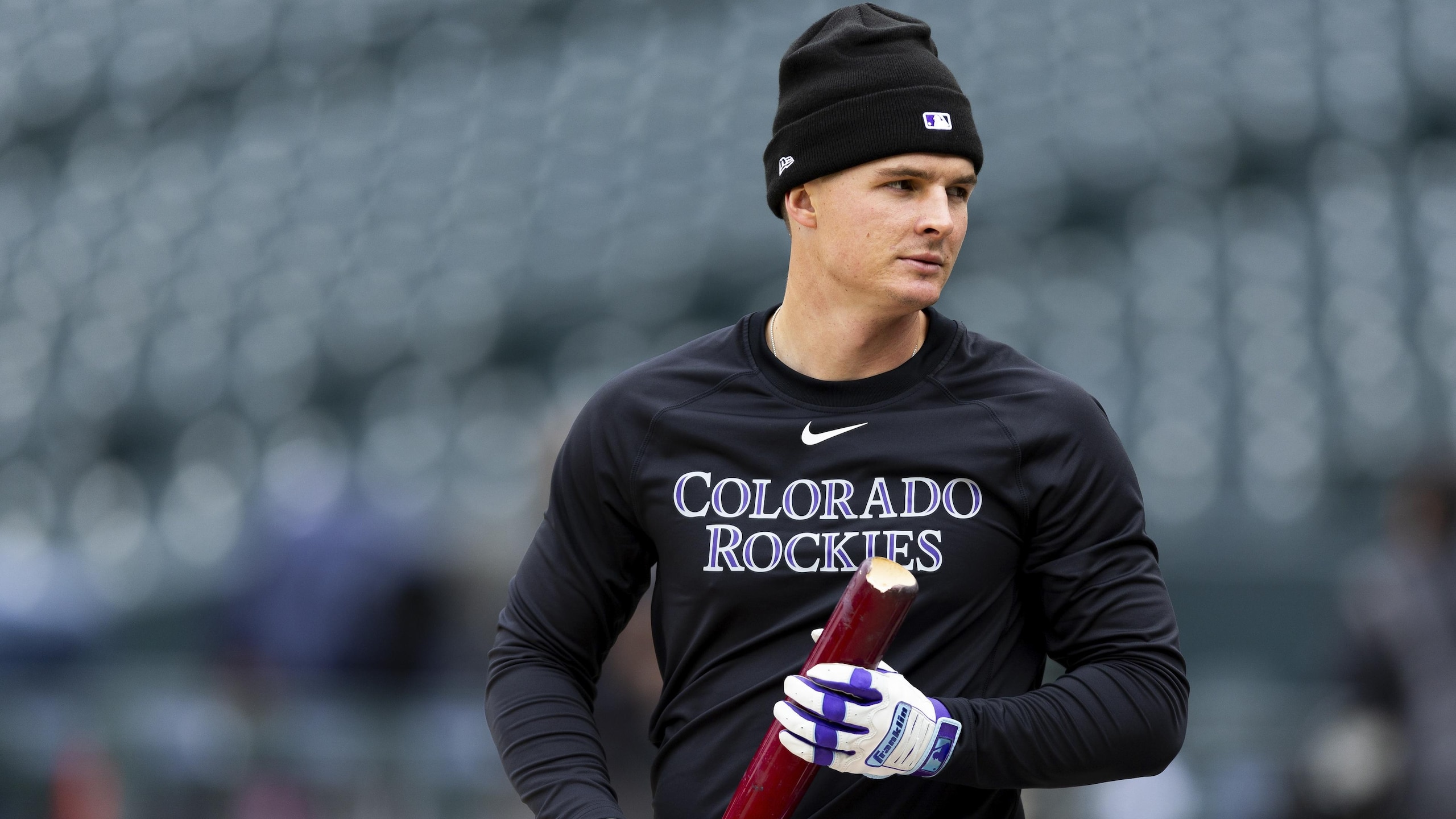
McDaniel/Passan Ranking: No. 32
Why He's a Coveted Trade Candidate
Moniak has missed the past month with an ankle injury, but he is two games into a rehab assignment and ought to be back within a week if all goes well. And if he gets all the way back to hitting like the breakout star who had an OPS north of 1.000 prior to suffering the ankle injury and trying to play through it for more than a week, the trade buzz will be plenty palpable. Moniak still has one year of arbitration eligibility remaining, too, so this is more than just a two-month rental of what could be a clean-up bat.
Why Buyers Need Beware
Since getting scooped up by the Rockies at the start of 2025, Moniak has an .855 OPS and has homered in 5.8 percent of his plate appearances. Those numbers are comparable to slugging aficionados such as Max Muncy (.864 and 5.4), Junior Caminero (.850 and 6.2) and Pete Alonso (.848 and 5.3).
But, dear friends, we must apply the Coors Field Inflation Factor.
Moniak has crushed in the thin air of Denver, amassing 24 home runs and a .980 OPS at home over the past 1.5 seasons. However, teams rather have to assume they would be trading for the much more pedestrian 12 home runs and .703 OPS that Moniak has put together in 83 games played on the road.
Statcast's expected data also suggests that Moniak's numbers are drastically inflated.
This season, he's batting .280, slugging .607 and has a .399 weighted on base average. His expected numbers, however, are .228, .470 and .324, respectively. And among the 347 players with at least 100 plate appearances this season, that 137-point gap between Moniak's slugging and his expected slugging is the widest of all.
Antonio Senzatela, RHP, Colorado Rockies
9 of 10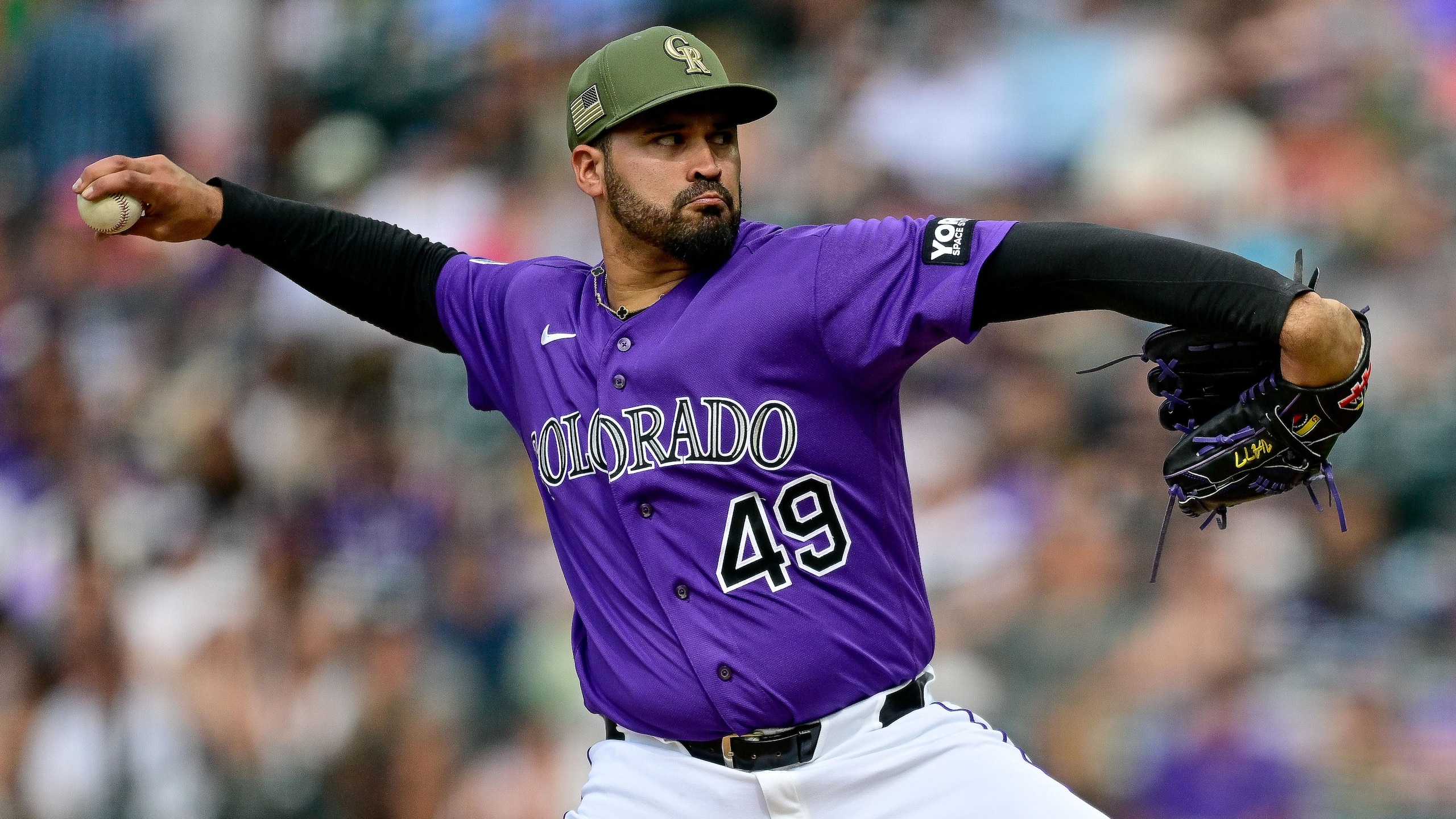
McDaniel/Passan Ranking: No. 29
Why He's a Coveted Trade Candidate
In 145 career starts over the previous nine seasons, Senzatela had a 5.29 ERA. While Coors Field (4.93 ERA at home) wasn't helping matters, he was actually a bit worse when pitching on the road (5.47 ERA). But shifting into a relief role has changed everything. Senzatela has blown a few saves recently, but he is 7-0 with three saves and a 2.23 ERA. (He has a 1.27 ERA on the road.) And if he continues to pitch well, that $14M club option for next season just might be worth picking up. (Or, if not, there's no buyout to worry about.)
Why Buyers Need Beware
Because he doesn't need to keep anything in the tank for a 100-pitch outing, Senzatela is throwing harder than ever before. The four-seamer that used to sit in the 93.6-95.0 MPH range has been in the mid 97s this year. He has even expanded his arsenal with a cutter that he suddenly uses 31 percent of the time.
But he's also getting luckier than ever before.
He entered 2026 with career marks of .325 BABIP against, 13.4 percent of fly balls going for home runs and a strand rate of 68.6 percent. Those rates are .248, 6.7 and 80.4, respectively.
Not only are those drastically better than what we're accustomed to seeing from Senzatela, but they're also considerably better than the MLB-wide averages for this season, which is the real reason he has an xFIP (4.17) that suggests his 2.23 ERA is too good to be true.
In fact, that ERA vs. xFIP differential of 1.94 is the third-most concerning gap among pitchers with at least 40 innings of work this season, better than only Spencer Arrighetti (2.57 ERA, 4.74 xFIP) and Eduardo Rodriguez (2.45 ERA, 4.42 xFIP).
José Soriano, RHP, Los Angeles Angels
10 of 10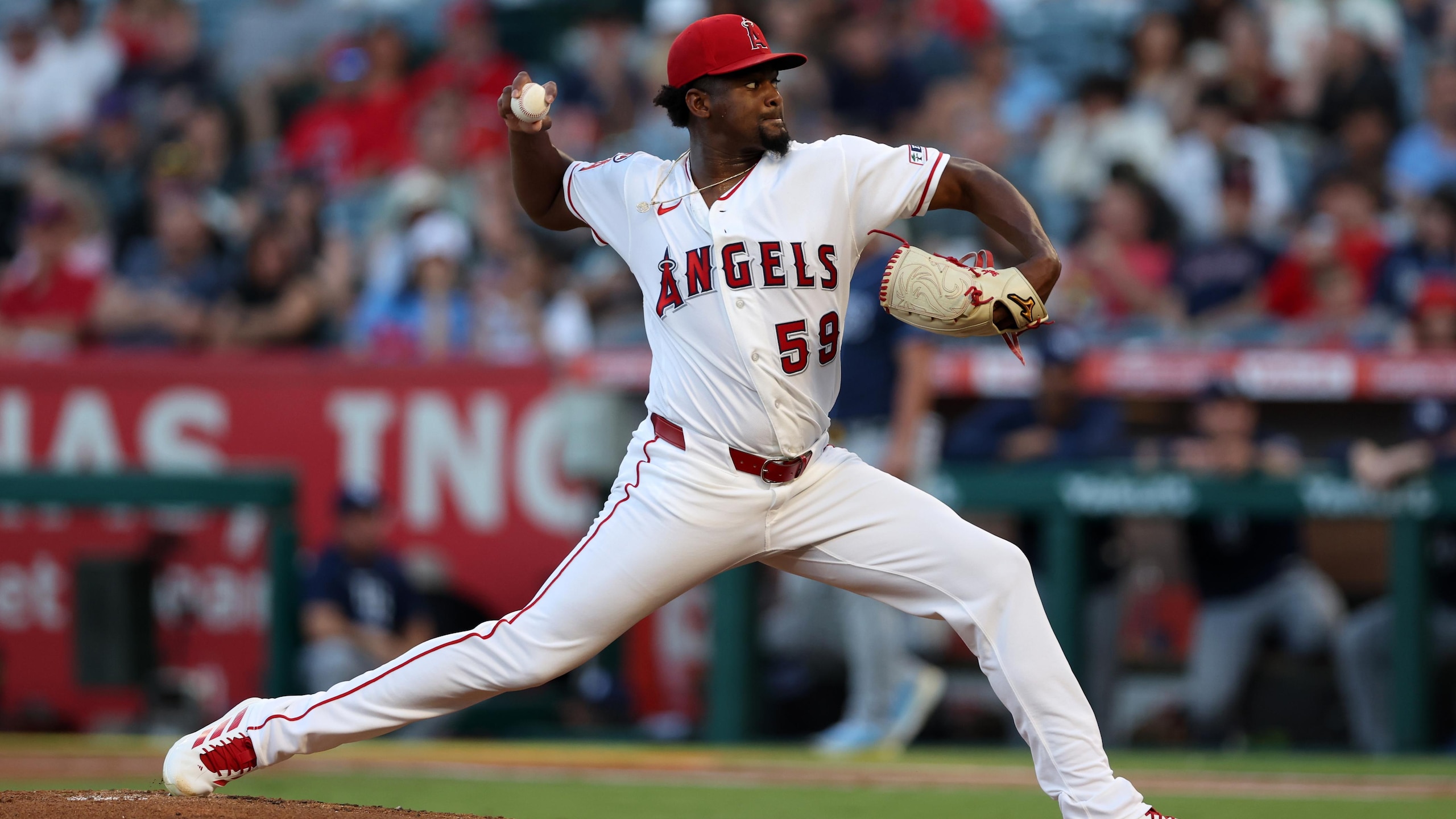
McDaniel/Passan Ranking: No. 7
Why He's a Coveted Trade Candidate
Soriano has made 16 starts this season with a 3.03 ERA and a 9.6 K/9. In six of those starts, he went at least five scoreless innings, blossoming into a viable candidate to win the AL Cy Young. His splitter has been one of the most valuable pitches in the game today. And while there are some great rentals available, the fact that Soriano has two years of arbitration eligibility remaining could have him at No. 1 on some trade deadline wish lists.
Why Buyers Need Beware
Soriano has a 3.03 ERA, but that can be split into a 0.24 mark through his first six scintillating starts and a 4.97 ERA since. Already, he has lost a lot of that early-season luster.
And because he has issued an MLB-high 46 free passes this season—something he has struggled with throughout his four seasons in the big leagues, entering 2026 with a walk rate of 4.1 per 9 IP—Soriano's FIP (3.88), xFIP (3.71) and xERA (4.12) all suggest that continued regression lies ahead.
It bears mentioning for the stretch run that Soriano has either been unavailable or unusable in previous Septembers. He has a career ERA of 3.76 or better and an OPS against of .689 or better in each of April, May, June, July and August, but those explode to marks of 10.06 and .841, respectively, in 13 September appearances.



.jpg?w=2560 "Terrell Owens Being Sued for Defamation")