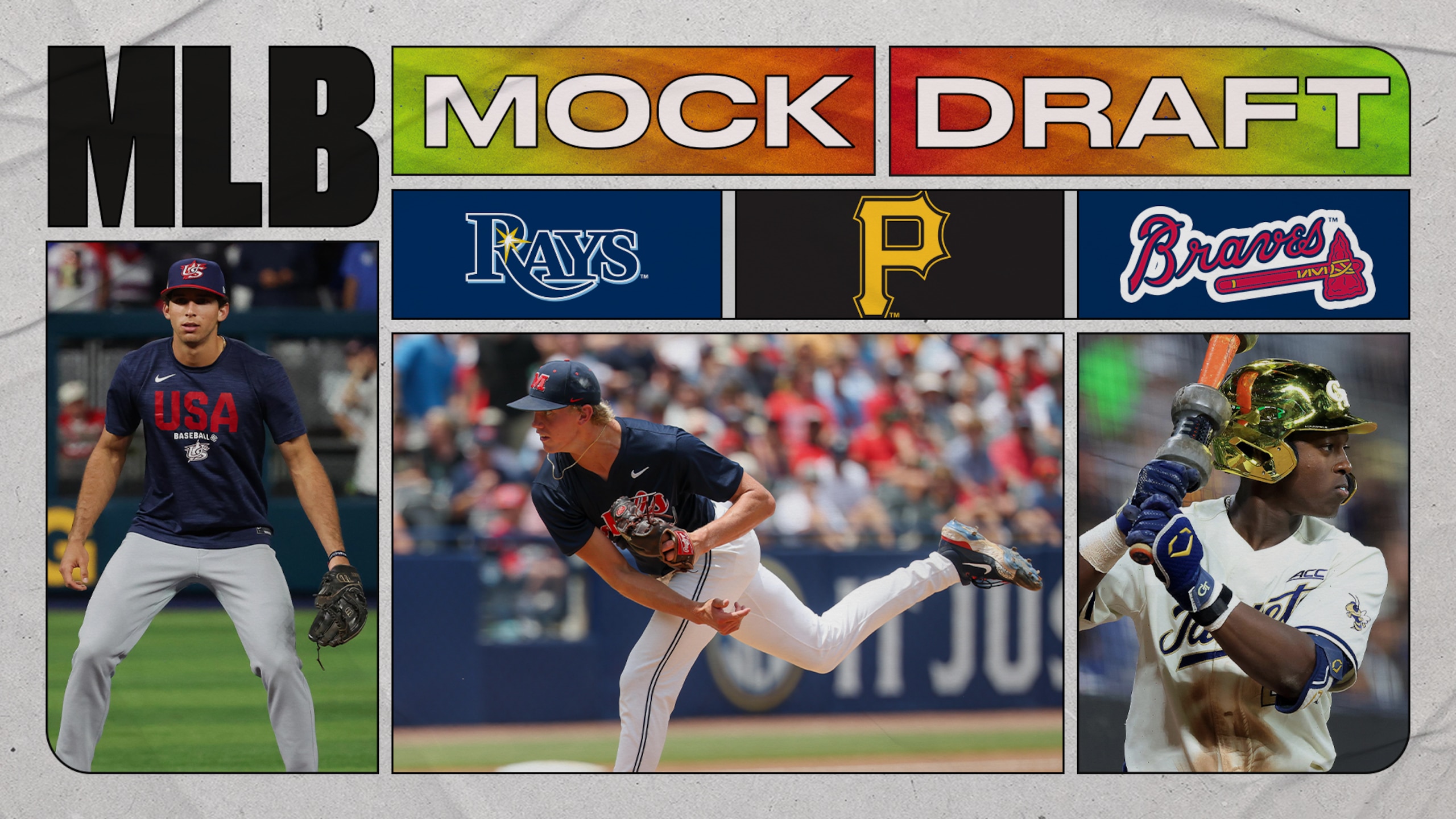

Fresh 2026 MLB Mock Draft After Oklahoma Wins College World Series
With Oklahoma officially crowned 2026 College World Series champion after besting North Carolina in the finals, the MLB draft is now just a few short weeks away.
UCLA shortstop Roch Cholowsky, Texas high school shortstop Grady Emerson and Georgia Tech catcher Vahn Lackey have separated themselves from the pack as the clear top tier of talent, but there's always the potential for a below-slot deal lurking to shake up the draft board.
Ahead is a full mock of the first 40 picks. That allows at least one pick for all 30 teams, as the Mets, Yankees, Phillies, Blue Jays and Dodgers all had their first selection moved back 10 spots as a penalty for exceeding the highest level of the luxury-tax threshold.
In case you missed it: B/R's 2026 MLB Mock Draft at Start of College World Series
Nos. 1-3
1 of 10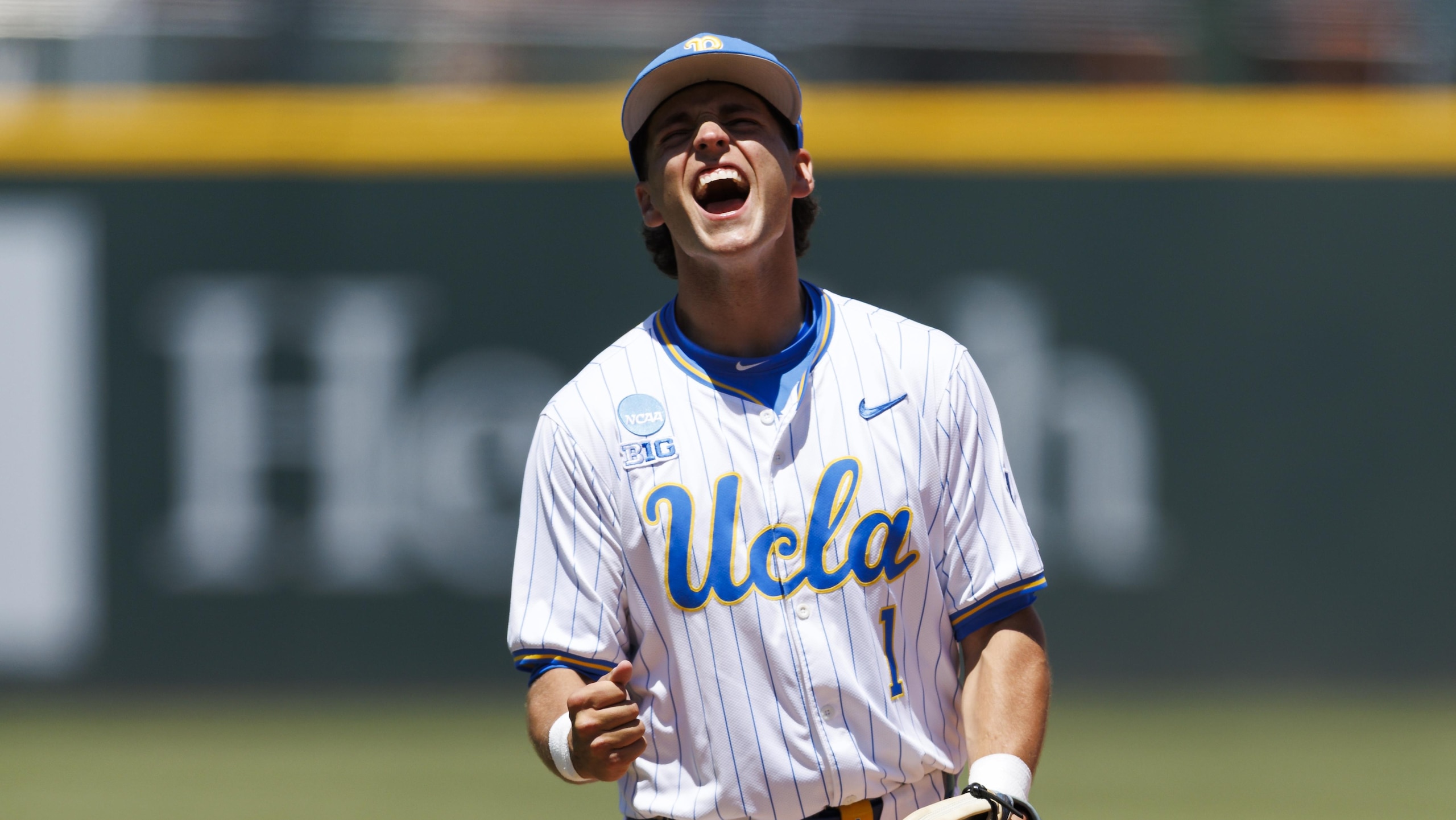
1. Chicago White Sox: SS Grady Emerson, Fort Worth Christian School (TX)
The gap between UCLA shortstop Roch Cholowsky and the field has narrowed, to the point that it might be a coin toss between Emerson and Cholowsky, with Georgia Tech catcher Vahn Lackey also still in the conversation.
Emerson is one of only two high schoolers ever to be named a finalist for the Golden Spikes Award, given to the nation's top amateur player, joining Bobby Witt Jr. in 2019. He hit .532/.648/1.013 with seven home runs, 50 RBI and 31 steals during the regular season this spring.
2. Tampa Bay Rays: C Vahn Lackey, Georgia Tech
Teams generally draft on talent or organizational philosophy, not need at the MLB level, simply because baseball prospects are not plug-and-play the way NBA and NFL draft picks make an immediate impact.
That said, the Rays have such a long-standing need for a franchise catcher, they have to seriously consider drafting Lackey, who is by no means a reach at No. 2 overall. He hit .397/.519/.772 with 20 home runs, 15 steals and more walks (50) than strikeouts (38) this spring, and he has the athleticism to develop into a quality defensive backstop.
3. Minnesota Twins: SS Roch Cholowsky, UCLA
The 2026 draft class has a clear top three, and the Twins just need to sit back and wait to see who from that group falls into their laps. That's assuming the White Sox and Rays don't overthink things and try to cut a deal, with Kentucky shortstop Tyler Bell a popular name in that hypothetical.
Cholowsky has been viewed as the No. 1 player in this class all spring, and there's still a good chance the White Sox call his name. He hit a good-not-great .308/.458/.496 with six home runs over 30 games in conference play, but he is still the safest bet in the field to develop into a multi-time All-Star.
Nos. 4-6
2 of 10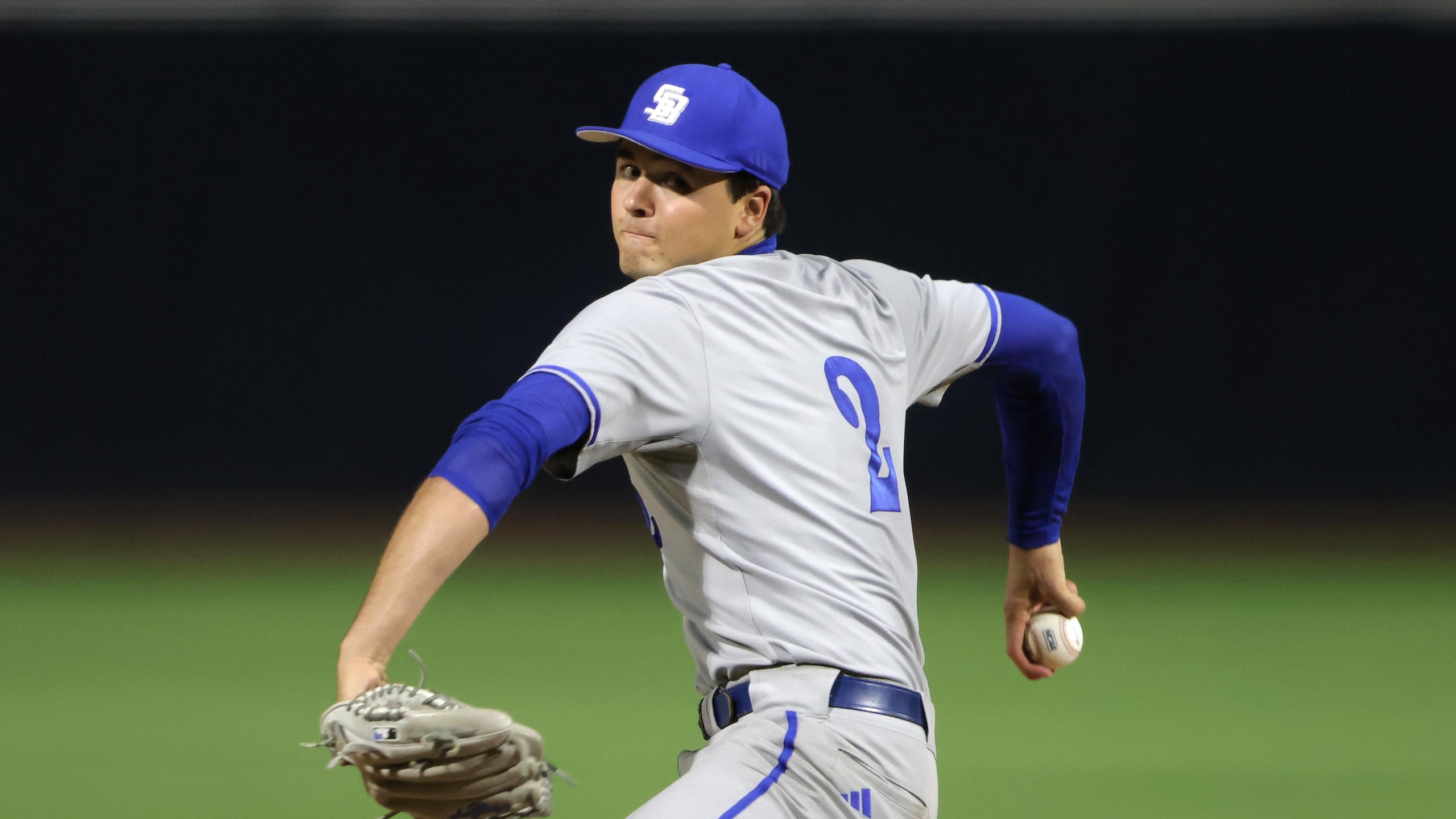
4. San Francisco Giants: RHP Jackson Flora, UC Santa Barbara
Prep standouts Jacob Lombard and Eric Booth Jr. are very much in play here, and the Giants would pounce if anyone from the projected top three falls, but Flora is the best arm on the board by a sizable margin. The 6'5" right-hander went 12-0 with a 1.06 ERA and 133 strikeouts in 102 innings this spring while allowing just 55 hits and three home runs.
5. Pittsburgh Pirates: SS Jacob Lombard, Gulliver Prep (FL)
Lombard might have the highest ceiling of anyone from the 2026 prep class, albeit with less overall polish than Grady Emerson. His 55-hit, 60-power, 65-speed toolbox tells the story, and he shares some similarities with Konnor Griffin in that all the pieces are there for him to be a star with just some minor tinkering to his swing and approach.
6. Kansas City Royals: OF Eric Booth Jr., Oak Grove HS (MS)
Zooming out from the consensus top three, this class also appears to have a clear top six in raw talent, and Booth is the last player from that group still on the board. With top-of-the-scale speed and enough hit and power potential to be more than just a burner, he could be a future 20-homer, 40-steal center fielder.
Nos. 7-9
3 of 10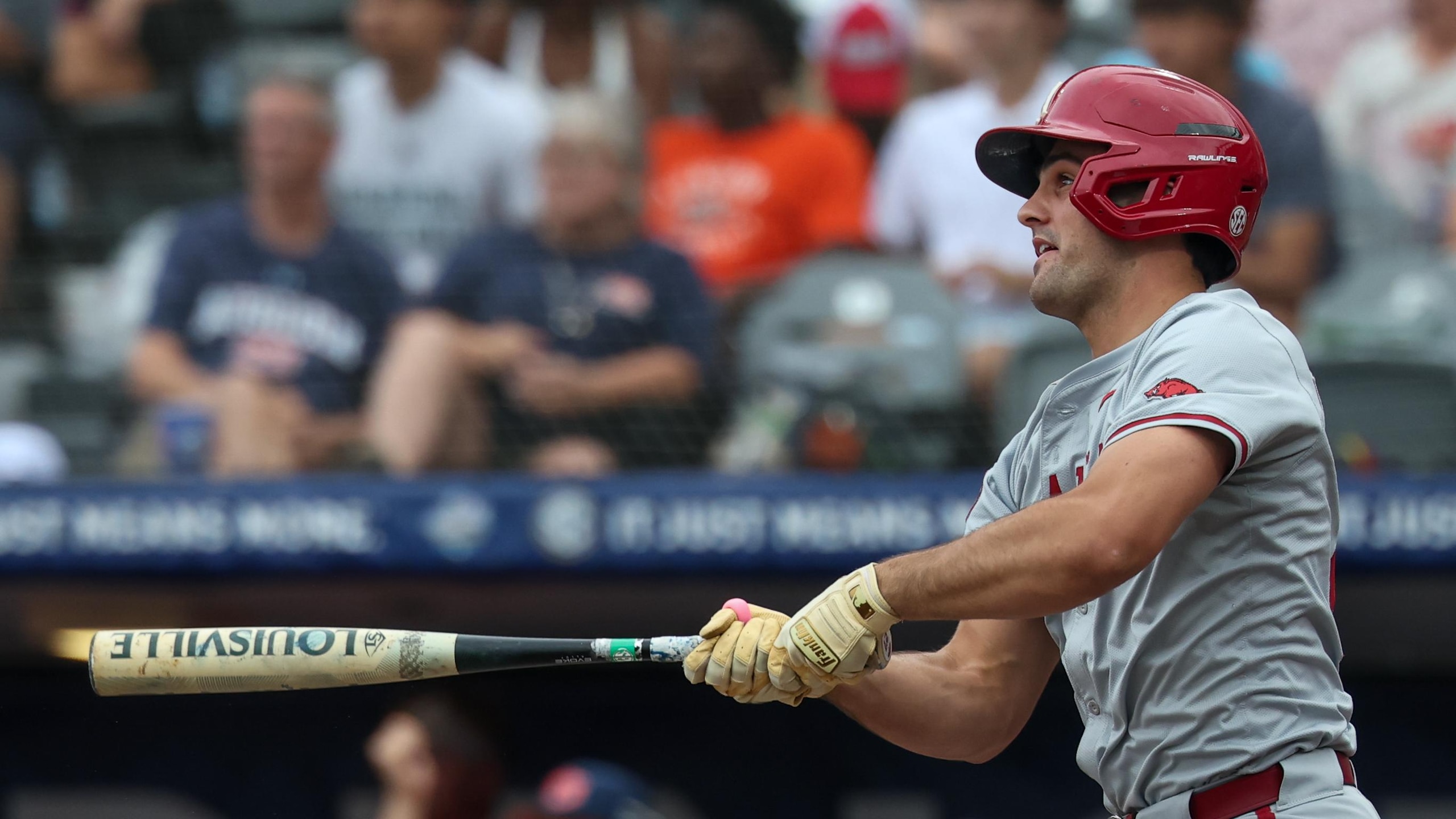
7. Baltimore Orioles: OF Drew Burress, Georgia Tech
Outside of Kentucky shortstop Tyler Bell on a potential below-slot deal, Burress appears to be the most likely candidate to crash the top-six party following a fantastic three-year career at Georgia Tech. A future center fielder with 60-grade power packed into his 5'9", 185-pound frame, he hit .357/.484/.720 with 60 home runs in 179 games during his time on campus.
8. Athletics: C Ryder Helfrick, Arkansas
Helfrick profiles similarly to current Athletics catcher Shea Langeliers at the same stage in his development. He exits the college ranks as the consensus top defensive catcher in his class, and has also shown enough pop to make an impact in the batter's box, hitting 33 home runs in 123 games the last two seasons. There is no such thing as too many quality catching prospects at a time when there's a shortage of talent at the position leaguewide.
9. Atlanta Braves: SS Tyler Bell, Kentucky
Bell suffered a shoulder injury diving for a ball on Opening Day, and while it sapped some of his power once he returned, his exit velocity and launch angle numbers started ticking back up down the stretch to give his draft stock a healthy boost. He hit .343/.510/.608 with 19 extra-base hits in 41 games, and he would immediately become the top position-player prospect in the Atlanta system.


Nos. 10-12
4 of 10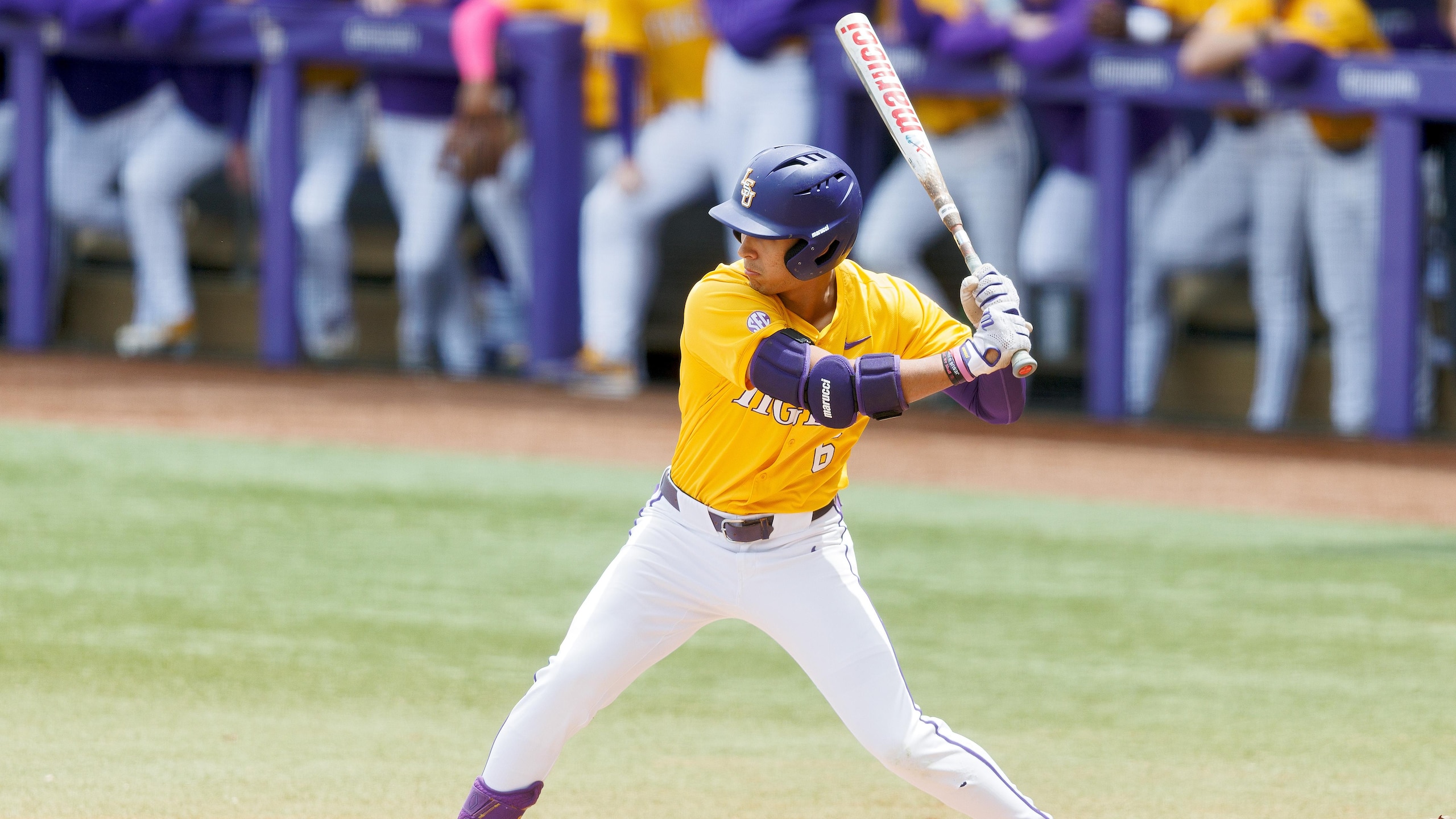
10. Colorado Rockies: OF Derek Curiel, LSU
Curiel is an interesting one to place on draft boards due to his lack of power, but he is one of the safest bets to develop into an everyday contributor and at a premium position in center field. The draft-eligible sophomore hit .349/.452/.522 with 38 doubles, 13 home runs, 101 RBI and 131 runs scored in 126 games at LSU, so he is far from a glove-first player, and he has the polish to move quickly.
11. Washington Nationals: 2B Chris Hacopian, Texas A&M
The Nationals have often been an organization willing to roll the dice on upside, and they've been tied to Alabama shortstop Justin Lebron as a result, though there's no telling if that philosophy will carry over to the new-look front office. Hacopian represents a significantly higher floor thanks to his elite bat-to-ball skills, and while his defensive profile is limited, he could be starting at second base in the majors by 2027.
12. Los Angeles Angels: LHP Hunter Dietz, Arkansas
With a 6'6", 235-pound frame and four 60-grade offerings among his five-pitch arsenal, Dietz has a compelling case to be the second pitcher off the board after Jackson Flora. He racked up 83 strikeouts in 59.2 innings during SEC play to move comfortably into the first-round conversation. The only hesitation is that injuries limited him to just 1.2 innings of work as a freshman and sophomore, so there is little track record to back up his strong 2026 numbers.
Nos. 13-15
5 of 10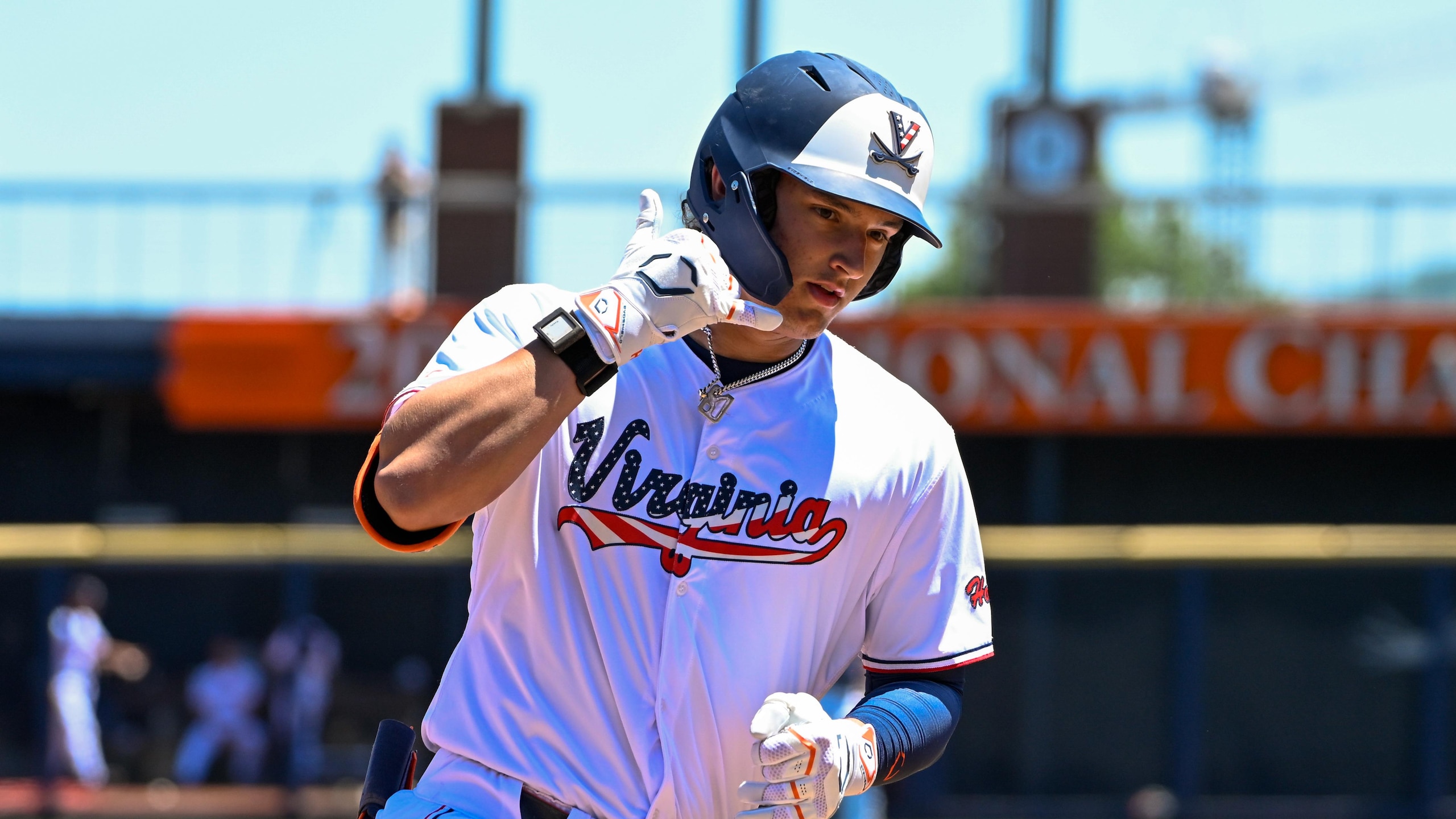
13. St. Louis Cardinals: OF/LHP Jared Grindlinger, Huntington Beach HS (CA)
Since reclassifying from the 2027 draft class in February, Grindlinger has settled comfortably into the middle of the first-round picture. Scouts remain split on whether his future is on the mound or in the outfield, and both profiles rely heavily on physical projection, but the Cardinals have a great player development system in place to maximize his unique talents.
14. Miami Marlins: SS Justin Lebron, Alabama
How far will Lebron fall on draft day? A candidate to go No. 1 overall at the start of the spring, his stock has steadily dipped since then, and he finished with a .222/.323/.407 line in SEC play. That said, the 60-power, 60-speed raw tools and potentially elite defense at shortstop remain, and the Marlins glaring need for impact bats could make it a gamble worth taking.
15. Arizona Diamondbacks: OF AJ Gracia, Virginia
One of the most polished bats in the 2026 college class, Gracia has been a tough one to place due to his lack of defensive value as he will likely be limited to left field. That said, after posting a .354/.489/.632 line and 14 home runs and more walks (47) than strikeouts (38) this spring, his highly advanced offensive game makes it difficult to see him slipping much further than this.
Nos. 16-18
6 of 10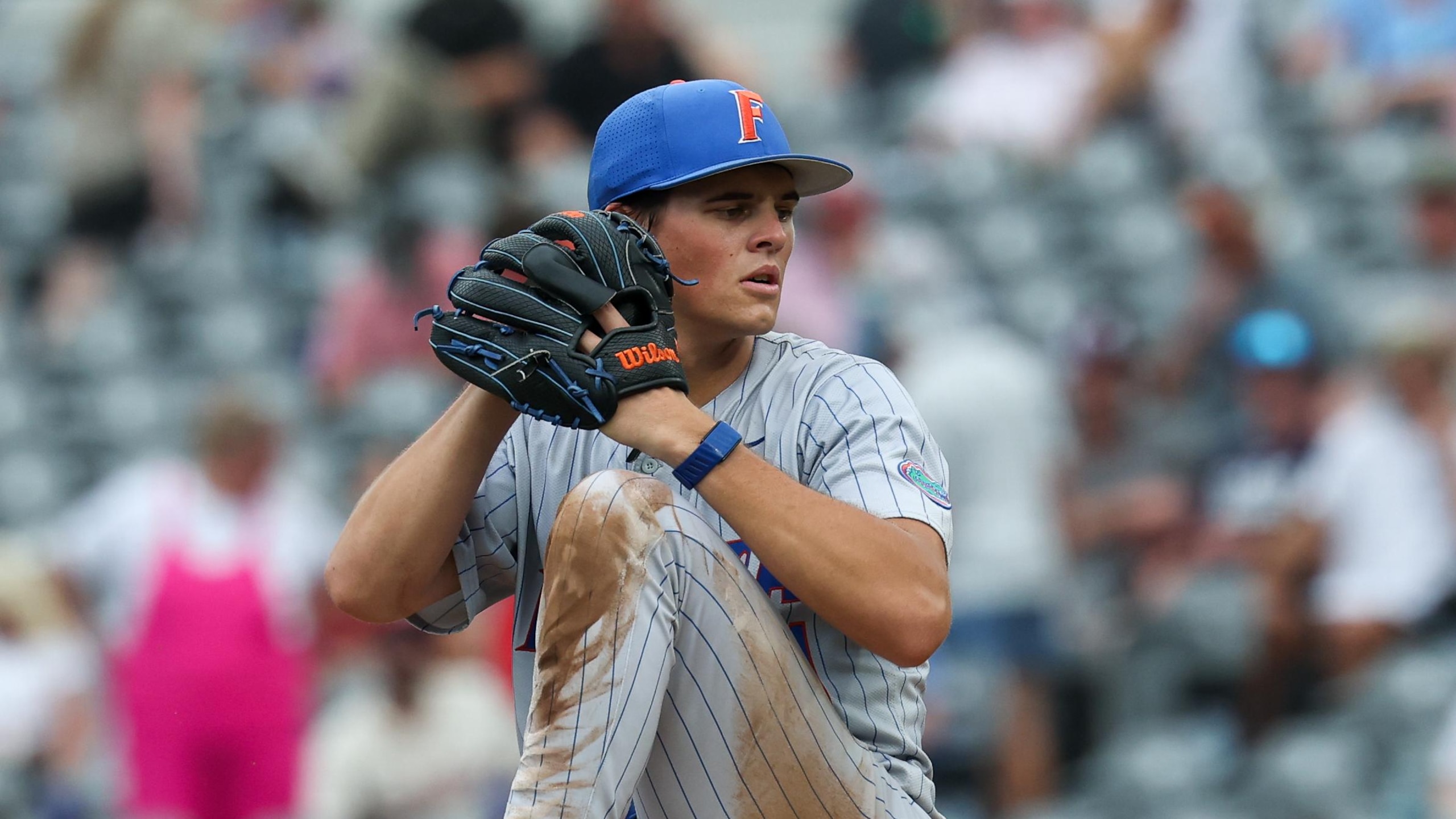
16. Texas Rangers: OF Aiden Robbins, Texas
Robbins transformed his game this spring, going from a high-contact guy at Seton Hall where he hit .422/.537/.652 as a sophomore, to one of the most productive power hitters in the country. His strikeout rate climbed from 12.5 to 22.9 percent, but the trade-off was well worth it, as he still hit .333/.426/.696 while slugging 24 home runs after hitting just 12 total as a freshman and sophomore.
17. Houston Astros: RHP Liam Peterson, Florida
The Astros pitching pipeline has run dry, but they are well-positioned to select from the second tier of college arms. Peterson entered the spring as one of the top arms in the class after tallying 96 strikeouts in 69.1 innings as a sophomore. He did not take the step forward many were expecting, but he still has some of the best pure stuff in the class, and he continued to miss plenty of bats with 111 strikeouts in 84.1 innings this spring.
18. Cincinnati Reds: OF Trevor Condon, Etowah HS (GA)
Condon has positioned himself as the No. 4 high school position player in this class, behind Grady Emerson, Jacob Lombard and Eric Booth Jr., and he likely won't get out of the top 20 picks. His 60-hit, 70-speed profile and plus glove give him the potential to develop into a table-setting center fielder, which is something the Reds have lacked for a long time.
Nos. 19-21
7 of 10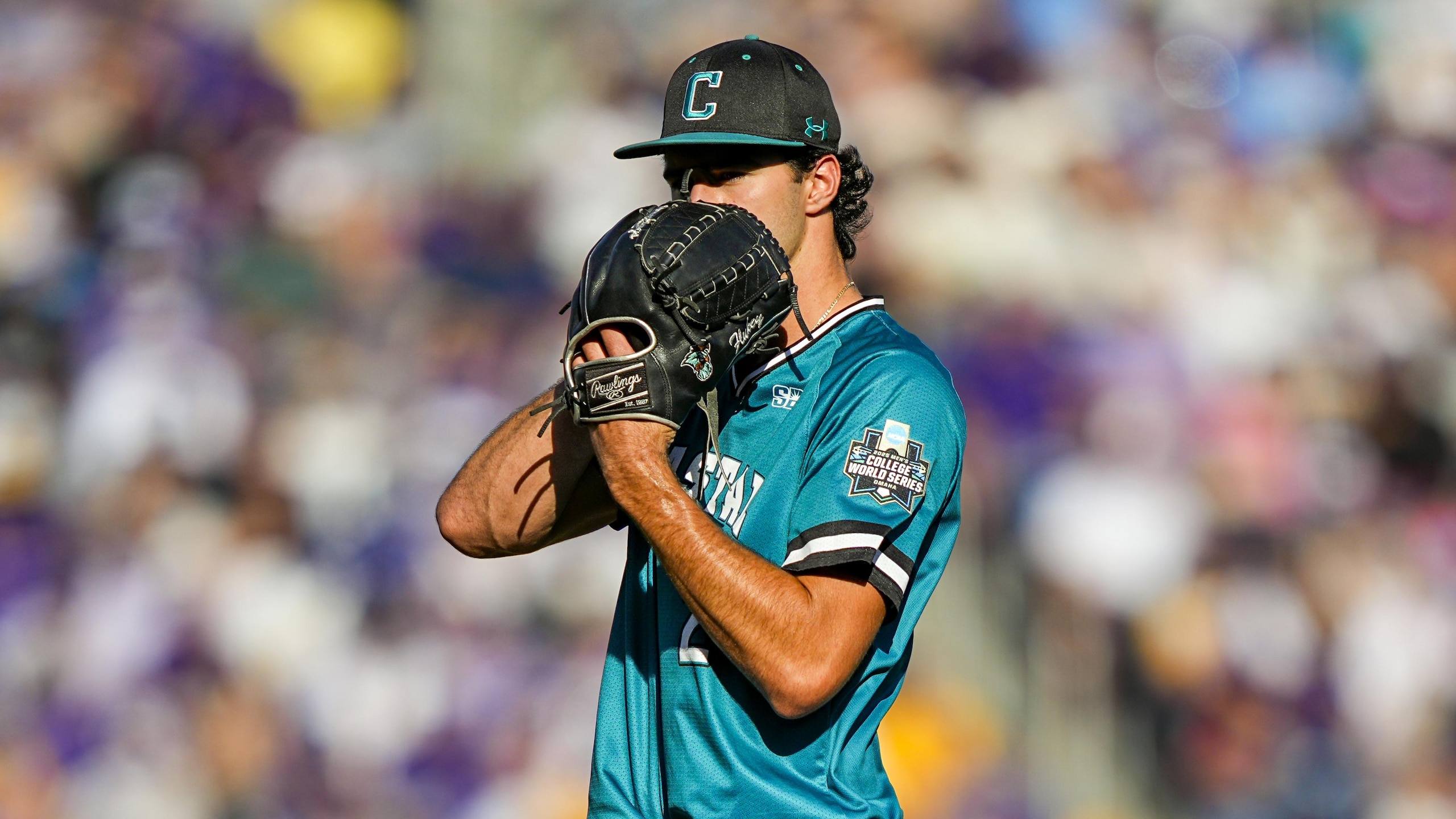
19. Cleveland Guardians: RHP Cameron Flukey, Coastal Carolina
The Guardians are going to have their pick of several top college pitchers, and given their track record of developing arms, they could walk away with one of the steals of the draft. Flukey could go higher if teams saw enough during his sophomore season to buy his frontline upside, but a stress reaction in his ribcage this spring limited him to just 24 innings and provided more questions than answers.
20. Boston Red Sox: LHP Cole Carlon, Arizona State
Carlon did exactly what he needed to this spring while transitioning from a bullpen role to the starting rotation, posting a 3.87 ERA and a 133-to-31 strikeout-to-walk ratio over 83.2 innings. He has been up to 101 mph with his fastball and backs it with a wicked slider, giving him a high floor as a power lefty in the bullpen. Prep third baseman Bo Lowrance has been regularly linked to the Red Sox, so he's also a name worth monitoring.
21. San Diego Padres: LHP Gio Rojas, Stoneman Douglas HS (FL)
In past mocks, Gio Rojas has been highlighted as a candidate for a below-slot deal somewhere inside the top 10, with the Royals (No. 6) and Braves (No. 9) looking like potential fits since they both pick again inside the top 30. If that doesn't happen, this might be the logical landing spot given the Padres long history of targeting prep arms, specifically lefties. His combination of polish and upside is unmatched in this year's prep pitching class.
Nos. 22-25
8 of 10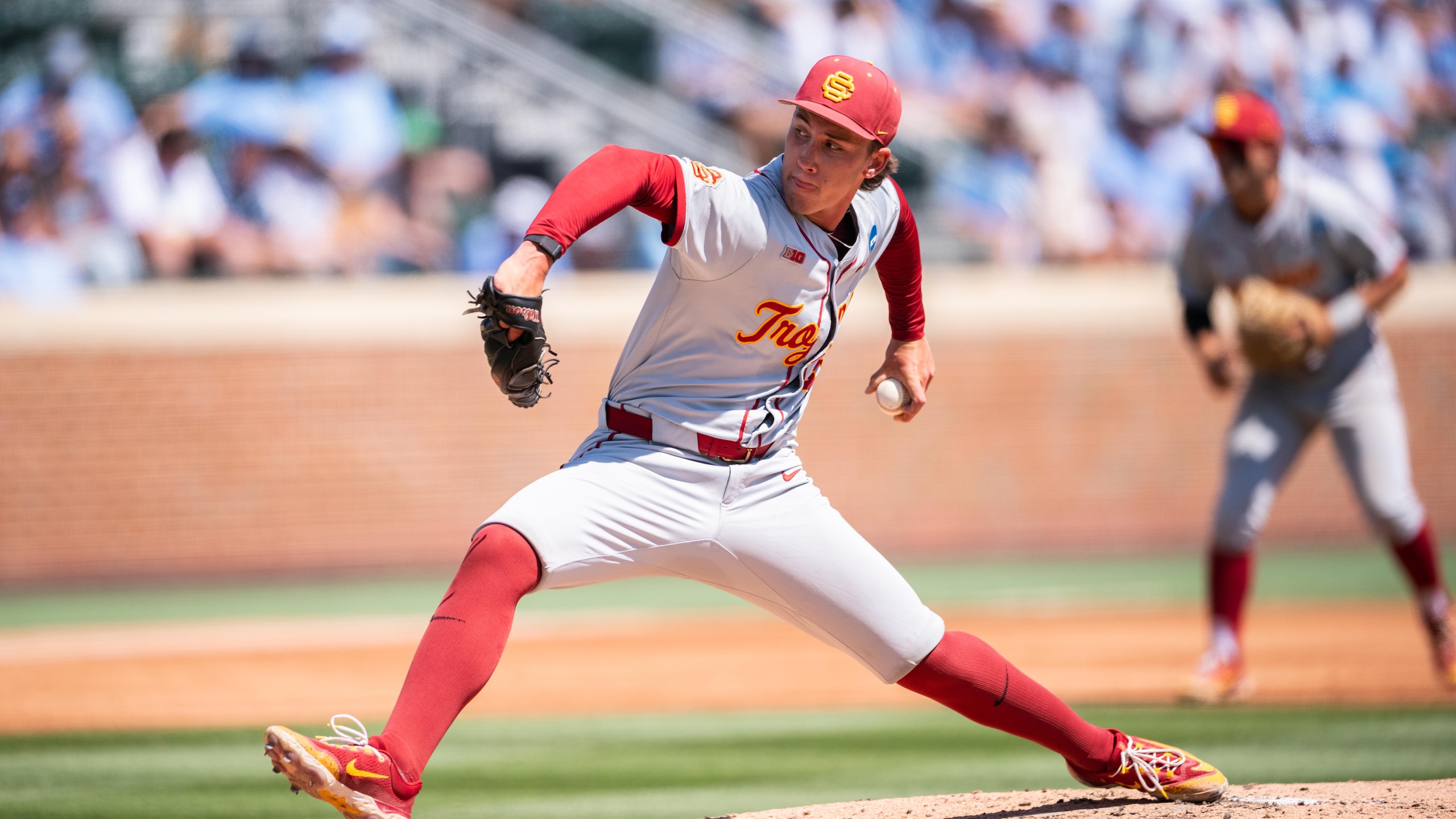
22. Detroit Tigers: 3B/C Cole Prosek, Magnolia Heights (MS)
Prosek has been trending up all spring thanks to a compact left-handed swing and good barrel skills, giving him a 60-grade hit tool that ranks among the best in the high school class. He has looked playable at catcher this spring, but the preferred route might be to focus on his offensive game and keep him out of the crouch. He will be draft-eligible as a sophomore, so he might need to go this high to be signable.
23. Chicago Cubs: LHP Mason Edwards, USC
Edwards is expected to be one of the first pitchers from the 2026 class to reach the majors, thanks to a polished three-pitch mix and improved command across the board this spring. After filling a swingman role as a freshman and sophomore, he took home Big Ten Pitcher of the Year honors this spring by going 8-0 with a 2.07 ERA, 1.06 WHIP and an NCAA-leading 169 strikeouts in 95.2 innings.
24. Seattle Mariners: 3B Bo Lowrance, Christ Church Episcopal HS (SC)
With a 6'5", 200-pound frame and an advanced 55-grade hit tool, it's easy to dream on Lowrance's future power potential, even if he has a more contact-oriented approach at this point. He is athletic enough that he played shortstop for his high school team, though third base is his likely long-term home. The Mariners recent run of developing high school bats makes Seattle a terrific landing spot.
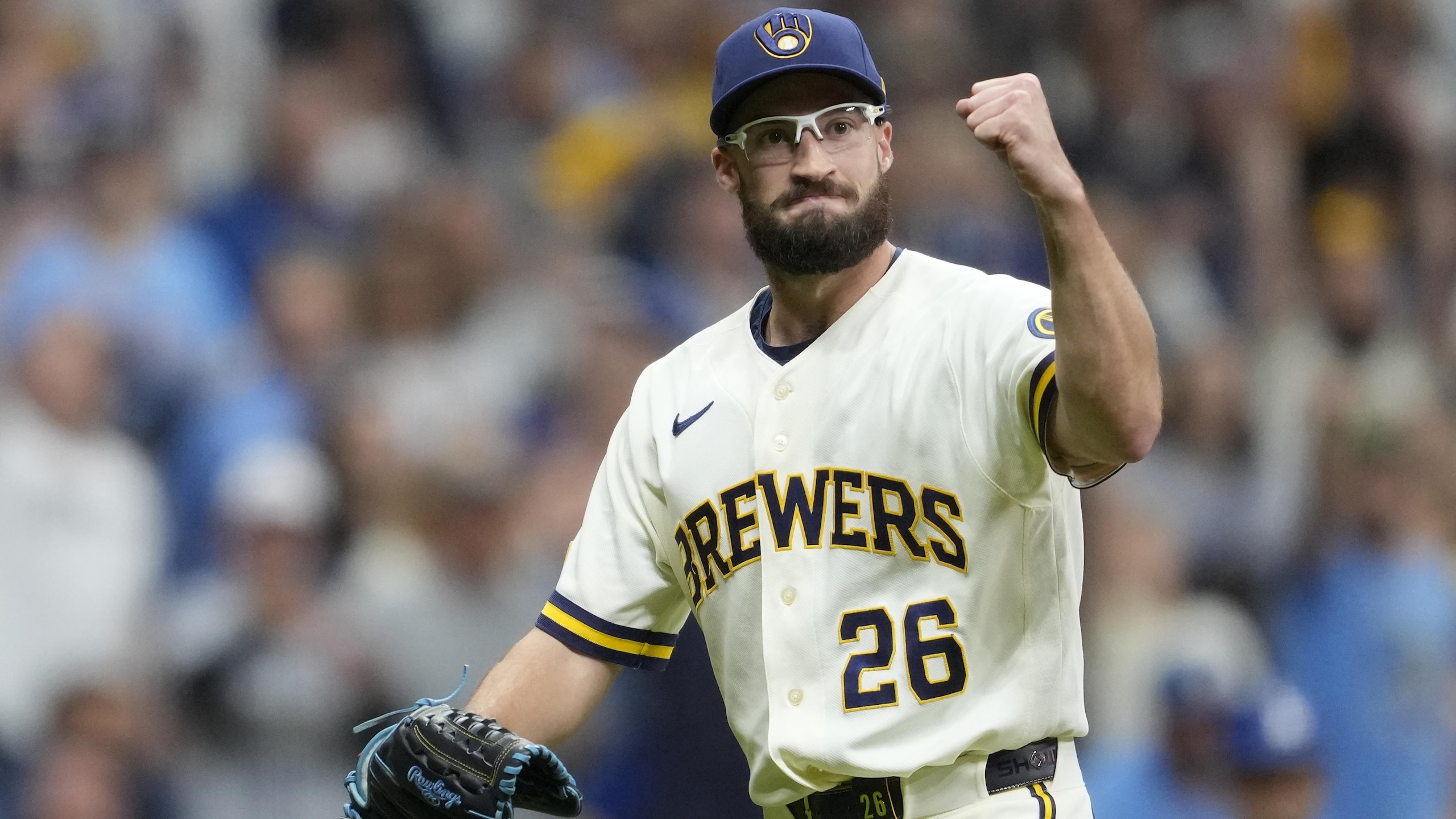
25. Milwaukee Brewers: OF Sawyer Strosnider, TCU
One of the top draft-eligible sophomores, Strosnider has been an extra-base hit machine during his two seasons at TCU, tallying 24 doubles, 12 triples and 24 home runs in 106 games. There is some swing-and-miss to his game, but a sharp spike in his walk rate from 8.0 to 18.4 percent helps offset those concerns. He has played primarily right field in deference to Chase Brunson, but should have a real shot to stick in center field in pro ball.
Nos. 26-28
9 of 10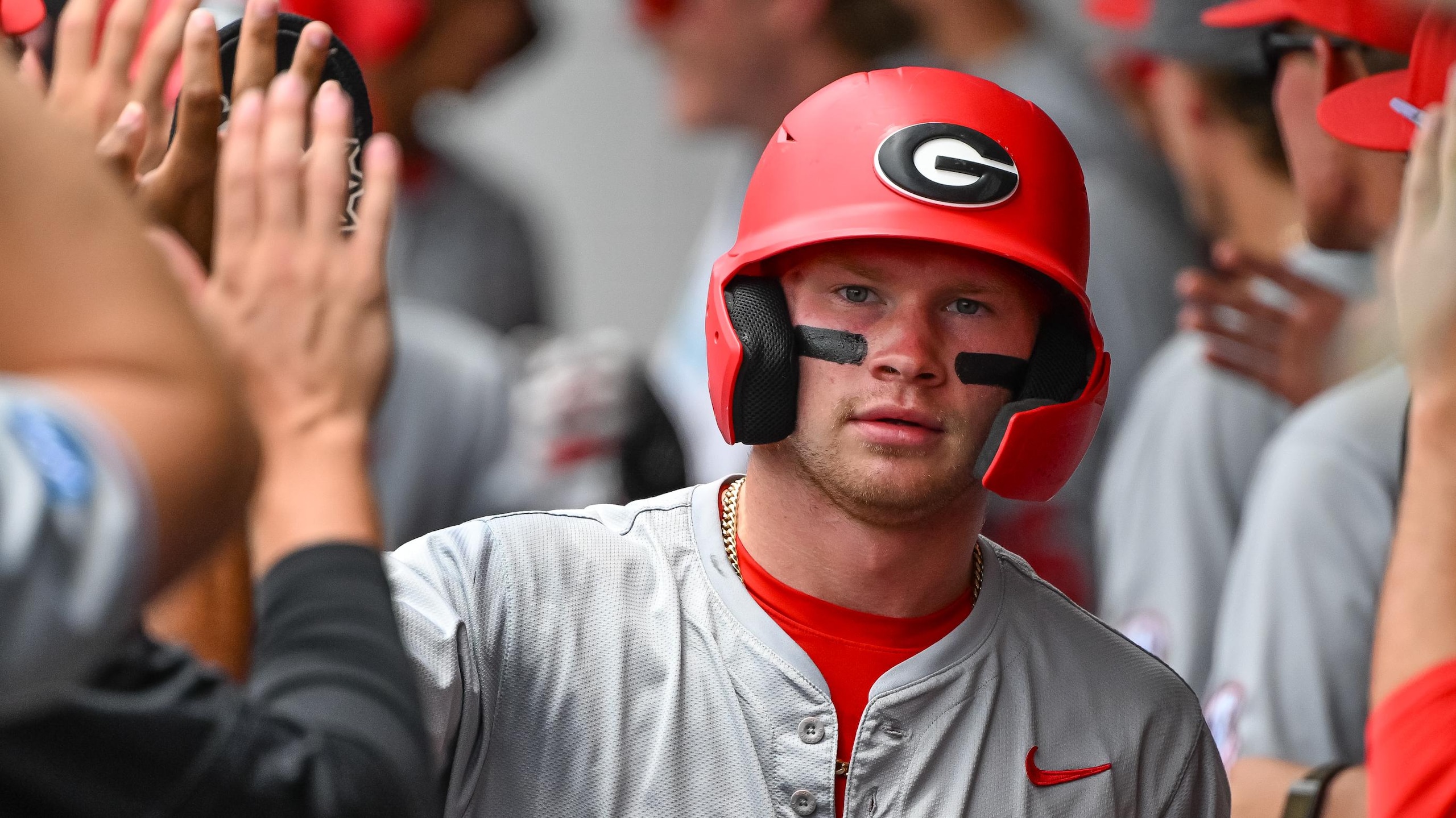
26. Atlanta Braves: RHP Taylor Rabe, Ole Miss
PPI pick for Drake Baldwin winning NL Rookie of the Year
Over his final four starts going back to his last outing of the regular season, Rabe logged a 1.46 ERA and 0.85 WHIP with 37 strikeouts and just 13 hits allowed in 24.2 innings. With a 70-grade fastball that regularly touches triple-digits, two quality offspeed pitches and some of the best command in the class, all from a 6'5", 200-pound frame, he is trending up in a big way.
27. New York Mets: LHP Brody Bumila, Bishop Feehan HS (MA)
First pick moved back 10 spots for exceeding top of luxury-tax threshold
The Mets don't pick again until No. 92 overall, so don't be surprised if they swing for the fences on upside and try to snag one of the top high school players left on the board at this spot. Bumila is extremely raw, but with an athletic and projectable 6'9" frame and a high-octane fastball that touches 102 mph, his upside might be unmatched if the pieces fall into place.
28. Houston Astros: C Daniel Jackson, Georgia
PPI pick for Hunter Brown finishing top-three in AL Cy Young
Jackson won the SEC Triple Crown by hitting .379/.473/.803 with 32 home runs and 87 RBI in 67 games, something only Rafael Palmeiro (1984) and Brent Rooker (2017) had previously accomplished. He also swiped 26 bases in 28 attempts, and is athletic enough to handle a corner outfield spot, though he has a real chance to stick behind the plate.
Competitive Balance A Picks
10 of 10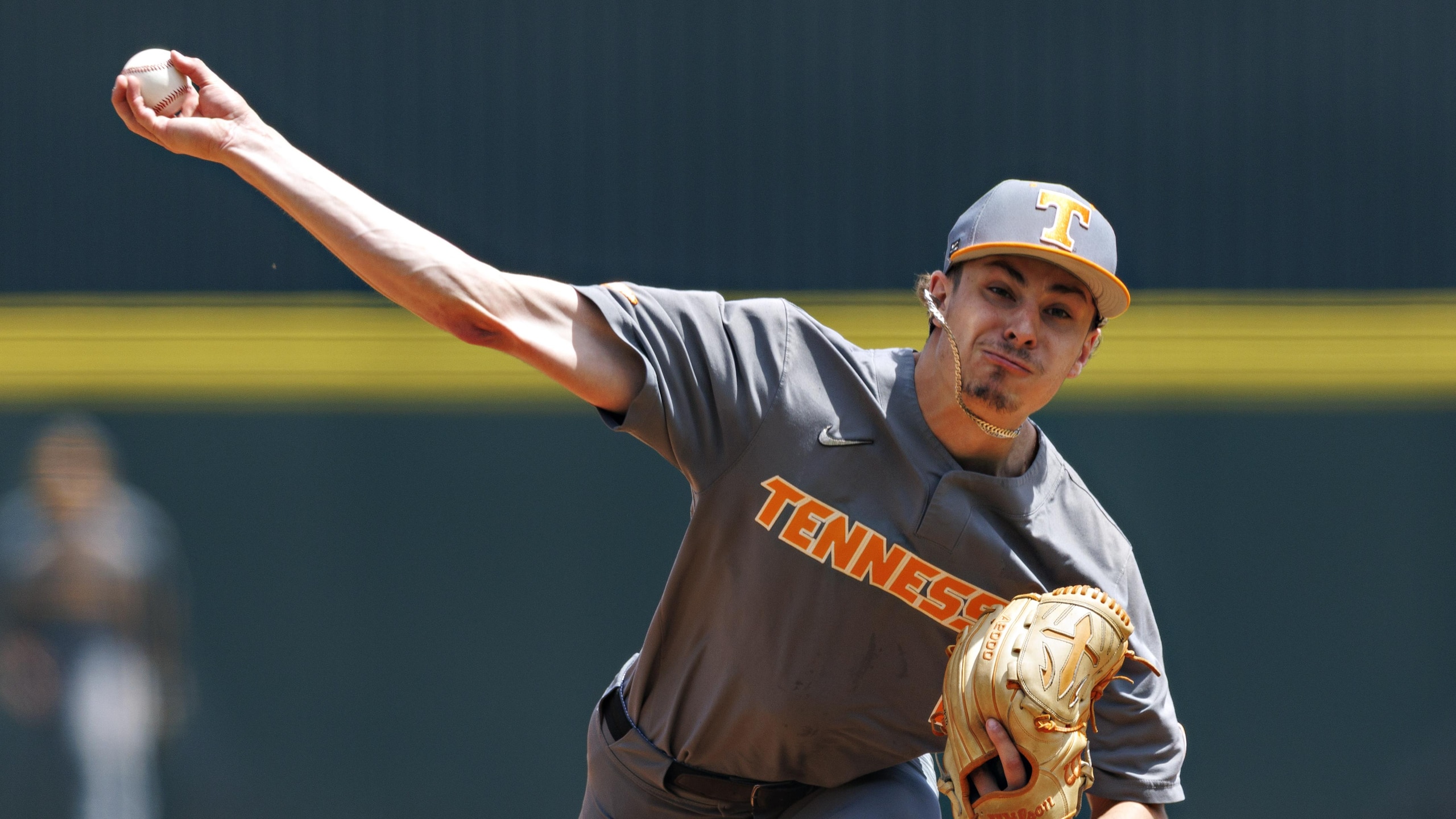
Competitive Balance Round A Picks
All teams that have either one of the 10 smallest markets or 10 smallest revenue pools receive an additional pick at the end of the first or second round. The groups of teams alternate between the two rounds each year. These are the only picks that are eligible to be traded.
The Yankees, Phillies, Blue Jays and Dodgers also each received a 10-pick penalty on their first selection for exceeding the second luxury-tax threshold, leaving their first picks as part of the Competitive Balance Round A.
29. San Francisco Giants: RHP Tegan Kuhns, Tennessee
Pick acquired from Guardians in Patrick Bailey trade
30. Kansas City Royals: RHP Cade Townsend, Ole Miss
31. Arizona Diamondbacks: RHP Logan Reddemann, UCLA
32. St. Louis Cardinals: 3B Ace Reese, Mississippi State
33. Tampa Bay Rays: IF Landon Thome, Nazareth Academy (IL)
Pick acquired from Orioles in Shane Baz trade
34. Pittsburgh Pirates: 2B Chris Rembert, Auburn
35. New York Yankees: OF Zion Rose, Louisville
First pick moved back 10 spots for exceeding top of luxury-tax threshold
36. Philadelphia Phillies: RHP Jack Radel, Notre Dame
First pick moved back 10 spots for exceeding top of luxury-tax threshold
37. Colorado Rockies: 1B Gavin Grahovac, Texas A&M
Second Round
38. Colorado Rockies: LHP Carson Bolemon, Southside Christian School (SC)
39. Toronto Blue Jays: SS Aiden Ruiz, The Stony Brook School (NY)
First pick moved back 10 spots for exceeding top of luxury-tax threshold
40. Los Angeles Dodgers: SS Eric Becker, Virginia
First pick moved back 10 spots for exceeding top of luxury-tax threshold

.jpg?w=2560)
.jpg?w=2560 "AD Trolls Bears WR on IG 😂")
.jpg?w=2560 "Viral Dan Campbell Presser 💙")
.jpg?w=2560 "Report: Steelers WR to Miss 'Weeks'")
.jpg?w=2560 "Cam Ward Says He's Not A Loser")
.jpg?w=2560 "Buzz: MHJ Hired Agents for Trade")
.jpg?w=2560 "Chargers Fall to 0-5 🤢")