.jpg?w=2560)

The most intriguing question of the offseason surrounds the league's oldest player: Where will LeBron James play in his 24th season?
With his time in Los Angeles coming to an end, per ESPN's Shams Charania, James may leave the Lakers outright as a free agent or use his soon-to-be-former franchise as a vehicle to a third stint with his hometown franchise.
The Cleveland Cavaliers took a step forward to their first Eastern Conference Finals berth since James was on the team, but they were sent packing quickly by the champion New York Knicks.
How can James finish his career where it began in Cleveland? Though complicated, a sign-and-trade from the Lakers to Cleveland is absolutely workable if all three sides are willing to make it happen.
Full Trade Details
1 of 3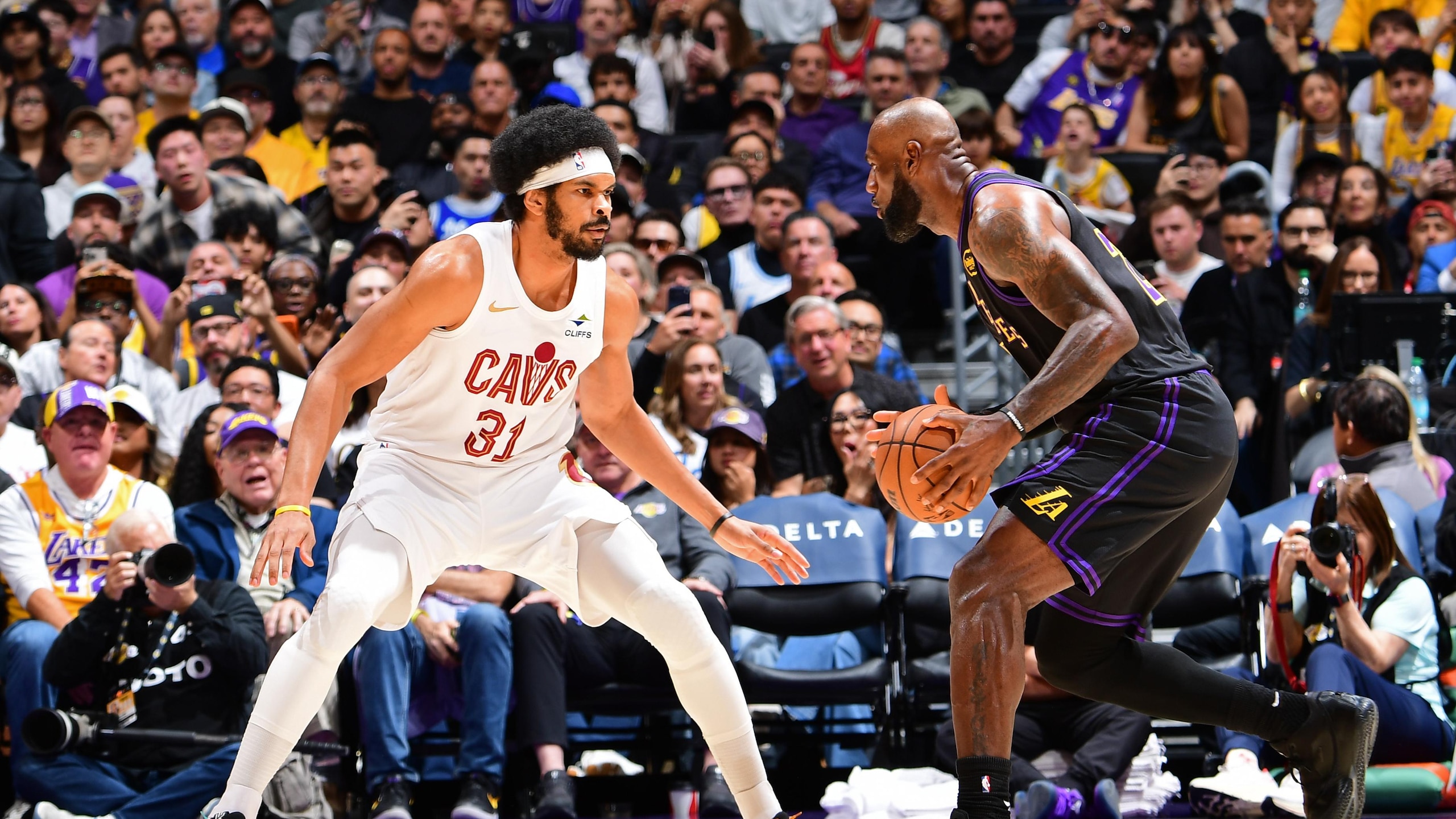
The Cleveland Cavaliers receive: LeBron James, Bronny James, Deandre Ayton, Jake LaRavia, Dalton Knecht, $28 million trade exception
The Los Angeles Lakers receive: Jarrett Allen, Dennis Schröder, Dean Wade, Sam Merrill
Why the Cleveland Cavaliers Do It
2 of 3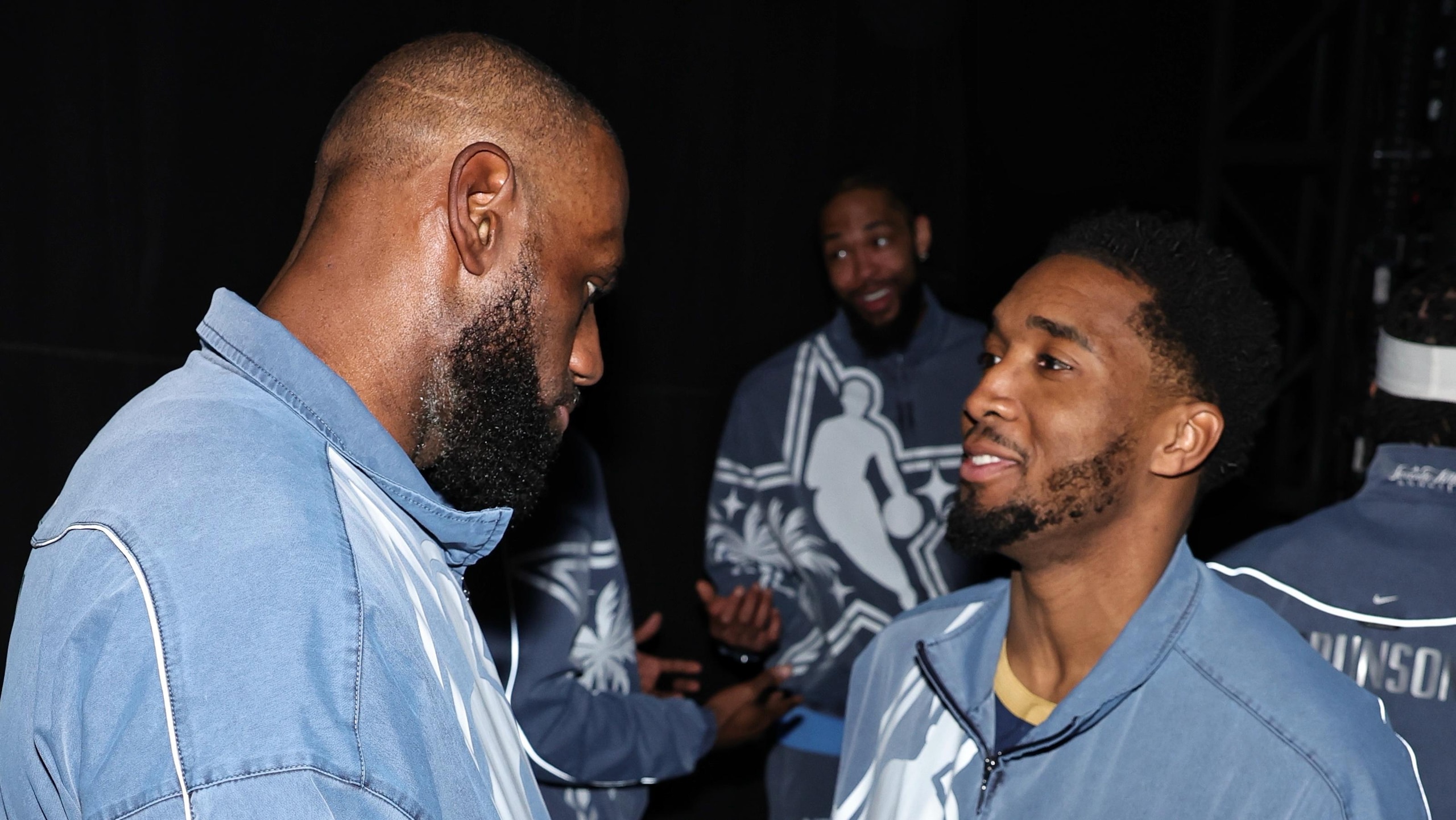
Cleveland was the second-best team in the East. Still, competitors like the Detroit Pistons, Boston Celtics, and Indiana Pacers will all be coming for the Knicks, let alone the Cavaliers. The team needs to improve, especially with Donovan Mitchell eligible for an extension this summer.
At its core, the Cavaliers must believe they've hit a wall with the Evan Mobley/Jarrett Allen pairing and are highly motivated to bring James home to finish his career. Mobley slides over to his more natural position at center with James at power forward. Cleveland also reduces its payroll to avoid additional second-apron penalties, while bringing on one of the NBA's all-time greatest players and postseason performers.
James Harden opted out of his $42.3 million player option, with many NBA sources expecting him to re-sign with the franchise for 2-3 more seasons. Pencil him back at perhaps $32.5 million starting salary (it's slightly negotiable), along with Max Strus, Mitchell, Mobley, and James.
Ayton, who opted into the second year of his deal at $8.1 million with the Lakers, can push Strus to the bench if and when the Cavs want bigger lineups.
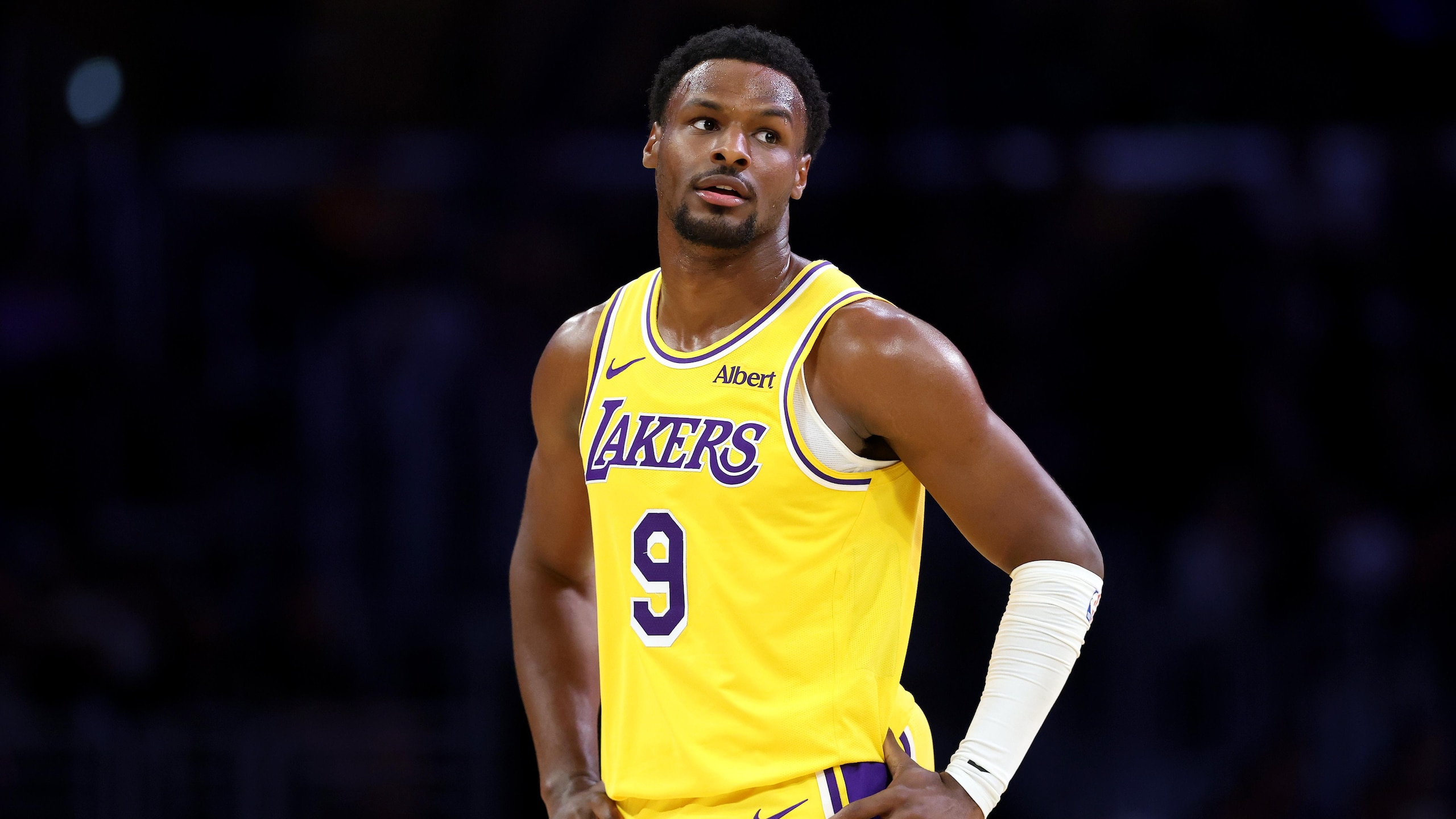
Cleveland takes on depth from the Lakers in LaRavia and Knecht, along with James' son, Bronny James, who played brief but legitimate playoff minutes for Los Angeles in the first round against the Houston Rockets. The Cavs round out the roster with Jaylon Tyson, Tyrese Proctor, Nae'Qwan Tomlin, and No. 34 Meleek Thomas. They can choose to keep Craig Porter Jr., use the taxpayer mid-level exception at a projected $6.1 million, or pay Keon Ellis a similar salary to stay.
The deal would be consummated on July 6, after the NBA's annual moratorium. The Cavaliers trigger a first-apron hard cap of $209.1 million—meaning players like Allen, Schröder, and Merrill must go to reduce payroll and allow Cleveland to flesh out reasonable bench depth.
James inks a three-year, $63 million sign-and-trade deal, with $20 million for 2026-27. James and the Cavaliers could have a behind-the-scenes agreement that James plays only a couple of seasons but receives his full compensation—similar to what the San Antonio Spurs did years ago with Tim Duncan at the end of his career. This figure is obviously negotiable as well; the lower the price for James, the greater the flexibility to maintain depth.
Cleveland would also send Wade to the Lakers at a $12.3 million starting salary (three years, $38.6 million) via sign-and-trade. The Cavaliers aggregate Schröder, Merrill, and Wade to take in James, Ayton, Knecht, and LaRavia. Bronny James is acquired via the De'Andre Hunter preexisting traded player exception (TPE), allowing Cleveland to generate a sizable $28 million TPE for Allen's full 2026-27 salary.
Why the Los Angeles Lakers Do It
3 of 3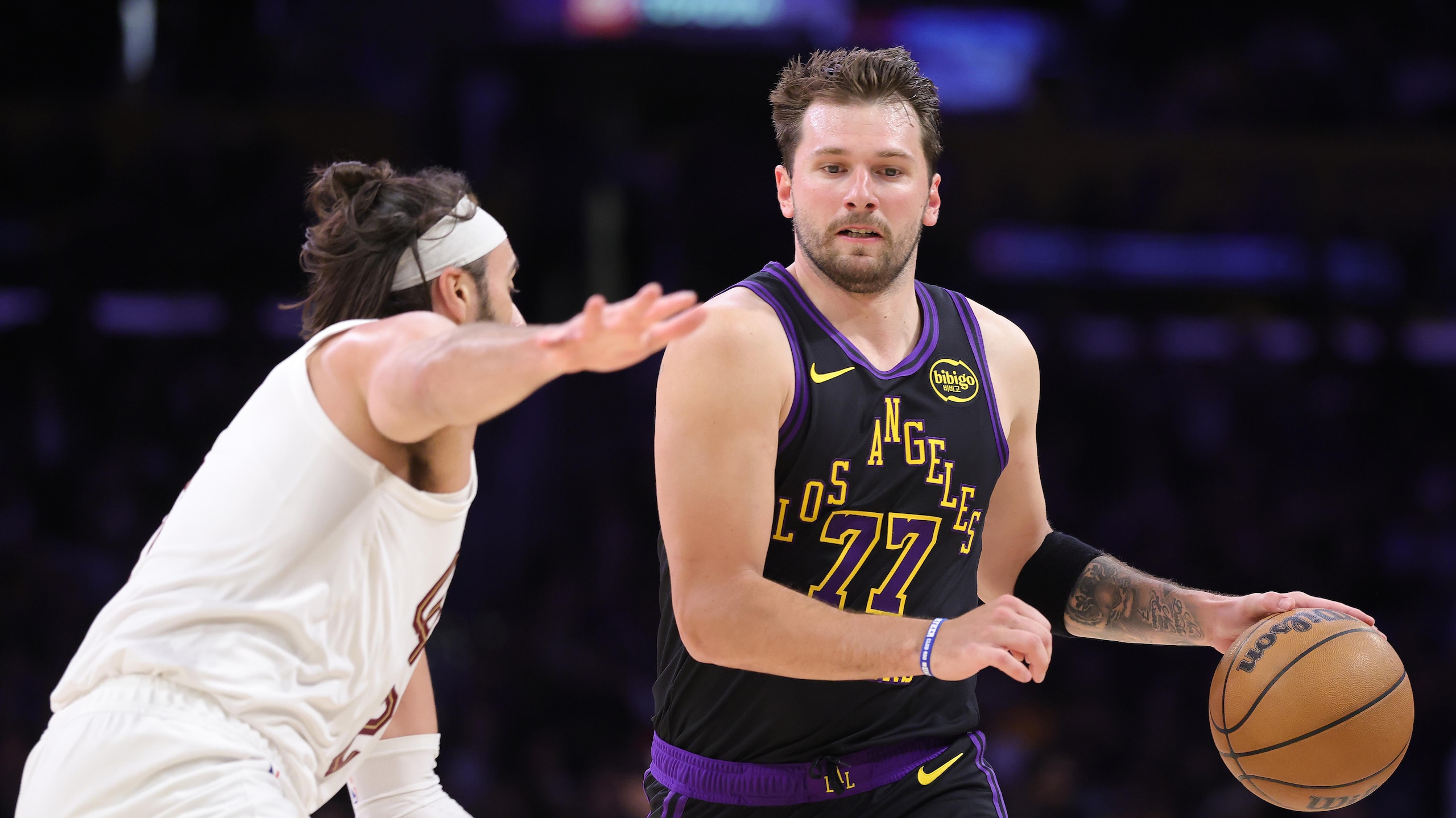
James' departure, from a basketball perspective, was inevitable. The Lakers must prioritize Luka Dončić's prime, as he's one of the most talented scorers in the NBA. James, at his age, isn't the franchise's future. Instead, the team chooses not to go under the salary cap this summer, as many expect.
Instead, James yields four rotation players, including a starting center in Allen, a veteran point guard in his third stint in L.A. in Schröder, a shooter in Merrill, and a versatile defender in Wade.
The alternative for the Lakers would be to renounce James and chase free agents in a decent but unspectacular market, especially with Austin Reaves and Rui Hachimura in the top 10. Reaves has agreed to return at a maximum salary projected at $41.3 million. The Lakers could seek to retain Hachimura in the $15-20 million starting range, though he will have multiple suitors in free agency.
Marcus Smart is the likely casualty in the deal, possibly leaving for the Houston Rockets. Luke Kennard returns on a two-year, $18.5 million contract, along with Jaxson Hayes at $10.4 million over two seasons (starting at $5 million).
The Lakers retain Adou Thiero, Cameron Carr (No. 24), and future movable firsts in 2031 and 2032, in case an opportunity arises immediately or at the trade deadline.
If the New Orleans Pelicans are willing to give up Trey Murphy III for three firsts, the Lakers can get to his salary by pairing Jarred Vanderbilt and Schröder as outgoing salary, perhaps increasing the deal with the Cavaliers into a three-team swap.
Los Angeles also generates a first-apron hard cap. James' outgoing salary brings in Allen; Ayton is enough for Schröder; LaRavia lands Wade; and the aggregation of Bronny James and Knecht is enough for Merrill.
The Lakers can fill the roster to 15 with a couple of minimum players, or slot one spot for Nick Smith Jr., whose contract doesn't have a guaranteed salary unless he makes the opening-night roster.
It's a bold move for the Lakers. But it's time for the franchise to reset and focus on the Dončić era.
Email Eric Pincus at eric.pincus@gmail.com and follow him on X @EricPincus and Bluesky.


.jpg?w=2560 "4 Arrested in February Shooting of 49ers' Keion White")