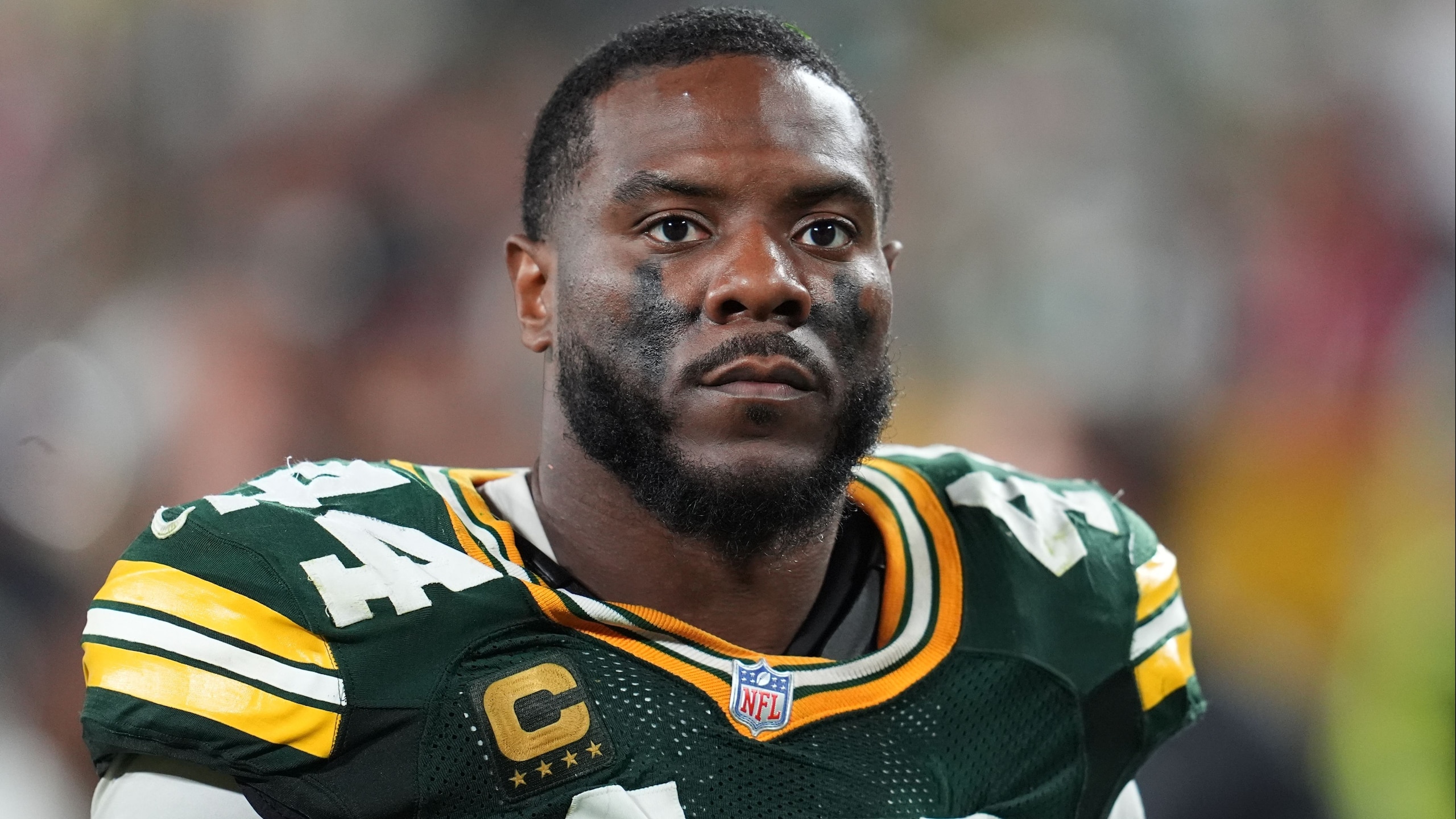
.jpg?w=2560 "49ers Eagles Football")

Eagles, 49ers, More NFL Teams' Updated Salary Cap After Post-June 1 Releases
NFL teams have been free this offseason to make up to a pair of post-June 1 releases. It's an important mechanism to have, allowing the team to spread out a dead cap hit across two seasons rather than absorbing the entirety in 2026.
The Miami Dolphins did this with Tua Tagovailoa, for instance, while the Atlanta Falcons did so with Kirk Cousins.
Here's what each team's cap situation looks like ahead of June 1, per Spotrac.
TOP NEWS
NFL Season Shaping Up To Be Unpredictable 🗣️
.jpg?w=2560 "Lions Cardinals Football")
Viral Dan Campbell Presser 💙
.jpg?w=2560 "Packers 49ers Football")
AD Trolls Bears WR on IG 😂
| Team | Cap Space (Top 51) |
| San Francisco 49ers | $69,941,420 |
| Tennessee Titans | $52,819,371 |
| Washington Commanders | $44,063,241 |
| Los Angeles Chargers | $43,967,122 |
| New England Patriots | $43,501,948 |
| Arizona Cardinals | $35,381,919 |
| Indianapolis Colts | $32,371,609 |
| Houston Texans | $30,664,641 |
| New York Jets | $29,753,674 |
| Seattle Seahawks | $28,922,866 |
| Los Angeles Rams | $27,262,485 |
| Philadelphia Eagles | $25,827,548 |
| Las Vegas Raiders | $24,380,349 |
| Miami Dolphins | $20,239,267 |
| Atlanta Falcons | $19,736,496 |
| Denver Broncos | $19,258,091 |
| Detroit Lions | $19,066,633 |
| Green Bay Packers | $18,235,199 |
| Baltimore Ravens | $17,624,461 |
| Cleveland Browns | $17,563,558 |
| Minnesota Vikings | $13,682,824 |
| Kansas City Chiefs | $13,270,110 |
| Chicago Bears | $12,052,948 |
| Carolina Panthers | $11,778,160 |
| New York Giants | $10,542,721 |
| Buffalo Bills | $10,175,733 |
| Jacksonville Jaguars | $10,065,493 |
| Tampa Bay Buccaneers | $8,651,627 |
| Cincinnati Bengals | $7,869,285 |
| Dallas Cowboys | $7,857,931 |
| Pittsburgh Steelers | $7,186,268 |
| New Orleans Saints | $6,911,472 |
Here's why Post-June 1 designations matter.
When teams sign players to new contracts, they are allowed to spread out the cap hit from the signing bonus over the duration of the agreement (up to five years). In essence, the money is paid to the player the moment the contract is signed, but the entirety of the signing bonus doesn't immediately count against the cap and is instead spread out.
So when a player is traded before the contract is over, those cap charges—also known as dead cap space—remain with the original team. Generally, the entirety of the remaining dead cap space counts against a team's salary cap that season unless the release is designated as a post-June 1 transaction. That designation allows the team to split the dead cap charge across two seasons (in this case, 2026 and 2027).
Players can be cut at any point in the offseason and still be designated as a post-June 1 release. If teams want to trade a player and split the dead cap charge between two seasons, however, they cannot process the transaction until June 2.
So if you've been wondering why you've been inundated with A.J. Brown trade rumors but he's still on the Philadelphia Eagles, that is why—the Birds are attempting to spread out his dead cap charge between 2026 and 2027 (assuming they in fact deal him, which seems very likely).
In Brown's case, trading him leaves the Eagles responsible for $43.5 million in dead cap responsibilities. That's a hefty number for a single season, but a post-June 1 trade allows them to split it in two ($16.3 million in 2026, $27.1 million in 2027).
Other players to monitor when it comes to potential post-June 1 trades includes Cleveland's Myles Garrett, Arizona's Josh Sweat and Indy's Anthony Richardson.
Brown has been the big offseason storyline, but he may not be the only big name on the move this summer.
.jpg?w=2560 "Texans Titans Football")
.jpg?w=2560 "Broncos Chargers Football")
.jpg?w=2560 "Report: Steelers WR to Miss 'Weeks'")