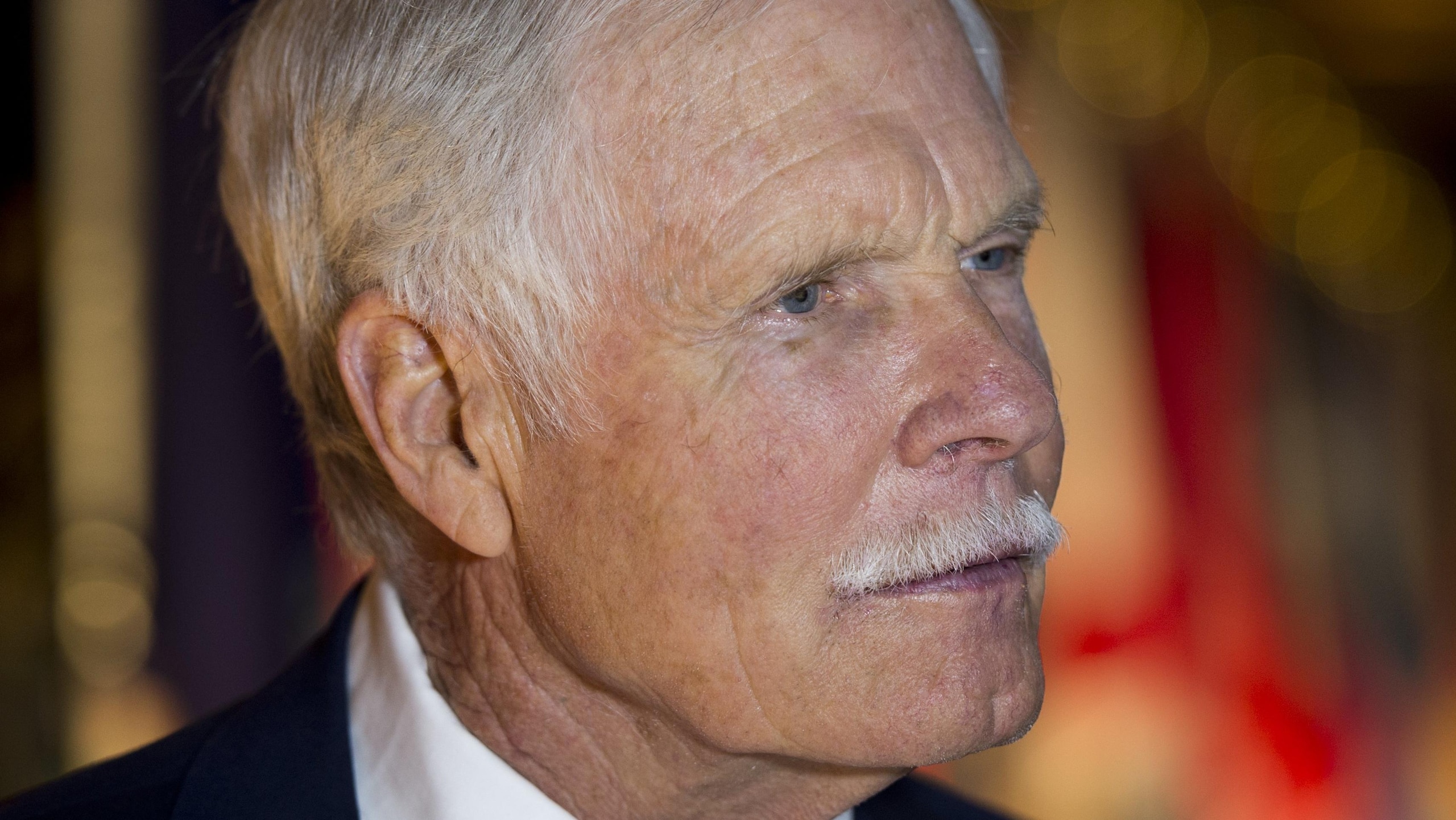


The world of pro wrestling lost an icon on Wednesday.
The death of Ted Turner at the age of 87 is felt not only in the television industry he helped revolutionize with the founding of TBS, TNT, CNN, and Cartoon Network, or the sports world, where he owned the Atlanta Braves and Atlanta Hawks, but also in the professional wrestling business.
Turner, an admitted fan of the industry, first introduced professional wrestling to his WTCG superstation network in the 1970s. In 1978, he rechristened the station "WTBS," which would continue to serve as home for professional wrestling on cable television.
TOP NEWS
.jpg?w=2560)
New AEW Rumors👂
Debating Triple H's Obsession With WarGames Match 👨⚖️
WWE Stars Get Married 💍
From the days of Georgia Championship Wrestling, to the 1984 Black Saturday fiasco involving Vince McMahon's failed expansion into the territory, through the entirety of Jim Crockett Promotions' famed, Ric-Flair-fueled run of the 1980s.
In 1988, he purchased Jim Crockett Promotions and created World Championship Wrestling (WCW), a legitimate contender to the national pro wrestling crown held by McMahon's WWF at the time.
WCW Monday Nitro
Seven years later, Eric Bischoff's off-the-cuff pitch for two hours of prime-time WCW television every Monday night to compete with McMahon's WWE Monday Night Raw would see the growth and evolution Turner had envisioned when he purchased it.
The creation of Monday Nitro ushered in massive star signings, such as Hulk Hogan, Randy Savage, Kevin Nash, and Scott Hall. The edginess of the New World Order gimmick, the brooding of Sting, and the meteoric rise of Bill Goldberg helped Turner and his company ride an 83-week ratings win streak over WWE in the Monday Night Wars.
Unfortunately, the same mismanagement that had plagued the company early in WCW's existence, this time mixed with corporate takeovers and mergers, reared its head. As quickly as Turner's company did the unthinkable by knocking off its greatest competitor, it fell, and by 2001, it was sold to McMahon for relative peanuts.
Turner's Lasting Impact on Pro Wrestling
While Turner's venture into wrestling ultimately failed to have a happy ending, his place as a giant in an industry he fell in love with as a youth is undeniable.
The billionaire from Cincinnati paved the way for other fans, wrestlers, and promoters to oppose the national stranglehold McMahon and WWE had on the industry. He proved that putting money behind a promotion, including paying the biggest stars their value, worked.
He paved the way for Jeff Jarrett to create TNA and give wrestlers and fans an alternative. To an extent, he provided the playbook for Tony Khan to follow with All Elite Wrestling, where the billionaire entrepreneur has dished out the cash to pay wrestlers their market value and give them a chance to succeed outside the confines of WWE.
Before that, he introduced a brand-new audience, well outside the Mid-Atlantic region, to industry icons such as Ric Flair, Dusty Rhodes, Arn Anderson, Tully Blanchard, Lex Luger, Sting, Nikita Koloff and Ricky Steamboat. The fans who watched on WTBS, then TBS, and finally TNT may not have otherwise seen those stars and missed all the iconic matches and moments they were responsible for.
Without Turner's influence, his willingness to broadcast professional wrestling, and his desire to put his money behind a genuine competitor to WWE, the industry as we know it may still be represented nationally by the McMahon-created company, with no wiggle room for any alternatives beyond the smaller-market independents.
For that reason, Turner's influence on the pro wrestling industry is enormous, and his impact on it can not be understated.
.jpg?w=2560 "Hunter's Wife Calls Out Sharpe")

.jpg?w=2560 "Colts Fire GM Chris Ballard")
.jpg?w=2560 "Report: Dalton Signing with Falcons")